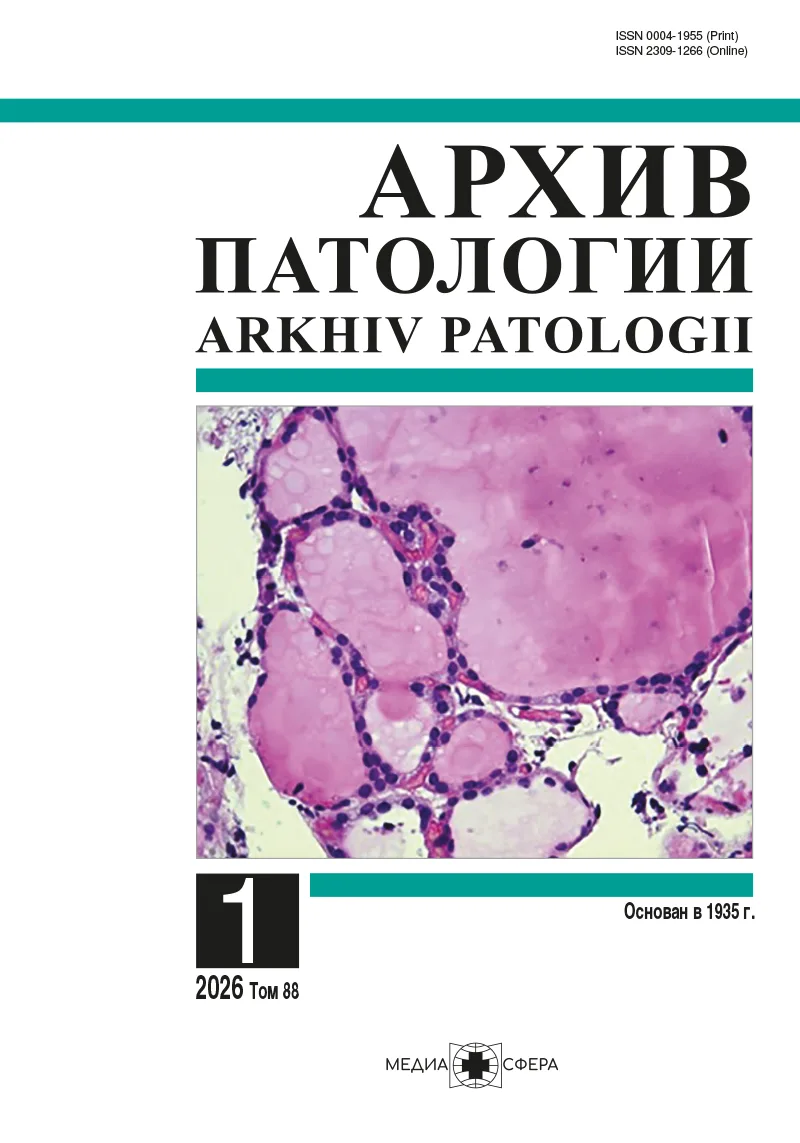
Сравнительный анализ рецептивности эндометрия у молодых женщин с эндометриальным и овариальным факторами инфертильности
Резюме
Инфертильность — значимая проблема медицины, связанная с морфофункциональными изменениями эндометрия и заболеваниями яичников, которые могут приводить к эндометриальной дисфункции. В связи с этим чрезвычайно важным остается аспект изучения роли патологии эндометрия и яичников в развитии инфертильности.
ЦЕЛЬ ИССЛЕДОВАНИЯ
Провести сравнительный анализ рецептивности эндометрия у молодых женщин с эндометриальным и овариальным факторами инфертильности.
МАТЕРИАЛ И МЕТОДЫ
Проведено ретроспективное исследование, в которое было включено 195 пациенток репродуктивного возраста. В 1-ю группу вошли пациентки с эндометриальным фактором инфертильности (n=97), во 2-ю — исследуемые с овариальным фактором инфертильности (n=38), в 3-й группе обследованы женщины с сочетанием обоих факторов инфертильности (n=35). Группу сравнения составили женщины с бесплодием, ассоциированным с мужским фактором, проходившие обследование перед процедурой ЭКО (n=25). Для патоморфологического и иммуногистохимического исследований у пациенток осуществляли забор эндометрия методом пайпель-биопсии на 19—22-й день менструального цикла.
РЕЗУЛЬТАТЫ
Анализ результатов патоморфологического исследования выявил различной степени выраженности нарушения развития пиноподий и задержки секреторной трансформации эндометрия у пациенток трех групп. Иммуногистохимическое исследование установило достоверное снижение уровня экспрессии эстрогеновых рецепторов (ER) и увеличение экспрессии прогестероновых рецепторов (PR) в железистом компартменте во всех исследуемых группах по сравнению с группой сравнения, а также снижение уровня экспрессии ER в стромальном компартменте эндометрия у пациенток 1-й и 3-й групп.
ЗАКЛЮЧЕНИЕ
Одними из ведущих причин неудачной имплантации у пациенток с эндометриальным и овариальным факторами инфертильности являются нарушение созревания пиноподий, задержка секреторной трансформации эндометрия и смещение окна имплантации, а также снижение экспрессии ER и повышение экспрессии PR в железистом компартменте у пациенток обследуемых групп по сравнению с группой морфологического контроля, снижение экспрессии ER в стромальном компартменте у пациенток 1-й и 3-й групп.
Ключевые слова
- рецептивность эндометрия
- хронический эндометрит
- эндометриоидные кисты яичников
- инфертильность
Дата поступления: 02.07.2025
Дата принятия в печать: 22.10.2025
Дата публикации: 27.01.2026
- Feng, J., Wu, Q., Liang, Y. et al. Epidemiological characteristics of infertility, 1990—2021, and 15-year forecasts: an analysis based on the global burden of disease study 2021. Reprod Health. 2025. https://doi.org/10.1186/s12978-025-01966-7
- Михалева Л.М., Соломатина А.А., Хованская Т.Н., Чабиева Л.Б., Грачева Н.А., Чиграй Л.В., Михалев С.А. Морфофункциональное состояние и рецептивность эндометрия у пациенток с эндометриозом яичников. Проблемы репродукции. 2020;26(3):68-75. https://doi.org/10.17116/repro20202603168
- Elahi Z, Mokhtaryan M, Mahmoodi S, Shahroodian S, Darbandi T, Ghasemi F, Ghanavati R, Darbandi A. All Properties of Infertility Microbiome in a Review Article. J Clin Lab Anal. 2025;39(6): e25158. https://doi.org/10.1002/jcla.25158
- Zhang X, Chambers GM, Venetis C, Choi SKY, Gerstl B, Ng CHM, Abbott JA. Perinatal and infant outcomes after assisted reproductive technology treatment for endometriosis alone compared with other causes of infertility: a data linkage cohort study. Fertil Steril. 2025;123(5):846-855. https://doi.org/10.1016/j.fertnstert.2024.12.007
- Bonavina G, Taylor HS. Endometriosis-associated infertility: From pathophysiology to tailored treatment. Front Endocrinol (Lausanne). 2022;13:1020827. https://doi.org/10.3389/fendo.2022.1020827
- Толибова ГХ, Траль ТГ. Хронический эндометрит — затянувшаяся дискуссия. Уральский медицинский журнал. 2023; 22(2):142-152. https://doi.org/10.52420/2071-5943-2023-22-2-142-152
- Puente E, Alonso L, Laganà AS, Ghezzi F, Casarin J, Carugno J. Chronic Endometritis: Old Problem, Novel Insights and Future Challenges. Int J Fertil Steril. 2020;13(4):250-256. https://doi.org/10.22074/ijfs.2020.5779
- Takimoto K, Yamada H, Shimada S, Fukushi Y, Wada S. Chronic Endometritis and Uterine Endometrium Microbiota in Recurrent Implantation Failure and Recurrent Pregnancy Loss. Biomedicines. 2023;11(9):2391. https://doi.org/10.3390/biomedicines11092391
- Rowlands IJ, Hockey R, Abbott JA., Montgomery GW, Mishra GD. Body mass index and the diagnosis of endometriosis: Findings from a national data linkage cohort study, Obesity Research & Clinical Practice.2022; 16 (3): 235-241. https://doi.org/10.1016/j.orcp.2022.04.002
- Lee SY, Pearce EN. Testing, Monitoring, and Treatment of Thyroid Dysfunction in Pregnancy. J Clin Endocrinol Metab. 2021; 106(3):883-892. https://doi.org/10.1210/clinem/dgaa945
- Zhao L, Selvaratnam I, Cunningham J, Filion KB, Grandi SM. Maternal hypothyroidism and subsequent metabolic outcomes in children: a systematic review and meta-analysis. BMC Pediatr. 2024;24(1):490. https://doi.org/10.1186/s12887-024-04963-0
- Zhou X, Wu X, Luo X, Shao J, Guo D, Deng B, Wu Z. Effect of Vitamin D Supplementation on In Vitro Fertilization Outcomes: A Trial Sequential Meta-Analysis of 5 Randomized Controlled Trials. Front Endocrinol (Lausanne). 2022;13:852428. https://doi.org/10.3389/fendo.2022.852428
- Михалев С.А., Радзинский В.Е., Масалимова Д.Н. Риск привычного невынашивания беременности. Акушерство и гинекология: новости, мнения, обучение. 2024;12( 3): 20-25.
- Оразов М.Р., Михалева Л.М., Семенов П.А. Хронический эндометрит: патогенез, диагностика, лечение и его связь с бесплодием. Клин. эксп. морфология. 2020;9(2):16-25. https://doi.org/10.31088/CEM2020.9.2.16-25
- Zhu S, Wang A, Xu W, Hu L, Sun J, Wang X. The heterogeneity of fibrosis and angiogenesis in endometriosis revealed by single-cell RNA-sequencing. Biochim Biophys Acta Mol Basis Dis. 2023;1869(2):166602. https://doi.org/10.1016/j.bbadis.2022.166602
- Zhang L, Han Q, Bao MR, Wu Y. Impact of Endometrial Polyps on Pregnancy Outcomes in Patients with Endometriosis and Infertility: A Systematic Review and Meta-analysis. Biomed Environ Sci. 2025;38(3):341-350. https://doi.org/10.3967/bes2024.175
- Толибова Г.Х., Траль Т.Г., Кахиани М.И., Коган И.Ю. Гиперплазия эндометрия у женщин с наружным генитальным эндометриозом и миомой матки. Российский вестник акушера-гинеколога. 2020;20(6):90-95. https://doi.org/10.17116/rosakush20202006190
- Lazim N, Elias MH, Sutaji Z, Abdul Karim AK, Abu MA, Ugusman A, Syafruddin SE, Mokhtar MH, Ahmad MF. Expression of HOXA10 Gene in Women with Endometriosis: A Systematic Review. Int J Mol Sci. 2023;24(16):12869. https://doi.org/10.3390/ijms241612869
- Радзинский В.Е., Михалёва Л.М., Оразов М.Р., Силантьева Е.С., Камилова Д.П., Мидибер К.Ю., Орехов Р.Е. Рецептивность эндометрия пациенток с повторными неудачами имплантации. Доктор.Ру. 2022; 21(1): 27-33. https://doi.org/10.31550/1727-2378-2022-21-1-27-33
- Савельева Г. М., Михалев С. А., Коноплянников А. Г., Михалева Л. М., Бабиченко И. И., Болтовская М. Н. Хронический эндометрит — показание для прегравидарной подготовки. Клиническая практика. 2018; 9(2):36-41. https://doi.org/10.17816/clinpract09236-41
- Zhao Y, He D, Zeng H, Luo J, Yang S, Chen J, Abdullah RK, Liu N. Expression and significance of miR-30d-5p and SOCS1 in patients with recurrent implantation failure during implantation window. Reprod Biol Endocrinol. 2021;19(1):138. https://doi.org/10.1186/s12958-021-00820-2
- ErtenO, Taskomur AT, Albayrak M. Current Biomarkers for Endometrial Receptivity. Biomarkers in Medicine. 2022;1:565. https://doi.org/10.2174/9789815040463122010024
- Braun AS, Vomstein K, Reiser E, Tollinger S, Kyvelidou C, Feil K, Toth B. NK and T Cell Subtypes in the Endometrium of Patients with Recurrent Pregnancy Loss and Recurrent Implantation Failure: Implications for Pregnancy Success. J Clin Med. 2023;12(17):5585. https://doi.org/10.3390/jcm12175585
- Cuadrado-Torroglosa I, Pacheco A, Barrio A, Garrido N, Aparicio P, Pellicer N, García-Velasco JA, Alecsandru D. Increased cytotoxic natural killer cells in the endometrium alone cannot be considered the immunological cause of recurrent miscarriage. Fertil Steril. 2023;120(1):101-110. https://doi.org/10.1016/j.fertnstert.2023.02.024


Рекомендуем статьи по данной теме:
Эндометриоз как фиброзно-воспалительное заболевание: место ферментной терапии в стратегии комплексного лечения эндометриоз-ассоциированных состояний. Резолюция Совета экспертов.Проблемы репродукции. 2026;32(4):18-31
Рецептивность эндометрия у пациенток репродуктивного возраста до и после односторонней аднексэктомии по поводу зрелой тератомы яичников.Архив патологии. 2026;88(3):30-38
Персонализация окна имплантации и коррекция микрофлоры матки у пациентки с повторной неудачей имплантации.Российский вестник акушера-гинеколога. 2026;26(1):71-76
Факторы, определяющие эффективность процедур вспомогательных репродуктивных технологий: обзор литературы.Проблемы репродукции. 2025;31(6):46-59
Иммунный статус эндометрия у пациенток с аномальным маточным кровотечением, ассоциированным с хроническим эндометритом.Архив патологии. 2025;87(5):20-27
Озонотерапия в прегравидарной подготовке к применению программ вспомогательных репродуктивных технологий.Российский вестник акушера-гинеколога. 2025;25(5):67-74
Особенности лечения больных с гиперпластическими процессами в эндометрии в сочетании с хроническим эндометритом.Российский вестник акушера-гинеколога. 2025;25(5):35-40
Роль внеклеточных везикул в модуляции рецептивности эндометрия у пациенток с повторными неудачами имплантации.Проблемы репродукции. 2025;31(4):46-52
Морфофункциональные особенности эндометрия при лейомиоме матки до и после эмболизации маточных артерий.Архив патологии. 2025;87(4):13-23
Вирус-ассоциированный, прогестерон-резистентный хронический эндометрит — ситуация онкориска?Российский вестник акушера-гинеколога. 2025;25(1):25-30