Патоморфология рецидивирующих менингиом
Резюме
Одним из основных прогностических факторов возникновения рецидивов менингиом является гистологический диагноз с оценкой степени анаплазии. Несмотря на это, четких микроскопических критериев прогноза возможного рецидива у доброкачественных форм не существует, а также нет единого понимания оптимальной тактики ведения пациентов с рецидивами и продолженным ростом менингиом.
ЦЕЛЬ
Оценить нейровизуализационные, микроскопические особенности и уровень пролиферативной активности в случае рецидивов и продолженного роста менингиом.
МАТЕРИАЛ И МЕТОДЫ
Проведены гистологическое и иммуногистохимическое исследования биоптатов опухоли 16 пациентов с прогрессией опухоли, оперированных по поводу рецидива и продолженного роста интракраниальных менингиом; в группу сравнения вошло 10 пациентов с впервые выявленной интракраниальной менингиомой. Всем пациентам был проведен анализ результатов патоморфологических и лучевых методов исследования.
РЕЗУЛЬТАТЫ
Средний объем опухоли в группе пациентов с прогрессией менингиомы составил 48,88±14,32 см3; большее значение среднего объема опухоли (51,51±14,48 см3) было в группе первичного хирургического лечения. В рецидивирующих опухолях отмечались более выраженный клеточный и тканевой атипизм, паттерны инфильтративного роста с вовлечением крупных сосудов. Пролиферативная активность, оцененная по уровню экспрессии белка Ki-67(max), была больше выражена в группе с прогрессией менингиомы и составила 9,71±2,5%. В группе пациентов с рецидивом и продолженным ростом отмечены значимые различия уровня Ki-67 по локализации, степени анаплазии опухоли, наличию инвазии менингиомы в ткань головного мозга (p<0,05).
ЗАКЛЮЧЕНИЕ
Рецидивирующие менингиомы и менингиомы с продолженным ростом представлены опухолями разной степени анаплазии, включая доброкачественные типичные формы (grade 1), что указывает на необходимость большего внимания и динамического наблюдения пациентов с данной патологией. При рецидивирующем течении и продолженном росте менингиом в отличие от первично оперированных опухолей отмечено увеличение степени анаплазии и проявлений местно-деструирующего роста. Это свидетельствует о более выраженной биологической агрессии опухоли. Уровень экспрессии Ki-67 является важным прогностическим фактором в группе пациентов с рецидивом и продолженным ростом менингиом.
Ключевые слова
- менингиома
- рецидив
- прогрессия опухоли
- патоморфология
- нейрохирургия
Дата поступления: 27.02.2025
Дата принятия в печать: 25.06.2025
Дата публикации: 27.10.2025
Менингиома — самая частая первичная опухоль центральной нервной системы (ЦНС) у взрослых [1]. Гистологический диагноз с определением степени анаплазии (grade 1—3) по классификации опухолей ЦНС ВОЗ (2021) является одним из основных прогностических факторов в отношении возникновения рецидивов менингиом и в значительной степени определяет выбор дальнейшей тактики ведения пациентов [2—5]. Существующий перечень патоморфологических признаков анаплазии носит субъективный характер, что требует выделения дополнительных гистологических паттернов, являющихся предикторами рецидивов и продолженного роста менингиом [6, 7].
Цель — оценить нейровизуализационные, микроскопические особенности и уровень пролиферативной активности в случае рецидива и продолженного роста менингиом.
Материал и методы
Проведено одноцентровое проспективное продольное наблюдательное исследование двух групп пациентов старше 18 лет. Всем пациентам выполнено микрохирургическое удаление внутричерепной менингиомы в нейрохирургических отделениях НМИЦ им. В.А. Алмазова в 2022—2023 гг. Исследование проведено в соответствии со стандартами надлежащей клинической практики и принципами Хельсинкской декларации Всемирной медицинской ассоциации (2013 г., Форталеза, Бразилия) и одобрено этическим комитетом ФГБУ «Национальный медицинский исследовательский центр им. А.В. Алмазова» Минздрава России. Все пациенты подписали информированное согласие на использование данных в научной работе.
Обследуемая группа — 16 пациентов с прогрессией внутричерепной менингиомы (рецидив и продолженный рост опухоли). Группа сравнения — 10 пациентов с впервые выявленной внутричерепной менингиомой.
В исследовании рецидив менингиомы — это появление признаков опухолевого роста после тотального ее удаления (с отсутствием остаточной ткани менингиомы после операции), что согласуется со степенью радикальности по классификации Simpson I, II, а продолженный рост — выявление признаков опухолевого роста после частичного удаления опухоли, что соответствует Simpson III—V [6].
Группы пациентов были охарактеризованы по полу и возрасту. При анализе данных магнитно-резонансной томографии (МРТ) оценивали локализацию, размер опухоли, наличие перифокального отека, вовлеченность в опухоль сосудов: магистральных артерий (прежде всего внутренней сонной артерии и ее ветвей) и дуральных синусов. При исследовании операционного материала определяли степень анаплазии, наличие инвазии головного мозга. Выполняли иммуногистохимическое (ИГХ) исследование с оценкой уровня экспрессии Ki-67.
Статистическую обработку данных проводили с использованием прикладной программы STATISTICA 10.0. (Dell, США). Для всех количественных переменных указаны среднее значение и стандартная ошибка, а также выполнена проверка на соответствие нормальному распределению с помощью критерия Шапиро—Уилка. Неколичественные переменные представлены в процентах.
Распределение значений возраста пациентов в обеих группах соответствовало нормальному (p>0,05); различия между дисперсиями по возрасту в обеих группах были незначимы (p>0,05 по критерию Левена и Брауна—Форсайта). Для остальных количественных переменных (объем опухоли и уровень Ki-67) гипотеза о нормальности распределения была отклонена (p<0,05).
Были оценены межгрупповые различия между переменными с помощью статистических критериев Стьюдента, Манна—Уитни, точного критерия Фишера (значимое различие при p<0,05), а также методов описательной статистики. В группе пациентов с прогрессией менингиомы проанализированы различия уровня экспрессии Ki-67 (зависимые переменные) по группирующим переменным выборки с помощью критерия Манна—Уитни, точного критерия Фишера. Степень анаплазии опухоли при выявлении межгрупповых различий, а также при проверке взаимосвязи с неколичественными переменными была охарактеризована как номинальная переменная со значениями 1 (grade 1) и 2, 3 (grade 2 и 3) для этих случаев. Показатель экспрессии Ki-67(max) при проверке взаимосвязи с количественными переменными определялся как номинальная переменная со значениями 1 (менее 4%) и 2 (4% и более) для этих случаев. Уровень Ki-67 в 4% расценивался многими исследователями как пограничное значение, определяющее высокий и низкий риск возникновения рецидива опухоли [8].
Характеристика выборки по полу, возрасту и локализации опухоли представлена в табл. 1.
Таблица 1. Характеристика выборки по полу, возрасту пациентов, локализации опухоли
Показатель | Возраст, годы | Пол | Локализация опухоли |
мужчины/женщины | вне основания/основание черепа, % | ||
Исследуемая группа | 58,44±3,38 | 7/9 | 50/50 |
Группа сравнения | 54,50±3,69 | 3/7 | 80/20 |
Межгрупповые различия, p | 0,46 | 0,68 | 0,22 |
Критерий Стьюдента | Точный критерий Фишера | ||
Распределение пациентов по степени анаплазии согласно классификации ВОЗ (2021) представлено на рис. 1. Межгрупповые различия оказались незначимыми (p=0,66 по точному критерию Фишера). Основные гистологические признаки менингиом разной степени злокачественности продемонстрированы на рис. 2.
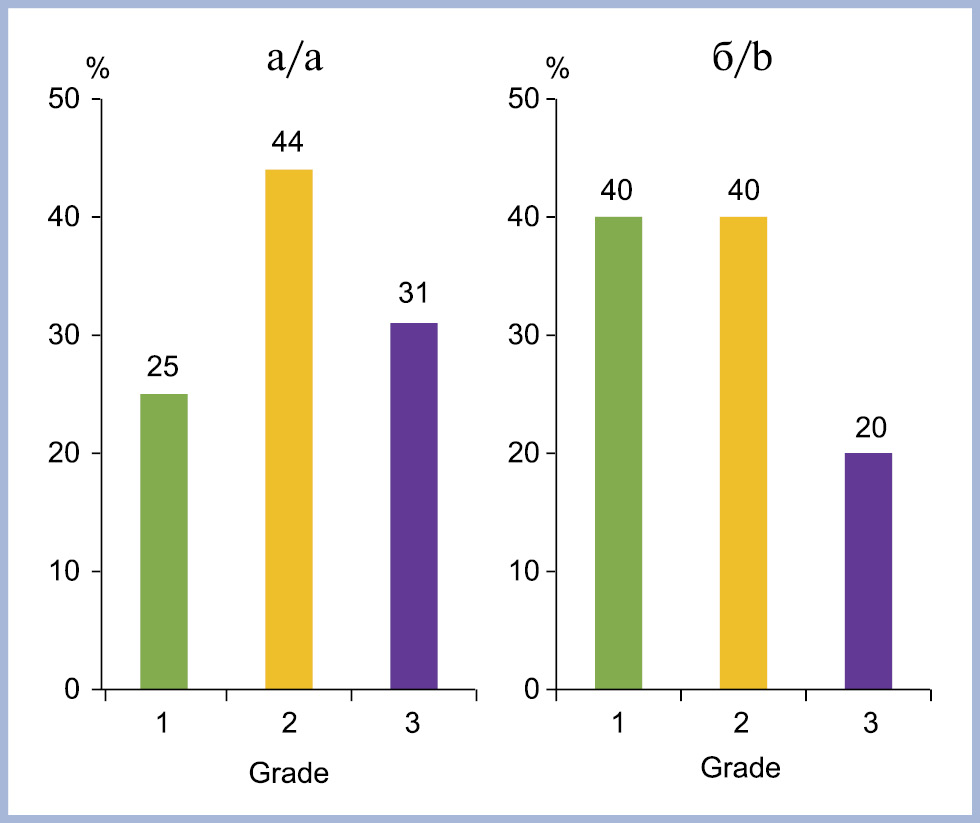
Рис. 1. Распределение пациентов по степени анаплазии по классификации ВОЗ (2021).
а — исследуемая группа; б — группа сравнения.
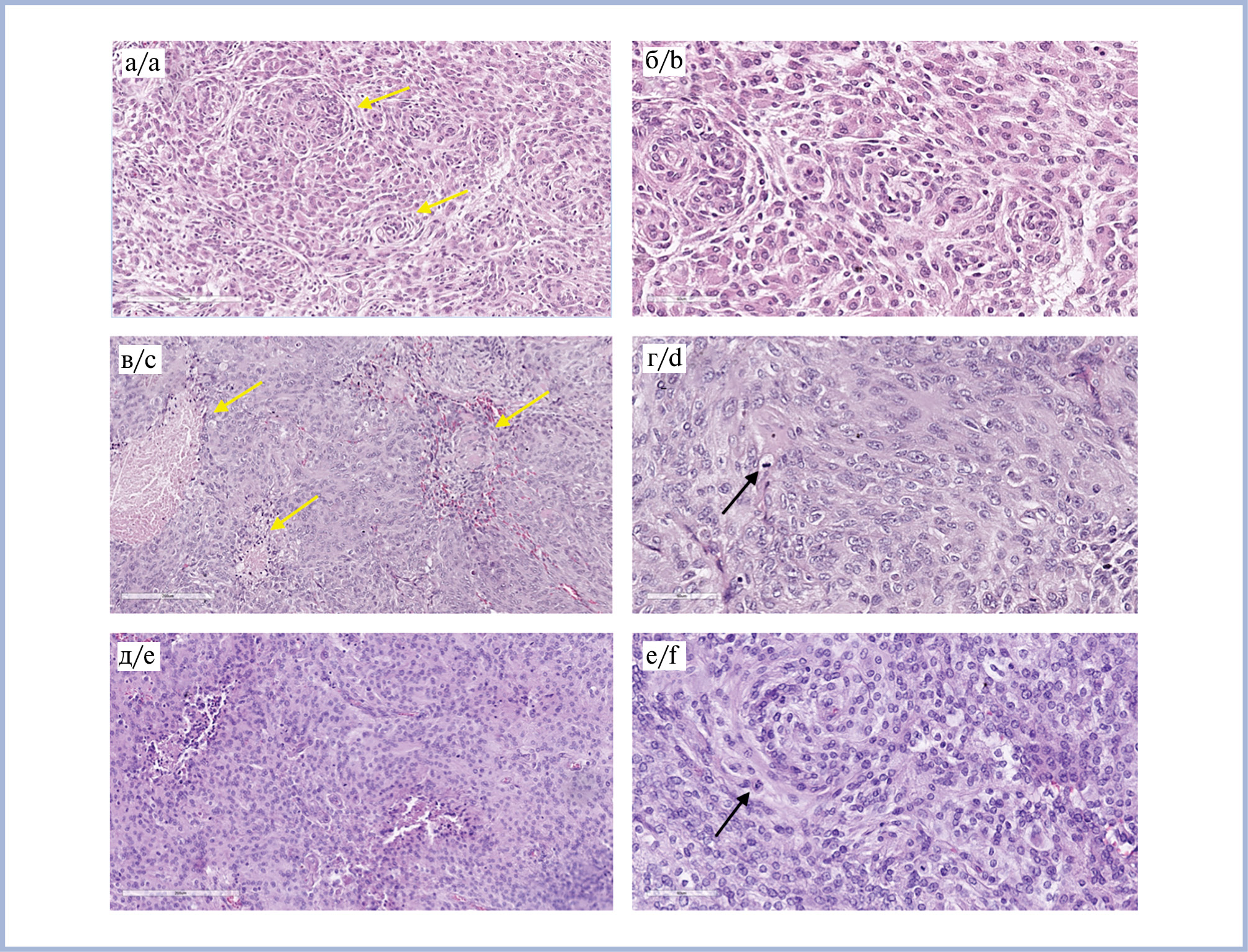
Рис. 2. Основные гистологические признаки менингиом разной степени злокачественности.
Менинготелиальная менингиома, grade 1: слабый клеточный и ядерный полиморфизм, концентрические структуры (желтые стрелки), отсутствие митозов и очагов некроза; а — ×100; б — ×400. Атипическая менингиома, grade 2: умеренный клеточный и ядерный полиморфизм, единичные ядрышки, микронекрозы (желтые стрелки), единичные митозы (черная стрелка); в — ×100, г — ×400. Анапластическая менингиома, grade 3: умеренный клеточный и ядерный полиморфизм, повышенная клеточная плотность, микронекрозы, множество митозов (черная стрелка — атипичный митоз); д — ×100, е — ×400. Окраска гематоксилином и эозином.
МРТ-характеристика менингиом
МРТ-характеристика менингиом представлена в табл. 2. В группе с прогрессией опухоли была отмечена тенденция к вовлечению в опухолевый узел артерий головного мозга и прорастанию дуральных синусов (рис. 3). Однако при оценке объема опухоли, наличия перифокального отека большие значения были характерны для пациентов группы сравнения (рис. 4). Тем не менее достоверного межгруппового различия выявлено не было.
Таблица 2. МРТ-характеристика менингиом с указанием межгрупповых различий
Показатель | Объем опухоли, см3 | Вовлеченность артерий, % | Прорастание дуральных синусов, % | Наличие перифокального отека, % |
Исследуемая группа | 48,88 ±14,32 | 50 | 75 | 56,25 |
Группа сравнения | 51,51±14,48 | 40 | 60 | 70 |
Межгрупповые различия, p | 0,82 | 0,70 | 0,66 | 0,69 |
Критерий Манна—Уитни | Точный критерий Фишера | |||
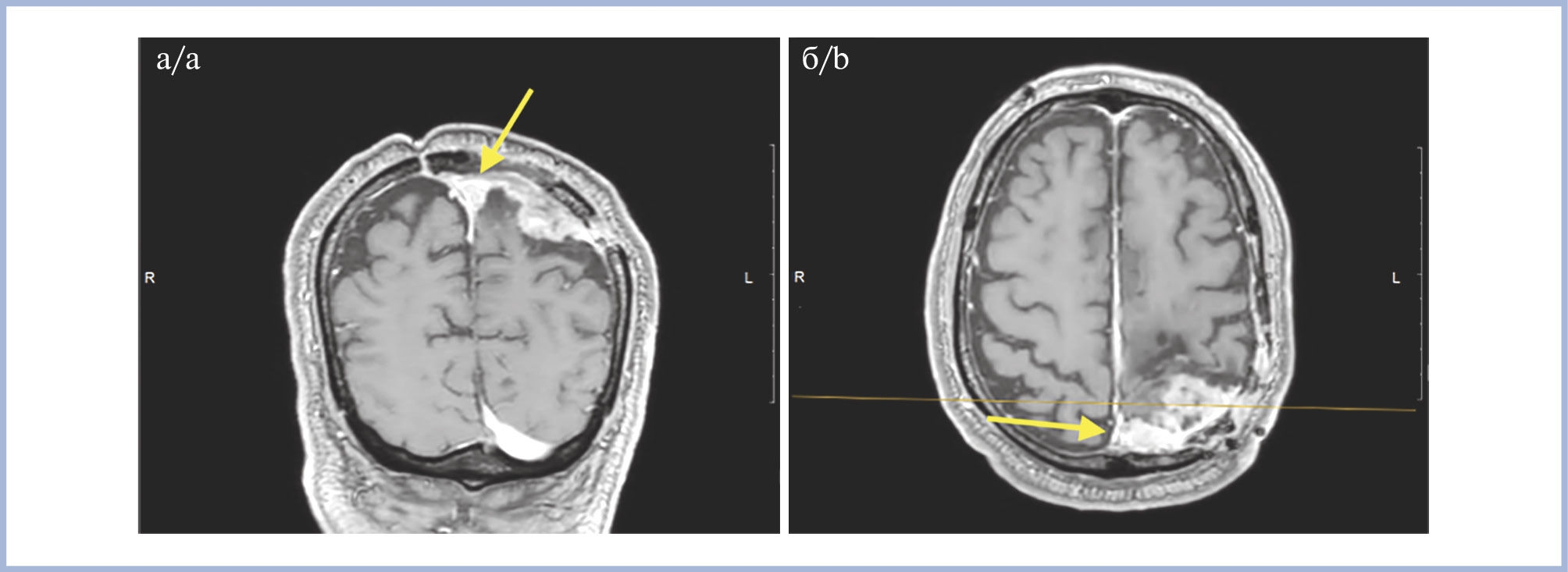
Рис. 3. Продолженный рост атипичной менингиомы (МРТ, Т1- взвешенные постконтрастные изображения).
Прорастание опухолью верхнего сагиттального синуса в задней трети (желтая стрелка); а — фронтальный срез; б — аксиальный срез.
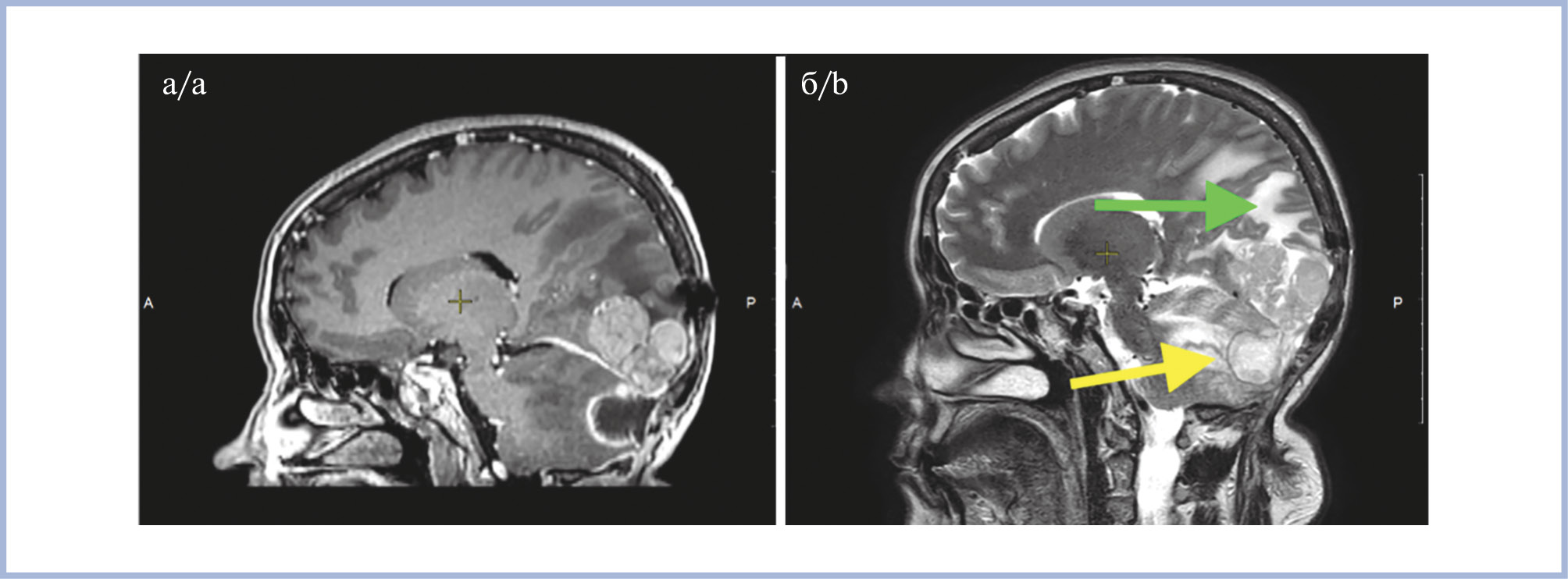
Рис. 4. Рецидив анапластической менингиомы супра- и субтенториальной локализации (сагиттальный срез).
а — Т1-взвешенное постконтрастное изображение МРТ; б — Т2-взвешенное изображение (желтая стрелка — вероятная инвазия в ткань головного мозга), выраженный перифокальный отек (зеленая стрелка).
Гистологическая характеристика менингиом
Инвазия головного мозга чаще была отмечена в группе с рецидивом и продолженным ростом менингиом и составила 43,75%, в том время как в группе сравнения — 20% (рис. 5). Различия в инвазии опухоли в головной мозг между группами оказались незначимыми (p=0,40 по точному критерию Фишера).
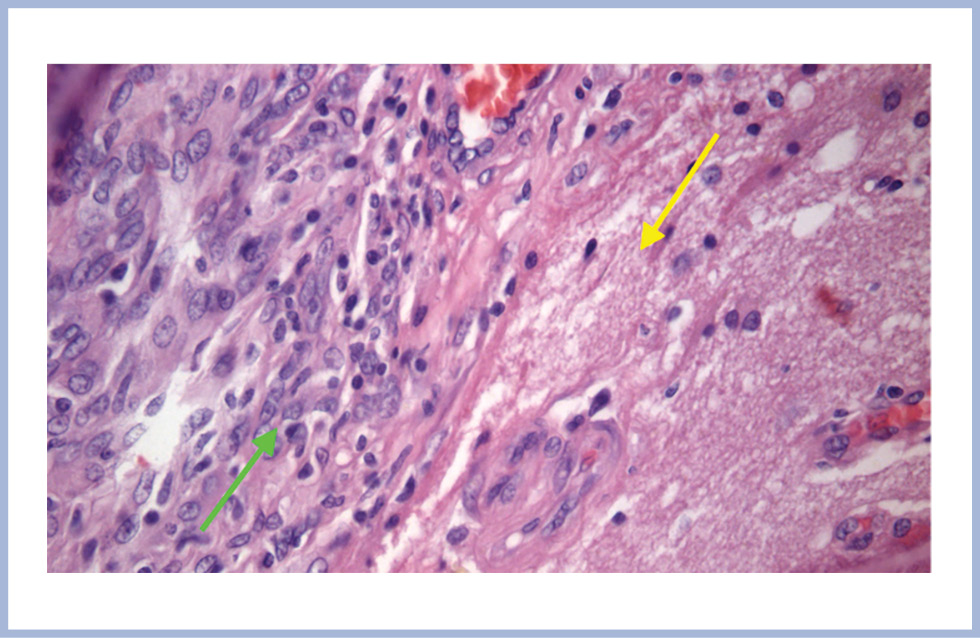
Рис. 5. Инвазия менингиомы в ткань головного мозга.
Плотное прилегание опухоли (зеленая стрелка) к ткани головного мозга (желтая стрелка), отсутствие субарахноидального пространства между ними. Умеренный клеточно-ядерный полиморфизм, неровная ядерная мембрана, наличие ядрышек, лимфоидная инфильтрация на границе с мозгом. Окраска гематоксилином и эозином, ×400.
Пролиферативная активность менингиомы была оценена по уровню экспрессии белка Ki-67(max) и составила 9,71±2,5% в группе с прогрессией опухоли и 6,67±1,76% в группе сравнения без значимых различий между группами (p=0,44 по критерию Манна—Уитни).
Выявление связей между переменными в группе рецидивирующих менингиом
При анализе связей между демографическими, нейровизуализационными, микроскопическими характеристиками рецидивирующих менингиом (табл. 3) была выявлена корреляция значений индекса пролиферативной активности по Ki-67 и степени анаплазии, при этом в случае доброкачественных менингиом (grade 1) среднее значение Ki-67 (max) составило 2,75±0,48 %, для grade 2 — 6,20±1,02 %, а для grade 3 — 18,80±4,75 %. Также отмечена значимая зависимость уровня экспрессии Ki-67 от наличия инвазии головного мозга и локализации рецидивирующих менингиом (рис. 6). Между другими переменными достоверной взаимосвязи выявлено не было.
Таблица 3. Оценка взаимосвязи степени анаплазии, инвазии головного мозга, индекса пролиферативной активности по Ki-67 с демографическими, нейровизуализационными, микроскопическими характеристиками рецидивирующих менингиом
Показатель | Степень анаплазии | Инвазия в ткань головного мозга | Ki-67 (max), % |
Пол пациентов | p=0,09 | p=0,61 | p=0,34 |
Возраст, годы | p=0,95 | p=0,54 | p=0,66 |
Локализация опухоли | p=0,08 | p=0,31 | p=0,007 |
Вовлечение в опухоль артерий | p=1,00 | p=1,00 | p=0,23 |
Прорастание опухолью дуральных синусов | p=1,00 | p=1,00 | p=0,55 |
Объем опухоли, см3 | p=0,38 | p=0,41 | p=0,66 |
Перифокальный отек | p=1,00 | p=0,61 | p=0,22 |
Степень анаплазии | — | — | — |
Инвазия в ткань головного мозга | p=0,09 | — | — |
Ki-67 (max), % | p=0,002 | p=0,042 | — |
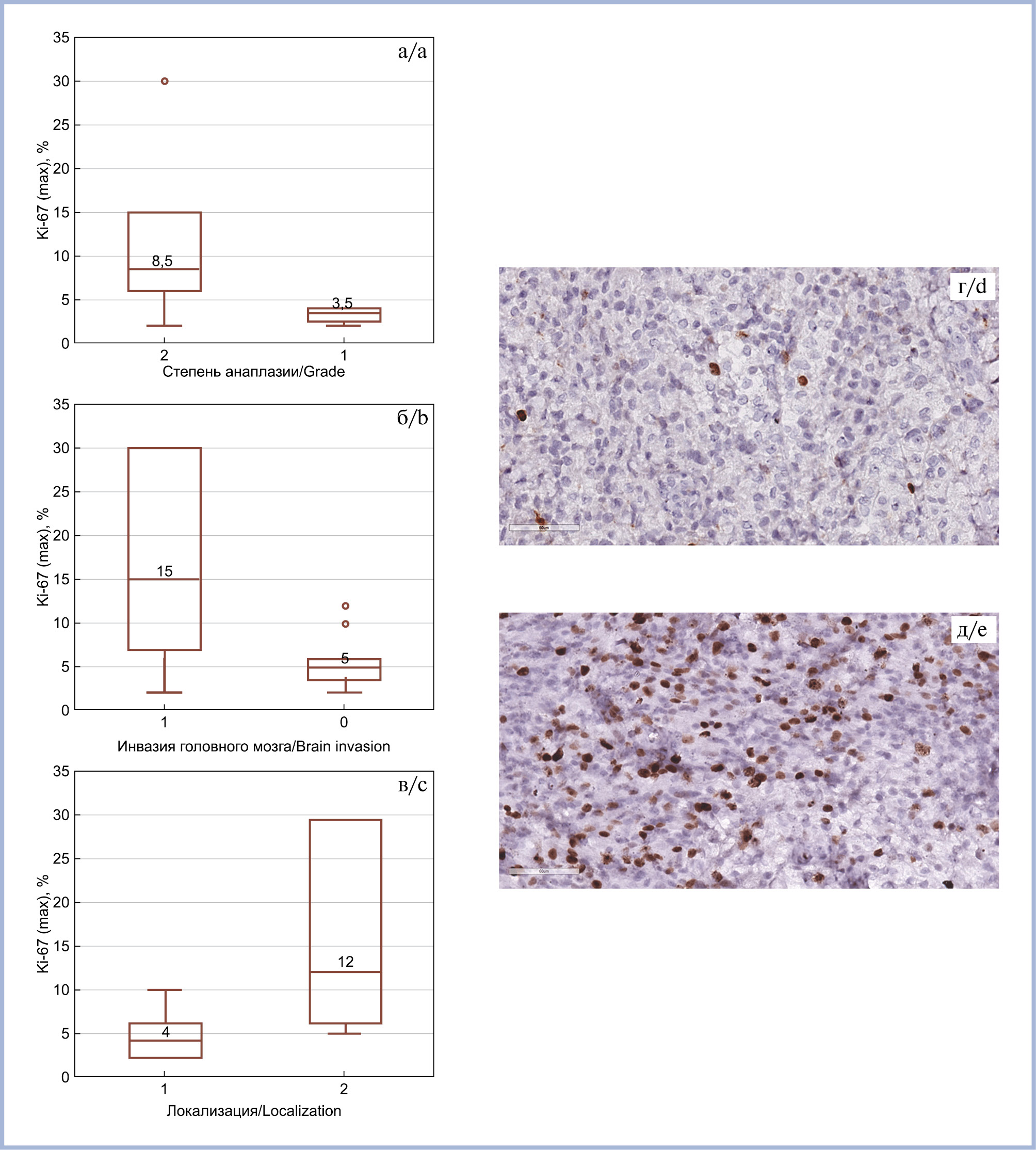
Рис. 6. Пролиферативная активность менингиомы по уровню экспрессии Ki-67.
а — индекс пролиферативной активности по Ki-67(max), процент в зависимости от степени анаплазии опухоли, 1 — grade 1; 2 — grade 2, 3; б — индекс пролиферативной активности по Ki-67(max), процент в зависимости от наличия инвазии головного мозга. 1 — наличие инвазии в ткань головного мозга; 0 — отсутствие инвазии в ткань головного мозга; в — индекс пролиферативной активности по Ki-67(max), процент в зависимости от локализации опухоли. 1 — основание черепа; 2 — вне основания черепа; г — иммуногистохимическая реакция с антителами Ki-67, низкая пролиферативная активность — менее 4 % окрашенных ядер, ×400; д — иммуногистохимическая реакция с антителами Ki-67, высокая пролиферативная активность — более 4% окрашенных ядер, ×400. а—в — на графиках указаны значения медианы.
Анализ общих характеристик и МРТ-картины пациентов в выборке
Локализация и размер менингиомы определяют клиническую картину у пациента и техническую возможность радикального удаления опухоли. Тотально удалить менингиомы не всегда можно при вовлечении в опухолевый процесс магистральных мозговых сосудов, в том числе при прорастании дуральных синусов [6]. Особенно это характерно для опухолей с локализацией на основании черепа. Выявлено, что при локализации менингиом на основании черепа рецидив и продолженный рост наблюдались чаще (50% против 20%), включение сосудов в опухоль тоже в основном отмечалось в исследуемой группе, что может быть обусловлено невозможностью радикального удаления при ранее проведенном первичном лечении.
В современных публикациях размер менингиомы редко рассматривается как прогностический фактор рецидивирования. В имеющихся немногочисленных работах [9] зависимости возникновения рецидива менингиомы от размера опухоли не выявлено. Однако размер опухолей все же является значимым прогностическим фактором прогрессирования при многих опухолях [10]. Примечательно, что в литературе [11] отмечена связь большего размера менингиомы с развитием перифокального отека, что коррелирует со смертностью от менингиомы. Наличие перитуморозного отека (до операции) влияет на послеоперационное восстановление и сопровождается развитием неврологического дефицита у 60% всех пациентов с менингиомой [12]. Установлено, что больший объем опухоли и развитие перифокального отека были характерны для пациентов с впервые выявленной менингиомой. Действительно, пациенты с рецидивами проходят динамическое наблюдение в виде регулярного МРТ-исследования, в этих условиях оптимальная тактика лечения принимается раньше, до достижения больших размеров опухоли и развития перифокального отека соответственно, что подтвердилось в нашем исследовании.
Анализ патоморфологических характеристик выборки
При пересмотрах классификации ВОЗ инвазия в ткань головного мозга как критерий злокачественности оказалась весьма дискутабельным параметром [7], но в 5-м пересмотре классификации ВОЗ (2021) является независимым критерием атипической менингиомы grade 2 [5]. В связи с этим большее количество опухолей стали относить к менингиомам grade 2, что соответственно потребуется требует более тщательное динамическое наблюдение и, возможно, применение лучевой терапии на более раннем этапе. В нашем исследовании инвазия головного мозга была чаще представлена в группе пациентов с рецидивом и продолженным ростом менингиомы, это отражает элементы инфильтративного роста опухоли и определяет биологическую агрессивность менингиомы в этой группе пациентов. Примечательно, что в группе с рецидивами и продолженным ростом инвазия в ткань головного мозга была характерна для менингиом с большим уровнем экспрессии Ki-67 (p=0,042).
Установлено, что отчетливая тенденция к более высокому уровню Ki-67 была в группе с рецидивом и продолженным ростом менингиомы, где он составил 9,71±2,5% и в свою очередь оказался достоверно больше в опухолях, расположенных вне основания черепа (p=0,007). Данную закономерность отмечают и другие исследователи [5, 13]. Было установлено значимое различие значений Ki-67 при разной степени анаплазии опухоли (p=0,002) с большим уровнем пролиферативной активности у более злокачественных вариантов менингиомы. В настоящий момент параметры экспрессии Ki-67 не отражены в диагностических критериях классификации ВОЗ (2021).
Существует мнение, что ИГХ-исследование, определение экспрессии Ki-67, в частности, не отличается хорошей репрезентативностью [14]. Действительно, в патоморфологических лабораториях используются разные реагенты, требуемые для исследования, причем сам подсчет результатов остается субъективным. Так, при переходе к автоматическим методам подсчета отмечены различия в результатах в сравнении с классическим вариантом, что настораживает и вызывает недоверие исследователей к данному критерию [14]. Однако в нашей работе были отмечены корреляции значений Ki-67 с рядом параметров, что определяет важность и перспективность данного критерия.
Заключение
Рецидивирующие менингиомы и менингиомы с продолженным ростом представлены опухолями разной степени анаплазии, включая доброкачественные типичные формы (grade 1), что указывает на необходимость большего внимания и динамического наблюдения пациентов с данной патологией.
При рецидивирующем течении и продолженном росте менингиом наблюдаются отличия от первично оперированных опухолей, связанные с увеличением степени анаплазии и проявлениями местно-деструирующего роста. Это свидетельствует о более выраженной биологической агрессии опухоли.
В патоморфологической картине рецидивирующих менингиом более выражены признаки клеточного и тканевого атипизма, паттерны местно-деструирующего роста в виде инвазии головного мозга по данным гистологического исследования, а также вовлечение в опухоль крупных сосудов и дуральных синусов под данным МРТ-диагностики, кроме того, отмечена более высокая пролиферативная активность. Уровень экспрессии Ki-67 является важным прогностическим фактором в группе пациентов с рецидивом и продолженным ростом менингиом.
Работа выполнена в рамках государственного задания №123021000128-4 «Разработка новой технологии лечения больных вторичными новообразованиями головного мозга и рецидивирующими менингиомами».
Участие авторов:
Концепция и дизайн исследования — Ушанов В.В., Забродская Ю.М., Улитин А.Ю.
Сбор и обработка материала — Ушанов В.В., Забродская Ю.М., Улитин А.Ю., Пальцев А.А., Куканов К.К., Ситовская Д.А., Шарова А.С.
Статистическая обработка — Ушанов В.В., Забродская Ю.М.
Написание текста — Ушанов В.В., Забродская Ю.М., Улитин А.Ю.
Редактирование — Забродская Ю.М., Улитин А.Ю., Пальцев А.А., Куканов К.К., Ситовская Д.А., Шарова А.С., Василенко А.В.
Авторы заявляют об отсутствии конфликта интересов.
- Ostrom QT, Patil N, Cioffi G, Waite K, Kruchko C, Barnholtz-Sloan JS. CBTRUS Statistical Report: Primary Brain and Other Central Nervous System Tumors Diagnosed in the United States in 2013-2017. [Published correction appears in Neuro Oncol. 2022 Jul 1;24(7):1214. https://doi.org/10.1093/neuonc/noaa200
- Nabors B, Portnow J, Hattangadi-Gluth J, Horbinski C. NCCN CNS tumor guidelines update for 2023. Neuro Oncol. 2023;25(12): 2114-2116. https://doi.org/10.1093/neuonc/noad169
- Goldbrunner R, Stavrinou P, Jenkinson MD, et al. EANO guideline on the diagnosis and management of meningiomas. Neuro Oncol. 2021;23(11):1821-1834. https://doi.org/10.1093/neuonc/noab150
- Улитин А.Ю., Желудкова О.Г., Иванов П.И., Кобяков Г.Л., Мацко М.В., Насхлеташвили Д.Р., Проценко С.А., Рыжова М.В. Практические рекомендации по лекарственному лечению первичных опухолей центральной нервной системы. Злокачественные опухоли. 2022; 12(3s2-1): 113—40. https://doi.org/10.18027/2224-5057-2022-12-3s2-113-140
- Louis DN, Perry A, Wesseling P, et al. The 2021 WHO Classification of Tumors of the Central Nervous System: a summary. Neuro Oncol. 2021;23(8):1231-1251. https://doi.org/10.1093/neuonc/noab106
- Тиглиев Г.С., Олюшин В.Е., Кондратьев А.Н. Внутричерепные менингиомы. СПб.: Российский нейрохирургический институт им. проф. А.Л. Поленова; 2001.
- Backer-Grøndahl T, Moen BH, Torp SH. The histopathological spectrum of human meningiomas. Int J Clin Exp Pathol. 2012; 5(3):231-242.
- Corvino S, Altieri R, La Rocca G, et al. Topographic Patterns of Intracranial Meningioma Recurrences-Systematic Review with Clinical Implication. Cancers (Basel). 2024;16(12):2267. https://doi.org/10.3390/cancers16122267
- de Carvalho GTC, da Silva-Martins WC, de Magalhães KCSF, et al. Recurrence/Regrowth in Grade I Meningioma: How to Predict? Front Oncol. 2020;10:1144. https://doi.org/10.3389/fonc.2020.01144
- Maeng CH, Kim BJ, Ahn MJ, et al. Association between Tumor Size at the Time of Disease Progression and Survival Outcomes. Cancer Res Treat. Published online October 22, 2024. https://doi.org/10.4143/crt.2024.690
- Sahab-Negah S, Gorji A. Meningioma Tumor Microenvironment. Adv Exp Med Biol. 2020;1296:33-48. https://doi.org/10.1007/978-3-030-59038-3_3
- Vignes JR, Sesay M, Rezajooi K, Gimbert E, Liguoro D. Peritumoral edema and prognosis in intracranial meningioma surgery. J Clin Neurosci. 2008;15(7):764-768. https://doi.org/10.1016/j.jocn.2007.06.001
- Magill ST, Young JS, Chae R, Aghi MK, Theodosopoulos PV, McDermott MW. Relationship between tumor location, size, and WHO grade in meningioma. Neurosurg Focus. 2018;44(4):E4. https://doi.org/10.3171/2018.1.FOCUS17752
- Gown AM. The Biomarker Ki-67: Promise, Potential, and Problems in Breast Cancer. Appl Immunohistochem Mol Morphol. 2023; 31(7):478-484. https://doi.org/10.1097/PAI.0000000000001087


Рекомендуем статьи по данной теме:
Плазменный скальпель Береснева в лечении фантомного болевого синдрома.Российский журнал боли. 2026;24(3):27-30
Клинико-морфологические прогностические показатели рецидива полипозного риносинусита.Российская ринология. 2026;34(3):40-46
Внутренняя валидация новой прогностической классификации (GVV Score) ювенильной ангиофибромы носоглотки и основания черепа: сравнение с системами Fisch—Andrews и UPMC.Вестник оториноларингологии. 2026;91(4):40-49
Сравнение шестилетних результатов открытых операций, успешного лапароскопического адгезиолизиса и неоперативного лечения при спаечной кишечной непроходимости.Хирургия. Журнал им. Н.И. Пирогова. 2026;(8):5-15
Эволюция методологических стандартов систематических обзоров и протокол метаанализа влияния молекулярно-генетического профиля менингиом на рецидив опухоли.Вопросы нейрохирургии имени Н.Н. Бурденко. 2026;90(4):114-121
Микрохирургическое лечение менингиом намета мозжечка: систематический обзор.Вопросы нейрохирургии имени Н.Н. Бурденко. 2026;90(4):106-113
Характеристика субпопуляций лимфоцитов и клеток системы мононуклеарных фагоцитов печени в острый период и в отдаленные сроки после перенесенного заболевания COVID-19.Архив патологии. 2026;88(4):5-13
Эпидемиологические и клинические особенности опухолей околоушных слюнных желез в Республике Хакасия.Оперативная хирургия и клиническая анатомия (Пироговский научный журнал). 2026;10(2-2):73-79
Случай псевдолимфомы кожи лица как реакция на профессиональное воздействие дихлорэтана.Клиническая дерматология и венерология. 2026;25(2):271-276
Показатели безрецидивной выживаемости при хирургическом и комбинированном лечении краниофарингиом, впервые выявленных у взрослых пациентов.Вопросы нейрохирургии имени Н.Н. Бурденко. 2024;88(5):54-59