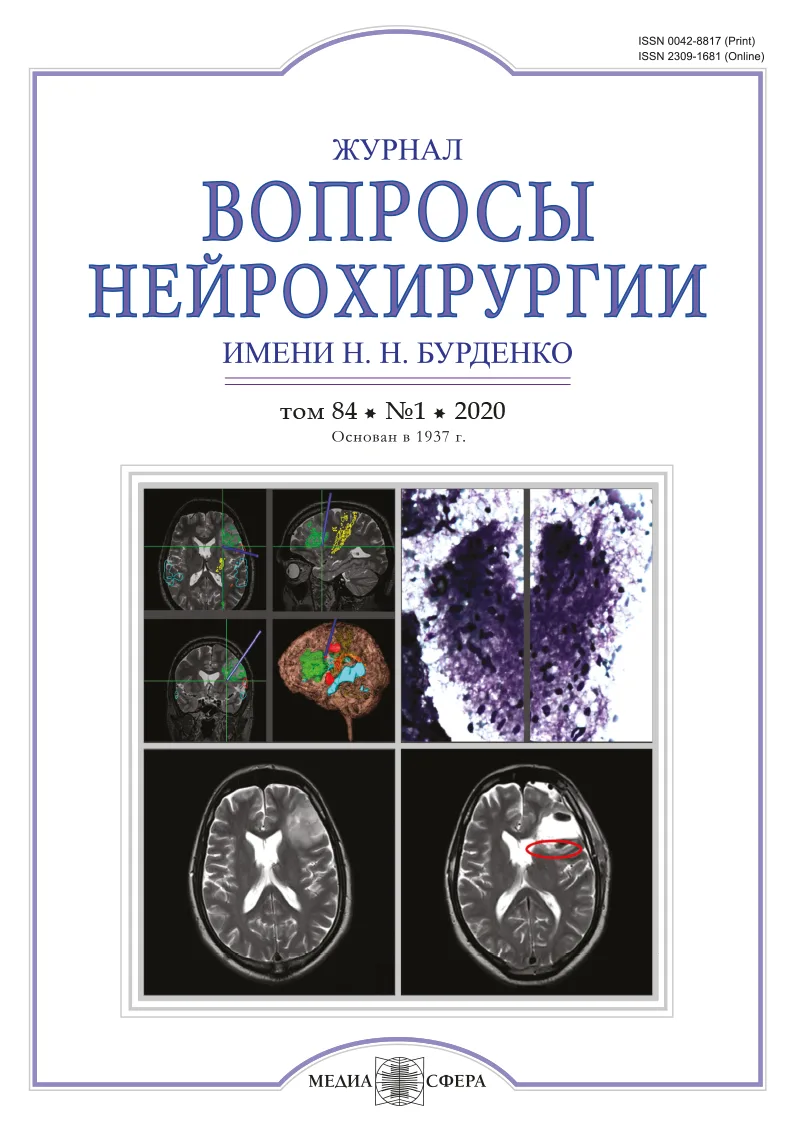
Хирургическое лечение эпилепсии у детей с глионейрональными опухолями мозга: морфология, магнитно-резонансно-томографическая семиология и факторы, влияющие на исход
Журнал: Вопросы нейрохирургии имени Н.Н. Бурденко. 2020;84(1):6-22.
Прочитано: 6627 раз
Резюме
Ключевые слова
- хирургическое лечение эпилепсии у детей
- глионейрональные опухоли
- МРТ-семиология
- иммуногистохимия
- электрокортикография
- объем резекции
Дата публикации: 30.04.2020
АЭ — антиэпилептический
Видео-ЭЭГ — видеоэлектроэнцефалография
ГНО — глионейрональная опухоль
ГНО NOS — глионейрональная опухоль без уточнения
КТ — компьютерная томография
ССВП — соматосенсорные вызванные потенциалы
ЭКоГ — электрокортикография
ЭЭГ — электроэнцефалография
DNT — дизэмбриопластическая нейроэпителиальная опухоль
GFAP — глиальный фибриллярный кислый белок
NOS — not otherwise specified, без уточнения
Syn — синаптофизин
Введение
Эпилептические приступы нередко сопутствуют опухолям мозга, а в случаях с доброкачественными внутримозговыми новообразованиями это часто ведущий симптом. В современной литературе закрепился термин — Long-term Epilepsy Associated Tumors (LEAT) (опухоль, ассоциированная с эпилепсией) [1—4]. Опухоли — вторая по частоте причина эпилепсии во всех крупных сериях с хирургическим лечением. Среди них особое место занимают глионейрональные опухоли (ГНО), которые кроме глиальных опухолевых клеток содержат ганглиозные клетки (в ганглиоглиомах) или же измененные формы нейронов и специфический глионейрональный компонент (в дизэмбриопластических нейроэпителиальных опухолях — DNT). ГНО составляют менее 1,5% всех новообразований мозга у детей [5], но, в отличие от других доброкачественных глиом, затрагивают преимущественно мозговую кору и практически не прогрессируют. В некоторых случаях ГНО перемежаются с участками кортикальной дисплазии или окружены ими, но это не вызывает очаговых неврологических нарушений и общемозговых симптомов. Эти опухоли выявляются обычно у детей, относительно чаще поражают височную долю и проявляются только стереотипными эпилептическими приступами, зачастую плохо поддающимися лекарственному лечению. У некоторых больных, особенно у малышей до 2—3 лет, обнаруживаются энцефалопатия и задержка в развитии, поэтому хирургическое вмешательство обоснованно используется для лечения эпилепсии у больных с ГНО. Однако результативность операций и доля пациентов с полным прекращением приступов варьируют, по данным литературы, от 60 до 100% [3, 6—15].
Настоящая работа основана на ретроспективном анализе собственного опыта хирургического лечения эпилепсии у детей с ганглиоглиомами и DNT.
Цель исследования — описать морфологическую и электро-клиническую картину, а также магнитно-резонансно-томографическую (МРТ) семиологию у больных с ГНО мозга; провести анализ результатов их хирургического лечения и факторов, определяющих его исход.
Материал и методы
Клинические наблюдения отобраны из базы данных о хирургическом лечении эпилепсии. База проспективно ведется в ФГАУ «Национальный медицинский исследовательский центр нейрохирургии им. акад. Н.Н. Бурденко» с 2006 г. Критерии включения: пациенты, оперированные в период с 2006 по 2017 г.; возраст — менее 18 лет; морфологически верифицированная ГНО.
В исследование включены 152 ребенка (медиана возраста на момент операции — 8 лет) и, поскольку из-за сохраняющихся приступов или их возобновления 7 детей оперированы повторно (двое — трижды) в сроки от 2 нед до 6 лет (в среднем 11 мес), в совокупности речь идет о 161 случае удаления ГНО у детей. Медиана возраста первых проявлений заболевания и дебюта эпилептических приступов составила 4 г. 7 мес, а длительность эпилепсии до операции — 23,5 мес (рис. 1, 2).


Кроме стандартной оценки общего и неврологического статуса, все дети обследованы с помощью МРТ и длительного видео-электроэнцефалографического (видео-ЭЭГ) мониторинга (более чем у 30% — с регистрацией приступных событий). Всех детей осмотрел эпилептолог, 71 пациент осмотрен и по возможности тестирован нейропсихологом.
У большинства больных (119) заболевание проявлялось фокальными моторными и немоторными приступами, у 12 — билатеральными тонико-клоническими судорогами или их сочетанием с фокальными (у 22), у 4 были эпилептические спазмы, у 4 — приступы с неизвестным началом. Более чем в ¾ всех случаев имелись указания на неэффективность антиэпилептического (АЭ) лечения с многочисленными и безуспешными попытками подбора противосудорожных препаратов. У 50 больных кроме эпилептических приступов имелись признаки темповой задержки психоречевого развития от умеренных (у 38) до выраженных (у 12).
Интериктальная ЭЭГ в большинстве случаев представлена периодическим, а временами и продолженным региональным замедлением, соответствующим расположению опухоли. В структуре замедления часто регистрировалась региональная эпилептиформная активность в виде спайков, комплексов пик-медленная волна, острая-медленная волна, с периодическим распространением на близлежащие отделы и гомологичные области противоположного полушария. В части наблюдений (это обычно совпадало с феноменологией приступов), отмечалось билатерально-синхронное распространение эпилептиформной активности с формированием диффузных разрядов.
Картина иктальной эпилептиформной активности также варьировала в зависимости от семиологии приступов. У пациентов с фокальными приступами в большинстве случаев отмечалось появление локализованных или латерализованных эпилептиформных паттернов — острых волн, комплексов острая-медленная волна, ритмической активности альфа-бета-диапазона с трансформацией частоты и амплитуды активности. Паттерн приступа редко оставался локальным, чаще наблюдалось распространение эпилептической активности по полушарию, а также ее вторичная генерализация. У малышей до 1,5—2 лет со спазмами паттерн был диффузным. У небольшой группы пациентов отчетливой зоны начала приступов не наблюдалось.
Гистологический тип ГНО и их локализация представлены в табл. 1, 2


После обследования историю болезни каждого пациента обсуждали на расширенной конференции, где коллегиально характеризовали электро-клинический синдром и топографию эпилептогенной зоны, подтверждали показания к операции, намечали ее объем и оговаривали риск вмешательства. Выводы излагали родителям и опекунам пациента для получения информированного согласия на операцию.
Хирургический доступ зависел от локализации и размеров опухоли.
У большинства больных с височными опухолями, располагавшимися в полюсе и медиальном комплексе, применяли традиционный птериональный доступ, у 9 детей с небольшими опухолями в проекции задних отделов парагиппокампа и фузиформной извилины на «стыке» с лингвальной извилиной затылочной доли использовали супрацеребеллярный транстенториальный доступ [16—18]. В последние годы в случаях со сравнительно небольшими височными опухолями чаще прибегали к субвисочному мини-доступу путем вертикального разреза кожи и циркулярной краниотомии не более 3—3,5 см (рис. 4).

У больных с опухолями в лобной и теменной области, особенно в случаях, если они располагались вблизи от функционально важных зон мозга, краниотомия намечалась с помощью безрамной стереотаксической навигации на основе предоперационной МРТ, а удалению опухоли предшествовало картирование обнаженной коры методами исследования соматосенсорных вызванных потенциалов (ССВП) и электростимуляции. В нескольких редких случаях, если опухоли распространялись вглубь и тесно соседствовали с кортикоспинальным трактом, его функциональное состояние контролировалось по ходу резекции путем электростимуляции с наконечника аспиратора.
Интраоперационный мониторинг ЭЭГ и электрокортикограммы (ЭКоГ) применены у 81 больного. Субгалеальные скальповые игольчатые электроды располагали по усеченной схеме «10—20». Регистрация ЭЭГ начиналась сразу же после индукции анестезии, продолжалась в ходе всей операции и завершалась перед ушиванием твердой мозговой оболочки. ЭКоГ регистрировали с помощью многоконтактных пластинчатых электродов (с 4, 6, 8, иногда — с 20 контактами), которые укладывали на кору в зонах интереса — над опухолью и в прилежащих к ней участках мозга, в части случаев — неоднократно, по ходу резекции, расширяя ее в зависимости от изменений биоэлектрической активности и функционального значения этих отделов мозга (рис. 5, 6).


Согласно протоколам операций, у 78 больных удаление опухоли ограничено пределами ее визуальных границ, у остальных использована расширенная резекция с удалением прилежащих участков мозга в том или ином объеме.
После изучения микропрепаратов удаленной опухоли, окрашенных гематоксилином и эозином, их фрагменты отбирали для иммуногистохимического исследования с антителами к глиальному фибриллярному кислому белку (GFAP), синаптофизину (Syn), нейрофиламентам (Nf и NeuN), маркеру пролиферативной активности Ki-67 и нейрональному протеину MAP27. Оценку результатов иммуногистохимической реакции проводили по наличию или отсутствию экспрессии в цитоплазме и ядрах опухолевых клеток, а также в процентном выражении ядерной экспрессии маркера Ki-67.
У всех пациентов в первые сутки после операции выполнена компьютерная томография (КТ) с целью исключения осложнений. После выписки больные наблюдались динамически путем очного обследования с повторными видео-ЭЭГ и МРТ, а также с опросом по телефону. Эти сведения имеются в 132 наблюдениях с медианой продолжительности 2 г. (1 мес — 3,5 г.). В 110 случаях имеются данные полноценной лучевой диагностики, выполненной для объективной оценки объема вмешательства и радикальности удаления опухоли не позже, чем через 2—3 мес после операции (из них в 101 случае — МРТ).
Влияние на результаты лечения индивидуальных факторов (гистологического типа и локализации опухоли, возраста дебюта болезни и ее длительности, типа приступов), а также того, как и в каком объеме удаляли опухоли, анализировали методами параметрической и непараметрической статистики (табл. 3, 4).


Результаты
Морфология. Ганглиоглиомы характеризовались комбинацией нейрональных и глиальных клеточных компонентов, что определяло гетерогенность их структуры. Диспластические нейроны зачастую теряли привычную цитоархитектонику, отличались выраженным плеоморфизмом и нередко представлены гигантскими двухъядерными или многоядерными формами (рис. 7, а).

В DNT, согласно действующей классификации опухолей ЦНС ВОЗ от 2016 г. [19], выделяли 3 формы.
При простой форме (DNT simple) гистологическая структура опухоли представлена интракортикальными узелками, состоящими из мелких округлых олигодендроподобных клеток (так называемый специфический глионейрональный компонент), иногда эти клетки были ориентированы в микроколонки, погруженные в фибриллярный микрокистозный либо миксоидный матрикс с отдельными флотирующими нейронами (рис. 7, б).
При комплексной форме (DNT complex) морфологическая картина характеризовалась сочетанием специфического глионейронального и глиального компонентов, за счет чего опухоль имела гетерогенную структуру и часто мультинодулярное строение. Глиальный компонент представлен астроцитарной дифференцировкой, в подавляющем большинстве случаев напоминал пилоидную астроцитому, в которой отмечался различной степени выраженности клеточный и ядерный полиморфизм, иногда определялась пролиферация эндотелия сосудов (рис. 7, в). Признаков атипии и некротических изменений мы не обнаружили ни в одном из наблюдений.
К неспецифическим и диффузным формам (DNT non-specific and diffuse) отнесли опухоли с диффузным ростом и морфологическими и иммуногистохимическими признаками глионейрональных опухолей, но без убедительных очагов специфического глионейронального компонента и других четких диагностических критериев (рис. 7, г). Эта группа имела вид смешанных опухолей с участками, подобными либо ганглиоглиоме, либо другим глиомам.
В небольшой части случаев (у 15 больных) при недостаточном количестве опухолевого материала или же его деформации коагуляцией, мы использовали термин «глионейрональная опухоль NOS».
Результаты МРТ. Ганглиоглиомы в большинстве случаев определялись в виде более или менее отграниченных зон повышенного МР-сигнала в режимах Т2 и Т2-FLAIR, в части случаев распространяющихся в белое вещество. На Т1-взвешенных изображениях эти опухоли имели изоинтенсивный сигнал, и в 25% тех наблюдений, в которых использовано контрастное усиление, отмечалось гетерогенное накопление контрастного вещества. В некоторых случаях в строме опухоли визуализировались петрификаты, которые располагались обычно ближе к паутинной оболочке, вовлеченной в патологический процесс. Примерно в половине всех случаев солидная часть сочеталась с одной или несколькими разнокалиберными кистами (рис. 8, a).


МР-картина DNT характеризовалась очагами гипоинтенсивности в режимах Т1 и Т2-FLAIR, и резко гиперинтенсивными на Т2-взвешенных изображениях, которые располагались в коре и редко — субкортикально. Такие множественные кистоподобные «дольчатые» камеры с повышением сигнала по их контуру в режимах Т2 и FLAIR (мембраны и перепонки) отражали структуру этих опухолей, состоящих из кист и псевдокист, и обычно соответствовали простым и комплексным формам DNT (рис. 8, б, в), а там, где они чередовались с ее солидной частью или с зонами диспластичной мозговой коры, — диффузным неспецифическим формам DNT (рис. 8, г). В случаях, если использовано контрастное усиление, контрастное вещество накапливала только периферия псевдокист (по типу кольцевидного накопления). В части случаев, как правило, у больных с простыми и отчетливо отграниченными формами, имелись истончение и пролапс внутренней костной пластинки над пораженным участком коры (см. рис. 5, a).
Интраоперационная ЭКоГ. Картина ЭКоГ в большей части случаев характеризовалась снижением амплитуды и редукцией корковой активности над зоной опухоли. По периферии от нее, как правило, более или менее локально регистрировались отдельные и сгруппированные эпилептиформные острые потенциалы, комплексы спайк-волна, реже — вспышки острых волн. В редких случаях выявлялись проявления устойчивой эпилептиформной активности в регионах, отступающих от зоны резекции области.
Радикальность удаления. На контрольных изображениях (у 101 пациента — МРТ) в 1 случае совершался промах мимо небольшой поверхностно расположенной опухоли, у 39 больных имелась картина субтотального или только парциального удаления с явной остаточной частью новообразований, в 82 наблюдениях они были удалены радикально. У остальных 39 пациентов мы располагали только данными ранних послеоперационных КТ.
Осложнения. Различали хирургические, неврологические и соматические осложнения (см. табл. 3). Остеомиелиты костного лоскута выявлены спустя 4 и 9 мес после удаления опухолей височной доли (в одном наблюдении — после третьей по счету операции из одного и того же птерионального доступа). Гематомы (в одном случае — эпидуральная, в другом — в ложе удаленной опухоли) распознаны и удалены вечером, в день операции, без последствий.
Во всех случаях с полной гемианопсией выполнено удаление распространенных опухолей височной доли в объеме передней височной лобэктомии. Все наблюдения с невропатией черепно-мозговых нервов представлены преходящим парезом III нерва после удаления опухолей височной доли и совпали с ранением паутинной оболочки круральной цистерны. Временные двигательные нарушения в конечностях сопутствовали удалению опухолей центральных извилин или теменной области, а в 3 случаях (с височными опухолями) отражали спазм и ишемию в бассейне передней хориоидальной артерии. Соматические осложнения (водно-электролитные нарушения у 1 ребенка, пневмония — у другого) в раннем послеоперационном периоде задержали выписку на 2 и 3 нед соответственно.
Эпилептические приступы. В 107 (81%) из 132 случаев с известным катамнезом приступы прошли и не повторялись (класс по шкале исходов Engel — IA). Из них 60 (45%) детей ко времени последнего осмотра смогли отказаться от противосудорожных лекарственных препаратов.
Среди 102 пациентов, у которых катамнез составляет год и более (медиана — 2 г.), благоприятный исход (класс по шкале исходов Engel — IA) отмечен у 86 (84%); 55 (54%) из них на момент последнего осмотра прекратили лекарственное АЭ лечение. При этом из 46 детей, имевших до операции ту или иную степень задержки в развитии, в 18 (39%) наблюдениях как при обследовании, так и на основании родительского мнения отмечено улучшение когнитивного статуса.
В табл. 4, 5

Следует отметить, что благоприятным исходом считали полное прекращение приступов (класс IA по шкале исходов Engel). Случаи с исходом IB, допускающим ауры, а тем более с исходами IC и D, при которых наряду с аурами могут возникать редкие, но инвалидизирующие приступы, равно как и все остальные (II—IV класс по шкале исходов Engel), относили в раздел неудач. Разделяя пациентов в зависимости от типов приступов, эпилептические спазмы относили к генерализованным, а 4 детей с «приступами без определенного начала» из расчетов исключили.
При определении радикальности удаления опухоли ориентировались исключительно на данные послеоперационных МРТ (83 из 102 больных, в большинстве случаев — с несколькими повторными исследованиями на протяжении 2—3 лет). Соотношение между случаями с радикальным или тотальным (gross-total) удалением и случаями, в которых выявлялись остатки опухоли или же об этом неизвестно, составило 59 к 43.
Имелись случаи, когда не было выявлено рецидивов опухоли. В 2 наблюдениях (ганглиоглиома височной доли и неспецифическая диффузная форма DNT затылочной доли) после парциального удаления отмечена прогрессия остаточной части опухолей, и эти больные оперированы повторно, несмотря на отсутствие приступов.
Обсуждение
Эпилептогенность ГНО подтверждена многочисленными работами [5, 11, 20, 21], в том числе теми, в которых эпилептиформную активность регистрировали с помощью глубинных погружных электродов непосредственно из паренхимы ГНО [10]. При этом ссылаются на привлекательную, но пока недоказанную гипотезу о роли нейронального компонента опухоли [21], а также на наличие островков корковой дисплазии, которыми она перемежается или с которыми соседствует [5, 22, 23]. Но ключевую роль в эпилептогенезе чаще всего отводят особенностям метаболизма в тканях ГНО и увеличению экспрессии рецепторов к глютамину [20, 24, 25]. Видимо потому, что, чем радикальнее иссечена опухоль, тем больше урон, который наносится сложившейся у пациента патологической эпилептогенной нейрональной сети (зоне), и наши данные подтверждают это положение (см. табл. 4).
Другим фактором, который определяет успех лечения, оказался возраст на момент вмешательства. Таким образом, чем младше ребенок, тем лучше результаты; чем дольше продолжались попытки подбора лекарственной АЭ терапии, пусть даже и не всегда полностью безуспешные, тем реже в итоге удавалось его вылечить (см. табл. 4).
И, наконец, при прочих равных условиях у больных с фокальными приступами прогноз был несколько лучше, нежели у детей с генерализованными припадками (см. табл. 4). В целом полученные нами результаты соответствуют данным ряда публикаций по этой теме [3, 4, 13, 15, 26—32].
Возникает вопрос: в чем тогда заключается роль дооперационного эпилептологического обследования? Необходимо помнить, что топография эпилептогенной зоны не всегда тождественна границам и объему опухоли. В части случаев она формируется вообще вне опухоли, например, в медиальных структурах височной доли у пациента с ипсилатеральным неокортикальным процессом (так называемая «двойная патология») [33, 34]. В других случаях, напротив, несмотря на наличие МР-признаков одностороннего поражения только медиально-височных структур, в эпилептогенез могут вовлекаться контрлатеральная височная доля или же такие отделы гомолатерального полушария, как островковая или орбито-фронтальная кора, а порой даже задневисочно-затылочный неокортекс (так называемые «temporal plus» формы) [35]. Опухоли, которые поражают теменно-затылочные отделы в зоне прекунеуса, могут симулировать электро-клиническую картину лобной эпилепсии [36]. Именно поэтому для успеха, кроме опыта и мастерства, хирургу необходимо участие эпилептолога. Тщательный профессиональный анализ электро-клинической картины стереотипных приступов и их фокального начала — главная задача предхирургического эпилептологического обследования.
Интраоперационный мониторинг ЭКоГ и скальповой ЭЭГ — логическое продление взаимодействия хирурга и эпилептолога/физиолога во время вмешательства. Использование мониторинга — довольно распространенный прием, но в последнее время мнения о его целесообразности противоречивы. Некоторые исследователи практически отказались от этих методов [3], другие, напротив, считают их очень полезными [37—39], особенно если речь идет о расширении резекции за пределы границ опухоли.
В нашей практике чаще всего вопрос о расширении объема резекции возникал у детей с медиально-височной локализацией патологии (у 61 из 83), главным образом в связи с упомянутыми закономерностями прогрессирующего течения и тенденции к вовлечению в эпилептогенную нейрональную сеть дистантных, формально не затронутых опухолью структур, в первую очередь гиппокампа [40, 41]. В 26 из 36 наших случаев в биоптатах, кроме опухоли, оказался и гиппокамп, выглядевший нормальным как на МРТ, так и визуально, в его тканях гистологически подтверждена очевидная патология (от деформации и дезорганизации слоев до типичного склероза). При этом у всех 26 больных приступы после операции прошли.
Нужна ли для этого инвазивная ЭЭГ, и насколько целесообразно ее применение во всех случаях ГНО? Несмотря на то что очевидных доказательств ее пользы из наших данных не следует (см. табл. 4), и признавая известные ограничения, обусловленные общей анестезией и непродолжительным временем исследования, мы полагаем, что в некоторых случаях ЭКоГ все же необходима. Наши взгляды во многом совпадают с рекомендациями, сформулированными F. Rosenow и соавт. о том, что у пациентов с экстратемпоральной локализацией опухоли интраоперационная ЭКоГ является целесообразной, если визуальные границы опухоли неопределенны либо они тесно соседствуют с функционально важными зонами [42]. В таких случаях эти исследования могут помочь расширить объем резекции или, наоборот, ограничить его, чтобы избежать неврологического дефицита. У детей с височными опухолями в зоне полюса и медиального комплекса, — а таких, как показывает опыт, большинство, — всегда желательна расширенная резекция в объеме передней височной лобэктомии. Поэтому, если приступы частые и инвалидизирующие и опухоль расположена в недоминантном полушарии, то гиппокамп целесообразно иссекать вместе с ней и безотносительно от того, как он выглядит на МРТ или воспринимается хирургом визуально во время операции. ЭКоГ в такой ситуации не требуется. Решаться же на гиппокампэктомию в случаях с расположением опухоли на доминантной стороне без убедительных оснований неоправданно, и тогда интраоперационная ЭКоГ играет не последнюю роль.
Инвазивная стерео-ЭЭГ с помощью множественных погружных многоконтактных электродов вне наркоза и операции представляется более точной. Используя этот метод у пациентов с различными гистологическими типами DNT височной области, F. Chassoux и соавт. выявили различия в эпилептогенности ткани опухоли и доказали вероятность ее распространения и в смежные с опухолью участки мозговой коры [10, 43]. Сопоставив затем электрографические данные с гистологическими и с особенностями МРТ, они пришли к заключению о том, что у пациентов с комплексными и простыми формами DNT эпилептогенная зона, как правило, ограничена границами опухолей, и интраоперационная ЭКоГ в такой ситуации не требуется, а при других типах опухолей, напротив, целесообразна, поскольку у таких пациентов необходима расширенная резекция.
Наши исследования отчасти подтверждают эти данные (см. табл. 5). Тенденция благоприятного прогноза у детей с простыми формами DNT очевидна. Можем ли мы распознать эти формы, основываясь только на МРТ? Видимо, да, потому что, за редким исключением, простые формы DNT выглядели на Т2 и FLAIR гиперинтенсивными кистоподобными очагами с границей, которая одинаково хорошо распознавалась как на изображениях, так и во время операции (см. рис. 8).
Сопоставление МРТ-семиологии ГНО и морфологических особенностей этих опухолей — одна из целей исследования, и мы постарались отразить эти сведения в иллюстрациях (см. рис. 7, 8). Следует отметить, что номенклатура ГНО постоянно уточняется. В последнем пересмотре классификации ВОЗ, кроме ганглиоглиом, описанных впервые в 1926 г. Perkins [6], и DNT, выделенных в 1988 г. C. Daumas-Duport и соавт. [44], а также других, более редких форм (это папиллярные глионейрональные опухоли, розеткоформирующие глионейрональные опухоли, десмопластические инфантильные ганглиоглиомы), добавлена диффузная лептоменингиальная глионейрональная опухоль [19], и все еще продолжается дискуссия в отношении некоторых гибридных форм опухолей, имеющих признаки как ганглиоглиом, так и DNT [5, 45—47]. При этом если в отношении простых и комплексных форм DNT, а также ганглиоглиом на сегодняшний день выработаны более или менее устоявшиеся и общепринятые гистологические и иммуногистохимические критерии, то группа неспецифических диффузных DNT в плане диагностики оказалась наиболее сложной. Для диагностики таких опухолей требуются дополнительные методы молекулярно-генетического исследования (BRAF-мутации, мутаций IDH 1 (R132H) и IDH2 (R172K), делеции 1 p/19q). Термин «глионейрональные опухоли NOS» введен для определения опухолей, не укладывающихся в существующие нозологические формы ГНО.
К моменту операции 50 (31,1%) из 161 ребенка имели ту или иную степень темповой задержки психоречевого развития (чаще при височной локализации опухоли — 39 из 50), варьирующую от легкой до выраженной умственной отсталости (38 и 12 соответственно), с очевидным преобладанием последней у детей с височными опухолями (9 из 12). При этом медиана возраста дебюта заболевания составила 1 год. Динамика спустя год и более после операции, основанная на результатах обследования у нейропсихолога и/или на родительском мнении, известна у 32 детей. Более чем у половины (у 17), отмечено улучшение в когнитивном статусе, у всех прекратились приступы, а 11 больных прекратили принимать противосудорожные лекарственные препараты.
Из 12 детей с исходно выраженной задержкой удалось оценить только 7. Спустя год и более после удаления опухоли двое остались на прежнем уровне развития и продолжали АЭ лечение (1 — при сохраняющихся приступах); у 5 пациентов, несмотря на отсутствие судорог, отмечался лишь незначительный прогресс приобретения навыков и формирования речи.
Задержку в развитии у детей с эпилепсией традиционно и не без оснований связывают с продолжающимися эпилептическими приступами и прогрессирующей эпилептической энцефалопатией. Преимущественно ранняя манифестация эпилепсии и задержка в развитии могут быть связаны также с этиопатогенезом описываемой патологии. Так, в литературе ГНО нередко объединяют трудно переводимым термином «developmental tumors», апеллируя к их «излюбленной» локализации (медиальный комплекс височной доли с наличием в нем пула плюрипотентных нейробластов в области гиппокампа и зубчатой извилины), а также к их нередкому сочетанию с кортикальной дисплазией. Еще одним аргументом в пользу того, что ГНО — не столько опухоль, сколько порочно сформированный участок мозга (гамартома), считается часто обнаруживаемая в их тканях положительная реакция с белком CD34 (до 80% в ганглиоглиомах и в большинстве диффузных неспецифических DNT) [5]. Изложенное представляется логичным, но не объясняет всех фактов. Во-первых, не ясно, откуда берутся эти опухоли в дорзальной коре лобной и теменной долей мозга. Мы также не нашли явных различий между теми из детей нашей группы, которые вдобавок к прекратившимся приступам возобновили развитие, и теми, которые остались глубоко дементными, несмотря на радикально удаленную опухоль и вылеченную эпилепсию. Следует полагать, что в части случаев с ГНО, несмотря на один и тот же морфологический диагноз и сходную топографию поражения, когнитивный дефицит обусловлен не только наличием новообразования и неблагоприятным воздействием эпилептиформной активности на формирующийся мозг, но и более распространенным анатомо-физиологическим изъяном, который мы пока не умеем распознавать. Требуется дальнейшее изучение этих вопросов.
Заключение
Золотой стандарт морфологической диагностики глионейрональных опухолей предполагает детальную иммуногистохимическую верификацию, а при необходимости — молекулярно-генетическое исследование для дифференциальной диагностики с диффузными опухолями глиального ряда, что крайне важно для дальнейшего адекватного лечения.
Магнитно-резонансная томография — метод выбора в диагностике глионейрональных опухолей. В немалой части случаев это исследование позволяет не только локализовать опухоль, но и с достаточно высокой вероятностью судить о ее гистологическом типе. У детей с эпилептическими приступами, обусловленными глионейрональными опухолями, метод выбора — радикальное и по возможности раннее удаление опухоли. Риск осложнений при этом невелик, а неврологические нарушения, если и развились, в большинстве случаев носят временный характер.
Тесное сотрудничество с эпилептологом на всех этапах лечения, начиная от определения показаний к операции и заканчивая самим вмешательством, — важное условие для достижения благоприятного результата, так как топография эпилептогенной зоны и объем резекции, требуемый для его достижения, могут выходить за пределы границ опухолей.
Участие авторов
Концепция и дизайн исследования — А.М., Л.Ш.
Сбор и обработка материала — А.М., Л.Ш., Е.Ш., А.К., П.В., Ю.К., М.К., С.Б., М.В.
Статистическая обработка данных — А.М.
Написание текста — А.М., Л.Ш.,
Редактирование — А.М., Л.Ш. Е.Ш., А.К., П.В.
Авторы заявляют об отсутствии конфликта интересов.
The authors declare no conflicts of interest.
Сведения об авторах
Меликян А.Г. — https://orcid.org/0000-0003-0737-5983
Шишкина Л.В. — https://orcid.org/0000-0001-7045-7223
Власов П.А. — https://orcid.org/0000-0003-2381-8609
Козлова А.Б. — https://orcid.org/0000-0002-8366-8254
Шульц Е.И. — https://orcid.org/0000-0001-5406-944X
Кушель Ю.В. — https://orcid.org/0000-0001-7136-0693
Корсакова М.Б. — https://orcid.org/0000-0002-6287-047X
Буклина С.Б. — https://orcid.org/0000-0002-9451-3565
Варюхина М.Д. — https://orcid.org/0000-0001-8870-7649
Автор, ответственный за переписку: Меликян А.Г. — e-mail: melikian@nsi.ru
Комментарий
Статья посвящена проблеме хирургического лечения глионейрональных опухолей (ГНО) у пациентов детского возраста. Тема крайне важна, учитывая высокий уровень эпилептогенности этих опухолей и резистентность пациентов к антиэпилептической терапии. На примере 152 пациентов обсуждены исходы хирургического лечения с учетом морфологического строения удаленных субстратов, их локализации и МР-характеристик. Авторы обращают внимание на высокую чувствительность МР-исследования, которое в большинстве случаев позволяет дифференцировать гистологический тип опухоли и предположить необходимые границы резекции. В работе сделан акцент на применение интраоперационного мониторинга ЭКоГ для точной верификации зоны эпилептогенеза, однако остается неясным, как этот метод исследования повлиял на объем резекции в исследуемой группе? Какими критериями руководствовались авторы при расширении объема резекции? Спорным является заключение о роли ЭКоГ при решении вопроса о гиппокампэктомии в случаях с расположением опухоли на доминантной стороне.
На наш взгляд, нейропсихологическое тестирование, проведенное до операции, в большинстве случаев позволяет предвидеть мнестические нарушения после удаления доминантного гиппокампа. Использование же ЭКоГ в данном случае оправдано при наличии эпилептических паттернов под гридом, а в отсутствие таких паттернов можем ли мы с уверенностью сказать, что гиппокамп не эпилептогенен?
Главным критерием оценки эффективности хирургического лечения глионейрональных опухолей является избавление от эпилептических приступов. В статье представлена высокая эффективность проведенного хирургического лечения (IA класс по шкале исходов Engel составил 84%) на основании данных 102 пациентов, катамнез которых — год и более. Читателю было бы интересно узнать критерии отмены антиэпилептической терапии, которыми пользовались авторы. Следует отметить достаточно низкий уровень послеоперационных осложнений и подробный анализ их структуры. На обсуждение авторы выносят важность предхирургического обследования и командной работы нейрохирурга и эпилептолога. На примере своих и зарубежных данных авторы показывают значение до- и интраоперационного нейромониторинга, позволяющего определить точные границы резекции.
На наш взгляд, статья представляет несомненный научный и практический интерес для большого круга специалистов, занимающихся лечением эпилепсии.
А.А. Зуев, Н.П. Утяшев (Москва)
.


Рекомендуем статьи по данной теме:
Муцинозная аденокарцинома червеобразного отростка, имитирующая опухоль яичника.Архив патологии. 2026;88(4):55-59
Характеристика субпопуляций лимфоцитов и клеток системы мононуклеарных фагоцитов печени в острый период и в отдаленные сроки после перенесенного заболевания COVID-19.Архив патологии. 2026;88(4):5-13
Эволюция интегральных морфологических прогностических индексов в диагностике рака молочной железы. Суммарный балл злокачественности и ноттингемский прогностический индекс.Архив патологии. 2026;88(3):92-97
Определение HER2-статуса при карциномах различных локализаций. Многоцентровое морфологическое исследование в Российской Федерации.Архив патологии. 2026;88(3):7-14
Случай псевдолимфомы кожи лица как реакция на профессиональное воздействие дихлорэтана.Клиническая дерматология и венерология. 2026;25(2):271-276
Опухолеассоциированные фибробласты и их особенности как компонента опухолевой стромы при раке мочевого пузыря.Архив патологии. 2026;88(2):87-93
Контроль качества иммуногистохимических исследований в России в 2025 г.: достижения и перспективы.Архив патологии. 2026;88(2):59-66
Хронический конъюнктивит как экстрагенитальный очаг мочеполовой хламидийной инфекции.Вестник офтальмологии. 2026;142(1):95-100
Морфологические типы идиопатического эпиретинального фиброза по данным иммуногистохимического исследования.Вестник офтальмологии. 2026;142(1):36-44
Морфологические особенности рецидивирующих плеоморфных аденом больших слюнных желез.Стоматология. 2026;105(1):31-36