Состояние оксидативного стресса и динамика его паттернов при применении лечебных физических факторов в комплексной терапии вазомоторного ринита
Журнал: Восстановительные биотехнологии, профилактическая, цифровая и предиктивная медицина. 2025;2(3):12-21.
DOI: 10.17116/rbpdpm2025203112
Прочитано: 1261 раз
Резюме
ЦЕЛЬ ИССЛЕДОВАНИЯ
Оценить выраженность оксидативного стресса у пациентов с вазомоторным ринитом и динамику основных паттернов липопероксидации при применении лечебных физических факторов (импульсной низкоинтенсивной лазеротерапии в инфракрасном диапазоне и транскраниальной электростимуляции) в послеоперационном периоде после выполнения холодно-плазменной коблации.
МАТЕРИАЛ И МЕТОДЫ
Исследование проведено с участием 137 пациентов с диагнозом вазомоторный ринит. Всем пациентам выполнена деструкция кавернозного сплетения нижних носовых раковин методом холодно-плазменной коблации. Базовая терапия (БТ), назначаемая всем пациентам в послеоперационном периоде, включала орошение полости носа раствором натрия хлорида 0,9%, туалет полости носа. Методом простой фиксированной рандомизации всех пациентов разделили на 4 группы. Пациенты контрольной группы (n=34) получали только БТ. Пациентам группы сравнения 1 (n=35) дополнительно к БТ проводили курс низкоинтенсивной лазеротерапии в инфракрасном диапазоне. Пациенты группы сравнения 2 (n=34) наряду с БТ получали процедуры транскраниальной электростимуляции. У пациентов основной группы (n=34) на фоне БТ применяли низкоинтенсивное лазерное излучение в комбинации транскраниальной электростимуляцией. Оценку выраженности оксидативного стресса проводили по содержанию в крови первичных и вторичных продуктов перекисного окисления липидов (ПОЛ) и определению активности антиоксидантных ферментов в эритроцитах. Дополнительно исследовали качество жизни больных ВР по опроснику SNOT-22.
РЕЗУЛЬТАТЫ
Выявленное у больных вазомоторным ринитом в исходном состоянии высокое содержание продуктов ПОЛ в крови на фоне снижения активности антиоксидантных ферментов свидетельствует о развитии оксидативного стресса. Дополнительным подтверждением участия паттернов липопероксидации в патогенезе вазомоторного ринита явились результаты корреляционного анализа коэффициента оксидативного стресса и данных, полученных с помощью опросника SNOT-22. Применение низкоинтенсивной лазеротерапии и транскраниальной электростимуляции в режиме монофакторного воздействия после проведения холодно-плазменной коблации способствовало снижению накопления продуктов перекисного метаболизма, более выраженному у пациентов, получавших низкоинтенсивное лазерное излучение. Максимальное корригирующее действие на систему прооксидантов и антиоксидантов выявлено у пациентов группы с комплексным использованием лазеротерапии и транскраниальной электростимуляции. Реализация комплексного подхода при применении физиотерапевтических методов способствовала снижению концентрации ПОЛ на 31—34% и росту содержания антиоксидантных ферментов на 33—69%.
ЗАКЛЮЧЕНИЕ
Выраженный корригирующий эффект в отношении процессов липопероксидации наблюдается при комплексном использовании низкоинтенсивной лазеротерапии и транскраниальной электростимуляции. В основе значительного прироста эффективности лежит феномен потенцирования, реализуемый в условиях комбинированного использования факторов с разной модальностью и механизмами реализации их биологического потенциала.
Ключевые слова
- вазомоторный ринит
- низкоинтенсивное лазерное излучение
- оксидативный стресс
- транскраниальная электростимуляция
- холодно-плазменная коблация
- корреляционная адаптометрия
Дата поступления: 14.07.2025
Дата принятия в печать: 23.08.2025
Дата публикации: 10.09.2025
Введение
Вазомоторный ринит (ВР) представляет собой хроническое заболевание полости носа, при котором дилатация сосудов носовых раковин и/или назальная гиперреактивность развиваются под воздействием неспецифических экзогенных или эндогенных факторов, но не в результате иммунологической реакции и не сопряжены с эозинофилией [1]. Вазомоторный ринит является наиболее распространенной формой в классификации хронических ринитов, основанной на патофизиологическом принципе. Эпидемиологические исследования, проведенные в последнее время, позволили установить, что ВР болеют от 10 до 30% населения у нас в стране и за рубежом, при этом наблюдается устойчивая тенденция к росту распространенности данной патологии [2]. По данным RA. Settipane, ВР выявлен примерно у 20 млн американцев (около 7% от общей численности населения) [3]. С учетом текущей численности мирового населения высказывается предположение, что в мире болеют ВР около 450 млн человек [3, 4]. В Европе насчитывается более 50 млн человек с ВР [5].
В этиопатогенетическом отношении ВР изучен недостаточно полно, однако считается, что он связан с нарушением регуляции и развитием дисбаланса между медиаторами симпатической, парасимпатической и ноцицептивной систем, что приводит к повышенной проницаемости сосудов и секреции слизи из желез слизистой оболочки полости носа [6]. Вместе с тем в последнее время в патогенезе ВР большое внимание уделяется оксидативному стрессу — патологическому процессу, характеризующемуся усиленной генерацией активных кислородных метаболитов, избыточным накоплением продуктов липопероксидации на фоне снижения активности факторов антиоксидантной защиты [7, 8]. Рассматривая оксидативный стресс в качестве ведущего механизма молекулярной патологии, исследователи делают акцент на том, что перекисная модификация тканей способствует поддержанию хронического воспаления слизистой оболочки полости носа и пролонгированию рецидивирующего течения заболевания [7].
Клиническая картина ВР характеризуется комплексом симптомов, обусловленных нарушением основных жизненно важных функций слизистой оболочки полости носа (дыхательной, защитной, обонятельной), сопровождающихся изменением в окружающих органах и системах и приводящих к значительному снижению качества жизни и трудоспособности пациентов [2, 9—11].
Консервативные методы лечения ВР, включающие применение интраназальных глюкокортикоидов, топических антигистаминных препаратов и антихолинергических средств на фоне регулярного промывания полости носа изотоническим раствором хлорида натрия, обычно являются первой линией терапии ринита. Однако они не обеспечивают контроля над симптомами ВР из-за отсутствия эффективности или из-за непереносимости пациентами назначенной терапии [12]. В этих случаях показаны хирургические вмешательства, основу которых составляет принцип уменьшения объема кавернозной ткани нижней носовой раковины (ННР) за счет механического, физического или химического воздействия [13]. Наиболее перспективным из современных методов хирургического лечения ВР является технология холодно-плазменной коблации, при которой радиочастотная энергия подается на проводящую среду (обычно физиологический раствор) с последующим образованием сфокусированного облака плазмы вокруг электрода [14—16]. При этом коблация не приводит к термической коагуляции ткани, а ее эффект основывается на низкотемпературной молекулярной дезинтеграции сосудистых сплетений ННР. Высокая эффективность метода обусловлена минимальной травматизацией окружающих тканей, удобством резекции, возможностью одномоментного осуществления полного гемостаза и более легким течением послеоперационного периода [17].
Вместе с тем в последнее время у практикующих врачей все больший интерес вызывают немедикаментозные методы послеоперационной терапии, оказывающие противовоспалительное и аналгезирующее действие, восстанавливающие трофическое обеспечение тканей, стимулирующие репаративные процессы в слизистой оболочке полости носа, а также обеспечивающие стойкий положительный функциональный результат за счет корригирующего влияния на основные звенья патогенеза ВР, включая регуляторный дисбаланс вегетативной нервной системы и состояние оксидативного стресса [18—21]. Наиболее перспективными в этом отношении являются низкоинтенсивное лазерное излучение (НИЛИ) инфракрасного диапазона и транскраниальная электротерапия (ТЭС) [22—31].
Цель исследования — оценить выраженность оксидативного стресса у пациентов с вазомоторным ринитом и динамику основных паттернов липопероксидации при применении лечебных физических факторов (импульсной низкоинтенсивной лазеротерапии в инфракрасном диапазоне и транскраниальной электростимуляции) в послеоперационном периоде после выполнения холодно-плазменной коблации.
Материал и методы
Исследование проведено на базе отделения оториноларингологии и челюстно-лицевой хирургии ФГБУ «Клиническая больница №1» Управления делами Президента Российской Федерации с участием 137 пациентов с диагнозом ВР (код по МКБ-10 J 30.0), поступивших на хирургическое лечение в период с 2022 по 2024 г. Средний возраст больных составил 40,9±0,68 года. Для проведения сравнительного анализа и установления референсных значений сформирована группа здоровых лиц (n=31) в возрасте 39,7±0,84 года без хронической оториноларингологической патологии. Все пациенты предоставили письменное информированное добровольное согласие на участие в исследовании.
Критерии включения в исследование: возраст от 20 до 65 лет; установленный диагноз ВР; стойкое затруднение носового дыхания (более 12 нед), связанное с увеличением объема ННР; отсутствие эффективности консервативного лечения в течение 6 мес.
Критерии исключения: возраст моложе 20 или старше 65 лет, беременность или период лактации; наличие тяжелой сопутствующей соматической патологии (сахарного диабета, некомпенсированной артерильной гипертензии, бронхиальной астмы и т.д.); аллергические заболевания верхних дыхательных путей; острые и хронические инфекционные воспалительные заболевания носа и околоносовых пазух; аномалии строения полости носа (атрезия хоан и др.); первичная цилиарная дискинезия; муковисцидоз; другие наследственные заболевания, характеризующиеся нарушением мукоцилиарного клиренса; непереносимость воздействия НИЛИ и ТЭС; несогласие пациента на участие в исследовании.
Всем пациентам выполнена деструкция кавернозного сплетения ННР методом холодно-плазменной коблации с помощью электрохирургического аппарата Coblator II («ArthroCare Corporation», США. Рег. уд. №РЗН 2015/2515 от 26.08.2016). Базовая терапия (БТ), проводимая всем пациентам в послеоперационном периоде, включала орошение полости носа раствором натрия хлорида 0,9%, туалет полости носа. Методом простой фиксированной рандомизации всех пациентов разделили на 4 группы.
Пациенты контрольной группы (n=34) получали только БТ.
Пациентам группы сравнения 1 (n=35) дополнительно к БТ проводили курс низкоинтенсивной лазеротерапии в инфракрасном диапазоне (880—920 нм) с помощью аппарата АЗОР-2К-02 (ООО «АЗОР», Россия. Рег. уд. №ФСР 2009/05839 от 13.10.2009) со световодной насадкой, позволяющей направлять лазерное излучение в полость носа. Эндоназальную лазеротерапию проводили в импульсно-периодическом режиме, мощностью 10 мВт и длительностью 2—2,5 мин с каждой стороны. Курс лечения составлял 10 процедур, выполняемых через день.
Пациенты группы сравнения 2 (n=34) наряду с БТ получали процедуры ТЭС с помощью транскраниального импульсного электростимулятора Трансаир-04 (ООО «Центр ТЭС», Россия. Рег. уд. №ФСР 2010/07062 от 28.04.2017). В соответствии с инструкцией по применению аппарата курс ТЭС состоял из 10 процедур по 30 мин, проводимых через день. Использовали биполярный ток 0,5—1,0 мА. Достаточной считалась величина тока, при которой под электродами появлялись ощущения легкого покалывания или слабой вибрации. В процессе процедуры следили, чтобы эти ощущения не исчезали, но и не были чрезмерно интенсивными.
У пациентов основной группы (n=34) на фоне БТ применяли НИЛИ в комбинации с ТЭС. Процедуры проводили через день, чередуя воздействие НИЛИ и ТЭС.
Оценку выраженности оксидативного стресса осуществляли по содержанию в крови первичных (ацилгидроперекисей — АГП) и вторичных (малонового диальдегида — МДА) продуктов перекисного окисления липидов (ПОЛ), а также по определению активности антиоксидантных ферментов (супероксиддисмутазы (СОД), каталазы) в эритроцитах. Для интегративной оценки дисбаланса между прооксидантной системой и факторами антиоксидантной защиты рассчитывали коэффициент оксидативного стресса (КОС) по алгоритму, предложенному Т.Я. Корчиной и В.И. Корчиным [32]. Венозную кровь для проведения лабораторных исследований забирали утром натощак трижды: до проведения холодно-плазменной коблации, на следующий день после нее и по окончании курсового лечения. Дополнительно определяли качество жизни больных ВР по опроснику SNOT-22.
Статистическую обработку первичных данных проводили с помощью пакета прикладных программ Statistica (v.12.6), используя параметрические методы оценки достоверности статистических различий и возможности корреляционного анализа.
Результаты и обсуждение
Результаты сравнительного анализа исходного состояния пациентов с ВР и группы здоровых лиц представлены в табл. 1. Как следует из полученных данных, в сыворотке больных ВР наблюдается более высокий уровень АГП и МДА, на 37 и 45% (p<0,05) соответственно превышающий их концентрацию в группе здоровых участников. При этом накопление продуктов липопероксидации сопровождается снижением эритроцитарной активности ключевых антиоксидантных ферментов на 27—42% (p<0,05). Оценка КОС у больных ВР и его сравнение с показателями у здоровых лиц позволила установить рост коэффициента в 4,7 раза, что убедительно доказывает факт выраженного преобладания активности прооксидантной системы в условиях хронического воспаления слизистой оболочки полости носа. Выявленный дисбаланс между продукцией оксидантов и антиоксидантной защитой характеризует собой состояние оксидативного стресса, который, как правило, приводит к повреждению биологических систем — универсального механизма, играющего ключевую роль в патогенезе многих заболеваний, включая ВР [7, 33]. По мнению О.В. Смирновой и Н.С. Гончаровой, основным патогенетическим фактором, приводящим к активации процессов липопероксидации при ВР, выступает развитие тканевой гипоксии, которая наряду с нарушением тканевого дыхания сопровождается снижением активности антиоксидантной системы и повторной активацией ПОЛ [7]. Таким образом, замыкается порочный круг, поддерживающий хроническое воспаление в полости носа.
Таблица 1. Сравнительная оценка содержания продуктов перекисного окисления липидов и активности антиоксидантных ферментов у здоровых лиц и больных вазомоторным ринитом
Показатель | Здоровые лица (n=30) | Пациенты с ВР (n=137) |
АГП, нмоль/г Hb | 1,9±0,07 | 2,6±0,09* |
МДА, мкмоль/л | 1,1±0,04 | 1,6±0,03* |
СОД, Ед/г Hb | 1683±34,3 | 1226±26,9* |
Каталаза, мкмоль Н2О2/г Hb | 32,4±0,75 | 18,7±0,38* |
КОС, усл. ед. | 3,8±0,10 | 18,2±0,46 |
Примечание. * — статистически значимое отличие от соответствующего показателя группы здоровых при p<0,05. ВР — вазомоторный ринит; АГП — ацилгидроперекиси; МДА — малоновый диальдегид; СОД — супероксиддисмутаза; КОС — коэффициент оксидативного стресса.
Применительно к ВР участие оксидативного стресса в формировании заболевания проявляется посредством механизмов повреждения эндотелиальных клеток с развитием эндотелиальной дисфункции и увеличением проницаемости сосудистой стенки, что способствует выходу жидкости из капилляров в интерстициальное пространство, вызывая отек слизистой оболочки и, как следствие, заложенность носа. Продукты ПОЛ могут повреждать мембраны нервных клеток, изменяя чувствительность рецепторов и нарушая передачу нервных импульсов, что сопровождается усилением неадекватной реакции слизистой оболочки полости носа на неспецифические раздражители [34]. Развитие оксидативного стресса меняет функциональную активность клеток слизистых желез, способствуя их гиперсекреции и увеличению продукции водянистой или слизистой жидкости, проявляющейся ринореей. Наконец, накопление продуктов липопероксидации в условиях оксидативного стресса способствует поддержанию воспалительного процесса и развитию хронического сосудистого воспаления с частым рецидивирующим течением ВР [7, 8].
Подтверждением патогенетической значимости оксидативного стресса служат результаты корреляционного анализа между содержанием продуктов ПОЛ и антиоксидантных ферментов, с одной стороны, и результатами исследования с помощью психометрического опросника SNOT-22 (табл. 2), являющегося надежным инструментом и эффективным анкетным методом для количественной оценки уровня КЖ больных ВР и эффективности терапии [35, 36]. Рассматривая опросник SNOT-22 в качестве биопсихосоциальной модели, ряд авторов придерживается алгоритма, при котором оценка эффективности лечения пациентов с постназальным синдромом проводится по выделенным структурным доменам, обладающим неодинаковой чувствительностью к проводимой терапии [37].
Таблица 2. Результаты корреляционного анализа между паттернами оксидативного стресса и доменами SNOT-22
Домен SNOT-22 | АГП | МДА | СОД | КАТ | КОС |
Назальный домен | 0,58* | 0,66* | –0,53* | –0,44* | 0,71* |
Ото-фациальный домен | 0,29 | 0,23 | –0,30 | –0,34 | 0,31 |
Домен нарушений сна | 0,54* | 0,65* | –0,44* | –0,49* | 0,62* |
Домен нарушений функций | 0,40* | 0,43* | –0,36 | –0,33 | 0,55* |
Домен эмоциональных нарушений | 0,39 | 0,41* | –0,32 | –0,28 | 0,34 |
SNOT-22 | 0,39 | 0,46* | –0,37 | –0,38 | 0,43* |
Примечание. * — статистически значимый коэффициент корреляции для уровня значимости при p<0,05. АГП — ацилгидроперекиси; МДА — малоновый диальдегид; СОД — супероксиддисмутаза; КАТ — каталаза; КОС — коэффициент оксидативного стресса.
Результаты выполненного корреляционного анализа позволяют заключить, что между паттернами оксидативного стресса и доменами SNOT-22 существует статистически значимая взаимосвязь, максимально проявившаяся с интегративной переменной КОС (r=0,71), что доказывает патогенетическую значимость перекисного метаболизма, активированного в условиях хронического воспаления, в развитии ВР. Вместе с тем из выделенных в составе SNOT-22 структурных доменов повышенный уровень взаимосвязи с проявлениями оксидативного стресса отмечается для назального домена и домена нарушений сна. Этот факт позволяет предположить более высокую чувствительность и информативность указанных доменов в оценке эффективности лечения ВР.
Проведение холодно-плазменной редукции ННР с последующей терапией пациентов в послеоперационном периоде сопровождалось статистически значимыми изменениями оцениваемых показателей (табл. 3). Следует отметить, что проведение собственно холодно-плазменной коблации вызывало увеличение концентрации продуктов ПОЛ в крови пациентов, что, на наш взгляд, отражает закономерную реакцию процессов липопероксидации на повреждение [38]. Внимания заслуживает динамика паттернов оксидативного стресса у пациентов исследуемых групп. В частности, у лиц контрольной группы наблюдались умеренные позитивные изменения, отражающие низкий антиоксидантный потенциал БТ. Дополнительное использование лечебных физических факторов сопровождалось более выраженной позитивной динамикой биохимических проявлений оксидативного стресса.
Таблица3. Динамика паттернов оксидативного стресса и уровня качества жизни пациентов с вазомоторным ринитом при применении различных схем терапии
Показатель | Группа | |||
контрольная (n=34) | сравнения 1 (n=35) | сравнения 2 (n=34) | основная (n=34) | |
АГП, нмоль/г Hb | 2,9±0,08 2,7±0,06 | 3,0±0,09 2,3±0,05*# | 2,9±0,09 2,4±0,05* | 3,1±0,11 2,1±0,04*# |
МДА, мкмоль/л | 1,8±0,05 1,6±0,04* | 1,8±0,06 1,4±0,04* | 1,7±0,05 1,5±0,05* | 1,8±0,07 1,2±0,03*# |
СОД, Ед/г Hb | 1137±31,8 1176±33,1 | 1161±32,8 1372±38,7*# | 1144±32,2 1296±36,4* | 1198±33,5 1569±43,7*# |
Каталаза, мкмоль Н2О2/г Hb | 18,2±0,53 19,8±0,57 | 18,3±0,56 24,5±0,71*# | 18,1±0,58 21,2±0,65* | 17,9±0,54 30,5±0,94*# |
КОС, усл. ед. | 25,2±0,96 18,6±0,69* | 25,4±0,94 9,6±0,36*# | 23,8±0,90 13,1±0,38*# | 26,0±1,03 5,3±0,21*# |
Оценка по SNOT-22, баллы | 40,4±0,93 13,1±0,29* | 38,3±0,85 10,4±0,24*# | 39,1±0,87 8,9±0,21*# | 41,2±0,98 6,4±0,14*# |
Примечание. В первом ряду каждой ячейки указаны значения показателей после проведения холодно-плазменной коблации, во втором ряду — после курса терапии; * — статистически значимые различия между показателями после коблации и после курса терапии при p<0,05; # — статистически значимые различия между показателями контрольной группы и других групп при p<0,05. АГП — ацилгидроперекиси; МДА — малоновый диальдегид; СОД — супероксиддисмутаза; КОС — коэффициент оксидативного стресса.
При сравнительном рассмотрении антиоксидантных потенций в группах с монофакторным воздействием (группы сравнения 1 и 2) и соответствующих им физических факторов необходимо отметить, что корригирующая активность НИЛИ превосходит ТЭС. Способность НИЛИ проявлять антиоксидантное действие рассматривается как вторичный биопроцесс, триггером которого выступает внутриклеточный локальный термодинамический сдвиг в концентрации Ca2+ с запуском Ca2+-зависимых эффектов [39]. В отношении антиоксидантной активности ТЭС есть сведения о том, что применение данного фактора приводит к снижению выраженности стресс-повреждающих биохимических эффектов, включая систему липопероксидации [40].
Максимальное корригирующее действие на систему про- и антиоксидантов выявлено в основной группе с комплексным использованием НИЛИ и ТЭС. Реализация комплексного подхода при применении физиотерапевтических методов способствовала выраженному снижению концентрации ПОЛ на 31—34% (p<0,05) и росту антиоксидантных ферментов на 33—69% (p<0,05).
Наиболее наглядно динамика параметров ПОЛ и антиоксидантной защиты представлена на рис. 1, отражающем изменения КОС у пациентов исследуемых групп. Согласно полученным данным, максимальные изменения, выявленные у пациентов основной группы, доказывают превосходство комплексного использования лечебных физических факторов, применяемых у больных ВР после проведения холодно-плазменной коблации.
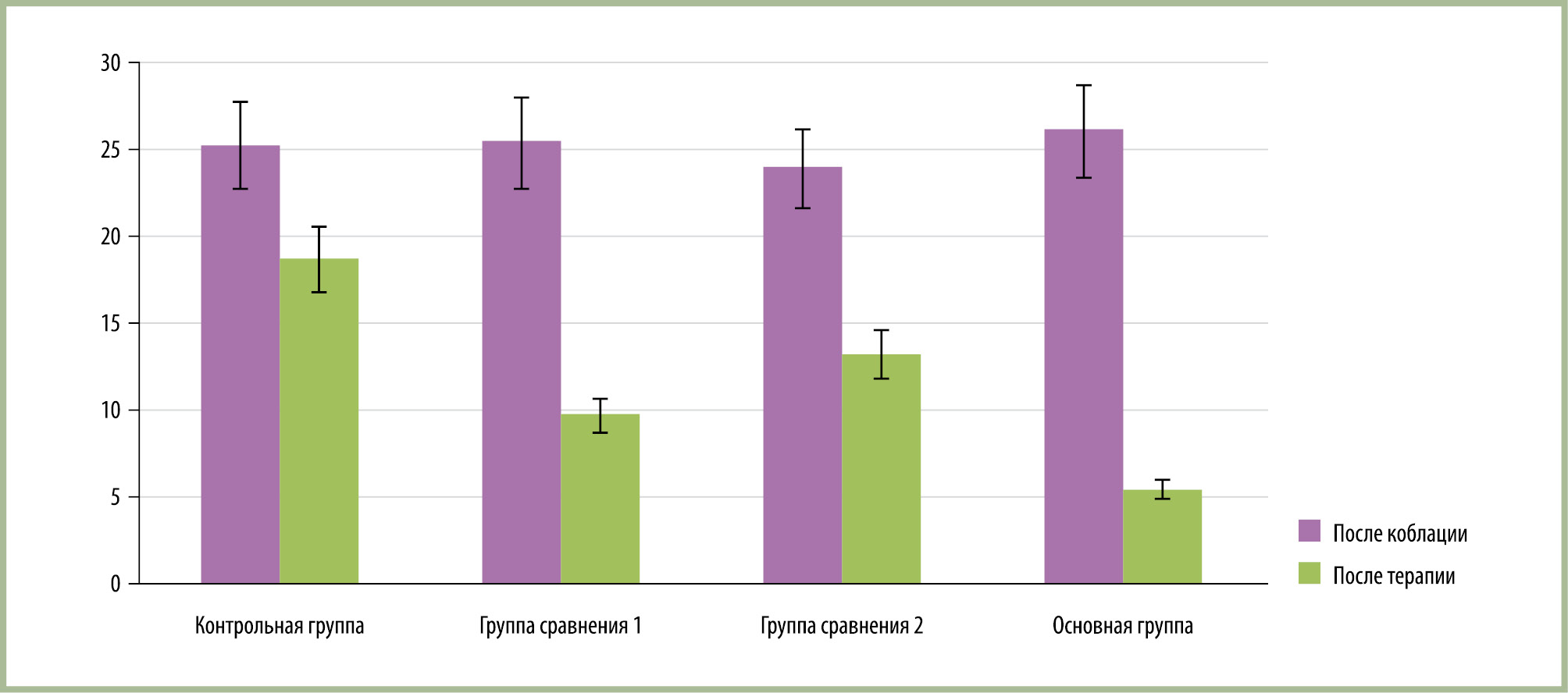
Рис. 1. Динамика интегральной оценки состояния процессов липопероксидации с помощью коэффициента оксидативного стресса у пациентов с вазомоторным ринитом при применении различных схем терапии после проведения холодно-плазменной коблации.
Обращает на себя внимание динамика результатов опросника SNOT-22 у пациентов, получавших ТЭС. Выявленное снижение суммарной оценки по SNOT-22 в баллах составило 77,2%, что превысило оценку изменений у пациентов, получавших НИЛИ. На наш взгляд, в основе выявленного феномена лежит способность электрического тока при его транскраниальном воздействии вызывать активацию опиоидной системы головного мозга, за счет чего происходит выраженный позитивный эффект, охватывающий функциональные домены, ответственные за психологический компонент здоровья. Дополнительным механизмом в реализации терапевтического потенциала ТЭС выступает способность физического фактора повышать активность симпатического отдела вегетативной нервной системы, что приводит к достижению вагосимпатического баланса в регуляции сосудистой сети слизистой оболочки полости носа [41].
Высокоинформативным алгоритмом определения клинической эффективности различных схем терапии является метод корреляционной адаптометрии, предложенный для оценки эффекта группового стресса [42, 43]. Количественным критерием корреляционной адаптометрии выступает вес корреляционного графа, представляющий собой абсолютную сумму всех коэффициентов корреляции в корреляционной матрице. По мнению авторов, снижение ВКГ указывает на возросший уровень функциональных резервов организма, самостоятельно обеспечивающих сохранение гомеостатических констант системы при стрессорных (патологических) воздействиях без вовлечения других факторов регуляции [44]. Результаты корреляционной адаптометрии, представленные на рис. 2 в виде средней адаптационной корреляции, наглядно свидетельствуют о преимуществе комплексного применения лечебных физических факторов в терапии ВР после проведения холодно-плазменной редукции ННР.
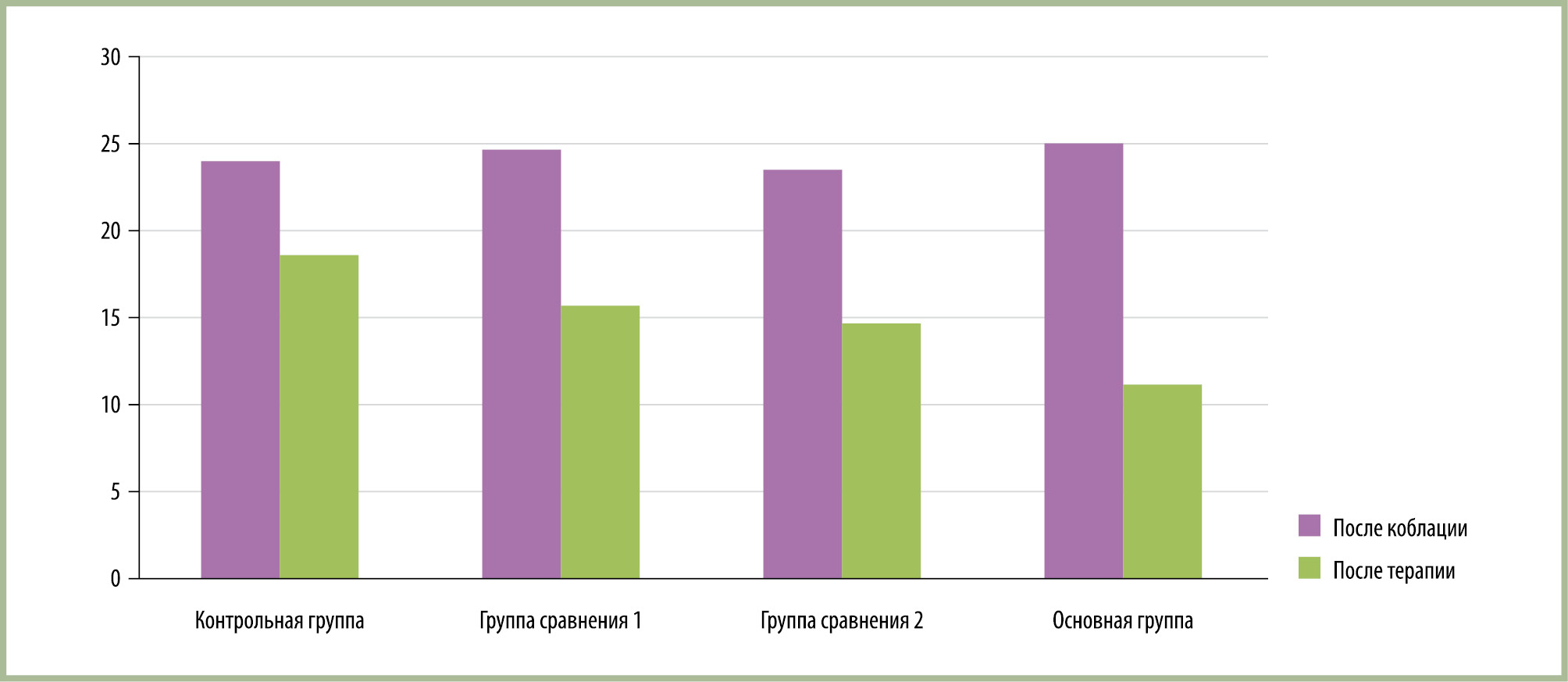
Рис. 2. Изменение средней адаптационной корреляции у пациентов с вазомоторным ринитом при применении различных схем терапии.
Реализация комплексного применения разных видов физиотерапевтического воздействия, как правило, сопровождается аддитивным или даже супрааддитивным взаимодействием физических факторов с развитием эффекта потенцирования. В основе такого типа взаимодействия лежат различия в физической природе воздействующих факторов, точках приложения и механизмах реализации терапевтического потенциала каждого из факторов. В нашем исследовании указанные условия реализованы в полной мере, поскольку в рамках разработанной комплексной технологии использована комбинация лечебных физических факторов, оказывающих местное (НИЛИ) и системотропное действие (ТЭС). Действие этих факторов направлено на купирование основных звеньев патогенеза ВР, а также на усиление регуляторных возможностей организма человека по поддержанию жизнедеятельности и адаптивных свойств его саморегулируемых систем.
Заключение
В целом полученные результаты наглядно продемонстрировали участие паттернов оксидативного стресса в патогенезе вазомоторного ринита. Выявленная тесная корреляционная связь между коэффициентом оксидативного стресса и структурными доменами опросника SNOT-22 подтверждает патогенетическую значимость накопления продуктов перекисного окисления липидов в условиях пониженной активности антиоксидантных ферментов. Дополнительное монофакторное применение низкоинтенсивной лазеротерапии или транскраниальной электростимуляции способствует снижению активности процессов липопероксидации после проведения холодно-плазменной коблации у пациентов с вазомоторным ринитом. Максимальный корригирующий эффект в отношении процессов липопероксидации проявляется при комплексном использовании физических факторов. В основе значительного прироста эффективности лежит феномен потенцирования, реализуемый в условиях комбинированного использования факторов с разными модальностями и механизмами реализации их биологического потенциала. Применение метода корреляционной адаптометрии позволило доказать преимущества разработанной комплексной физиотерапевтической технологии и рассмотреть выраженность ее антиоксидантной активности с позиций усиления функциональных резервов и адаптивных возможностей организма.
Участие авторов:
Концепция и дизайн исследования — Пелишенко Т.Г., Нагорнев С.Н.
Сбор и обработка материала — Белкина С.А.
Статистический анализ данных — Нагорнев С.Н.
Написание текста — Белкина С.А., Пелишенко Т.Г.
Редактирование — Пелишенко Т.Г.
Авторы заявляют об отсутствии конфликта интересов.
- Вазомоторный ринит: патогенез, диагностика и принципы лечения (клинические рекомендации). Под ред А.С. Лопатина. М., 2014. Ссылка активна на 07.08.25. https://vazomotor_14.docx
- Dykewicz MS, Wallace DV, Amrol DJ, Baroody FM, Bernstein JA, Craig TJ, Dinakar C, Ellis AK, Finegold I, Golden DBK, Greenhawt MJ, Hagan JB, Horner CC, Khan DA, Lang DM, Larenas-Linnemann DES, Lieberman JA, Meltzer EO, Oppenheimer JJ, Rank MA, Shaker MS, Shaw JL, Steven GC, Stukus DR, Wang J; Chief Editor(s): Dykewicz MS, Wallace DV; Joint Task Force on Practice Parameters: Dinakar C, Ellis AK, Golden DBK, Greenhawt MJ, Horner CC, Khan DA, Lang DM, Lieberman JA, Oppenheimer JJ, Rank MA, Shaker MS, Stukus DR, Wang J; Workgroup Contributors: Dykewicz MS, Wallace DV, Amrol DJ, Baroody FM, Bernstein JA, Craig TJ, Finegold I, Hagan JB, Larenas-Linnemann DES, Meltzer EO, Shaw JL, Steven GC. Rhinitis 2020: A practice parameter update. The Journal of Allergy and Clinical Immunology. 2020;146(4):721-767. https://doi.org/10.1016/j.jaci.2020.07.007
- Settipane RA. Epidemiology of vasomotor rhinitis. World Allergy Organization Journal. 2009;2(6):115-118. https://doi.org/10.1097/WOX.0b013e3181ac91ae
- Лопатин А.С. Лечение вазомоторного ринита: международные тенденции и российская практика. Медицинский совет. 2012;11:83-87.
- van Rijswijk JB, Blom HM, Fokkens WJ. Idiopathic rhinitis, the ongoing quest. Allergy. 2005;60(12):1471-1481. https://doi.org/10.1111/j.1398-9995.2005.00975.x
- Leader P, Geiger Z. Vasomotor Rhinitis. 2023. In: StatPearls. Treasure Island (FL): StatPearls Publishing; 2025.
- Смирнова О.В., Гончарова Н.С. Характеристика процессов липопероксидации и факторов системы антиоксидантной защиты при хроническом рините. Вестник оториноларингологии. 2024;89(1):16-20.
- Смирнова О.В., Гончарова Н.С. Влияние показателей системы «перекисное окисление липидов-антиоксидантная защита» на качество жизни больных хроническим ринитом разных фенотипов. Бюллетень физиологии и патологии дыхания. 2024;92:77-84.
- Кулякин Е.В., Затолока П.А., Семёнов С.А. Постназальный синдром: этиология, клиника, диагностика, лечение. Медицинский журнал. 2020;1(71):10-18.
- Ciprandi G, Passali GC, Passali D. Vasomotor Rhinitis: an Italian survey in clinical practice. Acta Biomedca. 2022 16;93(6):e2022296. https://doi.org/10.23750/abm.v93i6.13218
- Baroody FM, Gevaert P, Smith PK, Ziaie N, Bernstein JA. Nonallergic Rhinopathy: A Comprehensive Review of Classification, Diagnosis, and Treatment. Journal of Allergy and Clinical Immunology. In Practice. 2024;12(6):1436-1447. https://doi.org/10.1016/j.jaip.2024.03.009
- Desai V, Sampieri G, Namavarian A, Lee JM. Cryoablation for the treatment of chronic rhinitis: a systematic review. Journal of Otolaryngology and Head and Neck Surgery. 2023 29;52(1):37. https://doi.org/10.1186/s40463-023-00645-6
- Царапкин Г.Ю., Кравчук А.П., Огородников Д.С. Современные методы хирургического лечения гипертрофического и вазомоторного ринита. Российская ринология. 2021;29(1):31-36.
- Скороход А.А., Тупикин Д.В. Традиционные и инновационные методы в оториноларингологии. Modern Science. 2020;2-2:238-242.
- Abdullah B, Singh S. Surgical Interventions for Inferior Turbinate Hypertrophy: A Comprehensive Review of Current Techniques and Technologies. International Journal of Environmental Research and Public Health. 2021 26;18(7):3441. https://doi.org/10.3390/ijerph18073441
- Passali D, Loglisci M, Politi L, Passali GC, Kern E. Managing turbinate hypertrophy: coblation vs. radiofrequency treatment. European Archives of Oto-Rhino-Laryngology. 2016;273(6):1449-1453. https://doi.org/10.1007/s00405-015-3759-6
- Svistushkin VM, Starostina SV, Toldanov AV. Possibilities of coblation in otorhinolaryngology: analytical review. European Archives of Oto-Rhino-Laryngology. 2022;279(4):1655-1662. https://doi.org/10.1007/s00405-021-07055-2
- Митрофанов В.В., Шиман А.Г., Максимов А.В., Безрукова Е.В. Физические методы лечения вазомоторного ринита: учебное пособие. Физиотерапевт. 2008;5:29-49.
- Пустовит О.М. Реабилитация ринохирургических пациентов с использованием физиотерапевтических способов воздействия. Современная наука: актуальные проблемы теории и практики. Серия: Естественные и технические науки. 2019;11:184-188.
- Пустовит О.М. Наседкин А.Н., Исаев Э.В., Чурсинова Ю.В., Кузьмин М.В. Фотохромотерапия больных после септопластики и подслизистой вазотомии нижних носовых раковин. Лазерная медицина. 2017;21(2):21-25.
- Поляева М.Ю. Эндоназальный электрофорез в комплексном лечении деформаций перегородки носа и вазомоторного ринита. Российская оториноларингология. 2012;1(56):136-140.
- Волковская А.Н., Жабурина М.В., Борзов Е.В. Эффективность низкоинтенсивной лазеротерапии у ринохирургических пациентов. Главврач. 2022;11:47-50.
- Науменко A.Н., Шустова Т.И., Науменко Н.Н., Коноплев О.И., Шкабарова Е.В. Функциональное состояние ВНС у больных с патологией верхних дыхательных путей в пред- и послеоперационном периодах. Российская оториноларингология. 2008;6(37):91-94.
- Шустова Т.И., Науменко А.Н. Транскраниальное электровоздействие в лечении больных с патологией ЛОР органов. Актуальные вопросы современного естествознания. 2008;6:85-89.
- Орехова Э.М., Кончугова Т.В., Кульчицкая Д.Б., Корчажкина Н.Б., Егорова Л.А., Чуич Н.Г. Современные подходы к применению трансцеребральной магнитотерапии при артериальной гипертензии. Вопросы курортологии, физиотерапии и лечебной физической культуры. 2016;93(3):53-55.
- Котенко К.В., Корчажкина Н.Б., Еремин И.И., Наделяева И.И., Михайлова А.А. База данных научных исследований по применению фото- и лазеротерапии при лечении послеоперационных рубцов. Свидетельство о регистрации базы данных RU 2022622436, 06.10.2022. Заявка №2022622380 от 29.09.2022.
- Шептий О.В., Круглова Л.С., Корчажкина Н.Б., Котенко К.В., Яменсков В.В. Механизмы действия различных лазеров и дифференцированные показания к их применению (Обзор литературы). Вестник новых медицинских технологий. Электронное издание. 2014;1:156.
- Патент на изобретение RU 2587970 C1/27.06.2016. Драган С.П., Богомолов А.В., Разинкин С.М., Корчажкина Н.Б., Ерофеев Г.Г., Ивашин В.А. Способ повышения функциональных резервов организма.
- Корчажкина Н.Б., Ржевский В.С. Влияние широкополосной электромагнитной терапии и низкочастотного переменного электростатического поля на выраженность эндогенной интоксикации у больных с воспалительными заболеваниями челюстно-лицевой области. Вопросы курортологии, физиотерапии и лечебной физической культуры. 2022;99(3-2):107-108.
- Корчажкина Н.Б., Ржевский В.С. Применение методов физиотерапии в раннем реабилитационном периоде после оперативных вмешательств у больных с воспалительными заболеваниями челюстно-лицевой области. Хирургия. Журнал им. Н.И. Пирогова. 2022;2:5-10. https://doi.org/10.17116/hirurgia20220215
- Корчажкина Н.Б., Михайлова А.А., Колгаева Д.И., Ковалев С.А., Ржевский В.С. Обоснование включения импульсного низкочастотного электростатического массажа в комплексные лечебные и реабилитационные программы. Физиотерапия, бальнеология и реабилитация. 2019;18(3):191-194. https://doi.org/10.17816/1681-3456-2019-18-3-191-194
- Корчина Т.Я., Корчин В.И. Взаимосвязи между элементным статусом и показателями окислительного метаболизма у жителей Ханты-Мансийского автономного округа с некачественной водоподготовкой. Здоровье населения и среда обитания. 2022;30(4):14-21. https://doi.org/10.35627/2219-5238/2022-30-4-14-21
- Sies H, Berndt C, Jones DP. Oxidative Stress. Annual Review of Biochemistry. 2017;86:715-748. https://doi.org/10.1146/annurev-biochem-061516-045037
- Расулова М.Т., Ганижонов П.Х., Хомидчонова Ш.Х., Одилов Х.А. Стресс и его влияние на состояние слизистой оболочки пищеварительного тракта: морфологические и функциональные изменения (обзор литературы). Consilium Medicum. 2024;26(5):286-291. https://doi.org/10.26442/20751753.2024.5.202671
- Кулякин Е.В., Криштопова М.А., Затолока П.А., Семенов С.А. Лингвистическая адаптация и подтверждение достоверности применения опросника SNOT-22 рус по оценке качества жизни пациентов с постназальным синдромом при вазомоторном рините. Медицинский журнал. 2021;1(75):132-137.
- Кулякин Е.В. Оценка качества жизни пациентов с постназальным синдромом при вазомоторном рините до и после хирургического лечения. Медицинский журнал. 2022;3(81):88-93.
- Корягин Ф.Н., Пелишенко Т.Г., Нагорнев С.Н. Динамика клинического состояния пациентов с полипозным риносинуситом при проведении комплексной терапии с применением физических факторов и дупилумаба. Физиотерапевт. 2025;21(3):77-89.
- Дугиева М.З., Котенко К.В. Активность процессов липопероксидации у пациенток с длительным послеоперационным болевым синдромом на фоне комбинированного применения низкоинтенсивной инфракрасной лазеротерапии при воздействии на область тимуса и электрофореза пантовегина. Саратовский научно-медицинский журнал. 2013;9(4):831-835.
- Москвин С.В. Основы лазерной терапии. Серия «Эффективная лазерная терапия». Т.1. М. — Тверь: ООО «Издательство «Триада»; 2016.
- Балаева М.Р., Нагорнев С.Н., Ремизова А.А. Динамика маркеров оксидативного стресса и содержания цитокинов у пациентов с периимплантитами при комплексном применении мезодиэнцефальной модуляции и озонотерапии. Физиотерапия, бальнеология и реабилитация. 2023;22(4):261-272. https://doi.org/10.17816/rjpbr627063
- Цукарзи Э.Э. Нейромодулирующая терапия при посттравматическом стрессовом расстройстве: применение транскраниальной магнитной стимуляции и транскраниальной электростимуляции. Российский психиатрический журнал. 2025;1:25-30.
- Горбань А.Н., Смирнова Е.В. Эффект группового стресса и корреляционная адаптометрия. 2018. Ссылка активна на 05.08.25. https://adaptometry.narod.ru/Index.htm
- Смирнова Е.В. Математическое моделирование адаптации к экстремальным условиям, эффект группового стресса и корреляционная адаптометрия: дис. … д-ра физ.-мат. наук. Красноярск, 2000.
- Метаорганизм. Стресс и адаптация. Монография. Под ред. А.Л. Бурмистровой. Челябинск: Издательство Челябинского государственного университета; 2019.



Рекомендуем статьи по данной теме:
Риноманометрия в оценке вегетативной регуляции организма человека.Российская ринология. 2026;34(2):13-24
Расстройства сна и окислительный стресс.Журнал неврологии и психиатрии им. С.С. Корсакова. Спецвыпуски. 2026;126(5-2):68-73
Плацента-ассоциированные осложнения как факторы риска индукции преждевременных родов: перинатальные аспекты.Российский вестник акушера-гинеколога. 2026;26(1):42-50
Транскраниальная электротерапия в лечении психических заболеваний.Вопросы курортологии, физиотерапии и лечебной физической культуры. 2025;102(6):32-39
Клинико-патогенетическое обоснование комплексного применения лечебных физических факторов у пациентов с вазомоторным ринитом при проведении холодно-плазменной вазотомии нижних носовых раковин.Восстановительные биотехнологии, профилактическая, цифровая и предиктивная медицина. 2025;2(4):5-13
Роль провоспалительных цитокинов TNF-α, IL-1, IL-8 и противовоспалительных цитокинов IL-4 и IL-10 при хроническом вазомоторном рините.Вестник оториноларингологии. 2025;90(6):55-59
Показатели оксидативного стресса в материнской и пуповинной крови беременных при гестационном и прегестационном сахарном диабете.Проблемы репродукции. 2025;31(6):85-93
Биохимические маркеры стресса у медицинских работников с синдромом профессионального выгорания и их динамика при применении физиотерапевтических факторов.Вопросы курортологии, физиотерапии и лечебной физической культуры. 2025;102(5-2):17-27
Старение мозга: молекулярные мишени геропротекции и стратегии профилактики.Журнал неврологии и психиатрии им. С.С. Корсакова. 2025;125(11):132-139
К вопросу о взаимосвязи паттернов оксидативного стресса и провоспалительных цитокинов у пациентов с полипозным риносинуситом в условиях курсового применения лечебных физических факторов.Восстановительные биотехнологии, профилактическая, цифровая и предиктивная медицина. 2025;2(2):42-49