Эффективность неоадъювантной химиотерапии при местно-распространенном раке ободочной кишки
Журнал: Онкология. Журнал им. П.А. Герцена. 2025;14(5):19-25.
DOI: 10.17116/onkolog20251405119
Прочитано: 1440 раз
Резюме
Общепринятая стратегия лечения местно-распространенного рака ободочной кишки — радикальное хирургическое вмешательство в объеме резекции участка кишки с опухолью, лимфаденэктомией и последующей адъювантной химиотерапией. Вопрос увеличения метаболической активности микрометастазов и опухолевых отсевов после удаления первичной опухоли остается актуальным.
ЦЕЛЬ ИССЛЕДОВАНИЯ
Изучить эффективность и безопасность неоадъювантной химиотерапии (НАХТ) у больных с местно-распространенным резектабельным раком ободочной кишки.
МАТЕРИАЛ И МЕТОДЫ
На базе ММНКЦ им С.П. Боткина с 1 января 2022 г. по 1 января 2024 г. были ретроспективно проанализированы истории болезни 90 пациентов с аденокарциномой ободочной кишки со стадией cT3 и более и/или поражением регионарных лимфатических узлов (cN+) независимо от значения T, с отсутствием MSI (микросателлитной нестабильности), без отдаленного метастазирования и с проведенной химиотерапией в режимах XELOX, FOLFOX и FOLFOXIRI.
РЕЗУЛЬТАТЫ
Полный курс НАХТ прошли 83 (92,2%) пациента без развития прогрессирования и/или осложнений III–IV степени. У 3 (3,3%) пациентов отмечено прогрессирование. Хирургическое лечение было проведено всем, R0-резекции удалось достичь в 100% случаев. Адъювантную химиотерапию не получили 29 (32,2%) человек. Токсичность при НАХТ наблюдалась в 34 (37,7%) случаях. Частота осложнений III–IV степени составила 5 (5,1%). Полный лечебный патоморфоз наблюдался у 3 (3,3%) пациентов, частичный опухолевый ответ — у 39 (43,3%). Медиана наблюдения составила 23,1 мес, частота прогрессирования — 10 (11,1%) мес. Местный рецидив отмечен у 3 (3%) пациентов, отдаленные метастазы — у 7 (8%). Показатели 2-летней общей и безрецидивной выживаемости составили 94 и 92,8% соответственно.
ЗАКЛЮЧЕНИЕ
Проведение НАХТ является безопасным и эффективным методом для пациентов с раком ободочной кишки: переносимость удовлетворительна, риск прогрессирования минимален, а частота развития послеоперационных осложнений сопоставима с результатами мировой литературы. Необходимо проведение проспективных сравнительных исследований для дальнейшего изучения этой темы.
Ключевые слова
- неоадъювантная химиотерапия
- послеоперационные осложнения
- рак ободочной кишки
Дата поступления: 10.03.2025
Дата принятия в печать: 15.05.2025
Дата публикации: 29.10.2025
Рак ободочной кишки является 4-й наиболее распространенной локализацией злокачественных новообразований во всем мире [1]. Основную проблему составляют пациенты с местно-распространенным раком толстой кишки (T4 или T3, инвазия 5 мм и более за пределы собственной мышечной оболочки), прогноз которых по-прежнему остается неудовлетворительным — 5-летняя выживаемость не превышает 88% [2].
Актуальная стратегия лечения местно-распространенного рака ободочной кишки — радикальное хирургическое вмешательство в объеме резекции участка кишки с опухолью (R0-резекция) с лимфаденэктомией и последующее проведение адъювантной химиотерапии. Что касается стратегии лечения других солидных злокачественных новообразований, неоадъювантная химиотерапия (НАХТ) является стандартом лечения таких онкологических заболеваний, как рак прямой кишки и молочной железы [3—5]. В большинстве случаев в отличие от опухолей прямой кишки опухоли ободочной кишки являются исходно резектабельными. Это обеспечивает преимущество предоперационной химиотерапии в связи с потенциальным воздействием на микрометастазы [6], что позволяет добиться более высокой частоты радикальных R0-резекций и улучшить показатели выживаемости без прогрессирования (ВБП) и общей выживаемости (ОВ). Однако перед проведением адъювантной химиотерапии пациенту требуется время для восстановления после операции, что во многих случаях задерживает ее начало. Не следует забывать и об увеличении метаболической активности микрометастазов и опухолевых отсевов после хирургического удаления первичной опухоли, что потенциально может приводить к стимуляции факторов роста как одной из важнейших причин риска местного и отдаленного рецидива в послеоперационном периоде [7].
На сегодняшний день относительно мало исследований, иллюстрирующих эффективность НАХТ в контексте отдаленных результатов выживаемости у пациентов с местно-распространенными формами рака ободочной кишки. По данным исследования FOxTROT [8], проведение НАХТ у пациентов с операбельным раком толстой кишки стадии T4 или T3 снижает стадию опухолевого процесса и является безопасным, однако не продемонстрировало убедительное влияние на ОВ. Продолжающееся французское клиническое исследование PRODIGE 22-ECKINOXE и китайское исследование COLARC подтвердили, что проведение НАХТ безопасно, имеет приемлемую переносимость, но не связано с увеличением частоты патоморфологического опухолевого ответа [9—11]. В свою очередь, недавно опубликованные результаты многофакторного анализа базы данных из США [12] показали влияние на ОВ только пациентов с T4-распространенностью опухолевого процесса. Национальная комплексная онкологическая сеть (NCCN) рассматривает проведение НАХТ как опцию для пациентов с исходно неоперабельным неметастатическим раком ободочной кишки T4 [13].
Применение НАХТ в лечении местно-распространенного рака ободочной кишки ограничено из-за риска прогрессирования заболевания во время проведения первого этапа, что может привести к нерадикальному хирургическому вмешательству и вообще отмене последнего. Кроме того, есть риск «перелечивания» пациентов, связанный с неточностями в определении клинической стадии по результатам компьютерной томографии (КТ). Благодаря последним достижениям в области КТ многие исследования продемонстрировали высокие показатели чувствительности и специфичности КТ в качестве основного «инструмента» стадирования пациентов с раком ободочной кишки — 78 и 67% соответственно (по сравнению с патоморфологической стадией) [14, 15], показатели 3-летней безрецидивной выживаемости — точность 75%, по данным КТ, против 43% по результатам гистологии [16]. Кроме того, результаты КТ позволяют достаточно точно определить рак ободочной кишки высокого риска (T3/4) с минимальным завышением стадии опухолей T1/T2 — 95 и 50% соответственно [17].
Цель исследования — изучить эффективность и безопасность НАХТ у больных резектабельным местно-распространенным раком ободочной кишки.
Материал и методы
Был проведен ретроспективный анализ историй болезни 90 пациентов, прошедших специфическое противоопухолевое лечение в период с 1 января 2022 г. по 1 января 2024 г. (44 мужчины и 46 женщин), средний возраст составлял 63 года (39—85 лет). У всех пациентов были установлены гистологически подтвержденная аденокарцинома ободочной кишки, имеющая клиническую стадию cT3 и выше и/или поражение регионарных лимфатических узлов (cN+) независимо от критерия T, отсутствие MSI (микросателлитной нестабильности) без отдаленного метастазирования, по данным КТ грудной клетки, брюшной полости и малого таза с внутривенным контрастированием. Чаще всего опухоль локализовалась в сигмовидной кишке (50%), преобладали местно-распространенные образования с прорастанием в соседние органы (мочевой пузырь, матка, яичники, желудок, двенадцатиперстная кишка, подвздошно-поясничная мышца), поражение мезоколических лимфатических узлов. У большей части пациентов исследуемой группы установлены распространенные стадии IIIC (43,3%). Коморбидные пациенты, имеющие 2 хронических заболевания и более, составили 26,7%. Всем пациентам была проведена НАХТ в режимах XELOX, FOLFOX и FOLFOXIRI (в случае высокого риска рецидива после операции) с последующей инструментальной оценкой опухолевого ответа и проведением хирургического вмешательства (табл. 1).
Таблица 1. Общая характеристика исследуемой группы
Характеристика | Количество больных, n=90 |
Пол, абс. (%): | |
женский | 46 (51,1) |
мужской | 44 (48,9) |
Возраст, лет | 63 (39—85) |
Локализация опухоли, абс.(%): | |
сигмовидная кишка | 45 (50,0) |
нисходящая кишка | 10 (11,1) |
селезеночный изгиб | 10 (11,1) |
поперечная ободочная кишка | 3 (3,3) |
печеночный изгиб | 7 (7,8) |
восходящая ободочная кишка | 8 (8,9) |
слепая кишка | 7 (7,8) |
Ct, абс. (%): | |
3 | 33 (36,7) |
4a | 10 (11,1) |
4b | 20 (22,2) |
Cn, абс. (%): | |
0 | 29 (32,2) |
1 | 44 (48,9) |
2 | 17 (18,9) |
Стадия, абс. (%): | |
IIA | 13 (14,4) |
IIB | 7 (7,8) |
IIC | 8 (8,9) |
IIIA | 1 (1,1) |
IIIB | 22 (24,5) |
IIIC | 39 (43,3) |
Наличие сопутствующих заболеваний, абс. (%): | |
нет | 30 (33,3) |
1 | 35 (38,9) |
2 | 11 (12,2) |
3 и более | 14 (15,6) |
ECOG статус, абс. (%): | |
0 | 72 (80,1) |
1 | 17 (18,4) |
2 | 1 (1,5) |
В данное ретроспективное наблюдательное исследование не входили пациенты с подтвержденными отдаленными метастазами, первично-множественным синхронным или метахронным раком, беременные, а также лица с декомпенсированными сопутствующими заболеваниями (ECOG 3—4).
В нашем исследовании мы оценивали такие параметры, как степень морфологического ответа по классификации Tumor Regression Grade (TRG), объем хирургического вмешательства, а также частоту R0- резекций, послеоперационных осложнений (по классификации Clavien–Dindo), осложнений НАХТ (NCI-CTCAE v.5.0), проведения АХТ в полном объеме, частоту развития местного рецидива, отдаленных метастазов, а также общую медиану наблюдения. Для расчета отдаленных результатов лечения использовали программу SPSS (IBM SPSS Statistics for Macintosh, version 23.0, IBM Corp, Armonk, NY).
Показатели ОВ считали со дня проведения операции до даты последнего посещения или смерти. Оценку выбывшим из-под наблюдения пациентам давали по дате их последнего визита. Время до прогрессирования заболевания определяли от даты хирургического вмешательства до дня диагностики прогрессирования/смерти больного либо последней явки пациента. Выживаемость анализировали в соответствии с методом Каплана–Мейера.
Результаты
Всем пациентам на первом этапе была проведена НАХТ в различных режимах (табл. 2). Стандартно пациентам назначали 4 курса XELOX/FOLFOXIRI и 6 курсов FOLFOX до хирургического вмешательства. Количество проведенных курсов значительно различалось в зависимости от наличия осложнений. В связи с развитием осложнений III степени и выше 5 (5,7%) пациентам проведено менее 4 и 6 курсов НАХТ, всем выполнено хирургическое вмешательство после соответствующей подготовки. У 3 (3,3%) пациентов на фоне НАХТ отмечено прогрессирование заболевания в виде увеличения размеров первичной опухоли, в связи с чем НАХТ была отменена. Полный курс НАХТ прошли 83 (92,2%) пациента без развития прогрессирования и/или осложнений III–IV степени.
Таблица 2. Характеристика проведенного лечения, абс. (%)
Характеристика | Количество больных, n=90 |
Неоадъювантная химиотерапия: | |
XELOX | 40 (44,4) |
FOLFOX | 45 (50) |
FOLFOXIRI | 5 (5,6) |
Количество курсов: | |
XELOX | 4 (1—12) |
FOLFOX | 6 (1—12) |
FOLFOXIRI | 4 (1—10) |
Хирургическое вмешательство: | |
открытый доступ | 47 (52,2) |
лапароскопический доступ | 42 (46,7) |
роботический доступ | 1 (1,1) |
Мультивисцеральная резекция | 25 (27,8) |
Послеоперационные осложнения (Clavien–Dindo): | |
Grade I | 3 (2,9) |
Grade II | 5 (5,9) |
Grade IIIa | 4 (4,4) |
Grade IIIb | 3 (3,7) |
Grade V | 1 (0,7) |
Адъювантная химиотерапия: | 61 (67,8) |
XELOX | 23 (34,3) |
FOLFOX | 30 (49,2) |
капецитабин | 6 (9,8) |
FOLFOXIRI | 2 (3,3) |
Количество курсов | 4 (4—12) |
Хирургическое вмешательство было проведено всем больным. Доступ (открытый, лапароскопический или роботический) и объем хирургического вмешательства определяли на междисциплинарном консилиуме исходя из локализации первичной опухоли. Большинство хирургических вмешательств было выполнено лапароскопическим доступом (46,7%), несмотря на наличие местно-распространенных образований. Мультивисцеральные резекции произведены в 27,8% случаев. R0-резекций удалось достичь в 100% случаев. Среди послеоперационных осложнений был констатирован один смертельный исход на фоне несостоятельности анастомоза на 10-е сутки послеоперационного периода.
Послеоперационную химиотерапию начинали через 8 нед после хирургического вмешательства: в режиме XELOX выполнено дополнительно 4 курса и FOLFOX — 6 курсов после результатов гистологического исследования. Адъювантная химиотерапия не проводилась 29 (32,2%) пациентам, у 20 из них отсутствовали показания к проведению химиотерапии, у 6 развилась тяжелая токсичность во время НАХТ, а у 3 наблюдался полный морфологический регресс опухоли. Токсичность НАХТ установлена в 34 (37,7%) случаях (табл. 3). Частота осложнений III–IV степени составила 5 (5,1%).
Таблица 3. Осложнения неоадъювантной химиотерапии, n (%)
Токсичность | Степень | Всего | |
I–II | III–IV | ||
Максимально зарегистрированная токсичность | 29 (32,6) | 5 (5,1) | 34 (37,7) |
Тошнота | 22 (24,2) | 0 | 22 (24,2) |
Диарея | 10 (11) | 1 (0,7) | 11 (11,7) |
Рвота | 6 (6,6) | 0 | 6 (6,6) |
Лейкопения | 4 (4,4) | 0 | 4 (4,4) |
Нейтропения | 4 (4,4) | 1 (0,7) | 5 (5,1) |
Тромбоцитопения | 6 (6,6) | 1 (0,7) | 7 (7,3) |
Периферическая нейропатия | 8 (8,8) | 1 (0,7) | 9 (9,5) |
Кардиотоксичность | 1 (0,7) | 0 | 1(0,7) |
Полный лечебный патоморфоз наблюдался у 3 (3,3%) пациентов из 90, частичный опухолевый ответ (TRG 3) — почти у половины — 39 (43,3%) пациентов (табл. 4). При сравнении клинической и патоморфологической стадий (табл. 5) обращает на себя внимание одинаковое количество местно-распространенных образований (T4a, T4b), при этом значительно (почти в 2 раза) снижается стадия N после гистологического исследования.
Таблица 4. Результаты гистологического исследования, абс. (%)
Характеристика | Количество больных, n=90 |
pT: | |
T1 | 5 (5,5) |
T2 | 9 (10,0) |
T3 | 43 (47,8) |
T4a | 10 (11,1) |
T4b | 23 (25,6) |
pN: | 5 (5,5) |
N0 | 54 (60,0) |
N1 | 28 (31,1) |
N2 | 8 (8,9) |
Количество лимфатических узлов | 19 (12—64) |
Tumor Regression Grade: | |
TRG 1(полная регрессия) | 3 (3,3) |
TRG 2 | 23 (25,6) |
TRG 3 | 39 (43,4) |
TRG 4 | 22 (24,4) |
TRG 5 | 3 (3,3) |
R0-резекции | 90 (100) |
Таблица 5. Соотношение клинического и патоморфологического стадирования, абс. (%)
Критерий | Клиническая стадия | Патоморфологическая стадия |
T: | ||
T1 | — | 5 (5,5) |
T2 | — | 9 (10,0) |
T3 | 33 (36,7) | 43 (47,8) |
T4a | 10 (11,1) | 10 (11,1) |
T4b | 20 (22,2) | 23 (25,6) |
N: | ||
N0 | 29 (32,2) | 54 (60,0) |
N1 | 44 (48,9) | 28 (31,1) |
N2 | 17 (18,9) | 8 (8,9) |
Медиана наблюдения всех пациентов составила 23,1 мес, частота прогрессирования — 10 (11,1%) пациентов. Местный рецидив отмечен у 3 (3%) пациентов, отдаленные метастазы — у 7 (8%) больных (табл. 6). Показатели 2-летней ОВ и ВБП составили 94 и 92,8% соответственно (рис. 1, 2).
Таблица 6. Отдаленные результаты, абс. (%)
Средняя медиана наблюдения, мес | 23,1 (3—39) |
Летальный исход | 2 (2) |
Рецидив | 10 (11) |
Местный рецидив | 3 (3) |
Отдаленный рецидив | 7 (8) |
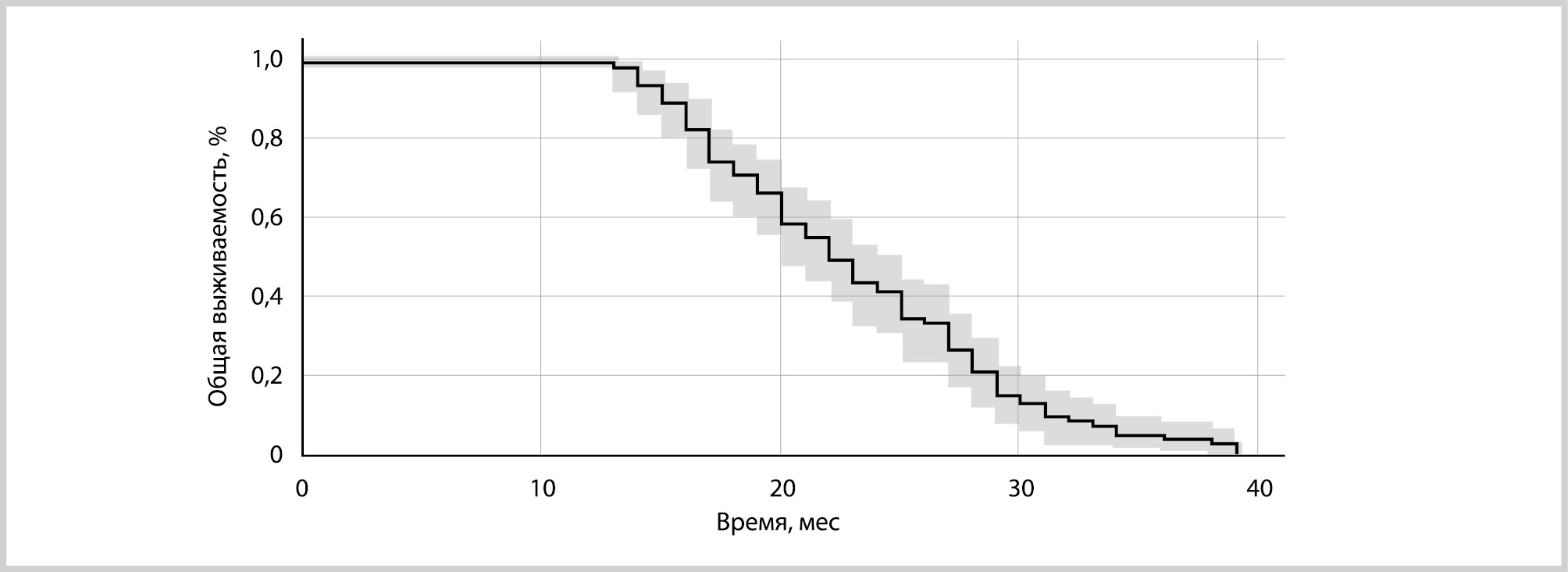
Рис. 1. Двухлетняя общая выживаемость.
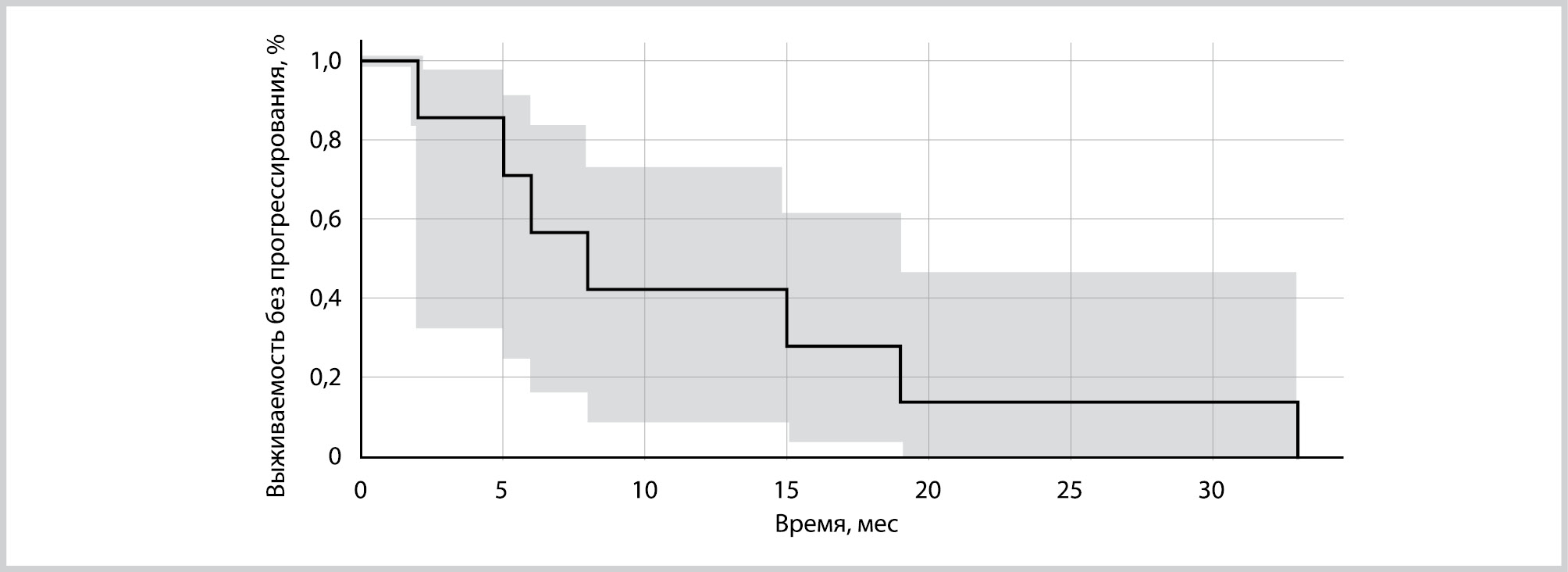
Рис. 2. Двухлетняя выживаемость без прогрессирования.
Обсуждение
Неоадъювантная химиотерапия в лечении местно-распространенных форм рака ободочной кишки все чаще применяется в клинической практике, однако эффективность такого подхода остается спорной [6, 9]. К возможным недостаткам НАХТ у больных раком ободочной кишки относят риск прогрессирования заболевания, развития осложнений (кровотечения, кишечная непроходимость) и снижения эффективности последующего хирургического вмешательства [18].
Переносимость проведенного лечения, а также частота развития побочных реакций являются важными параметрами при его оценке. Наиболее частыми побочными эффектами были тошнота (25%), диарея (11,7%), периферическая нейропатия (9,5%), тромбоцитопения (7,3%). Кардиотоксичность III степени развилась у одного больного, в связи с чем НАХТ была отменена. По данным исследования W. Zeng и соавт. [19], токсичность III или IV степени наблюдалась только у 10% пациентов в группе НАХТ среди 42 пациентов.
Рандомизированное исследование FOxTROT продемонстрировало снижение частоты развития несостоятельности анастомозов, внутрибрюшных абсцессов (4,7% против 7,4%; p=0,07), а также частоты повторных операций почти в 2 раза в группе НАХТ (4,3% против 7,1%; p=0,05) [9]. Рандомизированное исследование PRODIGE 22 — ECKINOXE II фазы также не выявило статистически значимых различий в развитии послеоперационных осложнений в двух группах [10,12]. Радикальное хирургическое вмешательство R0 было выполнено всем пациентам, из которых мультивисцеральные резекции составили 27,8%, несмотря на проведение НАХТ. Послеоперационные осложнения наблюдались у 16 (17,8%) пациентов, из которых летальный исход отмечен у 1 на фоне несостоятельности межкишечного анастомоза.
Другие опасения, высказанные по поводу внедрения НАХТ в клиническую практику, были связаны с риском развития осложнений со стороны опухоли у определенной подгруппы пациентов. Несмотря на то что в исследование FOxTROT включались пациенты с бессимптомными первичными опухолями, в процессе неоадъювантного лечения у 4,3 % больных развилась клиника кишечной непроходимости [9]. При анализе историй болезни 90 пациентов стоит отметить, что развитие осложнений (кровотечение, кишечная непроходимость) со стороны опухоли не наблюдалось. Это связано в первую очередь с тем, что около 40% пациентов на момент постановки диагноза имели картину острой обтурационной кишечной непроходимости, которым на первом этапе было выполнено хирургическое вмешательство в объеме эндоскопической установки стента или выведение стомы с целью разрешения кишечной непроходимости в качестве концепции bridge-to-surgery.
Основным параметром при оценке эффективности проведения НАХТ является патоморфологический опухолевый ответ. В исследовании FOxTROT частота полных патоморфологических ответов после 3 курсов по схеме FOLFOX составила 3,7%, отсутствие патоморфоза отмечено у 37,6% пациентов [9]. В нашем исследовании среди 90 пациентов наиболее часто наблюдался частичный регресс опухоли — 43,4%, полный ответ и его отсутствие встречались в 3,4% случаев каждый. Результаты других недавно опубликованных исследований [9—12, 18—20] демонстрируют схожие показатели, в частности, полный патоморфологический ответ в 3—4% случаев. Такое расхождение может быть связано с различными фенотипами опухоли, особенно касающимися разных локализаций (правая и левая половина). Также в данном исследовании показано, что опухолевый ответ был значимо ниже в группе пациентов с микросателлитной нестабильностью (7% (8/115) против 23% (128/553); p<0,001). Эти наблюдения демонстрируют необходимость проведения дальнейшего изучения опухолевых фенотипов, а также тщательный подбор пациентов для выполнения периоперационной химиотерапии.
Согласно полученным данным, показатели 2-летней общей выживаемости и выживаемости без прогрессирования при проведении НАХТ у пациентов с местно-распространенным раком ободочной кишки составили 94,0 и 92,8% соответственно. В свою очередь, A. Grothey и соавт. [21], анализируя результаты 6 независимых исследований при проведении стандартной стратегии лечения пациентов с местно-распространенным раком ободочной кишки (адъювантная терапия и последующая операция), показывают результаты 3-летней безрецидивой выживаемости в 75,5% случаев (при 6-месячном курсе химиотерапии).
Применение НАХТ может улучшить ОВ пациентов с pT4 за счет снижения размеров первичной опухоли, а также уменьшения микрометастазов. По результатам проведенного в Китае проспективного исследования [22], наблюдалось достоверное увеличение показателей ОВ исключительно у пациентов с pT4. Исследование FOXTROT [20], в котором в группе НАХТ было значительно больше пациентов с pT3, не продемонстрировало достоверных различий в безрецидивной выживаемости, что может быть связано именно с низкой стадией T, а также предоперационной гипердиагностикой. При нашем анализе среди 90 пациентов у 3 отметили увеличение размеров первичной опухоли на фоне НАХТ, что может быть связано как с изначально неблагоприятными факторами (локализация, наличие кишечной непроходимости, выраженное поражение лимфатических узлов), так и с неточностью предоперационного стадирования.
Применение НАХТ в лечении местно-распространенных форм рака ободочной кишки имеет неоспоримые преимущества: ранняя элиминация микрометастазов, уменьшение размеров первичной опухоли, возможность выполнения радикальной резекции, восстановления и подготовки пациентов к хирургическому вмешательству, оценка опухолевого ответа на лекарственную терапию, увеличение толерантности к проведению адъювантной химиотерапии, потенциальное улучшение отдаленных результатов.
Заключение
Таким образом, впервые показаны краткосрочные и отдаленные результаты применения НАХТ в лечении рака ободочной кишки в российской популяции. Данная работа демонстрирует безопасность применения НАХТ при раке ободочной кишки: переносимость лекарственных препаратов удовлетворительная, риск прогрессирования во время проведения терапии минимальный, частота развития послеоперационных осложнений сопоставима с результатами мировой литературы. Необходимо проведение проспективных сравнительных исследований для дальнейшего изучения этой темы.
Участие авторов:
Концепция и дизайн исследования — Багателия З.А., Греков Д.Н., Титов К.С., Лебедев С.С., Кулушев В.М.
Сбор и обработка материала — Кулушев В.М., Титов К.С., Прокофьева Е.С., Зайцев Р.Д.
Написание текста — Кулушев В.М., Миненкова А.Г., Шаренкова А.С.
Редактирование — Миненкова А.Г., Шаренкова А.С.
Авторы заявляют об отсутствии конфликта интересов.
- Bray F, Ferlay J, Soerjomataram I, Siegel RL, Torre LA, Jemal A. Global cancer statistics 2018: GLOBOCAN estimates of incidence and mortality worldwide for 36 cancers in 185 countries. CA: A Cancer Journal for Clinicians. 2018;68(3): 394-424. https://doi.org/10.3322/caac.21492
- Lombardi L, Morelli F, Cinieri S. Adjuvant colon cancer chemotherapy: Where we are and where we’ll go. Cancer Treatment Reviews. 2010;36(1): 34-41. https://doi.org/10.1016/s0305-7372(10)70018-9
- Cunningham D, Allum WH, Stenning SP, Thompson JN. Perioperative chemotherapy versus surgery alone for resectable gastroesophageal cancer. New England Journal of Medicine. 2006;355(7):11-20. https://doi.org/10.1056/nejmoa055531
- Sauer R, Becker H, Hohenberger W, Rödel C, Wittekind C, Fietkau R. Preoperative versus postoperative chemoradiotherapy for rectal cancer. New England Journal of Medicine. 2004;351(4):1731-1740. https://doi.org/10.1056/nejmoa040694
- Graham PJ, Brar MS, Foster T, McCall M, Bouchard-Fortier A, Temple W, Quan ML. Neoadjuvant Chemotherapy for Breast Cancer, Is Practice Changing? A Population-Based Review of Current Surgical Trends. Annals of Surgical Oncology. 2015; 22(5):3376-3382. https://doi.org/10.1245/s10434-015-4714-x
- Arredondo J, Pastor C, Baixauli J, Rodríguez J. Preliminary outcome of a treatment strategy based on perioperative chemotherapy and surgery in patients with locally advanced colon cancer. Colorectal Disease. 2013;15(5):552-557. https://doi.org/10.1111/codi.12119
- Scheer MG, Stollman TH, Vogel WV. Increased metabolic activity of indolent liver metastases after resection of a primary colorectal tumor. The Journal of Nuclear Medicine. 2008;49(9):887-891. https://doi.org/10.2967/jnumed.107.048371
- Group F.O.C. Feasibility of preoperative chemotherapy for locally advanced, operable colon cancer: The pilot phase of a randomised controlled trial. The Lancet Oncology. 2012;13(1):1152-1160. https://doi.org/10.1016/s1470-2045(12)70348-0
- Karoui M, Rullier A, Luciani A, Bonnetain F, Auriault ML, Sarran A. Neoadjuvant FOLFOX 4 versus FOLFOX 4 with Cetuximab versus immediate surgery for high-risk stage II and III colon cancers: A multicentre randomised controlled phase II trial–the PRODIGE 22–ECKINOXE trial. BioMed Central Cancer. 2015;15(2):511. https://doi.org/10.1186/s12885-015-1507-3
- Fangqi Liu, Li Yang, Yuchen Wu, Cong Li. CapOX as neoadjuvant chemotherapy for locally advanced operable colon cancer patients: A prospective single-arm phase II trial. Chinese Journal of Cancer Ressearch. 2016;28(5):589-597. https://doi.org/10.21147/j.issn.1000-9604.2016.06.05
- Karoui M, Rullier A, Piessen G, Legoux JL, Barbier E. Perioperative FOLFOX 4 Versus FOLFOX 4 Plus Cetuximab Versus Immediate Surgery for High-Risk Stage II and III Colon Cancers: A Phase II Multicenter Randomized Controlled Trial (PRODIGE 22). Annals of Surgery. 2020;271(6):637-645. https://doi.org/10.1097/sla.0000000000003454
- Pena P, Cui A, AlMasad Q. Considerations in Neoadjuvant Therapy Implementation in T3 and T4 Colon Cancer. An American Society of Clinical Oncology Journal. 2025;2(1):54-58. https://doi.org/10.1200/OA-24-00071
- Al B Benson, Alan P Venook, Mohamed Adam, George Chang, Yi-Jen Chen, Kristen K Ciombor. Colon Cancer, Version 3.2024, NCCN Clinical Practice guidelines in oncology. Journal of the National Comprehensive Cancer Network. 2024;22(2D):1540-1405. https://doi.org/10.6004/jnccn.2024.0029
- Dighe S, Blake H, Koh M, Swift I, Arnaout A, Temple L, Barbachano Y, Brown G. Accuracy of multidetector computed tomography in identifying poor prognostic factors in colonic cancer. British Journal of Surgery. 2010;97(6):1407-1415. https://doi.org/10.1002/bjs.7096
- Dighe S, Purkayastha S, Swift I, Tekkis P. Diagnostic precision of CT in local staging of colon cancers: A meta-analysis. Clinical Radiology. 2010;65(6):708-719. https://doi.org/10.1016/j.crad.2010.01.024
- Smith NJ, Bees N, Barbachano Y, Norman AR, Swift RI, Brown G. Preoperative computed tomography staging of nonmetastatic colon cancer predicts outcome: Implications for clinical trials. British Journal of Cancer. 2007;6(4):1030-1036. https://doi.org/10.1038/sj.bjc.6603646
- Dighe S, Swift I, Magill L, Handley K, Gray R, Quirke P. Accuracy of radiological staging in identifying high-risk colon cancer patients suitable for neoadjuvant chemotherapy: A multicentre experience. Colorectal Disease. 2012;14(5):438-444. https://doi.org/10.1111/j.1463-1318.2011.02638.x
- Amy Body, Hans Prenen, Sarah Latham, Marissa Lam, Samuel Tipping-Smith, Ajay Raghunath, Eva Segelov. The role of neoadjuvant chemotherapy in locally advanced colon cancer. Cancer Management and Research. 2021;13(3):2567-79. https://doi.org/10.2147/cmar.s262870
- Zeng W, Liu Y, Wang C, Yang C, Lin S, Li W. Efficacy and Safety of Neoadjuvant Chemotherapy Combined with Adjuvant Chemotherapy for Locally Advanced Colon Cancer: A Propensity Score-Matching Analysis. Medicina (Kaunas, Lithuania). 2022;58(11):1505. https://doi.org/10.3390/medicina58111505
- Glasbey J, Seligmann J, Morton DG, FOxTROT Collaborating Group. Risk of bowel obstruction in patients undergoing neoadjuvant chemotherapy for high-risk colon cancer: A nested case- control matched analysis of an international, multi-centre, randomized controlled trial (FOxTROT). Annals of Oncology. 2021;32(5):530-582. https://doi.org/10.1016/j.annonc.2021.08.911
- Grothey A, Sobrero AF, Shields AF, Yoshino T, Paul J. Duration of Adjuvant Chemotherapy for Stage III Colon Cancer. New England Journal of Medicine. 2018;378(13):1177-1188. https://doi.org/10.1056/NEJMoa1713709
- Haitao Zhou, Yan Song, Jun Jiang, Haitao Niu, Hong Zhao. A pilot phase II study of neoadjuvant triplet chemotherapy regimen in patients with locally advanced resectable colon cancer. Chinese Journal of Cancer Ressearch. 2016;28(6):598-605. https://doi.org/10.21147/j.issn.1000-9604.2016.06.06




Рекомендуем статьи по данной теме:
Результаты хирургического лечения больных раком правой половины ободочной кишки с применением интракорпоральных анастомозов в период пандемии COVID-19. (Ретроспективное когортное исследование).Оперативная хирургия и клиническая анатомия (Пироговский научный журнал). 2026;10(3):12-19
Факторы риска послеоперационных осложнений после резекций легкого: ретроспективное многоцентровое исследование.Хирургия. Журнал им. Н.И. Пирогова. 2026;(9-2):61-69
Результаты многоцентрового проспективного исследования ESOSTAT: анализ 90-дневных послеоперационных осложнений и летальности после радикальных операций при раке пищевода и пищеводно-желудочного перехода.Хирургия. Журнал им. Н.И. Пирогова. 2026;(9-2):50-60
Хирургическое лечение первично-множественного рака легкого у лиц пожилого и старческого возраста.Хирургия. Журнал им. Н.И. Пирогова. 2026;(8):23-32
Клиническая эффективность комбинированного дренирования подпеченочного пространства при лапароскопической холецистэктомии у пациентов с гангренозным холециститом.Эндоскопическая хирургия. 2026;32(4):46-53
Ревизионные операции после лапароскопической продольной резекции желудка.Эндоскопическая хирургия. 2026;32(3):59-72
Идентификация стадий энтоза in situ в ткани немелкоклеточного рака легкого и их изменения после неоадъювантной химиотерапии.Архив патологии. 2026;88(3):20-28
Профилактическая эмболизация левой желудочной артерии у пациентов с местнораспространенным раком желудка перед неоадъювантной химиотерапией.Онкология. Журнал им. П.А. Герцена. 2026;15(3):56-61
Место фтортиазинона в комплексной терапии послеоперационных инфекционно-воспалительных осложнений. Клиническое наблюдение и взгляд на проблему.Анестезиология и реаниматология. 2026;(3):109-116
Ятрогенное расслоение аорты при коронарном шунтировании без искусственного кровообращения.Кардиология и сердечно-сосудистая хирургия. 2026;19(3):7-12