Эффективность комбинированной химиоиммунотерапии и поиск персонифицированного подхода к лечению распространенного немелкоклеточного рака легкого
Журнал: Онкология. Журнал им. П.А. Герцена. 2025;14(4):37-45.
DOI: 10.17116/onkolog20251404137
Прочитано: 1417 раз
Резюме
Рак легкого как одна из наиболее значимых проблем мирового здравоохранения в силу высокой распространенности и частоты летальных исходов требует внедрения в реальную клиническую практику инновационных схем терапии, которые позволят увеличить показатели выживаемости и снизить одногодичную летальность от этого заболевания.
ЦЕЛЬ ИССЛЕДОВАНИЯ
Оценить эффективность и безопасность комбинации химиоиммунотерапии (атезолизумаб+бевацизумаб+карбоплатин+паклитаксел (АБКП)) в терапии распространенного немелкоклеточного рака легкого (НМРЛ), а также осуществить поиск оптимальной популяции пациентов, для которых данная схема была бы наиболее эффективной в реальной клинической практике.
МАТЕРИАЛ И МЕТОДЫ
Проведен ретроспективный анализ медицинских записей 58 пациентов, получавших терапию комбинацией АБКП в лечебных учреждениях Челябинской области с января 2020 по ноябрь 2023 г.
РЕЗУЛЬТАТЫ
Медиана возраста у 58 пациентов составила 62 (диапазон 38—84) года. Медиана длительности терапии АБКП была 11,3 мес. Контроль над заболеванием (частичный ответ или стабилизация) достигнут в 84,2% (n=48) случаев. Медиана выживаемости без прогрессирования (мВБП) составила 15,1 мес (95% доверительный интервал (ДИ): 11,17—20,03). мВБП у пациентов с метастазами в головном мозге была 24,8 мес (95%ДИ: 19,2—40,7)); p=0,05. Медиана общей выживаемости (мОВ) не достигнута.
ЗАКЛЮЧЕНИЕ
В исследовании продемонстрировано, что терапия АБКП показывает высокую противоопухолевую эффективность в реальных клинических условиях у пациентов с распространенным НМРЛ, у которых частота объективного ответа и выживаемость без прогрессирования/общая выживаемость были эквивалентны или превосходили те, которые наблюдались в исследовании IMpower150. Подгрупповой анализ показал, что пациенты с метастазами в головном мозге могут получить клиническое преимущество от этой комбинированной терапии. Комбинация АБКП характеризуется приемлемым профилем безопасности при очень низкой частоте иммуноопосредованных нежелательных явлений. Полученные данные позволяют рассмотреть терапию комбинацией АБКП как эффективную стратегию в лечении распространенного НМРЛ.
Ключевые слова
- немелкоклеточный рак легкого
- одногодичная летальность
- реальная клиническая практика
- химиоиммунотерапия
- атезолизумаб
Дата поступления: 20.05.2025
Дата принятия в печать: 10.06.2025
Дата публикации: 19.08.2025
Рак легкого — одно из самых распространенных злокачественных новообразований (ЗНО) в мире. По данным международного проекта GLOBACAN, в 2022 г. в мире раком легкого заболели 2 480 675 человек (что составило 12,4% от заболевших ЗНО), а умерли 1 817 469 (18,7%) человек. В структуре как заболеваемости, так и смертности населения обоих полов в мире он занимает 1-е место [1]. В структуре онкологической заболеваемости в России рак легкого стоит на 3-м месте (11,1%), а по смертности — на 1-м (16,6%) [1]. Показатели заболеваемости и смертности на 100 000 населения от ЗНО легких в Челябинской области за 2023 г. составили 50,68 и 37,25 соответственно, что значительно выше среднероссийских (40,26 и 31,41 соответственно) [2].
Рак легкого относится к новообразованиям с высоким уровнем летальности. По данным популяционного ракового регистра, за последние 3 года отмечается стойкое снижение одногодичной летальности от рака легкого. Во многом это произошло благодаря значительному прогрессу в лекарственной терапии за этот период (рис.1).
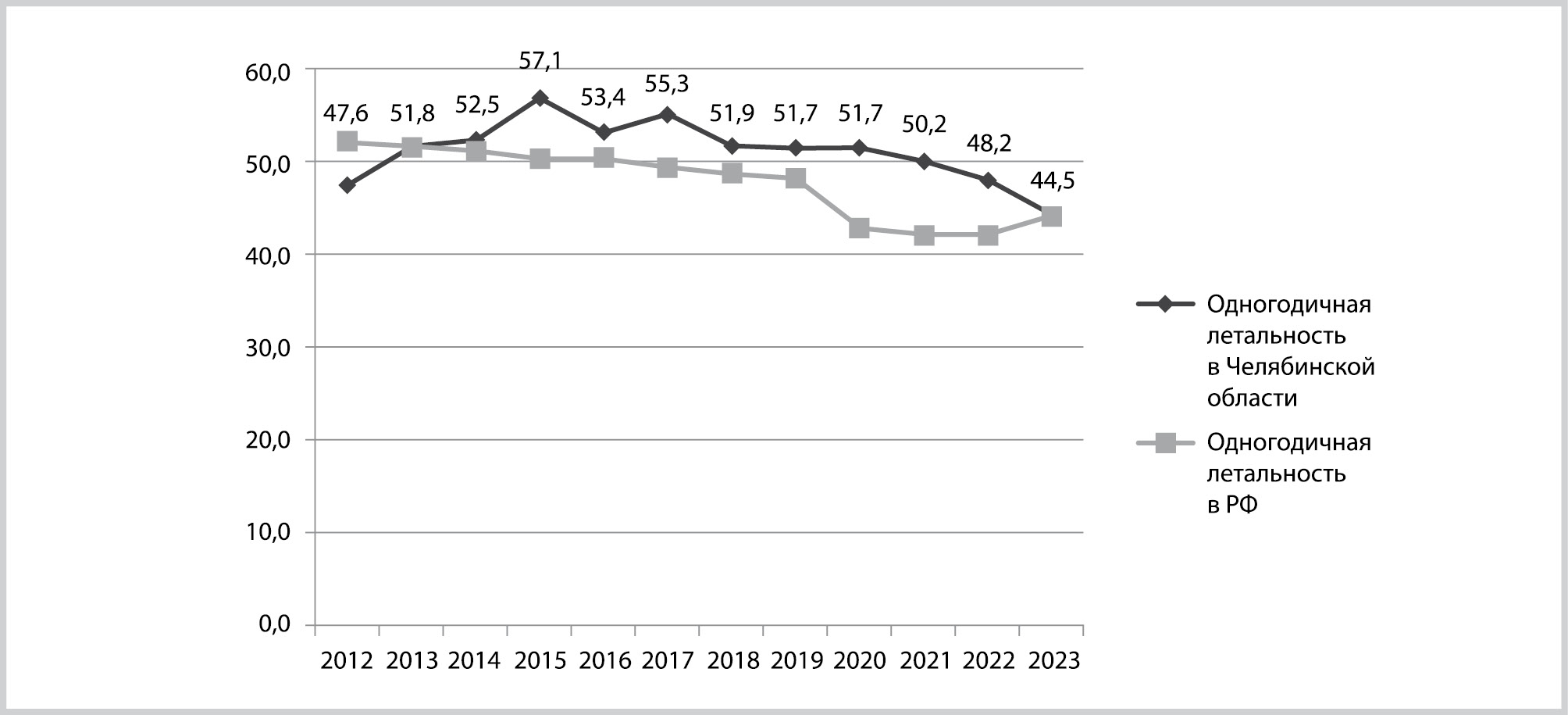
Рис. 1. Динамика (в %) одногодичной летальности от ЗНО легкого в Челябинской области и в РФ 2012—2023 гг.
Появление иммунотерапии позволило изменить результаты лечения многих онкологических заболеваний, в том числе рака легкого. Комбинированная химиоиммунотерапия при распространенном немелкоклеточном раке легкого (НМРЛ) рекомендуется в качестве первой линии лечения с любым (или неизвестным) статусом PD-L1 [3], что дает быстрый и длительный ответ, благодаря иммунному компоненту. Уникальность 4-компонентной комбинации препаратов атезолизумаб+бевацизумаб+карбоплатин+паклитаксел (АБКП) обеспечивается сочетанием различных противоопухолевых эффектов входящих в нее компонентов. Бевацизумаб — моноклональное антитело, которое специфически воздействует на фактор роста эндотелия сосудов А (VEGF-A), ингибирует ангиогенез и тем самым препятствует росту опухоли и ее выживанию [4]. В дополнение к известным ангиогенным эффектам бевацизумаба было продемонстрировано, что ингибирование VEGF оказывает множественное иммуномодулирующее действие при ряде солидных видов рака [4, 6—10]. Атезолизумаб — антитело к PD-L1, которое восстанавливает опухолеспецифический иммунитет, предотвращая связывание PD-L1 экспрессируемого на опухолевых или антигенпрезентирующих клетках, с PD-1- и B7.1-рецепторами, экспрессируемыми на Т-клетках [5]. Таким образом, эффективность атезолизумаба синергически повышается за счет бевацизумаба, который устраняет иммуносупрессию, опосредованную VEGF-A, способствуя созреванию антигенпрезентирующих клеток, таких как дендритные, а также подавляя иммуноингибирующие свойства стволовых клеток миелоидного происхождения [7, 8, 11—21]. Ниже приведены результаты регистрационного исследования IMpower 150, которое позволило включить в клиническую практику эту опцию терапии распространенного рака легкого.
IMpower 150 — многоцентровое, открытое, рандомизированное, контролируемое исследование III фазы, в котором оценивалась эффективность и безопасность атезолизумаба в комбинации с химиотерапией (карбоплатин и паклитаксел) с бевацизумабом или без него у пациентов с IV стадией неплоскоклеточного НМРЛ, которые ранее не получали химиотерапию. В 240 центрах из 26 стран мира было включено 1202 пациента [22].
По критериям включения разрешалось набирать пациентов с имеющимися метастазами в головном мозге в стабильном состоянии после проведения локальной терапии. Также допустимо было включать пациентов с подтвержденными мутациями EGFR или транслокацией ALK после прогрессирования на первой линии терапии ингибиторами тирозинкиназ (ИТК) [22].
Комбинированная первичная конечная точка включала выживаемость без прогрессирования (ВБП) по оценке исследователя с использованием RECIST v1.1 (критерии оценки ответа солидных опухолей на терапию, версия 1.1) и общую выживаемость (ОВ). Показатель ОВ в составе комбинированной конечной точки в исследовании IMpower150 оценивался у всех рандомизированных участников исследования без мутации ALK или EGFR (популяция ITT, дикий тип, ITT-WT). Ключевые дополнительные конечные точки включали ВБП и ОВ по оценке исследователя, безопасность в популяции ITT и в подгруппах с мутациями EGFR и ALK [22].
Результаты исследования продемонстрировали, что мВБП была увеличена с 6,8 мес в группе химиотерапии и бевацизумаба до 8,4 мес в группе АБКП, что соответствует снижению относительного риска (ОР) прогрессирования на 43%. Одногодичная ВБП составила 20 и 38% соответственно [22].
Добавление атезолизумаба стало причиной улучшения результатов лечения во всех группах независимо от уровня PD-L1. Снижение ОР прогрессирования или смерти составило около 30% у пациентов с отсутствием экспрессии, около 50% в группе с положительной экспрессией и около 60% в группе с высокой экспрессией независимо от клона антитела, которым проводилось тестирование [22].
В группе комбинированной терапии добавление атезолизумаба также улучшило и ОВ независимо от уровня PD-L1. Снижение ОР смерти составило около 10—20% у пациентов с отсутствием экспрессии, около 30% в группе с положительной экспрессией и около 30—40% в группе с высокой экспрессией независимо от клона антитела, которым проводилось тестирование [22]. В общей группе пациентов, включая лиц с наличием мутаций, добавление атезолизумаба привело к увеличению мОВ с 15 до 19,8 мес, что соответствует снижению ОР смерти на 20% (HR=0,80) [22].
В случае большого объема опухолевого поражения (2 очага и более либо сумма наибольших диаметров опухолевых очагов 108 мм и более) и/или при наличии симптомов, связанных с распространенностью опухолевого процесса, частота объективного ответа сохраняется практически на столь же высоком уровне — около 60%, а время до достижения ответа в среднем составляет 1,5 мес [22].
В подгрупповом анализе пациентов с метастазами в печени было продемонстрировано, что комбинация АБКП увеличила частоту объективного ответа (ЧОО) с 40 до 60% [23].
Нежелательные явления (НЯ) 3—5-й степени отмечались у 70% пациентов, а частота отмены терапии по причине НЯ наблюдалась у 35% получавших комбинацию АБКП. Схожие данные по безопасности наблюдались в группе трехкомпонентной химиоиммунотерапии [22].
Наиболее выдающиеся показатели эффективности наблюдались в группе пациентов с сенсибилизирующими мутациями EGFR (делеции в 19-м экзоне и мутация L858R): более 40% пациентов продолжают жить более 3 лет. При этом подавляющее большинство пациентов (около 60%) получили предшествующую терапию ИТК. В группе больных с наличием активирующих мутаций добавление атезолизумаба привело к достоверному улучшению медианы времени до прогрессирования с 6,1 до 9,7 мес, что соответствует снижению ОР прогрессирования на 41% (HR=0,59) [23].
Таким образом, комбинация АБКП была зарегистрирована в качестве терапии первой линии у пациентов с аденокарциномой легкого независимо от экспрессии PD-L1, а также в качестве второй и последующих линий при наличии мутаций EGFR и ALK после применения ИТК.
Цель исследования — оценить непосредственную эффективность и отдаленные результаты лечения распространенного рака легкого комбинацией АБКП в условиях реальной клинической практики в Челябинской области, проанализировать динамику изменения одногодичной летальности от рака легкого в Челябинской области в связи с внедрением инновационных схем терапии.
Материал и методы
Ретроспективно проанализированы медицинские записи 58 пациентов с IV стадией рака легкого за период с января 2020 по ноябрь 2023 г., получавших лечение в ЛПУ Челябинской области. Все больные лечились по схеме: атезолизумаб (1200 мг ) в 1-й день+бевацизумаб (15 мг/кг) в 1-й день+паклитаксел (175—200 мг/м2) в 1-й день+карбоплатин AUC 5—6 в 1-й день, цикл 21 день, 4 цикла с дальнейшей поддерживающей терапией: атезолизумаб (1200 мг) в 1-й день+бевацизумаб (15 мг/кг) в 1-й день, цикл 21 день до прогрессирования или неприемлемой токсичности. Данные пациентов: возраст, пол, ECOG, статус курения, гистологический тип опухоли, стадия опухоли, результаты оценки PD-L1, установленная мутация EGFR или транслокации ALK, предшествующая терапия, включая ИТК, извлекались из медицинских записей. Клиническая стадия у всех пациентов классифицировалась по TNM 8. Ответ опухоли на терапию оценивался по критериям RECIST v.1.1. Нежелательные явления были оценены в соответствии с общими терминологическими критериями для обозначения нежелательных явлений (CTCAE v.5.0). Конечная дата сбора данных 01 августа 2024 г. ВБП оценивалась как время между началом терапии АБКП и датой прогрессирования или смерти пациента. ОВ определялась как время между началом терапии АБКП и датой смерти. Поскольку исследование было ретроспективное, не требовалось собирать информированное согласие у пациентов.
Статистический анализ. Статистическая обработка результатов исследования осуществлялась в программном продукте StatPlus:macPro для Microsoft Excel. В качестве исходных данных использована описательная статистика в виде чисел, процентов и медианы с диапазонами. Медианы ВБП и ОВ рассчитывались по методу Каплана–Мейера. Логранговые тесты использовались при сравнительном подгрупповом анализе. Относительные риски были выражены как ОР с 95% ДИ. Достоверность результатов определяли при уровне значимости p< 0,05.
Результаты
Характеристики пациентов. Медиана возраста у 58 пациентов составила 62 (диапазон 38—84) года, в том числе 39 (67,2%) мужчин, 19 (32,8%) женщин. Все исходные характеристики пациентов представлены в табл.1.
Таблица 1. Исходная характеристика пациентов, включенных в исследование
Характеристика | Значение |
Возраст, медиана (диапазон), годы | 62 (38—84) |
Пол, м/ж, абс (%) | 39 (67,2)/19 (32,8) |
Статус курения, абс (%): | |
курят | 25 (43,1) |
никогда не курили | 24 (41,4) |
бросили курить | 5 (8,6) |
Статус ECOG, абс (%): | |
0 | 1 (1,7) |
1 | 45 (77,6) |
3 | 1 (1,7) |
Метастазы в ЦНС, абс (%) | 10 (17,2) |
В том числе потребовавшие дистанционной лучевой терапии | 3 (30) |
Гистологический тип, абс (%): | |
аденокарцинома (TTF+) | 55 (94,8) |
крупноклеточная карцинома | 2 (3,4) |
карцинома без признаков органоспецифичности | 1 (1,7) |
Уровень экспрессии PD-L1, абс (%): | |
отрицательная (TPS<1%) | 25 (43,1) |
низкая (1%≤TPS≤49%) | 8 (13,8) |
высокая (TPS≥50%) | 7 (12,1) |
не определялся | 18 (31) |
Комбинированная схема АБКП, абс (%): | |
в первой линии терапии | 50 (86,2) |
во второй линии после прогрессии на ИТК | 8 (13,8) |
Среди пациентов с выявленными генетическими аберрациями установленная мутация гена EGFR была определена у 6, а транслокация ALK– у 2 (табл. 2).
Таблица 2. Терапия пациентов с драйверными мутациями
Наличие мутаций | Предыдущая таргетная терапия (ее продолжительность, мес) | ВБП на терапии АБКП, мес |
ALK+ | Кризотиниб (6), алектиниб (6) | 12,1 |
ALK+ | Кризотиниб (16), лорлатиниб (4) | 2,7 |
EGFR 19del, mut T790М | Гефитиниб (9), осимертиниб (31) | 10,2 |
EGFR 19del | Гефитиниб (17) | 17* |
EGFR+ | Осимертиниб (11,5) | 6,6 |
EGFR 19del | Гефитиниб (11) | 22,1 |
EGFR 19del, mut T790М | Гефитиниб (30), осимертиниб (10) | 17 |
EGFR 19del | Гефитиниб (3) | 4,3 |
Примечание. Звездочка — длительность терапии указана на 01.08.24, конечная точка не была достигнута.
Эффективность. К моменту прекращения сбора данных (01 августа 2024 г.) медиана длительности терапии составила 11,3 мес. Контроль над заболеванием (частичный ответ или стабилизация) достигнут в 84,2% (48) случаев. Медиана ВБП составила 15,1 мес (95% ДИ: 11,17—20,03) (рис. 2). Медиана ОВ не достигнута. Медиана ВБП у пациентов с метастазами в головном мозге составила 24,8 мес (рис. 3). Контроль над заболеванием достигнут в 100% случаев. У 8 (13,8%) пациентов с выявленными генетическими аберрациями в 100% случаев достигнут контроль над заболеванием. Медиана ВБП для подгруппы некурящих пациентов составила 11,17 мес, для курящих — 20,13 мес, для ранее куривших, в настоящее время не курят — 8,3 мес (рис. 4). Медиана ВБП в подгруппе пациентов с высоким уровнем PD-L1 (TPS≥50%) была 18,5 мес, с промежуточным уровнем PD-L1 (1%≤TPS≤49%) — 8,7 мес, отрицательный PD-L1 (TPS<1%) — 18,4 мес (рис. 5).
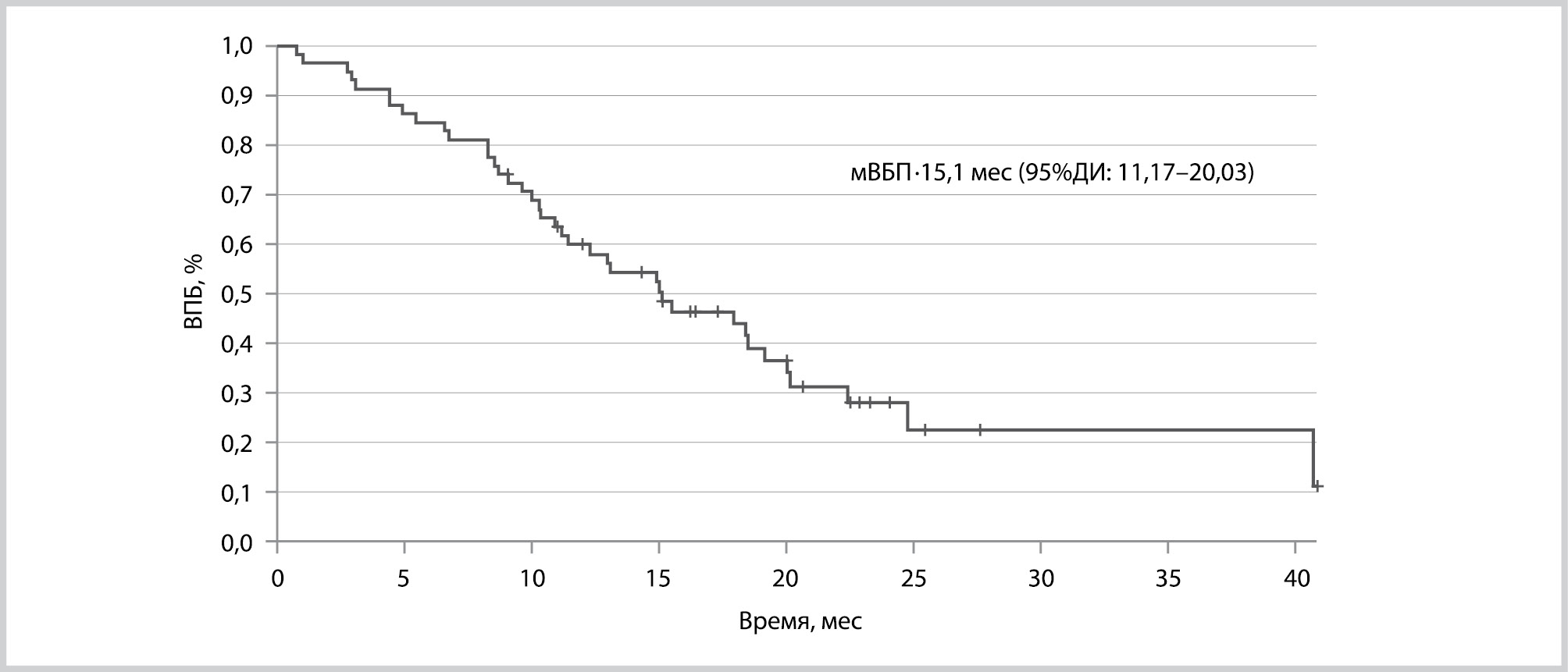
Рис. 2. Выживаемость без прогрессирования по всей исследуемой группе.
Здесь и на рис. 3—5: мВБП — медиана выживаемости без прогрессирования.
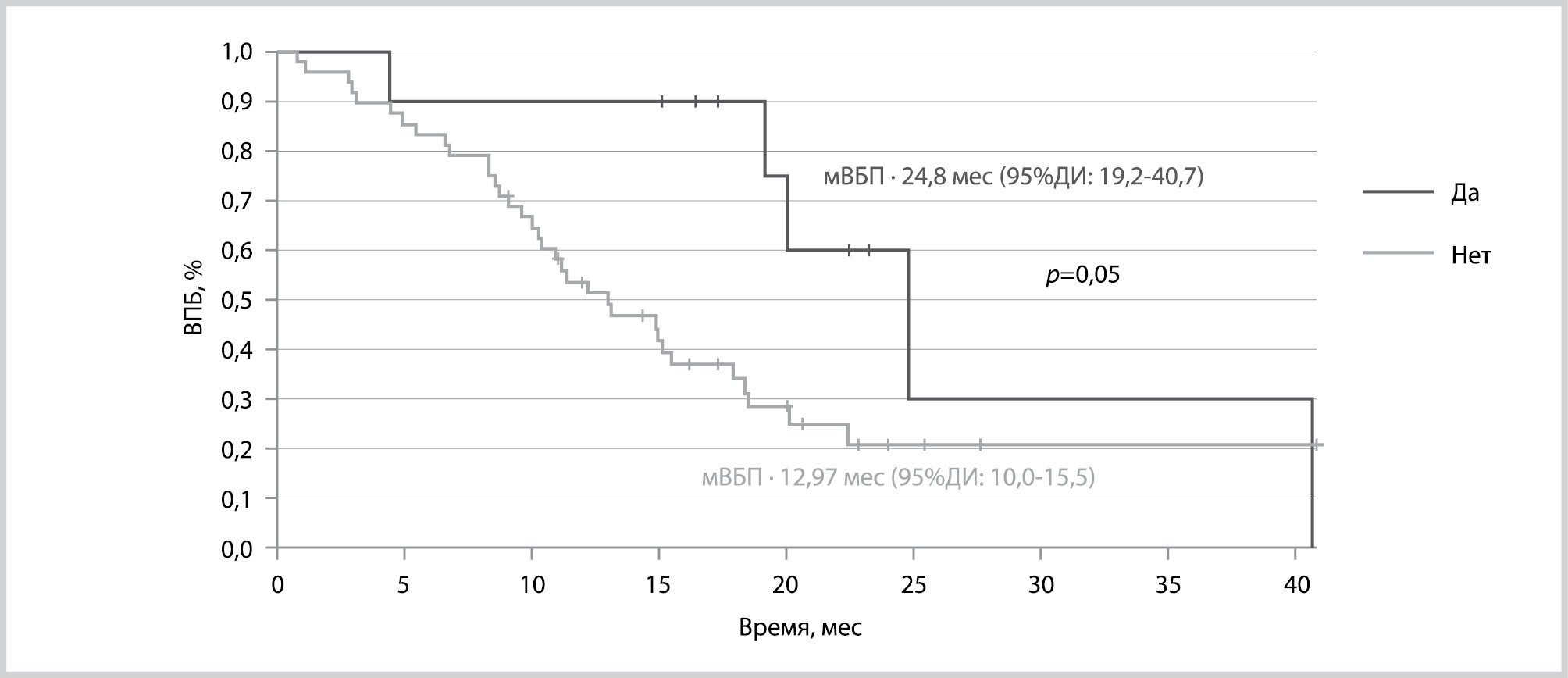
Рис. 3. Выживаемость без прогрессирования (мВБП) в зависимости от наличия метастазов в головном мозге.
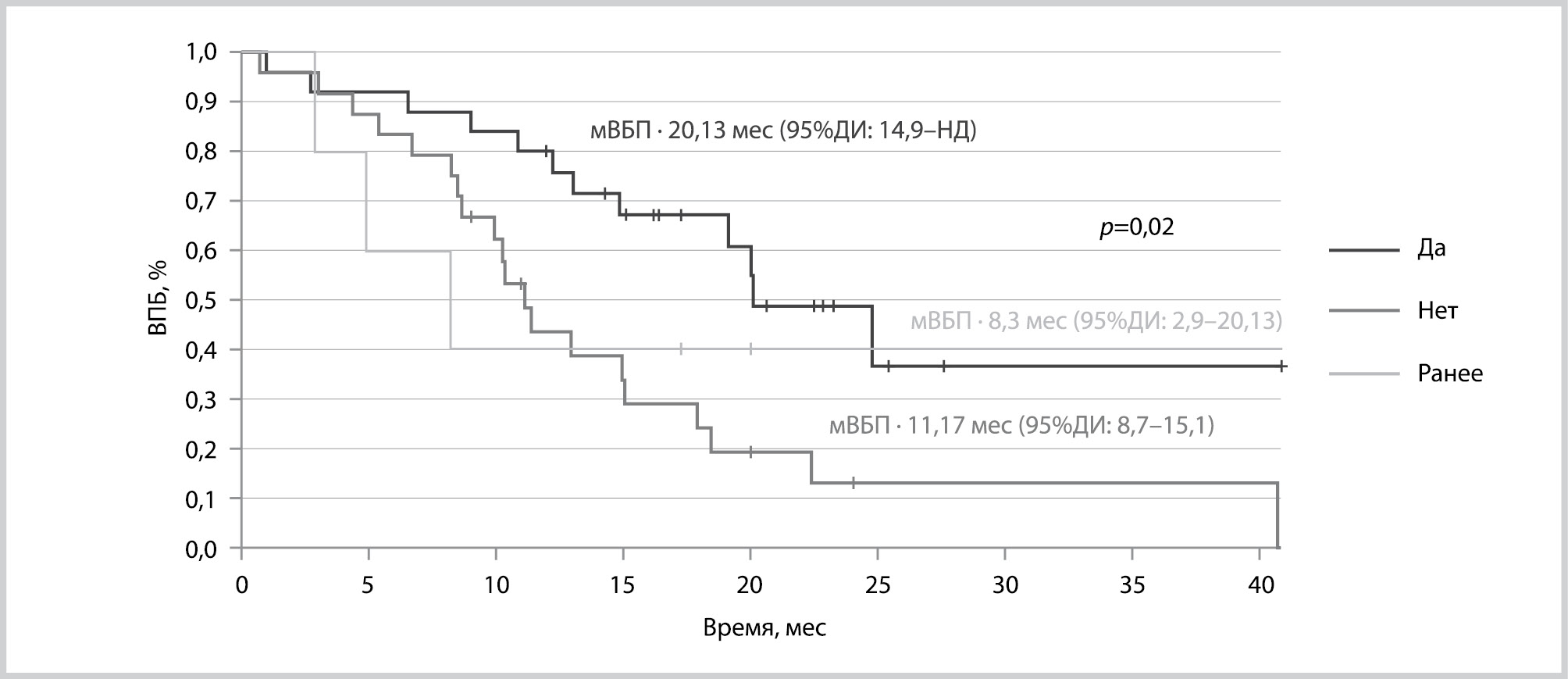
Рис. 4. Выживаемость без прогрессирования в зависимости от статуса курения.
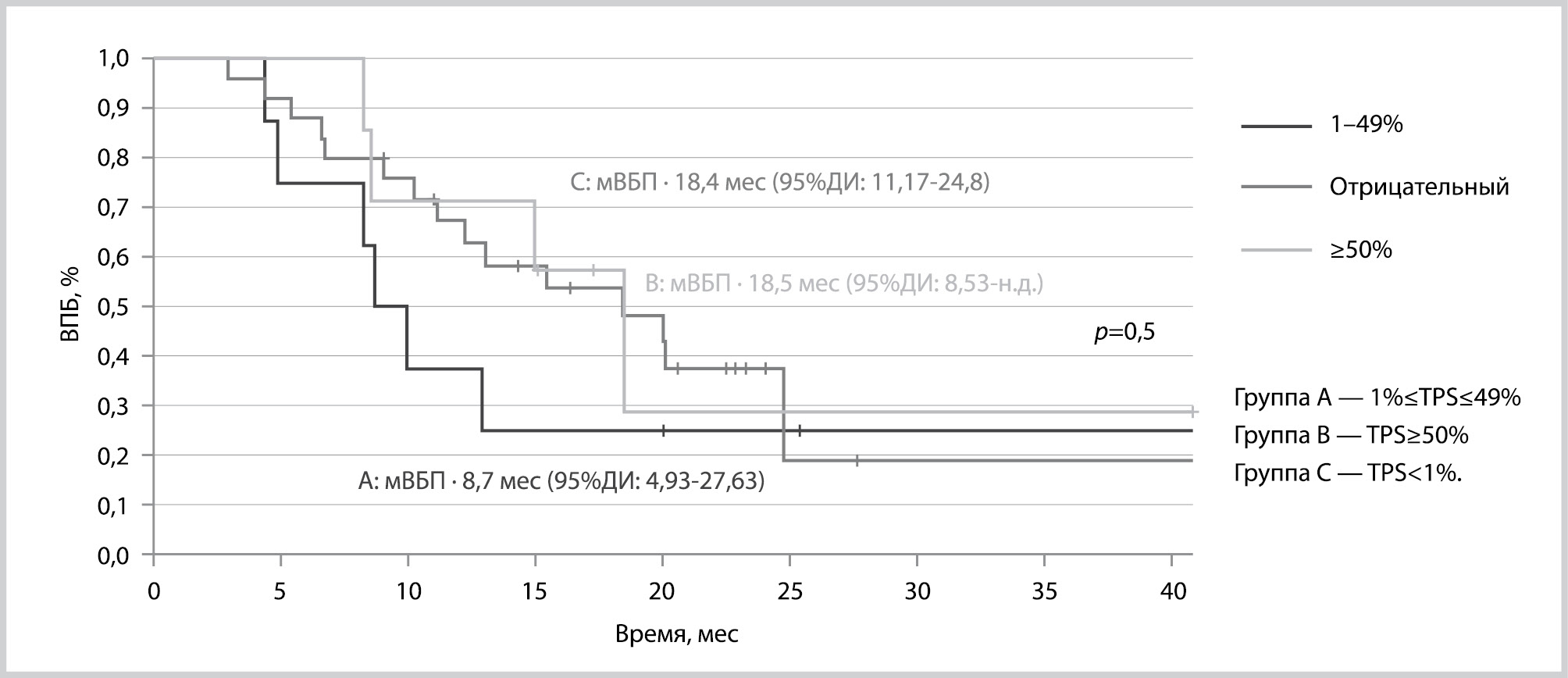
Рис. 5. Выживаемость без прогрессирования в зависимости от уровня экспрессии PD-L1.
Частота достижения объективного ответа в зависимости от массивности опухолевого поражения:
— сумма наибольших диаметров опухолевых очагов 108 мм и более была зафиксирован у 35,8% (n=19) пациентов, у 78,9% (n=15) достигнут контроль над заболеванием, среднее время до достижения ответа 2,1 мес;
— метастатическое поражение: 2 очага и более в паренхиматозных органах у 25,9% (n=24) пациентов, из них у 37,5% (n=9) достигнут контроль над заболеванием, среднее время до достижения ответа — 2,0 мес.
Из всех пациентов анализируемой группы 15,5% (n=9) умерли от прогрессирования заболевания на момент проведения анализа.
Безопасность. Развитие иммуноопосредованных НЯ на терапии АБКП наблюдалось у 8,6% (n=5) пациентов: 2 случая гипотиреоза 2-й степени (компенсированы заместительной терапией), 1 случай пневмонита 1-й степени (компенсирован коротким курсом глюкокортикостероидов), 1 случай полиартрита 3-й степени (потребовалась отмена атезолизумаба), 1 случай кожной токсичности 3-й степени (отмена атезолизумаба). Другие нежелательные явления, наблюдаемые на данной схеме терапии, — развитие нефротоксичности 3-й степени –1 случай, тромбоцитопения 4-й степени — 1 случай, анемия 3-й степени — 1 случай, нейтропения 3-й степени — 1 случай, дыхательная недостаточность 3-й степени — 2 случая.
Обсуждение
В исследовании мы продемонстрировали, что терапия АБКП показывает высокую противоопухолевую эффективность в реальных клинических условиях у пациентов с распространенным НМРЛ, у которых ЧОО и ВБП/ОВ были эквивалентны или превосходили те, которые наблюдались в исследовании IMpower150 [22]. Проведенный анализ подгрупп также показал, что пациенты с метастазами в головном мозге могут получить клиническое преимущество от комбинированной терапии, что также подтверждается и другими исследователями [24]. Показатели эффективности, наблюдаемые у бевацизумаба и атезолизумаба, могут быть обусловлены синергическим действием анти-VEGF-антитела и анти-PD-L1-индуцированным противоопухолевым иммунным ответом. Действительно, многие фундаментальные экспериментальные исследования показали разные иммуномодулирующие эффекты антител к VEGF: а) повышение способности к праймингу Т-клеток за счет созревания дендритных клеток; б) усиление проникновения Т-клеток в опухоль за счет нормализации сосудистого русла опухоли; в) подавление миелоидных супрессорных клеток и регуляторных Т-клеток, снижающих иммунную устойчивость опухоли [25]. Ингибиторы контрольных точек обеспечивают долгосрочную выживаемость в зависимости от степени уменьшения объема опухоли, более глубокий ответ опухоли связан с более длительными ВБП и ОВ у пациентов, получающих антитела к PD-1 [26]. Такая же тенденция наблюдалась и при химиотерапии дублетами платины (карбоплатин в комбинации с наб-паклитакселом или со стандартной формой паклитаксела) [27]. В совокупности эти наблюдения подтверждают, что устойчивый противоопухолевый эффект при комбинированной химиотерапии с применением ингибиторов контрольных точек и антител к VEGF-A может обеспечить превосходный результат для пациентов. Проведенный анализ подгрупп по уровням экспрессии PD-L1 не выявил существенной связи между уровнями экспрессии PD-L1 и клиническими исходами. При этом одной из возможных причин может быть то, что проанализировано ограниченное число пациентов (n=40), среди 7 пациентов с высокой экспрессией PD-L1 у 1 были метастазы в костях, у 1 — в головном мозге, у 2 — в печени и у 4 метастазы выявлены в двух органах или более как неблагоприятный прогностический фактор.
В нашем исследовании 7,2% (n=10) пациентов имели метастазы в головном мозге на начало терапии, 3 из них проводилась лучевая терапия и мВБП для этой подгруппы значимо отличалась от подгруппы без метастазов, что позволяет предположить, что комбинация АБКП полезна для пациентов с НМРЛ с метастазами в головном мозге. И действительно, в нескольких публикациях рассматривалась эффективность бевацизумаба у этой подгруппы пациентов с НМРЛ. По данным исследования BRAIN, комбинация химиотерапии и бевацизумаба показала обнадеживающую эффективность и безопасность у пациентов с неплоскоклеточным НМРЛ и бессимптомными метастазами в головном мозге [28]. Хотя в исследовании IMpower 150 не проводился анализ подгрупп пациентов с метастазами в головном мозге, соотношение рисков возникновения новых метастазов в головном мозге составило 0,68 в группе АБКП и 1,55 в группе АКП по сравнению с группой БКП, что свидетельствует о профилактическом эффекте атезолизумаба и бевацизумаба в отношении риска развития метастазов в головном мозге [23]. Таким образом, комбинированное применение бевацизумаба и атезолизумаба может способствовать созданию синергичного противоопухолевого эффекта метастазов в головном мозге.
Примечательно, что комбинация АБКП продемонстрировала приемлемый профиль безопасности при очень низкой частоте иммуноопосредованных НЯ. Был отмечен только 1 случай развития пневмонита, его тяжесть соответствовала 1-й степени. В исследовании IMpower 150 частота возникновения пневмонита индуцированного ингибитором контрольных точек, в группе получавших АБКП составила 2,8% всех степеней тяжести [22], что аналогично результатам нашего исследования. Кроме того, частота возникновения пневмонита, вызванного ингибиторами контрольных точек, была независимо связана с более короткими ВБП и ОВ [29]. Низкая частота иммуноопосредованного пневмонита на терапии АБКП может быть результатом использования бевацизумаба, который может снизить частоту возникновения медикаментозного пневмонита в клинических условиях [30]. Можно предположить, что добавление бевацизумаба к терапии, основанной на ингибиторах контрольный точек, может снизить риск иммуноопосредованного пневмонита у онкологических больных с легкой интерстициальной пневмонией без признаков «пчелиных сот». Недавнее экспериментальное исследование на мышах подтвердило, что анти-VEGF-антитело подавляет обострение воспаления легких, вызванное ингибиторами контрольных точек [30].
К ограничениям нашего исследования относятся небольшая популяция пациентов, ретроспективный характер исследования и короткое время наблюдения. Несмотря на эти ограничения, неоднородность реальной когорты пациентов и результаты, сопоставимые с существующими данными, повышают важность рассмотрения терапии комбинацией АБКП как эффективной стратегии, особенно у пациентов с метастазами в головном мозге, однако необходимы дальнейшие исследования для определения оптимальной популяции пациентов для этой терапии.
Заключение
Иммунотерапия — высокоэффективный метод лечения многих солидных опухолей, в том числе и рака легкого. Использование комбинации иммунотерапии с химиотерапией прочно входит в ежедневную клиническую практику и показывает ранее невозможные положительные результаты ОВ и ВБП. В настоящем исследовании превосходная противоопухолевая эффективность терапии АБКП с длительными показателями ВБП/ОВ была подтверждена в реальной клинической практике. Благодаря широкой доступности иммуноонкологических препаратов в терапии данных пациентов в течение последних 3 лет отмечается стойкое снижение одногодичной летальности от рака легкого в Челябинской области.
Участие авторов:
Концепция и дизайн исследования —Исаева Г.К.
Сбор и обработка материала — Исаева Г.К., Андриевских М.И., Берсенёва О.В., Шубина К.А., Таскина Д.К., Ерыгина А.А., Мальцева В.А., Бахарева Я.В., Меньщиков Д.В.
Статистическая обработка —Исаева Г.К.
Написание текста — Исаева Г.К.
Редактирование — Исаева Г.К.
Авторы заявляют об отсутствии конфликта интересов.
- WHO. IARC. Cancer today. 2022. Available at: https://gco.iarc.who.int/today
- Каприн А.Д., Старинский В.В., Шахзадова А.О., ред. Состояние онкологической помощи населению России в 2022 году. М.: МНИОИ им. П.А. Герцена — филиал ФГБУ «НМИЦ радиологии» Министерства здравоохранения Российской Федерации; 2022.
- Министерство здравоохранения Российской Федерации. Клинические рекомендации. Злокачественные новообразования бронхов и легкого. 2022.
- Ferrara N, Hillan KJ, Gerber HP, Novotny W. Discovery and development of bevacizumab, an anti-VEGF antibody for treating cancer. Nat Rev Drug Discov. 2004;3(5):391-400. https://doi.org/10.1038/nrd1381
- Herbst RS, Soria JC, Kowanetz M, Fine GD, Hamid O, Gordon MS, Sosman JA, McDermott DF, Powderly JD, Gettinger SN, et al. Predictive correlates of response to the anti-PD-L1 antibody MPDL3280A in cancer patients. Nature. 2014;515(7528):563-567. https://doi.org/10.1038/nature14011
- Roland CL, Lynn KD, Toombs JE, Dineen SP, Udugamasooriya DG, Brekken RA. Cytokine levels correlate with immune cell infiltration after anti-VEGF therapy in preclinical mouse models of breast cancer. PLoS One. 2009;4(11):e7669. https://doi.org/10.1371/journal.pone.0007669
- Hodi FS, Lawrence D, Lezcano C, Wu X, Zhou J, Sasada T, Zeng W, Giobbie-Hurder A, Atkins MB, Ibrahim N, et al. Bevacizumab plus ipilimumab in patients with metastatic melanoma. Cancer Immunol Res. 2014;2(7):632-642. https://doi.org/10.1158/2326-6066.CIR-14-0053
- Voron T, Colussi O, Marcheteau E, Pernot S, Nizard M, Pointet AL, Latreche S, Bergaya S, Benhamouda N, Tanchot C, et al. VEGF-A modulates expression of inhibitory checkpoints on CD8+ T cells in tumors. J Exp Med. 2015;212(2):139-148. https://doi.org/10.1084/jem.20140559
- Wallin JJ, Bendell JC, Funke R, Sznol M, Korski K, Jones S, Hernandez G, Mier J, He X, Hodi FS, et al. Atezolizumab in combination with bevacizumab enhances antigen-specific T-cell migration in metastatic renal cell carcinoma. Nat Commun. 2016;7:12624. https://doi.org/10.1038/ncomms12624
- Kim JM, Chen DS. Immune escape to PD-L1/PD-1 blockade: seven steps to success (or failure). Ann Oncol. 2016;27(8):1492-1504. https://doi.org/10.1093/annonc/mdw217
- Chen DS, Mellman I. Oncology meets immunology: the cancer-immunity cycle. Immunity. 2013;39(1):1-10. https://doi.org/10.1016/j.immuni.2013.07.012
- Zitvogel L, Galluzzi L, Smyth MJ, Kroemer G. Mechanism of action of conventional and targeted anticancer therapies: reinstating immunosurveillance. Immunity. 2013;39(1):74-88. https://doi.org/10.1016/j.immuni.2013.06.014
- Hegde PS, Wallin JJ, Mancao C. Predictive markers of anti-VEGF and emerging role of angiogenesis inhibitors as immunotherapeutics. Semin Cancer Biol. 2018;52(Pt. 2):117-124. https://doi.org/10.1016/j.semcancer.2017.12.002
- Gabrilovich DI, Chen HL, Girgis KR, Cunningham HT, Meny GM, Nadaf S, Kavanaugh D, Carbone DP. Production of vascular endothelial growth factor by human tumors inhibits the functional maturation of dendritic cells. Nat Med. 1996;2(10):1096-1103. https://doi.org/10.1038/nm1096-1096
- Oyama T, Ran S, Ishida T, Nadaf S, Kerr L, Carbone DP, Gabrilovich DI. Vascular endothelial growth factor affects dendritic cell maturation through the inhibition of nuclear factor-kappa B activation in hemopoietic progenitor cells. J Immunol. 1998;160(3):1224-1232.
- Blank C, Mackensen A. Contribution of the PD-L1/PD-1pathway to T-cell exhaustion: an update on implications for chronic infections and tumor evasion. Cancer Immunol Immunother. 2007;56(5):739-745. https://doi.org/10.1007/s00262-006-0272-1
- Chen DS, Irving BA, Hodi FS. Molecular pathways: next-generation immunotherapy — inhibiting programmed death-ligand 1 and programmed death-1. Clin Cancer Res. 2012;18(24):6580-6587. https://doi.org/10.1158/1078-0432.CCR-12-1362
- Goel S, Duda DG, Xu L, Munn LL, Boucher Y, Fukumura D, Jain RK. Normalization of the vasculature for treatment of cancer and other diseases. Physiol Rev. 2011;91(3):1071-1121. https://doi.org/10.1152/physrev.00038.2010
- Motz GT, Santoro SP, Wang LP, Garrabrant T, Lastra RR, Hagemann IS, Lal P, Feldman MD, Benencia F, Coukos G. Tumor endothelium FasL establishes a selective immune barrier promoting tolerance in tumors. Nat Med. 2014;20(6):607-615. https://doi.org/10.1038/nm.3541
- Gabrilovich DI, Nagaraj S. Myeloid-derived suppressor cells as regulators of the immune system. Nat Rev Immunol. 2009;9(3):162-174. https://doi.org/10.1038/nri2506
- Facciabene A, Peng X, Hagemann IS, Balint K, Barchetti A, Wang LP, Gimotty PA, Gilks CB, Lal P, Zhang L, et al. Tumour hypoxia promotes tolerance and angiogenesis via CCL28 and T(reg) cells. Nature. 2011;475(7355):226-230. https://doi.org/10.1038/nature10169
- Socinski MA, Jotte RM, Cappuzzo F, Orlandi F, Stroyakovskiy D, Nogami N, Rodríguez-Abreu D, Moro-Sibilot D, Thomas CA, Barlesi F, et al.; IMpower150 Study Group. Atezolizumab for first-line treatment of metastatic nonsquamous NSCLC. N Engl J Med. 2018;378(24):2288-2301. https://doi.org/10.1056/NEJMoa1716948
- Nogami N, Barlesi F, Socinski MA, Reck M, Thomas CA, Cappuzzo F, Mok TSK, Finley G, Aerts JG, Orlandi F, et al. IMpower150 final exploratory analyses for atezolizumab plus bevacizumab and chemotherapy in key NSCLC patient subgroups with EGFR mutations or metastases in the liver or brain. J Thorac Oncol. 2022;17(2):309-323. https://doi.org/10.1016/j.jtho.2021.09.014
- Ikeuchi N, Igata F, Kinoshita E, Kawabata T, Tan I, Osaki Y, Otsuka R, On R, Ikeda T, Nakao A, et al. Real-world efficacy and safety of atezolizumab plus bevacizumab, paclitaxel and carboplatin for first-line treatment of Japanese patients with metastatic non-squamous non-small cell lung cancer. Anticancer Res. 2023;43(2):713-724. https://doi.org/10.21873/anticanres.16210
- Hack SP, Zhu AX, Wang Y. Augmenting anticancer immunity through combined targeting of angiogenic and PD-1/PD-L1 pathways: challenges and opportunities. Front Immunol. 2020;11:598877. https://doi.org/10.3389/fimmu.2020.598877
- McCoach CE, Blumenthal GM, Zhang L, Myers A, Tang S, Sridhara R, Keegan P, Pazdur R, Doebele RC, Kazandjian D. Exploratory analysis of the association of depth of response and survival in patients with metastatic non-small-cell lung cancer treated with a targeted therapy or immunotherapy. Ann Oncol. 2017;28(11):2707-2714. https://doi.org/10.1093/annonc/mdx414
- Morgensztern D, Ko A, O’Brien M, Ong TJ, Waqar SN, Socinski MA, Postmus PE, Bhore R. Association between depth of response and survival in patients with advanced-stage non-small cell lung cancer treated with first-line chemotherapy. Cancer. 2019;125(14):2394-2399. https://doi.org/10.1002/cncr.32114
- Besse B, Le Moulec S, Mazières J, Senellart H, Barlesi F, Chouaid C, Dansin E, Bérard H, Falchero L, Gervais R, et al. Bevacizumab in patients with nonsquamous non-small cell lung cancer and asymptomatic, untreated brain metastases (BRAIN): a nonrandomized, phase II study. Clin Cancer Res. 2015;21(8):1896-1903. https://doi.org/10.1158/1078-0432.CCR-14-2082
- Fujimoto D, Miura S, Yoshimura K, Wakuda K, Oya Y, Yokoyama T, Yokoi T, Asao T, Tamiya M, Nakamura A, et al. Pembrolizumab plus chemotherapy-induced pneumonitis in chemo-naïve patients with non-squamous non-small cell lung cancer: a multicentre, retrospective cohort study. Eur J Cancer. 2021;150:63-72. https://doi.org/10.1016/j.ejca.2021.03.016
- Iwai T, Sugimoto M, Patel H, Yorozu K, Kurasawa M. Kondoh O. Anti-VEGF antibody protects against alveolar exudate leakage caused by vascular hyperpermeability, resulting in mitigation of pneumonitis induced by immunotherapy. Mol Cancer Ther. 2012;20(12):2519-2526. https://doi.org/10.1158/1535-7163.MCT-21-0031



Рекомендуем статьи по данной теме:
Лекарственно-индуцированное поражение легких у пациентов с немелкоклеточным раком легкого: обзор лучевых паттернов и клинические наблюдения.Хирургия. Журнал им. Н.И. Пирогова. 2026;(9-2):170-181
Прогностическая ценность шкал оценки хирургического риска у больных злокачественными опухолями легкого центральной локализации.Хирургия. Журнал им. Н.И. Пирогова. 2026;(9-2):116-124
Эффективность атезолизумаба в комбинации с карбоплатином и этопозидом в первой линии терапии распространенного мелкоклеточного рака легкого в реальной клинической практике: ретроспективное одноцентровое исследование.Онкология. Журнал им. П.А. Герцена. 2026;15(4):22-29
Результаты применения атезолизумаба у предлеченных пациентов с метастатическим немелкоклеточным раком легких в реальной клинической практике.Онкология. Журнал им. П.А. Герцена. 2026;15(4):15-21
Удержание на терапии и приверженность терапии ботулиническим токсином типа A и моноклональными антителами к кальцитонин-ген-родственному пептиду при мигрени. (Ретроспективное когортное исследование специализированного центра головной боли).Журнал неврологии и психиатрии им. С.С. Корсакова. 2026;126(7):69-74
Первый опыт применения препарата тезепелумаб для лечения полипозного риносинусита в Московской области.Вестник оториноларингологии. 2026;91(3):46-51
Идентификация стадий энтоза in situ в ткани немелкоклеточного рака легкого и их изменения после неоадъювантной химиотерапии.Архив патологии. 2026;88(3):20-28
Сравнительный анализ двух методик оценки доли остаточной опухоли при немелкоклеточном раке легкого после неоадъювантной терапии.Архив патологии. 2026;88(3):15-19
Эффективность длительного применения атезолизумаба в лечении метастатического немелкоклеточного рака легкого.Онкология. Журнал им. П.А. Герцена. 2026;15(2):71-75
Эффективность химиоиммунотаргетной терапии у пациентов с распространенным немелкоклеточным раком легкого в реальной клинической практике.Онкология. Журнал им. П.А. Герцена. 2025;14(3):63-70