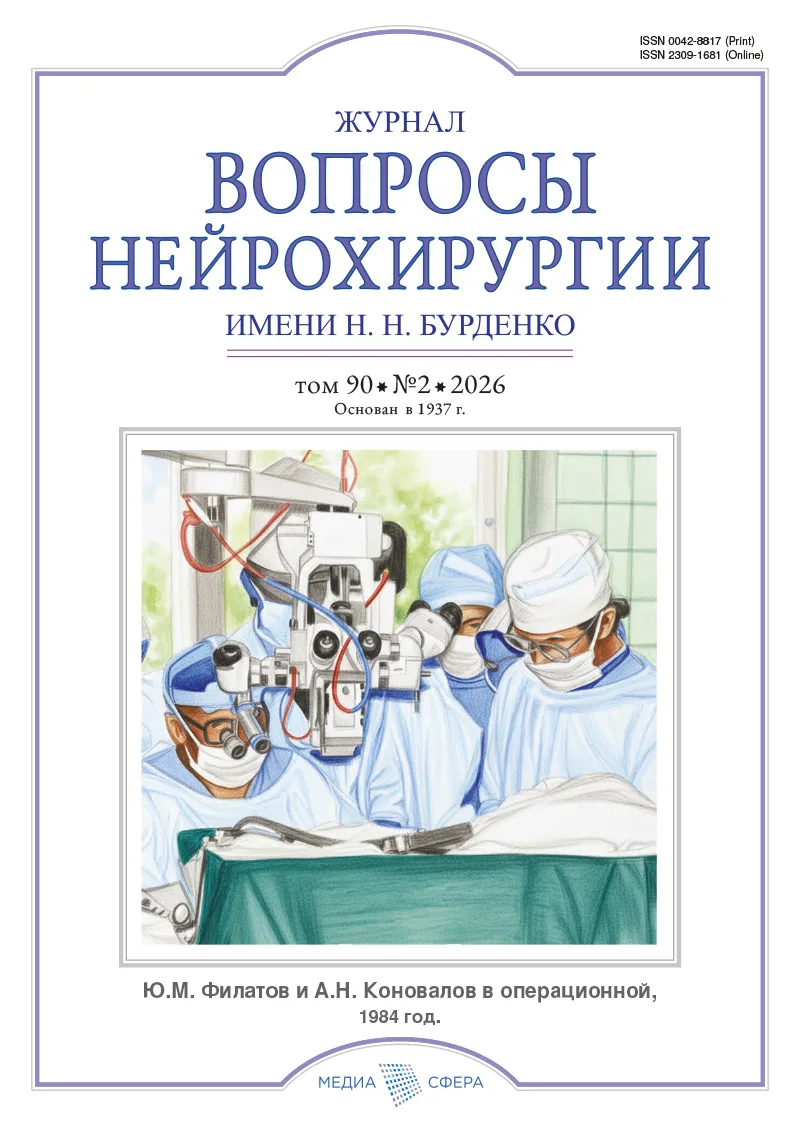
Первое клиническое применение аутологичного фибринового клея Vivostat в нейрохирургии Казахстана и Центральной Азии
Журнал: Вопросы нейрохирургии имени Н.Н. Бурденко. 2026;90(2):70-76.
DOI: 10.17116/neiro20269002170
Прочитано: 1534 раза
Резюме
Герметизация дефектов твердой мозговой оболочки и реконструкция дефектов основания черепа остаются одними из ключевых задач нейрохирургии. Аутологичный фибриновый клей Vivostat, получаемый из крови пациента, обеспечивает высокую биосовместимость, эластичность и надежную адгезию. Данные о его клиническом применении в странах Центральной Азии отсутствуют.
ЦЕЛЬ ИССЛЕДОВАНИЯ
Оценить клиническую эффективность и безопасность аутологичного фибринового клея Vivostat при герметизации твердой мозговой оболочки и реконструкции основания черепа на базе Национального центра нейрохирургии Казахстана.
МАТЕРИАЛ И МЕТОДЫ
В ретроспективно-проспективное исследование включены 110 пациентов, оперированных в Национальном центре нейрохирургии (Астана, Казахстан) в период с августа 2024 по сентябрь 2025 г. Клей, полученный из аутологичной крови с помощью системы Vivostat, применялся для герметизации дефектов твердой мозговой оболочки и фиксации трансплантатов. Оценивали частоту послеоперационной ликвореи, инфекционных осложнений и повторных вмешательств.
РЕЗУЛЬТАТЫ
Медиана возраста пациентов составила 48,9±14,7 лет, женщин было 60%. Эндоскопический трансназальный доступ применен у 65 пациентов, краниотомия — у 35, прочие доступы — у 10. Полимеризация клея происходила практически мгновенно, максимальная прочность достигалась через 1—2 мин. Успешная герметизация достигнута у 109 (99,1%) пациентов, 1 (0,9%) пациент потребовал повторной операции из-за назальной ликвореи и кровотечения. Инфекционных, аллергических и тромбоэмболических осложнений не отмечено.
ЗАКЛЮЧЕНИЕ
Применение аутологичного фибринового клея Vivostat обеспечивает высокую эффективность и безопасность при герметизации твердой мозговой оболочки и реконструкции дефектов основания черепа. Метод снижает риск послеоперационной ликвореи и повторных вмешательств. Представлен первый клинический опыт его применения в Центральной Азии.
Ключевые слова
- аутологичный фибриновый клей
- герметизация твердой мозговой оболочки
- реконструкция основания черепа
- нейрохирургия
- ликворея
- клиническая эффективность
Дата поступления: 13.11.2025
Дата принятия в печать: 30.01.2026
Дата публикации: 03.04.2026
- Eberly HW, Rosi-Schumacher M, Sciscent BY, Truong N, King TS, Goldenberg D, Goyal N. The use of fibrin sealants in reducing postoperative complications in skull base surgery: a systematic review and meta-analysis. Journal of Neurological Surgery Part B: Skull Base. 2024;87(1):63-70. https://doi.org/10.1055/a-2493-1134
- Pang JC, Bitner BF, Nottoli MM, Abiri A, Bui AT, Nguyen CH, Hsu TI, Nguyen TV, Hsu FPK, Kuan EC. Tissue sealant impact on skull base reconstruction outcomes: a systematic review and meta-analysis. Laryngoscope. 2024;134(8):3425-3436. https://doi.org/10.1002/lary.31390
- Volz F, Wolf K, Fung C, Carroll I, Lahmann C, Lützen N, Urbach H, Klingler JH, Beck J, El Rahal A. Impact of spinal CSF leaks on quality of life and mental health and long-term reversal by surgical closure. Neurology Clinical Practice. 2024;14(2):e200272. https://doi.org/10.1212/CPJ.0000000000200272
- Шелеско Е.В., Доронина В.А., Шарипов О.И., Кван О.К., Черникова Н.А., Струнина Ю.В., Зинкевич Д.Н. Применение аутологичного фибринового клея в эндоскопической пластике дефектов основания черепа при назальных ликвореях. Вопросы нейрохирургии им. Н.Н. Бурденко. 2023;87(1):49-54. https://doi.org/10.17116/neiro20238701149
- Кван О.К., Теряева Н.Б. Фибриновый клей в хирургической практике. Клиническая медицина. 2025;103(3):187-195. https://doi.org/10.30629/0023-2149-2025-103-3-187-195
- Tominaga H, Kawamura I, Tokumoto H, Tawaratsumida H, Ogura T, Kuroshima T, Ijiri K, Taniguchi N. Fibrin glue-coated collagen matrix is superior to fibrin-coated PGA sheet for preventing CSF leakage during spinal surgery. Scientific Reports. 2024;14(1):23613. https://doi.org/10.1038/s41598-024-75085-x
- Шарипов О.И., Кван О.К., Кутин М.А., Донской А.Д., Калинин П.Л. Применение аутологичного фибринового клея для пластики дефекта основания черепа в транссфеноидальной хирургии. Описание клинического случая и обзор литературы. Вопросы нейрохирургии им. Н.Н. Бурденко. 2022;86(5):89-95. https://doi.org/10.17116/neiro20228605189
- Matsushima K, Matsunaga K, Nakajima N, Kohno M. Autologous fibrin glue in microvascular decompression for Trigeminal Neuralgia and Hemifacial Spasm. Neurologia Medico-chirurgica. 2025;65(10):448-455. https://doi.org/10.2176/jns-nmc.2025-0146
- Furgoł T, Antończyk R, Miciak M, Jezierzański M, Smreczak M, Gigoń K, Fogiel O, Ratajczak M, Hrapkowicz T. Inflammatory response induction as a result of BioGlue adhesive application in cardiac surgery – a review of the literature. Kardiochirurgia i Torakochirurgia Polska. 2024;21(1):43-46. https://doi.org/10.5114/kitp.2024.138566
- Fife A, Khouri OR, Grantham M, DiVito J, Hébert T, Kuo DYS. Inflammatory reaction to BioGlue™ masquerading as recurrence in patients with endometrial cancer: a report of two cases. Gynecologic Oncology Reports. 2020;34:100665. https://doi.org/10.1016/j.gore.2020.100665
- Nguyen M, Tran L, Foreman A, Lockwood C. The effectiveness of fibrin sealants in head and neck surgery: a systematic review and meta-analysis. Systematic Reviews. 2024;13(1):246. https://doi.org/10.1186/s13643-024-02634-w
- Corvino S, Berardinelli J, Corazzelli G, Altieri R, Dallan I, Corrivetti F, de Notaris M. Surgical risk of CSF leakage following endoscopic transorbital approach for anterior and middle skull base pathologies: a systematic review and meta-analysis. Neurosurgical Review. 2025;48(1):282. https://doi.org/10.1007/s10143-025-03426-z
- Poma S, Modica DM, Mattina G, Gallina S, Azzolina AA, Mario-Galfano G. Skull base CSF-leak closure with autologous fibrin sealant. Iranian Journal of Otorhinolaryngology. 2021;33(114):3-8. https://doi.org/10.22038/ijorl.2020.42520.2385
- Corvino S, Corrivetti F, Catapano G, Corazzelli G, Colamaria A, Maghalashvili E, Dallan I, Di Maria D, Di Matteo G, Iaconetta G, de Notaris M. The 4 F (Fat, Fascia, Fibrin, and Fat) Technique for Skull Base Reconstruction: Preliminary Data from a Monoinstitutional Surgical Series. Acta Neurochirurgica. 2025;167(1):258. https://doi.org/10.1007/s00701-025-06667-5
- Zhang C, Yang Z, Liu P. Strategy of skull base reconstruction after endoscopic endonasal approach. Frontiers in Surgery. 2023;10:1130660. https://doi.org/10.3389/fsurg.2023.1130660
- Corral M, Ferko N, Hogan A, Hollmann SS, Gangoli G, Jamous N, Batiller J, Kocharian R. A hospital cost analysis of a fibrin sealant patch in soft tissue and hepatic surgical bleeding. ClinicoEconomics and Outcomes Research. 2016;8:507-519. https://doi.org/10.2147/CEOR.S112762
- Talamonti G, Horaczek JA, Torres RT, Deppo LD, Carter MJ. PEG hydrogel sealant versus fibrin glue in posterior fossa surgery: an economic comparison across five European countries. Journal of Comparative Effectiveness Research. 2024;13(4):e230047. https://doi.org/10.57264/cer-2023-0047
- Cantarini Aguiar C, Filho U, Bonatti BF, Oliveira MDJ, Ely V. Comparative effectiveness of dural sealants versus conventional dural closure methods in cranial neurosurgery: a systematic review and meta-analysis. Neurosurgical Review. 2025;49(1):33. https://doi.org/10.1007/s10143-025-03965-5
- Argiti K, Shah MJ, Joseph K, Ravi VM, Stathi A, Volz F, El Rahal A, Strahnen D, Grauvogel J, Rölz R, Hubbe U, Beck J, Vasilikos I. Platelet rich fibrin and commercial sealants for dural closure in neurosurgery: An in vitro study. PLoS One. 2025;20(4):e0319349. https://doi.org/10.1371/journal.pone.0319349
- Reyes Medina B, Linsler S, Saffour S, Sitoci-Ficici KH, Oertel J. Dural repair after intraoperative CSF leakage in endoscopic endonasal skull base surgery without pedicled nasoseptal flap: is it a safe surgical technique? Neurosurgical Review. 2025;48(1):671. https://doi.org/10.1007/s10143-025-03831-4


Рекомендуем статьи по данной теме:
Плазменный скальпель Береснева в лечении фантомного болевого синдрома.Российский журнал боли. 2026;24(3):27-30
Клиническая эффективность эперизона в лечении пациентов со скелетно-мышечной болью.Российский журнал боли. 2026;24(2):78-85
Прерывистая нормобарическая гипокситерапия в лечении сердечно-сосудистых заболеваний: современные возможности и перспективы.Профилактическая медицина. 2026;29(5):27-31
Экспериментально-клиническое изучение влияния биомеханических условий на эффективность протезирования с опорой на имплантаты.Стоматология. 2026;105(1):10-15
Опыт применения системного тромболизиса у пациентов с массивной тромбоэмболией легочной артерии после нейрохирургической операции (серия клинических наблюдений и обзор литературы).Анестезиология и реаниматология. 2026;(1):84-91
Клиническая эффективность моноклонального антитела дупилумаб в терапии рецидивирующего полипозного риносинусита тяжелого течения без бронхиальной астмы.Российская ринология. 2025;33(4):32-37
Радиохирургическое лечение нейрохирургических пациентов (к 20-летию нейрорадиохирургии в России).Вопросы нейрохирургии имени Н.Н. Бурденко. 2025;89(6):7-15
Патоморфология рецидивирующих менингиом.Архив патологии. 2025;87(5):28-35
Анатомические варианты папилломатозных краниофарингиом: анализ хирургической серии.Вопросы нейрохирургии имени Н.Н. Бурденко. 2025;89(4):18-29
Анатомо-хирургические исследования в нейрохирургии. Традиции и тренды.Оперативная хирургия и клиническая анатомия (Пироговский научный журнал). 2025;9(1):56-65