Анатомические варианты папилломатозных краниофарингиом: анализ хирургической серии
Журнал: Вопросы нейрохирургии имени Н.Н. Бурденко. 2025;89(4):18-29.
DOI: 10.17116/neiro20258904118
Прочитано: 1894 раза
Резюме
Краниофарингиомы — доброкачественные опухоли хиазмально-селлярной области взрослых и детей, склонные к локальной инвазии и рецидивированию. Различают 2 морфологических типа краниофарингиом — адамантиномоподобные (у детей и взрослых) и папилломатозные (ПКФ) (в основном у взрослых). ПКФ являются более редким типом (15—20%). В литературе последних лет, посвященной ПКФ, выделяют 2 основных варианта этих опухолей: 1) солидные интравентрикулярные (III желудочек) и 2) монокистозные с небольшим опухолевым компонентом, располагающиеся вне III желудочка.
ЦЕЛЬ ИССЛЕДОВАНИЯ
Изучение патогенеза ПКФ и уточнение причин формирования различных анатомических вариантов опухоли.
МАТЕРИАЛ И МЕТОДЫ
В исследование вошли 34 взрослых пациента с ПКФ (21 женщина и 13 мужчин), прошедшие первичное хирургическое лечение в НМИЦ нейрохирургии им. акад. Н.Н. Бурденко с 2017 по 2024 г. Критерием включения являлось наличие ПКФ супраселлярной, экстра-интравентрикулярной и строго желудочковой локализации по данным МРТ головного мозга. Удаление опухоли осуществлялось с использованием микрохирургического (12) и эндоскопического транссфеноидального (22) доступов. Во всех случаях интраоперационно проводился забор гистологического материала, включая как солидную часть опухоли, так и капсулу опухолевой кисты. Диагноз «папилломатозная краниофарингиома» во всех случаях был подтвержден гистологически.
РЕЗУЛЬТАТЫ
Выделены 2 основные формы ПКФ — солидная интравентрикулярная ПКФ (III желудочек) (24%) и ПКФ с выраженным монокистозным компонентом (76%). Кистозные ПКФ представлены 2 вариантами: супраселлярные экстравентрикулярные (цистернальные) кистозные ПКФ и кистозные ПКФ, смещающие дно III желудочка и распространяющиеся в его полость.
ЗАКЛЮЧЕНИЕ
Существование 2 основных форм ПКФ — солидной интравентрикулярной и преимущественно кистозной — определяется местом исходного роста опухоли относительно пиальной оболочки. Причина формирования кистозных форм ПКФ — их расположение под пиальной оболочкой, которая принимает участие в формировании кистозной стенки.
Ключевые слова
- папилломатозная краниофарингиома
- III желудочек
- нейрохирургия
- гипоталамус
Дата поступления: 08.04.2025
Дата принятия в печать: 05.06.2025
Дата публикации: 27.08.2025
Список сокращений
АКФ — адамантиномоподобная краниофарингиома
КФ — краниофарингиома
ПКФ — папилломатозная краниофарингиома
ШКГ — шкала комы Глазго
Введение
КФ — доброкачественные опухоли хиазмально-селлярной области у детей и взрослых. Выделяют 2 вида КФ, различных по происхождению, гистологическому строению и генетическим особенностям: АКФ и ПКФ. Согласно молекулярно-генетическим исследованиям, развитие АКФ связано с мутацией в гене CTNNB1, который кодирует белок бета-катетин [1]. Для АКФ характерно смешанное строение (солидная часть, кисты, петрификаты), гистологический полиморфизм и локальный инфильтративный рост. ПКФ составляют около 15% всех КФ и в основном выявляются у взрослых, с пиком их формирования в диапазоне 40—50 лет [2]. Развитие ПКФ связано с мутацией в гене BRAF (V600E), которая активирует сигнальный путь митоген-активируемой протеинкиназы (MAPK/ERK) [3]. ПКФ, как правило, имеет вид солидной или солидно-кистозной опухоли. Солидные опухоли преимущественно располагаются в полости III желудочка. Кистозные ПКФ развиваются в области гипоталамуса и ножки гипофиза и, смещая дно III желудочка, могут распространяться в его просвет [4, 5].
Согласно современным представлениям, формирование ПКФ происходит в результате плоскоклеточной метаплазии аденогипофизарного эпителия, расположенного в pars tuberalis [6—8], что отличает их патогенез от АКФ, которые формируются из эпителиальных клеток кармана Ратке, не подвергшихся обратному развитию.
В последнее десятилетие особое внимание обращено на ПКФ. В их изучении особых успехов добилась группа R. Prieto и соавт., которые в публикации 2022 г. тщательно изучили основные литературные источники более чем за 100 лет и подробно проанализировали данные о 360 пациентах с ПКФ [9]. В 2024 г. ими же совместно с исследовательскими группами из Германии США и др. представлен анализ 560 наблюдений, описанных в литературе [10]. В этой обстоятельной, практически исчерпывающей статье описан патогенез ПКФ, их топографо-анатомические особенности, клинические проявления и диагностические особенности. Детально рассматриваются аспекты хирургического, лучевого и медикаментозного лечения. На основании этих данных R. Prieto и соавт. выделили 2 основных варианта ПКФ:
1) «строго» внутрижелудочковые солидные ПКФ (60% наблюдений);
2) «нестрого» внутрижелудочковые/интраэкстравентрикулярные кистозные КФ (30% наблюдений).
Однако в этих работах мы не нашли объяснения формирования этих анатомических вариантов.
Цель исследования — изучение патогенеза ПКФ и уточнение причин формирования различных анатомических вариантов опухоли.
Материал и методы
Исследовалась проспективно-ретроспективная группа из 34 больных с ПКФ, проходивших хирургическое лечение в НМИЦ нейрохирургии им. акад. Н.Н. Бурденко с 2017 по 2024 г., среди которых 21 женщина в возрасте от 18 до 72 лет, 13 мужчин в возрасте от 30 до 66 лет.
Всем пациентам выполнялось до- и послеоперационное МРТ головы с контрастным усилением по специализированному протоколу, включающему следующие режимы: аксиальные, коронарные Т2 HiRes, сагиттальные, коронарные и аксиальные T2 FLAIR, сагиттальные FIESTA, аксиальные Т1 SPGR.
Всем пациентам выполнено хирургическое удаление опухоли с использованием расширенного трансназального эндоскопического (22 пациента) и микрохирургического (преимущественно транскаллезного, 12 пациентов) методов с фото- и видеорегистрацией этапов операции. В 30 случаях опухоль удалена тотально, в 4 — субтотально.
Операционный материал (фрагменты опухоли и кистозной стенки) фиксировался в 10% нейтральном забуференном формалине на протяжении 12—24 ч. Затем материал подвергался стандартному обезвоживанию в спиртах восходящей концентрации и последующей заливке в парафин Histomax (Leica). Из парафиновых блоков изготовливались срезы толщиной 5—7 мкм. Полученные срезы окрашивались гематоксилином и эозином, при необходимости проводилось иммуногистохимическое исследование с использованием антител к глиальному фибриллярному кислому белку (GFAP) и маркеру пролиферативной активности (Ki-67). Окрашивание проводилось с помощью иммуностейнеров DAKO и VENTANA. В отдельных случаях проводилось молекулярно-генетическое исследование для выявления мутации BRAF (V600E) в опухоли.
Результаты
На основании сопоставления данных МРТ, проведенных операций и гистологических исследований выделены 2 основные формы ПКФ:
1) солидная интравентрикулярная ПКФ (III желудочек), n=8 (24%);
2) ПКФ с выраженным монокистозным компонентом, n=26 (76%).
Необходимо отметить, что опухоли, несмотря на различия в строении и топографии, были одинаковыми по генетическим характеристикам — содержали мутацию BRAF (V600E), что было подтверждено молекулярно-генетическим исследованием в 6 случаях разных топографических вариантов (2 случая с кистозными ПКФ под дном III желудочка, 2 случая с кистозными ПКФ, вдающимися в III желудочек, 2 случая с первично внутрижелудочковыми солидными ПКФ).
Солидные интравентрикулярные ПКФ (8 наблюдений) практически во всех случаях заполняли полость III желудочка (рис. 1). На МРТ опухоли характеризовались бугристой поверхностью и ячеистостью строения, обусловленной наличием небольших внутриопухолевых микрокист. Крупные кисты в структуре опухоли отсутствовали, в отдельных наблюдениях близко к поверхности опухоли обнаруживались щелевидные кистозные полости (рис. 2).
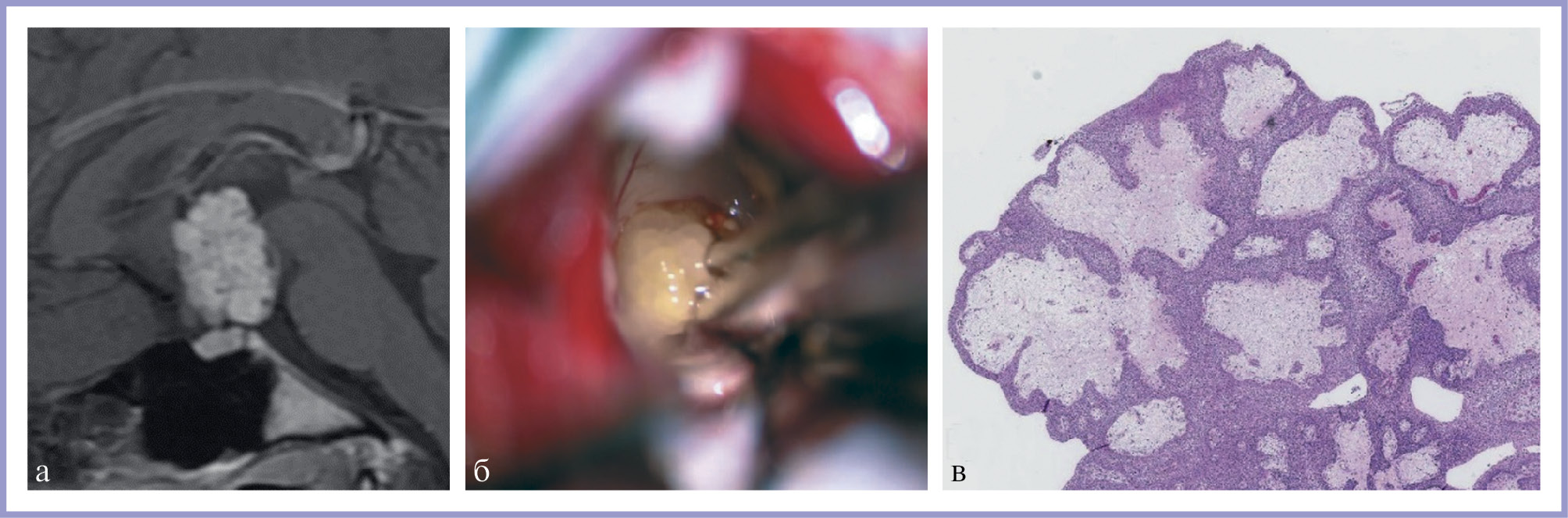
Рис. 1. Солидная интравентрикулярная папилломатозная краниофарингиома.
а — магнитно-резонансная томограмма в режиме Т1: опухоль III желудочка с бугристой поверхностью; неравномерная плотность опухоли обусловлена наличием в ее строме множества небольших кист; б — интраоперационное фото: папилломатозная краниофарингиома характерного серовато-желтого цвета; в — гистологический препарат краевой зоны опухоли, обращенной в просвет желудочка: определяется многослойный плоский неороговевающий эпителий, окружающий фиброваскулярную строму, образующую множественные внутриопухолевые кисты; окраска гематоксилином и эозином, ×100.
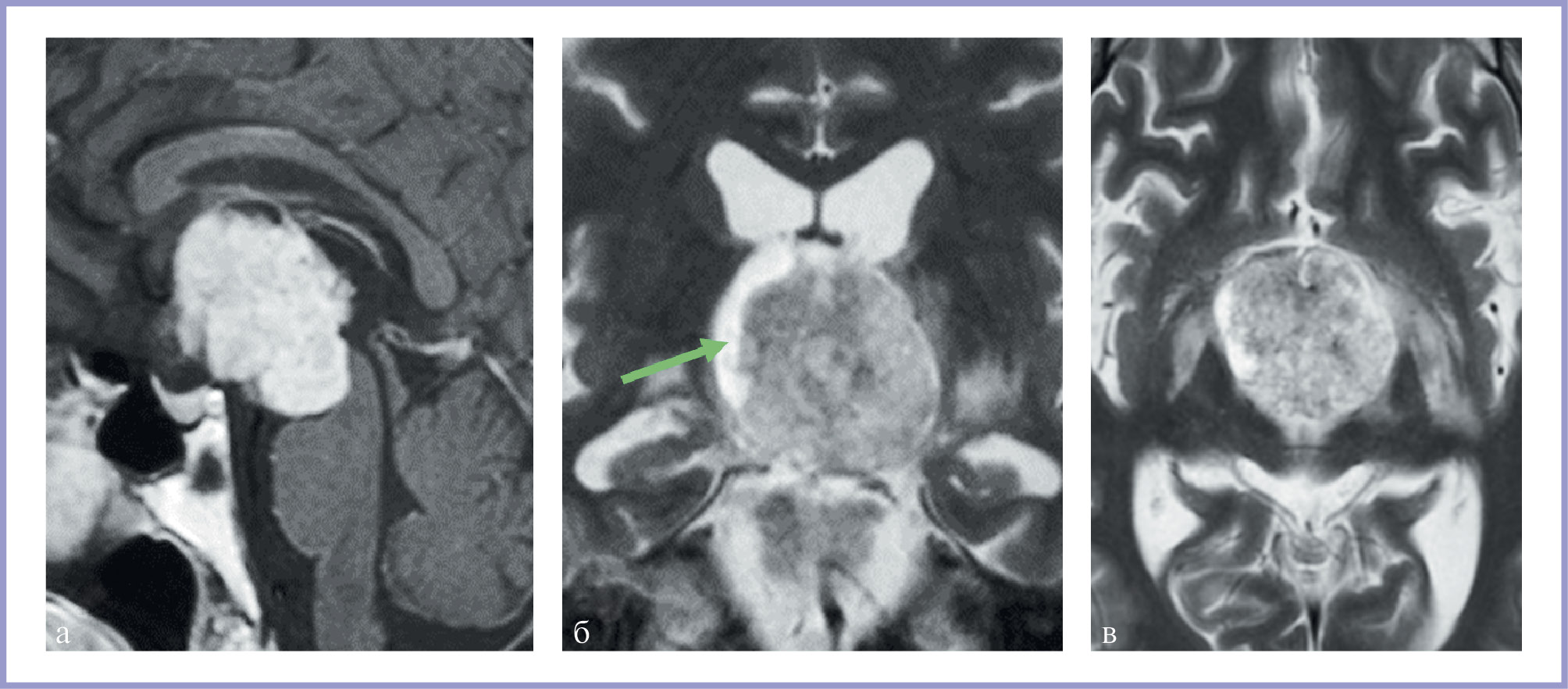
Рис. 2. Внутрижелудочковая папилломатозная краниофарингиома с щелевидной кистой на периферии.
Магнитно-резонансные томограммы в режиме Т1 с контрастным усилением в сагиттальной (а), в режиме Т2 в коронарной (б) и аксиальной (в) проекциях. На периферии опухоли — «щелевидная» киста (зеленая стрелка).
Для удаления интравентрикулярных ПКФ во всех случаях был использован транскраниальный транскаллезный хирургический доступ. Примечательно, что поверхность опухоли была практически не спаяна со стенками III желудочка. Опухоль сравнительно легко удалялась кусачками и ультразвуковым аспиратором. Морфологически — солидная опухоль с бугристой поверхностью. При гистологическом исследовании краевые зоны, обращенные в просвет желудочка, были представлены многослойным плоским эпителием, окружающим фиброваскулярные структуры с внутриопухолевыми кистами, составляющими строму и не содержащими мозговой ткани.
Характерным признаком интравентрикулярных ПКФ (обнаружен в 4 из 8 наблюдений) является воронкообразное углубление в базальных отделах опухоли, впервые описанное J. Pascual и соавт. в 2022 г. как «базальный проток» (рис. 3) [11, 12].
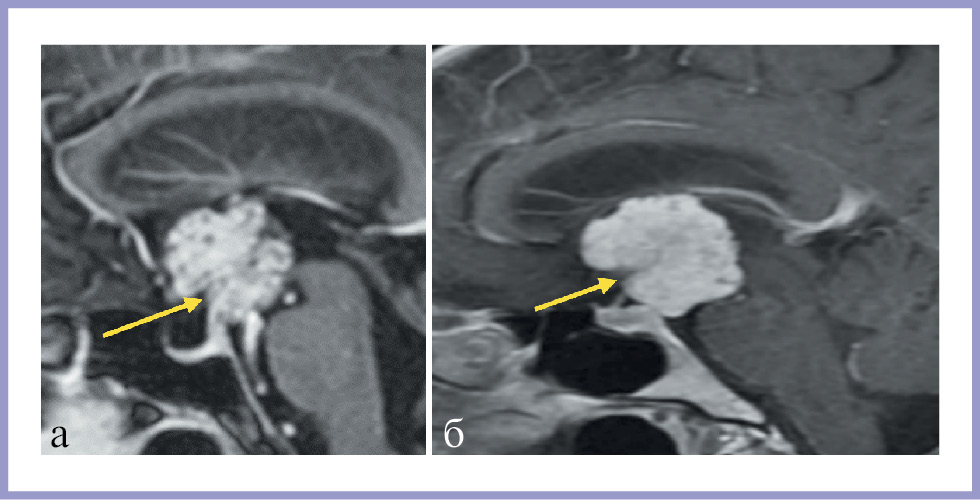
Рис. 3. Солидная интравентрикулярная папилломатозная краниофарингиома с воронкообразным углублением. Магнитно-резонансные томограммы в режиме Т1 с контрастным усилением.
а, б — воронкообразное углубление (желтая стрелка) в базальной части опухоли.
В связи с интравентрикулярным ростом ПКФ клиническая симптоматика развивается на поздних сроках в результате окклюзии ликворопроводящих путей (межжелудочковые отверстия, водопровод), когда большой объем опухоли уже полностью заполняет полость III желудочка. Интравентрикулярные ПКФ обычно умеренной плотности и малокровоснабжаемые.
Кистозные ПКФ (26 наблюдений). В этой группе можно выделить 2 варианта:
А. Монокистозные (цистернальные) ПКФ.
Б. Кистозные ПКФ, смещающие дно III желудочка и вдающиеся в его просвет. Для удаления ПКФ этой группы преимущественно использовался эндоскопический трансназальный передний расширенный доступ — 85% случаев (n=22).
А) Монокистозные ПКФ — супраселлярные экстравентрикулярные ПКФ с небольшой солидной частью, располагающиеся в базальных цистернах под или вблизи хиазмы (n=4).
Для этих опухолей характерны ранние клинические проявления в виде снижения зрения вследствие сдавления хиазмы и зрительных трактов. В этой связи опухоли диагностируются на ранних стадиях развития и имеют небольшие размеры (рис. 4). При морфологическом исследовании капсулы кисты выявлено, что ее внутренняя поверхность сформирована опухолевой тканью, состоящей из плоского эпителия (рис. 4 б), а наружная представлена слоем соединительной ткани — фиброзированной мягкой и арахноидальной оболочками. Наиболее вероятное исходное место развития опухоли — верхние отделы ножки гипофиза, что определяет ее преимущественно цистернальное расположение. Примечательно, что у всех пациентов в группе заболевание дебютировало с развития зрительных нарушений, а по данным МРТ все цистернальные ПКФ располагались ретрохиазмально, сдавливая при этом хиазму зрительных нервов. После удаления опухоли во всех случаях было отмечено улучшение остроты зрения.
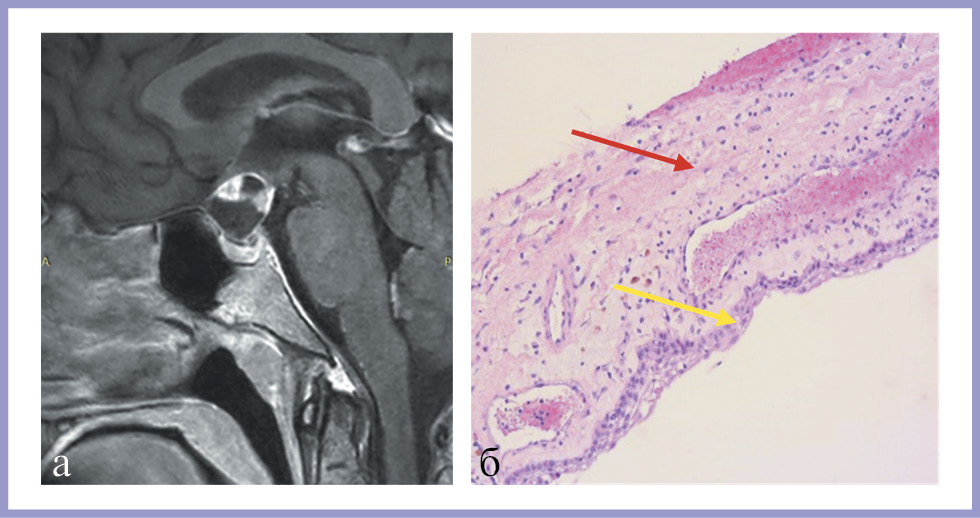
Рис. 4. Супраселлярная экстравентрикулярная кистозная папилломатозная краниофарингиома.
а — магнитно-резонансная томограмма в режиме Т1 с контрастным усилением: определяется преимущественно кистозная папилломатозная краниофарингиома, расположенная под хиазмой и граничащая сверху с дном III желудочка; б — гистологический препарат свободного фрагмента капсулы кисты, окраска гематоксилином и эозином, ×400; желтой стрелкой обозначен слой опухолевых клеток (эпителий), плотно прилегающий к хорошо выраженной соединительнотканной капсуле, сформированной фиброзированными мягкой мозговой и, скорее всего, также арахноидальной оболочками (красная стрелка).
Б) Кистозные ПКФ с распространением в III желудочек (n=22).
Все опухоли этой группы на МРТ были представлены крупными единичными кистами, в базальных отделах которых располагалась солидная часть опухоли (рис. 5 а). Опухоли отличаются большим разнообразием: степенью внедрения в III желудочек, размерами кист, разновидностью структуры и формы солидной части (рис. 5, 6). При эндоскопическом удалении стенка кисты, вдавливающаяся в просвет III желудочка, выглядела более «мощной» в латеральных отделах вблизи стенок III желудочка и резко истончалась в центральной части (области купола кисты), где имела вид полупрозрачной мембраны (рис. 5 б). Гистологически эта часть капсулы состояла из слоя эпителиальных клеток с фрагментами пиальной оболочки (рис. 5 д). При гистологическом исследовании латеральных (утолщенных) отделов капсулы между слоями опухолевого эпителия и прилежащими фрагментами мозговой ткани выявляется тонкий слой соединительной ткани — остатки мягкой мозговой оболочки (рис. 5 г, рис. 6 б, г).
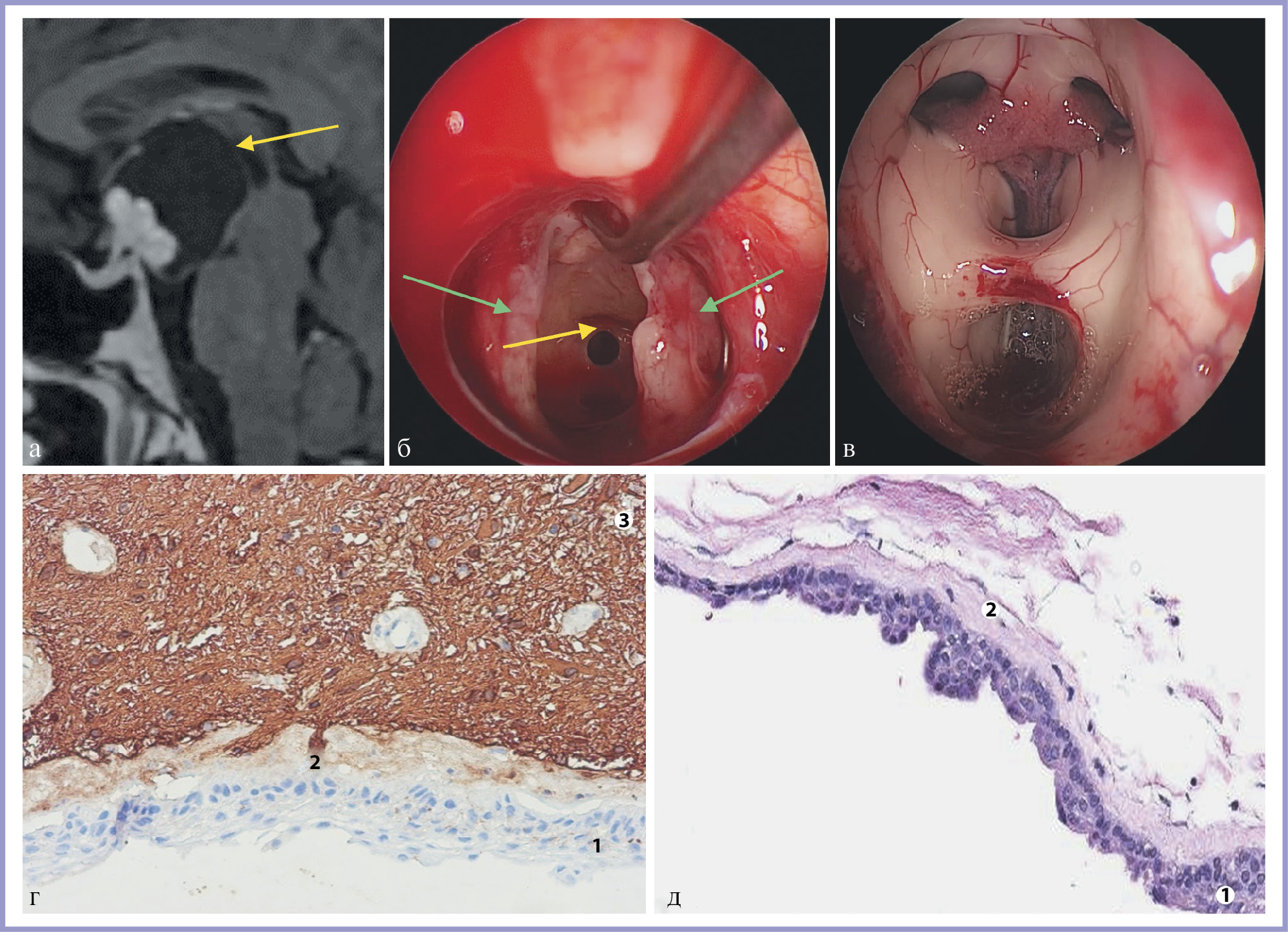
Рис. 5. Кистозная папилломатозная краниофарингиома, внедряющаяся в III желудочек.
а — магнитно-резонансная томограмма в режиме Т1 с контрастным усилением; сагиттальный срез: определяется небольших размеров солидная часть опухоли и крупная киста, вдающаяся в просвет III желудочка (желтая стрелка); б — интраоперационное фото, этап эндоскопического трансназального удаления опухоли: видны фрагменты опухоли, прилегающей к стенкам III желудочка (зеленые стрелки), в центре — тонкая полупрозрачная капсула краниофарингиомы, сформированная в основном мягкой мозговой оболочкой; в — интраоперационное фото после удаления капсулы краниофарингиомы: видна полость III желудочка, отверстия Монро и передняя межталамическая спайка; г — иммуногистохимический препарат капсулы кисты с прилежащими фрагментами мозговой ткани: 1 — опухолевый многослойный неороговевающий эпителий; 2 — атрофичная мягкая мозговая оболочка; 3 — мозговая ткань (экспрессия GFAP); д — гистологический препарат резко истонченной капсулы кисты в области ее верхнего полюса (желтая стрелка на рис. 5 а и 5 б): 1 — опухолевый эпителий капсулы краниофарингиомы; 2 — мягкая мозговая оболочка (окраска гематоксилином и эозином).
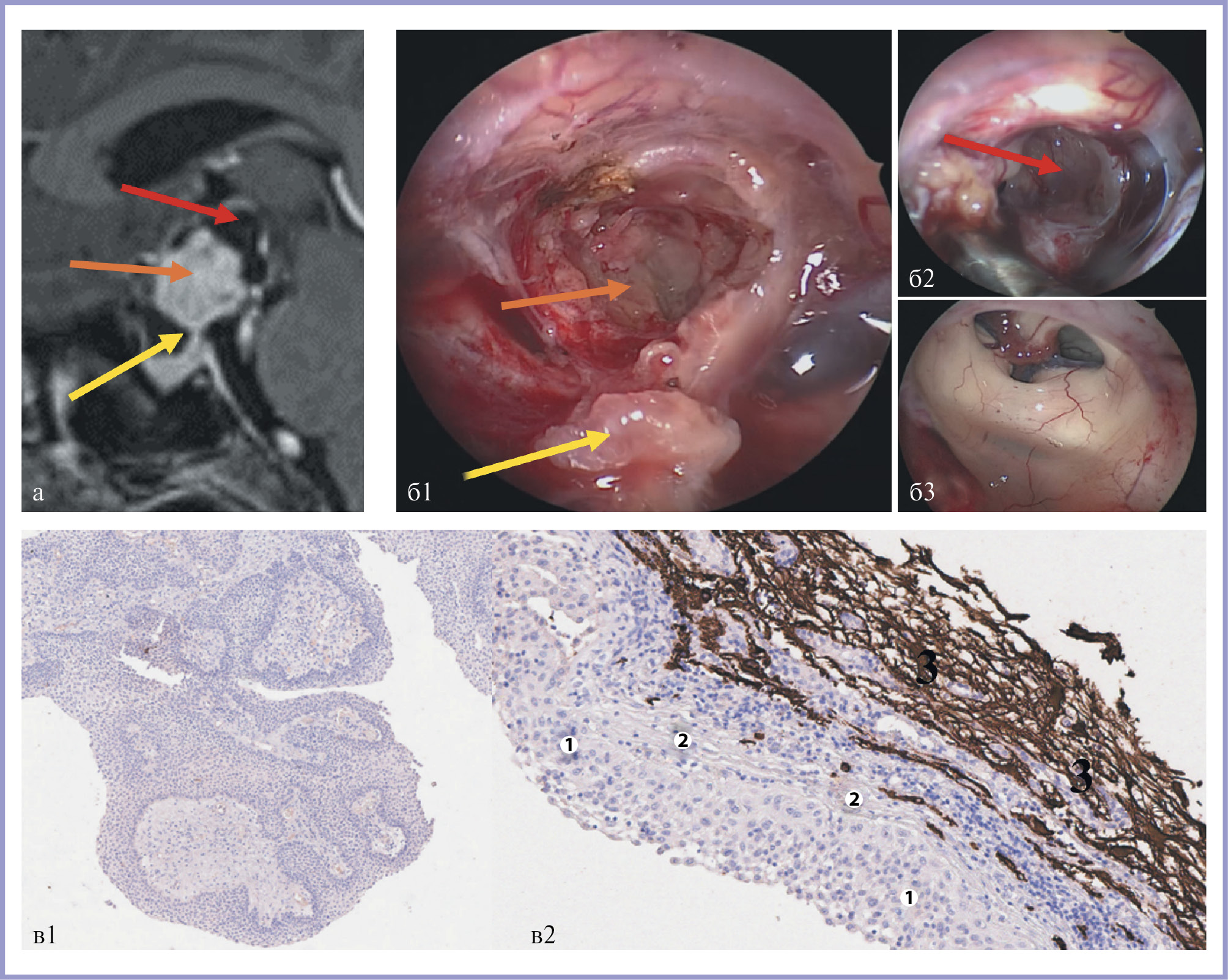
Рис. 6. Солидно-кистозная папилломатозная краниофарингиома, внедряющаяся в III желудочек.
а — магнитно-резонансная томограмма в режиме Т1 с контрастным усилением: определяется кистозно-солидная папилломатозная краниофарингиома, распространяющаяся в III желудочек, стебель гипофиза указан желтой стрелкой, солидная часть папилломатозной краниофарингиомы — оранжевой стрелкой, кистозная часть — красной стрелкой; б — интраоперационные фото: 1 — этап удаления солидной части папилломатозной краниофарингиомы, стрелками указаны инфильтрированный опухолью стебель гипофиза и сама солидная часть опухоли; 2 — резко истонченная полупрозрачная капсула (красная стрелка); 3 — полость III желудочка после тотального удаления папилломатозной краниофарингиомы; в1 — гистологический препарат солидной массы папилломатозной краниофарингиомы, представленной папиллярными разрастаниями многослойного неороговевающего плоского эпителия и внутриопухолевыми кистами; в2 — иммуногистохимическое исследование латеральных участков капсулы: 1 — опухолевый эпителий; 2 — атрофичная мягкая мозговая оболочка; 3 — мозговая ткань с элементами лимфоцитарного воспаления.
В качестве примера кистозно-солидной ПКФ, сопровождающейся не только сдавлением дна III желудочка, но и выраженной адгезией с его стенками, приведем следующий пример.
Больной Ш., 30 лет, поступил в НМИЦН в тяжелом состоянии, с грубейшими когнитивно-мнестическими нарушениями. По данным МРТ, кистозная опухоль заполняла всю полость III желудочка, разрушая свод (рис. 7). Солидная часть опухоли состояла из крупного узла и ряда перемычек. Во время транскаллезного удаления опухоли были взяты ее фрагменты в области правого отверстия Монро (рис. 7 а). При гистологическом исследовании обнаружен фрагмент соединительной ткани со следами перенесенного кровоизлияния и признаками коагуляции. Второй участок капсулы кисты взят в области боковой стенки III желудочка (рис. 7 а) и представлял собой глиальную ткань с участками опухоли (ПКФ). Была удалена солидная часть опухоли. Стенка, спаянная со структурами III желудочка, не удалялась.
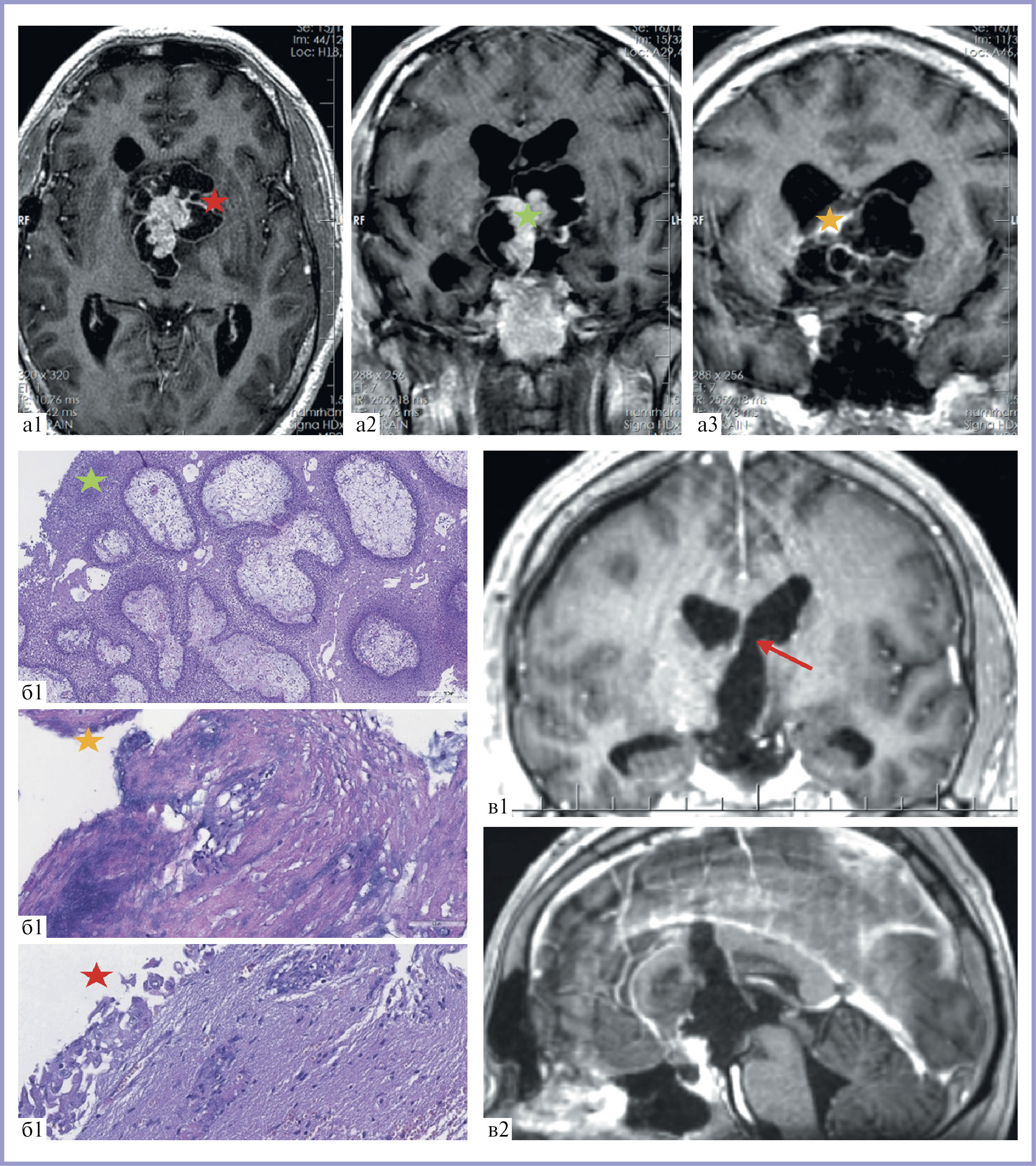
Рис. 7. Кистозная папилломатозная краниофарингиома, распространяющаяся в III желудочек; транскраниальное удаление.
а — магнитно-резонансная томограмма в режиме Т1 с контрастным усилением, аксиальный срез (1), коронарные срезы (2, 3): определяется кистозно-солидная интраэкстравентрикулярная папилломатозная краниофарингиома; отмечена неоднородность структуры опухоли, большая киста, верхняя стенка которой сформирована приподнятым дном III желудочка, распространяется за его пределы (2, 3); б — гистологический препарат солидной части папилломатозной краниофарингиомы; мелкие фрагменты грубоволокнистой фиброзной ткани с кровоизлияниями и следами коагуляции (2); мелкие фрагменты гиперплазированной глиальной (мозговой) ткани с микроскопическими участками эпителиальной опухоли папиллярного строения (3); в — магнитно-резонансная томограмма в режиме Т1 с контрастным усилением после удаления опухоли, коронарный (1) и сагиттальный (2) срезы: определяется дефект свода слева (разрушение опухолью свода было выявлено во время операции, оно четко определяется на послеоперационной магнитно-резонансной томограмме (1) — красная стрелка). Наиболее вероятная причина повреждения свода — высокое давление в опухолевой кисте.
Стоит отдельно упомянуть, что солидный компонент кистозных ПКФ может существенно разниться по размерам и форме, напоминая тутовую ягоду, цветную капусту (такие определения часто встречаются в литературе). В крупных кистах солидная часть опухоли может быть фрагментирована и иметь форму тяжей, разделяющих полость кисты на отдельные сегменты. (рис. 8).
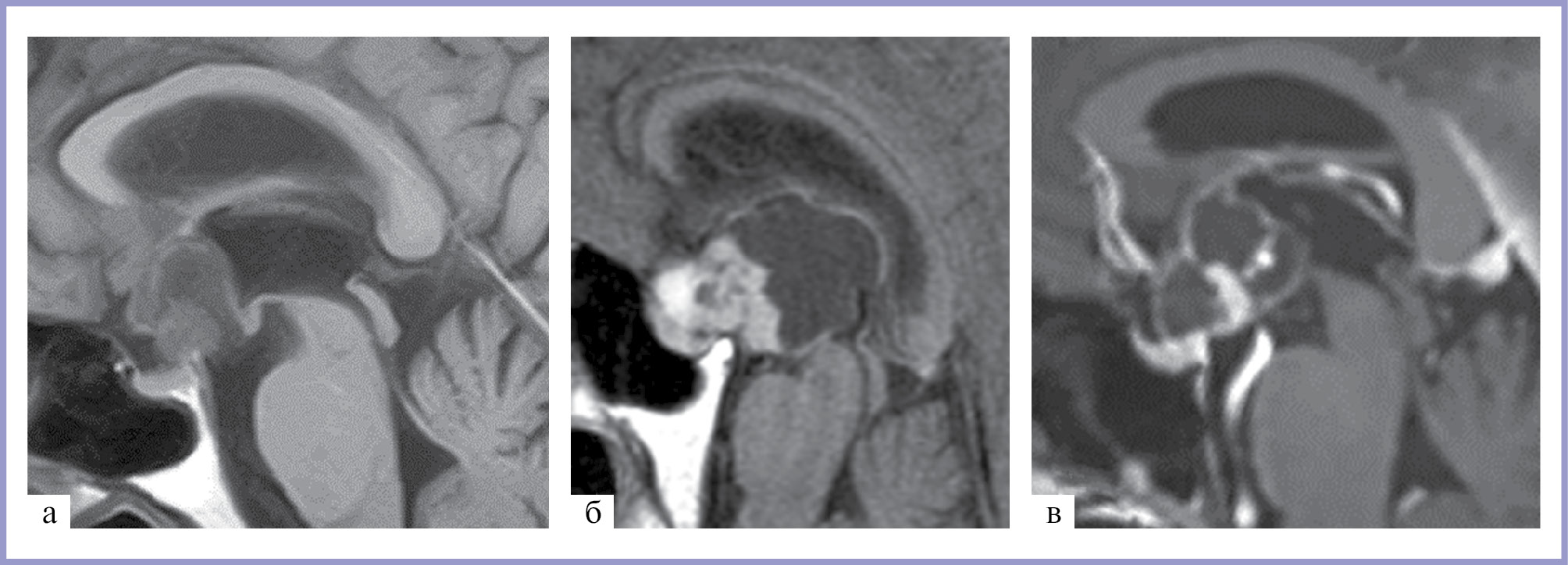
Рис. 8. Магнитно-резонансные томограммы, демонстрирующие различные варианты солидных структур кистозных папилломатозных краниофарингиом.
Разнообразие структуры солидной части определяется тем, что формирующиеся в ней кисты, сливаясь, разрывают опухоль на отдельные фрагменты, иногда принимающие форму перемычек, тяжей (рис. 7, 8).
Обсуждение
В литературе, посвященной ПКФ, выделяются 2 основные формы этих опухолей: солидные интравентрикулярные (III желудочек) и монокистозные с небольшим солидным компонентом, однако не делается попытки объяснить причину 2 разных по структуре форм ПКФ.
Наши исследования позволили выделить 2 формы кистозных ПКФ: 1) преимущественно цистернального расположения и 2) внедряющиеся в полость III желудочка. Гистологическое исследование выявило, что стенки кист цистернальных ПКФ, развивающихся на уровне ножки гипофиза, сформированы мягкой мозговой и арахноидальной оболочками и слоями опухолевого эпителия. Стенка кистозных ПКФ, внедряющихся в III желудочек, образована мягкой мозговой оболочкой и клетками опухоли с локальной инвазией мозговой ткани.
Интравентрикулярные ПКФ свободно располагаются в полости III желудочка, за пределами мягкой мозговой оболочки.
Формирование различных по структуре ПКФ определяется особенностями их развития в эмбриональном периоде. На второй-третьей неделе эмбриогенеза ротоглоточный эпителиальный выступ (карман Ратке) до формирования мягкой мозговой оболочки вступает в контакт с инфундибулярным выпячиванием. Из клеток кармана Ратке формируется передняя доля гипофиза. Подобные клетки могут также располагаться в гипоталамической области и ножке гипофиза под пиальной оболочкой. Клетки кармана Ратке могут попасть в просвет нейронального пузыря за пределы мозговой оболочки при ее недоразвитии или дефектах [13]. Путем метаплазии этих клеток в последующем формируются ПКФ. Хотя ПКФ преимущественно состоят из плоского эпителия, в структуре опухоли есть небольшое количество цистернирующих клеток (колбовидных, реснитчатых) [13].
При интравентрикулярных солидных ПКФ крупные кисты практически не формируются, поскольку кистозное содержимое поступает в ликвор желудочковой системы. При кистозных ПКФ, развивающихся на уровне ножки гипофиза, формирующаяся в опухолях жидкость (секрет реснитчатых и колбовидных клеток; жидкость, фильтрующаяся из сосудов опухоли) скапливается под капсулой, сформированной мягкой и арахноидальной оболочками, выстланными слоями плоского эпителия (по данным некоторых авторов [14, 15], арахноидальная оболочка окружает большую часть ножки гипофиза). ПКФ, располагающиеся под дном III желудочка, отделены от его просвета только пиальной оболочкой, и при увеличении кисты беспрепятственно смещают дно III желудочка в его полость, местами срастаясь с ним. Различие между вариантами кистозных ПКФ в определенной степени условно. Например, ПКФ, развивающиеся из стебля гипофиза, могут достигать большой величины и, как следствие, сдавливать III желудочек. Ниже представлена схема топографического соотношения всех трех форм ПКФ с окружающими мозговыми структурами (рис. 9).
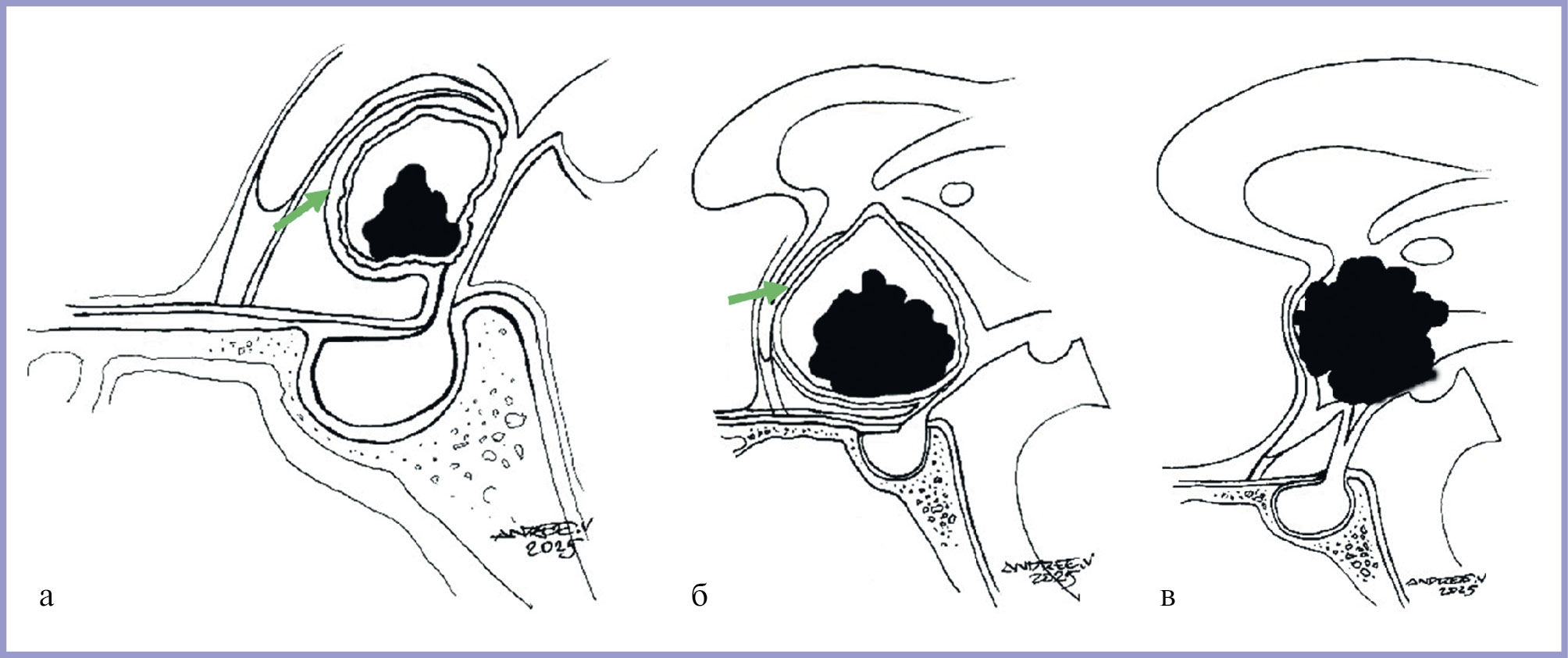
Рис. 9. Схема отношения папилломатозной краниофарингиомы к мягкой мозговой оболочке.
а — супраселлярная цистернальная кистозная папилломатозная краниофарингиома без внедрения в III желудочек; б — кистозная папилломатозная краниофарингиома с внедрением в III желудочек; в — солидная интравентрикулярная папилломатозная краниофарингиома. Зелеными стрелками указаны ориентиры мягкой мозговой оболочки.
В редких случаях ПКФ могут формироваться экстрапиально. В этих случаях кистозное содержимое скапливается в цистернах основания, формируя крупные образования (рис. 10).
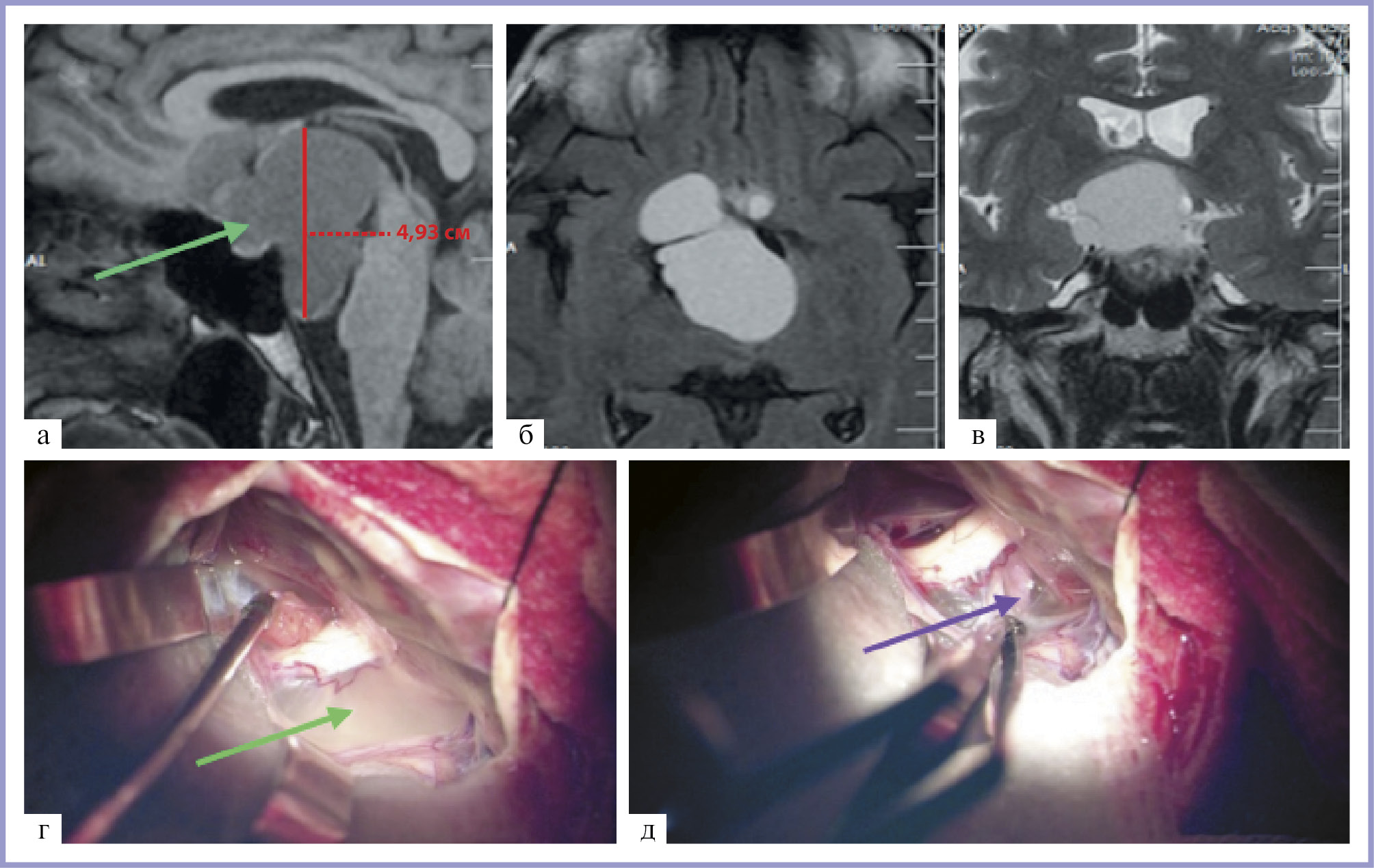
Рис. 10. Большая кистозная папилломатозная краниофарингиома, расположенная в субарахноидальном пространстве основания мозга.
а–в — магнитно-резонансные томограммы головы в сагиттальной, аксиальной и фронтальной проекциях; а — небольшая, практически неразличимая опухоль (обозначена стрелкой); большая киста, расположенная в субарахноидальном пространстве, сдавливает III желудочек и распространяется на скат; г, д — интраоперационные снимки, субфронтальный доступ: г — конец отсоса на поверхности опухоли, расположенной под хиазмой; стенка кисты с опалесцирующим, мутным содержимым (зеленая стрелка); д — снимок после удаления опухоли и опорожнения кисты, визуализирована ножка гипофиза (фиолетовая стрелка).
Частота разных форм ПКФ окончательно не определена. По первоначальным данным R. Prieto и соавт., основанным на анализе опубликованных наблюдений [9], интравентрикулярные ПКФ составляли около 60%. В следующей публикации (анализ 560 случаев) интравентрикулярные ПКФ составили около половины наблюдений. Необходимо подчеркнуть, что эти данные, основанные на литературных публикациях, вряд ли отражают реальное соотношение различных вариантов ПКФ, поскольку публикации в большинстве случаев посвящены описанию необычных, редких случаев, какими являются, в первую очередь, вентрикулярные солидные опухоли. Ближе к реальным данные, приведенные в работе Y. Jia и соавт. [16]: из 101 случая в 36 (36,64%) выявлены цистернальные ПКФ (по нашей классификации), в 52 (51,49%) — кистозные ПКФ, внедряющиеся в III желудочек, и в 13 (12,87%) — солидные интравентрикулярные ПКФ.
Заключение
Анатомо-морфологические варианты папилломатозных краниофарингиом зависят от места исходного роста опухоли из остатков эмбрионального эпителия гипоталамической области относительно слоя мягкой мозговой оболочки. Кистозная стенка папилломатозной краниофарингиомы, развивающейся на уровне стебля гипофиза, сформирована слоями мягкой и арахноидальной оболочек. Стенка кист папилломатозных краниофарингиом, возникающих на уровне гипоталамуса (инфундибулярного углубления) и вдающихся в полость III желудочка, сформирована мягкой мозговой оболочкой и структурами дна III желудочка. Солидная вентрикулярная папилломатозная краниофарингиома образуется из опухолевого эпителия, расположенного в базальных отделах желудочка за пределами мягкой мозговой оболочки. Образующаяся в солидных интравентрикулярных папилломатозных краниофарингиомах кистозная жидкость поступает в ликвор.
Участие авторов:
Концепция и дизайн исследования — Коновалов А.Н., Иванов В.В., Шишкина Л.В.
Сбор и обработка материала — Иванов В.В.
Статистическая обработка данных — Иванов В.В., Коновалов А.Н.
Написание текста — Иванов В.В., Шишкина Л.В.
Редактирование — Коновалов А.Н., Калинин П.Л., Шкарубо А.Н., Кутин М.А., Фомичев Д.В.
Авторы заявляют об отсутствии конфликта интересов.
Комментарий
Несмотря на все достижения современной нейронауки, краниофарингиомы, эти «калейдоскопические» опухоли, остаются предметом изучения морфологов, эндокринологов, специалистов лучевой диагностики, онкологов, генетиков и, конечно, нейрохирургов. Труднодоступная локализация, полиморфность строения, функциональная значимость прилежащих структур, нередко вовлеченных в опухолевый процесс, высокий риск нарастания эндокринных и неврологических нарушений в послеоперационном периоде оставляют хирургию таких опухолей в числе самых сложных. С этих позиций изучение онкогенеза сохраняет свою актуальность.
Авторы в своей публикации изучили строение и топографию папилломатозных краниофарингиом и установили существование 2 основных форм — солидной интравентрикулярной и преимущественно кистозной, при этом строение опухоли зависело от места исходного роста относительно пиальной оболочки. Как причина формирования кистозных папилломатозных краниофарингиом рассматривается расположение опухоли под последней.
Подробные, очень детальные постмортальные морфологические исследования первой половины прошлого столетия позволили выявить некоторые закономерности в расположении скоплений эмбрионального эпителия (Christeller (1914), Kiyono (1924), Carmicheal (1931), Susman (1932), В.В. Грехов (1965)), была отмечена неоднородность клеточного состава этих скоплений в зависимости от их локализации. Причем именно в инфундибулярной области они сохраняют сходство с эмбриональным эпителием первичной ротовой полости. Yoshida и соавт. (1977) и Koboyashi и соавт. (1978) были опубликованы очень интересные наблюдения, в которых опухоль состояла их 2 фрагментов: эндоселлярная часть по строению соответствовала кисте кармана Ратке, а плотная узловая часть состояла из слоя реснитчатого и многослойного плоскоклеточного эпителия. Такие единичные наблюдения, действительно, поддерживают предположение, что характер опухоли определяется исходной матрицей роста, т.е. типом клеток, из которых она развивается: например, многослойным плоскоклеточным эпителием с участками кубического, цилиндрического эпителия с реснитчатыми или бокаловидными клетками и т. д.
В основе кистообразования лежит хорошо известный процесс дегенеративных изменений. Второй механизм — это наличие железистоподобных структур и микрокист, обладающих секреторной способностью (Szeifert (1991)), т.е. ретенционный характер кистообразования (по типу образования кист в слюнных железах по причине нарушения оттока их секрета). Авторы на своем материале установили еще один фактор, определяющий строение опухоли, — ее расположение по отношению к пиальной оболочке, — что представляется очень важным.
Рассматривая кистообразование в случае экстрапиального роста опухоли, авторы выдвинули предположение о возможности скопления кистозного содержимого в цистернах основания с формированием крупных кистозных полостей, выстланных тонким слоем опухолевых клеток. Можно предположить, что кистозное строение адамантиномоподобных краниофарингиом (что характерно при данном гистологическом варианте и локализации) будет также определяться субпиальным ростом опухоли.
Вместе с тем не стоит сбрасывать со счетов исследования Szeifert (1991), который описал наличие фенестрированных капилляров в капсуле опухоли, т.е. еще один механизм — активный транспорт жидкости через цитоплазму клеток опухоли в просвет кистозной полости.
Возможно, изучение культуры опухоли позволит уточнить некоторые положения.
Ж.Б. Семенова (Москва)
- Sekine S, Shibata T, Kokubu A, Morishita Y, Noguchi M, Nakanishi Y, Sakamoto M, Hirohashi S. Craniopharyngiomas of adamantinomatous type harbor beta-catenin gene mutations. The American Journal of Pathology. 2002;161(6):1997-2001. https://doi.org/10.1016/s0002-9440(10)64477-x
- Кутин М.А., Сиднева Ю.Г., Коновалов А.Н., Пронин И.Н., Кадашев Б.А., Калинин П.Л., Шкарубо А.Н., Семенова Ж.Б., Фомичев Д.В., Шарипов О., Шульц Е.И., Лубнин А.Ю., Попугаев К.А., Савин И.А., Астафьева Л.И., Клочкова И.С., Шишкина Л.В., Добровольский Г.Ф., Ротин Д.Л., Саватеев А.Н. Гипоталамус. Современные представления о пространственной и функциональной организации (обзор литературы). Вестник неврологии, психиатрии и нейрохирургии. 2016;2:55-65.
- Brastianos PK, Taylor-Weiner A, Manley PE, Jones RT, Dias-Santagata D, Thorner AR, Lawrence MS, Rodriguez FJ, Bernardo LA, Schubert L, Sunkavalli A, Shillingford N, Calicchio ML, Lidov HG, Taha H, Martinez-Lage M, Santi M, Storm PB, Lee JY, Palmer JN, Adappa ND, Scott RM, Dunn IF, Laws ER Jr, Stewart C, Ligon KL, Hoang MP, Van Hummelen P, Hahn WC, Louis DN, Resnick AC, Kieran MW, Getz G, Santagata S. Exome sequencing identifies BRAF mutations in papillary craniopharyngiomas. Nature Genetics. 2014;46(2):161-165. https://doi.org/10.1038/ng.2868
- Crotty TB, Scheithauer BW, Young WF Jr, Davis DH, Shaw EG, Miller GM, Burger PC. Papillary craniopharyngioma: a clinicopathological study of 48 cases. Journal of Neurosurgery. 1995;83(2):206-214. https://doi.org/10.3171/jns.1995.83.2.0206
- Кутин М.А., Калинин П.Л., Кадашев Б.А., Фомичев Д.В., Шарипов О.И., Голанов А.В., Трунин Ю.Ю., Астафьева Л.И., Мазеркина Н.А., Клочкова И.С., Сиднева Ю.Г., Семенова Ж.Б., Саватеев А.Н., Струнина Ю.В., Сидорук Е.В. Краниофарингиомы. Общие сведения и основные направления лечения (обзорная лекция). Вестник неврологии, психиатрии и нейрохирургии. 2016;5.
- Larkin SJ, Ansorge O. Pathology and pathogenesis of craniopharyngiomas. Pituitary. 2013;16(1):9-17. https://doi.org/10.1007/s11102-012-0418-4
- Erdheim J. Über hypophysengangsgeschwülste und hirncholesteatome. Sitzungsberichte der Kaiserlichen Akademie der Wissenschaften mathematisch-naturwissenschaftliche Classe. 1904;113:537-726.
- Luse SA, Kernohan JW. Squamous-cell nests of the pituitary gland. Cancer. 1955;8(3):623-628. https://doi.org/10.1002/1097-0142(1955)8:3<623::aid-cncr2820080328>3.0.co;2-d
- Prieto R, Barrios L, Pascual JM. Papillary Craniopharyngioma: A Type of Tumor Primarily Impairing the Hypothalamus — A Comprehensive Anatomo-Clinical Characterization of 350 Well-Described Cases. Neuroendocrinology. 2022;112(10):941-965. https://doi.org/10.1159/000521652
- Prieto R, Juratli TA, Bander ED, Santagata S, Barrios L, Brastianos PK, Schwartz TH, Pascual JM. Papillary Craniopharyngioma: An Integrative and Comprehensive Review. Endocrine Reviews. 2025;46(2):151-213. https://doi.org/10.1210/endrev/bnae028
- Pascual JM, Prieto R, Carrasco R, Barrios L. Basal Recess in Third Ventricle Tumors: A Pathological Feature Defining a Clinical-Topographical Subpopulation of Papillary Craniopharyngiomas. Journal of Neuropathology and Experimental Neurology. 2022;81(5):330-343. https://doi.org/10.1093/jnen/nlac020
- Belotti F, Lupi I, Cosottini M, Ambrosi C, Gasparotti R, Bogazzi F, Fontanella MM, Doglietto F. Persisting Embryonal Infundibular Recess (PEIR): Two Case Reports and Systematic Literature Review The Journal of Clinical Endocrinology & Metabolism. 2018;103(7):2424-2429. https://doi.org/10.1210/jc.2018-00437
- Pascual JM, Prieto R, Castro-Dufourny I, Carrasco R. Topographic diagnosis of papillary craniopharyngiomas: the need for an accurate MRI-surgical correlation. American Journal of Neuroradiology. 2015;36(8):E55-E56. https://doi.org/10.3174/ajnr.A4441
- Ciric IS, Cozzens JW. Craniopharyngiomas: transsphenoidal method of approach — for the virtuoso only? Clinical Neurosurgery. 1980;27:169-187.
- Qi S, Lu Y, Pan J, Zhang X, Long H, Fan J. Anatomic relations of the arachnoidea around the pituitary stalk: relevance for surgical removal of craniopharyngiomas. Acta Neurochirurgica. 2011;153(4):785-796. https://doi.org/10.1007/s00701-010-0940-y
- Jia Y, Cai K, Qiao N, Liu F, Wu W, Ru S, Xiao Y, Cao L, Gui S. A Full View of Papillary Craniopharyngioma Based on Expanded Endonasal Approach: A Comprehensive Clinical Characterization of 101 Cases. Journal of Clinical Medicine. 2023;12(20):6551. https://doi.org/10.3390/jcm12206551


Рекомендуем статьи по данной теме:
Плазменный скальпель Береснева в лечении фантомного болевого синдрома.Российский журнал боли. 2026;24(3):27-30
Первое клиническое применение аутологичного фибринового клея Vivostat в нейрохирургии Казахстана и Центральной Азии.Вопросы нейрохирургии имени Н.Н. Бурденко. 2026;90(2):70-76
Опыт применения системного тромболизиса у пациентов с массивной тромбоэмболией легочной артерии после нейрохирургической операции (серия клинических наблюдений и обзор литературы).Анестезиология и реаниматология. 2026;(1):84-91
Радиохирургическое лечение нейрохирургических пациентов (к 20-летию нейрорадиохирургии в России).Вопросы нейрохирургии имени Н.Н. Бурденко. 2025;89(6):7-15
Патоморфология рецидивирующих менингиом.Архив патологии. 2025;87(5):28-35
Анатомо-хирургические исследования в нейрохирургии. Традиции и тренды.Оперативная хирургия и клиническая анатомия (Пироговский научный журнал). 2025;9(1):56-65
Возможности HARDI-CSD-трактографии в определении структуры проводящих путей диэнцефальной области при краниофарингиомах.Вопросы нейрохирургии имени Н.Н. Бурденко. 2025;89(1):30-36
Современные представления о топографо-анатомической классификации краниофарингиом: обзор литературы.Вопросы нейрохирургии имени Н.Н. Бурденко. 2024;88(5):110-117
Показатели безрецидивной выживаемости при хирургическом и комбинированном лечении краниофарингиом, впервые выявленных у взрослых пациентов.Вопросы нейрохирургии имени Н.Н. Бурденко. 2024;88(5):54-59