Количественная электроэнцефалограмма у женщин на разных этапах формирования алкогольной ремиссии
Журнал: Журнал неврологии и психиатрии им. С.С. Корсакова. 2025;125(8):122-126.
DOI: 10.17116/jnevro2025125081122
Прочитано: 1375 раз
Резюме
ЦЕЛЬ ИССЛЕДОВАНИЯ
Провести сравнительный анализ спектральных параметров электроэнцефалограммы (ЭЭГ) у женщин на разных этапах формирования алкогольной ремиссии.
МАТЕРИАЛ И МЕТОДЫ
Проведен анализ 60 ЭЭГ женщин с установленным диагнозом алкогольной зависимости. На момент включения в исследование пациентки находились на разных этапах формирования ремиссии: алкогольно-депривационный этап (группа 1), этап стабилизации ремиссии (группа 2), этап сформировавшейся ремиссии (группа 3).
РЕЗУЛЬТАТЫ
Статистический анализ показателей спектральной мощности ЭЭГ выявил более высокие значения в альфа-диапазоне у пациенток из группы 3 в затылочном (O1: p=0,011 и p=0,027) и височных (T5: p=0,001 и p=0,012; T6: p=0,022 и p=0,029) отведениях по сравнению с пациентками из групп 1 и 2 соответственно. Также были обнаружены статистически значимо более высокие показатели спектральной мощности в бета-диапазоне у пациенток из группы 3 во фронтальных (F7: p=0,001; F8: p=0,002), теменных (P3: p=0,041; P4: p=0,045 и p=0,043), затылочных (O1: p=0,002; O2: p=0,008 и p=0,003) и височных (T5: p=0,002 и p=0,001; T6: p=0,001 и p<0,001) отведениях. Статистически значимых различий количественных показателей спектральной мощности ЭЭГ между группами 1 и 2 не обнаружено (p>0,05).
ЗАКЛЮЧЕНИЕ
Результаты проведенного сравнительного анализа указывают на значимую перестройку функционального состояния головного мозга у женщин лишь после 1 года воздержания от приема алкоголя.
Ключевые слова
- алкогольная зависимость
- ремиссия
- электроэнцефалограмма
- топографическое картирование
- спектральная мощность
Дата поступления: 01.04.2025
Дата принятия в печать: 14.05.2025
Дата публикации: 29.08.2025
Злоупотребление алкоголем и алкогольная зависимость связаны с повышенной преждевременной смертностью, увеличивая риск возникновения сердечно-сосудистых заболеваний, психических расстройств, травм, суицидов и т.д. [1, 2]. Несмотря на то что алкоголь является общеизвестным фактором риска для здоровья, его потребление в мире продолжает расти и в настоящее время считается основной причиной нетрудоспособности, а также ранней смертности в возрастной группе 15—49 лет [3, 4]. Согласно эпидемиологическим данным, алкогольной зависимостью чаще страдают мужчины, чем женщины [4], тем не менее женщины более уязвимы к неблагоприятным последствиям для здоровья, связанным с употреблением алкоголя [5, 6], что отчасти объясняется гендерными различиями в фармакокинетике алкоголя.
В современной отечественной наркологии основными критериями эффективности лечения алкогольной зависимости считаются устойчивость и качество достигнутых ремиссий, а именно длительность сохранения полной трезвости у пациента после завершения курса противоалкогольной терапии [7, 8]. Анализ картины ремиссии алкогольной зависимости в контексте ее патофизиологических проявлений является важным для создания комплексного подхода к терапии. Тем не менее многие предыдущие исследования были сосредоточены лишь на мужчинах с алкогольной зависимостью [9—11], что обусловливает актуальность данного исследования.
Несмотря на огромный объем информации о нейрофизиологических коррелятах клинических проявлений алкогольной зависимости [12—17], динамика изменений функционального состояния коры головного мозга в процессе формирования алкогольных ремиссий остается малоизученной. Основное внимание исследователей уделяется выявлению особенностей электроэнцефалограммы (ЭЭГ) у пациентов до начала лечения [13—15], а также поиску ЭЭГ-предикторов длительных терапевтических ремиссий при алкогольной зависимости [12, 17]. Хотя с целью профилактики рецидивов заболевания рекомендуется длительное наблюдение после купирования абстинентного синдрома, особенности ЭЭГ на разных этапах формирования алкогольной ремиссии почти не исследованы.
Цель исследования — проведение сравнительного анализа спектральных параметров ЭЭГ у женщин на разных этапах формирования алкогольной ремиссии.
Материал и методы
Проведен анализ 60 ЭЭГ женщин на базе клиники НИИ психического здоровья Томского НИМЦ с установленным диагнозом алкогольной зависимости по критериям МКБ-10 (F10.2).
Критерии включения: женский пол; возраст от 18 до 60 лет; подписание информированного согласия на участие в исследовании; диагноз «психические и поведенческие расстройства, вызванные употреблением алкоголя» (F10.2) по МКБ-10.
Критерии исключения: возраст моложе 18 и старше 60 лет; отказ от участия в исследовании; деменция; умственная отсталость; хронические соматические заболевания в стадии обострения; эпилептическая активность или другие грубые патологические изменения ритмов в ходе ЭЭГ-обследования (типы IV и V по классификации Е.А. Жирмунской [18]).
Все включенные в исследование пациентки обращались в клинику на добровольных условиях для прохождения курса детоксикации и/или психотерапии с целью купирования абстинентных проявлений, нормализации гомеостаза, профилактики возможных осложнений и последующего наблюдения. Соответственно, на момент включения в исследование пациентки находились на разных этапах формирования ремиссии [8]: алкогольно-депривационный этап — начинается через 1 нед после детоксикации и длится до 6 мес; этап стабилизации ремиссии — от 6 мес до 1 года; этап сформировавшейся ремиссии — от 1 года и более.
Регистрация ЭЭГ проводилась при помощи электроэнцефалографа NEUROFAX EEG-1200K («Nihon Kohden», Япония) в состоянии спокойного бодрствования с закрытыми глазами от 16 каналов согласно международной системе «10—20», монополярно, в частотном диапазоне от 0,5 до 40 Гц, с частотой дискретизации 1 кГц и Fz в качестве электрода заземления. После фильтрации и удаления артефактов проводился анализ абсолютной спектральной мощности (мкВ2) в диапазоне тета- (4—7 Гц), альфа- (8—13 Гц) и бета- (14—40 Гц) частот.
Все пациентки подписали информированное согласие на участие в исследовании и обработку персональных данных; протокол проведения исследования был одобрен локальным Этическим комитетом при НИИ психического здоровья Томского НИМЦ (протокол заседания ЛЭКа №157 от 18 ноября 2022 г. — Дело №157/4.2022).
Статистический анализ полученных данных проводился с использованием пакета программ Statistica 12. Проверка согласия с законом нормального распределения проводилась с помощью критерия Шапиро—Уилка. Данные представлены в виде медианы, нижнего и верхнего квартилей — Me [Q1; Q3]. При сравнении нескольких независимых выборок использовался критерий Краскела—Уоллиса ANOVA с процедурой множественного апостериорного попарного сравнения (тест Данна). Различия считались статистически значимыми при p<0,05.
Результаты
Исследуемая выборка пациенток была разделена на 3 группы в соответствии с временными критериями этапов формирования алкогольной ремиссии: группа 1 (n=25) — алкогольно-депривационный этап; группа 2 (n=19) — стабилизация ремиссии; группа 3 (n=16) — сформировавшаяся ремиссия (см. таблицу).
Клиническая характеристика выделенных групп пациентов
Показатель | Группа 1 | Группа 2 | Группа 3 | p1—2; p1—3; p2—3 |
Возраст, годы | 44 [40; 50] | 48 [46; 50] | 47 [45; 51] | 0,289; 0,119; 0,994 |
Возраст первой пробы алкоголя, годы | 16 [16; 18] | 17 [16; 21] | 16 [16; 17] | 0,609; 0,991; 0,997 |
Прогредиентность, годы | 3 [1; 8] | 5 [5; 9] | 3 [3; 8] | 0,661; 0,998; 0,996 |
Длительность заболевания, годы | 2 [1; 8] | 7 [5; 10] | 13 [8; 16] | 0,606; 0,035*; 0,301 |
Длительность ремиссии, мес | 0,5 [0,5; 4] | 11 [9; 11] | 24 [18; 36] | — |
Примечание. * — p<0,05.
Группы пациенток были сопоставимы по возрасту, возрасту первой пробы алкоголя, темпу прогредиентности алкогольной зависимости (p>0,05). Статистически значимые отличия были обнаружены только по длительности заболевания между группами пациенток, находящихся на 1-м (алкогольно-депривационном) и 3-м (сформировавшейся ремиссии) этапах.
При визуальной оценке топографических карт спектральной мощности ЭЭГ наибольшие различия между группами отмечались в альфа- и бета-диапазоне частот (рис. 1 на цв. вклейке). Показатели спектральной мощности альфа- и бета-ритма были выше у пациенток из группы 3, преимущественно в теменно-затылочных отведениях. Распределение и выраженность низкочастотной активности (тета-ритм) на ЭЭГ были схожи в исследуемых группах.
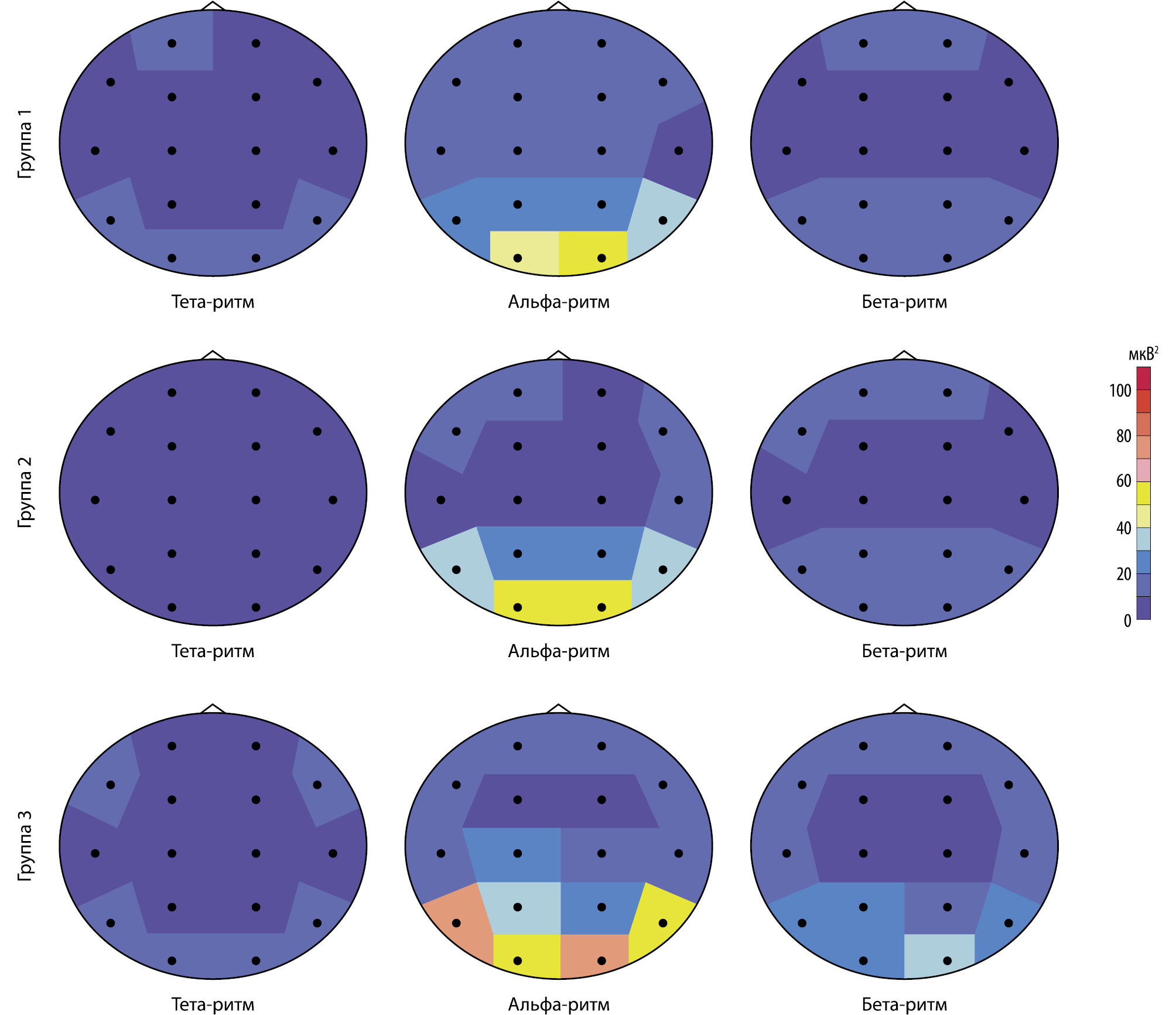
Рис. 1. Топографические карты спектральной мощности ЭЭГ исследуемых групп пациенток.
Статистический анализ показателей спектральной мощности ЭЭГ (рис. 2 на цв. вклейке) показал более высокие значения в альфа-диапазоне у пациенток из группы 3 в затылочном (O1: p=0,011 и p=0,027) и височных (T5: p=0,001 и p=0,012; T6: p=0,022 и p=0,029) отведениях по сравнению с пациентками из групп 1 и 2 соответственно. Также были обнаружены статистически значимо более высокие показатели спектральной мощности в бета-диапазоне у пациенток из группы 3 во фронтальных (F7: p=0,001; F8: p=0,002), теменных (P3: p=0,041; P4: p=0,045 и p=0,043), затылочных (O1: p=0,002; O2: p=0,008 и p=0,003) и височных (T5: p=0,002 и p=0,001; T6: p=0,001 и p<0,001) отведениях. Статистически значимых различий количественных показателей спектральной мощности ЭЭГ между группами 1 и 2 не обнаружено (p>0,05).
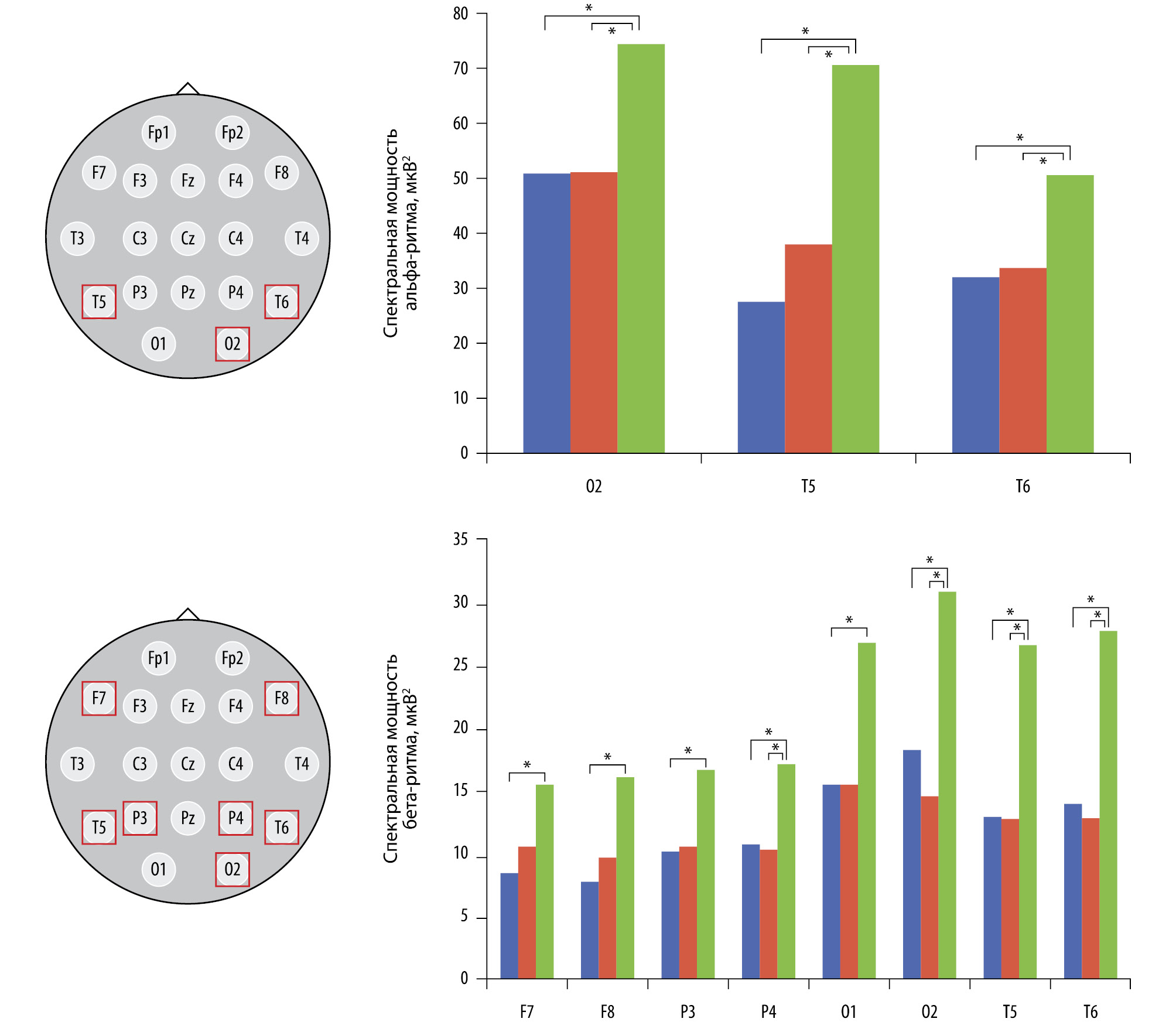
Рис. 2. Различия количественных показателей спектральной мощности ЭЭГ исследуемых групп пациенток.
Левый столбец — группа 1, средний столбец — группа 2, правый столбец — группа 3. Отведения указаны в соответствии с международной системой «10—20». * — p<0,05.
Обсуждение
Результаты исследования показывают, что у женщин, находящихся на разных этапах формирования алкогольной ремиссии, имеются отличительные особенности биоэлектрической активности головного мозга. В целом можно отметить повышение спектральной мощности альфа-активности, достигающее статистической значимости в затылочных и задневисочных областях, а также бета-активности — в лобных, теменно-затылочных и задневисочных областях коры головного мозга после 1 года воздержания от употребления алкоголя (при становлении этапа сформировавшейся ремиссии). В клинической электроэнцефалографии подобные изменения ЭЭГ рассматриваются как коррелят повышения функционального состояния головного мозга с постепенным восстановлением функций сдерживающего контроля, внимания, рабочей памяти и когнитивной гибкости [19—22].
Ранее некоторые авторы показали, что у пациентов, воздерживающихся от приема алкоголя на протяжении 6 мес, отмечались более высокие показатели альфа-активности относительно пациентов с рецидивом [23, 24]. Тогда как в отношении бета-активности более высокие показатели обнаруживались у пациентов при возобновлении приема алкоголя [23]. Кроме того, были отмечены различия медленноволновой активности (дельта- и тета-). Однако эти результаты были получены на выборках пациентов, включающих и мужчин, и женщин. Тогда как позднее были показаны существенные различия в ЭЭГ между мужчинами и женщинами с алкогольной зависимостью [25, 26], что могло повлиять на полученные ранее результаты.
С другой стороны, отмеченные различия ЭЭГ были статистически значимы только относительно пациентов со сформировавшейся ремиссией (более 1 года воздержания от приема алкоголя), тогда как между группами, находящимися на алкогольно-депривационном этапе (до 6 мес) и этапе стабилизации ремиссии (от 6 до 12 мес), различий обнаружено не было. Как известно, наиболее разностороннее описание ремиссионного процесса при алкогольной зависимости представлено с клинических позиций и рассматривается как стойкая компенсация абстинентного состояния при достижении баланса компонентов регуляторных систем [8, 27]. Ряд авторов указывают, что ремиссия не является однородным состоянием, проходя ряд последовательных стадий [7, 8, 27]. Однако, несмотря на то, что традиционно выделяют 3 этапа становления ремиссии, имеющие собственные клинические дефиниции [8], 1-й и 2-й этапы характеризовались схожими электрофизиологическими паттернами. В связи с этим мы предполагаем, что только после 1 года ремиссии можно ожидать значимые перестройки режима активности головного мозга у женщин.
Заключение
Таким образом, результаты проведенного сравнительного анализа указывают на значимую перестройку функционального состояния головного мозга у женщин лишь после 1 года воздержания от приема алкоголя. Полученные данные могут быть использованы в качестве объективных критериев поддержания ремиссии у женщин, страдающих алкогольной зависимостью.
Исследование проведено в рамках выполнения государственного задания №075-00490-25-00 «Разработка адаптивных методов комплексной терапии больных с гетерогенными психическими и поведенческими нарушениями при аддиктивных и непсихотических психических расстройствах», номер госрегистрации 123041900008-8.
The study was conducted as part of the State Assignment No. 075-00490-25-00, «Development of Adaptive Methods of Complex Therapy of Patients with Heterogeneous Mental and Behavioral Disorders due to Addictive and Non-Psychotic Mental Disorders», state registration number 123041900008-8.
Авторы заявляют об отсутствии конфликта интересов.
- Федотов А.А. Распространение алкоголизма и наркомании в регионах России. Народонаселение. 2022;(3):144-152. https://doi.org/10.19181/population.2022.25.3.11
- Старых Е.В., Соколова Л.П. Неврологические проявления алкоголизма. Нервные болезни. 2022;(4):19-25. https://doi.org/10.24412/2226-0757-2022-12931
- Manthey J, Shield KD, Rylett M, et al. Global alcohol exposure between 1990 and 2017 and forecasts until 2030: a modelling study. Lancet. 2019;393:2493-2502. https://doi.org/10.1016/S0140-6736(18)32744-2
- Glantz MD, Bharat C, Degenhardt L, et al. The epidemiology of alcohol use disorders cross-nationally: Findings from the World Mental Health Surveys. Addict Behav. 2020;102:106128. https://doi.org/10.1016/j.addbeh.2019.106128
- Berge LI, Gjestad R, Franck J, et al. Gender specific early treatment for women with alcohol addiction (EWA): Impact on work related outcomes. A 25-year registry follow-up of a randomized controlled trial (RCT). Drug Alcohol Depend. 2022;239:109600. https://doi.org/10.1016/j.drugalcdep.2022.109600
- Бохан Н.А., Кисель Н.И., Биче-Оол У.К. и др. Формирование алкогольной зависимости у женщин тувинской и русской этнической принадлежности. Сибирский вестник психиатрии и наркологии. 2021;(4):54-63. https://doi.org/10.26617/1810-3111-2021-4(113)-54-63
- Сквира И.М. Клиническая структура ремиссии алкогольной зависимости. Проблемы здоровья и экологии. 2019;(3):17-24.
- Шулькин Л.М., Косенко Н.А., Косенко В.Г. и др. Клинический обзор ремиссии алкогольной зависимости. Кубанский научный медицинский вестник. 2015;(2):153-159.
- Ветлугина Т.П., Лобачева О.А., Никитина В.Б. и др. Гормоны стресс-реализующей системы при алкогольной зависимости: возможность прогнозирования длительности ремиссии. Журнал неврологии и психиатрии им. С.С. Корсакова. 2020;(5):73-78. https://doi.org/10.17116/jnevro202012005173
- Агибалова Т.В., Туманов Н.В., Кузнецов А.Г. и др. Варианты терапевтических ремиссий у больных алкогольной зависимостью в процессе лечения вивитролом. Наркология. 2012;(6):70-74.
- Миронова Н.В. Психологическая адаптация и самоактуализация у мужчин с алкогольной зависимостью на разных стадиях ремиссии. Историческая и социально-образовательная мысль. 2013;(3):124-126.
- Галкин С.А., Пешковская А.Г., Бохан Н.А. Возможные клинико-электроэнцефалографические факторы прогноза длительности ремиссии пациентков с алкогольной зависимостью. Российский психиатрический журнал. 2021;(1):47-52. https://doi.org/10.47877/1560-957X-2021-10105
- Березина И.Ю., Михайлов А.Ю., Горецкая Т.А. и др. Показатели суммарной спонтанной электрической активности головного мозга у пациентов с синдромом зависимости от психоактивных веществ. Вопросы наркологии. 2023;(3):51-63.
- Арзуманов Ю.Л., Лапин И.А., Мещеряков А.Ф. и др. Электрофизиологические корреляты генетического риска развития алкогольной зависимости. Вопросы наркологии. 2016;(2):5-23.
- Галкин С.А., Бохан Н.А. Роль функциональной активности мозга в нарушении ингибиторного контроля при алкогольной зависимости. Журнал неврологии и психиатрии им. С.С. Корсакова. 2021;(11):67-72. https://doi.org/10.17116/jnevro202112111167
- Zhang H, Yao J, Xu C, Wang C. Targeting electroencephalography for alcohol dependence: A narrative review. CNS Neurosci Ther. 2023;29(5):1205-1212. https://doi.org/10.1111/cns.14138
- Kinreich S, McCutcheon VV, Aliev F, et al. Predicting alcohol use disorder remission: a longitudinal multimodal multi-featured machine learning approach. Transl Psychiatry. 2021;11(1):166. https://doi.org/10.1038/s41398-021-01281-2
- Жирмунская Е.А., Лосев В.С. Системы описания и классификация электроэнцефалограмм человека. М.: Наука. 1984;79.
- Галкин С.А., Рощина О.В., Кисель Н.И. и др. Клинические и нейрофизиологические особенности при алкогольной зависимости и при ее коморбидности с аффективными расстройствами. Журнал неврологии и психиатрии им. С.С. Корсакова. 2020;(10):56-59. https://doi.org/10.17116/jnevro202012010156
- Зенков Л.Р. Клиническая электроэнцефалография: руководство для врачей. М.: МЕДпресс-информ. 2011;355.
- Синкин М.В., Кваскова Н.Е., Брутян А.Г. и др. Русскоязычный словарь терминов, используемых в клинической электроэнцефалографии. Нервные болезни. 2021;(1):83-88. https://doi.org/10.24412/2226-0757-2021-12312
- Галкин С.А., Бохан Н.А. Особенности когнитивного процесса принятия решений, основанных на вознаграждении, у больных алкогольной зависимостью. Журнал неврологии и психиатрии им. С.С. Корсакова. 2023;(2):37-43. https://doi.org/10.17116/jnevro202312302137
- Saletu-Zyhlarz GM, Arnold O, Anderer P, et al. Differences in brain function between relapsing and abstaining alcohol-dependent patients, evaluated by EEG mapping. Alcohol Alcohol. 2004;39(3):233-240. https://doi.org/10.1093/alcalc/agh041
- Bauer LO. Predicting relapse to alcohol and drug abuse via quantitative electroencephalography. Neuropsychopharmacology. 2001;25(3):332-340. https://doi.org/10.1016/S0893-133X(01)00236-6
- Галкин С.А., Ткачева Г.Д., Ошкина Т.А. и др. Гендерные различия ЭЭГ при алкогольной зависимости. Наркология. 2021;(3):20-26.
- Elliott AS, Moreno-Fernández RD, Sampedro-Piquero P. Effects of Alcohol on EEG Activity: A Systematic Review Focused on Sex-Related Differences in Youth. Curr Neuropharmacol. 2024;23(6):705-727. https://doi.org/10.2174/1570159X23666241106095027
- Клименко Т.В., Аптикеева Р.Ф., Зубов Н.А. Клиническая типология состояния ремиссии при алкогольной зависимости (по данным трехлетнего катамнеза). Вопросы наркологии. 2024;(5):22-33.






Рекомендуем статьи по данной теме:
Здоровые молодые взрослые с семейной отягощенностью по алкогольной зависимости: суицидальные мысли, тревога и «поиск новизны».Журнал неврологии и психиатрии им. С.С. Корсакова. 2026;126(8):96-103
Лимфопролиферативные заболевания в период беременности. Отдаленные исходы для матери и ребенка.Российский вестник акушера-гинеколога. 2026;26(4):5-18
Особенности микробного пейзажа кожи пациентов с атопическим дерматитом во время обострения и в фазе ремиссии.Адаптивная медицинская иммунология и вопросы общественного здоровья. 2026;2(1):60-66
Полиморфизм гена OPRD1 (rs4654327) как потенциальный предиктор эффективности терапии пролонгированным налтрексоном при алкогольной зависимости.Журнал неврологии и психиатрии им. С.С. Корсакова. 2026;126(4):56-61
Влияние полиморфных вариантов генов нейротрофических факторов на тяжесть заболевания и уровень тревожности при аффективных расстройствах, коморбидных с алкогольной зависимостью.Журнал неврологии и психиатрии им. С.С. Корсакова. 2026;126(1):126-131
Реабилитация лиц с алкогольной зависимостью, сформированной в среднем и пожилом возрасте и осложненной вторичными органическими психическими расстройствами в пожилом возрасте.Журнал неврологии и психиатрии им. С.С. Корсакова. 2025;125(10):42-50
Влияние семаглутида на психическое здоровье.Журнал неврологии и психиатрии им. С.С. Корсакова. 2025;125(9):28-36
Факторы, влияющие на формирование ремиссий у больных с алкогольной зависимостью и коморбидными с психическими расстройствами.Журнал неврологии и психиатрии им. С.С. Корсакова. 2025;125(6):21-30
Современные представления о нарушениях сна при психических расстройствах.Журнал неврологии и психиатрии им. С.С. Корсакова. 2025;125(6):7-12
Показатели фоновой спектральной мощности ЭЭГ у больных с синдромом зависимости от алкоголя, осложненным экзогенно-органическим заболеванием головного мозга.Журнал неврологии и психиатрии им. С.С. Корсакова. 2025;125(1):112-118