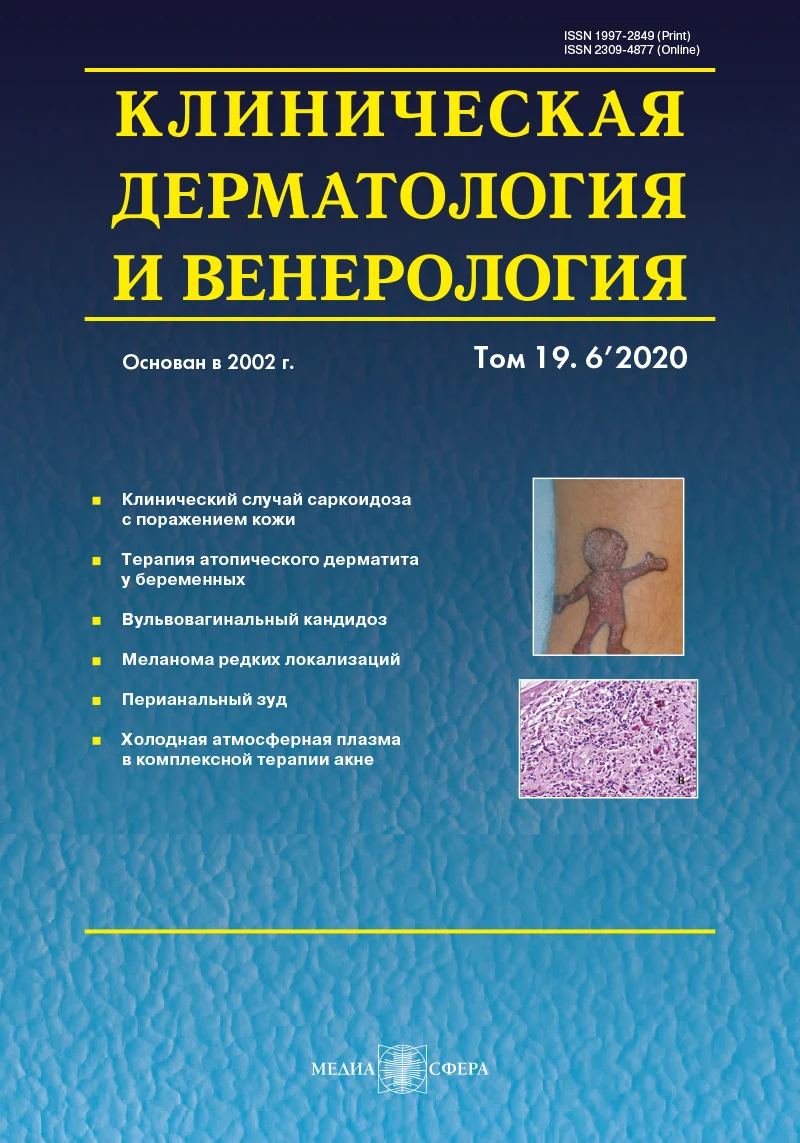
Клинический случай саркоидоза с поражением кожи
Журнал: Клиническая дерматология и венерология. 2020;19(6):831-835.
DOI: 10.17116/klinderma202019061831
Прочитано: 7394 раза
Резюме
Саркоидоз — гранулематозное заболевание с поражением различных органов и систем. В последнее десятилетие выявляется рост заболеваемости саркоидозом с ежегодным увеличением числа больных примерно на 2%. Отчасти это можно объяснить совершенствованием его диагностики. Саркоидоз встречается в любом возрасте, однако в зоне риска находятся лица в возрасте от 30 до 40 лет, а дети болеют очень редко. В настоящее время широко обсуждаются генетические аспекты возникновения саркоидоза. В последние годы отмечен значительный патоморфоз клинических проявлений туберкулеза и других болезней органов дыхания, описано появление различных коморбидных состояний, что значительно затрудняет диагностику саркоидоза, нередко сложности возникают при назначении адекватной терапии. Синдром Лефгрена является острой формой саркоидоза с поражением легких, суставов и кожи. На примере клинического случая рассмотрены современные подходы к диагностике и лечению саркоидоза с поражением кожи. Одним из значимых клинических симптомов саркоидоза у пациентки явилось поражение кожи в виде узловатой эритемы — красных болезненных подкожных образований, которая имеет схожую симптоматику с рожистым воспалением, туберкулезом кожи, дерматомикозами, панникулитом. Обследование пациентки включало лабораторную диагностику, компьютерную томографию грудной клетки, гистологическое исследование кожи. В результате обследования подтвержден диагноз саркоидоза. Своевременная диагностика позволила провести эффективное лечение и достигнуть значительного регресса симптомов заболевания.
Ключевые слова
- саркоидоз
- синдром Лефгрена
- узловатая эритема
- дифференциальный диагноз
Дата поступления: 16.03.2020
Дата принятия в печать: 08.11.2020
Дата публикации: 10.01.2021
Саркоидоз — мультисистемное воспалительное гранулематозное заболевание неизвестной этиологии, характеризуемое наличием в различных органах и тканях эпителиоидно-клеточных гранулем без казеозного некроза [1]. Первое описание этого заболевания с поражением легких и кожи относится к XIX веку. До 1980-х годов саркоидоз считался редким заболеванием. В настоящее время в мире отмечается рост заболеваемости саркоидозом, что, скорее всего, связано с усовершенствованием методов диагностики, а также с накоплением знаний об особенностях клинического течения заболевания [2]. Распространенность саркоидоза в Москве, по данным на 2012 г., составила 2,85 случая на 100 тыс. населения с колебаниями от 8,2 до 1,8 случая на 100 тыс. населения по различным административным округам столицы [3]. Наибольшая заболеваемость саркоидозом отмечена среди людей молодого и среднего возраста, чаще у женщин, чем у мужчин, в соотношении 3:1.
Среди факторов, способствующих развитию заболевания, важная роль отводится инфекциям (хламидиям, вирусам гепатита В, С, герпеса, цитомегаловирусу, плесневым грибам), воздействию металлов (кобальт, цирконий и др.), а также побочным реакциям лекарственных препаратов. Ряд исследований выявил наследственную предрасположенность к саркоидозу. В патогенезе заболевания отмечается роль иммунного ответа на патоген с активным фагоцитозом. Установлено, что вследствие развития воспаления под действием макрофагов в органах начинают формироваться гранулемы. Саркоидоз преимущественно (до 90%) локализуется в легких и регионарных лимфатических узлах, 10% поражений приходится на другие органы: кожу, органы зрения, слюнные железы, сердце, печень, почки, селезенку, кости. Встречается генерализованный тип саркоидоза с формированием гранулем в нескольких органах. Примером является синдром Лефгрена — острая форма саркоидоза, характеризуемая лихорадкой, астенией, поражением легких, двусторонней лимфаденопатией корней легких, развитием узловатой эритемы и артритов (преимущественно суставов нижних конечностей) [4—6]. Очаги узловатой эритемы при синдроме Лефгрена чаще всего локализуются в области суставов нижних конечностей, на предплечьях и представляют собой болезненные красноватые узлы размером до 1 см.
Ниже представлен клинический случай наблюдения пациентки с саркоидозом, проявившимся синдромом Лефгрена.
Пациентка Е., 44 года, поступила в стационар с жалобами на общую и мышечную слабость, потливость, сухой кашель, одышку при минимальной нагрузке, повышение температуры тела до 38,2 оС преимущественно в вечернее время, боли в коленных и голеностопных суставах, покраснение и отек в области обеих голеней и правой стопы с развитием в дальнейшем болезненных подкожных образований.
Со слов больной, заболевание развилось 3 нед назад. В поликлинике пациентка была осмотрена хирургом, который заподозрил рожистое воспаление. Консультирована инфекционистом: наличие рожи не подтверждено, рекомендован прием нестероидного противовоспалительного препарата диклофенака в течение 7—10 дней. На фоне лечения диклофенаком у больной сохранялись слабость, повышенная температура (к вечеру до фебрильных цифр), боли и припухлость голеностопных суставов с резко болезненными узлами по передней и наружной поверхностям голеней, в связи с чем она направлена в ГКБ №13 ДЗМ. При осмотре в приемном отделении общее состояние расценено как тяжелое: генерализованная мышечная слабость, температура тела 37,7 оС, одышка при умеренной физической нагрузке. Слизистые оболочки розовые, влажные, зубы санированы. Кожные покровы: по передней поверхности голеней и в области наружного мыщелка голеностопных суставов сливные ярко-красные болезненные узлы, возвышающиеся над поверхностью кожи, размером 12×7 см, горячие и плотные при пальпации (рис. 1, 2). На коже бедер единичные узлы размером до 5×5 см. Зуд отсутствует.

Рис. 1. Подкожные узлы в области голеностопного сустава и стопы.

Рис. 2. Плотное подкожное образование в области голени.
Пальпируются болезненные паховые, подмышечные и поднижнечелюстные лимфатические узлы. Отмечаются припухлость и болезненность при пальпации и движениях в голеностопных и коленных суставах, положительный симптом сжатия стоп, болезненность при пальпации мышц бедер.
Дыхание в легких учащенное, жесткое, проводится во все отделы; хрипов нет. Частота дыхания 20 в 1 мин. Тоны сердца ясные, ритмичные; шумы не выслушиваются. ЧСС 87 в 1 мин, АД 130/85 мм рт.ст. Живот обычной формы, увеличен за счет подкожно-жировой клетчатки, мягкий, безболезненный. Печень не выступает из-под края реберной дуги. Физиологические отправления в норме.
В лабораторных анализах выявлены лейкоцитоз (12∙109/л), ускоренная СОЭ (79 мм/ч), высокий уровень СРБ (197 мг/л). Остальные показатели в пределах референсных значений.
На рентгенограмме органов грудной клетки обнаружены мелкоочаговые образования в обоих легких, требующие верификации, двустороннее увеличение лимфатических узлов корней легких. Для исключения специфического процесса выполнена компьютерная томография органов грудной клетки: обнаружены двусторонние очагово-интерстициальные изменения в тканях легких (справа 4 очага размером до 6,4 мм в поперечнике, преимущественно полигональной формы, слева 2 очага размером до 4,7 мм). Имеется увеличение внутригрудных лимфатических узлов: паратрахеальных (16×17 мм), аортолегочного окна (13×24 мм), трахеобронхиальных и бронхопульмональных справа (10×13,4 мм) и слева (10×13,7 мм), бифуркационных (15,4×9 мм). Выпот в полости перикарда 15 мл. УЗИ лимфатических узлов: признаки гиперплазии подчелюстных лимфатических узлов.
При УЗИ мягких тканей голеней определяются признаки отека, фиброзных изменений дермы и подкожно-жировой клетчатки.
С учетом результатов клинических, лабораторных и функционально-диагностических методов обследования проведен дифференциальный диагноз между саркоидозом внутригрудных лимфатических узлов и кожи, туберкулезом легких, эритематозной рожей.
При консультации хирургом диагноз «эритематозная рожа» был отвергнут. Консультация фтизиатра: на основании отрицательного диаскинтеста и анализа мокроты на туберкулез, взятой трижды, данных, свидетельствующих об активном туберкулезе, не получено. При консультации больной ревматологом для исключения саркоидоза назначено дополнительное обследование: определение уровня кальция в суточной моче, ангиотензинпревращающего фермента (АПФ) в крови, диагностическая биопсия кожи в области инфильтрата. В результате обследования выявлены гиперкальциурия (9,2 ммоль/сут), повышение уровня АПФ в сыворотке крови — 162 АСЕ unit (норма от 18 до 67 АСЕ unit). При гистологическом исследовании в коже выявлены эпителиоидно-клеточные гранулемы с гигантскими многоядерными клетками без признаков казеозного некроза.
Таким образом, на основании клинико-анамнестических данных и результатов проведенных исследований пациентке поставлен диагноз: саркоидоз легких и внутригрудных лимфатических узлов и кожи, II стадия, острое течение, двусторонняя лимфоаденопатия средостения, узловатая эритема, артриты. Синдром Лефгрена. Больной проведено лечение, включавшее прием per os преднизолона в дозе 25 мг/сут, внутривенные инъекции солу-медрола в виде пульс-терапии (1,5 г суммарно), а также антикоагулянтная терапия. Через 2 нед после лечения у больной отмечено улучшение самочувствия, нормализовалась температура тела, купирован артрит, уменьшились болезненность и гиперемия узлов на коже (рис. 3), нормализовались клинические анализы крови. Пациентка выписана домой с рекомендациями по медленному снижению дозы преднизолона под наблюдением пульмонолога.

Рис. 3. Изменения очагов поражения на коже голеней после 3 нед терапии преднизолоном.
Обсуждение
Приведенный случай демонстрирует сложность постановки диагноза у пациентки с лихорадкой, лимфоаденопатией, суставным синдромом, кожными проявлениями, что требует проведения дифференциальной диагностики с системными, инфекционными, лимфопролиферативными заболеваниями, туберкулезом, рожистым воспалением [7]. Саркоидоз кожи может проявляться различными элементами на коже: бляшками, узлами, пятнами, которые нередко болезненны при пальпации. Цвет высыпаний варьирует от розового до багрово-красного. В ряде случаев встречается феномен «запыленности», когда пятна приобретают землистый оттенок. Выделяют следующие формы саркоидоза кожи: ознобленная волчанка, саркоид Бека, подкожный саркоид Дарье—Русси, эритродермическая форма саркоидоза и некоторые другие. Ознобленная волчанка характеризуется наличием фиолетово-красных плотных бляшек с телеангиоэктазиями, чаще локализующихся на лице. Для саркоида Бека характерны мягкие внутрикожные узелки, узлы или бляшки коричневато-красного цвета. При эпителизации в центре элементов могут образовываться кольцевидные фигуры. Подкожные саркоиды Дарье—Русси представляют собой крупные подкожные узлы, кожа над ними обычной или синевато-красной окраски с явлениями атрофии в центральной зоне. Эритродермическая форма саркоидоза представлена большими, резко очерченными бляшками коричневато-красного цвета с шелушением на поверхности.
Узловатая эритема является типичным проявлением саркоидоза кожи. Она представляет собой васкулит с поражением мелких сосудов и может являться следствием различных заболеваний органов и систем: болезни Крона, Бехчета, системной красной волчанки, узловатого периартериита, паранеопластического синдрома (лимфогранулематоза и опухолей системы крови). По данным различных исследователей, саркоидоз является причиной узловатой эритемы в 60% случаев. Поэтому при осуществлении дифференциальной диагностики узловатой эритемы обычно рекомендуется проведение рентгенографии грудной клетки для исключения саркоидоза [8]. Однако наиболее полную и объективную картину в диагностике может дать гистологическое исследование биоптатов из зон пораженной кожи, позволяющее выявить характерные эпителиоидно-клеточные гранулемы без признаков казеозного некроза и продуктивный васкулит.
Узловатая эритема при саркоидозе может разрешаться самопроизвольно либо вследствие проведенных лечебных мероприятий, оставляя рубцовые изменения кожи. В случае локализации элементов в области волосистой части головы после инволюции элементов возникает стойкая алопеция.
Заключение
Течение саркоидоза, как правило, доброкачественное. Частота летальных исходов при саркоидозе составляет <1% и обусловлена дыхательной и сердечно-сосудистой недостаточностью, присоединением туберкулеза [6]. Своевременная диагностика саркоидоза позволяет провести эффективное лечение и в большинстве случаев достигнуть стойкой ремиссии.
Участие авторов:
Концепция и дизайн исследования: Н.В. Орлова, В.Ю. Уджуху
Сбор и обработка материала: Т.Н. Гавва, А.Ю. Чупракова
Статистическая обработка данных: Н.В. Орлова
Написание текста: В.Ю. Уджуху
Редактирование: Н. Г. Короткий
Авторы заявляют об отсутствии конфликта интересов.
- Fahim A, Qasim MM, Rosewarne D. Neck as mediastinal extension: Diagnosis of sarcoidosis by core biopsy of cervical lymph nodes. The clinical respiratory journal. 2020;14(1):16-20. https://doi.org/10.1183/13993003.congress-2016.pa821
- Wilson JL, Mayr HK, Weichhart T. Metabolic Programming of Macrophages: Implications in the Pathogenesis of Granulomatous Disease. Frontiers in Immunology. 2019;10:2265. eCollection 2019. https://doi.org/10.3389/fimmu.2019.02265
- Русаков Н.В., Мухин Н.А., Брико Н.И., Несвижский Ю.В., Хрипач Л.В., Фомин В.В., Лебедева М.В., Миндлина А.Я., Воинова И.В., Воинов А.В. Особенности распространения саркоидоза в условиях Москвы. Гигиена и санитария. 2012;91(4):16-18. Ссылка активна на 04.03.2020. https://www.medlit.ru/journalsview/gigsan/view_journal/2012/4/
- Шкляев А.Е., Семёновых Е.А., Иванова Л.В. Синдром Лефгрена: клиническое наблюдение. Архив внутренней медицины. 2019;83(3):308-312. Ссылка активна на 04.03.2020. https://doi.org/10.18411/978-5-907192-54-6-2019-xxxvi-46-49
- Ungprasert P, Crowson CS, Matteson EL. Clinical Characteristics of Sarcoid Arthropathy: A Population-Based Study. Arthritis Care and Research. 2016;5:695-699. https://doi.org/10.1002/acr.22737
- Егорова О.Н., Карпова Ю.А., Савушкина Н.М., Белов Б.С. Поражение суставов при синдроме Лефгрена. Современная ревматология. 2016;3:35-40. Ссылка активна на 04.03.2020. https://doi.org/10.14412/1996-7012-2017-2-68-74
- Bhattarai B, Mandal A, Lamichhane J, Datar P, Mukhtar O, Alhafidh O, Lixon A, Gayam V, Enriquez D, Quist J, Schmidt F. A symptomatic gastric sarcoidosis and asymptomatic pulmonary sarcoidosis: a rare manifestation. Journal of community hospital internal medicine perspectives. 2019; 9(5):440-442. https://doi.org/10.1080/20009666.2019.1653140
- Харитонов М.А., Салухов В.В., Казанцев В.А., Шустов С.Б., Богомолов А.Б., Николаев А.В., Топорков М.М., Блэк М.С., Иванов В.В., Меньков И.А., Асямов К.В., Грозовский Ю.Р., Яровенко И.И. Диагностика и дифференциальная диагностика саркоидоза легких. Вестник Российской военно-медицинской академии. 2018;1(61):13-18. Ссылка активна на 04.03.2020. https://www.vmeda.org/wp-content/uploads/2018/12/vesnik_1.pdf


Рекомендуем статьи по данной теме:
Саркоидоз или саркоидоподобная реакция?Клиническая дерматология и венерология. 2026;25(3):390-394
Наследственная полинейропатия Шарко—Мари—Тута IA с поздним дебютом.Журнал неврологии и психиатрии им. С.С. Корсакова. 2026;126(5):138-145
Саркоидоз. (Клинические рекомендации. Краткая версия).Респираторная медицина. 2026;2(1):28-40
Случай диагностики миастении у пациента с полимиозитом.Журнал неврологии и психиатрии им. С.С. Корсакова. 2026;126(2):130-135
Синдром взрывающейся головы у пациентки с мигренью без ауры.Российский журнал боли. 2025;23(4):43-46
Саркоидная реакция с очаговым интерстициальным фиброзом у пациента, перенесшего COVID-19 с персистенцией нуклеокапсидного и спайк-белков Sars-Cov-2-вируса в саркоидных гранулемах и ткани легкого.Архив патологии. 2025;87(4):54-57
Бронхообструктивные нарушения при саркоидозе: в поисках причин.Респираторная медицина. 2025;1(2):60-65
Дифференциальный диагноз болезни Альцгеймера и сосудистых когнитивных расстройств.Журнал неврологии и психиатрии им. С.С. Корсакова. Спецвыпуски. 2025;125(4-2):26-35
Современные подходы к диагностике кистозных заболеваний легких.Респираторная медицина. 2025;1(1):30-37
Хирургическое лечение вторичной тригеминальной невралгии.Журнал неврологии и психиатрии им. С.С. Корсакова. 2024;124(11):203-209