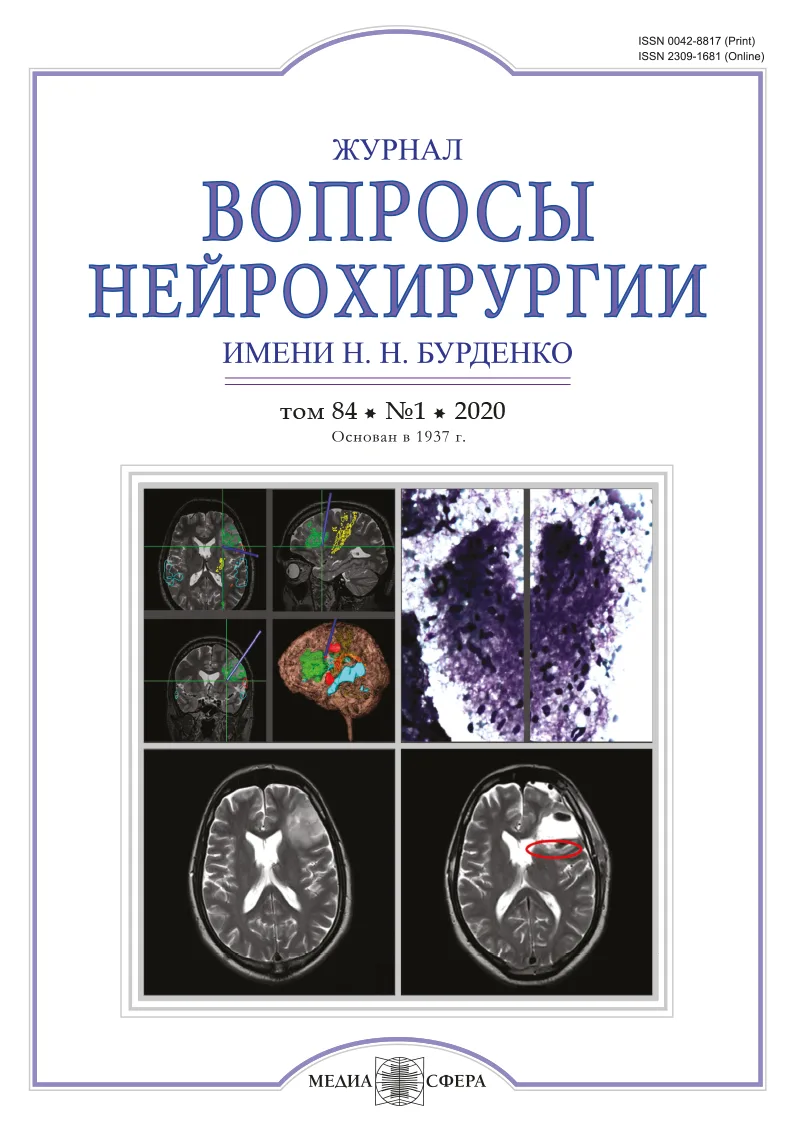
Клинические и нейропсихологические исследования больных до и после удаления глиом островковой доли головного мозга
Журнал: Вопросы нейрохирургии имени Н.Н. Бурденко. 2020;84(1):43-54.
DOI: 10.17116/neiro20208401143
Прочитано: 19464 раза
Резюме
Ключевые слова
- инсула
- фокальные эпилептические приступы
- когнитивные нарушения
Дата публикации: 30.04.2020
МРТ — магнитно-резонансная томография
ЭП — эпилептический приступ
Первичные опухоли головного мозга разной локализации приводят к развитию эпилептических приступов (ЭП) с разной частотой. Считается, что опухоли височной и лобной долей, а также островка (insulaе, инсулы) являются самыми эпилептогенными [1, 2]. В настоящее время активно изучаются результаты нейрохирургического лечения симптоматической эпилепсии у больных с глиомами инсулярной области, височной и лобной долей низкой степени злокачественности [3—6]. Однако подробного анализа клинической картины ЭП при глиомах островковой доли мы не встретили, хотя в статье D. Wang и соавт. [6] приведены статистические данные о частоте разных ЭП при инсулярных глиомах.
В последние годы появилось много работ, отражающих участие инсулы в самых разных функциях — когнитивных, в том числе речевых, а также вегетативных и аффективных [7—9]. Однако при трактовке полученных данных и соотнесении выявленных расстройств именно с поражением инсулы следует учитывать, что эта структура очень тесно контактирует анатомически и функционально с такими областями, как лобная, височная и теменная доли, с разными отделами лимбической системы, а также с длинными проводящими путями речевой системы [7, 10].
Цель исследования — изучение функции островковой доли головного мозга на основе анализа и сопоставления ЭП (симптомов раздражения) и когнитивных нарушений (симптомов выпадения) у больных с глиомами островка.
Материал и методы
Под нашим наблюдением находился 51 больной (основная группа) с глиальными опухолями островковой зоны. Все больные обследованы до операции и через 4—6 дней после удаления опухоли. Распространение опухоли устанавливалось по данным магнитно-резонансной томографии (МРТ) и интраоперационных находок. С учетом данных литературы о большом сходстве инсулярных и медиально-височных пароксизмов, а также тесной связи островка с височной и лобной долями в работе приведены данные дооперационного исследования двух дополнительных групп сравнения: с опухолями височных (n=50) и лобных (n=50) долей. Таким образом, в работе проанализированы данные дооперационного исследования ЭП у 151 больного (85 мужчин, 66 женщин). Локализация опухолей представлена в таблице. 
Больные были в возрасте от 9 до 67 лет, средний возраст — 36,6 года, медиана — 34 года. Нейропсихологическое исследование проведено по методу А.Р. Лурия [11, 12]. Исследовались все виды праксиса, качественные особенности речевых функций (в том числе письма и счета), пространственных функций, слуховой и зрительный гнозис и мышление. Данное исследование позволяло установить топическую принадлежность выявляемых расстройств, сделать заключение о механизмах их формирования и в случае нарушения наметить пути реабилитации. Все больные были правшами, только у единичных пациентов наблюдались отдельные признаки левшества (например, прикладывали телефон к левому уху), либо родственники левши.
Результаты исследования до операции
ЭП наблюдались у 45 (88,2%) пациентов с опухолью островка, у 5 больных заболевание проявлялось общемозговыми и очаговыми симптомами, у 1 пациентки опухоль обнаружена случайно при обследовании по поводу панических атак и агорафобии. Общие судорожные приступы без ауры наблюдались у 8 больных (у 5 — с левосторонней опухолью и у 3 — с правосторонней). У этих пациентов опухоль имела наибольший объем и в большей степени, чем у других, распространялась на прилежащие медиальные отделы височной и лобной долей. Еще 6 человек имели вторичную генерализацию судорожной активности с развитием общих судорожных приступов разной частоты после аур, а 4 человека — сложные фокальные приступы (то есть фокальные пароксизмальные проявления с разной степенью изменения сознания, но без генерализованных судорог). В общей сложности в структуре ЭП та или иная степень изменения сознания наблюдалась у 18 (35,2%) человек, а видимый фокальный компонент судорожных приступов отсутствовал только у 8 пациентов.
У 41 человека фокальные приступы имели многокомпонентный характер. Чаще всего наблюдались вегетативные проявления в сочетании с обонятельными и вкусовыми галлюцинациями.
Обонятельные и вкусовые галлюцинации наблюдались примерно поровну при разной латерализации опухоли островка, всего у 26 (51%) пациентов из 51. При левостороннем расположении опухоли (всего у 13 человек) только обонятельные галлюцинации наблюдались у 2 больных, еще у 3 отмечено одновременное появление обонятельных и вкусовых галлюцинаций, у 4 — искажение обоняния и, наконец, еще у 4 человек имели место только вкусовые галлюцинации.
При правосторонней локализации опухоли инсулы (всего у 12 человек) у 5 пациентов наблюдались обонятельные галлюцинации, у 3 — сочетание обонятельных и вкусовых галлюцинаций (одновременно) и еще у 4 —только вкусовые галлюцинации.
Большой интерес представлял качественный анализ характера обонятельных и вкусовых галлюцинаций. У всех без исключения больных, вне зависимости от стороны локализации опухоли, они носили характер неприятного запаха и вкуса, иногда очень резкого и мучительно-навязчивого. Ощущения запаха и вкуса, как и вся структура фокального компонента, были всегда одинаковыми у одного и того же больного. Больные чаще всего ощущали запах гари, «чего-то горелого» (например, запах горелой резины), газа, серы, иногда — чего-то резкого, «противного», химического, «чего нет и не может быть в природе, извращенный запах какой-то». Это мог быть очень резкий химический запах кокоса, какой-то сложной «химии», камфоры или эфира либо чего-то прокисшего, несъедобного. Всегда отмечался запах чего-то опасного, чего следовало избегать. При этом больные, если запах имел хоть какой-то естественный оттенок, например газа, гари, не всегда осознавали болезненный характер возникновения запаха, пытались найти его источник, подключая к этому родственников, при этом отмечая внезапность появления и большую быстротечность его присутствия. У ряда больных с разной латерализацией опухоли появлялась гиперестезия обоняния, и на этом фоне периодически возникало извращенное восприятие хорошо знакомых запахов (обонятельные иллюзии). Так, у 2 больных хорошо знакомая пища внезапно начинала резко пахнуть «химией» или издавать не свойственный ей аромат. Это происходило так остро и необычно, что больные в дальнейшем отказывались есть такую же пищу, боясь вновь испытать подобное. Например, пациентка сильно удивлялась внезапно резко обострившемуся у нее обонянию («чувствую хлеб в кухне даже при закрытой тумбочке»). Еще у 2 больных один и тот же реальный резкий внешний запах мог вызывать фокальный приступ по типу рефлекторной эпилепсии. Так, у больного с опухолью правого островка отмечались своеобразные приступы рефлекторной эпилепсии — в ответ на резкий запах цитрусовых у него появлялись очень неприятный металлический вкус во рту и кратковременная слабость в левых конечностях. У другого пациента в ответ на резкий запах «жженой солярки» (действительно существующий, больной работал водителем-дальнобойщиком), возникало чувство, «что вот-вот произойдет потеря сознания, что-то меняется».
Разнообразие вкусовых галлюцинаций, входящих в структуру парциальных приступов при опухолях островка, было небольшим и также не зависело от латерализации опухоли. Вкус во рту бывал очень неприятным и чаще всего проявлялся резким ощущением чего-то прокисшего, тошнотворного либо острого химического и металлического, всегда несъедобного, опасного. Одна больная говорила, что «вкус прокисшего был настолько сильным и тошнотворным, что сразу хотелось прополоскать рот, чтобы избавиться от него». Ощущение кислого вкуса (или химического) могло сочетаться с таким же одновременным ощущением запаха и тошнотой с гиперсаливацией. Больные сообщали, что «этим полон рот и нос, трудно сказать, где больше». Однако у 2 больных резкая внезапная тошнота с гиперсаливацией, длящаяся 1—2 мин на фоне ясного сознания, наблюдалась и без обонятельных и вкусовых галлюцинаций. Тошнота возникала «ниоткуда» и не сопровождалась неприятными ощущениями в области желудка.
Мы не исключаем, что частота обонятельных и вкусовых галлюцинаций у больных с опухолями островка могла быть выше, так как не все больные с вкусовыми галлюцинациями или обонятельными обманами связывали их с заболеванием головного мозга. Так, одна больная кратковременно и внезапно чувствуя запах газа даже в неподходящих местах, продолжала поиски его источника, уверенно подключая к этому близких. Об этом расстройстве она сообщила только при прицельном расспросе врача. Другой больной с глиобластомой левой островковой доли в течение нескольких месяцев без успеха обследовался у разных гастроэнтерологов по поводу внезапно наступающих приступов резкой тошноты и тошнотворного резкого кислого вкуса во рту на фоне ясного сознания. При поступлении он предъявлял жалобы исключительно на приступы парестезий в правых конечностях. Клиническая картина заболевания полностью прояснилась только тогда, когда прямо во время осмотра нейропсихолога у больного развился пароксизм с резкой тошнотой и ощущением кислого вкуса во рту. Следовательно, больные с данной локализацией опухоли нуждаются в прицельном детальном расспросе.
Еще один частый компонент фокальных приступов при опухолях островка — резкие внезапные немотивированные эмоции страха, тревоги либо паники; они наблюдались всего у 9 (17,6%) человек. Ни у одного больного аффективный пароксизмальный компонент не был положительным, также не было аффектов гнева или ярости. Аффективный компонент входил в структуру фокальных приступов у 3 больных с левосторонней опухолью островка и у 6 — с правосторонней. Тревога и страх обязательно сопровождались вегетативными проявлениями. Например, больная с левосторонней опухолью по несколько раз за ночь просыпалась от сильного немотивированного страха, сопровождаемого вегетативными проявлениями — выраженным сердцебиением, потоотделением, резкой тошнотой. В конце концов она начала бояться ложиться спать и засыпать. После установления диагноза на фоне приема противосудорожных препаратов приступы страха регрессировали.
Следует отметить, что у всех больных с приступами тревоги и страха опухоль частично распространялась и на медиобазальные отделы височной доли, реже — на базальные отделы лобной доли.
В общей сложности у 27 (53%) больных с опухолью островка фокальные компоненты приступов включали вегетативные проявления, которые не различались при разной латерализации опухоли: чувство дурноты, поднимающуюся «волну» снизу (так называемое «восходящее эпилептическое ощущение»), потоотделение, сердцебиение, чувство жара, холода, покраснение лица, неприятные ощущения в области эпигастрия, тошноту, гиперсаливацию, реже — одышку и затруднение дыхания. Вегетативные проявления могли сочетаться с другими составляющими приступов — страхом, обонятельными или вкусовыми галлюцинациями либо выступать самостоятельно. У отдельных больных эти вегетативные пароксизмальные расстройства сочетались с аутомоторным компонентом — жестовыми автоматизмами, глотанием и другими оральными гиперкинезами. Или, также у отдельных больных, при распространении опухоли на височную долю отмечались приступы по типу «уже виденного», дереализации (2 больных с опухолью правосторонней локализации) или сложных звуковых галлюцинаций («один и тот же мужской голос» — 1 больная с левосторонней опухолью). Все эти клинические проявления считаются характерными именно для медиальной височной эпилепсии [13, 14] и могут свидетельствовать о распространении эпилептической активации на лимбические структуры.
У 12 больных в состав приступа входили онемение, клонические судороги или кратковременная слабость в противоположных очагу конечностях, иногда в сочетании с ощущением, что «заплетается язык» и с вегетативными нарушениями. Эти явления наблюдались при распространении опухоли задних отделов островка на лобную и/или теменную доли.
Для уточнения клиники пароксизмальных состояний при опухолях островка проанализирован характер ЭП у 50 больных с изолированными опухолями височных долей и у 50 — с опухолями лобных долей (см. таблицу).
Среди опухолей височной доли преобладала медиобазальная локализация. Синдромология височной эпилепсии хорошо изучена. Различают амигдалогиппокампальную (медиальную или мезиальную) и латеральную височную эпилепсию [13, 14]. При распространенных поражениях приступы могут иметь одновременно характер, специфичный для той и другой височной эпилепсии.
Первое, что обращало на себя внимание при сопоставлении характера приступов у больных с опухолями височной доли и островка, — большая доля приступов с той или иной формой изменения сознания у больных с опухолями височной доли. Изменения сознания выявлены у 42 (84%) из 50 человек. Это могли быть сумеречные состояния сознания, бессудорожные эквиваленты в виде «застываний», вторичная генерализация с развитием после различных аур общих судорожных приступов и общие судорожные приступы без предшествующих аур.
Обонятельные и вкусовые галлюцинации также наблюдались у 8 (16%) больных с опухолями височной доли. Среди них у 5 человек (2 пациента с опухолью правой и 3 — левой височной доли) фокальный компонент приступа был в виде неприятного (химического) запаха. Еще 2 пациента с левосторонней локализацией очага пароксизмально чувствовали неприятный вкус (химический, ацетон). Больной с правосторонней опухолью в структуре приступов имел одновременное ощущение неприятного запаха и вкуса.
Как и у больных с опухолью островка, у этих пациентов ощущения и вкуса, и запаха были неприятными, химическими, неестественными. Однако частота обонятельных и вкусовых галлюцинаций у больных с опухолями височной доли оказалась значительно ниже, чем у больных с опухолями островка (16% по сравнению с 51%). Следует особо подчеркнуть, что у всех 8 пациентов опухоль имела большой объем и занимала или передние области височной доли (полюс) или была распространенной, медиобазальной, с захватом также передних отделов височной доли.
Другим фокальным компонентом, качественно схожим с таковым, наблюдаемым при инсулярных опухолях, был аффективный. И при височной, и при островковой локализации опухоли аффект всегда представлен сильным, внезапно возникающим чувством немотивированного страха, тревоги, иногда переходящим в панику. Не отмечено появления чувства гнева или каких-либо положительных эмоций. Страх и тревога сопровождались тахикардией, иногда покраснением лица, потоотделением. Вегетативное обеспечение очень похоже на естественную реакцию сильного страха. Появление чувства страха отмечено всего у 14% больных, в том числе у 6 больных с правосторонней височной опухолью и только у 1 больного — с левосторонней. У всех пациентов опухоль распространялась на медиальные, чаще переднемедиальные отделы височной доли. Важно отметить, что и при височной локализации опухоли, и при островковой приступы страха чаще возникали при правостороннем расположении эпилептогенного очага.
Фокальные вегетативные компоненты в структуре приступа наблюдались всего у 19 (38%) больных с опухолями височной доли, причем почти исключительно при их преимущественно медиобазальной локализации независимо от латерализации опухоли. Вопреки ожиданиям вегетативные проявления в структуре приступов при опухолях височной доли не столь развернуты и многокомпонентны, как при опухолях островковой доли. В большинстве случаев до потери сознания успевали проявиться 1—2 вегетативных компонента приступа. После короткой ауры у большинства больных с опухолями височной доли быстро развивалась та или иная форма потери сознания.
Проанализированы данные 50 больных с опухолями лобных долей мозга (см. таблицу). Из этих больных 48 (96%) пациентов имели судорожные приступы, причем 39 (81%) — общие судорожные приступы (иногда в сочетании с отдельно возникающими фокальными приступами) или вторичную генерализацию фокальных приступов. Общие судорожные приступы возникали при разной локализации опухоли, но наиболее часто — при опухолях левой премоторной области (всего 17 человек из 48), особенно при распространении опухоли с коры вглубь доли или медиально. На левую премоторную зону, как на наиболее эпилептогенную, указывали и другие авторы [15]. При преимущественно корковом расположении небольших опухолей у 8 пациентов выявлялись простые парциальные приступы, соответствующие функциональной топике коры лобной доли. У 2 больных с опухолями правой оперкулярной зоны вторичной генерализации приступов предшествовали фокальные компоненты, схожие с височными: «восходящая волна» с неприятными ощущениями в верхней половине туловища, жестовые автоматизмы. Это сходство с височными приступами могло объясняться анатомическим распространением опухоли в глубине сильвиевой щели или пропагацией эпилептической активности на медиальные отделы височной доли. Большой интерес представляли данные исследования 3 пациентов с опухолями медиобазальной локализации с инфильтрацией лобных долей в области ольфакторных нервов, трактов и переднего продырявленного вещества, рядом с которым в обонятельном бугорке заканчивается часть волокон от обонятельной луковицы. Обонятельных галлюцинаций не было ни у одного из этих больных. Однако 1 пациент с правосторонней опухолью отметил появление гиперестезии обоняния с возникающим чувством сильной дурноты в ответ на резкие запахи. Именно эти жалобы послужили причиной обследования больного, в результате чего обнаружена опухоль указанной локализации.
При нейропсихологическом исследовании больных с опухолью островка только 7 человек практически не имели когнитивных нарушений. Следует подчеркнуть, что у 5 из них опухоль располагалась справа. Двое больных с левосторонними опухолями были педагогами, имели хорошо развитую речь, что, возможно, способствовало компенсации легких нарушений слухоречевой памяти. У 6 больных без четких когнитивных нарушений выявлена глиома Gr II и только у 1 больной — Gr III. У всех этих пациентов опухоль клинически проявлялась только фокальными ЭП (неприятный вкус во рту, запах гари, судороги в левых конечностях).
У 41 (80%) пациента выявлены нарушения высших психических функций, причем наиболее частым расстройством были мнестические дефекты. Они выявлены у всех этих больных. Однако полный спектр когнитивных нарушений, а также их степень, сильно зависели от стороны и распространения опухолевого процесса.
При левостороннем расположении опухоли у 7 человек уже при поступлении выявлены элементы разной афазии, соответствующей частичному распространению опухоли (и/или перитуморального отека) на лобную или височную долю (эфферентной моторной или акустико-мнестической). У 5 из 7 больных с афазиями выявлена глиобластома Gr IV, и у 2 — астроцитома Gr III; т. е. четкими очаговыми симптомами (здесь — в виде афазии) до операции проявлялись глиомы высокой степени злокачественности.
У остальных 26 больных с левосторонней опухолью на первый план выступали нарушения памяти, выявляемые только при нейропсихологическом исследовании. Корсаковский синдром не зафиксирован, все больные правильно ориентированы и редко жаловались на снижение памяти на бытовом уровне. Нарушения памяти при нейропсихологическом исследовании были модально-неспецифическими (то есть выявлялись и в слухоречевой, и в зрительной сфере), однако четко преобладали расстройства слухоречевой памяти, иногда довольно выраженные. Преимущественно страдало отсроченное воспроизведение слов после предъявления интерференции (серийный счет, перечисление праздников). Однако у ряда больных отсроченное воспроизведение слов не просто нарушалось, но и дополнялось привнесением посторонних включений (нарушение избирательности следов), что свидетельствовало о вкладе в расстройство памяти дисфункции базально-медиальных отделов лобных долей. Как правило, за редким исключением, связанный по смыслу материал (рассказ-басню) пациенты воспроизводили значительно лучше, чем не связанные по смыслу слова. Нарушения зрительной памяти по типу сужения объема выявлялись при непосредственном воспроизведении фигурок.
Мнестические расстройства до операции у разных больных имели разную степень выраженности (как правило, хуже у больных с опухолями Gr III и Gr IV, а также при большем распространении опухоли в медиобазальные отделы лобной и височной долей). У большинства больных до операции нарушения памяти дополнялись симптоматикой именно со стороны прилежащих отделов мозга (особенно наглядно — лобной доли), например инертностью в двигательной и интеллектуальной сфере, нарушением динамического праксиса и реципрокной координации, персеверациями (чаще в двигательной сфере).
У 10 пациентов с правосторонней опухолью до операции на первый план также выступали расстройства памяти, преимущественно в слухоречевой сфере, однако чаще они не были столь выражены, как при левостороннем очаге. Страдание преимущественно слухоречевой памяти при правосторонней опухоли говорило о развитии мнестических расстройств на фоне дисфункции глубинных отделов мозга (медиобазальные отделы височных и лобных долей), а не корковых областей. Качественные нарушения памяти схожи с таковыми при опухолях островка левосторонней локализации. У некоторых больных с правосторонней опухолью еще до операции можно было отметить некоторые элементы снижения критики к своему состоянию и эмоциональной расторможенности, что также говорило о функциональной заинтересованности прилегающих медиобазальных отделов правой лобной доли.
Результаты исследования после операции
Больные, осмотренные после операции, получали противосудорожную терапию, и ЭП в этот период наблюдения у них не отмечались. Характер и степень выраженности динамики нейропсихологической симптоматики четко зависели от стороны операции, наличия или отсутствия интраоперационных осложнений и распространения опухоли на прилежащие отделы мозга. По особенностям динамики нейропсихологического синдрома после операции удаления опухоли островка можно выделить несколько групп больных.
1-ю группу составили 11 (21,5%) больных, у которых послеоперационный нейропсихологический статус мало отличался от дооперационного. Среди этих больных — 4 пациента с левосторонней опухолью и 7 — с правосторонней. Больные с правосторонним процессом несколько чаще после операции обходились без нарастания когнитивных расстройств. До операции у больных без определенного нарастания дефицита выявлены негрубые нарушения слухоречевой памяти, а у 1 пациента с опухолью Gr IV выявлялись элементы эфферентной моторной афазии.
Из этих 11 пациентов у 3 произведено частичное удаление опухоли островка, что обусловило стабильное состояние их после операции. У 8 пациентов островок удален полностью, но без значительной травматизации окружающего мозгового вещества (у 2 — слева и у 6 — справа). У этих больных опухоли были низкой степени злокачественности. Особый интерес вызывали 2 наблюдения, в которых полное удаление островка слева не привело к изменениям ни памяти, ни речи (рис. 1, 2). 

У 11 (21,5%) больных второй группы после операции отмечалось умеренное нарастание нейропсихологической симптоматики. Из них 8 человек имели опухоль слева и 3 — справа. В 10 случаях диагностированы глиомы низкой степени злокачественности (Gr II, преобладали диффузные астроцитомы). У 1 больного была глиобластома слева, с некоторым распространением на височную долю. В этом случае уже до операции в нейропсихологическом статусе определялась четкая акустико-мнестическая афазия, которая усугубилась после частичного удаления опухоли.
Умеренное нарастание когнитивных расстройств после операции отмечалось, прежде всего, в звене слухоречевой памяти, зрительная память практически не менялась. Следует отметить, что ухудшение слухоречевой памяти отмечалось как при левостороннем расположении опухоли, так и при правостороннем, хотя и могло иметь свои особенности в зависимости от стороны операции. У этой группы больных опухоль в некоторой степени распространялась на прилежащие отделы лобной, височной и в 1 случае теменной долей, поэтому после операции кроме усугубления мнестических расстройств выявлялись симптомы со стороны именно этих отделов мозга. Так, у 1 больного с правополушарной опухолью появились многоречивость, эйфория с неуместной шутливостью (дисфункция базальных отделов правой лобной доли), у другого — легкие пространственные расстройства при копировании (дисфункция правой теменной доли). У пациентов с левополушарными опухолями после операции нарастали прежде всего расстройства слухоречевой памяти в отсроченном звене, часто с чертами, характерными для участия левой лобной доли в формировании когнитивного дефекта у этой группы больных. В 3 случаях после операции появились легкие расстройства называния (элементы акустико-мнестической височной афазии).
У больных следующих двух групп после операции отмечено выраженное нарастание когнитивных нарушений (т.е. появление новых симптомов, которых не было до операции, либо значительное ухудшение уже имевшихся).
У 8 (15%) человек одной из этих групп (все с левосторонней опухолью) нарастание когнитивных нарушений можно в первую очередь объяснить распространением опухоли на прилежащие отделы мозга (височную и лобную долю, у 3 пациентов — на подкорковые ядра). У этих пациентов вновь появилась или значительно усилилась афазия (у 5 — афазия по височному типу, акустико-мнестическая, у 2— смешанная), в 1 случае отмечено значительное усугубление расстройств памяти. Выраженное нарастание модально-неспецифических нарушений памяти выявлялось преимущественно в слухоречевом звене. Часто в мнестической сфере, особенно при отсроченном воспроизведении, выявлялось нарушение избирательности следов, то есть происходило воспроизведение слов, которые не предъявлялись, что характерно для поражения лобных долей [12]. Нарушения памяти и речи у больных этой группы дополнялись дефектами динамического праксиса, персеверациями в двигательной сфере, трудностями при счете, соответствующими типу афазии ошибками при письме.
Послеоперационное нарастание когнитивных расстройств у 10 (19%) человек следующей группы можно объяснить относительно локальными интраоперационными осложнениями — появлением после операции локальной ишемии прилегающих к островку структур мозга (чаще — подкорковых узлов) и/или скоплением крови в ложе опухоли. Из этих 10 человек у 6 опухоль удалена слева и у 4 — справа, у 3 пациентов имелась глиобластома, у остальных — глиома Gr II. Ишемия после операции подтверждена данными МРТ у 9 больных из этой группы и связана с травматизацией лентикуло-стриарных артерий. Скопление крови выявлено у 1 больной с правополушарной опухолью. При этом характер нарушений высших психических функций отчетливо свидетельствовал о более распространенном поражении мозга.
После операции у больных этой группы с левополушарной опухолью появилась афазия, в которой преобладал эфферентный моторный компонент, что связано с ишемией подкорковых узлов. Кроме этого, у больных как с левосторонним, так и правосторонним расположением опухоли отмечалась и другая подкорковая симптоматика, например, у 3 пациентов появились расстройства речи по подкорковому типу: речь стала мало модулированной, тихой, дизартричной. У всех наросли расстройства памяти, отмечались персеверации в двигательной сфере, появилось снижение критики к своему состоянию (особенно после правосторонних операций), плохое удержание программы задания по лобному типу.
Самое грубое нарастание когнитивных дефектов в сочетании с тяжелыми двигательными нарушениями наблюдалось у 7 (13%) больных последней группы (у 5 — операция по поводу левосторонней опухоли и у 2 — правосторонней). У больных с расположением опухоли в левом полушарии выявлена грубая афазия, а после удаления опухоли справа — дезориентировка во времени, плохое удержание программы в интеллектуальных тестах, существенное ухудшение слухоречевой и зрительной памяти. Ухудшение состояния больных связано с повреждением во время операции ветвей средней мозговой артерии и развитием полушарной ишемии с захватом внутренней капсулы.
Таким образом, наше исследование показало, что до удаления опухоли островка характерными в клинической картине являются фокальные ЭП с обонятельными и вкусовыми галлюцинациями и вегетативным компонентом. Это роднит приступы при опухолях островка и медиальных отделов височной доли. В ближайшие сроки после операции ЭП не наблюдались.
При нейропсихологическом исследовании до операции у больных выявляются прежде всего расстройства памяти. После удаления опухолей, расположенных только в островке, даже слева может не наблюдаться нарастания расстройств когнитивных функций, в том числе дефектов памяти и речи. На наш взгляд, отсутствие нарастания нарушений речи и памяти нельзя объяснить возможностями мозга к компенсации на фоне длительно растущей опухоли, так как после повреждения классических речевых зон у больных с опухолями низкой степени злокачественности афазия возникает. Даже при незначительном распространении опухоли на прилежащие отделы мозга (медиобазальные отделы лобной и височной долей) после операции наблюдаются нарушения памяти и речи, характер которых напрямую зависит от направления и степени распространения опухоли на прилежащие отделы мозга.
При интраоперационных осложнениях сосудистого генеза появление когнитивных нарушений соответствует пораженному сосудистому бассейну.
Обсуждение
В настоящее время участие островковой доли в когнитивных процессах активно обсуждается в многочисленных зарубежных работах.
Глубинное расположение островка обусловливает наличие его обширных связей с окружающими структурами, причем разные отделы инсулы связаны с разными отделами мозга афферентными и эфферентными связями [16, 17].
В самых общих чертах можно выделить следующие связи инсулы: двусторонние связи с разными отделами лобной, височной и теменной долей, поясной извилиной, амигдалой, с другими отделами лимбической системы, дорсальным таламусом, некоторыми отделами ствола мозга, а также эфферентные связи с препириформной ольфакторной корой и стриатумом [18—20]. Именно тесными связями инсулы с лимбической системой можно объяснить наличие в структуре приступов вегетативных компонентов, так схожих с височными, а тесные связи с миндалиной объясняют частое появление приступов тревоги и страха у исследованных нами больных.
В настоящее время считается, что инсула играет ключевую роль во многих процессах, от висцеросенсорных и восприятия боли до мотивационных, а также в таких функциях, как эмоции, когнитивный контроль и речь [8, 21—28]. T. Wager [25] назвал инсулу ключом, соединяющим мышление и аффективную сферу, а A. Craig [29] считал, что передняя инсула, получающая богатую интерорецепцию и имеющая мощные связи с лимбическими структурами, ответственна за самоосознание. Данные об исследовании функций островка у людей получены с помощью нейровизуалиционных методов (функциональная МРТ, функциональная МРТ в состоянии покоя (resting state MRI), трактография), при обследовании больных после удаления опухолей островка и в эксперименте. При этом показано, что островок разделен цитоархитектонически на 3 части, которые ассоциируются с тремя группами функций. Передняя агранулярная кора преимущественно связана с вентролатеральной префронтальной и орбитофронтальной корой и имеет отношение к обонянию и вегетативным функциям; средняя дизгранулярная инсула ассоциируется с восприятием вкуса; по контрасту, задняя гранулярная инсула демонстрирует тесные связи с первичной и вторичной соматосенсорной корой [30, 31].
Важные сведения о функциях островка получены при прямой электростимуляции инсулы у больных с эпилепсией с целью получения ответов, имеющих сходство с клинической картиной припадков [32—34]. В целом можно сказать, что при электростимуляции передней инсулы получены висцеромоторные и висцеросенситивные ответы, очень похожие на проявления медиальной височной эпилепсии. Иногда отмечались обонятельные и вкусовые галлюцинации. Напротив, при электростимуляции задней инсулы выявлялись различные эффекты соместезии. Сделан вывод, что инсулярная кора содержит две разные нейронные сети: у передней инсулы наиболее выражены связи с пириформной, орбитофронтальной корой, а также с гиппокампом и миндалиной, что делает чрезвычайно схожими височную и инсулярную эпилепсию. В то же время задняя инсула, напротив, связана с первичной и вторичной соматосенсорной корой, а также с париетальным оперкулумом, что объясняет появление во время электростимуляции (и припадков) разного рода соместезий [34].
Весьма схожие с электростимуляцией эффекты получены нами при изучении ЭП у больных с опухолями островка: те же вегетативные проявления, обонятельные и вкусовые галлюцинации, а также парестезии противоположных конечностей при распространении опухоли на задние отделы островка.
Причины появления ярких вкусовых и обонятельных галлюцинаций хорошо объясняют экспериментальные работы. Первичная вкусовая кора у приматов располагается в передней агранулярной инсуле и прилежащем оперкулуме. В то же время показано, что сюда же (а не только в uncus височной доли и структуры лимбического круга) поступают и прямые ольфакторные проекции [35]. Это означает, что уже на уровне инсулы сходятся обонятельные и вкусовые проводники. Напомним, что у исследованных нами больных часто одновременно отмечалось появление ощущений вкуса и запаха во время приступов. Для оценки и запаха, и вкуса весьма важна эмоциональная составляющая — у инсулы для этого имеются богатые связи со структурами лимбического круга. Вторичные и третичные поля для анализа обонятельных и вкусовых стимулов, их эмоциональной окраски расположены в орбитофронтальной и префронтальной коре


Рекомендуем статьи по данной теме:
Оценка эффективности комплексного применения реабилитационной перчатки в остром периоде ишемического инсульта у пациентов с умеренным парезом кисти.Журнал неврологии и психиатрии им. С.С. Корсакова. Спецвыпуски. 2026;126(8-2):75-81
Клинико-функциональные особенности болезни Паркинсона при хронической болезни почек.Журнал неврологии и психиатрии им. С.С. Корсакова. 2026;126(8):79-85
Современный взгляд на немедикаментозную коррекцию когнитивных нарушений.Журнал неврологии и психиатрии им. С.С. Корсакова. 2026;126(8):59-65
Молекулярные и системные механизмы когнитивных нарушений, ассоциированных с коронавирусной инфекцией.Журнал неврологии и психиатрии им. С.С. Корсакова. 2026;126(8):40-50
Динамика параметров периферического кровотока и микроциркуляции при курсовом приеме фиксированной комбинации мемантина и мелатонина у пациентов с додементными когнитивными нарушениями и обструктивным апноэ сна.Профилактическая медицина. 2026;29(6):68-75
Исследование глиального нейротрофического фактора и нейропсихологического статуса у пациентов, перенесших COVID-19.Журнал неврологии и психиатрии им. С.С. Корсакова. 2026;126(6):87-93
AMPA-рецепторы: молекулярные механизмы синаптической пластичности и потенциал Ампассе в коррекции когнитивных нарушений.Журнал неврологии и психиатрии им. С.С. Корсакова. 2026;126(6):59-65
Взаимосвязь уровня IL-8 и когнитивных нарушений у пациентов с полиморбидностью.Адаптивная медицинская иммунология и вопросы общественного здоровья. 2026;2(1):67-70
Особенности нарушений дыхания во сне в пожилом возрасте и их влияние на нервную систему и психику.Журнал неврологии и психиатрии им. С.С. Корсакова. Спецвыпуски. 2026;126(5-2):81-86
Двунаправленные связи между депривацией сна и развитием нейродегенеративных заболеваний.Журнал неврологии и психиатрии им. С.С. Корсакова. Спецвыпуски. 2026;126(5-2):74-80