Клинические, демографические и топографо-анатомические аспекты лечения пациентов с образованиями средостения: влияние на выбор хирургического доступа
Журнал: Хирургия. Журнал им. Н.И. Пирогова. 2025;(10):31-37.
DOI: 10.17116/hirurgia202510131
Прочитано: 1353 раза
Резюме
ЦЕЛЬ ИССЛЕДОВАНИЯ
Сравнение клинических и демографических характеристик пациентов и топографо-анатомических аспектов образований средостения при различных доступах хирургического лечения объемных образований средостения.
МАТЕРИАЛ И МЕТОДЫ
Проведено ретроспективное одноцентровое исследование у 616 взрослых пациентов, оперированных в ГУ «Республиканский специализированный медицинский центр хирургии им. академика В. Вахидова» с 2008 по 2024 г. Пациенты были разделены на 3 группы в зависимости от применяемого хирургического доступа: торакотомия (n=420), стернотомия (n=84), видео-ассистированная торакоскопия — ВАТС (n=112). Анализ включал демографические данные, локализацию, размер, объем и прилегание опухолей к анатомическим структурам, а также морфологический тип образований.
РЕЗУЛЬТАТЫ
Пациенты имели схожие демографические и клинические характеристики. ВАТС преимущественно применялся при образованиях верхнего средостения (70,5%), тогда как в группе стернотомии 95,2% опухолей также находились в верхнем средостении, но чаще прилегали к ключевым анатомическим структурам. В группе торакотомии образования верхнего средостения составляли 80,0%, а заднего и среднего — 21,2 и 20,0% соответственно. Средний размер опухолей был меньше в группе ВАТС (6,8±3,8 см) по сравнению с торакотомией (8,6±4,8 см; p=0,116) и стернотомией (12,1±4,6 см; p=0,007). Аналогично объем опухолей в группе ВАТС (0,3±0,2 дм3) был значительно меньше, чем в торакотомии (0,6±0,4 дм3; p=0,01) и стернотомии (0,8±0,5 дм3; p=0,002). Тимомы составили значительную долю образований, наиболее часто оперированных стернотомным доступом (82,1%; p<0,001), тогда как тимолипомы чаще встречались при ВАТС (21,4%; p<0,001). Кистозные образования чаще лечили торакотомным доступом (37,4%; p<0,001).
ЗАКЛЮЧЕНИЕ
Выбор хирургического доступа при образованиях средостения определяется размерами, локализацией и топографо-анатомическими особенностями опухолей. Стернотомия оптимальна для крупных образований с прилеганием к магистральным сосудам и перикарду, торакотомия — для кистозных и ангиоматозных образований, а ВАТС предпочтителен для менее инвазивных вмешательств и образований верхнего средостения.
Ключевые слова
- образования средостения
- хирургический доступ
- ВАТС
- торакотомия
- стернотомия
Дата поступления: 28.11.2024
Дата принятия в печать: 19.12.2024
Дата публикации: 30.10.2025
Введение
Объемные образования средостения — нечастые поражения, встречающиеся в клинической практике, но их частота значительно возросла за последние четыре десятилетия [1, 2]. Поражения средостения могут быть как доброкачественными, так и злокачественными, развиваться из структур самого средостения или являться метастазами опухолей, локализованных в других органах [3, 4].
Известно, что выбор хирургического доступа при лечении объемных образований средостения представляет собой актуальную проблему, требующую комплексного подхода. Традиционные методы, такие как торакотомия и стернотомия, долгое время считались «золотым стандартом», однако в последние годы видеоторакоскопия получила широкое распространение благодаря своим преимуществам в минимальной инвазивности и сокращении периода восстановления после операции [5, 6]. Важно отметить, что индивидуальные особенности пациента, тип и распространенность опухоли, а также опыт и предпочтения хирурга играют важную роль в принятии окончательного решения о выборе метода оперативного вмешательства [7, 8].
В нашей работе мы сравнили клинические и демографические характеристики пациентов и топографо-анатомические аспекты образований средостения при различных доступах хирургического лечения объемных образований средостения.
Материал и методы
Ретроспективное одноцентровое исследование проведено с участием 616 взрослых пациентов с объемными образованиями средостения, получивших хирургическое лечение в ГУ «Республиканский специализированный научно-практический медицинский центр хирургии им. академика В. Вахидова» (Ташкент, Узбекистан) в период с 2008 по 2024 г. Пациенты были разделены на 3 группы в зависимости от применяемого хирургического доступа: торакотомия (n=420), стернотомия (n=84), видео-ассистированная торакоскопия — ВАТС (n=112).
Пациенты имели схожие демографические и клинические характеристики (табл. 1).
Таблица 1. Предоперационная клиническая и демографическая характеристика пациентов групп исследования
Характеристика | ВАТС (n=112) | Торакотомия (n=420) | Стернотомия (n=84) | P* | P** | |||
Возраст, годы | 40,9±14,6 (18—75) | 40,1±14,9 (18—78) | 35,1±12,7 (18—72) | 0,906 | 0,668 | |||
Мужчины | 37 | 33,0% | 161 | 38,3% | 31 | 36,9% | 0,303 | 0,573 |
Женщины | 75 | 67,0% | 259 | 61,7% | 53 | 63,1% | ||
ИМТ, кг/м2 | 25,4±2,1 | 29,8±2,4 | 25,7±2,5 | 0,168 | 0,926 | |||
Сочетанные заболевания | ||||||||
Артериальная гипертония | 28 | 25,0% | 98 | 23,3% | 22 | 26,2% | 0,713 | 0,85 |
ИБС | 19 | 17,0% | 90 | 21,4% | 20 | 23,8% | 0,299 | 0,235 |
Сахарный диабет | 8 | 7,1% | 24 | 5,7% | 5 | 6,0% | 0,573 | 0,741 |
Ожирение | 14 | 12,5% | 44 | 10,5% | 9 | 10,7% | 0,542 | 0,701 |
ХОБЛ, БЭБ | 7 | 6,3% | 29 | 6,9% | 6 | 7,1% | 0,807 | 0,804 |
Болезни почек | 4 | 3,6% | 25 | 6,0% | 8 | 9,5% | 0,325 | 0,156 |
Болезни печени | 23 | 20,5% | 78 | 18,6% | 16 | 17,0% | 0,734 | 0,837 |
Болезни ЖКТ | 7 | 6,3% | 32 | 7,6% | 7 | 8,3% | 0,522 | 0,576 |
Класс ASA | ||||||||
I | 0 | 0 | 0 | 0 | 0 | 0 | 1,0 | 1,0 |
II | 112 | 100% | 412 | 98,1% | 84 | 100% | 0,301 | 1,0 |
III | 0 | 0 | 8 | 1,9% | 0 | 0 | 0,301 | 1,0 |
Примечание. ВАТС — видео-ассистированная торакоскопия; ИМТ — индекс массы тела; ИБС — ишемическая болезнь сердца; ХОБЛ — хроническая обструктивная болезнь легких; БЭБ — бронхоэктатическая болезнь. Здесь и в табл. 2—4: * — для различий между ВАТС и торакотомией; ** — для различий между ВАТС и стернотомией.
Средний возраст пациентов в группе ВАТС составил 40,9±14,6 года (от 18 до 75 лет). В группе пациентов, которым выполнена торакотомия, средний возраст составил 40,1±14,9 года (от 18 до 78 лет), а в группе стернотомии — 35,1±12,7 года (от 18 до 72 лет). Статистически значимых различий по возрасту между группами ВАТС и торакотомии (p=0,906), а также ВАТС и стернотомии (p=0,668) не выявлено. Распределение по полу в группах также было схожим. В группе ВАТС 33,0% (n=37) составили мужчины и 67,0% (n=75) женщины. В группе торакотомии мужчины составили 38,3% (n=161), женщины — 61,7% (n=259). В группе стернотомии — 36,9% (n=31) и 63,1% (n=53) соответственно. Статистически значимых различий между группами не выявлено. Средний ИМТ в группе ВАТС составил 25,4±2,1 кг/м2, в группе торакотомии — 29,8±2,4 кг/м2, а в группе стернотомии — 25,7±2,5 кг/м2. Различия по ИМТ между группами ВАТС и торакотомии (p=0,168), а также ВАТС и стернотомии (p=0,926) не достигли статистической значимости. Распределение по классам ASA среди всех групп оказалось одинаковым: все пациенты в группе ВАТС и стернотомии имели класс ASA II (100%), в группе торакотомии этот показатель составил 98,1%, что не являлось статистически значимым различием (p=0,301).
Материалы исследования были подвергнуты статистической обработке с использованием методов параметрического и непараметрического анализа. Накопление, корректировку, систематизацию исходной информации и визуализацию полученных результатов осуществляли в электронных таблицах Microsoft Office Excel 2016. Статистический анализ проводили с использованием программы IBM SPSS Statistics v.23 (разработчик — «IBM Corporation»).
Результаты
Все три хирургических доступа применены в большинстве случаев при образованиях переднего средостения (табл. 2), причем в группе стернотомии практически при всех образованиях (97,6%; n=82), что существенно отличается от группы ВАТС (p<0,001), где 78,6% (n=88) образований находились в переднем средостении. В группе торакотомии этот показатель составил 58,8% (n=247), что значительно ниже (p<0,001).
Таблица 2. Сравнительная характеристика групп в зависимости от локализации опухолей средостения
Локализация опухоли в средостении | ВАТС (n=112) | Торакотомия (n=420) | Стернотомия (n=84) | P* | P** | |||
Переднее | 88 | 78,6% | 247 | 58,8% | 82 | 97,6% | <0,001 | <0,001 |
Заднее | 13 | 11,6% | 89 | 21,2% | 0 | 0 | 0,023 | 0,002 |
Среднее | 11 | 9,8% | 84 | 20,0% | 2 | 2,4% | 0,013 | 0,038 |
Верхнее | 79 | 70,5% | 336 | 80,0% | 80 | 95,2% | 0,032 | <0,001 |
Нижнее | 33 | 29,5% | 84 | 20,0% | 4 | 4,8% | ||
Локализация образований в средостении значительно варьировала между группами в зависимости от метода хирургического вмешательства. В группе ВАТС наиболее часто выявлялись образования в верхнем средостении (70,5%), в то время как их доля в заднем и среднем средостении была значительно меньше (11,6 и 9,8% соответственно). В группе торакотомии образование в верхнем средостении также доминировали (80,0%), но частота локализации в заднем и среднем средостении была значительно выше, чем в группе ВАТС (21,2 и 20,0% соответственно). В группе стернотомии большинство образований находились в верхнем средостении (95,2%), тогда как в заднем и среднем средостении они практически отсутствовали. Статистический анализ выявил значимые различия между группами по всем зонам локализации (см. табл. 2).
Сравнение групп ВАТС, торакотомии и стернотомии не выявило статистически значимых различий по право- или левосторонней локализации образований (p=0,591 и p=0,741 соответственно). Однако размеры и объемы опухолей существенно различались между группами. Средний размер опухоли в группе ВАТС составил 6,8±3,8 см, что меньше, чем в группе торакотомии (8,6±4,8 см; p=0,116) и значительно меньше, чем в группе стернотомии (12,1±4,6 см; p=0,007). Опухоли размером более 10 см встречались у 20,5% (n=23) пациентов в группе ВАТС, что сопоставимо с группой торакотомии (23,6%; n=99), но существенно меньше, чем в группе стернотомии, в которой такие опухоли наблюдались у большинства пациентов (63,1%; n=53; p<0,001). Средний объем опухоли также был значительно меньше в группе ВАТС (0,3±0,2 дм3) по сравнению с группами торакотомии (0,6±0,4 дм3; p=0,01) и стернотомии (0,8±0,5 дм3; p=0,002). Таким образом, группа стернотомии характеризуется наибольшими размерами и объемами опухолей (табл. 3).
Таблица 3. Сравнительная характеристика групп в зависимости от диаметра и объема образований средостения
Параметр | ВАТС (n=112) | Торакотомия (n=420) | Стернотомия (n=84) | P* | P** | |||
Размер опухоли, см | 6,8±3,8 | 8,6±4,8 | 12,1±4,6 | 0,116 | 0,007 | |||
≤10 | 89 | 79,5% | 321 | 76,4% | 31 | 36,9% | 0,497 | <0,001 |
>10 | 23 | 20,5% | 99 | 23,6% | 53 | 63,1% | ||
Объем опухоли, дм3 | 0,3±0,2 | 0,6±0,4 | 0,8±0,5 | 0,01 | 0,002 | |||
≤1 дм3 | 106 | 94,6% | 338 | 80,5% | 60 | 71,4% | <0,001 | <0,001 |
>1 дм3 | 6 | 5,4% | 82 | 19,5% | 24 | 28,6% | ||
Тимомы составили значительную долю всех образований средостения, и распределение по их типам демонстрирует различия между группами. В группе стернотомии тимомы были наиболее распространены, достигая 82,1% (n=69), что статистически значимо больше, чем в других группах (p<0,001). Тимолипомы, напротив, чаще выявлялись в группе ВАТС — 21,4% (n=24), что значительно превышает долю в группе торакотомии (3,3%; n=14; p<0,001), но сопоставимо с показателями группы стернотомии (16,7%; n=14; p=0,404). Распределение подтипов тимом также демонстрирует существенные различия. В группе ВАТС отсутствовали случаи типов А и B3, что отличает ее от группы торакотомии, в которой выявлено 2,6% (n=11) случаев типа А и 0,2% (n=1) типа B3. В группе стернотомии по сравнению с группой ВАТС наблюдалось значительное преобладание тимом типа B3 (28,6%; n=24; p<0,001) и типа C (21,4%; n=18; p<0,001). Таким образом, применение стернотомного доступа было предпочтительным при выявлении тимом агрессивных подтипов (рис. 1).
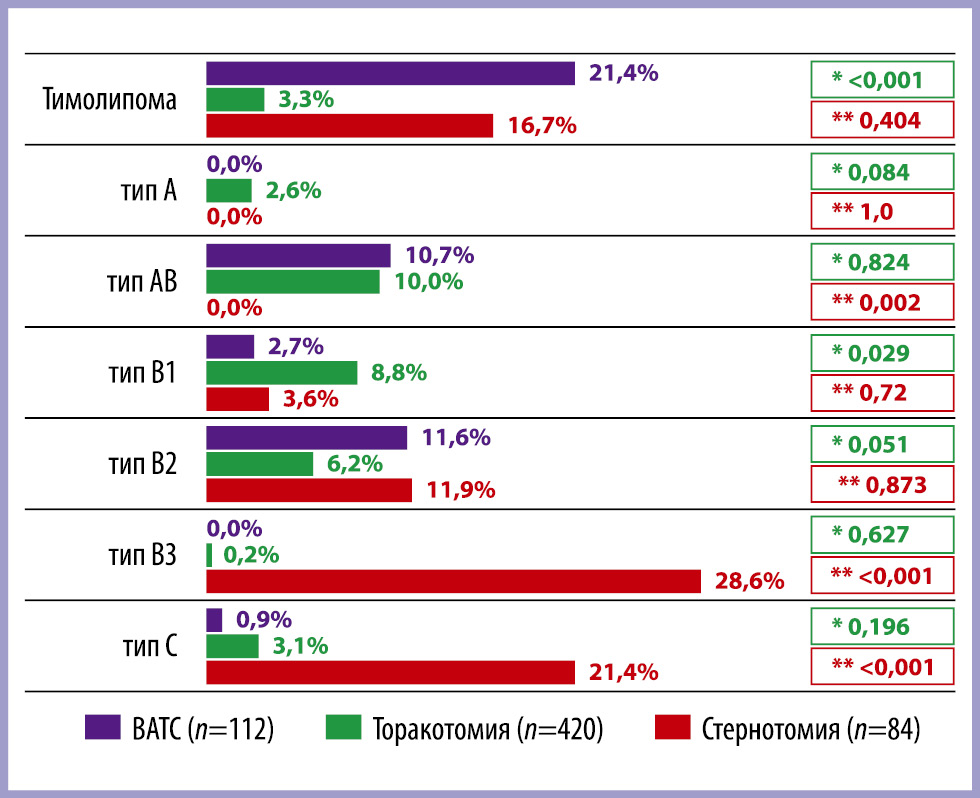
Рис. 1. Сравнительная характеристика групп по числу оперированных случаев тимом и их морфологическим формам.
Здесь и на рис. 2, 3: * — для различий между ВАТС и торакотомией; ** — для различий между ВАТС и стернотомией.
Кистозные образования средостения наиболее часто удаляли торакотомным доступом, при котором они составили 37,4% (n=157) случаев, что значительно превышает частоту их обнаружения в группе ВАТС (16,1%; n=18; p<0,001). В группе стернотомии этот показатель был существенно ниже и составил 7,1% (n=6), что лишь незначительно отличается от группы ВАТС (p=0,06). Особое внимание привлекают дермоидные кисты/тератомы, которые чаще встречались в группе торакотомии — 16,4% (n=69) против 3,6% (n=4) в группе ВАТС (p<0,001) (рис. 2).
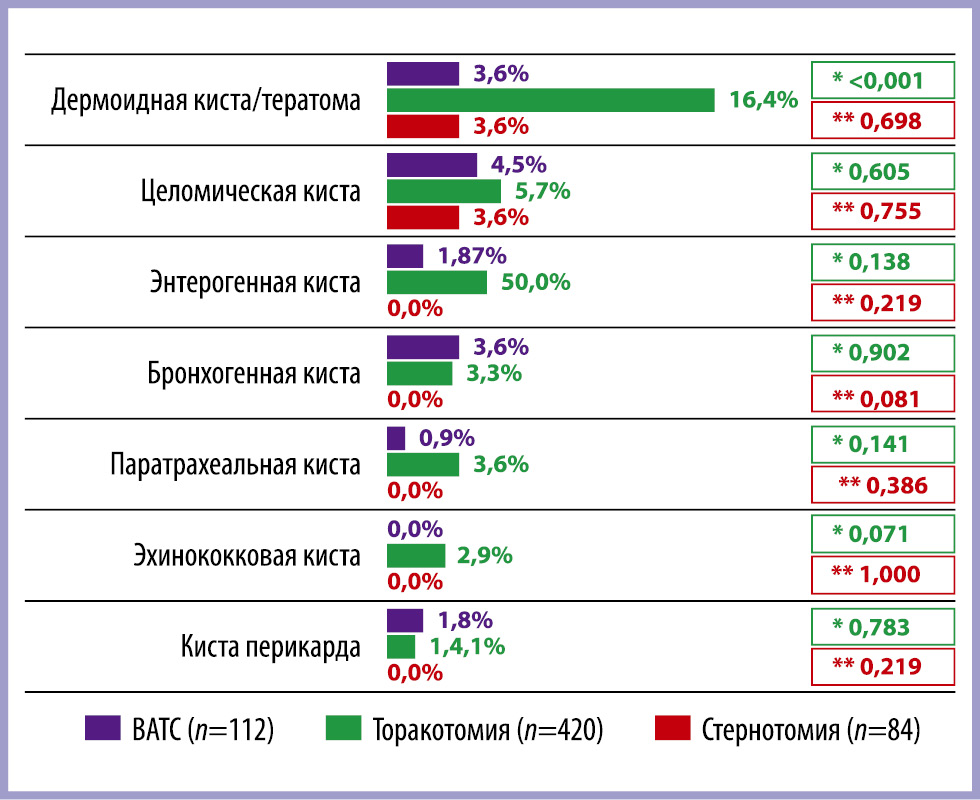
Рис. 2. Сравнительная характеристика групп по числу оперированных случаев кистозных образований средостения и их морфологическим формам.
ВАТС чаще использовали для удаления аденом, липом, фибром и неврином, тогда как торакотомия была предпочтительна в случае ангиом. Стернотомию реже использовали для этих редких типов образований средостения (рис. 3).
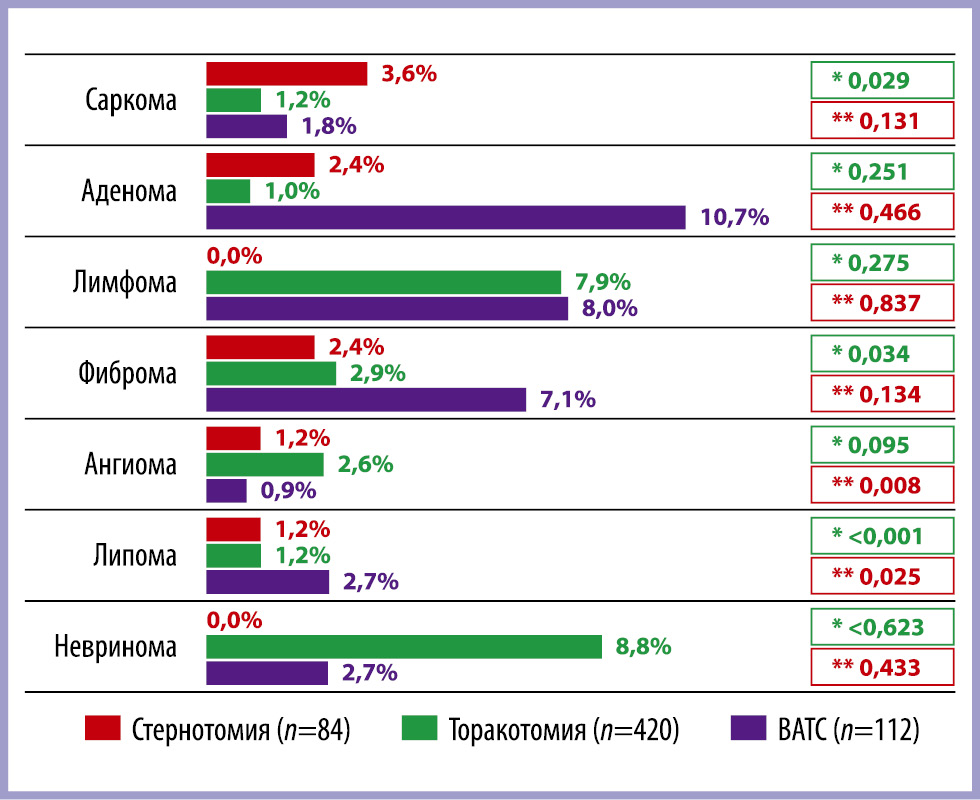
Рис. 3. Сравнительная характеристика групп по более редким образованиям средостения.
Таким образом, выбор хирургического доступа существенно зависит от прилегания образований к различным анатомическим структурам. Стернотомию чаще использовали при образованиях, прилегающих к аорте, венозным сосудам, перикарду и плевре, в то время как ВАТС предпочтителен при опухолях, прилегающих к трахее, бронхам и верхней полой вене (табл. 4).
Таблица 4. Распределение пациентов в группах исследования в зависимости прилегания опухолей средостения к различным анатомическим структурам
Прилегающий орган | ВАТС (n=112) | Торакотомия (n=420) | Стернотомия (n=84) | P* | P** | |||
n | % | n | % | n | % | |||
Аорта | 7 | 6,3 | 74 | 17,6 | 20 | 23,8 | 0,003 | <0,001 |
Артериальные сосуды | 8 | 7,1 | 32 | 7,6 | 3 | 3,6 | 0,865 | 0,282 |
Венозные сосуды | 29 | 25,9 | 78 | 18,6 | 43 | 51,2 | 0,086 | <0,001 |
Верхняя и нижняя полые вены | 12 | 10,7 | 22 | 5,2 | 3 | 3,6 | 0,035 | 0,063 |
Грудная стенка | 2 | 1,8 | 20 | 4,8 | 0 | 0,0 | 0,160 | 0,218 |
Диафрагма | 2 | 1,8 | 7 | 1,7 | 0 | 0,0 | 0,931 | 0,218 |
Нервы | 6 | 5,4 | 46 | 11,0 | 5 | 6,0 | 0,076 | 0,858 |
Перикард | 22 | 19,6 | 116 | 27,6 | 45 | 53,6 | 0,087 | <0,001 |
Пищевод | 7 | 6,3 | 21 | 5,0 | 4 | 4,8 | 0,599 | 0,654 |
Плевра | 21 | 18,8 | 50 | 11,9 | 57 | 67,9 | 0,058 | <0,001 |
Позвоночник | 1 | 0,9 | 8 | 1,9 | 3 | 3,6 | 0,461 | 0,189 |
Ребра | 1 | 0,9 | 4 | 1,0 | 0 | 0,0 | 0,954 | 0,385 |
Трахея, бронхи | 35 | 31,3 | 27 | 6,4 | 9 | 10,7 | <0,001 | 0,001 |
Обсуждение
Подходы к лечению пациентов с опухолями средостения включают хирургическое вмешательство, которое является основным методом лечения, как при доброкачественных, так и злокачественных новообразованиях и часто сочетается с химио- и лучевой терапией, а прогноз определяется типом опухоли, при этом при злокачественных формах требуется более агрессивный подход [1—6].
Результаты ряда клинических исследований подтверждают, что видеоторакоскопия может обеспечивать сопоставимые или даже лучшие результаты по сравнению с традиционными методами, особенно в случае необходимости минимизировать травматизм окружающих тканей и ускорить процесс выздоровления у пациентов [9—16]. Несмотря на это, вопрос выбора оптимального хирургического доступа остается предметом дискуссий и дальнейших исследований.
Срединная стернотомия по-прежнему является общепринятым золотым стандартом при опухолях средостения [7, 8]. Однако с развитием ВАТС традиционная стернотомия характеризуется большей интраоперационной кровопотерей, более выраженной послеоперационной болью и инфекцией, что влияет на качество послеоперационного восстановления и долгосрочное качество жизни [6]. ВАТС как минимально инвазивная методика для заболеваний средостения получила широкое признание [7, 9].
В целом ВАТС не рекомендуется для опухолей средостения диаметром >5 см или локальной инвазией. В исследовании Y. Fang и соавт. (2021) большие (более 6 см) и инвазивные опухоли средостения, по существу, не продлевают длительность восстановления пациентов после ВАТС. Отсутствие клинически значимых осложнений у включенных в исследование 113 пациентов с большими или инвазивными опухолями указывает на то, что ВАТС безопасен и надежен для удаления таких опухолей средостения. Спектр заболеваний пациентов включал тимому (стадия Масаока I, II—III), плоскоклеточный рак тимуса, шванному, ганглионеврому, гиперплазию тимуса, зрелую тератому, липому средостения, гемангиому, кисту тимуса и бронхиальную кисту [11].
Методы ВАТС обеспечивают высокий уровень безопасности и ускоряют восстановление, снижая послеоперационную боль и частоту развития осложнений. Например, субмечевидный доступ уменьшает воспаление и болевой синдром, а долгосрочные результаты, включая онкологические исходы, такие как рецидивы и смертность, сопоставимы с результатами открытых операций, что подтверждает эффективность метода [10—13]. И, наоборот, несмотря на то что ВАТС имеет множество преимуществ, некоторые исследования показывают, что продолжительность обучения и технические проблемы, связанные с этими малоинвазивными методами, могут ограничить их широкое применение, особенно в сложных случаях [10—13].
В литературе нет единого клинического алгоритма, позволяющего выбрать оптимальную методику морфологической верификации, особенно в сложных клинических ситуациях, при неинформативности первой попытки биопсии. Хотя основное внимание часто уделяется злокачественным опухолям средостения, доброкачественные новообразования также могут представлять сложные клинические проблемы и обусловить необходимость тщательного лечения для предотвращения осложнений [15, 16].
Таким образом, определение правильной тактики лечения сопряжено с множеством сложностей, обусловленных в первую очередь топографо-анатомической характеристикой и гистологической структурой опухоли средостения.
Проведенное нами исследование по сравнительной характеристике пациентов, прошедших хирургическое лечение по поводу объемных образований средостения различными доступами, подчеркивает значение учета локализации, размеров и объема опухоли, а также морфологической формы при планировании хирургического вмешательства, так как это может существенно влиять на техническую сложность операции, объем кровопотерь, длительность восстановления и общие результаты лечения у пациентов с объемными образованиями в средостении. Анализ анатомической характеристики образований средостения показал значительные различия в локализации, размере и объеме опухолей между группами пациентов, которым были выполнены ВАТС, торакотомия и стернотомия. Образования у пациентов из группы ВАТС чаще локализовались в переднем и верхнем средостении, имели меньшие размеры и объемы по сравнению с таковыми в группах торако- и стернотомии. В свою очередь в группе стернотомии чаще встречались более крупные и объемные опухоли, преимущественно расположенные в переднем и верхнем средостении.
Ограничения исследования включают ретроспективный дизайн, ограниченность выборки одним центром, что могло повлиять на выбор хирургического доступа. Гетерогенность опухолей и индивидуальные особенности пациентов также могут ограничивать обобщение результатов. Учет этих факторов в будущем повысит достоверность выводов.
Заключение
Таким образом, выбор хирургического доступа при образованиях средостения определяется размерами, локализацией и топографо-анатомическими особенностями опухолей. Стернотомия оптимальна при крупных образованиях с прилеганием к магистральным сосудам и перикарду, торакотомия — при кистозных и ангиоматозных образованиях, а ВАТС предпочтительнее при менее инвазивных вмешательствах и образованиях верхнего средостения.
Участие авторов:
Концепция и дизайн исследования — Порханов В.А., Эшонходжаев О.Д.
Сбор и обработка материала — Эшонходжаев О.Д., Рахимий Ш.У.
Статистическая обработка — Ибадов Р.А., Рахимий Ш.У.
Написание текста — Ибадов Р.А., Рахимий Ш.У.
Редактирование — Порханов В.А., Эшонходжаев О.Д.
Авторы заявляют об отсутствии конфликта интересов.
- Sweilh M, Ediab EM, Bardan H. Mediastinal tumors. Research Square. 2024. https://doi.org/10.21203/rs.3.rs-3173961/v1
- Александров О.А., Рябов А.Б., Пикин О.В. Тимома (обзор литературы). Сибирский онкологический журнал. 2017;16(4):76-83. https://doi.org/10.21294/1814-4861-2017-16-4-76-83
- Aroor AR, Prakasha S R, Seshadri S, S T, Raghuraj U. A study of clinical characteristicsof mediastinal mass. J Clin Diagn Res. 2014;8(2):77-80. https://doi.org/10.7860/JCDR/2014/7622.4013
- Mayer N, Kestenholz P, Minervini F. Surgical access to the mediastinum-all roads lead to Rome: a literature review. Mediastinum. 2024;8:28. https://doi.org/10.21037/med-23-71
- Li WW, van Boven WJ, Annema JT, Eberl S, Klomp HM, de Mol BA. Management of large mediastinal masses: surgical and anesthesiological considerations. J Thorac Dis. 2016;8(3):E175-E184. https://doi.org/10.21037/jtd.2016.02.55
- Gerber TS, Porubsky S. Benign lesions of the mediastinum. Histopathology. 2024;84(1):183-195. https://doi.org/10.1111/his.15088
- Hsu DS, Banks KC, Velotta JB. Surgical approaches to mediastinal cysts: clinical practice review. Mediastinum. 2022;6:32. https://doi.org/10.21037/med-22-20.
- Рябов А.Б., Пикин О.В., Александров О.А., и др. Клинический алгоритм диагностикии и лечения опухолей средостения. Хирургия. Журнал им. Н.И. Пирогова. 2022;(5):43-51. https://doi.org/10.17116/hirurgia202205143].
- Подобед А.В. Минимально инвазивные вмешательства в лечении цервико-медиастинальных опухолей: выбор хирургического доступа. Хирургия. Журнал им. Н.И. Пирогова. 2021;11:47-55. https://doi.org/10.17116/hirurgia202111147
- Ефтеев Л.А., Родионов Е.О., Миллер С.В., и др. Видеоторакоскопия в комбинированном лечении тимом. Хирургия. Журнал им. Н.И. Пирогова. 2019;3:84-87. https://doi.org/10.17116/hirurgia201903184
- Fang Y, Qin Z. Video-assisted thoracoscopic surgery for large and invasive mediastinal tumors. Wideochir Inne Tech Maloinwazyjne. 2021;16(1):163-168. https://doi.org/10.5114/wiitm.2020.94528
- Agatsuma H, Yoshida K, Yoshino I, et al. VATS thymectomy versus sternotomy thymectomy in thymoma patients. Ann Thorac Surg. 2017;104:1047-1053. https://doi.org/10.1016/j.athoracsur.2017.03.054
- Petersen RH, Holbek BL, Hansen HJ, et al. Video-assisted thoracoscopic surgery: A step into the future. Eur J Cardiothorac Surg. 2017;51:694-695. https://doi.org/10.1093/ejcts/ezw381
- Gülmez G, Hasdiraz L, Önal Ö. Approach to mediastinal masses: Comparison of open surgery and uniportal VATS techniques. Ank Med J. 2024;3(1):13-18. https://doi.org/10.51271/ANKMJ-0003
- Gengxu H, Yao T, Zhao L, et al. VATS resection of anterior mediastinal disease: Subxiphoid vs lateral intercostal approach. 2022. https://doi.org/10.21203/rs.3.rs-1270771/v1
- Cao Y, Li H. VATS for resection of mediastinal parathyroid adenomas. In: Ferguson M, ed. Difficult Decisions in Thoracic Surgery: An Evidence-Based Approach. Springer; 2020:56. https://doi.org/10.1007/978-3-030-47404-1_56



Рекомендуем статьи по данной теме:
Сравнение онкологической эффективности чрезротового доступа и блоковой резекции при pT3-плоскоклеточном раке языка и дна полости рта.Онкология. Журнал им. П.А. Герцена. 2026;15(2):18-23
Резекция апикальной аневризмы левого желудочка и коррекция резидуальной среднежелудочковой обструкции трансапикальным доступом после алкогольной септальной абляции у пациента с гипертрофической кардиомиопатией.Кардиология и сердечно-сосудистая хирургия. 2026;19(2):86-91
Непосредственные и отдаленные результаты заживления торакофренолюмботомии в хирургии торакоабдоминальной аорты и синдрома мегааорты: пятнадцатилетний опыт одного центра.Кардиология и сердечно-сосудистая хирургия. 2026;19(2):5-13
Выделение дистальной порции левой внутренней грудной артерии из передней торакотомии: описание технологии и демонстрация клинического примера.Кардиология и сердечно-сосудистая хирургия. 2025;18(5):602-606
Первая тысяча торакоскопических анатомических резекций легкого: опыт МНИОИ им. П.А. Герцена.Хирургия. Журнал им. Н.И. Пирогова. 2025;(6):7-18
Сравнительный анализ непосредственных результатов торакоскопических и открытых комбинированных тимэктомий: опыт двух центров.Хирургия. Журнал им. Н.И. Пирогова. 2025;(5):58-64
Обоснованность экстрацервикального доступа при загрудинном зобе.Хирургия. Журнал им. Н.И. Пирогова. 2025;(5):44-50
Факторы риска бронхоплевральных осложнений после пневмонэктомии.Хирургия. Журнал им. Н.И. Пирогова. 2025;(3):7-15
Профилактика и лечение постторакотомного болевого синдрома с позиции торакального хирурга.Российский журнал боли. 2025;23(1):62-68
Сравнительная оценка кривой обучения лобэктомии при выполнении открытым и видеоассистированным доступом.Эндоскопическая хирургия. 2025;31(1):46-52