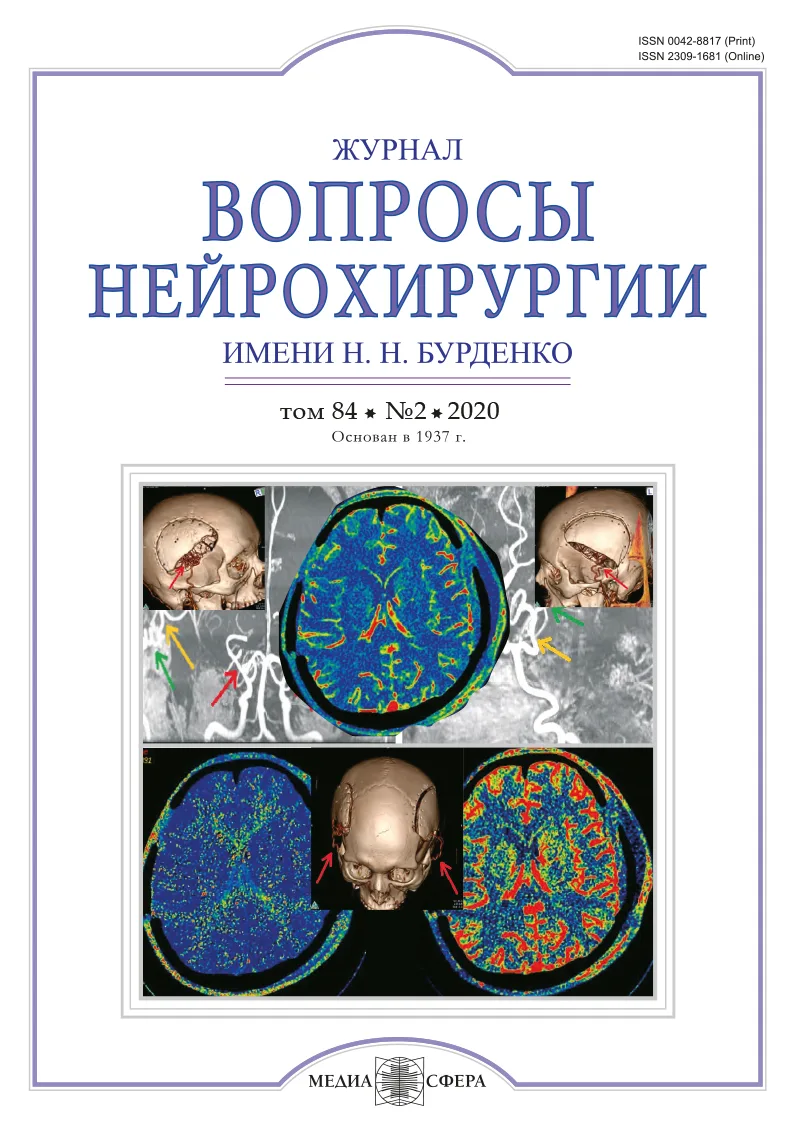
Сочетание комбинированной двуствольной прямой и непрямой реваскуляризации головного мозга с двух сторон в лечении болезни моямоя
Журнал: Вопросы нейрохирургии имени Н.Н. Бурденко. 2020;84(2):93-102.
DOI: 10.17116/neiro20208402193
Прочитано: 3488 раз
Резюме
Ключевые слова
- ишемия мозга
- реваскуляризация
- болезнь моямоя
- двойной анастомоз
- синангиоз
Дата публикации: 01.07.2020
Список сокращений
БММ — болезнь мойамойа
ВСА — внутренняя сонная артерия
КТ — компьютерная томография
МРТ — магнитно-резонансная томография
ПВА — поверхностная височная артерия
ПМА — передняя мозговая артерия
СМА — средняя мозговая артерия
ТМО — твердая мозговая оболочка
ЭДАМС — энцефало-дуро-артерио-миосинангиоз
ЭИКМА — экстраинтракраниальный анастомоз
MTT — среднее время транзита крови
CBF — церебральный кровоток
Болезнь моямоя (БММ) представляет собой редкое, генетически обусловленное хроническое цереброваскулярное заболевание, проявляющееся медленно прогрессирующим сужением сосудов артериального круга головного мозга вплоть до их полной окклюзии [1, 2]. Чаще всего это заболевание встречается в азиатских странах, где его распространенность достигает 6—10 на 100 000 человек [3]. В России данные о заболеваемости БММ официально отсутствуют, и все сведения ограничиваются небольшими сериями и единичными наблюдениями [4—6].
Развитие заболевания характеризуется дефицитом лептоменигеальной сосудистой сети на фоне прогрессирующего стеноокклюзирующего поражения магистральных артерий головного мозга и недостаточности естественных экстраинтракраниальных коллатералей. Возникающая при этом выраженная цереброваскулярная недостаточность может приводить к развитию ишемического инсульта. Геморрагическая форма БММ обусловлена формированием гемодинамических микроаневризм на интракраниальных коллатералях основания головного мозга, которые представлены на ангиограммах в виде «легкой дымки» (перевод «моямоя» с японского) — яркой отличительной черты этого заболевания [7]. При обоих вариантах течения хирургические методы рассматриваются в качестве основного подхода к лечению этой патологии. Цель оперативных вмешательств — формирование дополнительной лептоменингеальной сети путем создания экстраинтракраниальных анастомозов (ЭИКМА) — прямая реваскуляризация и стимулирование развития лептоменингеальной сети путем синангиозов с васкуляризированными тканями — непрямая реваскуляризация. Оба метода применяются как по отдельности, так и в комбинации. Тактика реваскуляризации головного мозга, а также оценка ее эффективности в зависимости от объема хирургического вмешательства, возраста пациента и данных предоперационных обследований до настоящего времени является объектом научного интереса.
В представленном клиническом наблюдении описан редкий вариант сочетания двуствольных анастомозов с каждой стороны с наиболее распространенными методами непрямой реваскуляризации головного мозга, что позволило уже в раннем послеоперационном периоде добиться хорошей компенсации мозгового кровотока у взрослого пациента с БММ, несмотря на прогрессирование заболевания.
Клинический случай
Пациент К., 27 лет, поступил в ФГАУ «НМИЦ нейрохирургии им. акад. Н.Н. Бурденко» Минздрава России 06.11.18 с жалобами на упорные головные боли, прогрессирующую утомляемость и снижение работоспособности, обмороки (синкопальные состояния). Обзорная КТ головы не выявила существенных изменений, однако в ходе КТ-ангиографического обследования обнаружены признаки стеноза бифуркации обеих внутренних сонных артерий (ВСА), стеноза А1, М1 сегментов средней мозговой артерии (СМА) и передней мозговой артерии (ПМА) с двух сторон, слабое контрастирование корковых сосудов на фоне сети расширенных патологических коллатералей основания головного мозга (рис. 1). Подобная ангиографическая картина характерна для БММ 3 стадии по J. Suzuki [1].

Признаки стеноза бифуркации обеих внутренних сонных артерий, стенозов А1, М1 сегментов средней мозговой артерии и передней мозговой артерии с двух сторон, патологическая сеть сосудов мойамойа на основании головного мозга (стрелки): а — аксиальная проекция; б — коронарная проекция.
Для оценки степени цереброваскулярной недостаточности выполнено КТ-перфузионное исследование (рис. 2, а, б), при котором выявлен выраженный дефицит кровоснабжения мозга в лобно-теменных областях с двух сторон, больше справа: снижение церебрального кровотока (CBF) в проекции коры лобно-теменных областей до 25—27 мл/100 г/мин (рис. 2, б), пролонгация времени транзита крови (MTT) до 10 с в лобных долях, до 11 с в левой теменной доле, до 12 с в правой теменной доле и до 8—10 с в заднетеменных областях при сохранении нормальных величин MTT (3 с) в затылочных долях (см. рис. 2, а).

а — признаки декомпенсации мозгового кровотока в бассейнах обеих средних мозговых артерий и передних мозговых артерий: повышение времени транзита крови до 10—12 с в лобно-теменно-височных областях, больше справа; б — снижение церебрального кровотока в лобно-теменно-височных областях до 25—27 мл/100 г/мин (усредненный мозговой кровоток в коре и белом веществе). Цветовая шкала отражает величину мозгового кровотока: красный — высокий мозговой кровоток, больше 60 мл/100 г/мин, синий — низкий мозговой кровоток, меньше 20 мл/100 г/мин.
С целью профилактики как ишемического (выраженное снижение мозгового кровотока), так и геморрагического (усиление кровотока через сеть патологических коллатералей основания головного мозга) инсульта пациенту предложено этапное хирургическое лечение.
Поскольку преобладал перфузионный дефицит в бассейне правой СМА, 07.11.18 на первом этапе проведена операция — комбинированная реваскуляризация бассейна правой СМА с созданием двух ЭИКМА и энцефало-дуро-артерио-миосинангиоза (ЭДАМС). Оперативное вмешательство проводили в условиях эндотрахеального наркоза в положении больного лежа с поворотом головы и ее жесткой фиксацией скобой Мейфилда. Перед разметкой операционного доступа пальпаторно определяли ход обеих ветвей поверхностной височной артерии (ПВА) (рис. 3, а). Из дугообразного разреза в правой лобно-теменно-височной области выполнена широкая костнопластическая трепанация размером 8×10 см с обнажением твердой мозговой оболочки (ТМО) над правой лобной, теменной и височной долями (рис. 3, б). Последовательно выделены лобная и теменная ветви ПВА, имевшие диаметр до 1,2 мм, на протяжении 6 и 8 см соответственно. ТМО рассекали лепестками с широким основанием к краям костного дефекта (впоследствии лоскуты ТМО использовались для формирования дурального синангиоза). С целью сохранения естественных дурально-корковых ЭИКМА основной ствол средней оболочечной артерии и ее крупные ветви не пересекались (рис. 3, в). С целью увеличения объема реваскуляризации наложено два ЭИКМА между лобной и височной корковыми артериями (рис. 3, г). Время пережатия корковых артерий составило 23 и 25 мин соответственно. Дополнительно донорские артерии подшиты к пиальной оболочке головного мозга с целью создания энцефало-артерио-синангиозов. Лепестки рассеченной ТМО инвертированы под края костного дефекта для формирования энцефало-дуро-синангиоза (рис. 3, д). На кору лобно-височно-теменной области уложена отсепарированная височная мышца (миосинангиоз), которую фиксировали к костному краю, закрыв тем самым дефект ТМО (рис. 3, е). Швы герметизированы тахокомбом. Во избежание сдавления мышцы костный лоскут базально резецирован в пределах 1 см. Костный лоскут уложен на место и фиксирован узловыми швами.

а — разметка кожных разрезов в правой лобно-теменно-затылочной области; б — широкая трепанация черепа с обнажением твердой мозговой оболочки над Сильвиевой щелью, правой лобной, теменной и височной долями; в — вскрытие твердой мозговой оболочки с сохранением ствола и крупных ветвей средней менингеальной артерии; г — двойной экстраинтракраниальный микрососудистый анастомоз; д — подвернутые листки твердой мозговой оболочки под края костного дефекта — энцефало-дуро-синангиоз (стрелки); е — дефект твердой мозговой оболочки закрыт височной мышцей — энцефало-мио-синангиоз.
Оперативное вмешательство пациент перенес удовлетворительно. В послеоперационном периоде отметил улучшение общего состояния: увеличилась активность, уменьшились частота и интенсивность приступов головной боли, регрессировали синкопальные состояния.
При контрольном комплексном МРТ исследовании через 3 мес после операции выявлена прогрессия стенозов М1 сегментов СМА вплоть до их полной окклюзии (рис. 4, а). На этом фоне визуализировались как оба созданных анастомоза с признаками гипертрофии основного ствола и ветвей ПВА, так и сеть новых лептоменингеальных коллатералей в области непрямого миосинангиоза (рис. 4, б). Несмотря на выявленную прогрессию стенозов бифуркаций обеих ВСА и окклюзию М1 сегмента правой СМА, это обеспечило улучшение мозгового кровотока, что подтверждено данными перфузионного ASL исследования: отмечены признаки восстановления мозгового кровотока в бассейне правой СМА до 40—45 мл/100 г/мин на фоне сохраняющихся низких значений объема CBF слева — 25—30 мл/100 г/мин (рис. 4, в).

а — прогрессия стенозирования бифуркации обеих внутренних сонных артерий, окклюзия обеих средних мозговых артерий, стеноз передней мозговой артерии с двух сторон (красные стрелки); функционирующий экстраинтракраниальный анастомоз (основной ствол и обе ветви) (желтая стрелка), новая сеть коллатеральных сосудов головного мозга — непрямой компонент (зеленая стрелка); б — функционирующий экстраинтракраниальный анастомоз (основной ствол и обе ветви) (желтые стрелки), новая сеть коллатеральных сосудов головного мозга — непрямой компонент (зеленая стрелка); в — перфузионное ASL исследование: улучшение перфузии в правом полушарии головного мозга (красная стрелка), остается значительный перфузионный дефицит левого полушария (желтая стрелка).
Поскольку сохранялся перфузионный дефицит в бассейне левой СМА, 28.03.19 на втором этапе проведена операция комбинированная реваскуляризация бассейна левой СМА с созданием двух ЭИКМА и ЭДАМС слева. Техника оперативного вмешательства аналогична таковой на первом этапе. Пациент оперативное вмешательство перенес удовлетворительно. В послеоперационном периоде нарушений мозгового кровообращения не отмечалось.
При контрольном КТ-ангиографическом исследовании на 7-е сутки после операции визуализированы функционирующие двойные анастомозы с двух сторон (рис. 5, а—д), а также зафиксировано улучшение параметров перфузии — восстановление среднего времени транзита крови (MTT) в области кровоснабжения СМА и ПМА до нормальных значений с обеих сторон (3—4 с) (рис. 6, а), значительное повышение объема CBF по сравнению с исследованием, выполненным до первой операции (рис. 6, б, в). Перфузионное ASL исследование подтвердило отсутствие межполушарной асимметрии мозгового кровотока за счет повышения объема CBF с двух сторон до 40—45 мл/100 г/мин.

а — фронтальная проекция; б — аксиальная проекция; в—д — 3D-реконструкция. Визуализируются функционирующие двойные экстраинтракраниальные анастомозы с двух сторон, увеличение калибра стволов поверхностных височных артерий (красные стрелки), сеть новых лептоменингеальных коллатералей в области непрямого синангиоза (желтая стрелка).

а — улучшение перфузионных показателей левого полушария в виде снижения времени транзита крови в обоих полушариях до нормальных значений (3 с); б — снижение церебрального объема крови до 1,2 мл/100 г с двух сторон в лобно-теменных областях; в — повышение церебрального кровотока в лобно-теменных областях до 40—45 мл/100 г/мин.
В клинической картине во время наблюдения отмечено дальнейшее улучшение состояния. Синкопальные состояния не повторялись.
По данным контрольного МРТ исследования, через 6 мес после второй операции вновь выявлена прогрессия основного заболевания вплоть до окклюзии обеих ВСА, СМА, ПМА (рис. 7, а). Однако, благодаря функционирующим двуствольным ЭИКМА с двух сторон, а также вновь образованным лептоменингеальным коллатералям, имела место полная компенсация кровоснабжения головного мозга до нормальных значений 55—65 мл/100 г/мин без межполушарной асимметрии (рис. 7, б).

а — магнитно-резонансное-ангиографическое исследование в режиме 3D TOF: прогрессия основного заболевания — окклюзия внутренней сонной артерии, средней мозговой артерии, передней мозговой артерии с двух сторон (красные стрелки), функционирующие двойные экстраинтракраниальные анастомозы с двух сторон, увеличение калибра ствола поверхностной височной артерии (желтые стрелки); б — перфузионное ASL-исследование: восстановление церебрального кровотока обоих полушарий до нормальных значений — 55—65 мл/100 г/мин — стрелки.
Обсуждение
БММ редко выявляется на территории Российской Федерации, в связи с этим алгоритм обследования и хирургического лечения больного до настоящего времени вызывает множество вопросов среди специалистов.
В приведенном клиническом наблюдении рассмотрен наиболее частый вариант течения заболевания в виде распространенного стенозирования артерий виллизиева круга, послужившего причиной выраженной церебральной ишемии. Так, выявленное у пациента по данным КТ-перфузионного исследования удлинение МТТ (более 11 с) в бассейнах обеих СМА в сочетании со снижением объема регионарного кровотока более чем на 30% по сравнению с нормальными величинами соответствовало пороговым значениям стадии декомпенсации мозгового кровотока с повышенным риском развития ишемического инсульта [8]. Кроме того, выявленный доминирующий характер компенсации мозгового кровотока через гипертрофированную сеть базальных коллатералей определял повышенный риск геморрагического инсульта [9]. Таким образом, данные нейровизуализации в сочетании с характерной клинической симптоматикой и предполагаемым прогрессирующим характером заболевания, подтвержденным в ходе последующего наблюдения, определили показания к хирургическому лечению — реваскуляризации головного мозга с целью создания новых путей коллатерального кровотока [10].
Развитие методов хирургического лечения БММ началось с 70-х годов ХХ века, когда стали применять методы прямой и непрямой реваскуляризации мозга. В 1972 г. впервые пациенту с БММ выполнен ЭИКМА между ПВА и ветвью СМА [11, 12]. Альтернативный подход в лечении патологии заключается в перемещении хорошо кровоснабжаемых мягких тканей пациента непосредственно на поверхность головного мозга. Тем самым создаются благоприятные условия для неоангиогенеза, приводящего к формированию спонтанных экстраинтракраниальных анастомозов из системы наружной сонной артерии [13—15]. Каждый их этих методов хирургического лечения БММ имеет свои преимущества и недостатки, что служит предметом дискуссий и специализированных исследований [10, 16, 17]. Тем не менее, в целом выявлена связь между результатами реваскуляризации головного мозга и степенью компенсации мозгового кровотока за счет вновь сформированных анастомозов [18]. Одним из вариантов увеличения количества таких коллатералей, а соответственно, и объема реваскуляризации, является комбинация прямых анастомозов и непрямых синангиозов [16]. Подобные методики описаны в 90-х годах прошлого века [19] и отражают современную тенденцию хирургического лечения БММ. В то же время в отечественной литературе до настоящего времени методика комбинированной реваскуляризации головного мозга подробно не рассматривалась.
В приведенном наблюдении исходили из предоперационной картины развернутой стадии БММ и наличия тяжелой цереброваскулярной недостаточности, поэтому в качестве метода хирургического лечения выбрали комбинированную реваскуляризацию обоих полушарий по принципу максимального использования всех доступных донорских сосудов бассейна наружной сонной артерии. Обе ветви ПВА использовали в качестве доноров для прямых анастомозов, ветви средней менингеальной артерии — для создания дурального синангиоза, ветви глубокой височной артерии — для создания миосинангиоза [16]. Оперативное лечение проводили в два этапа. Полушарие для первоочередного вмешательства при двусторонних поражениях обычно определяется стороной преобладания клинической симптоматики [16]. В отсутствие латерализации очаговой неврологической симптоматики, как правило, выбирается доминантное полушарие [16], или, как в рассматриваемом клиническом наблюдении, сторона преобладания перфузионного дефицита.
Учитывая признаки разобщения источников кровоснабжения лобных и височных долей вследствие выраженного стенотического поражения М1 сегмента СМА и отсутствия компенсаторных перетоков по дистальным ветвям СМА, приняли решение о наложении двух ЭИКМА с использованием обеих ветвей ПВА. При этом в качестве акцепторных артерий выбирали корковые артерии сегмента М4 СМА по разные стороны относительно сильвиевой щели. Дополнительными факторами увеличения объема реваскуляризации служили подшивание обеих донорских артерий ЭИКМА к пиальной оболочке головного мозга с целью создания пиального энцефало-артерио-синангиоза, а также максимально широкая область создания дуральных и мио-синангиозов благодаря широкой трепанации черепа.
Примечательно, что после первого этапа реваскуляризации у пациента отмечено развитие окклюзии СМА с двух сторон, что можно связать как с прогрессией основного заболевания, так и с гемодинамической перестройкой мозгового кровотока с увеличением нагрузки на сеть лептоменингеальных и пиальных артерий [20]. Это, в свою очередь, может приводить к регрессу сети патологически расширенных сосудов на основании мозга [21].
Методика комбинированной реваскуляризации в приведенном клиническом наблюдении продемонстрировала высокую эффективность — уже спустя 3 мес при контрольной КТ-ангиографии визуализировалась обширная сеть экстраинтракраниальных коллатералей, позволившая компенсировать имевшийся перфузионный дефицит. Тем самым удалось не только предотвратить вероятный ишемический инсульт на фоне прогрессии стенозов М1 сегментов СМА вплоть до их окклюзии, но и улучшить клиническое состояние больного. Обращает на себя внимание визуализация не только прямых анастомозов, но и сети непрямых синангиозов. Это подтверждает высокую эффективность комбинированных методов реваскуляризации как у детей, так и у взрослых, что улучшает прогноз течения БММ [18, 22].
Безусловно, вызывают интерес вклад прямых и непрямых компонентов реваскуляризации в общее улучшение кровоснабжения мозга, вероятность побочных эффектов в ходе длительного послеоперационного наблюдения, а также сопоставление результатов комбинированного метода лечения и изолированных методов реваскуляризации. Результаты исследований, посвященных данным вопросам, будут представлены в следующих публикациях.
Заключение
Представлено клиническое наблюдение, в котором комбинированная реваскуляризация головного мозга у пациента с болезнью моямоя оказалась эффективной. Хирургическое вмешательство позволило своевременно компенсировать и предотвратить возможные нарушения мозгового кровообращения, несмотря на прогрессию стеноокклюзирующей патологии. Большая роль в этом принадлежит двуствольным экстраинтракраниальным анастомозам, обеспечившим восполнение выраженного перфузионного дефицита уже в раннем послеоперационном периоде. Выявленные признаки неоангиогенеза и развития лептоменингеальной сети после непрямых синангиозов указывают на целесообразность их использования в рамках комбинированной реваскуляризации головного мозга, в том числе у взрослых пациентов.
Авторы заявляют об отсутствии конфликта интересов.
Комментарий
Рецензируемая статья демонстрирует клинический случай успешного лечения взрослого пациента с болезнью мойямойя — редким на территории Российской Федерации стеноокклюзирующим заболеванием. Несмотря на более чем 50-летний мировой опыт использования реваскуляризации головного мозга в лечении данной патологии, в русскоязычной литературе публикации, посвященные методам хирургического лечения этого заболевания, практически отсутствуют, что подчеркивает важность работы.
В статье представлена интересная комбинация различных технических вариантов реваскуляризации, позволившая уже в раннем послеоперационном периоде компенсировать имевшуюся у больного грубую недостаточность мозгового кровообращения и предотвратить возможные неблагоприятные последствия развития заболевания. При этом подчеркнуто значение различных компонентов реваскуляризации — прямого экстраинтракраниального анастомоза и непрямых синангиозов. Подтвержденная по данным КТ-ангиографии новая сеть лептоменингеальных коллатералей, образованных в месте непрямого синангиоза, подчеркивает эффективность непрямых компонентов, даже у взрослых пациентов. Это имеет большое практическое значение, поскольку позволяет обосновать выполнение комбинированных вмешательств у пациентов не только детского, но и взрослого возраста.
Представленные в статье клинические данные, показания к хирургическому лечению, данные пред- и послеоперационных обследований обоснованы и не вызывают возражений. Статья удачно иллюстрирована и может служить хорошим пособием по комбинированной технике хирургической реваскуляризации головного мозга. Представляет также интерес анализ отдаленных результатов описанной методики на серии наблюдений и их сравнение с прямыми и непрямыми вариантами реваскуляризации. Можно порекомендовать представить результаты такого исследования в будущих публикациях.
В.А. Лазарев (Москва)


Рекомендуем статьи по данной теме:
Сравнительная эффективность методов реваскуляризации при ишемическом инсульте в клинической практике.Журнал неврологии и психиатрии им. С.С. Корсакова. Спецвыпуски. 2026;126(8-2):45-53
Высокая эффективность когнитивной реабилитации в позднем восстановительном периоде после реваскуляризации.Журнал неврологии и психиатрии им. С.С. Корсакова. Спецвыпуски. 2026;126(4-2):100-106
Характеристика хирургической и медикаментозной терапии пациентов кардиологического профиля, госпитализированных в федеральный медицинский исследовательский центр.Профилактическая медицина. 2026;29(1):20-27
Оказание медицинской помощи пациентам с синдромом диабетической стопы и облитерирующим атеросклерозом сосудов нижних конечностей: проблемы и перспективы.Медицинские технологии. Оценка и выбор. 2025;47(4):42-53
Аневризмы, ассоциированные с ангиопатией мойя-мойя (клинические наблюдения).Вопросы нейрохирургии имени Н.Н. Бурденко. 2025;89(6):96-104
Двойные экстра-интракраниальные микроанастомозы при деконструктивных операциях по поводу гигантских аневризм внутренних сонных и средних мозговых артерий.Вопросы нейрохирургии имени Н.Н. Бурденко. 2025;89(5):16-27
Характеристики, особенности лечения и госпитальная летальность пациентов с инфарктом миокарда 75 лет и старше в России по данным регистра РЕГИОН-ИМ.Кардиологический вестник. 2025;20(1):22-38
Первый российский опыт педиатрической субтотальной реплантации лица.Пластическая хирургия и эстетическая медицина. 2024;(4):5-15