Эффективность и безопасность использования минимально инвазивных доступов в микрохирургическом лечении церебральных аневризм
Журнал: Вопросы нейрохирургии имени Н.Н. Бурденко. 2021;85(1):47-55.
DOI: 10.17116/neiro20218501147
Прочитано: 3246 раз
Резюме
Церебральные аневризмы выявляются в 1—2% случаев в популяции и служат причиной субарахноидальных кровоизлияний (САК) в 80—85% случаев. В последние десятилетия благодаря широкой доступности компьютерной и магнитно-резонансной томографии возросла частота выявления неразорвавшихся аневризм (НА). Одну из лидирующих ролей в лечении церебральных аневризм по-прежнему играют микрохирургические вмешательства.
ЦЕЛЬ ИССЛЕДОВАНИЯ
Разработать и внедрить в клиническую практику индивидуальный подход к лечению больных с церебральными аневризмами путем проведения сравнительного анализа результатов микрохирургических вмешательств с использованием традиционных (ТрД) и минимально инвазивных (МиД) доступов, а также уточнить показания и противопоказания к использованию МиД.
МАТЕРИАЛ И МЕТОДЫ
Проведен анализ результатов диагностики и микрохирургического лечения 394 пациентов с церебральными аневризмами за период с 2014 по 2019 г. В исследование включены 2 группы пациентов, отличавшихся по виду хирургического доступа: группа ТрД (n=171, 43,4%) и группа МиД (n=223, 56,6%). В группе ТрД применяли птериональный (ПТД) (n=85), орбитозигоматический (n=23) и латеральный супраорбитальный доступы (n=63). В группе МиД использовали трансбровный супраорбитальный (n=88), миниптериональный (n=62), трансбровный трансорбитальный (n=37) и транспальпебральный трансорбитальный доступы (n=36). Сравнение результатов лечения проводилось в подгруппах ТрД и МиД отдельно для пациентов с разорвавшимися и НА. Мы оценивали интра- и послеоперационные осложнения, длительность оперативного вмешательства и послеоперационного стационарного лечения. Неврологические исходы оценивали по шкале исходов Глазго и модифицированной шкале Рэнкина. Сравнение косметических исходов осуществлялось с использованием визуальной аналоговой косметической шкалы. Отдельно оценивали гипестезию на стороне доступа и движение бровей в сроки 3, 6 и 12 месяцев.
РЕЗУЛЬТАТЫ
В остром периоде кровоизлияния в группе МиД длительность операций была статистически значимо меньше (p=0,001). Статистически значимой разницы в частоте интраоперационного разрыва, развития хирургических и неврологических осложнений между группами не было (p>0,05). Количество послеоперационных койко-дней было статистически значимо меньше в группе МиД (p=0,006). В данной группе неврологические исходы были несколько лучше (p<0,001), летальных исходов не было, неблагоприятные исходы наблюдались в 5,3% случаев (n=5). В группе ТрД 1 больной скончался на фоне тракционной гематомы, неблагоприятные исходы наблюдались у 9 (8,7%) больных. Косметические исходы оказались статистически значимо лучше в группе МиД (p<0,001). В холодном периоде кровоизлияния и в случаях НА длительность операций была меньше в группе МиД (p=0,051). Частота интра- и послеоперационных осложнений сопоставима в обеих группах (p>0,05). Длительность госпитализации была статистически значимо меньше в группе МиД (p<0,001). Функциональные исходы в обеих группах сопоставимы, а косметические исходы — статистически значимо лучше в группе МиД (p<0,05).
ВЫВОДЫ
Минимально инвазивные доступы при микрохирургическом лечении церебральных аневризм по эффективности и безопасности не уступают традиционным доступам. Использование минимально инвазивных доступов рекомендовано только для опытных нейрохирургов в условиях специализированной клиники. Безопасность и эффективность минимально инвазивных доступов достигается посредством тщательного подбора пациентов и оценки нейровизуализационной картины с использованием индивидуального планирования.
Ключевые слова
- минимально инвазивная нейрохирургия
- церебральные аневризмы
- субарахноидальное кровоизлияние
Дата поступления: 31.03.2020
Дата принятия в печать: 02.11.2020
Дата публикации: 09.02.2021
Список сокращений
ИР — интраоперационный разрыв
КТ — компьютерная томография
МиД — минимально инвазивный доступ
НА — неразорвавшиеся аневризмы
ПТД — птериональный доступ
САК — субарахноидальное кровоизлияние
ТрД — традиционный доступ
Церебральные аневризмы выявляются в 1—2% случаев в популяции и служат причиной субарахноидальных кровоизлияний (САК) в 80—85% случаев [1, 2]. Это жизнеугрожающее заболевание встречается, как правило, у людей трудоспособного возраста на 4—6-й декадах жизни [3—5]. У пациентов с САК и его последствиями частота летальных исходов составляет 25—50% [6, 7]. Ежегодно в Российской Федерации выявляется примерно 19 600 случаев САК, причем не менее чем в 7300 наблюдениях показано оперативное вмешательство [8]. В последние десятилетия благодаря широкой доступности компьютерной (КТ) и магнитно-резонансной томографии возросла частота выявления неразорвавшихся аневризм (НА). Риск САК для пациентов с НА в течение жизни составляет 20—50% [9]. Однако точно оценить индивидуальный риск САК при НА невозможно. Поэтому многие пациенты с НА являются кандидатами на хирургическое лечение. Все это определяет большую социально-экономическую значимость данной патологии.
Микрохирургическое вмешательство по-прежнему играет одну из лидирующих ролей в лечении церебральных аневризм. Спектр хирургических доступов достаточно широк и определяется тяжестью состояния больного, локализацией и размером аневризмы, объемом кровоизлияния и опытом нейрохирурга. Традиционным является птериональный доступ (ПТД) [10]. Позже предложены модификации ПТД в виде супраорбитального, орбитоптерионального и орбитозигоматического доступов [11—14]. Авторы с успехом использовали традиционные доступы как при разорвавшихся аневризмах, так и при НА. Однако при критическом анализе эффективности традиционных доступов становится понятно, что большая часть мозговых структур обнажается в ходе хирургического доступа избыточно, неоправданно, без связи с целью оперативного вмешательства. Вполне вероятно, что, избегая травмы этих структур при клипировании аневризм, можно снизить агрессивность вмешательства без потери эффективности и безопасности. Это позволяет обосновать целесообразность использования индивидуального подхода в микрохирургическом лечении аневризм, выбора наиболее эффективного доступа и микрохирургического маршрута на основании возраста, клинического состояния пациента, нейровизуализационной картины и анатомии лицевого отдела головы.
Помимо сказанного выше, при расширенных переднелатеральных доступах имеется риск формирования эпидуральной гематомы, атрофии височной мышцы, образования рубца и асимметрии лица, дисфункции височно-нижнечелюстного сустава, повреждения лобной ветви лицевого нерва, гипестезии половины головы [15—17]. Эти негативные последствия влияют на восстановление больных, удлиняют сроки госпитализации, что приводит к длительной потере трудоспособности и экономическим затратам. Таким образом, профилактика подобных осложнений имеет как медицинские, так и экономические предпосылки.
С внедрением технологических инноваций минимально инвазивные вмешательства неизбежно начали использовать во всех областях хирургии. Сформировался основной принцип минимализма — не как уменьшения трепанационного окна, а как создания индивидуализированного маршрута к конкретной мишени, что влечет за собой снижение агрессивности вмешательства.
A. Perneczky и R. Reisch в 2008 г. предложили использовать минимальный супраорбитальный доступ через бровь в качестве альтернативы птериональному доступу [16]. Позже появились работы о применении птерионального keyhole-доступа и трансорбитального минидоступа [18—21]. При этом в подавляющем большинстве исследовательских работ вопрос выбора нейрохирургического доступа с учетом индивидуальной нейровизуализационной картины, состояния пациента и анатомии лицевого отдела головы не рассматривается [15, 18, 20, 22—28]. Подводя итог, следует подчеркнуть, что данные об использовании минидоступов в микрохирургии церебральных аневризм ограничены и не систематизированы.
Цель исследования — разработать и внедрить в клиническую практику индивидуальный подход к лечению больных с церебральными аневризмами путем проведения сравнительного анализа результатов микрохирургических вмешательств с использованием традиционных (ТрД) и минимально инвазивных (МиД) доступов, а также уточнить показания и противопоказания к использованию МиД.
Материал и методы
Нами проведен анализ результатов диагностики и микрохирургического лечения 394 пациентов с церебральными аневризмами за период с 2014 по 2019 г. В исследование включены 2 группы пациентов, отличающиеся по виду выполненного доступа: ТрД (n=171, 43,4%) и МиД (n=223, 56,6%). В группе ТрД использовали птериональный (ПТД) (n=85), орбитозигоматический (n=23) и латеральный супраорбитальный доступы (n=63). В группе МиД применяли трансбровный супраорбитальный (n=88), миниптериональный (n=62), трансбровный трансорбитальный (n=37) и транспальпебральный трансорбитальный доступы (n=36). Пациентов госпитализировали в 5 многопрофильных стационаров с обязательным наличием в них Регионального сосудистого центра: ГБУЗ города Москвы «Городская клиническая больница им. Ф.И. Иноземцева Департамента здравоохранения города Москвы» (Москва), ГБУЗ города Москвы «Городская клиническая больница №1 им. Н.И. Пирогова Департамента здравоохранения города Москвы» (Москва), ГБУЗ МО «Московский областной научно-исследовательский клинический институт им. М.Ф. Владимирского» (Москва), ГБУЗ Тверской области «Областная клиническая больница» (Тверь), ГБУ Республики Дагестан «Республиканская клиническая больница скорой медицинской помощи» (Махачкала).
Средний возраст пациентов (170 мужчин и 224 женщины) составил 56±16,4 года. Превалировали пациенты молодой и средней возрастных категорий (n=302, 76,7%). В исследование включены пациенты с разорвавшимися и НА, старше 17 лет, с тяжестью состояния по шкале Hunt—Hess I—III, с прослеженным катамнезом не менее 6 мес. Критерии исключения: тяжесть состояния по шкале Hunt—Hess IV—V, локализация аневризм в дистальных отделах передней мозговой и средней мозговой артерий, на позвоночных артериях и стволе базилярной артерии.
В остром периоде кровоизлияния было 198 (50,3%) пациентов. В субкомпенсированном состоянии по Hunt—Hess III — 17 (8,6%) больных: в группе ТрД — 7 (4,1%) пациентов, МиД — 10 (4,5%). В холодном периоде после САК поступили 52 (13,2%) пациента. НА диагностированы у 144 (36,6%) больных. Распределение пациентов в зависимости от сроков после САК и выполненного доступа представлено в таблице.
Распределение пациентов в зависимости от сроков после субарахноидального кровоизлияния и выполненного доступа
Сутки после САК | Виды доступов, n=198 | ||||||
ПТД, n (%) | ОЗД, n (%) | ЛСД, n (%) | ТСД, n (%) | МПД, n (%) | ТТД, n (%) | ТпТД, n (%) | |
0—3 | 25 (12,6) | 5 (2,5) | 23 (11,6) | 18 (9,1) | 5 (2,5) | 8 (4,1) | 4 (2,1) |
4—7 | 15 (7,6) | 2 (1) | 8 (4,1) | 16 (8,1) | 8 (4,1) | 4 (2,1) | 3 (1,5) |
8—14 | 7 (3,5) | 2 (1) | 9 (4,6) | 13 (6,6) | 4 (2,1) | — | 1 (0,5) |
15—21 | 3 (1,5) | 3 (1,5) | 3 (1,5) | 9 (4,6) | — | 1 (0,5) | — |
Всего | 49 (24,8) | 12 (6,1) | 43 (21,7) | 56 (28,3) | 17 (8,6) | 13 (6,6) | 8 (4,1) |
Примечание. САК — субарахноидальное кровоизлияние; ПТД — птериональный доступ; ОЗД — орбитозигоматический доступ; ЛСД — латеральный супраорбитальный доступ; ТСД — трансбровный супраорбитальный доступ; МПД — миниптериональный доступ; ТТД — трансбровный трансорбитальный доступ; ТпТД — транспальпебральный трансорбитальный доступ.
Основным методом диагностики при планировании доступов была КТ, которая выполнена в 100% наблюдений. КТ включала 3 формата оценки индивидуальной анатомии: нативной, костной и ангиографической. Нативная часть исследования необходима для оценки локализации и объема кровоизлияния, наличия гидроцефалии, вторичных ишемических очагов, симптомов повышения внутричерепного давления, также обращали внимание на наличие резервных пространств у пациентов в холодном периоде кровоизлияния или с НА. Костный режим позволял оценить топографию и пневматизацию лобных пазух, наличие костных выступов, гиперостотических изменений по ходу доступа, которые необходимо резецировать. Ангиографический режим позволял оценить локализацию, размер аневризмы, наличие дочерних мешков, анатомию Виллизиева круга, наличие множественных аневризм, спазм артерий.
Виртуальная краниотомия и индивидуальное планирование
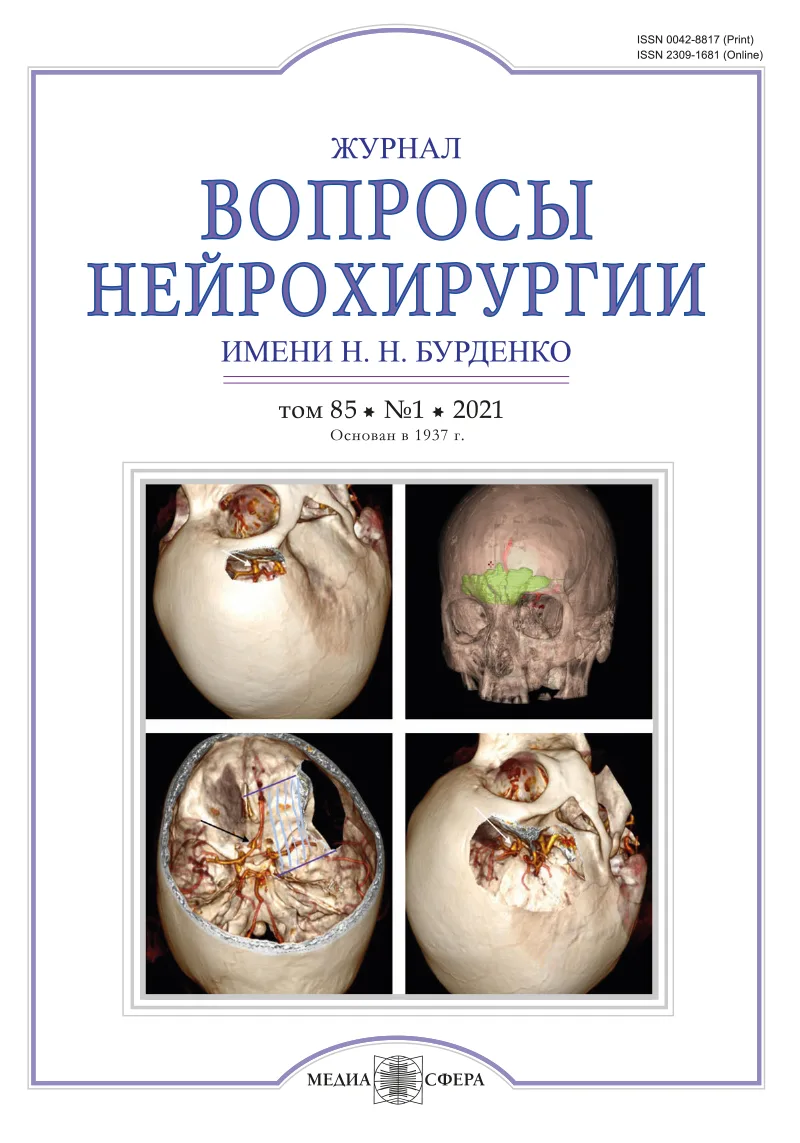
Мы использовали индивидуальное планирование минидоступа не только с целью простого уменьшения трепанационного окна. Основная цель индивидуального планирования — это определение оптимальной локализации, вида и размера краниотомии, обеспечивающей максимальную хирургическую эффективность. Оптимальная хирургическая траектория доступа к аневризме обеспечивает снижение инвазивности вмешательства на всех этапах: кожного разреза, рассечения височной мышцы, краниотомии, вскрытия твердой мозговой оболочки с эпидуральной диссекцией, и микрохирургический маршрут в этом случае обеспечивает минимизацию травматизации и тракции мозга. При этом правильно спланированный микрохирургический маршрут должен обеспечивать возможность диссекции только тех структур, которые необходимы для ранней релаксации мозга, проксимального и дистального контроля, визуализации шейки аневризмы и аневризматического комплекса. Предварительное планирование с созданием виртуальной 3D- модели доступа выполняли с помощью программы Inobitec Dicom Viewer. Виртуальную краниотомию использовали в 190 (85,2%) наблюдениях в группе МиД. Виртуальный трансбровный супраорбитальный доступ и ПТД для пациента с аневризмой передней соединительной артерии представлен на рис. 1.

Рис. 1. Спиральная компьютерная томография сосудов мозга с виртуальным моделированием трансбровного супраорбитального и птерионального доступов.
а, б — моделирование трансбровного супраорбитального доступа; в, г — моделирование птерионального доступа у того же больного. При трансбровном супраорбитальном доступе продемонстрирован сфокусированный маршрут к аневризматическому комплексу.
В ходе индивидуального планирования мы также оценивали возможность использования разных доступов при определяемой на КТ патологии. Создание виртуальной модели занимало менее 1 мин, после чего сопоставление с анатомией лицевого отдела головы позволяло выбрать безопасный, эффективный и малотравматичный доступ (рис. 2). Трансбровные разрезы не использовали при тонких светлых бровях, склонности к келоидным рубцам. Основным критерием для выбора транспальпебрального доступа было наличие естественной складки верхнего века.

Рис. 2. Виртуальное 3D-планирование доступов.
а, б — планирование трансбровного супраорбитального доступа; в — планирование трансбровного трансорбитального доступа. Визуализация разницы при сравнении двух представленных доступов. При трансбровном трансорбитальном доступе угол вертикального обзора больше за счет резекции верхнего края орбиты.
С целью дополнительного интраоперационного контроля нами использована нейронавигационная верификация лобных пазух при супра- и трансорбитальных минидоступах (n=161) в 61 (37,9%) наблюдении (рис. 3).

Рис. 3. Нейронавигационное планирование с оценкой топографии лобных пазух.
а, б — визуализация лобных пазух (зеленым цветом) и передних отделов артериального круга большого мозга (красным цветом).
Передний наклоненный отросток резецировали экстрадурально при трансорбитальных миникраниотомиях (n=73) в 12 (16,4%) наблюдениях. Мы использовали традиционную микрохирургическую технику. В остром периоде кровоизлияния вскрытие терминальной пластинки для снижения риска развития гидроцефалии и санация цистерн от крови для снижения риска ангиоспазма обязательны. У больных с НА нет необходимости в широкой диссекции цистерн, сильвиевой щели и вскрытии терминальной пластинки, поскольку это может быть связано с риском формирования арахноидальных рубцов и гигром.
При использовании минидоступов манипуляции могут быть затруднены, и углы хирургического воздействия ограничены по сравнению с традиционной трепанацией, решение о выборе доступа в каждом конкретном случае принималось с учетом опыта оперирующего хирурга.
Инструментальное обеспечение, включающее современные микроскопы, эндоскопы, специально сконструированные инструменты, обеспечивают хирургу маневренность в узкой ране и необходимую визуализацию.
Для статистического анализа различий между группами по количественным переменным применяли непараметрический критерий Манна—Уитни. Анализ взаимосвязи категориальных признаков выполнен с помощью критерия хи-квадрат (χ2) и точного критерия Фишера. Подбор подгрупп пациентов из сравниваемых групп, сопоставимых по распределению базовых характеристик, потенциально влияющих на результаты лечения, проводили с помощью метода Propensity Score Matching (PSM, псевдорандомизация). Анализ данных выполнен с помощью языка и среды для статистического программирования R (версия 3.4.4) в интегрированной среде разработки RStudio (версия 1.2.1335). Статистический анализ проведен в лаборатории биомедицинской информатики и искусственного интеллекта ФГАУ «НМИЦ нейрохирургии им. акад. Н.Н. Бурденко».
Результаты
Нами проведен анализ результатов микрохирургического лечения 394 пациентов с 425 церебральными аневризмами через МиД и ТрД. Группы, подобранные с помощью метода PSM, оказывались сбалансированными (статистически значимо не различались) по основным факторам, потенциально влияющим на исходы микрохирургического лечения церебральных аневризм: полу, возрасту, наличию и распространенности кровоизлияния, периоду кровоизлияния, а также размеру и локализации аневризм, что обеспечивало минимизацию систематической ошибки отбора и более корректное сравнение.
Сравнение пациентов групп ТрД и МиД в остром периоде кровоизлияния
В группе МиД длительность операции была статистически значимо меньшей (p=0,001). Статистически значимой разницы в частоте интраоперационного разрыва (ИР), хирургических и неврологических осложнений не было (p>0,05). Количество послеоперационных койко-дней было статистически значимо меньше в группе МиД (p=0,006). При использовании метода псевдорандомизации статистически значимых различий в неврологических исходах между группами не выявлено (p>0,05). Летальные исходы в группе МиД не зарегистрированы, 1 больной группы ТрД скончался на фоне внутримозговой гематомы, неблагоприятные функциональные исходы имелись у 9 (8,7%) больных по сравнению с 5 (5,3%) пациентами группы МиД. Косметические исходы в срок 3—6 мес были статистически значимо лучше в группе МиД (p<0,001). Гипестезия со стороны доступа в сроки 3 мес встречалась с сопоставимой частотой (p=0,873). В срок 6—12 мес мы получили статистически значимо более благоприятные результаты у пациентов группы МиД (p<0,05). В срок 6—12 мес статистически значимой разницы при сравнении наличия асимметрии в движении бровей не отмечалось (p>0,05). Полученные результаты по основным параметрам подтверждены статистически с помощью 2-го этапа сравнения по методу псевдорандомизации.
Сравнение пациентов групп ТрД и МиД в холодном периоде кровоизлияния и при неразорвавшихся аневризмах
Длительность операции была меньше у пациентов группы МиД (p<0,05). Показатели частоты ИР аневризмы, вскрытия лобной пазухи, хирургических и неврологических осложнений были сопоставимы в обеих группах (p>0,05). Количество послеоперационных койко-дней было меньше в группе МиД (p<0,05). Неврологические исходы сопоставимы у пациентов обеих групп.
Мы не получили статистически значимую разницу в динамике движения бровей у пациентов сравниваемых групп. При использовании метода «псевдорандомизации» эти результаты подтвердились.
ИР аневризмы произошел в 18 (4,6%) наблюдениях, из них в 11 (6,4%) случаев у пациентов группы ТрД и в 7 (3,1%) — группы МиД. Таким образом, в нашем материале использование минидоступов не увеличивало риск развития ИР аневризмы. Все эпизоды ИР аневризмы успешно контролировались с использованием традиционной микрохирургической техники. Необходимости в конверсии минидоступа в традиционный не было.
Неврологические осложнения развились у 42 (10,7%) пациентов, из них у 26 (15,2%) пациентов группы ТрД, у 16 (7,2%) — группы МиД. Выраженная послеоперационная боль отмечена у 20 (11,7%) пациентов группы ТрД и у 3 (1,4%) —группы МиД, различия статистически значимы (p<0,05).
Лобная пазуха вскрыта в 23 (5,8%) случаях, из них в 12 (7%) у пациентов группы ТрД и у 11 (4,9%) — группы МиД, различия статистически незначимы (p>0,05). Назальная ликворея возникла у 4 (1%) больных, из них у 1 (0,6%) пациента группы ТрД и у 3 (1,3%) — группы МиД. Во всех случаях ликворея купирована на фоне наружного люмбального дренирования в течение 7 дней.
Послеоперационные ретракционные изменения в виде локальных ишемических и геморрагических очагов выявлены у 11 (12,9%) пациентов после ПТД. У пациентов после минидоступов геморрагических проявлений не было, что мы связываем с использованием техники динамической тракции и отказа от фиксированной ретракции мозга. После ТрД внутримозговые гематомы выявлены в 4 (2,3%) и эпидуральные — в 3 (1,8%) случаях, причем в 2 наблюдениях потребовалась эвакуация гематом, а в 1 случае внутримозговая гематома привела к летальному исходу.
Местные инфекционные осложнения выявлены у 3 (1,8%) больных после ТрД и у 2 (0,9%) — после МиД, менингит — у 6 (3,5%) и у 3 (1,4%) пациентов соответственно.
Обсуждение
В нашем исследовании продемонстрированы хорошие функциональные исходы использования МиД, которые сопоставимы с результатами ТрД как при разорвавшихся аневризмах, так и при НА. Индивидуализация доступа приводит к снижению агрессивности вмешательства, статистически значимому уменьшению продолжительности операции и в остром (p=0,001), и в холодном периоде (p=0,01), и при НА (p=0,051); к уменьшению количества койко-дней в остром периоде (p=0,006) и при НА (p<0,001), что позволяет нивелировать возможные доступ-ассоциированные осложнения и обеспечить раннюю активизацию больных после микрохирургического клипирования церебральных аневризм. Косметические исходы после МиД являются более благоприятными (p<0,05). Наши результаты схожи с результатами других авторов, занимающихся минимально инвазивной хирургией аневризм [22—28].
Выбор доступа между традиционным или минимально инвазивным зависит от индивидуальной нейровизуализационной картины и состояния пациента. ТрД мы рекомендуем использовать у пациентов в тяжелом состоянии или в случае ожидаемого ухудшения состояния в динамике, когда требуется расширенная трепанация черепа. МиД в этих случаях мы считаем противопоказанными, несмотря на опыт нейрохирурга.
Пациенты с аневризмами передних отделов Виллизиева круга, которые находятся в компенсированном состоянии I—II степени по шкале Hunt—Hess, могут рассматриваться в качестве кандидатов для выполнения минидоступов, за исключением большинства сложных и гигантских аневризм. Выбор доступа для пациентов с III степенью тяжести по шкале Hunt—Hess осуществляется индивидуально и также зависит от многих факторов. Противопоказаниями к применению минидоступов для этих пациентов являются: признаки внутричерепной гипертензии/дислокации срединных структур по данным КТ, массивное САК в сочетании с внутримозговыми и/или внутрижелудочковыми кровоизлияниями, требующими эвакуации.
Наиболее подходящими кандидатами с САК для МиД являются пациенты с кровоизлияниями I—II степени по Fisher. Решение о выборе минидоступа у пациентов с кровоизлияниями III—IV степени по Fisher либо у пациентов с гидроцефалией решается индивидуально на основании тяжести клинического состояния, давности САК, локализации и размера аневризмы. Наличие гидроцефалии облегчает микрохирургический этап и предоставляет возможность увеличения рабочего пространства после релаксации мозга и вскрытия терминальной пластинки. Аналогично использование малотравматичного доступа возможно у возрастных пациентов (старше 60 лет) после САК, у которых наблюдаются хорошо выраженные резервные пространства на фоне возрастной атрофии головного мозга.
Для пациентов с НА минидоступы показаны при аневризмах размером менее 10 мм. Применение же МиД при крупных и гигантских аневризмах требует взвешенной оценки их анатомических параметров. Наличие узкой шейки при гигантских НА может служить основанием для выполнения минидоступа. Однако чаще всего в таких случаях методом выбора будут являться традиционные доступы.
Заключение
Минимально инвазивная концепция в микрохирургии церебральных аневризм является самостоятельным направлением, эффективной и безопасной альтернативой традиционным нейрохирургическим доступам. Однако использование минимально инвазивных доступов рекомендовано только для опытных нейрохирургов в условиях специализированной клиники. Безопасность и эффективность их применения достигается посредством тщательного подбора пациентов и оценки нейровизуализационной картины с использованием индивидуального планирования.
Участие авторов:
Концепция и дизайн исследования — Джинджихадзе Р.С., Древаль О.Н., Лазарев В.А.
Сбор и обработка материала — Джинджихадзе Р.С., Поляков А.В., Одаманов Д.А., Новикова Е.К.
Статистический анализ данных — Данилов Г.В., Джинджихадзе Р.С., Поляков А.В.
Написание текста — Джинджихадзе Р.С.
Редактирование — Лазарев В.А., Древаль О.Н.
Авторы заявляют об отсутствии конфликта интересов.
Комментарий
Статья Р.С. Джинджихадзе и соавторов посвящена, несомненно, актуальному и широко обсуждаемому вопросу использования индивидуально спланированных доступов в нейрохирургии. С развитием анестезиологии, обеспечившей релаксацию мозга, и микрохирургической техники стало ясно, что доступ должен быть минимально необходимого для выполнения операции размера.
Авторами проведен скрупулезный математический анализ, высокий уровень доказательности выявленных различий не вызывает сомнений. Но хочу отметить некоторую искусственность сравнения «минимально инвазивных» и «традиционных» доступов. Размеры трепанации черепа и разреза кожи при птериональном доступе могут быть сопоставимыми с таковыми при чрезбровном, тем более что эти размеры авторы не приводят и непонятно, с какого предела птериональная краниотомия становилась «миниптериональной». Насчет минимальной инвазивности также не все ясно. Авторы утверждают, что минидоступы обеспечивают лучший косметический результат. Но послеоперационный рубец в височной области после птериональной краниотомии вряд ли более заметен, чем на брови, а повреждение лобных ветвей лицевого нерва наблюдается только при нарушении технологии диссекции височной фасции. Кстати, при чрезбровном доступе не рекомендую пользоваться монополярной коагуляцией, разрез обычным скальпелем на всю глубину кожи в меньшей степени повреждает волосяные луковицы и обеспечивает лучший косметический результат.
Далее, косметические и функциональные результаты трансорбитального доступа требуют дальнейшей независимой оценки. В отношении экстенсивных трансбазальных доступов такие исследования на рубеже веков провели Dorothy Lang и соавт., после чего их использование практически оставлено. В отношении трансорбитальных доступов независимой оценки в литературе обнаружить не удалось, а пациенты с осложнениями в наш Центр иногда обращаются.
Сравнение же «традиционных» и «миниинвазивных» доступов по параметрам хирургических осложнений и функциональных исходов, проведенное математически безупречно, заставляет вспомнить рекомендацию авторов не использовать миниинвазивные доступы у пациентов в тяжелом состоянии и при больших и сложных аневризмах. Думаю, существенно большее число тракционных повреждений мозга и гематом в группе «традиционных» доступов связано именно с этим.
Соответственно, вывод авторов о том, что четыре пропагандируемых ими доступа «являются <...> эффективной и безопасной альтернативой традиционным» требует уточнения: эти доступы относительно безопасны только в конкретных клинико-топографо-анатомических ситуациях при условии использования их опытной хирургической бригадой в хорошо оснащенной операционной. По сути, авторы об этом и пишут, но, как мне представляется, не везде правильно расставляют акценты. Было бы корректнее сказать, что на материале 392 наблюдений проведено исследование, посвященное индивидуальному планированию хирургического доступа при артериальных аневризмах, с использованием «двухточечной модели» Spetzler’a и, в большинстве случаев, 3D-моделирования, что обеспечило очень хорошие результаты. Именно обоснование целесообразности индивидуализации хирургического доступа, а не перечисление одних доступов в противопоставление другим, является главным достоинством проведенного исследования и должно считаться основным его результатом и выводом.
Работа также ценна тем, что вновь привлекает внимание нейрохирургов к проблеме индивидуализации лечения пациентов, в том числе к выбору оптимального доступа в каждом конкретном случае. Надеюсь, ее публикация сможет вызвать продолжение дискуссии на страницах нашего журнала.
А.В. Козлов (Москва)
- Крылов В.В. Микрохирургия аневризм головного мозга. Т.1. М.: ИП Т.А. Алексеева; 2012.
- Brown RD Jr, Broderick JP. Unruptured intracranial aneurysms: epidemiology, natural history, management options, and familial screening. The Lancet. Neurology. 2014;13(4):393-404. https://doi.org/10.1016/S1474-4422(14)70015-8
- Лекции по нейрохирургии. Под ред. Парфенова В.Е., Свистова Д.В. СПб.: Фолиант; 2004.
- Элиава Ш.Ш. Хирургическое лечение аневризм головного мозга в остром периоде кровоизлияния. М.: ИП Т.А. Алексеева; 2019.
- Alg VS, Sofat R, Houlden H, Werring DJ. Genetic risk factors for intracranial aneurysms: a meta-analysis in more than 116,000 individuals. Neurology. 2013;80(23):2154-2165. https://doi.org/10.1212/WNL.0b013e318295d751
- Huang J, van Gelder JM. The probability of sudden death from rupture of intracranial aneurysms: a meta-analysis. Neurosurgery. 2002;51(5):1101-1107. https://doi.org/10.1097/00006123-200211000-00001
- Nieuwkamp DJ, Setz LE, Algra A, Linn FH, de Rooij NK, Rinkel GJ. Changes in case fatality of aneurysmal subarachnoid haemorrhage over time, according to age, sex, and region: a meta-analysis. Lancet Neurology. 2009;8(7):635-642. https://doi.org/10.1016/S1474-4422(09)70126-7
- Крылов В.В. Нейрохирургия и нейрореаниматология. М.: ИД «АБВ-пресс»; 2018.
- Suarez JI, Tarr RW, Selman WR. Aneurysmal subarachnoid hemorrhage. The New England Journal of Medicine. 2006;354(4):387-396. https://doi.org/10.1056/NEJMra052732
- Yasargil MG, Fox JL. The microsurgical approach to intracranial aneurysms. Surgical Neurology. 1975;3(1):7-14.
- Zabramski JM, Kiriş T, Sankhla SK, Cabiol J, Spetzler RF. Orbitozygomatic craniotomy. Technical note. Journal of Neurosurgery. 1998;89(2):336-341. https://doi.org/10.3171/jns.1998.89.2.0336
- Jane JA, Park TS, Pobereskin LH, Winn HR, Butler AB. The supraorbital approach: technical note. Neurosurgery. 1982;11(4):537-542.
- Delashaw JB Jr, Jane JA, Kassell NF, Luce C. Supraorbital craniotomy by fracture of the anterior orbital roof. Technical note. Journal of Neurosurgery. 1993;79(4):615-618. https://doi.org/10.3171/jns.1993.79.4.0615
- Мельченко С.А., Козлов А.В., Абрамян А.А., Юлчиев Ю.А., Черекаев В.А. Орбитозигоматический доступ. История, техника, модификации. Вопросы нейрохирургии им. Н.Н. Бурденко. 2019;83(3):102-108. https://doi.org/10.17116/neiro201983031102
- Reisch R, Perneczky A. Ten-year experience with the supraorbital subfrontal approach through an eyebrow skin incision. Neurosurgery. 2005;57(4 suppl):242-255. https://doi.org/10.1227/01.neu.0000178353.42777.2c
- Perneczky A, Reisch R. Keyhole approaches in neurosurgery. Springer-Verlag Wien; 2008.
- Джинджихадзе Р.С., Древаль О.Н., Лазарев В.А., Поляков А.В., Салямова Э.И., Давудов А.М. Функциональные и косметические исходы у больных после птериональной краниотомии. Российский нейрохирургический журнал им. проф. А.Л. Поленова. 2017;9(4):69-78.
- Колотвинов В.С. Птериональный keyhole доступ в хирургии интракраниальных аневризм: Дис. ... канд. мед. наук. М.: Санкт-Петербург; 2003.
- Сакович В.П., Колотвинов В.С., Шамов А.Ю. Хирургическое лечение интракраниальных аневризм с применением малых трепанационных отверстий. Вопросы нейрохирургии имени Н.Н. Бурденко. 2000;(1):3-7.
- Warren WL, Grant GA. Transciliary orbitofrontozygomatic approach to lesions of the anterior cranial fossa. Neurosurgery. 2009;64(5 suppl 2):324-330. https://doi.org/10.1227/01.NEU.0000338951.29171.07
- Kanaan IN. Trans-eyebrow mini-orbitozygomatic pterional approach for minimally invasive skull base surgery. Minimally Invasive Neurosurgery. 2005;48(1):34-38. https://doi.org/10.1055/s-2004-830182
- Mori K, Wada K, Otani N, Tomiyama A, Toyooka T, Tomura S, Takeuchi S, Yamamoto T, Nakao Y, Arai H. Long-Term Neurological and Radiological Results of Consecutive 63 Unruptured Anterior Communicating Artery Aneurysms Clipped via Lateral Supraorbital Keyhole Minicraniotomy. Operative Neurosurgery (Hagerstown). 2018;14(2):95-103. https://doi.org/10.1093/ons/opx244
- Radovanovic I, Abou-Hamden A, Bacigaluppi S, Tymianski M. A safety, length of stay, and cost analysis of minimally invasive microsurgery for anterior circulation aneurysms. Acta Neurochirurgica (Wien). 2014;156(3):493-503. https://doi.org/10.1007/s00701-013-1980-x
- Reisch R, Stadie A, Kockro R, Hopf N. The keyhole concept in neurosurgery. World Neurosurgery. 2013;79(2 suppl):S17.e9-S17.e13. https://doi.org/10.1016/j.wneu.2012.02.024
- Reisch R, Marcus HJ, Hugelshofer M, Koechlin NO, Stadie A, Kockro RA. Patients’ cosmetic satisfaction, pain, and functional outcomes after supraorbital craniotomy through an eyebrow incision. Journal of Neurosurgery. 2014;121(3):730-734. https://doi.org/10.3171/2014.4.JNS13787
- Алексеев А.Г., Пичугин А.А., Данилов Г.В., Шаяхметов Н.Г., Данилов В.И. Сравнительное исследование эффективности и безопасности трансбровного супраорбитального доступа в хирургии аневризм головного мозга. Вопросы нейрохирургии им. Н.Н. Бурденко. 2019;83(1):40-52. https://doi.org/10.17116/neiro20198301140
- Brydon HL, Akil H, Ushewokunze S, Dhir JS, Taha A, Ahmed A. Supraorbital microcraniotomy for acute aneurysmal subarachnoid haemorrhage: results of first 50 cases. British Journal of Neurosurgery. 2008;22(1):40-45. https://doi.org/10.1080/02688690701601521
- Chen L, Tian X, Zhang J, Huang Y, Chen E, Lan Q. Is eyebrow approach suitable for ruptured anterior circulation aneurysms on early stage: a prospective study at a single institute. Acta Neurochirurgica (Wien). 2009;151(7):781-784. https://doi.org/10.1007/s00701-009-0205-9


Рекомендуем статьи по данной теме:
Аневризматическое субарахноидальное кровоизлияние.Журнал неврологии и психиатрии им. С.С. Корсакова. Спецвыпуски. 2026;126(8-2):28-36
Первый опыт применения быстрой желудочковой стимуляции для индуцированной гипотензии при клипировании крупной аневризмы области слияния позвоночных артерий.Вопросы нейрохирургии имени Н.Н. Бурденко. 2026;90(4):75-86
Аносмия после микрохирургических операций у пациентов с аневризмами передних отделов виллизиева круга.Вопросы нейрохирургии имени Н.Н. Бурденко. 2026;90(4):30-36
Распространенность венозных тромбоэмболических осложнений у пациентов с внутричерепными кровоизлияниями различной этиологии: одноцентровое ретроспективное обсервационное нерандомизированное исследование.Хирургия. Журнал им. Н.И. Пирогова. 2026;(6):60-68
Принцип одной линии при классификации методов клипирования церебральных аневризм.Вопросы нейрохирургии имени Н.Н. Бурденко. 2025;89(5):5-15
Результаты микрохирургического лечения 723 церебральных аневризм на основании одноцентрового проспективного исследования.Вопросы нейрохирургии имени Н.Н. Бурденко. 2025;89(3):60-67
Тромбированная аневризма внутренней сонной артерии, осложнившаяся развитием ишемического инсульта с последующим субарахноидальным кровоизлиянием.Журнал неврологии и психиатрии им. С.С. Корсакова. 2024;124(9):135-140
Ближайшие и отдаленные результаты после микрохирургического клипирования разорвавшихся аневризм в остром периоде кровоизлияния.Вопросы нейрохирургии имени Н.Н. Бурденко. 2024;88(5):30-37