Биологическая и геномная характеристика фага Ec2-7 с антимикробной активностью против STEC-штаммов Escherichia coli
Журнал: Молекулярная генетика, микробиология и вирусология. 2025;43(3):31-35.
DOI: 10.17116/molgen20254303131
Прочитано: 1228 раз
Резюме
Шигатоксин-продуцирующая бактерия Escherichia coli (STEC) является одной из ведущих причин бактериальных инфекций пищевого происхождения, а растущая антибиотикорезистентность этих штаммов требует поиска альтернативных методов борьбы.
ЦЕЛЬ ИССЛЕДОВАНИЯ
Охарактеризовать новый бактериофаг Ec2-7 с помощью биологических и молекулярно-генетических методов, провести филогенетический анализ и оценку его антимикробной активности in vitro в отношении STEC штамма.
МАТЕРИАЛ И МЕТОДЫ
Биологическую и геномную характеристику бактериофага проводили с использованием общепринятых методов. Секвенирование ДНК выполняли на платформе Ion Proton, биоинформатический анализ осуществляли с применением инструментов RAST, VirulenceFinder, ResFinder, алгоритма BLAST и баз данных нуклеотидных последовательностей NCBI. Филогенетический анализ проводили с использованием платформ ViPTree и VIRIDIC.
РЕЗУЛЬТАТЫ
Бактериофаг Ec2-7, выделенный из сточных вод, формировал прозрачные бляшки диаметром 0,5—1 мм, обладал высокой скоростью адсорбции, коротким латентным периодом (20 мин), выходом 56±8 вирионов на клетку и устойчивостью к хлороформу. Он демонстрировал стабильность в агрессивных условиях и проявлял литическую активность в отношении STEC-штаммов. По данным полногеномного секвенирования, фаг Ec2-7 содержал двухцепочечную ДНК длиной 146 т.п.н. с содержанием G+C 38,9%. Филогенетический анализ протеома (ViPTree) позволил отнести фаг к группе Pseudomonadota, а сравнительный геномный анализ подтвердил его принадлежность к роду Phapecoctavirus. В геноме не обнаружено генов антибиотикорезистентности, вирулентности и токсинов. В экспериментах in vitro фаг Ec2-7 проявил антимикробную активность, снижая численность STEC на 99,7% в течение 6 ч после обработки.
ЗАКЛЮЧЕНИЕ
Совокупность характеристик бактериофага Ec2-7 свидетельствовала о его потенциале для применения в фаготерапии и биоконтроле E. coli.
Ключевые слова
- бактериофаг
- фаготерапия
- биоконтроль
- E.coli
- STEC
- Phapecoctavirus
- антибиотикорезистентность
Дата поступления: 10.02.2025
Дата принятия в печать: 17.04.2025
Дата публикации: 02.10.2025
Шигатоксин-продуцирующие бактерии E. coli (STEC) являются одной из основных причин бактериальных заболеваний пищевого происхождения, проявляющихся от легкой диареи до тяжелых форм, таких как гемолитико-уремический синдром (ГУС) [1]. STEC может быть частью нормальной микрофлоры некоторых животных, например, крупного рогатого скота, и передаваться людям через сырое или недожаренное мясо, а также загрязненную пищу и воду [2]. По данным ФАО и ВОЗ, ежегодно регистрируется более 1,2 млн случаев заражения бактериями STEC через пищу, что приводит к смертельным исходам и потере многих лет жизни с учетом инвалидности (DALY) [3].
Проблема антибиотикорезистентности продолжает набирать остроту, особенно в случаях инфекций, вызванных патогенными штаммами E. coli, такими как STEC [4]. С увеличением применения антибиотиков в медицинской и ветеринарной практике, а также в сельском хозяйстве, наблюдается рост устойчивости E. coli к различным классам антибактериальных препаратов. Это приводит к снижению эффективности традиционного лечения инфекций, вызванных этими штаммами, что представляет угрозу для общественного здравоохранения [5—7].
Дефицит новых антибиотиков способствует активному поиску альтернативных методов лечения, и в последние годы исследователи все чаще обращаются к использованию бактериофагов, как альтернативе традиционным антибактериальным препаратам [8, 9].
Целью настоящего исследования было охарактеризовать новый бактериофаг Ec2-7 с помощью биологических и молекулярно-генетических методов, провести филогенетический анализ и получить оценку его антимикробной активности in vitro в отношении STEC.
Подготовка бактериофага
Бактериофаг Ec2-7, выделенный из сточных вод Московской области, был выбран объектом исследования благодаря его высокой специфичности и эффективности в отношении патогенных штаммов Escherichia coli, включая STEC штаммы. Бактериофаг выращивали на ГМФ-агаре (НИЦФ, Россия) с использованием непатогенного штамма E. coli M7 (141 ST) по описанной методике [10] и суспендировали в 0,9% NaCl. Средний титр фага составлял ≥1010 БОЕ/мл.
Характеристика бактериофага
Адсорбцию фага Ec2-7 оценивали по количеству неадсорбированного вируса. Экспоненциально растущие клетки штамма-хозяина смешивали с фагом (MOI=0,01) и инкубировали при 37 °C. Через 0, 1, 2, 3, 4, 5, 10, 15 и 20 мин отбирали по 100 мкл смеси, добавляли 850 мкл SM-буфера и 50 мкл хлороформа. Образцы центрифугировали при 5000 g в течение 5 мин при 4 °C. Титр фага в начальный момент принимали за 100%.
Латентный период и урожайность. Культуру (5 мл) инкубировали при 37 °C до середины экспоненциальной фазы (OD600=0,4), затем центрифугировали (7000 об/мин, 5 мин, 4 °C). Осадок ресуспендировали в 4,5 мл бульона ГМФ (НИЦФ, Россия) и добавляли фаг (MOI=0,01). После 5-минутной адсорбции при 37 °C смесь центрифугировали (12 000 об/мин, 2 мин) для удаления неабсорбированных фагов. Осадок ресуспендировали в 10 мл бульона ГМФ и инкубировали при 37 °C. Образцы (100 мкл) отбирали каждые 10 мин в течение 80 мин, добавляли в 850 мкл SM-буфера и 50 мкл хлороформа, затем определяли титр. Урожайность рассчитывали как отношение среднего максимального количества высвободившихся фагов к среднему числу частиц в латентный период. Результаты представлены как средние значения±стандартное отклонение (n=3).
Для оценки pH-стабильности 100 мкл бактериофага Ec2-7 (1×10⁶ БОЕ/мл) инкубировали 1 ч в бульоне ГМФ с pH 3—10, после чего измеряли титр. Термостабильность оценивали путем инкубации 1,5 мл фаговой суспензии (1×10⁶ БОЕ/мл) при 30—80 °C в течение 1 ч в термостате «Гном» (ДНК-технологии, Россия). Аликвоты (100 мкл) анализировали методом двойных агаровых слоев. Все эксперименты проводили в трех повторах.
Спектр литической активности
Оценку спектра литической активности определяли в отношении 13 STEC штаммов методом spot-теста (табл. 1).
Таблица 1. Штаммы STEC, использованные для определения спектра литической активности бактериофага Ec2-7
№ | Вид | Штамм | Серотип | Гены вирулентности | Ec2-7 |
1 | Escherichia coli | 158 | O157 | eae; stx2 | + |
2 | Escherichia coli | 172 | O111 | eae; stx1; stx2 | — |
3 | Escherichia coli | 177 | O26 | eae; stx2 | + |
4 | Escherichia coli | 225 | O103 | eae; stx2 | — |
5 | Escherichia coli | 1289 | O114 | eae; stx2 | + |
6 | Escherichia coli | 1583 | O128 | eae; stx2 | — |
7 | Escherichia coli | 1616 | O55 | eae; stx2 | — |
8 | Escherichia coli | 1619 | O157 | eae; stx2 | + |
9 | Escherichia coli | 1621 | O157 | stx2 | — |
10 | Escherichia coli | 2312 | O128 | stx1; stx2 | — |
11 | Escherichia coli | 205 | O103 | eae; stx1 | — |
12 | Escherichia coli | 1584 | O104 | aggR; stx2 | — |
13 | Escherichia coli | 2095 | O125 | eae; stx2 | + |
Выделение ДНК бактериофага и секвенирование
Бактериофаг с титром ≥109 БОЕ/мл фильтровали через насадку с диаметром пор 0,22 мкм и обрабатывали DNase I (NEB, США). ДНК выделяли с использованием набора К-Сорб (ООО «НПФ Синтол», Россия) по инструкции производителя, затем фрагментировали ультразвуком (Bioruptor UCD-200, Diagenode, Бельгия). Библиотеки для секвенирования готовили с набором NEBNext (NEB, США) и баркодами Ion XpressTM (Thermo Fisher Scientific, США). Длину фрагментов и концентрацию оценивали на Bioanalyzer 2100 с набором Agilent High Sensitivity DNA Kit (Agilent Technologies, США). Клональную амплификацию проводили с набором Ion PI Template OT2 200 Kit v3 (Thermo Fisher Scientific, США). Секвенирование выполняли на Ion Proton с использованием Ion PI Sequencing 200 Kit v3 и чипа Ion PI Chip Kit v2 (Thermo Fisher Scientific, США) согласно протоколам производителя.
Сборку геномов осуществляли с использованием программного обеспечения Newbler (Roche/454 GS-FLX). Сравнение собранных геномов бактериофагов с геномами известных аннотированных бактериофагов проводили при помощи алгоритма blast (https://blast.ncbi.nlm.nih.gov/Blast.cgi) и баз данных нуклеотидных последовательностей NCBI.
Аннотацию генома фага проводили с использованием RAST [11]. Гены вирулентности и устойчивости к антибиотикам оценивали с помощью VirulenceFinder v2.0 и ResFinder v2.4 на платформе Centre for Genomic Epidemiology (CGE) с порогом идентичности 95%. Открытые рамки считывания (ORF) предсказывали с использованием ORFFinder с параметрами по умолчанию (www.ncbi.nlm.nih.gov/orffinder/).
Филогенетический анализ и сравнение геномов
Филогенетический анализ проводили для оценки сходства фага Ec2-7 с фагами из базы данных NCBI. Собранный геном загружали в ViPTree [12] с настройками по умолчанию (дцДНК, хозяева: прокариоты). Для построения филогенетического дерева отобрали 13 геномов фагов с идентичностью 95,3—97%. Полученные данные использовали для таксономической классификации с применением VIRIDIC [13] с порогом вида 95% и порогом рода 70%.
Оценка антимикробной активности бактериофага in vitro
Культуру бактерий выращивали в 10 мл бульона ГМФ (НИЦФ, Россия) при 37 °C в течение 18 ч. Затем методом десятикратных разведений доводили концентрацию до ~106 КОЕ/мл. Фаг Ec2-7 (107 БОЕ/мл) в количестве 100 мкл добавляли к 4 мл бактериального раствора. Для контроля в 4 мл бактериального раствора добавляли тот же объем 0,9% NaCl. Опытные и контрольные образцы инкубировали при комнатной температуре, а количество бактерий определяли через 0, 2, 4 и 6 ч инкубации, проводя посев 100 мкл на агар Мак-Конки (HiMedia, Индия).
Статистический анализ
Статистическую обработку результатов проводили в программе BioStat 2009 («AnalystSoft, Inc.», США). Оценку нормальности распределения проводили с помощью теста Шапиро—Уилка для малых выборок. Статистический анализ значимых различий между опытной и контрольной группами проводили с использованием дисперсионного анализа и U-критерия Манна—Уитни для независимых выборок (p<0.05).
Характеристика бактериофага
Бактериофаг Ec2-7, выделенный из сточных вод в Московской области в 2019 г., при культивировании на индикаторной культуре Escherichia coli M7 образует прозрачные колонии диаметром 0,5—1 мм (рис. 1). Детальная характеристика бактериофага представлена в табл. 2.
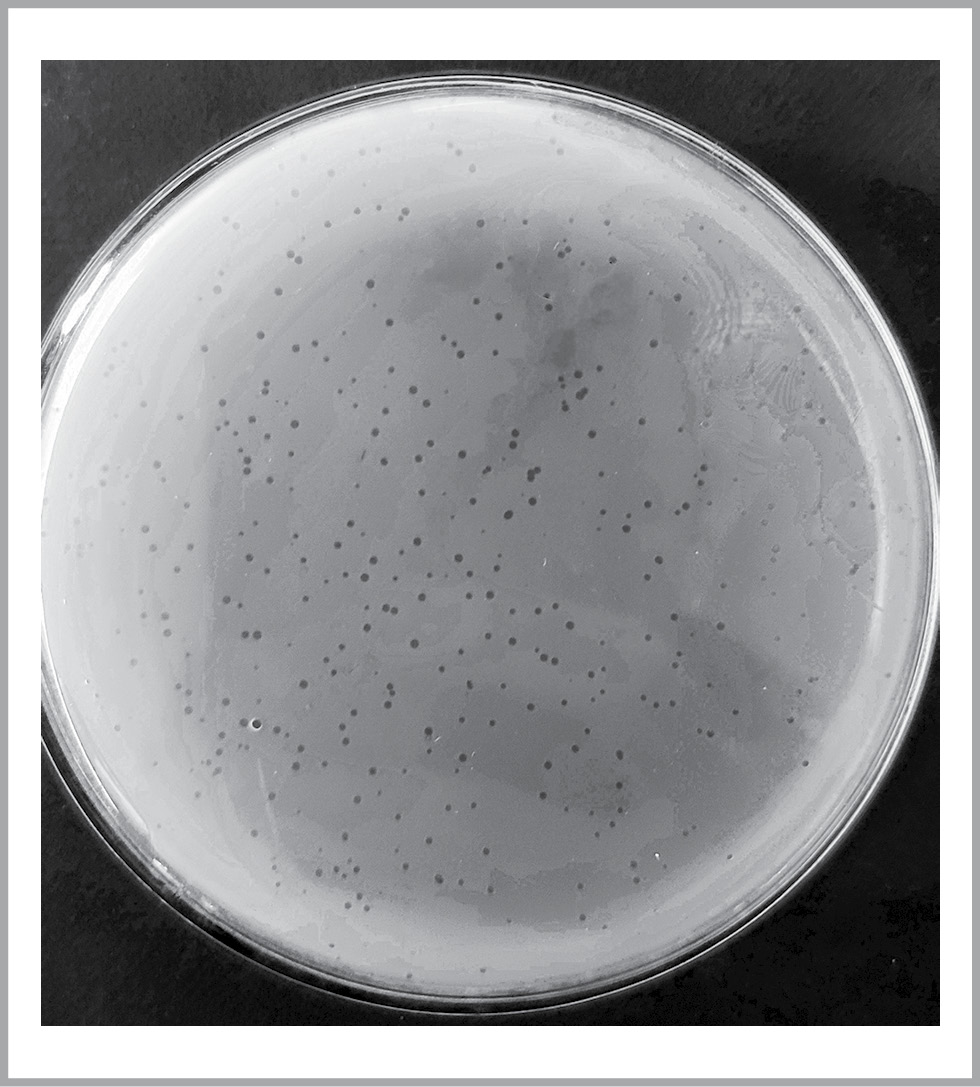
Рис. 1. Морфология негативных колоний бактериофага Ec2-7.
Таблица 2. Краткое описание характеристик бактериофага Ec2-7
Показатель | Значение |
Спектр литической активности на STEC штаммах (N=13) | 5/13 (38,4%) |
Устойчивость к хлороформу | Устойчив |
Температурная устойчивость ( °C) | 0—50 |
Устойчивость к pH | 4,0—9,0 |
Константа адсорбции (мл/мин) | 3,15 × 10⁻⁹ |
% адсорбции (5 мин) | 83 |
Латентный период (мин) | 20 |
Выход фаговых частиц из одной клетки (БОЕ) | 56±8 |
Урожайность (титр), БОЕ/мл | 1010 |
Нуклеиновая кислота (размер генома) | ДНК (146 т.п.н.) |
Содержание G+C (%) | 38,9 |
Открытые рамки считывания (ORFs) | 176 |
tRNA | 11 |
Гены токсинов/вирулентности, лизогении, антибиотикорезистентности | Не обнаружены |
Филогенетический анализ и сравнительный геномный анализ
Протеомное дерево фага Ec2-7 построено на основе полных геномных последовательностей близкородственных фагов, отобранных из общего протеомного дерева в Viptree. Дерево построено на основе матриц геномных расстояний и укоренено в средней точке. Длины ветвей логарифмически масштабированы от корня протеомного дерева, а числа сверху отображают логарифмически масштабированные длины ветвей на основе значений SG (по нормализованным оценкам tBLASTx).
Филогенетический анализ протеома фага с помощью ViPTree показал, что бактериофаг принадлежит к группе хозяев Pseudomonadota, как показано на филогенетическом дереве на рис. 2, см. https://mediasphera.ru/upload/medialibrary/files/Mol_genetika_2025_03_034_add.zip. VIRIDIC показал межгеномное сходство между исследуемым фагом и другими близкородственными фагами из базы данных NCBI (рис. 3, см. https://mediasphera.ru/upload/medialibrary/files/Mol_genetika_2025_03_034_add.zip). Фаг Ec2-7 показал 89,3% межгеномного сходства с Escherihia phage ESCO5, ранее выделенного для борьбы с колибактериозом птиц и обладающим литической активностью против патогенного штамма Cp6Salp3 [14].
В соответствии с руководством Международного комитета по таксономии вирусов (ICTV) [15], данные сравнительного геномного анализа указывают на то, что фаг Ec2-7 является новым представителем класса Caudoviricetes, подсемейства Stephanstirmvirinae и рода Phapecoctavirus. Род Phapecoctavirus был описан I.H.E. Korf и соавт. [16] на основе фага phAPEC8 [17], выделенного из воды для птицы в 2012 г. Широкий спектр источников фагов этого рода (вода, компост, фекалии человека, фермерские куры и птицы) [14, 18] свидетельствует о способности инфицировать E. coli различного происхождения, что делает их перспективными кандидатами для биоконтроля E. coli в пищевых продуктах, а также для фаготерапии, при лечении инфекций, вызванных антибиотикорезистентными штаммами E. coli в медицине или ветеринарии.
Антимикробная активность Ec 2-7 in vitro
Оценку антимикробной активности бактериофага Ec2-7 проводили с использованием штамма STEC №158 (eae+, stx2+), выделенного от поросят с клиническими признаками кишечной инфекции. Штамм был предоставлен лабораторией диагностики и мониторинга антибиотикорезистентности возбудителей клинически значимых инфекционных болезней животных Всероссийского института экспериментальной ветеринарии (ФГБНУ ФНЦ ВИЭВ РАН).
Антимикробную активность Ec2-7 против STEC 158 оценивали в питательном бульоне ГМФ. По данным проведенного исследования, обработка фагом Ec2-7 приводила к статистически значимому снижению численности STEC штамма. Через 4 ч после инкубации с бактериофагом наблюдалось уменьшение количества бактериальных клеток на 92,5% по сравнению с контролем. К 6-му часу эксперимента антибактериальный эффект усиливался, достигая снижения 99,7% (табл. 3).
Таблица 3. Антимикробная эффективность бактериофага Ec2-7 invitro
Показатель | Время, ч | |||
0 | 2 | 4 | 6 | |
STEC 158 + Ec2-7 (КОЕ/мл) | 5,4±0,98 ×10⁵ | 4,93±1,5 ×10⁵ | 4,3±3,7 ×10⁴* | 3,4±2,6 ×10³* |
Контроль (КОЕ/мл) | 6,4±1,5 ×10⁵ | 4,8±3,0 ×10⁵ | 5,7±2,7 ×10⁵ | 1,3±0,7 ×10⁶ |
Примечание: n=3; M±Sd; * p<0.05)
Заключение
Результаты исследования подтверждают, что фаг Ec2-7 является новым представителем рода Phapecoctavirus, обладающим высокой скоростью адсорбции и коротким латентным периодом. Фаг демонстрирует устойчивость к различным неблагоприятным факторам окружающей среды и эффективно лизирует штаммы STEC. Геномный анализ показал отсутствие генов антибиотикорезистентности, вирулентности и токсинов, что делает Ec2-7 перспективным кандидатом для использования в качестве альтернативного средства контроля E. coli.
Авторы заявляют об отсутствии конфликта интересов.
- Cukrovany AE, Wroblewski D, Wirth SE, Thompson LM, Saylors AL, et al. Shiga Toxin-Producing Escherichia coli Testing in New York 2011-2022 Reveals Increase in Non-O157 Identifications. Foodborne Pathog Dis. 2025;22(4):273-280. https://doi.org/10.1089/fpd.2023.0152
- Hunt JM. Shiga toxin-producing Escherichia coli (STEC). Clin Lab Med. 2010;30(1):21-45. https://doi.org/10.1016/j.cll.2009.11.001
- Attributing Illness Caused by Shiga Toxin-Producing Escherichia Coli (STEC) to Specific Foods: Report.; 2019.
- Mir RA, Kudva IT. Antibiotic‐resistant Shiga toxin‐producing Escherichia coli : An overview of prevalence and intervention strategies. Zoonoses and Public Health. 2019;66(1):1-13. https://doi.org/10.1111/zph.12533
- Poirel L, Madec JY, Lupo A, Schink AK, Kieffer N, et al. Antimicrobial Resistance in Escherichia coli. Microbiology Spectrum. 2018;6(4). https://doi.org/10.1128/microbiolspec.ARBA-0026-2017
- Abdalla SE, Abia ALK, Amoako DG, Perrett K, Bester LA, et al. From Farm-to-Fork: E. Coli from an Intensive Pig Production System in South Africa Shows High Resistance to Critically Important Antibiotics for Human and Animal Use. Antibiotics. 2021;10(2):178. https://doi.org/10.3390/antibiotics10020178
- Urban-Chmiel R, Marek A, Stępień-Pyśniak D, Wieczorek K, Dec M, et al. Antibiotic Resistance in Bacteria—A Review. Antibiotics. 2022;11(8):1079. https://doi.org/10.3390/antibiotics11081079
- Broncano-Lavado A, Santamaría-Corral G, Esteban J, García-Quintanilla M. Advances in Bacteriophage Therapy against Relevant MultiDrug-Resistant Pathogens. Antibiotics. 2021;10(6):672. https://doi.org/10.3390/antibiotics10060672
- Loponte R, Pagnini U, Iovane G, Pisanelli G. Phage Therapy in Veterinary Medicine. Antibiotics. 2021;10(4):421. https://doi.org/10.3390/antibiotics10040421
- Laishevtsev AI, Zulkarneev ER, Pimenov NV, Kiseleva IA, Bagandova KM, et al. Biological properties of the Salmonella phage BF-1356 strain and its effectiveness in phage therapy of chicken pullorosis. Sel’skokhozyaistvennaya Biologiya [Agricultural Biology]. 2024;59(4):799-813. https://doi.org/10.15389/agrobiology.2024.4.799eng
- Aziz RK, Bartels D, Best AA, DeJongh M, Disz T, et al. The RAST Server: Rapid Annotations using Subsystems Technology. BMC Genomics. 2008;9(1):75. https://doi.org/10.1186/1471-2164-9-75
- Nishimura Y, Yoshida T, Kuronishi M, Uehara H, Ogata H, et al. ViPTree: the viral proteomic tree server. Bioinformatics. 2017;33(15):2379-2380. https://doi.org/10.1093/bioinformatics/btx157
- Moraru C, Varsani A, Kropinski AM. VIRIDIC—A Novel Tool to Calculate the Intergenomic Similarities of Prokaryote-Infecting Viruses. Viruses. 2020;12(11):1268. https://doi.org/10.3390/v12111268
- Nicolas M, Trotereau A, Culot A, Moodley A, Atterbury R, et al. Isolation and Characterization of a Novel Phage Collection against Avian-Pathogenic Escherichia coli. Microbiology Spectrum. 2023;11(3). https://doi.org/10.1128/spectrum.04296-22
- Turner D, Kropinski AM, Adriaenssens EM. A Roadmap for Genome-Based Phage Taxonomy. Viruses. 2021;13(3):506. https://doi.org/10.3390/v13030506
- Korf IHE, Meier-Kolthoff JP, Adriaenssens EM, Kropinski AM, Nimtz M, et al. Still Something to Discover: Novel Insights into Escherichia coli Phage Diversity and Taxonomy. Viruses. 2019;11(5):454. https://doi.org/10.3390/v11050454
- Tsonos J, Adriaenssens EM, Klumpp J, Hernalsteens JP, Lavigne R, et al. Complete Genome Sequence of the Novel Escherichia coli Phage phAPEC8. Journal of Virology. 2012;86(23):13117-13118. https://doi.org/10.1128/JVI.02374-12
- Khalifeh A, Kraberger S, Dziewulska D, Stenzel T, Varsani A. Complete Genome Sequence of a Phapecoctavirus Isolated from a Pigeon Cloacal Swab Sample. Microbiology Resource Announcements. 2021;10(5). https://doi.org/10.1128/mra.01471-20


Рекомендуем статьи по данной теме:
Антибактериальная резистентность в дерматологии: современный взгляд на проблему и место амоксициллина и клавулановой кислоты в лечении бактериальных инфекций кожи.Клиническая дерматология и венерология. 2026;25(4):660-667
Современные подходы к терапии NCMT-инфекций, передаваемых половым путем (N. gonorrhoeae, C. trachomatis, M. genitalium, T. vaginalis). Часть II. M. genitalium.Клиническая дерматология и венерология. 2026;25(4):603-612
Послеродовые инфекционно-воспалительные заболевания: от факторов риска и классификации к персонализированному прогнозированию и лечению.Российский вестник акушера-гинеколога. 2026;26(3):74-79
Клинико-морфологическое обоснование эффективности топической антимикробной терапии острого тонзиллофарингита.Вестник оториноларингологии. 2026;91(2):38-42
Современные подходы к терапии NCMT-инфекций, передаваемых половым путем (N. gonorrhoeae, C. trachomatis, M. genitalium, T. vaginalis). Часть I. N. gonorrhoeae, C. trachomatis.Клиническая дерматология и венерология. 2026;25(2):243-253
Опыт фаготерапии нозокомиального верхнечелюстного синусита.Российская ринология. 2026;34(1):83-87
Антибиотикотерапия у детей при заболеваниях ЛОР-органов.Российская ринология. 2026;34(1):54-62
Клинический случай неэффективности терапии инфекции, вызванной Mycoplasma genitalium.Клиническая дерматология и венерология. 2026;25(1):31-35
Антибиотикопрофилактика и лечение воспалительных заболеваний в хирургии полости рта.Российская стоматология. 2025;18(4):43-50
Частота клинических проявлений M. genitalium-инфекции у пациентов с мутациями и без мутаций устойчивости M. genitalium к антимикробным препаратам.Клиническая дерматология и венерология. 2025;24(6):777-783