
От ошибок к совершенству: путь повышения качества преаналитического этапа в лабораторной диагностике. Литературный обзор
Резюме
Представленный литературный обзор уделяет основное внимание эволюции исследований об ошибках преаналитического этапа (ОПЭ) в медицинских лабораториях. ОПЭ влекут последствия в выборе тактики курации пациентов, дополнительные расходы на здравоохранение, увеличение продолжительности пребывания в больнице. Для формулирования ключевых слов был использован инструмент Covidence Review, затем был проведен комплексный поиск литературы с использованием нескольких баз данных с последующим внесением результатов поиска непосредственно в Covidence (n=379). Был проведен скрининг по названиям, аннотации, удаление дубликатов и полнотекстовый скрининг статьей. Исследования (n=232) были просмотрены на соответствие критериям отбора (n=228) и включены в обзор (n=83), а результаты обобщены в блок-схеме PRISMA. В обзоре подчеркивается роль медицинских работников в предотвращении ОПЭ как при сборе и обработке образцов, так и при анализе. В обзоре также обсуждается использование и развитие искусственного интеллекта (ИИ) и машинного обучения в сокращении ОПЭ и выявляются недостатки в стандартных определениях и стратегиях образования. В статье подчеркивается необходимость дальнейших исследований для обеспечения эффективности моделей управления, решения вопросов нормативной валидации моделей индексации вероятности риска (RPI) и рассмотрения вопросов регулирования, безопасности и конфиденциальности. Обзор демонстрирует, что всесторонние исследование эффективности ИИ и программных платформ в реальных условиях и их внедрение в здравоохранение на сегодняшний день отсутствуют, что открывает возможности для дальнейших исследований с целью улучшения управления ОПЭ и повышения качества оказания медицинской помощи.
Ключевые слова
- ошибки преаналитического этапа (ОПЭ)
- искусственный интеллект (ИИ)
- машинное обучение
- уменьшение ошибок
- индикаторы качества
- технологические решения
Дата поступления: 01.08.2025
Дата принятия в печать: 01.09.2025
Дата публикации: 25.11.2025
Введение
Ошибки преаналитического этапа (ОПЭ) не случайны. Они возникают во время сбора, обработки, хранения и транспортировки образцов. Эти ошибки могут существенно повлиять на качество и точность результатов тестов, что подчеркивает необходимость постоянного внимания и важную роль медицинских работников на преаналитическом этапе лабораторных исследований [1, 2, 3]. Тем не менее, ОПЭ можно предотвратить и минимизировать при правильном подходе. Зная об этих ошибках и реализуя стратегии их профилактики и выявления, медицинские работники могут сыграть ключевую роль в повышении качества лабораторных исследований.
Признание и понимание ОПЭ в медицинских лабораториях с годами претерпело значительные изменения. В Соединенных Штатах Америки (США) в рамках национальных стандартов были приняты Поправки в совершенствовании клинических лабораторий (Clinical Laboratory Improvement Amendments (CLIA), которые были направлены на устранение ошибок на всех этапах процесса выполнения анализов, включая преаналитический [4,5]. В Австралии эквивалентным стандартом является AS: ISO 15189, регулируемый Национальной ассоциацией органов по проведению испытаний (National Association of Testing Authorities (NATA). В Европе тот же стандарт используется и регулируется европейскими властями.
В 1970-х гг. в клинической лабораторной диагностике был введен термин «преаналитический этап», подчеркнув значимость этой фазы в контексте лабораторных ошибок [6]. Первоначально лаборатории были сосредоточены на аналитических ошибках с минимальным вниманием к преаналитическому и постаналитическому этапам. Только лишь в 2000-х гг. было сформулировано полное понимание того, как преаналитические переменные влияют на результаты в лабораторной медицине [7]. Полный процесс тестирования (ППТ) включает в себя все стадии пути исследуемого образца, и ошибки, возникающие на любом этапе, могут повлиять на уход за пациентом, диагностику и лечение. В связи с тем, что лаборатории и медицинские учреждения делают акцент на пациент-ориентированных подходах к оказанию медицинской помощи, для обеспечения оптимального ухода, диагностики и лечения пациентов необходим более строгий контроль на преаналитической, аналитической и постаналитической фазах [7]. Хорошо известно, что ошибки в ППТ могут негативно влиять на исходы лечения пациентов [8]. Это подразумевает необходимость устранения дефектов в рамках ППТ для повышения безопасности пациентов без ущерба для качества медицинской помощи или своевременного медицинского вмешательства [9].
ОПЭ в лабораторных анализах включают этапы подготовки пациента, сбора образцов, маркировку, ввод заказов в лабораторную информационную систему (ЛИС), транспортировку и хранение биоматериала. Все это может значительно повлиять на результаты анализов и ведение пациентов, что потенциально приводит к неправильному диагнозу или ненадлежащему лечению [10, 11]. Несмотря на технологический прогресс, эти ошибки, которые происходят в основном на преаналитическом этапе, сохраняются (в диапазоне от 0,1% до 9,3%) по сравнению с препреаналитической (фаза выбора теста), аналитической и постаналитической фазами, влияя на исходы лечения пациентов и затраты здравоохранения [1, 12]. Индикаторы качества (ИК) — это меры для обнаружения и количественной оценки ошибок, внедренные с целью улучшения лабораторных исследований и ухода за пациентами [3]. Использование ИК подчеркивает важность комплексных систем, разработанных для повышения общей надежности лабораторных процессов и достижения оптимальных клинических результатов. Например, подход «Five Rights» на различных этапах процесса подчеркивает систематическое повышение качества лабораторных исследований и безопасности пациентов [13].
Как правило, ОПЭ составляют 61,9—68,2% всех лабораторных ошибок. Они совершаются на этапах от заказа теста до окончания пробоподготовки и включают в себя неправильную идентификацию пациента, маркировку образца и его обработку. С другой стороны, препреаналитические ошибки связаны с неправильным выбором тестов и чаще возникают из-за чрезмерной или недостаточной клинической осведомленности или неправильного понимания запросов клинициста. Это подчеркивает различия и сходства между двумя классами ошибок, что действительно требует широких стратегий для повышения безопасности пациентов [14]. Недавнее исследование австралийских больниц показало, что уровень ОПЭ составляет почти 25%, при этом около 75% от них можно избежать. Это доказывает, что клинический и административный персонал, участвующий в преаналитических процессах, нуждается в обучении с дальнейшим участием в усовершенствовании рабочих процессов [15, 16].
В этом обзоре уделяется внимание основным причинам ОПЭ, а также разработке рекомендаций по их устранению; подчеркивается отсутствие стандартизированных определений и единиц измерения для ОПЭ и рассматривается возможность применения ИИ для обнаружения и уменьшения ошибок. В нем обсуждается историческая хронология ОПЭ, потенциал ИИ для повышения эффективности лабораторий и важность пациент-ориентированного подхода. Также особое внимание уделяется образованию, профессиональной подготовке и соблюдению требований к преаналитическому этапу ISO 15189 для получения точных лабораторных результатов. В целом, обзор демонстрирует решающую роль медицинских работников в исключении ОПЭ и необходимость разработки рекомендаций для решения этой проблемы. Был проведен всесторонний обзор литературы через различные источники, включая PubMed, Scopus и другие современные базы данных. Публикации были отобраны для обзора в соответствии с критериями, изображенными на блок-схеме на рис. 1.
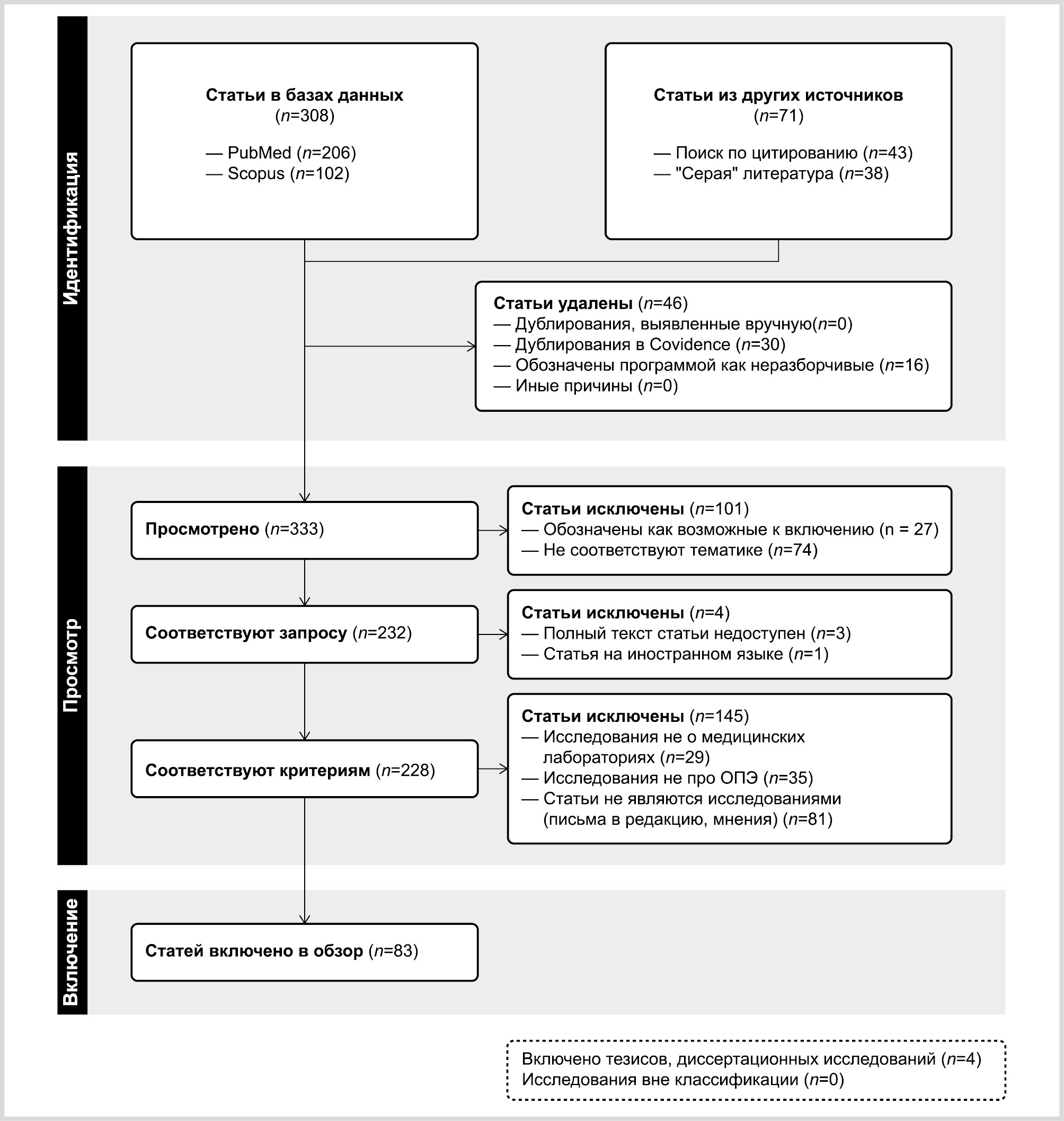
Рис. 1. Схема отбора публикаций, включенных в обзор
Глобальный взгляд на историческую хронологию ОПЭ
На рис. 2 изображена 50-летняя хронология эволюции исследований в области ОПЭ.
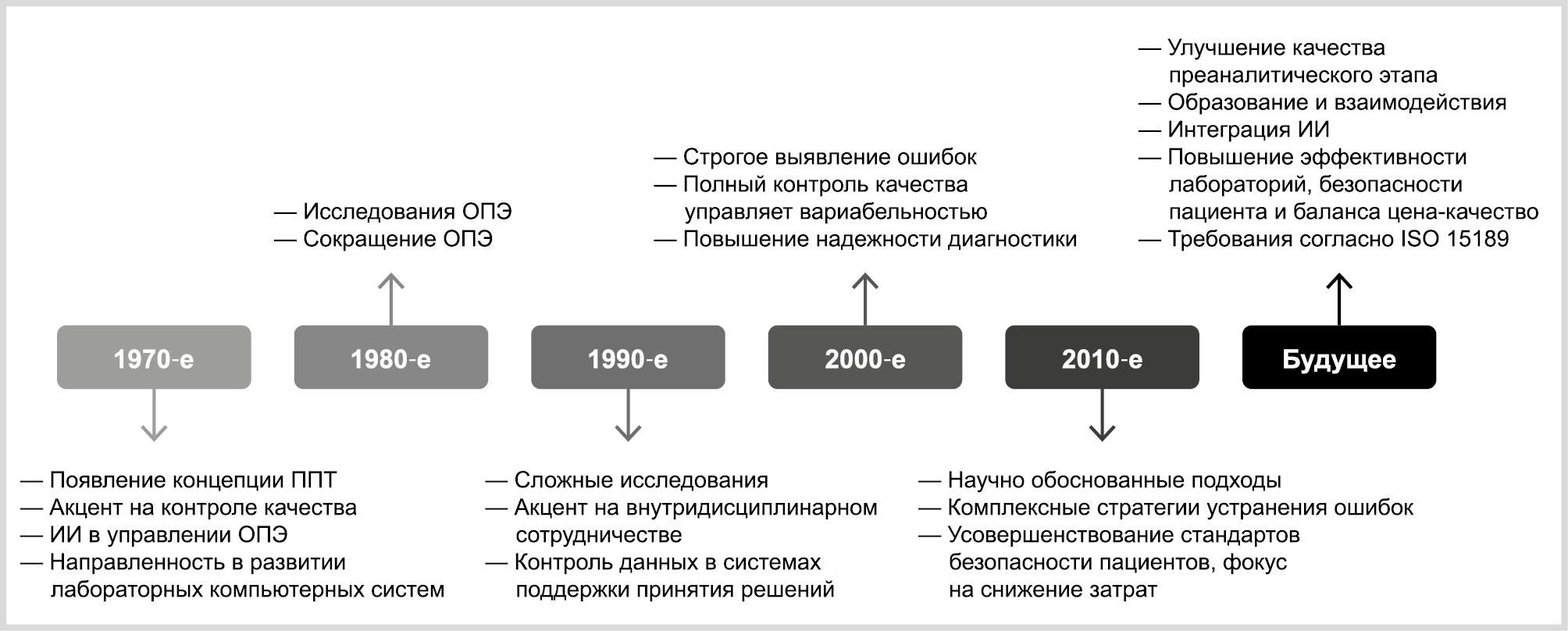
Рис. 2. 50-летняя хронология эволюции исследований ошибок преаналитического этапа (ОПЭ) [7, 10, 17–41]
Концепция ППТ появилась в 1970-х гг. и включает в себя этапы от рассмотрения тестов до диагностики и стратегий снижения ошибок. В ней говорилось о необходимости контроля качества не только на аналитическом этапе, рассматривался потенциал искусственного интеллекта и машинного обучения в управлении ОПЭ, предлагались будущие направления развития лабораторных компьютерных систем в дополнение к потенциальной роли технологий в решении этих проблем [17, 19]. Модель Джорджа Лундберга в 1980-х гг. подчеркнула влияние событий до и после лабораторных результатов на снижение количества ошибок [20]. В 1995 г. Гольдшмидт продемонстрировал потребность в сложных инструментах для преобразования необработанных данных в ценную информацию, уделяя особое внимание междисциплинарному сотрудничеству. Этот процесс имеет решающее значение для принятия обоснованных решений и закладывает основу для создания и применения ИИ в управлении ОПЭ [21].
В начале 2000-х гг. акцент сместился на более строгие методологии и технологические решения для обнаружения ошибок [10]. Менеджмент качества (МК) получил распространение, уделив особое внимание оптимизации на преаналитическом, аналитическом и постаналитическом этапах. Точная интерпретация структуры МК подчеркнула целесообразность унификации выбора тестов и обработки образцов [22]. В качестве продолжения МК также были выделены стандартизированные протоколы обработки проб в рамках снижения ОПЭ [18]. Основное исследование было сосредоточено на неопределенности измерений, предлагая строгие, стандартизированные протоколы и обучение управлению преаналитической вариабельностью для повышения надежности диагностических тестов и качества ухода за пациентами [23].
По мере появления подходов доказательной медицины стратегии уменьшения ошибок были смещены в клинической лабораторной науке в сторону комплексного подхода, включающего преаналитические и постаналитические процессы, где обучение персонала играет ключевую роль. Внедряются научно обоснованные практики, аккредитация лабораторий и специалистов, повышение качества и безопасность пациентов [24]. Дальнейшие исследования показали, что преаналитический (46‒68,2% ошибок) и постаналитический (18,5—47% ошибок) этапы превосходят по значимости аналитический этап, что подчеркивает ориентированный на пациента и повышение качества комплексный и стандартизированный подход к минимизации этих ошибок [25]. Дальнейшая плодотворная работа проложила путь к созданию практических алгоритмов для раннего обнаружения потенциальных ОПЭ, прежде чем перейти к этапу непосредственно анализа биологического образца. Такой упреждающий подход имел решающее значение для поддержания целостности лабораторных результатов и обеспечения безопасности пациентов. Реализуя эти алгоритмы, лаборатории потенциально снижают частоту ошибочных результатов из-за неправильной обработки образцов, что в конечном итоге способствует улучшению клинических результатов у пациентов с нарушениями свертываемости крови [26].
В отчете Института медицины подчеркивается, как медицинские ошибки связаны с событием, которое можно предотвратить и которое может привести к ненадлежащему использованию лекарств или даже причинить вред пациенту, в то время как лекарства находятся под контролем медицинского работника, пациента или потребителя. Несмотря на то, что они встречаются реже (0,1—9,3%), эти преаналитические ошибки остаются критическими, учитывая широкую распространенность в здравоохранении, в том числе в клинических лабораториях. В отчете подчеркивается, что они могут составлять до 75% от общего числа лабораторных ошибок, тем самым оказывая сильное влияние как на уход за пациентами, так и на расходы больницы [27]. Шаковелли поддержал это мнение и подчеркнул, что 50—75% лабораторных ошибок происходят на преаналитической фазе, что требует строгого контроля качества для обеспечения точных и надежных лабораторных услуг [28], а также подчеркнул важность преаналитических этапов в поддержании качества лабораторных исследований путем устранения потенциальных ошибок при сборе образцов крови, их контролируемой транспортировки, подготовки и хранение для обеспечения точных и надежных результатов исследований [29].
В начале XXI в. усилия таких организаций как Европейская федерация клинической химии и лабораторной медицины (EFLM) и Международная федерация клинической химии и лабораторной медицины (IFCC) выводят проблему ОПЭ на новый уровень. Эти инициативы признают, что ОПЭ могут значительно повлиять на результаты лечения пациентов, что приведет к увеличению расходов на здравоохранение и использования ресурсов [7, 31, 42]. Австралийское исследование ОПЭ в клинической лаборатории крупного стационара подчеркнуло их разнообразие, отметив, что отделение для сбора образцов сыграло решающую роль; также были разработаны рекомендации по стандартизации определений и внедрению конкретных алгоритмов на основе категорий ошибок, чтобы значительно улучшить экономию затрат на здравоохранение [32].
ISO 15189 — это международный стандарт, специально разработанный для аккредитации медицинских лабораторий. Он подчеркивает значимость потребности в обучении и подготовке кадров по преаналитическим вопросам, проблем автоматизации лабораторий и важность точного времени отбора проб для управления преаналитическими переменными и соблюдения преаналитических требований ISO 15189 усиливаются значением обеспечения качества и стандартизированных процедур для получения точных и надежных лабораторных результатов при исследованиях [33, 34].
В связи с недавним сдвигом в улучшении качества ОПЭ вновь появился акцент на сотрудничестве с клиницистами, интеграции диагностики и использовании технологий искусственного интеллекта. Ожидается, что этот сдвиг произведет революцию в диагностике и лечении заболеваний, что в конечном итоге улучшит уход за пациентами [35, 36]. В то время как технология искусственного интеллекта может быть частью решения, обучение и подготовка по преаналитическим вопросам, признание проблем в автоматизации лабораторий с целью точных и надежных лабораторных результатов для ухода за пациентами и исследований [35, 36]. Кроме того, поскольку технология искусственного интеллекта интегрирована в снижение ОПЭ, важно также контекстуализировать понимание предвзятости аналитических аспектов теста, которые имеют решающее значение для определения неопределенности измерений [37] в результатах лабораторных испытаний (например, с метрологической, статистической, лабораторной и клинической точек зрения), подчеркивая важность оценки и устранения систематической ошибки для уменьшения ошибок и повышения безопасности пациентов. В последнее время в области снижения ОПЭ были предприняты шаги для понимания значимости систематической ошибки, типов систематической ошибки, условий измерения и воздействия. Было предложено несколько моделей приемлемых пределов систематической ошибки и роли внешних схем оценки качества, а также пропаганда прагматичного подхода к работе с систематической погрешностью в клинических лабораториях, с рекомендацией в будущих исследованиях сосредоточиться на устранении систематической ошибки для эффективности здравоохранения [38]. Все эти факторы сводятся к управлению качеством, включающему непрерывный анализ, совершенствование и переоценку ресурсов, процессов и услуг, где преаналитический и постаналитический этапы лабораторных испытаний подвержены конкретным ошибкам и проблемам, что также подчеркивает использование моделей ИИ для управления ОПЭ [39].
Машинное обучение продемонстрировало высокую точность в выявлении сгустков в образцах. Также были разработаны программные платформы для стандартизации регистрации и анализа ОПЭ. Остаются нерешенными проблемы в обеспечении широкого внедрения этих технологий и решении проблем, связанных с оценкой ошибок и обработкой образцов [40].
С текущей и будущей точки зрения, потенциал ИИ для повышения эффективности лабораторий, безопасности пациентов и экономической эффективности подчеркивает необходимость дальнейшей проверки и учета нормативных требований, безопасности и конфиденциальности. На рис. 3 показано, что методы ИИ и машинного обучения развиваются очень быстро, и потенциал использования этих достижений ИИ в контексте управления ОПЭ огромен и используется недостаточно.
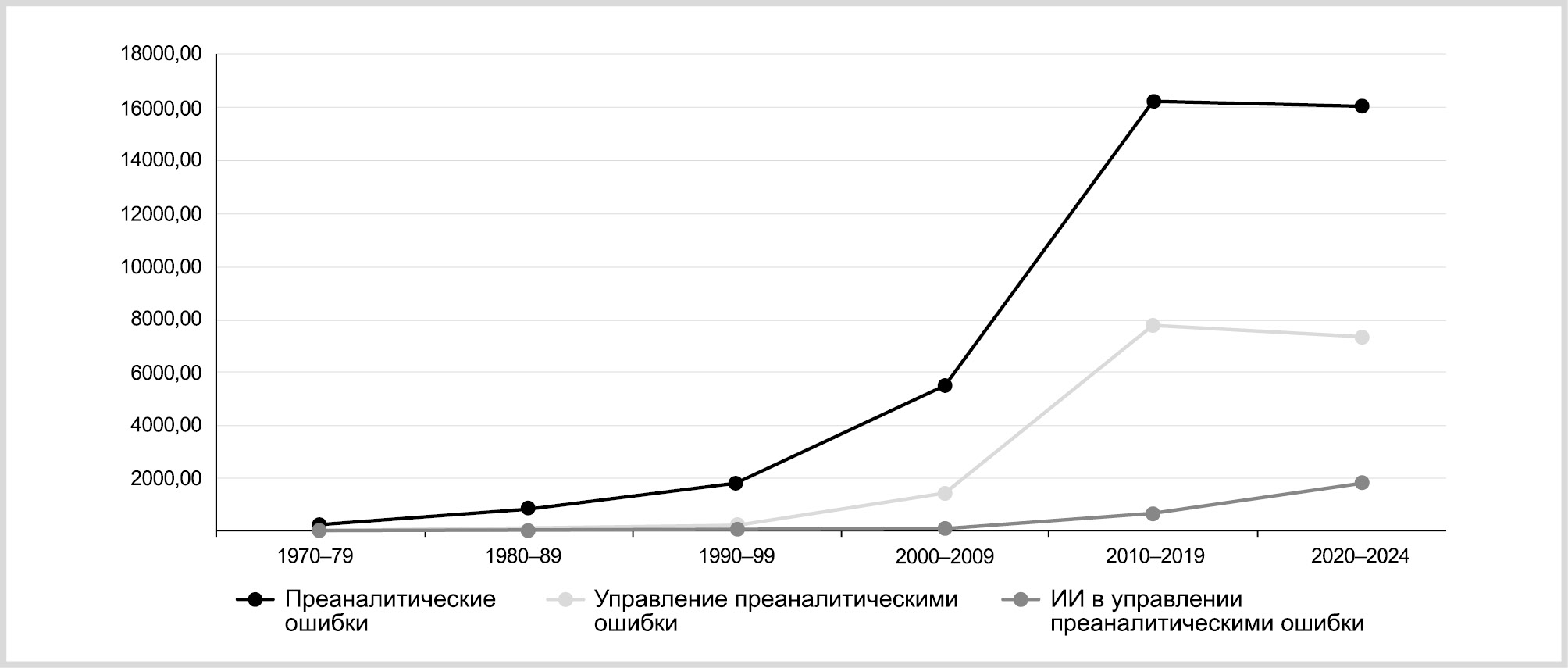
Рис. 3. 50-летняя хронология количества исследований по ошибкам преаналитического этапа (ОПЭ)
Классификация ОПЭ
Существует острая потребность в унифицированных системах отчетности, охватывающих ошибки в рамках ППТ, путем включения репрезентативных преаналитических показателей эффективности и критериев приемлемости образцов [1]. Это подчеркивает важность классификации лабораторных ошибок на основе их серьезности, важность пре- и постаналитических ошибок, а также потребность в надежных программах ИИ для выявления областей улучшения лабораторных испытаний. Также важна стандартизация сбора данных и использование ИК для обеспечения качества и безопасности лабораторной информации [9, 41]. Международная федерация клинической химии и лабораторной медицины (IFCC) разработала комплексную модель ИК, включающую 53 измерения, для мониторинга 27 ИК, которая получила широкое распространение в Европе [2, 43]. Система мониторинга и управления ключевыми инцидентами (KIMMS) и анализ последствий видов отказов (FMEA) также являются программами, которые работают вместе для выявления и управления ОПЭ в лабораториях. KIMMS, австралийская программа, запущенная в 2008 году, регистрирует инциденты и эпизоды для расчета частоты инцидентов. Он определяет риск с помощью частоты инцидентов, рейтинга вреда и оценки сложности обнаружения. FMEA присваивает количественный риск каждому типу инцидента, помогая приоритизировать ошибки на основе вреда. Вместе эти системы помогают выявлять, контролировать и сокращать количество ошибок в лабораторных испытаниях, концентрируя усилия и ресурсы по улучшению на наиболее критических типах инцидентов [44, 45].
Типы ошибок
Наиболее распространенные ошибки связаны с неправильными процедурами взятия проб, приводящими к гемолизу и свертыванию. Для повышения качества медицинской помощи и безопасности пациентов при лабораторных испытаниях необходимы научно обоснованные критерии качества, анализ процессов, и непрерывный мониторинг. Кроме того, несколько авторов обратили внимание на проблемы, связанные с нехваткой персонала и критическим распространением тестирования в местах оказания медицинской помощи. Предложенные действия включали устранение диагностических ошибок, улучшение идентификации пациентов и обеспечение передачи критически важных результатов тестов. Кроме того, было отмечено отсутствие универсального определения «лабораторной ошибки» и «допустимой частоты ошибок», что указывает на необходимость стандартизации различных исследований [1, 8, 10, 25].
На рис. 4 отображены часто встречающиеся в литературе категории ОПЭ и обобщены в табличном формате, при этом отмечается, что этот список требует дополнения.
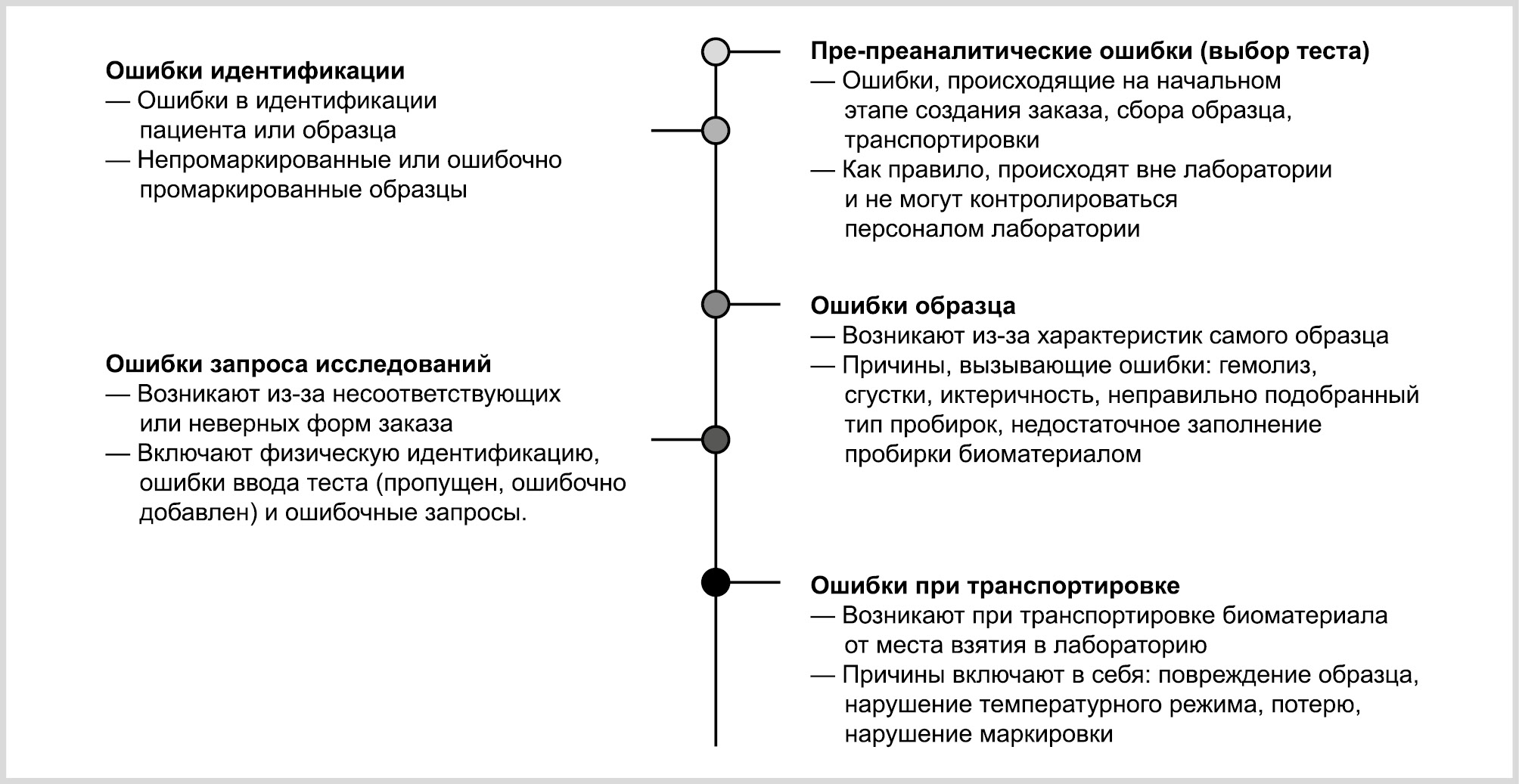
Рис. 4. Типы ОПЭ
Особые причины ОПЭ
Дж. Калра в своем исследовании подчеркивает важность научно обоснованных показателей качества, профилактических и корректирующих действий, а также интеграции лабораторных услуг с здравоохранением для повышения безопасности пациентов, подчеркивает потенциальное влияние технологических решений, а также целесообразность унифицирования запросов и интерпретации тестов для снижения диагностических ошибок и улучшения результатов лечения пациентов [8]. Грин представил практический анализ высокой частоты ошибок, связанных с приемом лекарств в отделениях интенсивной терапии (ОИТ), объяснив эти проблемы человеческими ошибками, плохой коммуникацией, отсутствием стандартизации и нехваткой персонала [27]. Грин предлагает потенциальные решения, в том числе использование форм ежедневных отчетов, закрытую модель отделений интенсивной терапии, управляемых реаниматологами, системы отчетности о критических инцидентах и включение фармацевтов в команды ОРИТ [27].
На рис. 5 предпринята попытка классифицировать категории ОПЭ на основе расширения рис. 4 от синтеза существующей литературы до конкретных факторов, вызывающих ОПЭ.
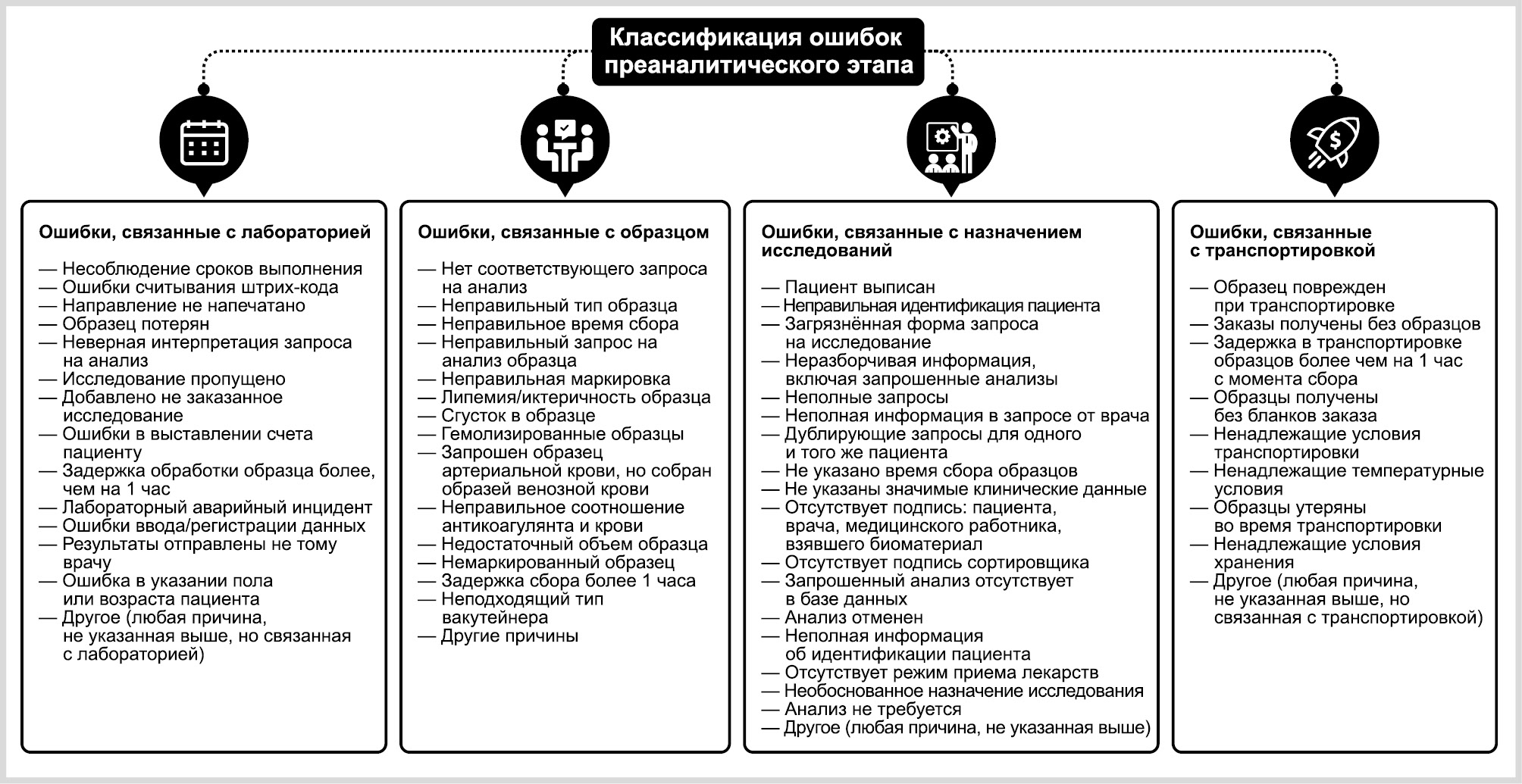
Рис. 5. Расшриненная классификация типов ОПЭ [2, 3, 16, 28, 32, 45, 46]
Влияние ОПЭ на медицину и лабораторную диагностику
Преаналитические ошибки в клинических лабораториях могут иметь далеко идущие последствия для большинства аспектов здравоохранения. Инциденты могут снизить безопасность пациента и качество медицинской помощи из-за неправильного диагноза и ненадлежащего лечения. ОПЭ также влекут повышенные финансовые затраты для систем здравоохранения, о чем свидетельствуют исследования, проведенные в Европе, Северной Америке и Австралии. Кроме того, это влияет на операционную эффективность и рабочий процесс, и для снижения таких последствий были применены принципы Lean и Six Sigma. Кроме того, ОПЭ потенциально могут нанести ущерб репутации и доверию к лабораторным результатам, что приводит к необходимости стандартизации процессов и внедрения технологий искусственного интеллекта. Усилия по обеспечению соответствия нормативным требованиям и аккредитации направлены на сведение к минимуму таких ошибок за счет автоматизации и стандартных процедур. Юридические вопросы и вопросы ответственности возникают из-за возможности постановки неправильного диагноза, что является недопустимым в медицинской практике. Наконец, ОПЭ нарушают целостность данных и процесс принятия решений, чтобы этого избежать, необходимы строгие регламенты с рекомендациями, обеспечивающие точность и надежность результатов тестов. В табл. 1 показано влияние ОПЭ на медицинские лаборатории по различным критериям.
Таблица 1. Влияние ОПЭ на медицину и клинические лаборатории.
Критерии | Влияние | Ссылка |
Безопасность пациентов и качество оказания услуг | Преаналитические ошибки могут значительно повлиять на безопасность пациента и качество медицинской помощи, что может привести к неправильному диагнозу или ненадлежащему лечению. Ошибки на этом этапе являются наиболее уязвимой частью процесса тестирования и могут поставить под угрозу безопасность пациента. К таким ошибкам относятся неуместные заказы тестов, проигнорированные результаты, неправильная интерпретация результатов, а также отсутствие или неуместно заказанные последующие исследования. Использование технологии искусственного интеллекта может помочь снизить количество преаналитических ошибок и способствовать улучшению ухода за пациентами. Усилия по сокращению этих ошибок, такие как внедрение технологии искусственного интеллекта и стандартизация преаналитических процессов, имеют решающее значение для улучшения результатов лечения пациентов. | [35] |
Расходы на здравоо- хранение | В исследовании, проведенном в Северной Америке, стоимость каждой преаналитической ошибки составила около 295 австралийских долларов. В исследовании, проведенном в Австралии, стоимость каждой ошибки составила около 72 австралийских долларов, что соответствует примерно 66 миллионам австралийских долларов в четырехлетнем ретроспективном исследовании. Ошибки также могут привести к значительному финансовому напряжению системы здравоохранения из-за увеличения затрат на обслуживание, расходные материалы и потребности в персонале. | [27, 45] |
Операционная эффективность и рабочий процесс | Принципы Lean и Six Sigma внедрялись в клинических лабораториях для повышения производительности и оптимизации операций из-за влияния ОПЭ на операционную эффективность и рабочий процесс. Lean фокусируется на предоставлении качественных продуктов и услуг за счет устранения отходов, в то время как принципы «Шести сигм» позволяют контролировать проекты и обеспечивать эффективность процессов. Эти стратегии показали ощутимые различия, при этом бережливые лаборатории достигают более быстрого времени выполнения тестов по сравнению с обычными лабораториями. В настоящее время внимание уделяется применению этих стратегий на преаналитической фазе для максимизации технологического процесса и улучшения ухода за пациентами. | [46] |
Репутация и доверие | ОПЭ может привести к неправильным диагнозам, неподходящему лечению и экономическим последствиям для пациентов и соответствующего медицинского отделения. Эти ошибки снижают доверие пациентов и медицинского персонала к достоверности лабораторных результатов, что приводит к дополнительной нагрузке на лабораторию. Кроме того, они могут привести к ненужным медицинским расходам и повлиять на лечение пациента. Усилия по смягчению этих ошибок, в том числе с использованием технологии искусственного интеллекта и стандартизации преаналитических процессов, имеют важное значение для улучшения результатов лечения пациентов и восстановления доверия к медицинским лабораториям. | [47] |
Соответствие нормативным требованиям и аккредитация | В настоящее время предпринимаются усилия по автоматизации лабораторий для решения преаналитических процессов в части заказа исследований и обработки образцов, чтобы уменьшить количество ошибок, повысить производительность и обеспечить безопасность пациентов. Стандартизация процедур и внедрение таких технологий, как предварительно маркированные пробирки со штрихкодами и инструменты искусственного интеллекта, привели к значительному сокращению ошибок. Аккредитованные лаборатории должны разрабатывать показатели качества для мониторинга всех аспектов процесса тестирования в соответствии с требованиями ISO 15189. Также подчеркивается необходимость постоянной оценки этих показателей. | [48] |
Юридические вопросы и вопросы ответственности | ОПЭ могут привести к неправильным результатам анализов, что может привести к неправильному диагнозу и неправильному лечению. Это может привести к серьезным юридическим последствиям для поставщиков медицинских услуг или лабораторий. Врачи общей практики, столкнувшиеся в своей деятельности с юридическими прецедентами, как правило, чувствуют выгорание, стремятся принимать идеальные решения, развивая тревожность, а некоторые рассматривают возможность досрочного завершения медицинской карьеры и выхода на пенсию. Более половины врачей общей практики изменили свою деятельность из-за этих опасений, включая корректировку порядка проведения анализов, направления к специалистам, отслеживание результатов тестов и информирование пациентов о рисках. Влияние этих ошибок включает в себя повышенный риск для пациентов, экономические потери и организационные проблемы. Внедрение технологии искусственного интеллекта может помочь снизить ОПЭ и улучшить уход за пациентами, сосредоточив внимание на усилиях по стандартизации преаналитических процессов для улучшения результатов лечения пациентов и снижения юридических рисков. | [49] |
Целостность информации и принятие решений | Важнейшая проблема целостности информации о преаналитических переменных при работе с биообразцами в клинических лабораториях в первую очередь связана с ОПЭ, которые могут привести к неточным результатам тестов или систематическим ошибкам. Оценка и контроль преаналитической обработки и подробной документации имеют важное значение для получения достоверных и надежных результатов. При принятии решений подчеркивается важность соблюдения рекомендаций по процедурам отбора проб крови и влияние преаналитических факторов на клинические биохимические анализы. Кроме того, в рамках обеспечения целостности данных и управления передовым опытом в контексте принятия более эффективных клинических решений было рекомендовано выступать за представление отчетов об исследованиях по преаналитической изменчивости биообразцов и включение их результатов в передовую практику биобанкинга. | [50] |
Современные стратегии минимизации преаналитических ошибок
Безопасность пациента является ключевым вопросом в медицине, в том числе и в лабораторной ее части. Для достижения этой цели необходимо снижать количество ошибок на всех этапах процесса тестирования. Краеугольным камнем любой стратегии уменьшения количества ошибок является эффективная коммуникация. Междисциплинарный подход, стандартизация, упрощение и командная работа являются одними из ключевых вопросов. Необходимо разработать QI для всех этапов процесса тестирования и установить спецификации качества для мониторинга и улучшения работы лаборатории. Программа KIMMS направлена на сокращение количества ошибок; Действительно, несмотря на значительное снижение риска, связанного с этой программой, цена ошибки все еще высока, что указывает на явную потребность в более точном определении первопричины и разработке передовых практик [8, 9]. Стоимость излишних затрат из-за ошибок в австралийском исследовании оценивается в 27 миллионов австралийских долларов в год, которая увеличивается до 66 миллионов австралийских долларов при рассмотрении необходимости лучшего понимания коренных причин и разработки рекомендаций по передовой практике [45]. В этом контексте некоторые из текущих стратегий, используемых в современной практике, кратко изложены в пунктах 1.4.1—1.4.4. Далее в разделе «Применение искусственного интеллекта в снижении преаналитических ошибок» обсуждается, как с помощью таких технологических достижений, как искусственный интеллект, можно лучше свести к минимуму ошибки ОПЭ.
Вероятность реализации риска
Использование анализа режимов и последствий отказа (FMEA) в клинических лабораториях для выявления потенциально неприемлемых образцов на основе их приоритета риска (RPN) является золотым стандартом. Наиболее приоритетные виды отказа и выбраковки происходили на преаналитической фазе и были обсуловлены такими явлениями как гемолиз образца и задержки в доставке образцов. После реализации корректирующих действий RPN снизился, особенно в отношении высокоприоритетных рисков, что свидетельствует об эффективности FMEA в снижении ошибок и повышении качества и безопасности в лабораториях клинической химии [9, 51]. Внедрение ИТ-систем, автоматизированных процедур, проактивных инструментов, таких как FMEA и исследования анализа рисков и работоспособности (HAZOP), а также международные инициативы по сокращению ошибок в лабораторной медицине также имели жизненно важное значение для определения вероятности ошибки риска [9, 51]. Тем не менее, конкретные вероятности ошибок риска будут зависеть от процессов, процедур и конкретных видов отказов, которые рассматриваются в конкретной лаборатории. Таким образом, каждая лаборатория должна проводить собственную FMEA для точного определения вероятности реализации риска на преаналитической фазе [9, 51].
Компьютеризированный ввод заказов (CPOE)
Computerized Provider Order Entry (CPOE) — это электронная система назначения анализов, разработанная для уменьшения количества ошибок при заказе в условиях клинической лаборатории. CPOE может помочь уменьшить количество преаналитических ошибок за счет устранения нечитаемых заказов, уменьшения количества неоднозначных направлений и повышения качества документации. Кроме того, он интегрирует заказы с информацией о пациенте, обеспечивая соответствие назначенных анализов состоянию пациента и улучшая количество и качество клинической информации, включаемой в запросы на исследования. Тем не менее, успешная реализация требует тщательного планирования, обучения и постоянной оценки [52, 53, 54].
Совместимость с LIMS
Системы управления лабораторной информацией (LIMS) играют решающую роль в сокращении ошибок в медицинских лабораториях, обеспечивая точное отслеживание образцов, автоматизированный ввод данных и стандартизацию процедур. Они способствуют повышению точности, эффективности, безопасности пациентов и соблюдению нормативных требований [30, 55, 56]. В нашем населенном пункте правительство Нового Южного Уэльса (НЮУ) уделяет приоритетное внимание созданию единых стандартов данных и терминов в системе здравоохранения, чтобы расширить возможности принятия решений по уходу за пациентами и управлению системой здравоохранения. Стандартизированные структуры данных помогают выявлять вариативность лечения и способствуют улучшению клинических операций и использования ресурсов. Функциональная совместимость систем ИКТ оптимизируется за счет принятия стандартов медицинской информации и снижения затрат на интеграцию за счет сосредоточения внимания на согласованных стандартах, технологических решениях, взаимодействии с заинтересованными сторонами и решениях по обмену данными при одновременном соблюдении требований политики, конфиденциальности и безопасности [57].
Применение ИИ для снижения преаналитических ошибок
В последние три десятилетия для минимизации ошибок в лабораторной медицине было рекомендовано внедрять анализ процессов, обучение и культуру безопасности. ИИ обещает способствовать улучшению управления ОПЭ. Злоупотребление лабораторными испытаниями и ролью поддержки моделей ИИ в решении этой проблемы является обнадеживающим событием, хотя оно все еще находится в зачаточном состоянии. Технологии и автоматизация, межведомственное сотрудничество и клинический аудит пропагандируются как средства ограничения возникновения ошибок. Все эти подходы требуют от медицинских работников, руководителей лабораторий и администрации проактивных действий и поддержки. Кроме того, в вышеуказанных подходах обсуждаются различные приложения ИИ на преаналитической стадии, такие как повышение точности тестирования и уменьшение ручной работы с уменьшением вероятности ошибки [9, 10, 40, 58]. В табл. 2 представлен обзор применения в таких областях, как флеботомия: разработка автоматизированных роботов для забора крови, интеллектуальных пробирок для крови, штрих-кодов, радиочастотной идентификации (RFID), устройств распознавания голоса, транспортных систем и контрольно-измерительных приборов для снижения ОПЭ и обеспечения целостности образца. Кроме того, предиктивная аналитика и устройства безопасности могут повысить безопасность медицинских работников в контексте непрерывной оптимизации рабочих процессов, а также детального мониторинга образцов в режиме реального времени. Это также кратко изложено на рис. 6, где показано отдельное применение ИИ для снижения преаналитических ошибок в различных процессах, происходящих при и обработке образцов.
Таблица 2. Краткое изложение отдельных способов применения ИИ для снижения преаналитических ошибок
Применение ИИ для снижения ОПЭ | Примеры | Значение | Ссылка |
Автоматизированная идентификация образцов и маркировка | Внедрение передовых информационных технологий и робототехники в больнице Сан-Бассиано повысило точность и клиническую эффективность лабораторного процесса. | Передовой опыт управления ОПЭ и достижении совершенства диагностики | [52] |
Внедрение системы идентификации пациентов на основе штрих-кода (EPPID) при флеботомии в Бригаме и Женской больнице для точной идентификации пациентов во время флеботомии привело к сокращению медицинских ошибок. | Значительно снижает количество ошибок при маркировке образцов с 5,45 до 3,2 на 10 000 человек, предотвратив примерно 108 случаев неправильной маркировки в год. Более того, внедрение системы EPPID не оказало негативного влияния на процесс сбора данных и не вызвала негатив у пациентов, продемонстрировав, что это эффективная технология для повышения безопасности пациентов в лабораторной медицине. | [59] | |
Для минимизации ошибок рекомендуется использовать автоматизированные системы, такие как штрихкодирование, хотя они не гарантируют правильную идентификацию. Это включало в себя надлежащую идентификацию пациента с использованием как минимум двух независимых идентификаторов, в идеале трех, включая полное имя пациента, когда маркировка трубки осуществляется в присутствии пациента, с использованием как минимум двух независимых идентификаторов. | Неправильная идентификация пациентов и образцов в медицинских учреждениях может привести к серьезным ошибкам в диагностике и лечении, что повлияет на безопасность пациентов. Использование нескольких независимых идентификаторов имеет решающее значение для минимизации этих ошибок, поскольку это значительно снижает вероятность ошибочной идентификации, даже если один идентификатор неверен или неразборчив. Эта практика соответствует стандартам, рекомендованным организациями здравоохранения и органами аккредитации, такими как JCI и ВОЗ, и вовлекает пациента в процесс верификации, что еще больше повышает безопасность пациентов. Следовательно, поставщики медицинских услуг могут гарантировать, что нужный пациент получит правильное лечение, сводя к минимуму риск серьезных и смертельных последствий, связанных с неправильной идентификацией. | [60] | |
ProTube Inpeco — это автоматизированное устройство, используемое при флеботомии для повышения эффективности различных процессов, включая идентификацию пациента, отбор образцов и маркировку. По сравнению с системой BC ROBO, она была более эффективной. Это сократило время забора крови и увеличило количество пациентов, принятых в процедурных кабинетах за единицу времени | В целом, он продемонстрировал преимущества в обеспечении автоматизированной проверки личности пациента, снижении количества ошибочных идентификаций, повышении качества процесса флеботомии и поддержке безопасности пациентов в лабораторной медицине. | [61] | |
Умные устройства для сбора образцов | Также ведется разработка автоматизированных роботов для забора крови (Vitestro) и интеллектуальных пробирок для крови, что обещает дальнейшие достижения в управлении преаналитической фазой искусственного интеллекта и робототехники для оптимизации преаналитических процессов в лабораторной медицине. ® | Снижение распространенности ошибок на преаналитической фазе, влияние на качество результатов тестов, а также использование технологий и робототехники для смягчения этой ошибки. | [58, 62] |
Штрих-коды, RFID, устройства распознавания голоса, важность транспортных систем и контрольно-измерительных приборов для улучшения преаналитической фазы, а также инновации в устройствах для сбора проб для обеспечения целостности проб — вот путь вперед. | Оптимизация дизайна этикеток и использование интеллектуальных устройств для сбора образцов для снижения вариативности и ошибок, повышения безопасности пациентов и надежности испытаний. | [46] |
Таблица 2. Краткое изложение отдельных способов применения ИИ для снижения преаналитических ошибок (продолжение)
Применение ИИ для снижения ОПЭ | Примеры | Значение | Ссылка |
Реализация двух предохранительных устройств со встроенной «вспышкой» для правильного введения в вены: иглы для забора крови BD EclipseTM SignalTM и набора для забора крови BD Vacutainer The Push Button. Оба устройства были опробованы и внедрены с обучением, чтобы убедиться, что соответствующее устройство используется для венозного доступа в различных сценариях.® | Повысилась безопасность медицинских работников, при этом на 71% снизилось количество травм от уколов иглой при использовании набора для забора крови. Эргономичный дизайн и повышение безопасности обоих продуктов были по достоинству оценены персоналом флеботомии, который посчитал, что дизайн продукта соответствует их потребностям. Обновления устройств, такие как технология BD UltraTouchTM, улучшили скорость кровотока в пробирках для образцов и снизили усилие проникновения, что привело к положительным отзывам пациентов. Это свидетельствует о том, что интеллектуальные устройства для сбора образцов значительно снижают преаналитическую вариабельность и ошибки, тем самым повышая безопасность пациентов и надежность результатов лабораторных исследований. | [63] | |
Способность анализаторов нового поколения контролировать ошибки в преаналитическом процессе по сравнению со старыми анализаторами. Один из анализаторов обладал усовершенствованным жидкостным интеллектом с обнаружением пузырьков, что эффективно предотвращало получение ошибочных результатов. | Внедрение аналогичных интеллектуальных средств управления процессом может значительно сократить количество ошибок без негативного влияния на производительность процесса. В нем также подчеркиваются потенциальные преимущества, такие как сокращение количества неверно представляемых результатов, меньшее количество повторов, меньшее вмешательство оператора и меньшее количество отходов реагентов. | [64] | |
Предиктивная аналитика для обеспечения качества образцов | Важность качества и точности в тестировании гемостаза и лабораторной медицине, влияние преаналитических и постаналитических переменных на диагностические ошибки (поведение донора и прогнозирование предпочтений), важность правильной обработки образцов (деформируемость отдельных эритроцитов) и хранения (хронологическая прогрессия морфологических изменений эритроцитов для лучшего прогнозирования качества эритроцитов), а также распространенность преаналитических ошибок в лабораториях. | Улучшите контроль качества продуктов крови, анализируя такие свойства, как деформируемость и время хранения, обеспечивая безопасность и эффективность. Персонализированная трансфузионная терапия за счет улучшенного сопоставления доноров и пациентов с использованием больших наборов данных для повышения точности. Предиктивная аналитика позволяет прогнозировать потребность в крови и потребности пациентов в переливании, оптимизируя управление запасами. | [65] |
Важность неаналитической автоматизации в снижении количества ошибок в клинических лабораториях подчеркивает необходимость стратегии управления рисками, основанной на показателях качества. В нем подчеркивается важность внедрения автоматизации для улучшения общих процессов тестирования и подчеркивается необходимость соблюдения стандартов безопасности пациентов и качества при тестировании гемостаза. | Поддержание высокого качества прогностических методов на протяжении всего процесса тестирования имеет решающее значение для обеспечения точных и надежных лабораторных результатов, решения проблем несоответствий при аккредитации медицинских лабораторий и признания важности отчетности о событиях в лабораторной медицине. | [66] | |
Прогностический чек-лист для предотвращения диагностических ошибок в клинических исследованиях. Этот контрольный список включает в себя пригодность к тестированию, состояние пациента, тип образца, центрифугу и условия хранения. Также подчеркивается участие специалистов лаборатории в разработке протоколов исследований и необходимость регистрации всех отклонений от протоколов для обеспечения надежных результатов в клинических испытаниях. Влияние гемолиза на гематологические исследования, требования к минимальному объему образцов, проблемы несоответствий при аккредитации медицинских лабораторий и значение отчетности о событиях в лабораторной медицине. | Существует потребность в более полном сборе данных о частоте преаналитических ошибок в лабораториях и в пропаганде непрерывного обучения и мониторинга для поддержания и совершенствования процесса прогностического тестирования, с потенциалом для создания национальной схемы внешней оценки качества для стимулирования этого улучшения. Это демонстрирует всеобщий интерес к улучшению ситуации для обеспечения рекомендаций и поддержки стандартизированного сбора данных по преаналитическим маркерам для создания схемы межлабораторного сравнения. | [67] |
Таблица 2. Краткое изложение отдельных способов применения ИИ для снижения преаналитических ошибок (продолжение)
Применение ИИ для снижения ОПЭ | Примеры | Значение | Ссылка |
Оптимизация маршрутизации и транспортировки образцов | В контексте прецизионной онкологии крайне важно постоянно оптимизировать рабочие процессы и протоколы для обеспечения высокой чувствительности и специфичности молекулярной диагностики. Это включает в себя внедрение автоматизированных рабочих процессов, схем обеспечения качества и стандартизацию преаналитических переменных путем интеграции технологий больших данных, таких как глубокое обучение и искусственный интеллект, для создания научно обоснованных моделей для прогнозирования закономерностей, связанных с заболеваниями, и ответов на лечение. | Важность точной медицины и потребность в стандартизированных наборах данных для поддержки подходов на основе искусственного интеллекта в здравоохранении с необходимостью интерпретации молекулярных анализов в контексте всесторонней клинической оценки. Ожидается, что разработка стандартизированных баз данных и использование уникальных молекулярных идентификаторов повысит надежность данных и поможет в выявлении пациентов с высоким риском. Область точной медицины развивается с интеграцией различных технологий и акцентом на персонализированное лечение рака. | [68] |
Техническое обслуживание оборудования и меры безопасности имеют важное значение для достижения эффективной отчетности о результатах и удовлетворенности пациентов. Существует необходимость в точной оценке показателей производительности и важности подходящих политик технического обслуживания для снижения частоты отказов с помощью искусственного интеллекта. Кроме того, роль показателей эффективности в методологиях совершенствования процессов, таких как бережливое производство и математическая оптимизация, подчеркивает их критическую роль в повышении производительности лабораторий и необходимость стандартизации их определений. | Для уменьшения этих ошибок были внедрены автоматизированные системы транспортировки и сортировки в виде моделей искусственного интеллекта, и их внедрение показало повышение эффективности за счет снижения количества ошибок и улучшения планировки и логистики лаборатории. | [69] | |
Внедрение автоматизации химии и свертывания крови нового поколения в клинических лабораториях было направлено на сокращение времени выполнения анализов, увеличение производительности тестирования и улучшение рабочего процесса. Автоматизированное внедрение и настройка системы. | Внедрение новой системы значительно снизило TAT для различных тестов, но столкнулось с такими проблемами, как ошибки на этикетках со штрихкодами, механические проблемы и проблемы с рабочим процессом. Несмотря на трудности, этот подход принес пользу другим лабораториям, которые рассматривали возможность внедрения и настройки автоматизированной системы. | [70] | |
Консолидация лабораторий клинической микробиологии и интеграция передовых технологий за счет таких факторов, как снижение затрат и технологический прогресс. Автоматизация решает проблемы логистики и обработки образцов, в частности комплексную автоматизацию лабораторий (TLA). | Установлены практичность и влияние TLA на клинические исходы, преимущества консолидации, а также роль инновационных диагностических платформ и искусственного интеллекта в выявлении и профилактике инфекционных заболеваний. К преимуществам автоматизации относятся снижение TAT и расширенные возможности диагностики. Внедрение автоматизации и ее потенциальное влияние на эпиднадзор за общественным здравоохранением и медицинские исследования возможны. | [71] | |
Мониторинг обработки образцов в режиме реального времени | Интеграция ИИ в клинические лабораторные условия улучшает рабочие процессы и преобразует лабораторную медицину на разных этапах процесса клинических испытаний, включая доаналитический, аналитический и постаналитический этапы. Алгоритмы машинного обучения (ML) и глубокого обучения (DL) используются для таких задач, как прогнозирование соответствующих лабораторных тестов, сегментация кровеносных сосудов для забора венозной крови, обнаружение преаналитических ошибок, таких как неправильная кровь в пробирке (WBIT), и анализ морфологических данных для образцов крови, мочи и микроорганизмов. | К преимуществам автоматизации в микробиологических лабораториях относятся снижение ТАТ, повышение эффективности рабочего процесса и расширенные возможности диагностики. Искусственный интеллект (ИИ) и машинное обучение (МО) обладают потенциалом для дальнейшего улучшения лабораторных операций, управления данными и точности диагностики. Существуют возможности для точной медицины благодаря мультиомическому анализу и мониторингу состояния здоровья в режиме реального времени с помощью носимых датчиков. Решение этих проблем с помощью усовершенствованных руководящих принципов, обучения в области ИИ и обширных валидационных исследований имеет решающее значение для успешного клинического применения инструментов ИИ в лабораторной медицине. | [72] |
Таблица 2. Краткое изложение отдельных способов применения ИИ для снижения преаналитических ошибок (окончание)
Применение ИИ для снижения ОПЭ | Примеры | Значение | Ссылка |
В связи с технологическим прогрессом исследования больших данных в реальном мире (RWBDS) приобретают все большее значение. Они используют клинические лабораторные данные для поддержки принятия клинических решений и лечения. В развивающихся странах лаборатории сталкиваются с проблемами форматирования данных, отсутствием опыта работы с методологиями RWBDS и неадекватной инфраструктурой для анализа данных. | К преимуществам RWBDS относятся экономичность, практичность, применимость к реальным условиям и облегчение крупномасштабных исследований. Однако они также создают такие проблемы, как неоднородные и неполные данные, вопросы конфиденциальности и безопасности, а также методологические проблемы. RWBDS применяются несколькими способами, включая установление референсных интервалов, контроль качества в режиме реального времени, диагностическое и прогностическое моделирование, эпидемиологические расследования, лабораторное управление и внешнюю оценку качества. Перспективы включают интеграцию искусственного интеллекта и машинного обучения, стандартизацию и гармонизацию форматов и методологий данных, а также повышение конфиденциальности и безопасности данных. Несмотря на то, что RWBDS обладают значительным потенциалом в развитии лабораторной медицины, решение методологических, технических и этических проблем имеет важное значение для реализации их преимуществ. | [73] | |
Автоматизация лабораторных исследований в клинических лабораториях значительно улучшила результаты лечения пациентов, предлагая широкий спектр точных тестов с быстрыми результатами. TLA имеет возможность автоматизированной работы с пробирками, подготовки и хранения образцов для биохимических исследований, иммунологическому анализу, гематологии и микробиологии, что избавляет от вмешательства оператора. Хотя для решения некоторых задач по-прежнему необходим мониторинг человека, автоматизированная лаборатория становится все более сложной с развитием молекулярной генетики. Это расширение потребует усиленных мер контроля качества в режиме реального времени, что приведет к увеличению количества флагов сбоев. | Преимущества улучшенного процесса контроля качества при внедрении автоматизации, улучшенных мер контроля качества в режиме реального времени и автоматической верификации образцов пациентов. Наиболее эффективным решением представляется автоматизация критически важных решений, требующих вмешательства человека, и интеграция контроля качества в TLA. | [74] | |
Растущая интеграция ИИ в преаналитическую фазу лабораторной медицины сокращает ручной труд, сводит к минимуму количество ошибок и повышает эффективность. Приложения ИИ для определения рецептов на тесты, сбора образцов, транспортировки образцов и оценки качества являются жизненно важными подходами. | Интеграция ИИ в преаналитическую фазу может произвести революцию в лабораторной медицине за счет повышения точности тестов и уменьшения количества ошибок. Кроме того, было разработано стандартизированное программное обеспечение для регистрации PAE, что облегчает глобальную деятельность по сравнительному анализу. | [40] |
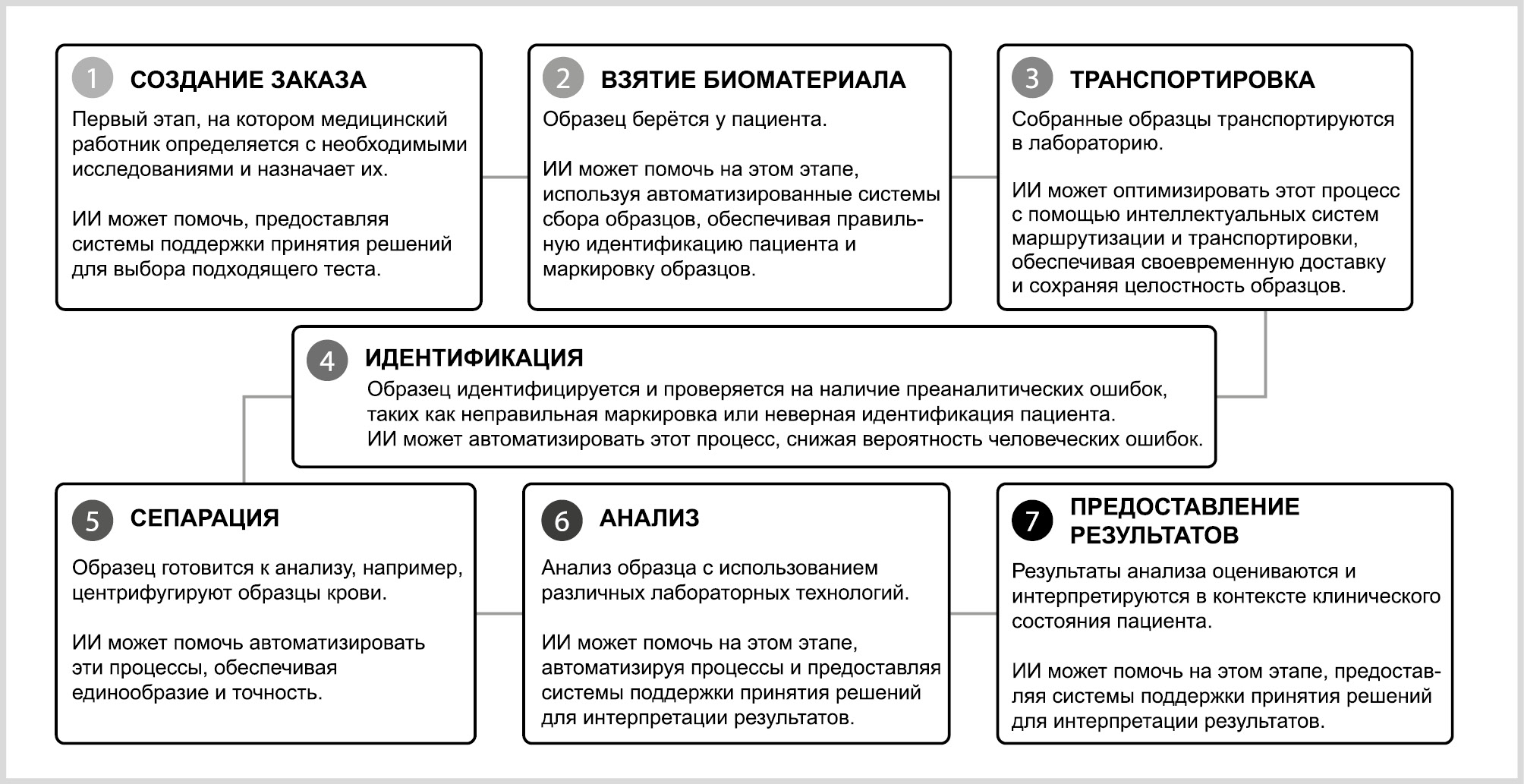
Рис. 6. Сводка применения ИИ для сокращения ошибок на всех этапах лабораторного процесса [3, 10, 41, 47, 53, 60, 61, 63, 64, 66—77].
Контроль качества и обнаружение аномалий
Внедрение системы отчетности «Запрос качества» в клиническую биохимическую лабораторию и перспективное отслеживание недостатков качества в течение 19 месяцев привели к тому, что было подготовлено 397 отчетов об ошибках, большая часть которых была отнесена к преаналитической фазе, и лишь немногие из этих ошибок оказали существенное влияние на уход за пациентами. Тем не менее, была отмечена возможность неблагоприятных исходов, что позволяет использовать комплексный подход к контролю качества в перспективе. Особое внимание уделялось управлению рисками и стандартизации практики для снижения частоты ошибок и повышения безопасности пациентов в отношении лабораторных исследований [77]. Другое исследование показало, что только 27,6% образцов не содержали ошибок, причем наиболее частые ошибки были связаны с проведением тестов без клинических запросов/показаний, ошибочными формами заявок и неудовлетворительными объемами образцов [78]. В исследовании подчеркивается необходимость ориентированного на пациента подхода, эффективных систем коммуникации, а также разработки ИИ для всех этапов процесса тестирования. Это позволит клинической лаборатории оценивать и контролировать свою работу с целью минимизации количества ошибок и повышения безопасности пациентов, подчеркивая необходимость командной работы и междисциплинарного сотрудничества, а также обеспечивая ориентированный на пациента подход, который снижает количество ошибок в лабораторной медицине. Включение управления рисками, всеобщих систем качества и стандартизации поможет снизить преаналитическую вариабельность и повысить безопасность пациентов при лабораторных исследованиях [10, 46, 77, 79].
Обучение персонала и поддержка принятия решений
При всестороннем анализе преаналитических ошибок в клинической лаборатории ключевым моментом для минимизации оных, требующими обучения персонала, является использование технологий и автоматизации, к примеру, рабочие станции, информационные технологии и робототехника, повышающая точность и эффективности сбора и обработки образцов. К числу успешных инициатив относятся использование беспроводных сетей, автоматизированных систем маркировки, идентификационных браслетов со штрих-кодом, стандартизированных процедур сбора данных и преаналитических рабочих станций, сопряженных с анализаторами [52]. Влияние преаналитических ошибок на качество лабораторных исследований и безопасность пациентов также было критическим фактором, подчеркивающим необходимость постоянного совершенствования преаналитических процессов для повышения эффективности лабораторий и безопасности пациентов. Одно исследование показало частоту ошибок 0,047% при значении «Шесть сигма» 4,9, что указывает на хорошо контролируемые процессы. Тем не менее, общая частота значимых ошибок составила 13,54%, что подчеркивает важность преаналитического управления ошибками в клинической лаборатории с помощью обучения персонала и поддержки принятия решений [80].
Постоянное совершенствование процессов
Решающая роль клинических лабораторий в повышении безопасности пациентов за счет управления пре- и постаналитическими фазами с использованием технологий и ИИ для минимизации ошибок и повышения эффективности сбора и обработки образцов является основой непрерывного совершенствования процессов. Стандартизация процессов и постоянный мониторинг необходимы для повышения качества всего процесса тестирования. Внедрение компьютеризированных систем ввода заказов, идентификации пациента с помощью штрих-кодов и автоматизированных систем маркировки образцов являются эффективными стратегиями предотвращения ошибок (60—70% проблем в лабораторной диагностике часто возникают из-за неправильного обращения во время сбора, обработки, подготовки или хранения образцов) за пределами лаборатории. Важность непрерывного совершенствования процессов лабораторной диагностики, особенно на преаналитической фазе, с акцентом на снижение операционных расходов и повышение безопасности пациентов, является неизбежной частью оперативного управления ОПЭ [46, 81].
Выводы
В то время как признание ОПЭ было частью более широкой эволюции лабораторного обеспечения качества на протяжении нескольких десятилетий, согласованные усилия по конкретному устранению этих ошибок стали более заметными в последние 20—30 лет. Повышенное внимание к ОПЭ отражает постоянные усилия по пониманию и совершенствованию всего процесса лабораторных исследований в целях улучшения ухода за пациентами. Тем не менее, с непредвзятой точки зрения, все еще существуют серьезные препятствия для их внедрения, включая отсутствие доступных цифровых инструментов, недостаточный доступ к медицинским данным и персонал, не обладающий навыками в области искусственного интеллекта. Примечательно, что существуют лаборатории в региональных/отдаленных/сельских районах, где было отмечено отсутствие стабильного подключения к Интернету, что подчеркивает другие инфраструктурные проблемы. Также важную роль играет повышение уровня обучения медицинских работников, значимой частью которого является реализации потенциала ИИ. Для удовлетворения таких потребностей были сформулированы будущие инициативы, направленные на развитие онлайн-ресурсов для обучения [82]. Кроме того, существуют проблемы интеграции инструментов генеративного ИИ в лабораторную медицину. В то время как запросы к инструментам ИИ (например, ChatGPT, Perplexity, Google Gemini, Cohere и You.com) показали заметные различия в их ответах на различные маркеры чувствительности (в диапазоне от 70—100%) и специфичности (7—80%), что подчеркивает довольно низкий уровень гетерогенности диагностической информации, полученной с помощью инструментов генеративного ИИ, тем самым ставя под сомнение потенциальные преимущества принятия клинических решений с использованием этих инструментов ИИ, еще раз подчеркивая важность критической оценки для эффективной интеграция генеративного ИИ в лабораторную медицину [83].
В этом обзоре подчеркивается несколько критических пробелов в литературе в части ОПЭ в клинических лабораториях.
— Отсутствие стандартных определений, классификаций и единиц измерения определено как серьезное препятствие для сравнения исследований и определения руководств по передовой практике, а последующие рекомендации трудно реализовать [27, 74].
— Требуется обучение и подготовка кадров по преаналитическим вопросам. Однако в современной литературе в целом не представлены подробные стратегии или программы такого образования и подготовки [9, 23, 34, 35, 37, 68, 73].
— Несмотря на то, что роль искусственного интеллекта и машинного обучения в управлении ОПЭ признается, необходимы дальнейшие исследования моделей индексации вероятности риска с акцентом на вопросы регулирования, безопасности и конфиденциальности [8, 9, 45—47, 52, 67, 78, 80, 82].
— Существует необходимость в более обширных исследованиях эффективности и фактическом внедрении этих технологий в реальную жизнь, тем самым создавая основу для будущих исследований о том, как избежать искажения результатов лабораторных испытаний в эффективности здравоохранения [39, 49, 51, 83].
— Также была отмечена необходимость обсуждения вопросов управления качеством посредством непрерывного анализа, совершенствования и переоценки ресурсов, процессов и услуг [10, 40].
— Несмотря на то, что программные платформы были разработаны для стандартизации записи и анализа для глобального бенчмаркинга, существует явный недостаток информации о переводе при внедрении и использовании этих платформ в различных медицинских учреждениях [10, 41].
В заключение следует отметить, что эти пробелы, таким образом, предоставляют дополнительные возможности для исследований и изысканий для лучшего управления ОПЭ и повышения качества ухода за пациентами.
Авторы заявляют об отсутствии конфликта интересов.
Перевод: Дарья Дёмина
- Lippi, G, Bassi, A, Brocco, G, Montagnana, M, Salvagno, GL, Guidi, GC. Preanalytic error tracking in a laboratory medicine department: results of a 1-year experience. Clin Chem. 2006;52:1442–3. https://doi.org/10.1373/clinchem.2006.069534.
- Plebani, M. Quality indicators to detect pre-analytical errors in laboratory testing. Clin Biochem Rev. 2012;33:85.
- Plebani, M, Sciacovelli, L, Aita, A, Pelloso, M, Chiozza, ML. Performance criteria and quality indicators for the pre-analytical phase. Clin Chem Lab Med. 2015;53:943–8. https://doi.org/10.1515/cclm-2014–1124.
- Hutchens TT. NCCLS: objectives, organization, and activities. Pathologist. 1981 Nov;35(11):605-8. PMID: 10253256.
- US Congress. Clinical Laboratory Improvement Amendments of 1988, in Pub L No 100–578, 102 Stat 29031988. Government Printing Office. Search in Google Scholar.
- Guder, WG. History of the preanalytical phase: a personal view. Biochem Med (Zagreb). 2014;24:25–30. https://doi.org/10.11613/bm.2014.005.
- West, J, Atherton, J, Costelloe, SJ, Pourmahram, G, Stretton, A, Cornes, M. Preanalytical errors in medical laboratories: a review of the available methodologies of data collection and analysis. Ann Clin Biochem. 2017;54:14–19. https://doi.org/10.1177/0004563216669384.
- Kalra, J. Medical errors: impact on clinical laboratories and other critical areas. Clin Biochem. 2004;37:1052–62. https://doi.org/10.1016/j.clinbiochem.2004.08.009.
- Plebani, M. Exploring the iceberg of errors in laboratory medicine. Clin Chim Acta. 2009;404:16–23. https://doi.org/10.1016/j.cca.2009.03.022.
- Bonini, P, Plebani, M, Ceriotti, F, Rubboli, F. Errors in laboratory medicine. Clin Chem. 2002;48:691–8. https://doi.org/10.1093/clinchem/48.5.691.SearchinGoogleScholar
- Lippi, G, Guidi, GC, Mattiuzzi, C, Plebani, M. Preanalytical variability: the dark side of the moon in laboratory testing. Clin Chem Lab Med. 2006;44:358–65. https://doi.org/10.1515/cclm.2006.073.SearchinGoogleScholarPubMed
- Carraro, P, Plebani, M. Errors in a stat laboratory: types and frequencies 10 years later. Clin Chem. 2007;53:1338–42. https://doi.org/10.1373/clinchem.2007.088344.
- Plebani, M. Towards a new paradigm in laboratory medicine: the five rights. Clin Chem Lab Med. 2016;54:1881–91. https://doi.org/10.1515/cclm-2016–0848.
- Mrazek, C, Lippi, G, Keppel, MH, Felder, TK, Oberkofler, H, Haschke-Becher, E, et al.. Errors within the total laboratory testing process, from test selection to medical decision-making–A review of causes, consequences, surveillance and solutions. Biochem Med (Zagreb). 2020;30:215–33. https://doi.org/10.11613/bm.2020.020502.
- Morias, C, Palmer, G, Santhakumar, A. Pre-analytical errors and patient outcomes in the total testing process. Aust J Med Sci 2018;39:14–27.
- Morias, C, Palmer, G, Santhakumar, A. Pre-analytical errors and their prevention in an emergency department setting. Aust J Med. Sci 2023;44:46–61.
- Gambino, SR. Met and unmet needs of the automated clinical laboratory. Trans N Y Acad Sci. 1970;32:816–20. https://doi.org/10.1111/j.2164–0947.1970.tb02756.x.
- Andersen, O, Haugaard, S, Jørgensen, L, Sørensen, S, Nielsen, JO, Madsbad, S, et al. Preanalytical handling of samples for measurement of plasma lactate in HIV patients. Scand J Clin Lab Invest. 2003;63:449–54. https://doi.org/10.1080/00365510310005128
- Ladenson, JH. Patients as their own controls: use of the computer to identify “laboratory error”. Clin Chem. 1975;21:1648–53. https://doi.org/10.1093/clinchem/21.11.1648.
- Plebani, M, Laposata, M, Lundberg, GD. The brain-to-brain loop concept for laboratory testing 40 years after its introduction. Am J Clin Pathol. 2011;136:829–33. https://doi.org/10.1309/ajcpr28hwhssdnon.
- Goldschmidt, H, Lent, R. From data to information: how to define the context? Chemometr Intell Lab Syst. 1995;28:181–92. https://doi.org/10.1016/0169–7439(95)80049-f.
- Pansini, N, Di Serio, F, Tampoia, M. Total testing process: appropriateness in laboratory medicine. Clin Chim Acta. 2003;333:141–5. https://doi.org/10.1016/s0009–8981(03)00178–5.
- Kouri, T, Siloaho, M, Pohjavaara, S, Koskinen, P, Malminiemi, O, Pohja-Nylander, P, et al.. Pre-analytical factors and measurement uncertainty. Scand J Clin Lab Invest. 2005;65:463–76. https://doi.org/10.1080/00365510500208332.
- Leibach, EK, Russell, BL. A typology of evidence based practice research heuristics for clinical laboratory science curricula. Clin Lab Sci. 2010;23:46–50. https://doi.org/10.29074/ascls.23.3_supplement.46.
- Plebani, M. Errors in clinical laboratories or errors in laboratory medicine? Clin Chem Lab Med. 2006;44:750–9. https://doi.org/10.1515/cclm.2006.123.
- Lippi, G, Salvagno, GL, Adcock, D, Gelati, M, Guidi, G, Favaloro, E. Right or wrong sample received for coagulation testing? Tentative algorithms for detection of an incorrect type of sample. Int J Lab Hematol. 2010;32:132–8. https://doi.org/10.1111/j.1751–553x.2009.01142.x.
- Green, SF. The cost of poor blood specimen quality and errors in preanalytical processes. Clin Biochem. 2013;46:1175–9. https://doi.org/10.1016/j.clinbiochem.2013.06.001.
- Sciacovelli, L, Aita, A, Chiozza, ML. Harmonization of pre-analytical quality indicators. Biochem Med (Zagreb). 2014;24:105–13. https://doi.org/10.11613/bm.2014.012.
- Magnette, A, Chatelain, M, Chatelain, B, Ten Cate, H, Mullier, F. Pre-analytical issues in the haemostasis laboratory: guidance for the clinical laboratories. Thrombosis. 2016;14:1–14. https://doi.org/10.1186/s12959-016-0123-z.
- Lippi, G, Cornes, MP, Grankvist, K, Nybo, M, Simundic, A-M. EFLM WG-Preanalytical phase opinion paper: local validation of blood collection tubes in clinical laboratories. Clin Chem Lab Med. 2016;54:755—60. https://doi.org/10.1515/cclm-2015-1274.
- Hall, KK, Shoemaker-Hunt, S, Hoffman, L, Richard, S, Gall, E, Schoyer, E, et al.. Making healthcare safer III: a critical analysis of existing and emerging patient safety practices. Rockville, MD: Agency for Healthcare Research and Quality; 2020.
- Yeates, RL. An investigation in pre-analytical error in a medium sized pathology laboratory: frequency, origin, type, and a proposed intervention. James Cook University; 2016.
- Lippi, G, Betsou, F, Cadamuro, J, Cornes, M, Fleischhacker, M, Fruekilde, P, et al.. Preanalytical challenges–time for solutions. Clin Chem Lab Med. 2019;57:974–81. https://doi.org/10.1515/cclm-2018-1334.
- Plebani, M, Aita, A, Sciacovelli, L. Patient safety in laboratory medicine. In: L Donaldson, editor. Textbook of patient safety and clinical risk management. Cham: Springer International Publishing; 2021:325–38 https://doi.org/10.1007/978-3-030-59403-9_24
- Cadamuro, J, Baird, G, Baumann, G, Bolenius, K, Cornes, M, Ibarz, M, et al.. Preanalytical quality improvement–an interdisciplinary journey. Clin Chem Lab Med. 2022;60:662–8. https://doi.org/10.1515/cclm-2022-0117.
- Cadamuro, J. Disruption vs. evolution in laboratory medicine. Current challenges and possible strategies, making laboratories and the laboratory specialist profession fit for the future. Clin Chem Lab Med. 2023;61:558–66. https://doi.org/10.1515/cclm-2022-0620.
- Milinković, N, Ignjatović, S, Šumarac, Z, Majkić-Singh, N. Uncertainty of measurement in laboratory medicine. J Med Biochem. 2018;37:279. https://doi.org/10.2478/jomb-2018-0002.
- Coskun, A. Bias in laboratory medicine: the dark side of the moon. Ann Lab Med. 2024;44:6. https://doi.org/10.3343/alm.2024.44.1.6.
- Garcia, LS. Quality management. In: Garcia, LS, et al.., editors. Clinical Laboratory Management. Newark, US: ASM Press; 2024:251–86 https://doi.org/10.1002/9781683673941.ch18
- Lippi, G, Mattiuzzi, C, Favaloro, EJ. Artificial intelligence in the pre-analytical phase: State-of-the art and future perspectives. J Med Biochem. 2024;43:1–10. https://doi.org/10.5937/jomb0-45936.
- Plebani, M, Sciacovelli, L, Aita, A, Padoan, A, Chiozza, ML. Quality indicators to detect pre-analytical errors in laboratory testing. Clin Chim Acta. 2014;432:44–8. https://doi.org/10.1016/j.cca.2013.07.033.
- Lippi, G, Simundic, A-M. The EFLM strategy for harmonization of the preanalytical phase. Clin Chem Lab Med. 2018;56:1660–6. https://doi.org/10.1515/cclm-2017-0277.
- Sciacovelli, L, Lippi, G, Sumarac, Z, del Pino Castro, IG, Ivanov, A, De Guire, V, et al.. Pre-analytical quality indicators in laboratory medicine: performance of laboratories participating in the IFCC working group “Laboratory Errors and Patient Safety” project. Clin Chim Acta. 2019;497:35–40. https://doi.org/10.1016/j.cca.2019.07.007.
- Badrick, T, Gay, S, Mackay, M, Sikaris, K. The key incident monitoring and management system–history and role in quality improvement. Clin Chem Lab Med. 2018;56:264–72. https://doi.org/10.1515/cclm-2017-0219.
- Gay, S, Badrick, T. Changes in error rates in the Australian key incident monitoring and management system program. Biochem Med (Zagreb). 2020;30:257–64. https://doi.org/10.11613/bm.2020.020704.
- Lippi, G, Chance, JJ, Church, S, Dazzi, P, Fontana, R, Giavarina, D, et al.. Preanalytical quality improvement: from dream to reality. Clin Chem Lab Med. 2011;49:1113–26. https://doi.org/10.1515/cclm.2011.600.
- Almatrafi, AA. Preanalytical errors: a major issue in medical laboratory. Acta Sci Med Sci 2019;3:93–5.
- Ly, H. Medical laboratory managers success with preanalytical errors. Walden University; 2017.
- Kornstein, MJ, Byrne, SP. The medicolegal aspect of error in pathology: a search of jury verdicts and settlements. Arch Pathol Lab Med. 2007;131:615–8. https://doi.org/10.5858/2007-131-615-tmaoei.
- Ellervik, C, Vaught, J. Preanalytical variables affecting the integrity of human biospecimens in biobanking. Clin Chem. 2015;61:914–34. https://doi.org/10.1373/clinchem.2014.228783.
- Jiang, Y, Jiang, H, Ding, S, Liu, Q. Application of failure mode and effects analysis in a clinical chemistry laboratory. Clin Chim Acta. 2015;448:80–5. https://doi.org/10.1016/j.cca.2015.06.016.
- Da Rin, G. Pre-analytical workstations: a tool for reducing laboratory errors. Clin Chim Acta. 2009;404:68–74. https://doi.org/10.1016/j.cca.2009.03.024.
- Georgiou, A, Williamson, M, Westbrook, JI, Ray, S. The impact of computerised physician order entry systems on pathology services: a systematic review. Int J Med Inform. 2007;76:514–29. https://doi.org/10.1016/j.ijmedinf.2006.02.004.
- Kemp, GM, Bird, CE, Barth, JH. Short-term interventions on wards fail to reduce preanalytical errors: results of two prospective controlled trials. Ann Clin Biochem. 2012;49:166–9. https://doi.org/10.1258/acb.2011.011133.
- Dagher, G, Becker, K-F, Bonin, S, Foy, C, Gelmini, S, Kubista, M, et al.. Pre-analytical processes in medical diagnostics: new regulatory requirements and standards. N Biotechnol. 2019;52:121–5. https://doi.org/10.1016/j.nbt.2019.05.002.
- Sholademi, BA. Identification and reduction of pre-analytical errors in clinical chemistry through expert advice. Sheffield Hallam University; 2017.
- NSW health [Internet]. c2016 [cited 07/01/25]. Available from: https://www.health.nsw.gov.au/ehealth/Pages/ehealth-strategy.aspx.
- Cadamuro, J, Simundic, A-M. The preanalytical phase–from an instrument-centred to a patient-centred laboratory medicine. Clin Chem Lab Med. 2023;61:732–40. https://doi.org/10.1515/cclm-2022-1036.
- Morrison, AP, Tanasijevic, MJ, Goonan, EM, Lobo, MM, Bates, MM, Lipsitz, SR, et al.. Reduction in specimen labeling errors after implementation of a positive patient identification system in phlebotomy. Am J Clin Pathol. 2010;133:870–7. https://doi.org/10.1309/ajcpc95yymsllrcx.
- van Dongen-Lases, EC, Cornes, MP, Grankvist, K, Ibarz, M, Kristensen, GB, Lippi, G, et al.. Patient identification and tube labelling–a call for harmonisation. Clin Chem Lab Med. 2016;54:1141–5. https://doi.org/10.1515/cclm-2015-1089.
- Piva, E, Tosato, F, Plebani, M. Pre-analytical phase: the automated ProTube device supports quality assurance in the phlebotomy process. Clin Chim Acta. 2015;451:287–91. https://doi.org/10.1016/j.cca.2015.10.010.
- Vitestro [Internet]. c2024 [cited 16/12/2024]. Available from: https://vitestro.com/pivotal-trial-study-of-breakthrough-autonomous-blood-draw-technology-confirms-performance-safety-and-patient-acceptance/.
- Lippi, G, Baird, GS, Banfi, G, Bölenius, K, Cadamuro, J, Church, S, et al.. Improving quality in the preanalytical phase through innovation, on behalf of the European Federation for Clinical Chemistry and Laboratory Medicine (EFLM) Working Group for Preanalytical Phase (WG-PRE). Clin Chem Lab Med. 2017;55:489–500. https://doi.org/10.1515/cclm-2017-0107.
- Jekelis, AW. Increased instrument intelligence — can it reduce laboratory error? Biomed Instrum Technol. 2005;39:232–6. https://doi.org/10.2345/0899-8205(2005)39[232:IIIIRL]2.0.CO;2.
- Lopes, MG, Recktenwald, SM, Simionato, G, Eichler, H, Wagner, C, Quint, S, et al. Big data in transfusion medicine and artificial intelligence analysis for red blood cell quality control. Transfus Med Hemother. 2023;50:163–73. https://doi.org/10.1159/000530458.
- Bakan, E, Bakan, N. Prevention of extra-analytical phase errors by non-analytical automation in clinical laboratory. Türk Biyokim Derg. 2021;46:235–43. https://doi.org/10.1515/tjb-2020-0483.
- Cornes, MP, Atherton, J, Pourmahram, G, Borthwick, H, Kyle, B, West, J, et al. Monitoring and reporting of preanalytical errors in laboratory medicine: the UK situation. Ann Clin Biochem. 2016;53:279–84. https://doi.org/10.1177/0004563215599561.
- Walter, W, Pfarr, N, Meggendorfer, M, Jost, P, Haferlach, T, Weichert, W. Next-generation diagnostics for precision oncology: preanalytical considerations, technical challenges, and available technologies. Semin Cancer Biol. 2022;84:3–15. https://doi.org/10.1016/j.semcancer.2020.10.015.
- Tsai, ER, Tintu, AN, Demirtas, D, Boucherie, RJ, de Jonge, R, de Rijke, YB. A critical review of laboratory performance indicators. Crit Rev Clin Lab Sci. 2019;56:458–71. https://doi.org/10.1080/10408363.2019.1641789.
- Tanasijevic, MJ, Melanson, SE, Tolan, NV, Ransohoff, JR, Conrad, MJ, Paik, H-I, et al. Significant operational improvements with implementation of next generation laboratory automation. Lab Med. 2021;52:329–37. https://doi.org/10.1093/labmed/lmaa108.
- Vandenberg, O, Durand, G, Hallin, M, Diefenbach, A, Gant, V, Murray, P, et al.. Consolidation of clinical microbiology laboratories and introduction of transformative technologies. Clin Microbiol Rev. 2020;33. https://doi.org/10.1128/cmr.00057-19.
- Hou, H, Zhang, R, Li, J. Artificial intelligence in the clinical laboratory. Clin Chim Acta. 2024:119724. https://doi.org/10.1016/j.cca.2024.119724.
- Ma, C, Wang, X, Wu, J, Cheng, X, Xia, L, Xue, F, et al.. Real-world big-data studies in laboratory medicine: current status, application, and future considerations. Clin Biochem. 2020;84:21–30. https://doi.org/10.1016/j.clinbiochem.2020.06.014.
- Brown, AS, Badrick, T. The next wave of innovation in laboratory automation: systems for auto-verification, quality control and specimen quality assurance. Clin Chem Lab Med. 2023;61:37–43. https://doi.org/10.1515/cclm-2022-0409.
- Lippi, G, Becan-McBride, K, Behúlová, D, Bowen, RA, Church, S, Delanghe, J, et al.. Preanalytical quality improvement: in quality we trust. Clin Chem Lab Med. 2013;51:229–41. https://doi.org/10.1515/cclm-2012-0597.
- Lippi, G, von Meyer, A, Cadamuro, J, Simundic, A-M. Chemistry EFoC, Phase LMWGf P. PREDICT: a checklist for preventing preanalytical diagnostic errors in clinical trials. Clin Chem Lab Med. 2020;58:518–26. https://doi.org/10.1515/cclm-2019-1089.
- O’Kane, MJ, Lynch, PM, McGowan, N. The development of a system for the reporting, classification and grading of quality failures in the clinical biochemistry laboratory. Ann Clin Biochem. 2008;45:129–34. https://doi.org/10.1258/acb.2007.007097.
- Mehndiratta, M, Pasha, EH, Chandra, N, Almeida, EA. Quality indicators for evaluating errors in the preanalytical phase. J Lab Physicians. 2021;13:169–74. https://doi.org/10.1055/s-0041-1729473.
- Plebani, M. The detection and prevention of errors in laboratory medicine. Ann Clin Biochem. 2010;47:101–10. https://doi.org/10.1258/acb.2009.009222.
- Marin, AG, Rivas-Ruiz, F, del Mar Pérez-Hidalgo, M, Molina-Mendoza, P. Pre-analytical errors management in the clinical laboratory: a five-year study. Biochem Med (Zagreb). 2014;24:248–57. https://doi.org/10.11613/bm.2014.027.
- Hawkins, R. Managing the pre-and post-analytical phases of the total testing process. Ann Lab Med. 2012;32:5. https://doi.org/10.3343/alm.2012.32.1.5.
- Cadamuro, J, Carobene, A, Cabitza, F, Debeljak, Z, De Bruyne, S, van Doorn, W, et al.. A comprehensive survey of Artificial Intelligence adoption in European Laboratory Medicine: current utilization and prospects. Clin Chem Lab Med. 2025;63:692–703. https://doi.org/10.1515/cclm-2024-1016.
- Pighi, L, Negrini, D, Lippi, G. Generative artificial intelligence (AI) for reporting the performance of laboratory biomarkers: not ready for prime time. Clin Chem Lab Med. 2025;63:2. https://doi.org/10.1515/cclm-2024-0857.





Рекомендуем статьи по данной теме:
Разработка методологических подходов к использованию машинного обучения в системе диспансерного наблюдения пациентов, перенесших инфаркт миокарда.Профилактическая медицина. 2026;29(8):106-112
Современные возможности диагностики голосовых расстройств с помощью компьютерного акустического анализа голоса и искусственного интеллекта. Обзор литературы.Вестник оториноларингологии. 2026;91(4):109-116
Облачная система автоматической диагностики дисфонии по акустическим параметрам с использованием моделей искусственного интеллекта.Вестник оториноларингологии. 2026;91(4):78-80
Краниоскопические методики определения пола по черепу человека.Судебно-медицинская экспертиза. 2026;69(4):34-38
Оценка BRAF-статуса локализованных и местнораспространенных папиллярных микрокарцином щитовидной железы с применением методов машинного обучения.Архив патологии. 2026;88(4):41-45
Искусственный интеллект в респираторной медицине.Респираторная медицина. 2026;2(2):21-29
Прогнозирование 90-дневной послеоперационной летальности после эзофагэктомии с использованием технологии машинного обучения: сравнительная оценка модели с зарубежными аналогами.Онкология. Журнал им. П.А. Герцена. 2026;15(3):22-26
Прогнозирование успеха дентальной имплантации с использованием искусственного интеллекта и машинного обучения.Российская стоматология. 2026;19(1-2):165-173
Сравнение подходов к прогнозированию сепсиса у реанимационных пациентов, длительно находящихся в условиях отделения реанимации и интенсивной терапии.Анестезиология и реаниматология. 2026;(2):7-18
Положительные примеры использования в здравоохранении искусственного интеллекта и телемедицины.Профилактическая медицина. 2026;29(2):109-114