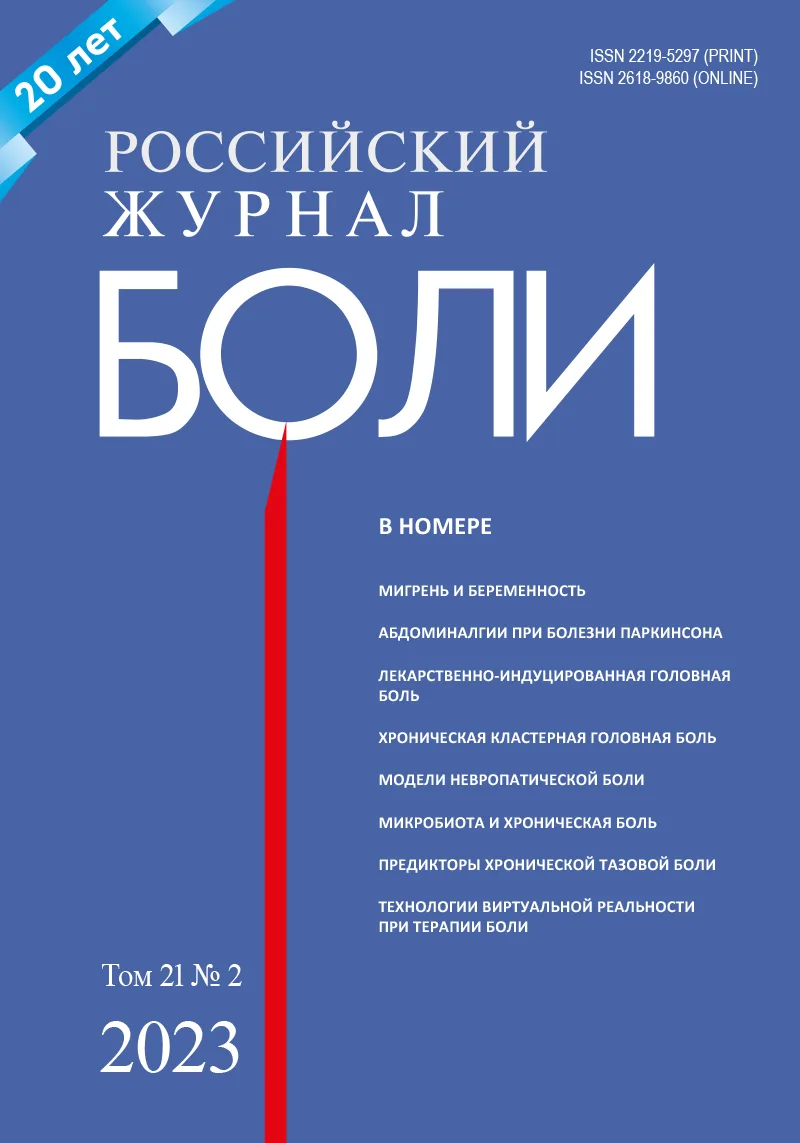
Предикторы формирования хронической тазовой боли в женской популяции
Резюме
ВВЕДЕНИЕ
Хроническая тазовая боль (ХТБ) — это боль, локализованная в нижней части живота, тазу или органах малого таза, которая сохраняется не менее трех месяцев и возникает непрерывно или периодически. ХТБ негативно сказывается на когнитивной функции, социальной и трудовой активности, семейной жизни пациента. Многочисленные факторы способствуют длительному сохранению боли, что делает актуальным поиск предикторов хронизации болевого синдрома.
ЦЕЛЬ ИССЛЕДОВАНИЯ
Рассмотреть предикторы ХТБ среди женщин.
МАТЕРИАЛ И МЕТОДЫ
Был проведен обзор литературы, посвященной предикторам тазовой боли и механизмам, которыми обусловлена корреляция. Использованы базы данных PubMed и КиберЛенинка.
РЕЗУЛЬТАТЫ
Предикторы ХТБ для удобства рассмотрения можно разделить на несколько категорий: немодифицируемые характеристики, индивидуальные особенности психики, социальные факторы, сопутствующие заболевания. Среди немодифицируемых характеристик повышенную предрасположенность к ХТБ определяют женский пол и возраст 30—50 лет. При анализе психических особенностей пациентов с ХТБ отмечается корреляция между хронизацией боли и повышенной эмоциональной лабильностью, тревожностью, депрессией, катастрофизацией боли. Анализ социальных факторов затруднен в наибольшей степени, так как многие из них влияют на хронизацию боли косвенно и в сопряжении с другими факторами. Особенно значимыми предикторами ХТБ служат сопутствующие болевые синдромы, в частности синдром раздраженного кишечника, первичная дисменорея и интерстициальный цистит. Роль реактивности сердечно-сосудистой системы и функции яичников вероятна, но требует дальнейшего рассмотрения.
ЗАКЛЮЧЕНИЕ
Большинство предикторов ХТБ легко обнаружить на этапе сбора анамнеза. Выявление предикторов ХТБ может быть важно для диагностического поиска, рационального выбора лечения и оценки прогнозов заболевания.
Ключевые слова
- хроническая тазовая боль
- предикторы хронизации
- центральная сенситизация
Дата поступления: 27.03.2023
Дата принятия в печать: 13.04.2023
Дата публикации: 09.06.2023
Актуальность проблемы. Понятие хронической тазовой боли. Понятие предиктора. Классификация предикторов хронической тазовой боли
Хроническая тазовая боль (ХТБ) — это боль, локализованная в нижней части живота, тазу или органах малого таза, которая сохраняется не менее трех месяцев и возникает непрерывно или периодически [E. Díaz Mohedo, J. Wärnberg, F.J. Barón López, S. Mera Velasco, A. Cabello Burgos. Chronic Pelvic Pain in Spanish Women: Prevalence and Associated Risk Factors. A Cross-Sectional Study. Clin Exp Obstet Gynecol. 2014;41:243-248]. В структуре гинекологического приема 20% обращений обусловлены ХТБ [P. Latthe, M. Latthe, L. Say, M. Gülmezoglu, K.S. Khan. WHO systematic review of prevalence of chronic pelvic pain: A neglected reproductive health morbidity. BMC Public Health. 2006;6:177], а 40% лапароскопических вмешательств связаны с поиском причины ХТБ у женщин [F.M. Howard. The role of laparoscopy as a diagnostic tool in chronic pelvic pain. Best Pract Res Clinical Obstet Gynaecol. 2000;14:467-494]. ХТБ — это многофакторное, гетерогенное состояние, возникающее в результате любой комбинации из трех составляющих — ноцицептивного, нейропатического, дисфункционального компонентов боли, длительно поддерживаемое впоследствии феноменом центральной сенситизации [M. Nicholas, J.W.S. Vlaeyen, W. Rief, et al. The IASP classification of chronic pain for ICD-11: chronic primary pain. Pain. 2019;160(1):28-37]. В дебюте ХТБ могут быть урологические, гинекологические, желудочно-кишечные заболевания, патология сосудистой, нервной или костно-мышечной систем, которые ввиду различных причин сохраняют после себя длительно персистирующую боль после излечения заболевания. ХТБ оказывает негативное влияние на когнитивные функции, повседневную активность, сексуальный и эмоциональный аспекты жизни пациента. Многочисленные факторы могут способствовать поддержанию паттерна ХТБ. В этой связи актуальным является выявление предикторов формирования ХТБ.
Цель данной работы — рассмотреть предикторы развития ХТБ среди женщин.
Под предикторами подразумеваются симптомы, а также внутренние и внешние факторы, наличие которых свидетельствует о повышенной вероятности развития определенного заболевания у данного пациента. Не во всех исследованиях, показавших корреляцию между ХТБ и тем или иным фактором, удается определить направление причинно-следственной связи. Следовательно, предиктор не синоним понятий «фактор риска» и «этиологический фактор».
Предикторы хронической тазовой боли для удобства рассмотрения можно разделить на несколько категорий.
1. Немодифицируемые характеристики. К данной группе относятся такие факторы, как пол, возраст, раса и наследственность. В данной работе будут подробнее рассмотрены различия в распространенности ХТБ между мужчинами и женщинами, а также в зависимости от возрастной группы.
2. Индивидуальные особенности психики. Ряд поведенческих и личностных особенностей, которые можно выявить непосредственно при общении с пациенткой или целенаправленно, с помощью психологических тестов; могут отражать предрасположенность к развитию ХТБ. Психические заболевания также влияют на восприятие и хронизацию боли.
3. Социальные факторы. Данные о социально-экономическом статусе, вредных привычках, семье, а также о физических и психологических травмах в анамнезе могут облегчить выявление предрасположенности к ХТБ.
4. Сопутствующие заболевания. В ряде исследований показана связь между ХТБ и другими хроническими болевыми синдромами, а также закономерность хронизации циклической боли. На развитие ХТБ могут влиять и другие заболевания, не связанные напрямую с расстройством модуляции боли или патологией органов малого таза.
Выявление предикторов ХТБ может сыграть важную роль в принятии дальнейших решений по ведению пациента уже на этапе сбора анамнеза. С одной стороны, если пациентка жалуется на состояния, являющиеся предикторами ХТБ, например на дисменорею, врач имеет возможность оценить прочие предрасполагающие факторы и сделать вывод о риске хронизации боли. С другой стороны, значительная часть женщин, страдающих от ХТБ, не осознают, что их заболевание требует консультации врача и поддается коррекции, поэтому наличие предикторов может подтолкнуть к обнаружению уже существующей ХТБ. Таким образом, внимание к предикторам ХТБ может быть полезным в диагностическом поиске и оказании пациенткам рациональной помощи.
Немодифицируемые характеристики
Под немодифицируемыми характеристиками подразумеваются пол, возраст, раса и наследственность пациента. Одной из задач данной работы было проследить по литературным источникам влияние пола и возраста пациенток на риск хронизации тазовой боли.
По результатам ряда исследований можно предположить, что женский пол сам по себе является предиктором ХТБ [1, 2]. J. Quaghebeur и J.J. Wyndaele оценивали боль, выраженность симптомов гиперреактивности мочевого пузыря и качество жизни у мужчин и женщин, страдающих ХТБ. Женщины имели в целом более высокий балл по опроснику боли Макгилла, в частности по аффективной шкале, а также оценивали свой болевой синдром более высоким баллом по визуально-аналоговой шкале по сравнению с мужчинами. Кроме того, женщины в анкетах заявляли о более выраженном снижении качества жизни в связи с ХТБ. Сексуальная активность среди женщин с ХТБ была ниже, чем среди мужчин [1]. J.S. Chandan и соавт. в протоколе систематического обзора, посвященного связи между пережитым в детстве насилием и склонностью к центральной сенситизации, упоминают, что среди женщин выше частота фибромиалгии и синдрома хронической усталости [2]. Как будет описано далее, хронические болевые синдромы облегчают хронизацию боли иной локализации [4]. Более того, именно фибромиалгия часто сочетается с ХТБ [5]. Поэтому можно предположить, что более высокая частота фибромиалгии и синдрома хронической усталости среди женщин косвенно свидетельствует и о большей распространенности ХТБ среди лиц женского пола. С другой стороны, результаты приведенных исследований построены на оценке пациентами собственных симптомов и качества жизни. При этом среди женщин более распространены тревожные, депрессивные и соматоформные расстройства, влияющие на индивидуальное восприятие боли [2, 3]. Поэтому нельзя исключить, что женский пол влияет не столько на саму хронизацию тазовой боли, сколько на восприятие симптомов и частоту обращаемости по поводу ХТБ.
Данные о возрастной распространенности ХТБ неоднозначны. C.Y. de Las Mercedes Villa Rosero и соавт. показали наибольшую распространенность ХТБ среди женщин до 30 лет, однако этот показатель наиболее актуален для Эквадора, где проводилось исследование [6]. A.A. Ayorinde и соавт. обнаружили, что среди женщин репродуктивного возраста ХТБ встречается чаще на 10,9% по сравнению с женщинами в постменопаузе. При этом средний возраст пациенток, отобранных для исследования, составлял 53 года [7]. Данные A.A. Ayorinde и соавт. соответствуют статистике по возрастной распространенности других хронических болевых синдромов: так, фибромиалгия и синдром хронической усталости наиболее распространены среди женщин 30—55 лет [2]. Если попытаться объединить приведенные данные, то можно предположить, что наибольшая вероятность развития ХТБ среди женщин приходится на конец первого периода и второй период зрелого возраста, до менопаузы. Средний возраст наступления менопаузы в РФ — 49—51 год [8]. Следовательно, наибольшему риску ХТБ подвержены женщины 30—50 лет.
Таким образом, немодифицируемые характеристики пациента, в частности пол и возраст, очевидны уже на этапе знакомства врача с пациентом. Предикторами ХТБ боли можно считать женский пол и возраст 30—50 лет. Сопоставление жалоб пациента с полом и возрастом может помочь врачу в выяснении риска хронизации болевого синдрома.
Индивидуальные особенности психики
Доказано, что психоэмоциональное состояние влияет на восприятие боли, что объясняется участием одних и тех же медиаторов в антиноцицептивной системе и в системах поощрения, мотивации и настроения. В ряде работ показана возможная вовлеченность серотонинергической, дофаминергической, опиоидергической систем в процесс хронизации боли [6, 9, 10].
Пациенты, страдающие ХТБ, чаще испытывают проблемы с формированием эмоциональных реакций и построением отношений [11, 12]. Среди них обнаружена положительная корреляция между интенсивностью боли и более высоким баллом по шкале оценки расстройств личности кластера B (эмоциональная неустойчивость, драматичность) и кластера C (склонность к беспокойству, страху) [11, 12]. В частности, среди пациентов с ХТБ в среднем более выражены признаки нарциссизма [11], отмечается относительно высокий невротизм, низкая экстравертированность, сниженная совестливость [12].
Во многих исследованиях отмечается корреляция хронических болевых синдромов, в том числе ХТБ, с депрессией и тревожностью [5, 7, 12—16]. Предполагается, что причинно-следственная связь двусторонняя [17]: хронический болевой синдром, в особенности сопряженный с нарушением сна [4, 6], может стать причиной развития депрессии; в то же время наличие депрессивных и тревожных расстройств предрасполагает к повышенной болевой чувствительности, центральной сенситизации и хронизации боли. Описано несколько возможных механизмов, объясняющих данную взаимосвязь. Во-первых, при депрессии нарушается обмен дофамина, серотонина, опиоидов, эндоканнабиоидов, являющихся важными участниками центральной и периферической регуляции боли [6, 9]. Во-вторых, при депрессии выявляют также дисрегуляцию ферментативного синтеза гистамина и иммунных белков, что способствует развитию нейрогенного воспаления как одного из этапов хронизации боли [13]. Таким образом, индивидуальное восприятие боли и расстройства настроения взаимосвязаны за счет биохимических изменений в центральном и периферическом отделах ноцицептивной системы.
Важным предиктором ХТБ является катастрофизация боли [5, 6]. Под этим понятием подразумевается особое субъективное восприятие болевого синдрома: сосредоточенность на боли, преувеличение опасности внутренних процессов, о которых свидетельствуют неприятные ощущения, и чувство собственной беспомощности [5]. У женщин с катастрофизацией боли повышена активность префронтальной коры, где происходит модуляция и фокусировка боли. Такие пациентки хуже отвечают на терапию, чаще жалуются на послеоперационную боль. Катастрофизация боли может быть сопряжена с тревожным расстройством и/или депрессией [5]. Следовательно, в профилактику и лечение ХТБ должна включаться работа с пациентом, направленная на снижение его обеспокоенности по поводу собственных симптомов. Не менее важно предотвращать ограничение пациентом своей повседневной активности в попытках избежать боли.
Оценка влияния качества сна на хронизацию тазовой боли в данный момент представляется затруднительной. С одной стороны, показана связь между нарушениями сна и повышением частоты развития ХТБ [6, 19]. С другой стороны, некоторые из исследователей обнаружили, что корреляция обусловлена сопутствующей депрессией [19]. Иными словами, нарушения сна связаны с депрессией, а депрессия может быть связана с ХТБ, но это не означает ассоциации непосредственно между нарушениями сна и ХТБ; более того, в данном контексте неясно, является ли депрессия следствием или предрасполагающим фактором ХТБ. Несмотря на отсутствие однозначной закономерности, предложены механизмы влияния качества сна на болевой синдром. Нарушения сна влияют на систему модуляции боли, ведут к изменениям в гипоталамо-гипофизарно-надпочечниковой системе, повышают уровень системного воспалительного ответа [19]. Отсутствие достоверных доказательств непосредственной связи не умаляет необходимости корректировать нарушения сна у пациентов с риском ХТБ, так как этот фактор может значительно сказываться на комплексной предрасположенности к хронизации боли [Г.Е. Шевцова, Л.А. Медведева, О.И. Загорулько. Нарушения сна у пациентов с хронической болью. РЖБ. 2017;1(52):42-43].
Состояние психики, от индивидуальных черт до крупных расстройств, влияет на синтез моноаминов в центральной и периферической нервной системе, а также на обмен медиаторов воспаления. Эти процессы отражаются на индивидуальном восприятии боли, могут предрасполагать к повышенной обеспокоенности по поводу ХТБ и более выраженному снижению качества жизни. Оценка эмоциональной лабильности, нарушений настроения, повышенной тревожности и прочих особенностей психики может облегчить выявление риска ХТБ у пациентов.
Социальные факторы и образ жизни
Ежедневное воздействие факторов, обусловленных уровнем дохода, социальной средой, образом жизни, может влиять как на причины тазовой боли, так и на индивидуальные особенности ноцицепции. К категории «социальные факторы и образ жизни» отнесены такие понятия, как социально-экономический статус, уровень образования, диета, физическая активность, курение и пережитое насилие.
Существуют исследования, демонстрирующие взаимосвязь между низким социально-экономическим статусом и первичной дисменореей [18], тогда как первичная дисменорея является предиктором ХТБ, что будет рассмотрено более подробно ниже. Социально-экономический статус, в свою очередь, может влиять на качество жизни. В некоторых работах обнаружено снижение качества жизни вследствие ХТБ, но не показано влияние качества жизни на риск ХТБ [15].
Можно также предположить взаимосвязь между социально-экономическим статусом и уровнем образования. Высокий уровень образования, по некоторым данным, ассоциирован с более частым возникновением ХТБ [7]. Парадоксальная на первый взгляд закономерность может быть объяснена ростом осведомленности о ХТБ и более частым обращением за медицинской помощью среди высокообразованной группы населения, а также сидячим образом жизни. Взаимосвязи между перечисленными факторами являются интуитивно-теоретическими и требуют дальнейшего изучения в комплексе с влиянием на риск хронизации боли.
Недостаток физической активности и сидячий образ жизни в ряде работ сами по себе рассматриваются как фактор, предрасполагающий к ХТБ [18, 19]. Влияние физической активности на болевой синдром может меняться в зависимости от периода жизни женщины и этиологии ХТБ. Проведенные на данный момент исследования не выявили однозначного снижения болевого синдрома, связанного с эндометриозом, у пациенток с более высокой физической активностью [19]. Изучение ХТБ, возникающей после беременности и родов, показало, что умеренные физические нагрузки снижают не частоту возникновения боли, но остроту симптомов и ограничение двигательной активности в связи с болью [23]. При этом физические нагрузки в позднем послеродовом периоде влияют на болевой синдром в значительно большей степени, чем во время беременности [19, 24]. Такие результаты наводят на предположение о том, что физическая активность влияет в первую очередь на восприятие боли через изменение психоэмоционального состояния, а также облегчает адаптацию к болевому синдрому и предотвращает избегающее поведение [19].
Поскольку особенности рациона могут изменять уровень медиаторов воспаления и гормонов, кажется логичным предположить взаимосвязь между диетой и риском развития ХТБ. Тем не менее в большинстве работ, рассмотренных в обзоре A. Gutke и соавт., влияние диеты на болевые синдромы не установлено [19]. В отдельных исследованиях показано улучшение симптомов ХТБ, обусловленной эндометриозом, у пациенток, принимающих капсулы рыбьего жира с витамином B12, и усугубление симптоматики при повышенном потреблении красного мяса и трансжиров [20]. Если рассматривать ожирение как следствие несбалансированной диеты, можно также вывести некоторые корреляции с ХТБ. Так, индекс массы тела больше 25 кг/м2 может повышать риск хронизации боли после родов [21, 22]. Особенности диеты, которые могут служить предикторами хронической тазовой боли, требуют дальнейшего поиска и анализа.
Некоторые исследователи рассматривают курение как еще один фактор образа жизни, повышающий вероятность собственно ХТБ, а также первичной дисменореи, предрасполагающей к ХТБ [4, 6, 18]. В отношении связи с первичной дисменореей данные противоречивы. С одной стороны, обнаружена прямая положительная связь между количеством выкуриваемых сигарет и частотой первичной дисменореи. С другой стороны, есть работы, по результатам которых прослеживается контринтуитивное повышение влияния тревожности и депрессии на развитие дисменореи у некурящих женщин по сравнению с курящими. Авторы объясняют парадоксальные данные наличием в составе сигарет веществ, ингибирующих синтез простагландинов [6]. При оценке влияния курения на частоту ХТБ стоит принять во внимание возможную связь между потреблением табака и рядом других предикторов, в том числе связанных с образом жизни (таких как уровень дохода, общее внимание к собственному здоровью, качество сна, подверженность стрессу) и ментальным здоровьем (депрессия, тревожность).
Пережитое насилие по своей социальной значимости играет особую роль среди предикторов ХТБ [2, 4, 6]. Решение данной проблемы распространяется за пределы вопросов здравоохранения, а ХТБ является последствием, значительно отсроченным во времени. Принимать во внимание следует как физическое, в частности сексуальное, так и психологическое насилие [2]. Болевой синдром может первоначально возникать из-за повторных травм или стрессового нарушения гормональной регуляции, в том числе в гипоталамо-гипофизарно-яичниковой и гипоталамо-гипофизарно-надпочечниковой системах [2]. У пациенток, переживших насилие в детском возрасте, отмечают повышенный уровень C-реактивного белка, интерлейкинов, сниженную реакцию на введение кортизола [24]. Эти процессы предрасполагают к развитию нейрогенного воспаления, периферической и центральной сенситизации. Повышается риск соматоформных расстройств и ряда хронических болевых синдромов, в число которых помимо ХТБ входят, например, фибромиалгия и синдром хронической усталости [2]. Пережитое насилие отражается на психическом здоровье пациентки, на ее способности к социальным взаимодействиям и на склонности доверять лечащему врачу. Следовательно, сбор анамнеза в подобных случаях может быть затруднен, и это тоже надо иметь в виду. Подверженность насилию может служить важным предиктором ХТБ, однако для его выявления необходимы доверительные отношения с пациенткой и совместная работа нескольких специалистов, включая психолога и/или психотерапевта.
Сложность анализа предикторов, отнесенных к группе «социальные факторы и образ жизни», возникает из-за их ассоциации между собой и с предикторами других групп, в частности с особенностями психики. Некоторые из этих факторов пациентка может скорректировать по совету врача и путем сознательных усилий, в том числе курение, недостаток физической активности, диету. В то же время у лечащего врача нет возможности повлиять на некоторые социальные факторы (социально-экономический статус, насилие в анамнезе). Во многих случаях для предотвращения хронизации боли требуется совместная работа нескольких специалистов.
Сопутствующие заболевания
Хронические заболевания, которыми страдает пациентка, могут дополнительно предрасполагать к развитию ХТБ. При рассмотрении роли сопутствующих заболеваний важным становится различие между предиктором и этиологическим фактором. Например, пролапс тазовых органов является частой причиной развития болевого синдрома, но само по себе развитие пролапса не предрасполагает к хронизации боли. У одних пациенток боль разрешается после хирургического лечения пролапса, у других продолжает персистировать, несмотря на отсутствие видимых органических причин. Различия в длительности сохранения послеоперационного болевого синдрома прослеживаются среди пациенток с другими заболеваниями, включая эндометриоз, родовые травмы и т.д. Таким образом, предикторами ХТБ могут служить состояния, предрасполагающие к сохранению и хронизации боли, но не обязательно вызывающие боль сами по себе.
1. Хронические болевые синдромы
Многие исследования прослеживают взаимосвязь между хроническими синдромами различной локализации: ХТБ, синдромом раздраженного кишечника, фибромиалгией, миофасциальным болевым синдромом, синдромом хронической усталости, синдромом хронической боли в спине, интерстициальным циститом, дисфункцией височно-нижнечелюстного сустава, функциональной диспепсией [2, 4, 6, 17, 18, 26]. Эта ассоциация объяснима единым механизмом центральной сенситизации, характерным для всех перечисленных патологий [2, 4, 6, 17, 18, 26].
Центральная сенситизация — это нейробиологический процесс, сопровождающийся повышением нейрональной возбудимости и снижением порогов болевой чувствительности, характеризующийся чрезмерным ответом ноцицептивных нейронов центральной нервной системы в ответ на нормальные или подпороговые стимулы [18] [IASP Terminology. https://www.iasp-pain.org/terminology?navItemNumber=576#Centralsensitization. Published 2019. Accessed December 21, 2019]. Изменение обработки боли в центральной нервной системе проявляется болевыми ощущениями, не соответствующими силе воздействия и не связанными с острым повреждением тканей [2, 26]. Предполагаемый механизм центральной сенситизации связан с усиленной активацией рецепторов глутамата [27]. При острой боли глутамат связывается в первую очередь с AMPA-рецепторами, так как их чувствительность выше по сравнению с NMDA-рецепторами. По мере повторения болевых стимулов глутамат накапливается в синаптической щели, и повышение его концентрации способствует связыванию с NMDA-рецепторами. Стимуляция NMDA-рецепторов приводит к резкому повышению уровня кальция в клетке и активации кальций-зависимых киназ, в том числе кальмодулинкиназы, протеинкиназы C, ЦОГ-2 и NO-синтазы. Продукты действия упомянутых ферментов (ПГЕ2, оксид азота и др.) повышают высвобождение в синаптическую щель глутамата, субстанции P и кокальцигенина. Субстанция P и кокальцигенин не только являются сотрансмиттерами глутамата, но и способствуют выбросу цитокинов и нейротрофинов из микроглии и астроцитов. Эта цепочка реакций поддерживает нейроны в состоянии гипервозбудимости, и, поскольку ноцицептивные стимулы продолжают повторяться, острая боль переходит в хроническую [27].
Центральная сенситизация у пациентов с ХТБ подтверждена результатами экспериментов по оценке болевой чувствительности и исследований морфологии центральной нервной системы. Интерстициальный цистит, провоцированная вестибулодиния, первичная дисменорея и другие формы хронических урогинекологических болевых синдромов сопровождаются повышением болевой чувствительности как в области проекции боли, так и в отдаленных анатомических областях [5, 16, 17]. Помимо гиперальгезии и аллодинии у пациенток, страдающих ХТБ, некоторые исследователи наблюдали повышение рефлексов, в том числе рефлекса отдергивания конечности и рефлекса Осинского [17].
Анализ структуры головного мозга с помощью воксель-ориентированной морфометрии позволил обнаружить изменения объема и плотности серого вещества у пациенток с ХТБ, причем при циклической боли структурные изменения не зависели от фазы менструального цикла [17, 28]. Наблюдаемые изменения, однако, были неоднородными: у одних пациентов объем и плотность серого вещества повышались, у других снижались. Закономерность прослеживалась в локализации участков, подверженных морфологической перестройке. Уменьшение плотности и объема наблюдалось преимущественно в таких областях системы боли, как таламус, поясная кора, скорлупа, предклинье, вторичная соматосенсорная кора, верхняя височная извилина, мозжечок, островковая кора, префронтальная кора. Увеличение объема и плотности серого вещества чаще происходило в зонах модуляции боли и стресса, а также эндокринного ответа на болевые стимулы: в правой нижней/средней лобной извилине, левом миндалевидном теле, гипоталамусе, средней височной извилине, среднем мозге, базальных ганглиях, гиппокампе и парагиппокампе [17]. Чем продолжительнее существовал болевой синдром, тем более выраженными были изменения [17]. Эта закономерность соотносится с наблюдением, согласно которому при циклической ХТБ изменения болевой чувствительности и структурные изменения выражены меньше, чем при ХТБ, не зависящей от фазы цикла [17, 28].
Взаимосвязь между болевыми синдромами в различных органах малого таза, например между вульводинией, дисменореей, интерстициальным циститом и синдромом раздраженного кишечника, объяснима с помощью концепции cross-talk. Эта концепция подразумевает перекрестную сенситизацию органов вследствие конвергенции афферентных путей, а также общности зон обработки ноцицептивных стимулов в центральной нервной системе [26, 29, 30]. Одни и те же чувствительные нейроны задних корешков спинного мозга собирают ноцицептивную афферентацию от внутренних половых органов, мочевого пузыря, сигмовидной кишки [30]. Перекрывающиеся зоны афферентации есть также у вставочных нейронов задних рогов спинного мозга [29, 30]. Кроме того, органы малого таза получают нисходящие антиноцицептивные сигналы от общих участков головного мозга, включая миндалевидное тело, ядро солитарного тракта, ядро Баррингтона, заднелатеральное вентральное ядро таламуса [29, 30]. Не исключена ретроградная передача сигнала по общим афферентным путям, стимулирующая нейрогенное воспаление [29]. Описанные взаимосвязи облегчают формирование повышенной болевой чувствительности в органах малого таза, изначально не являющихся источником боли.
Концепция cross-talk не полностью объясняет сопряженность хронических болевых синдромов в удаленных друг от друга анатомических областях, например сочетание ХТБ с дисфункцией височно-нижнечелюстного сустава. Однако это явление укладывается в механизмы центральной сенситизации, обусловленные изменениями на уровне структур головного мозга. Кроме того, предполагается, что медиаторы нейрогенного воспаления (гистамин, субстанция P) попадают в кровоток в количествах, достаточных для облегчения сенсибилизации нервных путей отдаленной локализации [13]. Определенную роль могут играть депрессивные и тревожные расстройства, которые развиваются в связи с первоначальным болевым синдромом и могут дополнительно предрасполагать к развитию сопутствующих хронических болей [5, 14].
Таким образом, практически любые хронические болевые синдромы можно считать предикторами хронизации тазовой боли. Наиболее описанной и обоснованной теоретически и эмпирически представляется взаимосвязь ХТБ с интерстициальным циститом, синдромом раздраженного кишечника и первичной дисменореей.
2. Иные заболевания
Некоторые исследователи отмечают, что состояние сердечно-сосудистой системы пациента и функции эндокринных желез могут влиять на болевую чувствительность и хронизацию боли. В частности, есть данные о влиянии среднего уровня артериального давления, реактивности сердечно-сосудистой системы на болевые стимулы и уровни эстрогенов.
Данные о связи между функцией сердечно-сосудистой системы и предрасположенности к ХТБ противоречивы. S. Kaya и соавт. описывают не только более высокие средние уровни артериального давления и частоты сердечных сокращений у пациенток с ХТБ, но и более высокое повышение давления в ответ на болевые стимулы по сравнению с контрольной группой без хронических болевых синдромов [17]. В этой же работе отмечается, что у пациенток без ХТБ более низкий средний уровень артериального давления коррелировал с более высоким болевым порогом [17]. Приведенным данным противоречит работа R.R. Nir и D. Yarnitsky, в которой обнаружена более эффективная модуляция боли среди пациентов с более значительным повышением артериального давления в ответ на экспериментально вызванную боль [31]. При этом для пациентов с ХТБ характерно снижение условной модуляции боли [16]. Можно предположить, что как сниженная, так и чрезмерная реактивность сердечно-сосудистой системы на боль может влиять на процессы эндогенной анальгезии, однако механизмы этого не вполне ясны. Возможно, реактивность сердечно-сосудистой системы отражает функцию гипоталамо-гипофизарно-надпочечниковой оси, изменения регуляции которой возникают также при расстройствах сна и в связи с психологическими травмами, то есть при состояниях, которые могут быть предикторами ХТБ [2, 19].
В некоторых работах предполагается влияние эстрогенов на восприятие боли и участие этих гормонов в патогенезе хронизации болевых синдромов [30, 32]. Рецепторы эстрогенов представлены в центральной нервной системе, в том числе в структурах, участвующих в передаче болевого сигнала, формировании реакции на боль и модуляции боли [32]. Активация эстрогеновых рецепторов ERS1 и ERS2 в нейронах эндорфиновой системы может приводить к повышению аффинности μ-опиоидных рецепторов или увеличению их плотности [33]. Связывание эстрогенов с метаботропными рецепторами mGluR1 оказывает ингибирующее влияние на NMDA-рецепторы глутамата [34]. Еще одним важным антиноцицептивным действием эстрогенов является ингибирование обратного захвата серотонина путем стимуляции синтеза транспортного белка SERT и подавления экспрессии MAO-B. Также эстрогены могут подавлять нейрогенное воспаление, так как способны ингибировать синтез провоспалительных цитокинов [32]. Эти механизмы соотносятся с данными об усилении симптомов синдрома раздраженного кишечника у женщин в период менструации [30]. Можно предположить, что гипоэстрогенные состояния могут облегчать хронизацию тазовой боли.
Влияние реактивности сердечно-сосудистой системы и эндокринной функции яичников на развитие ХТБ не исключено, однако снижение или повышение адаптивных реакций, а также гипоэстрогению затруднительно оценивать в качестве предикторов ХТБ. Маловероятно, что изменения артериального давления и частоты сердечных сокращений в ответ на болевые стимулы будут оценены у пациенток в связи с жалобами на хронические боли, тем более до возникновения жалоб. Уровень эстрогенов может меняться в зависимости от многих факторов: в связи с органическими причинами тазовой боли (эндометриоз, воспалительные заболевания органов малого таза), использованием гормональных контрацептивов (в том числе для терапии эндометриоза или ХТБ), депрессией на фоне ХТБ и т.д. Таким образом, роль сопутствующих заболеваний в качестве предикторов ХТБ представляется сомнительной.
Заключение
Понятие предиктора можно рассматривать как любой признак, фактор или состояние, повышающее вероятность диагностировать заболевание. В соответствии с предложенным определением к основным предикторам ХТБ у женщин можно отнести:
— женский пол;
— возраст 30—50 лет, причем в менопаузе вероятность первого возникновения ХТБ снижается;
— эмоциональную лабильность, тревожность, депрессию, склонность к катастрофизации боли;
— расстройства сна;
— сниженную физическую активность;
— подверженность физическому (в том числе сексуальному) и/или психологическому насилию;
— первичную дисменорею, синдром раздраженного кишечника, интерстициальный цистит, фибромиалгию и другие хронические болевые синдромы.
Нельзя также исключить влияния таких факторов, как уровень образования, социально-экономический статус, диета, реактивность сердечно-сосудистой системы и функция яичников.
Выявление предикторов ХТБ может быть полезным при оценке прогнозов и выборе тактики лечения у пациенток с ХТБ.
Авторы заявляют об отсутствии конфликта интересов.
- Quaghebeur J, Wyndaele JJ. Prevalence of lower urinary tract symptoms and level of quality of life in men and women with chronic pelvic pain. Scandinavian Journal of Urology. 2015;49(3):242-249.
- Chandan JS, Thomas T, Raza K, et al. Association between child maltreatment and central sensitivity syndromes: A systematic review protocol. BMJ Open. 2019;9(2):e025436.
- Brünahl C, Dybowski C, Albrecht R, et al. Mental disorders in patients with chronic pelvic pain syndrome (CPPS). Journal of Psychosomatic Research. 2017;98:19-26.
- Dydyk AM, Gupta N. Chronic Pelvic Pain. 2022 Nov 07. In: StatPearls [Internet]. Treasure Island (FL): StatPearls Publishing; 2023 Jan. PMID: 32119472.
- Grinberg K, Sela Y, Nissanholtz-Gannot R. New Insights about Chronic Pelvic Pain Syndrome (CPPS). Int J Environ Res Public Health. 2020;17(9):3005. PMID: 32357440; PMCID: PMC7246747. https://doi.org/10.3390/ijerph17093005
- De Las Mercedes Villa Rosero CY, Mazin SC, Nogueira AA, Vargas-Costales JA, Rosa-E-Silva JC, Candido-Dos-Reis FJ, Poli-Neto OB. Prevalence of chronic pelvic pain and primary dysmenorrhea in women of reproductive age in Ecuador. BMC Women’s Health. 2022;22(1):1-15.
- Ayorinde AA, Bhattacharya S, Druce KL, Jones GT, Macfarlane GJ. Chronic pelvic pain in women of reproductive and post-reproductive age: a population-based study. Eur J Pain. 2017;21(3):445-455. Epub 2016 Sept 15. PMID: 27634190. https://doi.org/10.1002/ejp.938
- Адамян Л.В., Андреева Е.Н., Аполихина И.А. и др. Клинические рекомендации. Менопауза и климактерическое состояние у женщины. Министерство здравоохранения Российской Федерации; 2021.
- Mlost J, Wąsik A, Starowicz K. Role of endocannabinoid system in dopamine signalling within the reward circuits affected by chronic pain. Pharmacol Res. 2019;143:40-47. Epub 2019 Mar 01. PMID: 30831242. https://doi.org/10.1016/j.phrs.2019.02.029
- Tanaka M, Török N, Tóth F, Szabó Á, Vécsei L. Co-Players in Chronic Pain: Neuroinflammation and the Tryptophan-Kynurenine Metabolic Pathway. Biomedicines. 2021;9(8):897. https://doi.org/10.3390/biomedicines9080897
- Albrecht R, Löwe B, A Brünahl C, Riegel B. Chronische Unterbauchschmerzen und Persönlichkeit — Zusammenhänge zwischen körperlichen Beschwerden und psychischer Struktur [Chronic Pelvic Pain Syndrome and Personality — Association of Somatic Symptoms and Psychic Structure]. Psychother Psychosom Med Psychol. 2015;65(11):418-425. (In German). Epub 2015 July 22. PMID: 26200244. https://doi.org/10.1055/s-0035-1554692
- Magariños López M, Lobato Rodríguez MJ, Menéndez García Á, García-Cid S, Royuela A, Pereira A. Psychological Profile in Women with Chronic Pelvic Pain. J Clin Med. 2022;11(21):6345. PMID: 36362572; PMCID: PMC9658626. https://doi.org/10.3390/jcm11216345
- Кучер А.Н. Нейрогенное воспаление: биохимические маркеры, генетический контроль и болезни. Бюллетень сибирской медицины. 2020;19(2):171-181. https://doi.org/10.20538/1682-0363-2020-2-171-181
- Grinberg K, Granot M, Lowenstein L, Abramov L, Weissman-Fogel I. A common pronociceptive pain modulation profile typifying subgroups of chronic pelvic pain syndromes is interrelated with enhanced clinical pain. Pain. 2017;158(6):1021-1029. PMID: 28178074. https://doi.org/10.1097/j.pain.0000000000000869
- Luz RAD, de Deus JM, Conde DM. Quality of life and associated factors in Brazilian women with chronic pelvic pain. Journal of Pain Research. 2018;11:1367-1374.
- Hellman KM, Roth GE, Dillane KE, et al. Dysmenorrhea subtypes exhibit differential quantitative sensory assessment profiles. Pain. 2020;161(6):1227-1236.
- Kaya S, Hermans L, Willems T, Roussel N, Meeus M. Central sensitization in urogynecological chronic pelvic pain: A systematic literature review. Pain Physician. 2013;16(4):291-308.
- Hoyos-Calderon Y-T, Martínez-Merinero P, Nunez-Nagy S, et al. Myofascial Trigger Points and Central Sensitization Signs, but No Anxiety, Are Shown in Women with Dysmenorrhea: A Case-Control Study. Biology (Basel). 2022;11(11)1550.
- Gutke A, Sundfeldt K, De Baets L. Lifestyle and Chronic Pain in the Pelvis: State of the Art and Future Directions. J Clin Med. 2021;10(22):5397. PMID: 34830680; PMCID: PMC8622577. https://doi.org/10.3390/jcm10225397
- Helbig M, Vesper AS, Beyer I, Fehm T. Does Nutrition Affect Endometriosis? Geburtshilfe Frauenheilkd. 2021;81(2):191-199. Epub 2021 Feb 08. PMID: 33574623; PMCID: PMC7870287. https://doi.org/10.1055/a-1207-0557
- Wuytack F, Daly D, Curtis E, Begley C. Prognostic factors for pregnancy-related pelvic girdle pain, a systematic review. Midwifery. 2018;66:70-78.
- Wiezer M, Hage-Fransen MAH, Otto A, Wieffer-Platvoet MS, Slotman MH, Nijhuis-van der Sanden MWG, Pool-Goudzwaard AL. Risk factors for pelvic girdle pain postpartum and pregnancy related low back pain postpartum; a systematic review and meta-analysis. Musculoskelet Sci Pract. 2020;48:102154.
- Davenport MH, Marchand A-A, Mottola MF, Poitras VJ, Gray CE, Jaramillo Garcia A, Barrowman N, Sobierajski F, James M, Meah VL, Skow RJ, Riske L, Nuspl M, Nagpal TS, Courbalay A, Slater LG, Adamo KB, Davies GA, Barakat R, Ruchat S-M. Exercise for the prevention and treatment of low back, pelvic girdle and lumbopelvic pain during pregnancy: A systematic review and meta-analysis. Br J Sports Med. 2019;53(2):90-98.
- Fisseha B, Mishra PK. The effect of group training on pregnancy-induced lumbopelvic pain: Systematic review and metaanalysis of randomized control trials. J Exerc Rehabil. 2016;12:15-20.
- Borsini A, Hepgul N, Mondelli V, et al. Childhood stressors in the development of fatigue syndromes: A review of the past 20 years of research. Psychol Med. 2014;44:1809-1823.
- Levesque A, Riant T, Ploteau S, et al. Clinical criteria of central sensitization in chronic pelvic and perineal pain (Convergences PP Criteria): Elaboration of a clinical evaluation tool based on formal expert consensus. Pain Medicine. 2018;19(10):2009-2015.
- Давыдов О.С. Периферические и центральные механизмы перехода острой боли в хроническую и возможная роль ингибирования циклооксигеназы 2 в предотвращении хронизации болевого синдрома. Неврология, нейропсихиатрия, психосоматика. 2016;8(2):10-16. https://doi.org/10.14412/2074-2711-2016-2-10-16
- Seidman LC, Temme CR, Zeltzer LK, Rapkin AJ, Naliboff BD, Payne LA. Ecological Momentary Assessment of Non-Menstrual Pelvic Pain: Potential Pathways of Central Sensitization in Adolescents and Young Adults with and without Primary Dysmenorrhea. Journal of Pain Research. 2020;13:3447-3456.
- Majima T, Sassa N. Organ cross-sensitization mechanisms in chronic diseases related to the genitourinary tract. Journal of Smooth Muscle Research. 2021;57:49-52.
- Malykhina AP. Neural mechanisms of pelvic organ cross-sensitization. Neuroscience. 2007;149(3):660-672. Epub 2007 Sept 08. PMID: 17920206. https://doi.org/10.1016/j.neuroscience.2007.07.053
- Nir RR, Yarnitsky D. Conditioned pain modulation. Current Opinion in Supportive and Palliative Care. 2015;9(2):131-137.
- Паневин Т.С., Бобкова А.О., Каратеев А.Е., Зоткин Е.Г. Дефицит эндогенных эстрогенов и развитие хронической скелетно-мышечной боли. Терапевтический архив. 2022;94(5):683-688.
- Gintzler AR, Liu NJ. Arbiters of endogenous opioid analgesia: role of CNS estrogenic and glutamatergic systems. Transl Res. 2021;234:31-42. https://doi.org/10.1016/j.trsl.2021.02.002
- Micevych PE, Mermelstein PG. Membrane estrogen receptors acting through metabotropic glutamate receptors: An emerging mechanism of estrogen action in brain. Mol Neurobiol. 2008;38(1):66-77. https://doi.org/10.1007/s12035-008-8034-z



Рекомендуем статьи по данной теме:
Разработка инструмента прогнозирования хронической послеоперационной боли в кардиохирургии.Российский журнал боли. 2026;24(2):62-67
Лечение хронической неспецифической боли в нижней части спины при спинальном остеоартрите: эффективность применения «Амбене Био» в комбинации со стандартным подходом к терапии.Российский журнал боли. 2026;24(2):33-44
Нервные волокна при эндометриозе: патогенез боли и новые подходы к диагностике.Проблемы репродукции. 2026;32(2):54-62
Центральная сенситизация у пациентов с болезнью церебральных мелких сосудов.Журнал неврологии и психиатрии им. С.С. Корсакова. 2026;126(1):77-81
Фантомно-болевой синдром. История, патофизиология и лечение.Российский журнал боли. 2025;23(4):60-70
Дисфункциональная тазовая боль у женщин.Российский журнал боли. 2025;23(2):32-37
Миофасциальные орофациальные боли: клинико-патогенетические механизмы, возможности ботулинотерапии.Российский журнал боли. 2025;23(2):12-23
Хроническая послеоперационная боль в кардиохирургии: сравнительный анализ данных количественного сенсорного тестирования и болевого анамнеза.Российский журнал боли. 2025;23(1):16-23
Психоэмоциональное состояние и сексуальная функция женщин с хронической тазовой болью при генитальном эндометриозе.Журнал неврологии и психиатрии им. С.С. Корсакова. 2024;124(10):5-15