Уровень эксцизионных колец Т-клеточных рецепторов и κ-делеционного элемента В-клеток у здоровых людей в разных возрастных группах
Резюме
В педиатрической практике для диагностики первичных иммунодефициты состояний широко применяется количественное определение эксцизионных колец Т-клеточных рецепторов (TREC) и κ-делеционного элемента В-клеток (KREC). Вопрос диагностической значимости исследования TREC и KREC у взрослого населения до сих пор был мало изучен.
ЦЕЛЬ
Этого исследования — определить возрастные физиологические уровни и пороговые значения уровней TREC и KREC у мужчин и женщин.
Нами проводилось изучение уровня TREC и KREC у 213 условно здоровых лиц в возрасте от 18 до 82 лет. В исследование вошли 104 (49,0%) мужчины и 109 (51,0%) женщин. Для исследования выполнялся забор периферической венозной крови. Были определены концентрации TREC и KREC среди мужчин и женщин. Принцип метода основан на количественном определении содержания копий ДНК TREC и KREC с использованием процесса амплификации участков ДНК TREC и KREC с помощью специфических к этим участкам праймеров и гибридизационных зондов и Taq ДНК-полимеразы с последующим определением накопления специфического флуоресцентного сигнала в режиме реального времени. Линейный диапазон количественного определения копийности TREC и KREC определенный с помощью колибраторов набора реагентов «ИММУНО-БИТ» составляет от 1х103 до 1х107 копий/мл. Статистические расчеты выполнялись на программе StatTech v. 4.7.1 (Россия). Между группами мужчин и женщин достоверных различий по уровню TREC и KREC не выявлено. Была установлена обратная корреляционная зависимость от возраста уровня TREC и KREC, указывающая на снижение количества TREC и KREC в течение жизни.
ВЫВОДЫ
Из результатов исследования следует, что уровни TREC и KREC снижаются с возрастом. В разных возрастных группах доноров нами были получены референсные значения физиологических уровней TREC и KREC. Количественное определение уровней TREC и KREC должно быть внедрено в рутинную практику, поскольку является весьма информативным методом диагностики заболеваний и терапевтического контроля.
Ключевые слова
- группа здоровых
- эксцизионные кольца рекомбинации участков ДНК
- TCR
- BCR
- TREC
- KREC
- взрослые
Дата поступления: 15.04.2025
Дата принятия в печать: 28.07.2025
Дата публикации: 25.11.2025
Введение
На этапе созревания Т- и В-лимфоцитов происходит V(D)J-рекомбинации участков ДНК, что способствует формированию разнообразных репертуаров Т-клеточных рецепторов (TCR) и В-клеточных рецепторов (BCR), которые позволяют распознавать неограниченное количество антигенов [1]. На этапах созревания Т- и В-лимфоцитов рекомбинация участков ДНК позволяет формировать различные варианты клеточных рецепторов. Во время каждой такой рекомбинации происходит вырезание небольшого фрагмента ДНК, в результате чего образуются эксцизионные кольца.
В процессе формирования TCR вырезанные фрагменты ДНК образуют эксцизионные кольца рекомбинации Т-клеточных рецепторов (TREC), которые экспортируются в цитоплазму Т-клеток [2, 3, 4]. На этапе формирования BCR формируются эксцизионные кольца рекомбинации В-клеточных рецепторов (KREC) [4].
Молекулы TREC присутствуют примерно в 70% дифференцирующихся Т-клеток, которые образуются в тимусе [5]. Известно, что с возрастом наблюдается снижение уровней TREC и KREC [6, 7].
В педиатрии для оценки функциональной активности тимуса и костного мозга выполняется определение уровней TREC и KREC. Уменьшение уровней TREC и/или KREC в крови может свидетельствовать о наличии иммунодефицита. Если для первичных иммунодефицитов (ПИД) характерны врожденные (генетические или эмбриопатии) дефекты иммунной системы, то предикторы вторичных иммунодефицитов весьма разнообразны. Известно, что распространенность ПИД достигает примерно 1 случая на 10 000 [8, 9]. Вторичные иммунодефициты часто являются результатом осложнения различных заболеваний.
Использование количественного анализа TREC и KREC постепенно расширяется, и его можно использовать в качестве инструмента для мониторинга Т- и В-клеток после трансплантации гемопоэтических стволовых клеток и иммуносупрессивной терапии, восстановления иммунитета у пациентов с ВИЧ, прогнозирования субпопуляций лимфоцитов и стратификации пациентов с общим вариабельным иммунодефицитом (ОВИД) или другими формами ПИД [10—13]. Тем не менее, чтобы использовать количественную оценку TREC и KREC, как указано выше, необходимо установить референсные интервалы и пороговые значения не только для новорожденных, но и для здоровых людей разных возрастов или демографических групп, поскольку уровни TREC и KREC с увеличением возраста имеют тенденцию к снижению [6].
У взрослых состояние как приобретенного, так и врожденного иммунодефицита часто не диагностируется и протекает с различными симптомами, которые могут быть связанны с инфицированием. У взрослых в основном регистрируют гипогаммаглобулинемии, а постановка диагноза происходит на третьем десятилетии жизни [5]. Доказано, что использование количественной оценки TREC и KREC в качестве маркеров созревания Т- и В-лимфоцитов важно для оценки клинической тяжести пациентов с ОВИД, а также для дифференциации от комбинированного иммунодефицита [10].
Цель этого исследования — определить возрастные физиологические уровни и пороговые значения уровней TREC и KREC у мужчин и женщин.
Материалы и методы
В исследование включены результаты анализов 213 здоровых добровольцев (доноров) в возрастном интервале от 18 лет до 82 лет. Медиана возраста составила 46 лет.
Из анамнеза жизни и электронной медицинской документации доноров известно об отсутствии у них онкопатологии, хронических заболеваний и острых воспалительных процессов.
Венозную кровь для исследования забирали по стандартной технологии в вакуумную пробирку. Вакуумная пробирка содержала калиевые соли этилендиаминтетрауксусной кислоты (К2ЭДТА).
Для тотальной выделения экстракции ДНК из цельной венозной крови использовался комплект реагентов «РИБО-преп» (ФБУН ЦНИИ Эпидемиологии Роспотребнадзора, Россия; каталожный номер — K2-9-Et-100). Исследуемая кровь обрабатывалась раствором для лизиса, в результате чего происходит деструкция клеточных мембран форменных элементов крови и наблюдается высвобождение нуклеиновых кислот и клеточных компонентов. После добавления раствора для преципитации и центрифугирования растворенная ДНК выпадает в осадок, а другие компоненты лизированного материала остающиеся в растворе удаляются последующими отмывками. На завершающей стадии экстракции проводится растворение осадка в буфере для элюции, очищенная ДНК переходит в раствор. В результате выполненных процедур получали очищенный препарат ДНК. Количественный анализ TREC и KREC проводили с использованием набора реагентов «ИММУНО-БИТ (АБВ-тест, Россия) методом полимеразной цепной реакции (ПЦР) в реальном времени. Для исследования использовали анализаторы: амплификатор Real-time CFX96, Bio-Rad Laboratories, США; детектирующий амплификатор ДТ-96, ДНК-Технология, Россия. Исследование проводили в соответствии с отработанной методикой согласно инструкции производителя [6].
Принцип исследования основан на количественном определении содержания ДНК TREC и KREC, который выполняется с использованием процесса амплификации участков ДНК TREC и KREC с помощью специфических к этим участкам праймеров, гибридизационных зондов и Taq ДНК-полимеразы с последующим определением накопления специфического флуоресцентного сигнала в режиме реального времени. Линейный диапазон количественного определения копийности TREC и KREC определенный с помощью калибраторов набора реагентов «ИММУНО-БИТ» составляет от 1×10³ до 1×10⁷ копий/мл. В наборе применяется технология TaqMan с флуоресцентными зондами для определения трех типов мишеней: одной реакции, которая определяет количество копий генов альбумина (ALB) и две реакции на TREC и KREC. Предел обнаружения участков ДНК с использованием стандартной панели образцов «СП TREC/KREC/ALB» составляет: 1×10³ копий ДНК TREC на 1 мл образца нуклеиновых кислот; 1×10³ копий ДНК KREC на 1 мл образца нуклеиновых кислот; 1×10³ копий ALB на 1 мл образца нуклеиновых кислот.
Количество копий TREC (KREC) на 105 ядросодержащих клеток (преимущественно лейкоцитов) с учетом ALB рассчитывались по формуле: количество TREC (KREC) = 200 000 × (количество копий TREC (KREC) на мл / количество копий ALB).
В исследование вошли 104 (49,0%) мужчин и 109 (51,0%) женщин. Распределение по возрастным группам в зависимости от гендерной принадлежности представлено в табл. 1.
Таблица 1. Распределение доноров по возрастным группам и полу
Возраст | Пол | |
Женщины (%) | Мужчины (%) | |
18—24 года | 25 (22,9) | 24 (23,0) |
25—44 года | 24 (22,0) | 28 (26,9) |
45—60 лет | 29 (26,6) | 27 (26,0) |
Старше 60 лет | 31 (28,4) | 25 (24,1) |
Итого | 109 (100) | 104 (100) |
Описание методов статистического анализа.
Статистический анализ проводился с использованием программы StatTech v. 4.7.1 (разработчик — ООО «Статтех», Россия).
Количественные показатели оценивались на соответствие нормальному распределению с помощью критерия Шапиро—Уилка (при числе исследуемых менее 50) и критерия Колмогорова—Смирнова (при числе исследуемых более 50).
В случае отсутствия нормального распределения количественные данные описывались с помощью медианы (Me) и нижнего и верхнего квартилей (Q1 — Q3).
Сравнение двух групп по количественному показателю, распределение которого отличалось от нормального, выполнялось с помощью U-критерия Манна—Уитни. Корреляционная связь между двумя количественными показателями оценивались с помощью коэффициента ранговой корреляции Спирмена (при распределении показателей, отличном от нормального).
Различия считались статистически значимыми при p<0,05.
Результаты исследования
По результатам исследования отмечено, что у доноров независимо от возраста наблюдался широкий разброс концентрации TREC, что возможно указывает на индивидуальные особенности (табл. 2).
Таблица 2.Уровень TREC (копий/105 клеток) среди здоровых лиц мужского (n=104) и женского пола (n=109)
Показатели | Me [Q₁ — Q₃] | Минимальный уровень | Максимальный уровень |
TREC, обе группы | 68,50 [26,25—245,0] | 3,0 | 648,65 |
TREC у женщин | 73,5 [32,70—290,65] | 3,0 | 648,65 |
TREC у мужчин | 67,08 [25,40—174,0] | 8,0 | 625,35 |
При оценке концентрации TREC в зависимости от гендерной принадлежности статистически значимые различия (p=0,137) не выявлены.
Результаты определения уровня KREC представлены в табл. 3.
Таблица 3. Уровень KREC (копий/105 клеток) среди здоровых лиц мужского (n=104) и женского пола (n=109)
Показатели | Me [Q₁ — Q₃] | Минимальный уровень | Максимальный уровень |
KREC, обе группы | 345,45 [220,55—448,48] | 54,5 | 1940,0 |
KREC у женщин | 325,65 [207,0—442,0] | 108,35 | 1940,0 |
KREC у мужчин | 343,18 [312,94—373,41] | 54,50 | 946,0 |
При сравнении концентрации KREC среди мужчин и женщин достоверные различия не выявлены (p=0,75).
Для определения динамики изменения уровня TREC в зависимости от возраста нами был проведен корреляционный анализ (рис. 1). Наблюдаемая зависимость TREC от возраста описывается уравнением парной линейной регрессии:
YTREC = –6,587 × ХВОЗРАСТ + 440,073
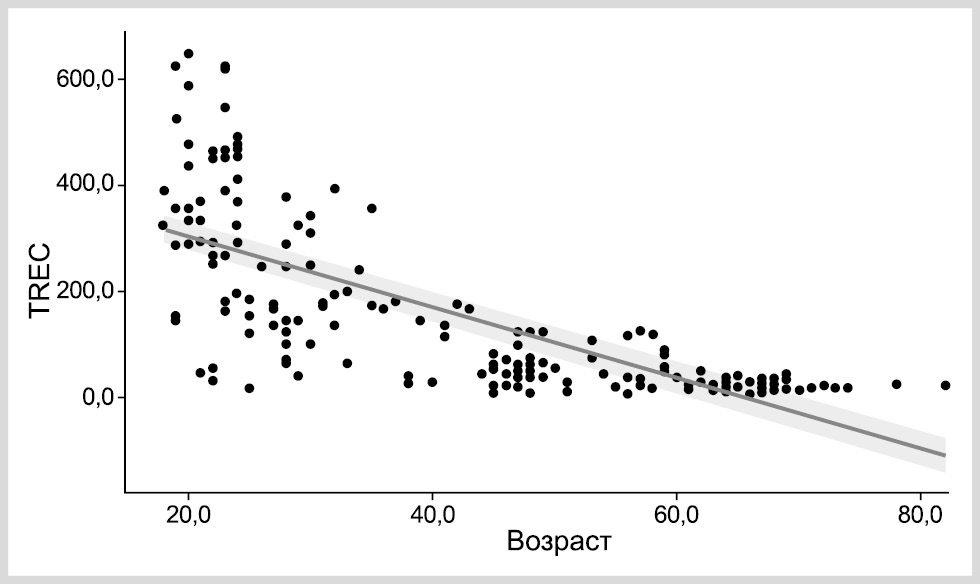
Рис. 1. График регрессионной функции, характеризующий зависимость уровня TREC (копий/105 клеток) от возраста.
Ось X (абсцисс) — возраст пациента в годах; Ось Y (ординат) — количество копий TREC (копий/105 клеток), определяемых в периферической крови; TREC — Т-рецепторное эксцизионное кольцо
При оценке зависимости уровня TREC от возраста нами была установлена сильная отрицательная связь (теснота связи по шкале Чеддока; ρ = –0,773; p<0,001). С увеличением возраста пациента на 1 год следует ожидать уменьшение TREC на 6,587 копий/105 клеток.
Представленные результаты демонстрируют, что с увеличением возраста наблюдается уменьшение уровня TREC, что вероятно связано с инволюцией тимуса и отражает снижение потенциала Т-клеточного иммунитета.
Ранее другими авторами при определении TREC и KREC использовались различные возрастные интервалы для формирования группы сравнения [6, 7]. Применение возрастных групп обосновано необходимостью определения референсных норм концентрации TREC и KREC для пациентов старше 17 лет [6] и тем, что возрастные изменения организма могут быть сопряжены с изменениями в иммунной системе. Для изучения концентрации TREC и KREC нами формировались группы сравнения, в возрастном интервале предложенной Н.В. Давыдовой с соавторами [6]: от 18 до 24 лет; от 25 до 44 лет; от 45 до 60 лет; старше 60 лет.
Сравнительный анализ концентрации TREC в различных возрастных группах представлен в табл. 4.
Таблица 4. Уровень TREC (копий/105 клеток) в различных возрастных группах
Возраст | Me [Q₁ — Q₃] | P |
18—24 года (n=49) | 367,75 [268,0—465,85] | Р25—44 лет – 18—24 года <0,001 Р45—60 лет – 25—44 лет<0,001 Рстарше 60 — 45—60 лет <0,001 |
25—44 года (n=52) | 165,75 [113,50—241,25] | |
45—60 лет (n=56) | 55,58 [36,31—77,81] | |
Старше 60 лет (n=56) | 22,15 [14,72—26,95] |
По результатам исследования отмечено, что уровни TREC в различных возрастных группах имеют статистически значимые различия.
При корреляционном анализе уровней KREC в зависимости от возраста была установлена умеренная отрицательная связь (теснота связи по шкале Чеддока; ρ = –0,512; p<0,001). Наблюдаемая зависимость KREC от возраста описывается уравнением парной линейной регрессии:
YKREC = –6,975 × ХВОЗРАСТ + 628,016
Отмечено, что с увеличением возраста пациента на 1 год наблюдалось уменьшение уровня KREC на 6,975 копий/105 клеток (рис. 2).
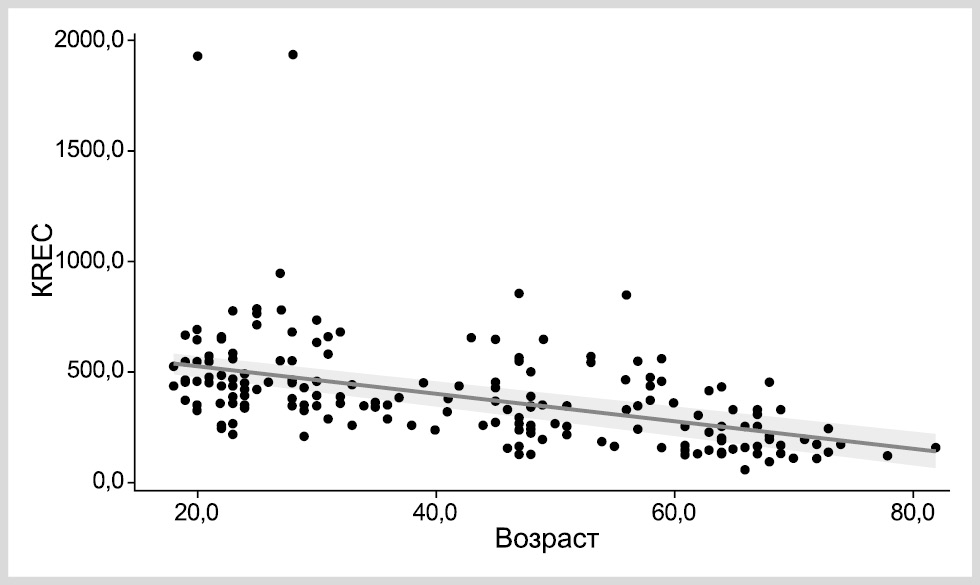
Рис. 2. График регрессионной функции, характеризующий зависимость KREC (копий/105 клеток) от возраста.
Ось X (абсцисс) — возраст пациента в годах; Ось Y (ординат) — количество копий KREC (копий/105 клеток), определяемых в периферической крови; KREC — каппа-делеционное рекомбинационное эксцизионное кольцо.
По результатам корреляционного анализа с увеличением возраста отмечается уменьшение уровня KREC, но при этом разные уровни KREC у людей с одинаковым возрастом указывает на индивидуальный характер формирования адаптивного гуморального иммунитета.
Результаты сравнительного анализа концентрации KREC в разных возрастных группах представлены в табл. 5.
Таблица 5. Уровень KREC (копий/105 клеток) в различных возрастных группах
Возраст | Me [Q₁—Q₃] | P |
18—24 года (n=49) | 435,8 [350,6—456,65] | Р25—44 лет – 18—24 года = 0,005 Рстарше 60 – 25—44 лет <0,001 Рстарше 60 – 45—60 лет <0,001 |
25—44 года (n=52) | 381,93 [345,45—450,50] | |
45—60 лет (n=56) | 326,35 [227,82—458,06] | |
Старше 60 лет (n=56) | 167,11 [135,19—245,65] |
По результатам исследования были выявлены достоверные различия уровней KREC между различными возрастными группами. Между возрастными группами от 25 до 44 лет и от 45 до 60 лет статистически значимых различий нет.
С увеличением возраста наблюдается уменьшение уровня KREC, но при этом разные уровни KREC у людей с одинаковым возрастом указывает на индивидуальный характер формирования адаптивного гуморального иммунитета.
Обсуждение полученных результатов
Представленные нами результаты исследования концентрации TREC и KREC указывают на возможность применения данного метода лабораторного исследования для выявления иммунодефицитных состояний у взрослого населения. Полученные нами данные подтверждают информацию других авторов о том, что с увеличением возраста наблюдается уменьшение концентрации TREC и KREC [6, 7].
Ранее в российской популяции похожее масштабное исследование было проведено в 2021 г., тогда анализу подверглись 140 человек [6], где с увеличением возраста отмечено снижение уровня TREC. Уменьшение концентрации TREC и KREC можно использовать для выявления иммунодефицитных состояний. У взрослых иммунодефицитное состояние чаще всего диагностируется поздно, когда появляются клинические симптомы, такие как рецидивирующие инфекции, и для него характерна повышенная чувствительность к инфекциям, аутоиммунным и воспалительным заболеваниям [14].
Мы определили референсные интервалы для взрослых в возрастных группах от 18 до 82 лет для потенциального применения в диагностике иммунодефицитных состояний у взрослого населения.
В нашем исследовании, как и в других работах, обратная корреляционная зависимость между уровнями TREC и возрастом [6, 15, 16] предположительно связано с инволюцией тимуса [18]. Если концентрация TREC с увеличением возраста имеет тенденцию к снижению, то концентрация KREC имеет умеренную отрицательную зависимость от возраста, что указывает на постепенное уменьшение формирования В-клеток на протяжении всей жизни и согласуется с результатами исследований других авторов [18, 19].
Наши результаты не выявили существенных различий в уровне TREC у женщин и мужчин независимо от возраста, что согласуется с исследованиями других авторов [3, 20, 21].
Для диагностики ПИД обычно используют стандартные методы диагностики, которые включают общий анализ крови, подсчет лимфоцитов, измерение уровня иммуноглобулинов, функциональные анализы и генетические тесты. Все традиционные анализы в диагностике ПИД имеют решающее значение, но при этом трудозатратные и несут финансовую нагрузку. Анализ TREC и KREC — это быстрый, экономичный и чувствительный инструмент для диагностики ПИД, особенно с учетом того, что для выделения ДНК требуется небольшой объем венозной крови. Выполнение стандартных методов исследований может оказаться невозможным, что часто связано с недостатком биоматериала (крови). Многими авторами отмечено, что применение методов определения концентрации TREC и KREC значительно сократит расходы на диагностику различных заболеваний, связанных с иммунодефицитом [6, 22, 23, 24].
Выводы
Из результатов исследования следует, что уровни TREC и KREC снижаются с возрастом. В разных возрастных группах доноров нами были получены референсные значения физиологических уровней TREC и KREC. Количественное определение уровней TREC и KREC должно быть внедрено в рутинную практику, поскольку позволит диагностировать заболевания, связанных с иммунодефицитом.
Авторы заявляют об отсутствии конфликта интересов.
- Jung D, Alt FW. Unraveling V(D)J Recombination. Cell. 2004 Jan;116(2):299–311. https://doi.org/10.1016/s0092–8674(04)00039-x
- Султанбаев А.В., Тузанкина И.А., Мусин Ш.И., Колядина И.В., Меньшиков К.В., Султанбаев М.В., Гилязова И.Р., Кудлай Д.А. Специфический противоопухолевый иммунитет и механизмы ускользания опухоли от иммунологического надзора. Онкология. Журнал им. П.А. Герцена. 2024;13(6):7077. https://doi.org/10.17116/onkolog20241306170
- Kwok JSY, Cheung SKF, Ho JCY, Tang IWH, Chu PWK, Leung EYS, Lee PPW, Cheuk DKL, Lee V, Ip P, Lau YL. Establishing Simultaneous T Cell Receptor Excision Circles (TREC) and K-Deleting Recombination Excision Circles (KREC) Quantification Assays and Laboratory Reference Intervals in Healthy Individuals of Different Age Groups in Hong Kong. Front Immunol. 2020 Jul 16;11:1411. https://doi.org/10.3389/fimmu.2020.01411
- Султанбаев А.В., Мусин Ш.И., Меньшиков К.В., Измайлов А.А., Насретдинов А.Ф., Султанбаева Н.И., Меньшикова И.А., Тимофеев И.В., Липатов Д.О., Султанбаев М.В., Липатов О.Н., Кудлай Д.А. Роль хромосомных V(D)J рекомбинаций лимфоцитов в формировании противоопухолевого иммунитета и эффективности применения иммунотерапии. Молекулярная медицина, 2023; (4): 11–19. https://doi.org/10.29296/24999490–2023–04–02
- Medova V, Hulinkova I, Laiferova N, Urdova V, Ciznar P, Dolnikova D, Krasnanova V, Fabri O, Ficek A, Soltysova A. The importance of defining the age-specific TREC/KREC levels for detection of various inborn errors of immunity in pediatric and adult patients. Clin Immunol. 2022 Dec;245:109155. https://doi.org/10.1016/j.clim.2022.109155.Epub2022Oct13.PMID:36243346
- Давыдова Н.В, Продеус А.П, Образцов И.В, Кудлай Д.А, Корсунский И.А. Референсные значения концентрации TREC и KREC у взрослых. Врач. 2021;32(6). https://doi.org/10.29296/25877305–2021–06–05
- Kwok JSY, Cheung SKF, Ho JCY, Tang IWH, Chu PWK, Leung EYS, Lee PPW, Cheuk DKL, Lee V, Ip P, Lau YL. Establishing Simultaneous T Cell Receptor Excision Circles (TREC) and K-Deleting Recombination Excision Circles (KREC) Quantification Assays and Laboratory Reference Intervals in Healthy Individuals of Different Age Groups in Hong Kong. Front Immunol. 2020 Jul 16;11:1411. https://doi.org/10.3389/fimmu.2020.01411.PMID:32765500;PMCID:PMC7378446
- Tangye SG, Al-Herz W, Bousfiha A, Cunningham-Rundles C, Franco JL, Holland SM, Klein C, Morio T, Oksenhendler E, Picard C, Puel A, Puck J, Seppänen MRJ, Somech R, Su HC, Sullivan KE, Torgerson TR, Meyts I. Human Inborn Errors of Immunity: 2022 Update on the Classification from the International Union of Immunological Societies Expert Committee. J Clin Immunol. 2022 Oct;42(7):1473–1507. https://doi.org/10.1007/s10875–022–01289–3.Epub2022Jun24.PMID:35748970;PMCID:PMC9244088
- Burlutskaya AV, Statova AV, Saveleva NV, Tril VY, Naumenko GV, Polyanskii AV. Clinical cases of primary immunodeficiency in children.2024. International Research Journal, 5(143). https://doi.org/10.60797/IRJ.2024.143.97
- Rosenberg E, Dent PB, Denburg JA. Primary Immune Deficiencies in the Adult: A Previously Underrecognized Common Condition. J Allergy Clin Immunol Pract. 2016 Nov-Dec;4(6):1101–1107. https://doi.org/10.1016/j.jaip.2016.09.004.PMID:27836059
- Borte S, von Döbeln U, Fasth A, Wang N, Janzi M, Winiarski J, Sack U, Pan-Hammarström Q, Borte M, Hammarström L. Neonatal screening for severe primary immunodeficiency diseases using high-throughput triplex real-time PCR. Blood. 2012 Mar 15;119(11):2552–5. https://doi.org/10.1182/blood-2011–08–371021.Epub2011Nov30.PMID:22130802
- Resnick ES, Moshier EL, Godbold JH, Cunningham-Rundles C. Morbidity and mortality in common variable immune deficiency over 4 decades. Blood. 2012 Feb 16;119(7):1650–7. https://doi.org/10.1182/blood-2011–09–377945.Epub2011Dec16.PMID:22180439;PMCID:PMC3286343
- Kim VH, Pham-Huy A, Grunebaum E. Neutropenia among patients with adenosine deaminase deficiency. J Allergy Clin Immunol. 2019 Jan;143(1):403–405. https://doi.org/10.1016/j.jaci.2018.04.029.Epub2018Jun19.PMID:29753815
- Lewandowicz-Uszyńska A, Pasternak G, Świerkot J, Bogunia-Kubik K. Primary Immunodeficiencies: Diseases of Children and Adults — A Review. Adv Exp Med Biol. 2021;1289:37–54. https://doi.org/10.1007/5584_2020_556
- Douek DC, McFarland RD, Keiser PH, Gage EA, Massey JM, Haynes BF, Polis MA, Haase AT, Feinberg MB, Sullivan JL, Jamieson BD, Zack JA, Picker LJ, Koup RA. Changes in thymic function with age and during the treatment of HIV infection. Nature. 1998 Dec 17;396(6712):690–5. https://doi.org/10.1038/25374.PMID:9872319.
- Chen X, Barfield R, Benaim E, Leung W, Knowles J, Lawrence D, Otto M, Shurtleff SA, Neale GA, Behm FG, Turner V, Handgretinger R. Prediction of T-cell reconstitution by assessment of T-cell receptor excision circle before allogeneic hematopoietic stem cell transplantation in pediatric patients. Blood. 2005 Jan 15;105(2):886–93. https://doi.org/10.1182/blood-2004-04-1405.Epub2004Sep9.PMID:15358630.
- Jones E, Sheng J, Carlson J, Wang S. Aging-induced fragility of the immune system. J Theor Biol. 2021 Feb 7;510:110473. https://doi.org/doi:10.1016/j.jtbi.2020.110473.Epub2020Sep14.PMID:32941914;PMCID:PMC7487974.
- Sottini A, Serana F, Bertoli D, Chiarini M, Valotti M, Vaglio Tessitore M, Imberti L. Simultaneous quantification of T-cell receptor excision circles (TRECs) and K-deleting recombination excision circles (KRECs) by real-time PCR. J Vis Exp. 2014 Dec 6;(94):52184. https://doi.org/10.3791/52184.PMID:25549107;PMCID:PMC4396956.
- Shakerian L, Pourpak Z, Shamlou S, Domsgen E, Kazemnejad A, Dalili H, Nourizadeh M. Determining Laboratory Reference Values of TREC and KREC in Different Age Groups of Iranian Healthy Individuals. Iran J Allergy Asthma Immunol. 2019 Apr 1;18(2):143–152. PMID: 31066250.
- Barman P, Kaur A, Chawla S, Sil A, Dhaliwal M, Rawat A, Singh S, Jindal AK. Utility of simultaneous quantification of TREC/KREC in patients with common variable immunodeficiency phenotype: an observational study from North India. Immunol Res. 2025 Mar 17;73(1):63. https://doi.org/10.1007/s12026-025-09615-8.PMID:40095152.
- Geenen V, Poulin JF, Dion ML, Martens H, Castermans E, I Hansenne, Moutschen M, Sékaly RP, Cheynier R. Quantification of T cell receptor rearrangement excision circles to estimate thymic function: an important new tool for endocrine-immune physiology. J Endocrinol. 2003 Mar;176(3):305–11. https://doi.org/10.1677/joe.0.1760305.PMID:12630915.
- Thomas C, Durand-Zaleski I, Frenkiel J, Mirallié S, Léger A, Cheillan D, Picard C, Mahlaoui N, Riche VP, Roussey M, Sébille V, Rabetrano H, Dert C, Fischer A, Audrain M. Clinical and economic aspects of newborn screening for severe combined immunodeficiency: DEPISTREC study results. Clin Immunol. 2019 May;202:33–39. https://doi.org/10.1016/j.clim.2019.03.012.Epub2019Apr1.PMID:30946917.
- Barreiros LA, Sousa JL, Geier C, Leiss-Piller A, Kanegae MPP, França TT, Boisson B, Lima AM, Costa-Carvalho BT, Aranda CS, de Moraes-Pinto MI, Segundo GRS, Ferreira JFS, Tavares FS, Guimarães FATM, Toledo EC, da Matta Ain AC, Moreira IF, Soldatelli G, Grumach AS, de Barros Dorna M, Weber CW, Di Gesu RSW, Dantas VM, Fernandes FR, Torgerson TR, Ochs HD, Bustamante J, Walter JE, Condino-Neto A. SCID and Other Inborn Errors of Immunity with Low TRECs — the Brazilian Experience. J Clin Immunol. 2022 Aug;42(6):1171–1192. https://doi.org/10.1007/s10875-022-01275-9.Epub2022May3.PMID:35503492.
- Costagliola G, Cappelli S, Consolini R. Autoimmunity in Primary Immunodeficiency Disorders: An Updated Review on Pathogenic and Clinical Implications. J Clin Med. 2021 Oct 15;10(20):4729. https://doi.org/10.3390/jcm10204729.PMID:34682853;PMCID:PMC8538991.



Рекомендуем статьи по данной теме:
Заболеваемость дерматомикозами в Российской Федерации за 2020—2024 годы.Клиническая дерматология и венерология. 2026;25(3):376-382
Циркадный ритм активности и световая гигиена как предикторы качества сна у детей и взрослых: актиграфическое исследование в семейной среде.Журнал неврологии и психиатрии им. С.С. Корсакова. Спецвыпуски. 2026;126(5-2):17-22
Изучение согласованности и валидности русскоязычной версии опросника по оценке пищевого поведения взрослого населения (Adult Eating Behaviour Questionnaire).Профилактическая медицина. 2025;28(8):89-95
Недостаточность и дефицит витамина D у населения Российской Федерации.Профилактическая медицина. 2025;28(8):14-19
Результаты применения ингибиторов иммунных контрольных точек в лечении мелкоклеточного рака легкого в реальной клинической практике: результаты одноцентрового наблюдательного исследования.Онкология. Журнал им. П.А. Герцена. 2025;14(4):46-53
Анализ качества жизни, связанного со стоматологическим здоровьем, среди детей-школьников и взрослых пациентов молодого возраста до и после ортодонтического лечения.Стоматология. 2025;104(2):54-58
Специфический противоопухолевый иммунитет и механизмы ускользания опухоли от иммунологического надзора.Онкология. Журнал им. П.А. Герцена. 2024;13(6):70-77