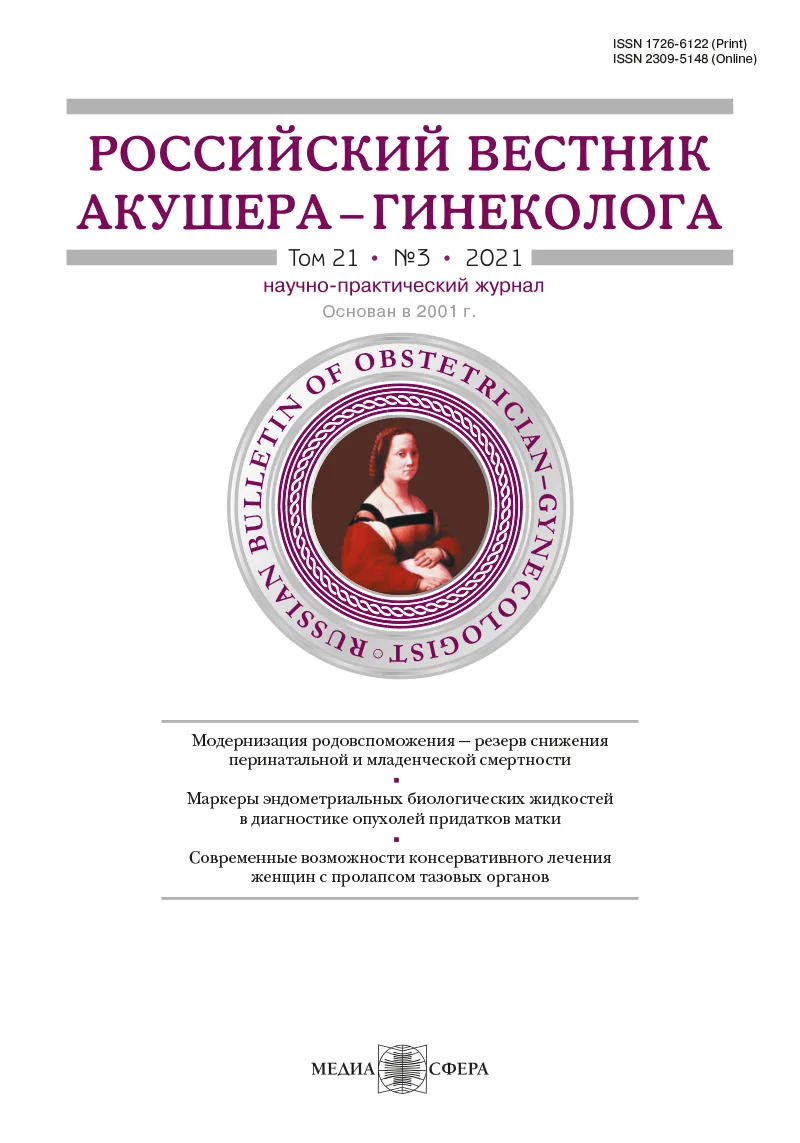
Маркеры эндометриальных биологических жидкостей в диагностике опухолей придатков матки
Журнал: Российский вестник акушера-гинеколога. 2021;21(3):25-30.
DOI: 10.17116/rosakush20212103125
Прочитано: 1835 раз
Резюме
ЦЕЛЬ ИССЛЕДОВАНИЯ
Усовершенствовать диагностику опухолей придатков матки с помощью использования структурных и биохимических маркеров в эндометриальных смывах и менструальных выделениях.
МАТЕРИАЛ И МЕТОДЫ
В работе представлены и проанализированы клинико-лабораторные данные о 355 пациентках, среди которых 95 (27,6%) — пациентки контрольной группы, не имевшие заболеваний репродуктивных органов, 196 (55,2%) — пациентки с опухолями придатков матки различного гистологического строения и 64 (18,0%) — больные с хроническим аднекситом. Помимо традиционных клинического, биохимического, патогистологического и цитологического методов исследования эндометриальных смывов и менструальных выделений в работе была использована инновационная технология — «Литос-система» для проведения их структурного анализа.
РЕЗУЛЬТАТЫ
Микроскопическая структура сухих капель фаций эндометриальных смывов и менструальных выделений имеет характерные структурные особенности у больных с воспалительными процессами в придатках матки, с доброкачественными и злокачественными опухолями яичников. Внедрение метода структурного анализа указанных биологических жидкостей с использованием технологии «Литос-система» в сочетании с биохимическим определением маркеров воспаления и оксидантного стресса — карбонильных групп белков у пациенток групп риска формирования опухолей яичников позволяет повысить эффективность их диагностики.
ЗАКЛЮЧЕНИЕ
Атравматичность и неинвазивность забора исследуемого материала, возможность повторения исследований с применением указанных методов диагностики в амбулаторных условиях, проведение анализов лабораториями лечебно-профилактических учреждений являются важными преимуществами представленного диагностического подхода. Полученные результаты указывают на возможность раннего выявления опухолей яичников, когда становится возможным выполнение органосберегающих операций и тем самым сохранение репродуктивного здоровья женщин.
Ключевые слова
- опухоли придатков матки
- эндометриальные смывы
- менструальные выделения
- микроскопическая структура фаций
- окислительная деструкция белков
- карбонильные группы белков
- церулоплазмин
Дата поступления: 24.08.2020
Дата принятия в печать: 17.11.2020
Дата публикации: 08.06.2021
Введение
Статистические исследования российских и зарубежных ученых свидетельствуют не только о росте заболеваемости, но и тенденции к «омоложению» больных доброкачественными и злокачественными опухолями тела матки и придатков [1, 2]. Это объясняется не только снижением репродуктивного потенциала современных женщин, но и увеличением в популяции «болезней цивилизации», таких как ожирение, сахарный диабет, гипертоническая болезнь, ановуляция и хроническая гиперэстрогения, а также частоты воспалительных заболеваний органов малого таза и многократных «агрессивных» акушерско-гинекологические манипуляций [3, 4].
Без преувеличения можно считать, что ранняя диагностика болезней внутренних половых органов остается одной из наиболее трудных задач гинекологии. Особое значение она приобретает при выявлении патологического процесса на начальных этапах, когда объемы формирующихся образований малы, а ультразвуковое и иные методы исследования не всегда способны точно определить начальные признаки заболевания. Эффективность диагностики на амбулаторном этапе, выбор оптимального метода лечения у пациенток с патологическими образованиями придатков матки позволяют не только заблаговременно определить план оперативного вмешательства, но и повысить шансы на выполнение органосберегающих операций, сохраняя тем самым репродуктивный потенциал [5]. По-прежнему неизменной остается и позиция экспертов ВОЗ, подтверждающих отсутствие в настоящее время надежных программ скрининга предопухолевой и опухолевой патологии тела матки и придатков.
Таким образом, совершенствование подхода к «активному поиску» больных с опухолями придатков матки следует рассматривать с позиции усовершенствования методов ранней диагностики как наиболее перспективный способ «вторичной профилактики» формирующейся патологии [6].
Как известно, традиционно морфологические исследования в клинической медицине сводятся к изучению тканей и клеточных элементов, тогда как особенности структуропостроения биологических жидкостей (БЖ) долгое время оставались малоизученными. В этом отношении перспективным оказалось изучение микроскопической структуры сухой капли БЖ — «фации» (от лат. facies — лицо, наружность, внешность), которая формируется при переходе БЖ в твердую фазу в результате дегидратации. Это инновационное направление получило название «морфологии БЖ» [7]. Суть предложенного метода диагностики заключается в том, что в норме при микроскопии фация БЖ имеет особую характерную структуру, а даже при незначительном воздействии повреждающих факторов (окислительных, токсичных и др.) запускаются процессы агрегации молекул, в результате чего гидратная оболочка белков подвергается трансформации. При этом даже самые незначительные патологические молекулярные изменения могут быть выявлены на ранних этапах формирования, без продолжительного латентного периода, необходимого для появления изменений на клеточном, органном и системном уровнях.
По мнению акад. В.Н. Шабалина и проф. С.Н. Шатохиной (2001), являющихся основоположниками создания технологии «Литос-системы» (включающей методы клиновидной и краевой дегидратации), фация — это структурный портрет молекулярных взаимосвязей в БЖ, позволяющий вывести глубинные микропроцессы на макроуровень. Методы структурного анализа БЖ открывают перед клиницистами возможности для ранней диагностики патологических процессов, что было многократно доказано на примерах из разных областей медицины [8, 9].
Известно, что эндометрий очень чутко реагирует на изменения гомеостаза в органах репродуктивной системы, а его структурные изменения во многом зависят от функционального состояния яичников [10, 11]. С учетом этого выбор менструальных выделений (МВ) в качестве объекта исследования обусловлен не только научным интересом (из-за их малоизученности), но и тем, что ежемесячно, в достаточном объеме для проведения лабораторного анализа (до 80—100 мл при ненарушенной фазе десквамации) эта БЖ самопроизвольно выделяется из полости матки и может быть собрана пациентками в специальные менструальные колпачки [12—14].
Следует отметить, что в состав МВ, кроме собственно крови и фрагментов эндометрия, отторгающегося во время менструации, также входит эндометриальный секрет — важный компонент для изучения. Маркеры «оксидантного стресса» (ОС), самыми ранними из которых являются карбонильные группы белков (КГБ), а также белок острой фазы воспаления церулоплазмин (ЦП), с использованием различных методик могут быть определены в МВ и в смывах из полости матки — эндометриальных смывах (ЭС) обследуемых пациенток задолго до появления первых признаков заболевания [15—17].
Цель исследования — усовершенствовать диагностику опухолей придатков матки с помощью использования структурных и биохимических маркеров в эндометриальных смывах и менструальных выделениях.
Материал и методы
Для реализации поставленных задач были проанализированы клинико-лабораторные данные 355 пациенток, среди которых 196 (55,2%) — основная группа — больные с опухолями яичников (ОЯ) различного гистологического строения (доброкачественные и злокачественные), 64 (18,0%) — группа сравнения — пациентки с хроническим аднекситом (ХА), а также 95 (27,6%) пациенток контрольной группы, не имевших заболеваний репродуктивных органов, соответствующих по возрасту пациенткам основной группы и группы сравнения. Больные основной группы с ОЯ были разделены на 2 подгруппы: в 1-ю подгруппу была включена 171 больная с доброкачественными опухолями (ДОЯ), а во 2-ю — 25 больных раком яичников (РЯ). В дополнение к общеклиническому и традиционному гинекологическому обследованию пациенток у них брали смывы из полости матки и образцы МВ с помощью специальных одноразовых катетеров. Полученный материал использовали для биохимических, структурных и цитологических исследований. Помимо указанных методов, в работе была использована инновационная технология «Литос-система» для структурного анализа эндометриальных смывов и менструальных выделений.
Морфологическое исследование фаций МВ проводили методом клиновидной дегидратации. Для этого 0,2 мл супернатанта МВ наносили на поверхность стандартного предметного стекла размером 75×25 мм и высушивали при комнатной температуре в течение суток. Изучение структурообразующих элементов дегидратированной капли (фации и аналитические ячейки) проводили при увеличениях от 10 до 80 с помощью бинокулярного микроскопа Leica ICC 50 и цветной цифровой камеры Pixera 120es.
Определение окислительной деструкции (модификации) белков выполняли по уровню карбонильных производных, регистрируемых с помощью реакции с 2,4-динитрофенилгидразином по методу R. Levine и соавт. (1990) и модифицированному Е.Е. Дубининой и соавт. (1995). Контрольная и опытная пробы содержали 0,1 мл исследуемой БЖ. В процессе исследования использовали 2 N раствор HCl, 8-молярный раствор мочевины, 20% раствор трихлоруксусной кислоты. Оптическую плотность образовавшихся динитрофенилгидразонов регистрировали при длине волны 363 нм [18]. При расчете уровня КГБ использовали коэффициент молярной экстинкции — 22 000 л·М–1·см–1. Предварительно в супернатанте смыва из полости матки или МВ определяли содержание общего белка по реакции с биуретовым реактивом. Результаты выражали в наномолях на 1 мг белка.
Оценку уровня ЦП осуществляли с помощью набора реагентов; количественный показатель ЦП в сыворотке и плазме крови определяли иммунотурбиметрическим методом с помощью автоматического планшетного анализатора для иммуноферментного анализа (ИФА).
Результаты и обсуждение
Как известно, при росте опухоли митохондриальное окисление вытесняется гликолизом, более простым способом обеспечения энергией, что сопровождается формированием активных форм кислорода и лежит в основе процесса свободнорадикального окисления, формируя ОС [17].
Свободные радикалы способны воздействовать практически на все виды макромолекул, приводя тем самым к окислительному разрушению как липидов, так и белков [19—21]. Подобный механизм может оказаться «пусковым» в возникновении структурно-функциональных повреждений органов репродуктивной системы, в том числе при формировании предопухолевых и опухолевых заболеваний внутренних гениталий.
Считается, что одной из ведущих причин отсрочки диагностических мероприятий на более позднее время является недостаточная деформация молекулярных составляющих клетки и, как следствие, более продолжительный период, в течение которого на заключительном этапе становится возможным использование традиционных цитологических и гистологических методов исследования. Между тем в современной медицине появились методики, направленные на изучение так называемых внеклеточных структур, исследование которых дает более высокую диагностическую результативность на ранних стадиях патологического процесса [7—9].
Учитывая особенности анатомической локализации, сложность определения микроскопической структуры новообразований гонад, наличие «размытых» границ между опухолями различной степени зрелости и варианты их сочетаний, усложняющих процесс своевременной диагностики, определение содержания маркеров ОС и анализ структурных особенностей фаций МВ и ЭС мы предлагаем как инновационный подход для оценки состояния внутренних половых органов у женщин, в том числе для выявления ОЯ [22, 23].
Как указывалось ранее, при формировании ОЯ эндометрий способен очень быстро реагировать увеличением концентрации маркеров ОС — КГБ в МВ и ЭС (табл. 1, 2).
Так, у женщин контрольной группы содержание КГБ в ЭС находилось в пределах 0—1,9 (0,9±0,14) нмоль/мг; при 2,0—3,5 (2,8±0,28) нмоль/мг в большинстве были выявлены ДОЯ (p<0,05), а при 3,3—4,9 (4,8±0,25) нмоль/мг — злокачественные ОЯ (p<0,01).
Таблица 1. Содержание карбонильных групп белков в эндометриальных смывах больных с доброкачественными (1-я подгруппа) и злокачественными (2-я подгруппа) опухолями яичников, нмоль/мг
Группа пациенток | Содержание карбонильных групп белков в эндометриальных смывах | |
репродуктивный возраст | период менопаузы | |
Контрольная (n=95) | 0,9±0,14 (n=56) | 0,4±0,13 (n=39) |
Основная группа: | ||
1-я подгруппа (n=171) | 2,8±0,28 (n=142)* | 2,3±0,20 (n=29)* |
2-я подгруппа (n=25) | 4,8±0,25 (n=10)**, # | 3,2±0,47 (n=15)* |
Примечание. * — различие показателей с таковыми в контрольной группе достоверно (p<0,05); ** — различие показателей контрольной группы и 2-й подгруппы (рак яичников) достоверно (p<0,01); # — различие показателей 1-й и 2-й подгрупп основной группы достоверно (p<0,05).
Таблица 2. Содержание карбонильных групп белков в менструальных выделениях больных с доброкачественными опухолями яичников (1-я подгруппа основной группы) и хроническим аднекситом (группа сравнения), нмоль/мг
Группа пациенток | Содержание карбонильных групп белков в менструальных выделениях | |
M±m | мин...макс значения | |
Контрольная (n=95) | 1,2±0,20 | 1,0…1,5 |
1-я подгруппа основной группы (n=171) | 2,7±0,25* | 2,5…2,9 |
Группа сравнения (n=64) | 1,2±0,29 | 1,0…1,7 |
Примечание. * Различие показателей 1-й подгруппы основной группы с таковыми контрольной группы и группы сравнения достоверно (p<0,01).
У больных ХА в стадии ремиссии содержание КГБ в МВ не превышало 1,2±0,29 нмоль/мг и практически не отличалось от аналогичного показателя в контрольной группе. Однако при обострении воспалительного процесса рассматриваемый показатель увеличивался до 1,7±0,18 нмоль/мг и достоверно (p<0,05) различался с аналогичными показателями пациенток контрольной группы и больных с ДОЯ (1-я подгруппа основной группы). В МВ больных с ДОЯ содержание КГБ оказалось достоверно выше, чем у пациенток с ХА (группа сравнения) и у женщин контрольной группы (p<0,01) (см. табл. 2).
Микроскопическая картина фаций ЭС у пациенток репродуктивного возраста контрольной группы характеризовалась четкой зональностью и в большинстве наблюдений была представлена двумя зонами: периферической с радиальными трещинами и центральной — с кристаллами солей, реже с радиальными трещинами, которые являлись продолжением периферической зоны (рис. 1 на цв. вклейке).

Рис. 1. Фация ЭС пациенток контрольной группы, ×10.
а — периферическая зона с радиальными трещинами; б — солевая зона.
Фации ЭС у больных с ДОЯ и РЯ по строению отличались от таковых у пациенток контрольной группы. Так, в фациях ЭС больных ДОЯ в 24,8% наблюдений появлялась третья, промежуточная зона с характерными «трехлучевыми» трещинами, указывающими на существование застойных явлений в тканях изучаемых органов (рис. 2 на цв. вклейке). Отмеченные особенности структуропостроения фаций ЭС у больных с ДОЯ сохранялись, как правило, во всех возрастных периодах. Появление зоны «трехлучевых» трещин в фациях ЭС больных с ДОЯ рассматривалось в ряде случаев как клинически и прогностически неблагоприятный маркер (рис. 3 на цв. вклейке).

Рис. 2. Фрагмент фации ЭС пациентки с ДОЯ.
а — ×80: «трехлучевая» трещина.

Рис. 3. Фрагмент фации ЭС больной со злокачественной ОЯ, ×10.
а — периферическая зона с радиальными трещинами; б — зона с многочисленными «трехлучевыми» трещинами.
Отмеченное в отдельных случаях появление зон «трехлучевых» трещин на поверхности фаций у больных с ДОЯ становилось более частым у больных РЯ. Размеры площади этого структурного маркера в рассматриваемой группе больных достигали 2,2±0,10 мм2(см. рис. 3 на цв. вклейке), достоверно отличаясь от таковых как в контрольной (p<0,01), так и в группе пациенток с ДОЯ (p<0,05). Площадь периферической зоны с характерными для нее «радиальными трещинами» находилась в пределах 6,1±0,42 мм2 и по этому показателю мало отличалась от аналогичной в контрольной группе.
У больных репродуктивного возраста с ХА при обострении процесса размеры площадей «трехлучевых» трещин в фациях ЭС достоверно не отличались от аналогичных показателей пациенток контрольной группы. Однако в фациях МВ в таких случаях появлялись «языковые структуры» (маркеры воспаления) (рис. 4 на цв. вклейке), «закрутки» и «жгутовые блоки» (маркеры гипоксии).

Рис. 4. Фрагмент фации МВ пациентки с ХА: ×40.
а — распространенные «языковые структуры» — маркеры воспаления.
По данным многочисленных современных исследований, хронические воспалительные заболевания органов малого таза (ХВЗОМТ) являются «дебютом» развития ряда патологических пролиферативных изменений в тканях внутренних половых органов, в том числе при формировании ОЯ [24—26].
Так, при оценке уровня ЦП в МВ больных с ХА отмечено его значительное повышение по сравнению с аналогичным показателем в сыворотке периферической крови. Скорее всего, это связано с особенностями изменения гомеостаза во время очередной менструации, когда повышаются продукция и выброс провоспалительных агентов, в том числе ЦП. Необходимо отметить, что содержание рассматриваемого маркера было достоверно выше в МВ больных с ХА по сравнению с аналогичным показателем пациенток контрольной группы (p<0,0001). Так, содержание ЦП в контрольной группе колебалось от 82,64 мг/дл до 658 мг/дл, составляя в среднем 348,85±163,4 мг/дл, а в группе больных с ХА — от 187,22 и до 3258,21 мг/дл (1065,8±771,19 мг/дл).
Своевременное выявление ХВЗОМТ является важной клинической задачей, так как этиологическими факторами развития их за последние годы стали не только микробные ассоциации, но и вирусы, существенная роль которых в формировании предопухолевых и опухолевых заболеваний описана рядом исследователей [25—27].
Заключение
Полученные данные свидетельствуют, что микроскопическая картина фаций ЭС и МВ имеет характерные структурные особенности у больных с ДОЯ и злокачественными ОЯ. Внедрение метода структурного анализа БЖ с использованием технологии «Литос-система» в сочетании с биохимическим определением маркеров ОС — КГБ у пациенток групп риска формирования ОЯ позволит повысить эффективность диагностики опухолей уже на амбулаторном этапе.
Атравматичность, неинвазивность и возможность повторения исследования в лабораториях лечебно-профилактических учреждений являются крайне важными преимуществами представленного диагностического подхода. Полученные результаты указывают на возможность раннего выявления ОЯ, когда повышается возможность выполнения органосберегающих операций и тем самым сохранения репродуктивного здоровья женщин.
Участие авторов:
Концепция и дизайн исследования — Е.Г. Шварев, Л.В. Дикарева
Сбор и обработка материала — Л.В. Дикарева, Д.Л. Оводенко, А.Р. Зоева, А.К. Аюпова
Статистическая обработка данных — Д.Л. Оводенко, А.Р. Зоева
Написание текста — Е.Г. Шварев
Редактирование — Л.В. Дикарева, Е.Г. Шварев
Авторы заявляют об отсутствии конфликта интересов.
Participation of the authors:
Concept and design of the study — E.G. Shvarev, L.V. Dikareva
Data collection and processing — L.V. Dikareva, D.L. Ovodenko, A.R. Zoeva, A.K. Ayupova
Statistical processing of the data — D.L. Ovodenko, A.R. Zoeva
Text writing — E.G. Shvarev
Editing — L.V. Dikareva, E.G Shvarev.
Authors declare lack of the conflicts of interests.
- Каприн А.Д., Старинский В.В., Петрова Г.В. Злокачественные новообразования в России в 2018 г. (Заболеваемость и смертность). М. 2019;250.
- Guleria S, Jensen A, Kjær SK. Risk of borderline ovarian tumors among women with benign ovarian tumors: A cohort study. Gynecol Oncol. 2018;148:1:86-90. https://doi.org/10.1016/j.ygyno.2017.11.024
- Cheewakriangkrai C, Kietpeerakool C, Charoenkwan K, Pattanittum P, John D, Aue-Aungkul A, Lumbiganon P., Health education interventions to promote early presentation and referral for women with symptoms of endometrial cancer. Cochrane Database Syst Rev. 2020;3:CD013253. https://doi.org/10.1002/14651858.CD013253.pub2
- Радзинский В.Е. Акушерская агрессия. М. 2011;92.
- Smith-Bindman R, Poder L, Johnson E, Miglioretti DL. Risk of malignant ovarian cancer based on ultrasonography findings in a large unselected population. JAMA Intern Med. 2019;179(1):71-77. https://doi.org/10.1001/jamainternmed.2018.5113
- Урманчеева А.Ф., Кутушева Г.Ф., Ульрих Е.А. Опухоли яичника. СПб.: Н-Л; 2012;28.
- Шатохина С.Н., Шабалин В.Н. Атлас структур неклеточных тканей человека в норме и патологии. Т. 2. Морфологические структуры сыворотки крови. М.: Триада; 2013;238.
- Шатохина С.Н., Самбулов В.И. Структуры неклеточных тканей организма и их значение в оториноларингологии. Альманах клинической медицины. 2016;44:7:857-865.
- Колтовой Н.А., Краевой С.А. Диагностика по капле крови. Кристаллизация биожидкостей. Книга 1. Кристаллизация сыворотки крови методом открытой капли. М.: Bookwika.ru; 2014;248.
- Josep Marí-Alexandre, Antonio Pellín Carcelén, Cristina Agababyan, Andrea Moreno-Manuel, Javier García-Oms, Silvia Calabuig-Fariñas, Juan Gilabert-Estellés. Interplay between microRNAs and oxidative stress in ovarian conditions with a focus on ovarian cancer and endometriosis. Int J Mol Sci. 2019;20:21:5322. https://doi.org/10.3390/ijms20215322
- Vincent Dochez, Hélène Caillon, Edouard Vaucel, Jérôme Dimet, Norbert Winer, Guillaume Ducarme; Biomarkers and algorithms for diagnosis of ovarian cancer: CA125, HE4, RMI and ROMA. A review. J Ovarian Res. 2019;12:1:28. https://doi.org/10.1186/s13048-019-0503-7
- Koks CA, Dunselman GA, de Goeij AF, Arends JW, Evers JL. Evaluation of a menstrual cup to collect shed endometrium for in vitro studies. Fertil Steril. 1997;68:3:560-564. https://doi.org/10.1016/s0015-0282(97)00250-1
- Zhonghua Fu Chan, Ke Za Zhi, S Shu, Fan QB, Lang JH. Investigation on endometrium from menstrual blood as a source of non-invasive tissue [Article in Chinese]. 2019.08.005;25;54:8:527-533. https://doi.org/10.3760/cma.j.issn.0529-567x.2019.08.005
- Мотовилова Т.М., Качалина Т.С., Гречканев Г.О., Боровкова Л.В., Зиновьев А.Н., Николаева О.А., Пономарева И.В., Замыслова В.П., Пучкова Т.Н., Стройкова К.И., Горхелашвили Л.З., Козлова Н.А. Определение биомаркеров в менструальной крови как возможность неинвазивной диагностики воспалительного процесса в полости матки. Медицинский альманах. 2016;5:88-91.
- Aditya Dandekar, Roberto Mendez, Kezhong Zhang. Cross talk between ER stress, oxidative stress, and inflammation in health and disease. Methods Mol Biol. 2015;1292:205-214. https://doi.org/10.1007/978-1-4939-2522-3_15
- Jolien Hendrix, Jo Nijs, Kelly Ickmans, Lode Godderis, Manosij Ghosh, Andrea Polli. The interplay between oxidative stress, exercise, and pain in health and disease: potential role of autonomic regulation and epigenetic mechanisms. Antioxidants (Basel). 2020;9:11:1166. https://doi.org/10.3390/antiox9111166
- Павлюченко И.И., Быков М.И., Федосов С.Р., Басов А.А., Быков И.М., Моргоев А.Э., Гайворонская Т.В. Комплексная оценка состояния системы про-антиоксиданты в различных биологических средах у хирургических больных с гнойно-септическими осложнениями. Успехи современного естествознания. 2006;6:82-83.
- Дубинина Е.Е. Продукты метаболизма кислорода в функциональной активности клеток. Жизнь и смерть, созидание и разрушение. Физиологические и клинико-биохимические аспекты. СПб. 2006;394.
- Захаров И.С., Букреева Е.Л. Оксидативный стресс при синдроме поликистозных яичников: прогностическое значение, возможности коррекции Гинекология. 2018;20:1:35-38.
- Щербакова Л.Н., Бугеренко К.А., Проскурнина Е.В. Свободнорадикальные изменения в ткани яичника у пациенток с объемными яичниковыми образованиями. В сборнике: Тезисы XIV Общероссийского научно-практического семинара «Репродуктивный потенциал России: версии и контраверсии». М.: StatusPraesens; 2020;47-48.
- Вавилов Н.В. Параметры биологических жидкостей организма, отражающие уровень карбонильного стресса. Международный студенческий научный вестник. 2017;4:6.
- Шварев Е.Г., Дикарева Л.В., Теплый Д.Л., Оводенко Д.Л., Шрамкова И.А. Способ ранней диагностики опухолей яичников. Патент РФ №2334986. Патентообладатель Шварев Е.Г. 2007. Бюл №27.
- Шварев Е.Г., Дикарева Л.В., Оводенко Д.Л., Аюпова А.К., Шварев Г.Е. Маркеры эндометриальных биологических жидкостей в диагностике опухолей придатков матки. Опухоли женской репродуктивной системы. 2015;11:4:76-80.
- Praderio RG, García Mitacek MC, Núñez Favre R, Rearte R, de la Sota RL, Stornelli MA. Uterine endometrial cytology, biopsy, bacteriology, and serum C-reactive protein in clinically healthy diestrus bitches. Theriogenology. 2019;131:153-161. https://doi.org/10.1016/j.theriogenology.2019.03.039
- Антонеева И.И., Генинг Т.П., Абакумова Т.В., Генинг С.О. Динамика уровня противовоспалительных цитокинов и их роль в развитии полимодальных локальных эффектов при прогрессировании рака яичников. Известия Самарского научного центра Российской академии наук. 2013;15:4-3:713-718.
- Унанян А.Л., Сидорова И.С., Косович Ю.М., Коган Е.А., Демура Т.А. Хронический эндометрит и ВПЧ: тревожные новости. Роль сочетания ВПЧ-инфекции и хронического эндометрита в патогенезе злокачественных опухолей эндометрия. М.: StatusPraesens; 2012;3:9:23-27.
- Максимов С.Я. Минимальный рак эндометрия. Практическая онкология. 2004;5:1:14-18.


Рекомендуем статьи по данной теме:
Эпителиально-мезенхимальный переход как важный этап формирования патологических пролиферативных заболеваний матки.Российский вестник акушера-гинеколога. 2025;25(4):37-43
Вирус-ассоциированный, прогестерон-резистентный хронический эндометрит — ситуация онкориска?Российский вестник акушера-гинеколога. 2025;25(1):25-30