
Ятрогенная назальная ликворея: диагностика, лечение, профилактика
Журнал: Российская ринология. 2019;27(2):93-101.
DOI: 10.17116/rosrino20192702193
Прочитано: 19825 раз
Резюме
Ключевые слова
- ятрогения
- сложные дефекты основания черепа
- назальная ликворея
- эндоскопическая эндоназальная хирургия
- хирургия основания черепа
Дата публикации: 04.05.2020
Список сокращений:
ОНП — околоносовые пазухи
ЯНЛ — ятрогенная назальная ликворея
КТ — компьютерная томография
КТЦГ — компьютерная цистернография
НМИЦН им. Н.Н. Бурденко — ФГАУ «Национальный медицинский исследовательский центр нейрохирургии им. акад. Н.Н. Бурденко»
Ятрогения (др.-греч. ἰατρός — врач + др.-греч. γενεά — рождение) — ухудшение физического или эмоционального состояния человека, ненамеренно спровоцированное медицинским работником [1].
Назальная ликворея — истечение цереброспинальной жидкости в полость носа или околоносовые пазухи (ОНП) вследствие врожденного либо приобретенного дефекта костей основания черепа [2]. Ятрогенная назальная ликворея (ЯНЛ) рассматривается как вариант травматической. Она связана с проведением различных лечебных манипуляций в зонах, близких к основанию черепа (операции на полости носа и ОНП, блок-резекции злокачественных опухолей, удаление опухолей хиазмально-селлярной области), а также с выполнением субфронтального доступа (из-за травмы задней стенки лобной пазухи) [3, 4].
По данным национального аудита, который проводился в Великобритании в 2006 г., ЯНЛ встречается в 0,1% случаев [5]. Ятрогенная ликворея, как сообщают J. Kerr и соавт., регистрируется в 5—15% случаев после удаления опухолей гипофиза, в 0,5—3% как осложнение после ЛОР-операций. Ликворея также может возникать после нейрохирургических вмешательств (7—11%), в частности после удаления невриномы слухового нерва, когда происходит поражение латеральных отделов основания черепа, а именно травма пирамиды височной кости. В этом случае ликвор попадает в полость носа и носоглотку через слуховую трубу, поэтому назвать такую ликворею истинно назальной нельзя [6].
С учетом оториноларингологической составляющей настоящая статья преимущественно направлена на диагностику, лечение и профилактику ЯНЛ, возникшей после эндоскопических эндоназальных вмешательств при патологии полости носа, ОНП и структур основания черепа.
Особенность клинической картины ЯНЛ — наличие четкой связи начала заболевания с предыдущей операцией. При передней риноскопии или эндоскопическом исследовании, помимо послеоперационных изменений полости носа, могут выявляться пульсация жидкости, менингоэнцефалоцеле. Другие методы диагностики — это определение уровня глюкозы в назальном секрете, компьютерная томография (КТ), компьютерная цистернография (КТЦГ). Возникновение ликвореи интраоперационно характеризуется появлением в операционном поле пульсации, истечением прозрачной жидкости из зоны дефекта основания черепа [7, 8].
Интраоперационная назальная ликворея не всегда считается ятрогенной. Так, например, если у пациента имеется опухоль, разрушающая кости основания черепа, то неизбежно после ее удаления возникнет ликворея. Если же хирург изначально предусматривает такое развитие событий и наряду с удалением опухоли одномоментно выполняет пластику ликворной фистулы, то ятрогении удастся избежать. Иная ситуация возникает в том случае, когда происходит повреждение структур основания черепа при выполнении различных хирургических действий в полости носа. Другими словами, ятрогенная ликворея — это ликворея, не планируемая хирургом во время операции (рис. 1, а, 
Для лечения ЯНЛ применяется пластическое закрытие дефекта основания черепа с использованием эндоскопического эндоназального доступа или иных подходов (комбинированный доступ — при наличии дефекта верхних отделов задней стенки лобной пазухи, транскраниальный — при наличии больших или множественных дефектов) [9, 10]. В настоящей статье авторы представляют анализ собственного опыта лечения ЯНЛ.
Цель исследования — определить факторы риска возникновения ятрогенных дефектов основания черепа, разработать рекомендации для их предотвращения и смоделировать тактику лечения данного осложнения.
Материал и методы
За 2001—2017 гг. в ФГАУ «Национальный медицинский исследовательский центр нейрохирургии им. акад. Н.Н. Бурденко» (НМИЦН им. Н.Н. Бурденко) прооперированы 570 пациентов с назальной ликвореей. Из них 62 (11%) случая имели ятрогенную этиологию. В исследование были включены пациенты, проходившие хирургическое лечение по поводу ЯНЛ или пневмоцефалии.
Диагноз был поставлен на основе сбора жалоб и анамнеза, осмотра, эндоскопического исследования, положительного анализа на определение глюкозы в назальном секрете, данных КТ, магнитно-резонансной томографии, КТЦГ. Критериями исключения из исследования стали все случаи, имевшие другую этиологию (травматическую, спонтанную) назальной ликвореи. Были также исключены пациенты с интраоперационной ликвореей, которым выполняли удаление опухоли, разрушающей структуры основания черепа, с одномоментным пластическим закрытием дефекта.
Проведен анализ демографических данных, анамнеза, рентгенологических особенностей строения основания черепа, характера и локализации дефекта, хирургических аспектов (осуществляемый доступ, характер и локализация фистулы, используемый трансплантат).
Пластическое закрытие дефекта выполняли в определенном порядке: после визуализации ликворной фистулы сначала укладывали трансплантат интракраниально за края костного дефекта, затем поверх фистулы с ее значительным перекрытием укладывали второй трансплантат. Пластические материалы фиксировали фибрин-тромбиновым клеем Evicel (США).
Результаты лечения оценивались по частоте послеоперационных осложнений и рецидивов. Средний период наблюдения 7 лет. Полученные данные сравнивались с результатами проведенного обзора литературы.
Результаты
В серии из 62 случаев с дефектами основания черепа ятрогенного происхождения средний возраст составил 43 года (диапазон 7—82 года); мужчин было 30 (48%), женщин — 32 (52%). По причинам возникновения ятрогенной ликвореи пациенты распределились следующим образом. С хирургическими вмешательствами в полости носа и ОНП, в том числе эндоскопическими, связаны 32 (52%) случая. В этой группе 5 человек перенесли 3—4 операции на ОНП по поводу полипозного риносинусита, 10 человек — 2 операции на ОНП, 17 пациентов отмечали признаки ликвореи после первой операции. Все больные были переведены в НМИЦН им. Н.Н. Бурденко из других клиник.
У 10 (16%) человек ликворея возникла после блок-резекций злокачественных опухолей полости носа и основания черепа, у 3 (5%) — при выполнении биопсии. У 17 (27%) пациентов признаки ликвореи появились после нейрохирургических вмешательств: у 10 (16%) — после удаления опухолей селлярной локализации, у 7 (11%) — при выполнении субфронтального доступа (рис. 2, табл. 

Основными проявлениями клинической картины были истечение прозрачной жидкости из полости носа — 62 (100%), головная боль — 58 (94%). Менингит в анамнезе отмечался у 17 (27%) пациентов, болезнь оперированного носа — у 20 (32%), синехии полости носа — у 6 (10%), перфорация перегородки носа — у 3 (5%) (рис. 3). 
По данным КТ, помимо выявленного костного дефекта, у 5 (8%) пациентов регистрировалось скопление воздуха интракраниально, у 29 (47%) — нарушение анатомии полости носа (перфорация перегородки носа, отсутствие средней и (или) верхней носовой раковины, синехии в полости носа, пристеночный отек слизистой, нарушение воздушности пазух). У 13 (21%) больных было выявлено менингоэнцефалоцеле (см. рис. 3, табл. 2). 
Всем 62 (100%) пациентам осуществлялось пластическое закрытие дефекта основания черепа: 55 (89%) — с применением эндоскопического эндоназального доступа, 7 (11%) — комбинированного (при дефектах в лобной пазухе, расположенных высоко или латерально). Наиболее распространенной локализацией дефекта основания черепа была клиновидная пазуха — 21 (34%) случай. В крыше решетчатого лабиринта дефекты отмечались в 15 (24%) случаях, в ситовидной пластинке — в 14 (23%). Дефекты в лобной пазухе и множественные дефекты имели 7 (11%) и 5 (8%) пациентов соответственно. Для пластики чаще всего использовали широкую фасцию бедра (98%), жировую клетчатку (35%), препарат тахокомб (33%), назосептальный лоскут и хрящ (кость) из перегородки носа (15%). Под контролем навигационной системы Medtronic Fusion (США) операцию осуществляли 15 (24%) пациентам. Люмбальный дренаж применяли в 41 (66%) случае. Успешность пластики составила 87% после первой операции и 100% при повторном вмешательстве. Количество рецидивов 8 (13%). Послеоперационные осложнения в виде развития менингита возникли у 4 (6%) больных (табл. 3). 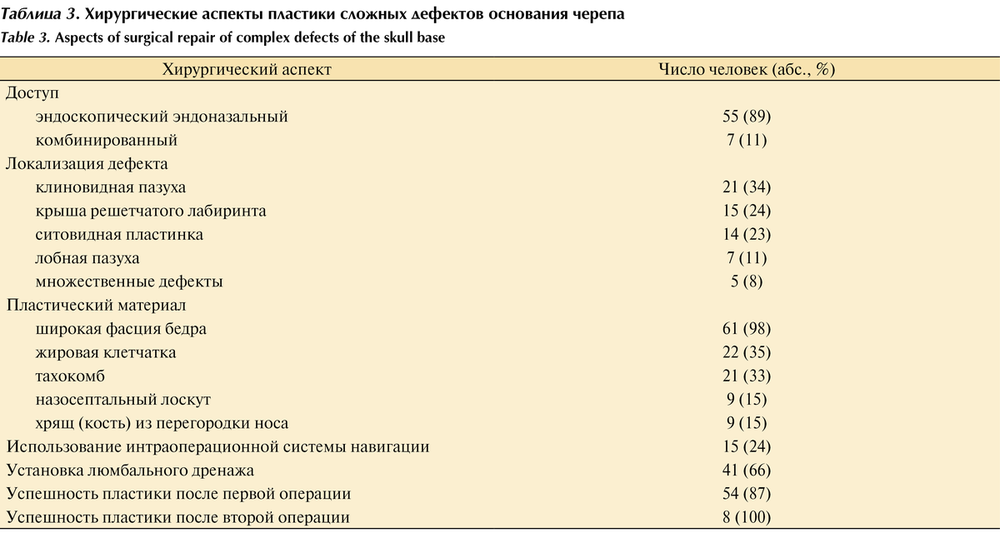
Обсуждение
В настоящей статье представлена серия из 62 случаев лечения ятрогенных дефектов основания черепа. Цель исследования — определение предрасполагающих факторов возникновения этого осложнения и разработка рекомендаций для его предотвращения, а также тактики лечения на основе полученных данных и данных мировой литературы.
Считаем, что к предрасполагающим факторам развития ятрогенных дефектов относятся опыт хирурга, анатомические особенности строения структур основания черепа и радикальность операции. Наша точка зрения полностью совпадает с позицией исследователей из Германии, США, Китая и других стран [11—15].
Как утверждают J. Stankiewicz и соавт., среди 3402 пациентов, которым были выполнены хирургические вмешательства на полости носа и ОНП, ЯНЛ встретилась в 0,5% случаев. Причинами данного осложнения стали чрезмерно сильное давление при работе вблизи структур основания черепа и недостаточная визуализация операционного поля вследствие неопытности хирурга или развития интраоперационного кровотечения [11].
Ретроспективный анализ серии из 32 случаев, целью которого было выявление корреляции между возникновением ятрогенных дефектов и опытом хирурга, проводили K. Bumm и соавт. Они выделили 4 класса хирургов в зависимости от количества проведенных операций (1-й класс — до 100 вмешательств, 2-й — до 300, 3-й — до 1000, 4-й — свыше 1000) и выяснили, что наибольшее количество осложнений отмечалось в группе хирургов, выполнивших до 300 операций. Объяснение тому простое: у хирургов 2-го класса возникает чувство чрезмерной самоуверенности при недостаточном практическом опыте. Авторы также оценивали зависимость локализации ятрогенных дефектов от опыта и обнаружили, что частота дефектов в передних клетках решетчатого лабиринта и в области ситовидной пластинки уменьшается с увеличением опыта, а частота возникновения дефектов в области лобной пазухи повышается с увеличением опыта. В последнем случае возникшую закономерность авторы объясняют не столько неосторожностью хирургов, сколько наличием серьезной патологии, которую берутся выполнять исключительно хирурги со стажем [12].
КТ-снимки пациентов с ликвореей, возникшей после эндоскопической операции по поводу хронического риносинусита, и пациентов с отсутствием осложнений после операции сравнивали C. Heaton и соавт. Было выявлено, что в группе больных ЯНЛ расстояние между ситовидной пластинкой, крышей решетчатого лабиринта и твердым небом оказалось меньше (р≤0,025) [13]. Подобное исследование проводили R. Lebowitz и соавт., изучавшие особенности строения крыши решетчатого лабиринта на 200 снимках К.Т. Авторами отмечено, что структуры основания черепа располагаются симметрично справа и слева менее чем в 50% случаев. Данное обстоятельство подчеркивает важность тщательной предоперационной подготовки хирурга [14].
Наиболее простой и используемой на сегодняшний день является классификация, предложенная в 1962 г. Р. Keros. Данная классификация выделяет 3 варианта строения структур основания черепа по глубине ольфакторной ямы (рис. 4). 
Риск развития назальной ликвореи выше у пациентов, которым было выполнено несколько операций в анамнезе. Вмешательства нередко приводят к значительному изменению анатомии полости носа и отсутствию важных ориентиров, что может ввести хирурга в заблуждение.
Риск возникновения ЯНЛ зависит и от радикальности ринохирургического вмешательства. Из нашего исследования были исключены пациенты с интраоперационной назальной ликвореей, которым выполняли удаление опухоли, разрушающей структуры основания черепа, с одномоментным пластическим закрытием дефекта. Однако если в послеоперационном периоде у больных развивалась назальная ликворея (менингит или пневмоцефалия), такую ситуацию мы интерпретировали как ятрогению. В основном к этой группе относились пациенты после удаления краниофациальных образований или опухолей хиазмально-селлярной зоны больших размеров.
Подытоживая вышесказанное, можно сделать вывод, что для предотвращения развития назальной ликвореи необходимо:
1) хорошо знать топографическую анатомию ОНП и рядом расположенных зон, включая хирургические зоны риска;
2) тщательно готовиться к операции, в том числе изучать снимки КТ пациента перед ее проведением;
3) в сложных, неоднозначных случаях (распространенное образование полости носа и ОНП, большое количество операций в анамнезе у больного) желательно использовать систему навигации.
Следует отметить, что всем пациентам проводилась предоперационная антибиотикопрофилактика препаратами широкого спектра действия. В послеоперационном периоде также назначают антибиотики, если есть факторы риска развития менингита: крупный дефект, крупное менингоэнцефалоцеле. Как утверждает H. Brodie [17], риск развития менингита на фоне антибиотикотерапии снижается с 10 до 2,5% (р=0,006) [16]. При надежном закрытии дефекта отпадает необходимость продолжать антибиотикотерапию после выписки. Если же требуются повторная операция или перевод больного в другое учреждение, то ему показана антибиотикотерапия.
Что касается использования люмбального дренажа у пациентов с ЯНЛ в послеоперационном периоде, то здесь однозначного ответа нет. Изначально мы придерживались такой методики. Однако после 2007 г. число лиц, которым устанавливался люмбальный дренаж, сократилось в 2 раза (за 2000—2006 гг. — 28 дренажей, за 2007—2017 гг. — 13), при этом статистика возникновения рецидивов не изменилась (4 — за 2000—2006 гг. и 4 — за 2007—2017 гг.).
Преимущества и недостатки применения люмбального дренажа в послеоперационном периоде у пациентов со сложными дефектами основания черепа изучали E. Ransom и соавт. По их данным, риск развития воспалительных осложнений у лиц с люмбальным дренажом выше, чем у лиц без дренажа, а вероятность рецидива ликвореи в группах не различается [18]. В своей статье D. Tien и соавт. утверждают, что в типичных случаях использовать люмбальный дренаж нежелательно. Исследователи приводят ряд рекомендаций, когда следует прибегать к применению данной методики. В числе таких рекомендаций повышенное внутричерепное давление, крупные дефекты (чтобы снизить внутричерепное давление для создания более благоприятных условий к приживанию трансплантата), введение флуоресцеина натрия [19].
На основании собственного опыта и информации, почерпнутой из системы Medline, мы сформировали рекомендации, которые помогут справиться с осложнениями при повреждении структур основания черепа и развитии назальной ликвореи интраоперационно во время проведения стандартных эндоскопических операций на ОНП.
При возникновении ЯНЛ интраоперационно следует:
1) проинформировать анестезиолога о случившемся, рыхло затампонировать область диссекции турундами с адреналином в разведении 1:100 000, опустить головной конец стола (профилактика пневмоцефалии), ввести внутривенно 1 г цефтриаксона (профилактика менингита), внимательно пересмотреть КТ на предмет анатомических аномалий и особенностей;
2) максимально визуализировать основные анатомические ориентиры (средняя раковина, медиальная стенка глазницы, передняя стенка клиновидной пазухи и др.) и внимательно осмотреть типичные места повреждения основания черепа (передние отделы решетчатого лабиринта, область прикрепления средней раковины, область между задними решетчатыми клетками и клиновидной пазухи), идентифицировать область фистулы и выполнить пластику дефекта;
3) при невозможности визуализировать дефект сразу отказаться от широкого обнажения основания черепа во избежание повторного повреждения и увеличения дефекта, добиться максимального гемостаза и постараться найти ликворную дорожку на фоне покрытого кровью операционного поля;
4) если и в этом случае не удалось установить локализацию дефекта, документировать интраоперационную картину, рыхло тампонировать операционную полость и выполнить мультиспиральную компьютерную томографию или КТЦГ ОНП и основания черепа шагом 1 мм (уточнить локализацию дефекта, исключить гематому и пневмоцефалию) в ближайшие сроки после операции;
5) при выявлении на КТ дефекта выполнить его пластику по описанной выше методике с использованием системы навигации. При наличии сомнений в дальнейших действиях в отношении диагностики и лечения обратиться в специализированное учреждение за консультацией или для перевода в него больного.
Выводы
1. Вероятность развития ятрогенных дефектов основания черепа зависит от опыта хирурга, радикальности операции, анатомических особенностей строения полости носа, ОНП и структур основания черепа.
2. Для профилактики данного осложнения требуются хорошее знание топографической анатомии ОНП и хирургических зон риска, а также тщательное изучение КТ-снимков пациента перед операцией.
3. При возникновении назальной ликвореи интраоперационно необходимо проинформировать анестезиолога о случившемся, опустить головной конец стола (профилактика пневмоцефалии), максимально визуализировать основные анатомические ориентиры, осмотреть типичные места повреждения основания черепа, идентифицировать область фистулы и выполнить пластику дефекта.
Авторы заявляют об отсутствии конфликта интересов.
Участие авторов:
Концепция и дизайн исследования: Е.Ш., А.К., Н.Ч.
Сбор и обработка материала: Е.Ш., О.З., Н.Ч.
Написание текста: Е.Ш., Н.Ч.
Редактирование: Д.К., А.К., О.З.



Рекомендуем статьи по данной теме:
Клинический случай извлечения инородных тел из тканей пародонта центральных резцов верхней челюсти пациента после неконтролируемого ортодонтического лечения.Стоматология. 2026;105(4):25-33
Базальные энцефалоцеле, осложненные назальной ликвореей, у пациентов с краниосиностозом.Вопросы нейрохирургии имени Н.Н. Бурденко. 2025;89(4):61-68
Хирургическое лечение назальной ликвореи у пациента с посттравматическим дефектом задней стенки лобной пазухи.Российская ринология. 2025;33(1):65-71
Ятрогенное повреждение наружной подвздошной артерии при паховом грыжесечении.Кардиология и сердечно-сосудистая хирургия. 2024;17(6):695-698
Врожденные базальные энцефалоцеле, включающие функционально значимые структуры.Вопросы нейрохирургии имени Н.Н. Бурденко. 2024;88(5):102-109