Результаты комбинированных операций при лечении пациентов с местно-распространенными тимомами
Журнал: Онкология. Журнал им. П.А. Герцена. 2025;14(5):7-12.
DOI: 10.17116/onkolog2025140517
Прочитано: 1135 раз
Резюме
ЦЕЛЬ ИССЛЕДОВАНИЯ
Анализ собственного опыта комбинированных тимэктомий при местно-распространенных тимомах с изучением непосредственных и отдаленных результатов.
МАТЕРИАЛ И МЕТОДЫ
В исследование включено 28 пациентов с морфологически подтвержденной местно-распространенной тимомой, которым с сентября 2004 г. по декабрь 2020 г. выполнены комбинированные хирургические вмешательства.
РЕЗУЛЬТАТЫ
У 78,6% (22/28) пациентов была III стадия по Masaoka, у 21,4% (6/28) — IV стадия. Распределение в соответствии с гистологической классификацией ВОЗ было следующим: A — 10,7% (3/28), AB — 7,1% (2/28), B1 — 7,1% (2/28), B2 — 17,8% (5/28), B3 — 10,7% (3/28), C — 46,4% (13/28). Распространенность первичной опухоли: T2 — 28,6% (8/28), T3 — 60,7% (17/28), T4 — 10,7% (3/28). Чаще всего опухоль врастала в перикард, легкое, плечеголовную и полую вены. Медиана длительности операции составила 220 мин, интраоперационной кровопотери — 300 мл, длительность дренирования плевральной полости — 3 сут, госпитализации — 14 сут. Показатели скорректированной и безрецидивной 5-летней выживаемости при тимомах III стадии по Masaoka составили 89,4 и 59,8%, 10-летней — 67,1 и 41,0% соответственно. В качестве хирургического доступа срединную стернотомию использовали у 8 (28,6%) пациентов, частичную цервикостернотомию — у 2 (7,1%), торакотомию — у 10 (35,7%).Видеоассистированная торакоскопическая (ВАТС) тимэктомия с резекцией перикарда выполнена 6 (21,4%) пациентам, легкого — 3 (10,7%), диафрагмального нерва — 1 (3,6%), краевая резекция левой плечеголовной вены — 1 (3,6%).
ВЫВОДЫ
Комбинированная тимэктомия — эффективный метод лечения тимом III стадии по Masaoka, позволяющий добиться удовлетворительных отдаленных результатов. При инвазии тимомы в легкое, перикард, плечеголовную вену возможно выполнение комбинированной ВАТС-тимэктомии с резекцией этих структур у тщательно отобранных пациентов.
Ключевые слова
- комбинированная тимэктомия
- тимома
- рак тимуса
- видеоассистированная торакоскопическая тимэктомия
Дата поступления: 27.02.2024
Дата принятия в печать: 05.04.2024
Дата публикации: 29.10.2025
Тимома относится к редким злокачественным опухолям, возникающим в переднем средостении (вилочковой железе) и характеризующимся относительно медленным ростом и поздним метастазированием [1]. Основным методом лечения больных с тимомами является хирургический. Золотой стандарт оперативного вмешательства — тимэктомия — удаление вилочковой железы в едином блоке с опухолью и клетчаткой переднего средостения [2]. Ключевой фактор прогноза, влияющий на отдаленные результаты, — это стадия опухоли и радикальность операции, подразумевающая отсутствие опухолевых клеток в краях резекции (R0) [3, 4]. Необходимость в резекции смежных органов возникает в случае инвазии в них опухоли (III стадия по Masaoka) либо при метастатическом поражении плевры или перикарда (IVa стадия). Следует отметить, что стадия III по Masaoka — крайне разнородная группа, включающая как инвазию в перикард, легкое, так и в магистральные сосуды средостения (аорта, верхняя полая вена), сердце. Она соответствует распространенности первичной опухоли T2–T4 по классификации TNM 8-го пересмотра [5, 6]. Однако не всегда удается радикально удалить опухоль. Частота полной резекции (R0) при III стадии составляет 47% (от 0 до 89%) [2]. Учитывая редкость этой патологии, на сегодняшний день нет единого мнения относительно целесообразности хирургического вмешательства и показаний к неоадъювантной лучевой и/или химиотерапии. Принимая во внимание медленный характер роста, следует определить, есть ли вообще необходимость в комбинированных вмешательствах, а в случае выполнения установить, насколько они эффективны и безопасны. Также нет единого мнения о целесообразности и возможности применения видеоассистированной торакоскопии (ВАТС) в лечении пациентов с местно-распространенными тимомами. Данные об отдаленных результатах лечения больных с тимомами III стадии также немногочисленны или ограничены небольшими сериями наблюдений.
Цель исследования — анализ собственного опыта комбинированных операций при местно-распространенных тимомах с изучением непосредственных и отдаленных результатов.
Материал и методы
Проведен ретроспективный анализ данных 28 пациентов, которым с сентября 2004 г. по декабрь 2020 г. выполнены комбинированные хирургические вмешательства по поводу инвазивных тимом. Из исследования исключены пациенты со II стадией по Masaoka, а также те, у которых врастание в окружающие органы не подтвердилось при гистологическом исследовании, а тесная связь опухоли и прилежащей структуры обусловлена перитуморозным воспалением. Всем пациентам проведено комплексное обследование, включавшее общеклинические исследования и компьютерную томографию органов грудной клетки и верхнего этажа брюшной полости.
Клинико-демографические характеристики 28 оперированных пациентов представлены в табл. 1.
Таблица 1. Клинико-демографические характеристики пациентов
Характеристика | Значение |
Возраст (M±SD), лет | 52,8±16,3 |
Пол, абс. (%): | |
мужской | 15 (53,6) |
женский | 13 (46,4) |
ИМТ(M±SD), кг/м2 | 27,13±4,3 |
Миастения, абс. (%) | 2 (7,1) |
Размер опухоли (M±SD), мм | 100,7±34,5 |
Гистологический тип (данные ВОЗ), абс. (%): | |
A | 3 (10,7) |
AB | 2 (7,1) |
B1 | 2 (7,1) |
B2 | 5 (17,8) |
B3 | 3 (10,7) |
C | 13 (46,4) |
Классификация TNM (8-й пересмотр), абс. (%): | |
T2 | 8 (28,6) |
T3 | 17 (60,7) |
T4 | 3 (10,7) |
Стадия TNM (8-й пересмотр), абс. (%): | |
II | 8 (28,6) |
III | 14 (50) |
IV | 6 (21,4) |
Примечание. ИМТ — индекс массы тела.
Неоадъювантная лучевая терапия проведена 1 (3,6%) пациенту,послеоперационная — 2 (7,1%), адъювантная химиотерапия — 1 (3,6%). Неоадъювантная химиотерапия в сочетании адъювантной проведена 2 (7,1%) пациентам, имевшим, помимо местно-распространенной опухоли, очаги на плевре (IVa стадия).
В качестве хирургического доступа использовали срединную стернотомию, частичную цервикостернотомию, торакотомию либо ВАТС (табл. 2).
Таблица 2. Хирургические доступы
Доступ | Количество больных, абс. (%) |
Срединная стернотомия | 8 (28,6) |
Частичная цервикостернотомия | 2 (7,1) |
Боковая торакотомия | 10 (35,7) |
ВАТС | 8 (28,6) |
В том числе: | |
трехпортовая | 4 (14,3) |
унипортальная | 2 (7,1) |
субксифоидная | 1 (3,6) |
билатеральная | 1 (3,6) |
Обязательным критерием включения в исследование являлось моноблочное удаление опухоли с вилочковой железой, клетчаткой переднего средостения и вовлеченными структурами.
При инвазии в паренхиму легкого выполняли атипичную резекцию или лобэктомию. Показаниями к лобэктомии служили: массивная инвазия, врастание в долевые легочные сосуды или близкое прилежание к ним, ставящее под сомнение радикальность атипичной резекции. При инвазии в перикард осуществляли его резекцию с отступом 1 см от видимой границы опухоли с последующей пластикой ксеноперикардиальной мембраной «Биокард» (за исключением видеоторакоскопических вмешательств). При поражении опухолью верхней полой вены от 30 до 50% полуокружности сосуда выполняли окончатую (1 пациент) резекцию, более 50% — циркулярную (2 пациента). Пластику и протезирование осуществляли при помощи мембраны «Биокард». При циркулярной резекции левой плечеголовной вены ее целостность не восстанавливалась. Видеоторакоскопическую резекцию левой плечеголовной вены выполняли путем прошивания и пересечения проксимальной и дистальной ее части эндостеплерами. Резекция и протезирование дуги аорты проведены совместно с кардиохирургами двум пациентам в условиях искусственного кровообращения и циркуляторного ареста по методике, описанной ранее [7]. Резекцию диафрагмального нерва осуществляли только в случае явной инвазии («вхождение» в опухоль). Превентивную пликацию диафрагмы выполнили только 1 пациенту.
Резекция одного органа проведена 12 пациентам, двух органов — трем пациентам, более двух органов — 12 пациентам. Смежные органы и структуры, резецированные при комбинированной тимэктомии, представлены в табл. 3.
Таблица 3. Резецированные органы и структуры
Резецируемый орган | Количество больных, абс. (%) |
Перикард | 18 (64,3) |
Легкое | 15 (53,6) |
Диафрагмальный нерв | 8 (28,6) |
Левая плечеголовная вена | 5 (17,8) |
Верхняя полая вена | 3 (10,7) |
Грудина и ребра | 2 (7,1) |
Дуга аорты | 2 (7,1) |
Адвентиция восходящей аорты | 1 (3,6) |
Общая сонная артерия | 1 (3,6) |
Верхняя легочная вена | 1 (3,6) |
Видеоассистированная торакоскопическая тимэктомия с резекцией перикарда выполнена 6 (21,4%) пациентам, легкого — 3 (10,7%), диафрагмального нерва — 1 (3,6%), резекция левой плечеголовной вены –1 (3,6%). Видеоторакоскопические вмешательства проводили при соблюдении следующих условий:
– Возможность выполнения тимэктомии с резекцией прилежащих органов единым блоком в пределах здоровых тканей (визуальная граница резекции 1 см и более от края опухоли).
– Возможность извлечения макропрепарата через утилитарный доступ (длиной 5 см и менее).
Статистический анализ проводили с использованием программы IBM SPSS Statistics v.26 (разработчик — IBM Corporation). При описании количественных показателей осуществляли расчет средних арифметических величин (М) и стандартных отклонений (SD), или значений медианы (Me), а также нижнего и верхнего квартилей (Q25—Q75). Номинальные данные описывали с указанием абсолютных значений и процентных долей. Оценку функции выживаемости пациентов проводили по методу Каплана–Мейера.
Результаты
Непосредственные результаты хирургических вмешательств у пациентов с местно-распространенными эпителиальными опухолями вилочковой железы представлены в табл. 4.
Таблица 4. Непосредственные результаты операций
Показатель | Значение |
Длительность операции, мин | 220,4±95,2 |
Интраоперационная кровопотеря, Me (Q25-Q75), мл | 300,0 (50—737,5) |
Длительность дренирования, Me (Q25-Q75), сут | 3,0 (1,2—4,0) |
Длительность госпитализации, Me (Q25-Q75), сут | 14,0 (6,2—18,0) |
Осложнения, абс. (%): | 11 (39,3) |
гидроторакс | 7 (25,0) |
дистелектаз | 2 (7,1) |
пневмония | 1 (3,6) |
перикардит | 1 (3,6) |
30-дневная летальность | 0 |
Послеоперационные осложнения зарегистрированы у 11 (39,3%) пациентов. Наиболее частым осложнением был малый гидроторакс — незначительное скопление жидкости в реберно-диафрагмальном синусе, выявленное при контрольной рентгенографии после удаления дренажей из плевральной полости или средостения. Как и послеоперационные дистелектазы, это осложнение соответствовало I степени по классификации Clavien—Dindo и не требовало дополнительного лечения (медикаментозного, эндоскопического или хирургического).
Серьезные осложнения (III—IV степени) отмечены у 2 (7,1%) пациентов и были успешно купированы.
Медиана наблюдения за пациентами составила 72 (12—100,5) мес. Все пациенты после комбинированной видеоассистированной торакоскопической тимэктомии живы в течение 3—72 мес. Скорректированная 5-летняя выживаемость 22 пациентов с тимомами III стадии по Masaoka составила 89,4±7,1%, а безрецидивная — 59,8±11,8%, 10-летняя — 67,1±14,7 и 41,0±13,8% соответственно (рис. 1).
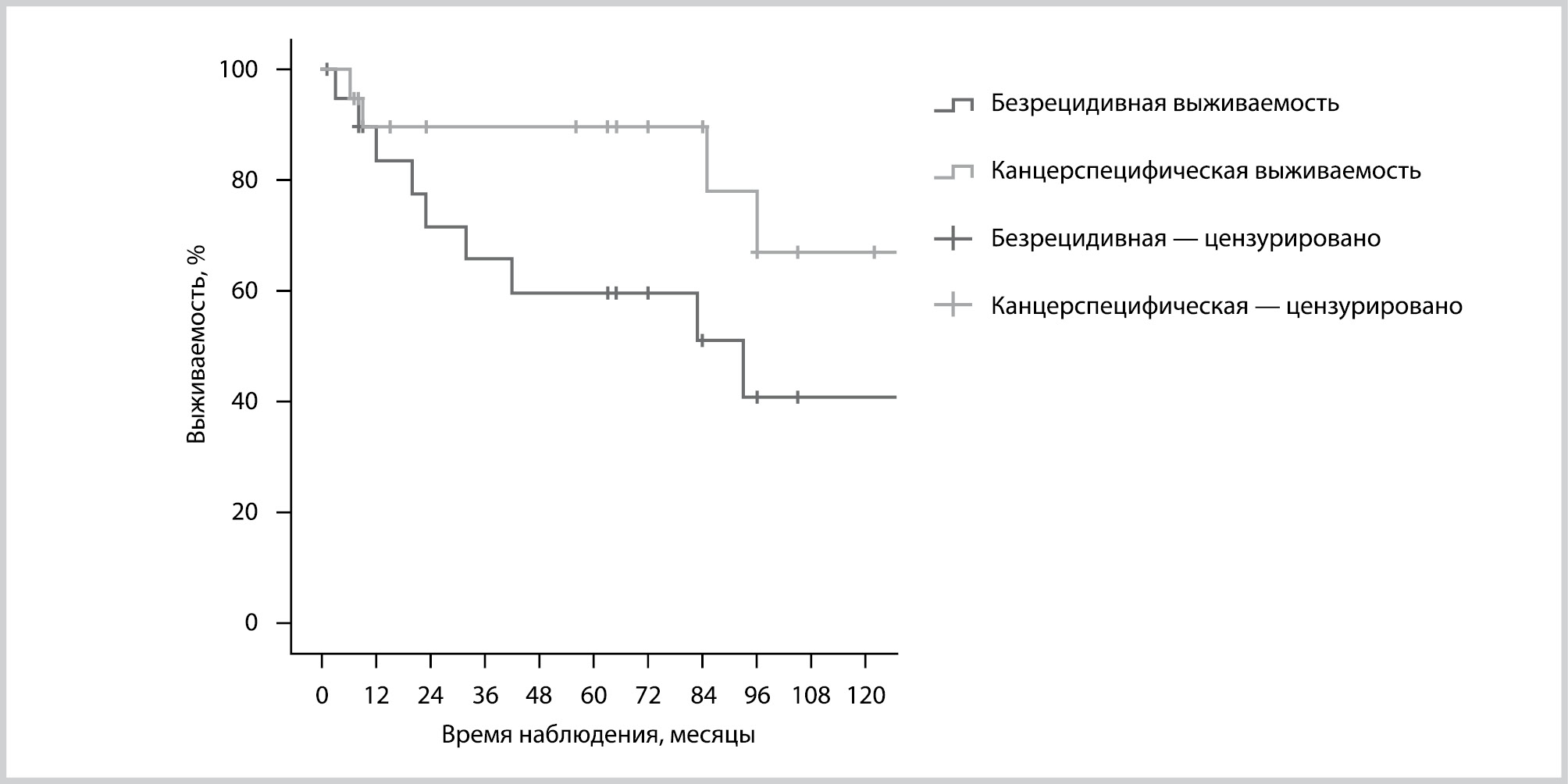
Рис. 1. Выживаемость при тимомах III стадии по Masaoka.
Показатели 5- и 10-летней выживаемости при T2 составили 100 и 100%, при T3 — 93,3±6,4 и 70,0±15,1% соответственно без статистически значимой разницы между группами (p=0,056) (рис. 2).
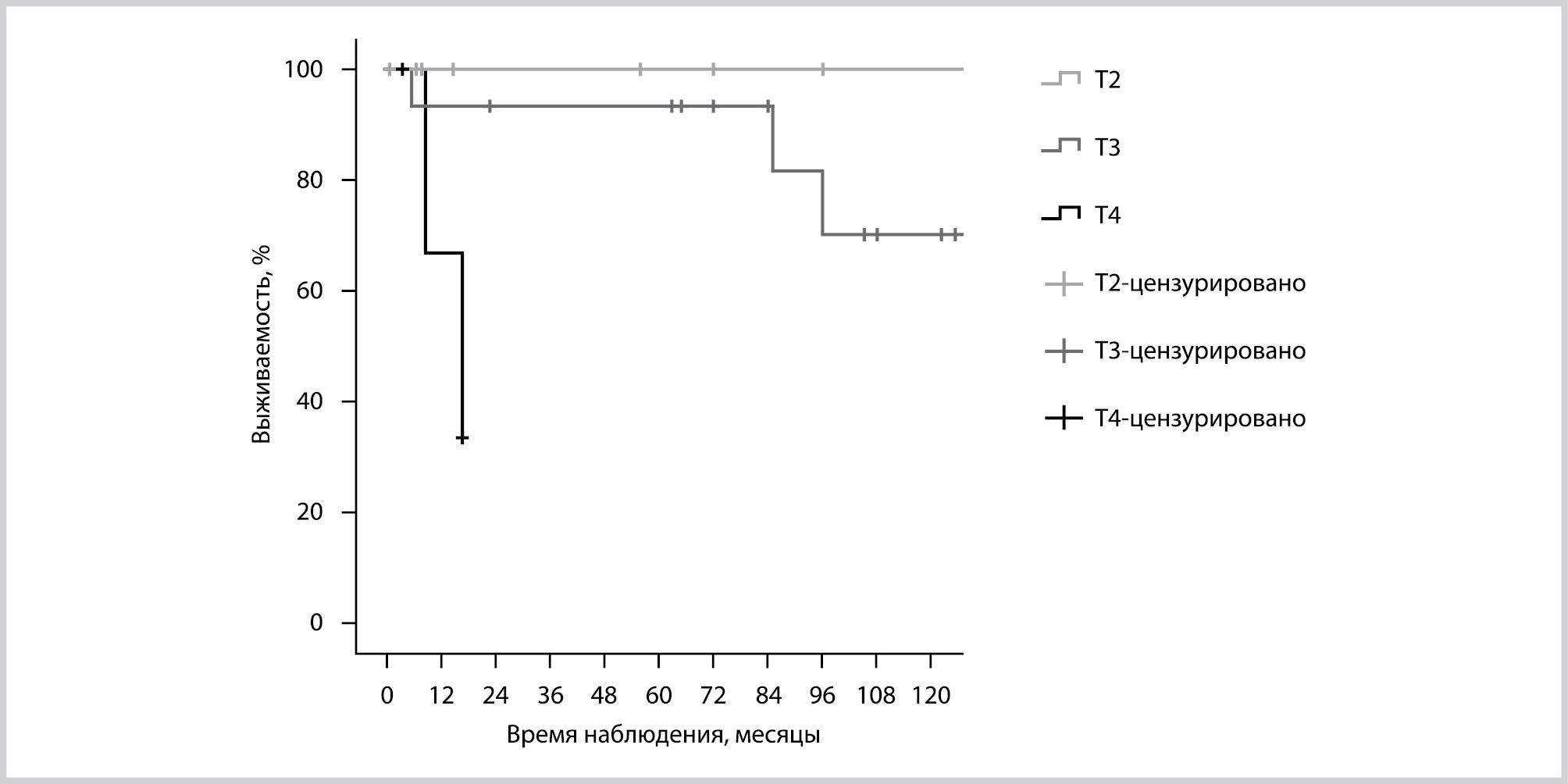
Рис. 2. Выживаемость при тимомах T2-T4 (TNM, 8-й пересмотр).
Сравнительный анализ выживаемости в зависимости от морфологического типа опухоли, стадии и хирургического доступа не проводился из-за малого числа пациентов, включенных в исследование. Однако выявленная в более ранней работе частота «агрессивных» гистологических подтипов (B2–B3, С) при I–II стадии по Masaoka оказалась достоверно ниже, чем при III стадии: 39,8% (39/98) против 75% (21/28) соответственно (p=0,001) [8]. При местно-распространенных опухолях преобладающей гистологической формой был рак тимуса — 46,4% (13/28) по сравнению с 13,3% (13/98) при начальных формах (p<0,0001).
Обсуждение
Наше исследование подтверждает данные других авторов [9] о корреляции между стадиями III—IV по Masaoka и гистологическими типами тимом высокого риска рецидива и метастазирования (B2–B3, C). Установлено, что наиболее частыми структурами, вовлекаемыми в опухолевый процесс, являются перикард, легкое, диафрагмальный нерв и левая плечеголовная вена. Эти анатомические образования могут быть резецированы с использованием ВАТС у тщательно отобранных пациентов [10—12]. В литературе [13] описаны случаи выполнения тангенциальной торакоскопической резекции верхней полой вены.
Дополнительным преимуществом ВАТС при хирургическом лечении местно-распространенных и крупных (более 5 см) тимом является возможность предварительной мобилизации диафрагмальных нервов перед стернотомией или торакотомией, что улучшает их визуализацию и снижает риск ятрогенного повреждения. Однако редкость встречаемости и гистологическая гетерогенность тимом затрудняют проведение сравнительного анализа эффективности и безопасности видеоторакоскопического и традиционного хирургических подходов.
Резекция диафрагмального нерва может привести к дыхательным нарушениям в послеоперационном периоде, поэтому при возможности следует сохранять его целостность. Некоторые авторы [14] рекомендуют сохранение нерва даже в ущерб радикальности операции, отмечая, что хотя это может увеличить частоту локальных рецидивов, статистически значимых различий в 5-летней выживаемости при этом не наблюдается. По нашему мнению, более оправданным является выполнение радикального вмешательства с последующей пликацией диафрагмы [15].
При протезировании или пластике верхней полой вены мы использовали ксеноперикард (мембрана «Биокард»), что позволило избежать необходимости длительной антикоагулянтной терапии в послеоперационном периоде. Перспективным направлением также представляется применение криоконсервированных аллографтов [16]. У пациентов с длительно существующим синдромом верхней полой вены и развитыми коллатералями возможна циркулярная резекция сосуда без последующего протезирования [17]. Радикальное хирургическое лечение тимом с инвазией в верхнюю полую вену позволяет достичь 5-летней выживаемости до 62% [18], хотя следует отметить, что эти данные основаны на небольших сериях наблюдений (до 11 пациентов).
Резекция и протезирование дуги аорты представляют наиболее сложный и дискуссионный аспект хирургии местно-распространенных тимом, требующий применения искусственного кровообращения и циркуляторного ареста. К сожалению, в нашем опыте результаты таких вмешательств оказались неудовлетворительными — продолжительность жизни двух оперированных пациентов составила менее 1,5 лет. Вместе с тем в литературе [19] имеются сообщения о выполнении резекций дуги аорты с удовлетворительными отдаленными результатами. Учитывая высокий риск осложнений и летальности при подобных вмешательствах, показания к ним, по нашему мнению, должны ограничиваться случаями неэффективности альтернативных методов лечения (химиотерапии и/или лучевой терапии).
Наши данные демонстрируют, что при III стадии по Masaoka возможно выполнение комбинированной тимэктомии с показателями 5- и 10-летней выживаемости 89,4 и 67,1% соответственно. Эти результаты сопоставимы с данными других исследований [20], где 5-летняя выживаемость варьирует от 46 до 88%, а 10-летняя — от 26 до 84%.
Согласно исследованиям M. Okumura и соавт. [21] и T. Utsumi и соавт. [22], III стадия по Masaoka является гетерогенной и включает две подгруппы с различным прогнозом в зависимости от вовлечения магистральных сосудов. 10-летняя выживаемость в общей группе составляет 74—88%, при инвазии в крупные сосуды — 54 (34—73)%, в перикард — 65 (68—86)%, в легкое — 69 (56—82)%. Многофакторный анализ подтвердил, что стадия по Masaoka и вовлечение магистральных сосудов являются независимыми прогностическими факторами.
Перспективным направлением улучшения отдаленных результатов при местно-распространенных тимомах представляется применение неоадъювантной химиотерапии или химиолучевого лечения [23].
Выводы
1. Комбинированная тимэктомия — эффективный метод лечения пациентов с тимомами III стадии по Masaoka, позволяющий добиться 5-летней скорректированной и безрецидивной выживаемости 89,4 и 59,8%, 10-летней 67,1 и 41,0% соответственно.
2. При инвазии тимомы в легкие, перикард, плечеголовную вену возможно выполнение комбинированной видеоассистированной торакоскопической тимэктомии с резекцией этих структур у тщательно отобранных пациентов.
Автор заявляют об отсутствии конфликта интересов.
- Siesling S, van der Zwan JM, Izarzugaza I, Jaal J, Treasure T, Foschi R, Ricardi U, Groen H, Tavilla A, Ardanaz E.RARECARE Working Group. Rare thoracic cancers, including peritoneum mesothelioma. Eur. J. Cancer. 2012;48(7):949-60. https://doi.org/10.1016/j.ejca.2012.02.047
- Detterbeck FC, Parsons AM. Thymic tumors. Ann. Thorac. Surg. 2004;77(5):1860-9. https://doi.org/10.1016/j.athoracsur.2003.10.001
- Detterbeck F, Youssef S, Ruffini E, Okumura M. A review of prognostic factors in thymic malignancies. J. Thorac. Oncol. 2011;6(7 Suppl 3):S1698-704. https://doi.org/10.1097/JTO.0b013e31821e7b12
- Okumura M, Shiono H, Minami M, Inoue M, Utsumi T, Kadota Y, Sawa Y. Clinical and pathological aspects of thymic epithelial tumors. Gen. Thorac. Cardiovasc. Surg. 2008;56(1):10-6. https://doi.org/10.1007/s11748-007-0177-8
- Detterbeck FC, Stratton K, Giroux D, Asamura H, Crowley J, Falkson C, Filosso PL, Frazier AA, Giaccone G, Huang J, Kim J, Kondo K, Lucchi M, Marino M, Marom EM, Nicholson AG, Okumura M, Ruffini E, Van Schil P.Staging and Prognostic Factors Committee; Members of the Advisory Boards; Participating Institutions of the Thymic Domain. The IASLC/ITMIG Thymic Epithelial Tumors Staging Project: proposal for an evidence-based stage classification system for the forthcoming (8th) edition of the TNM classification of malignant tumors. J. Thorac. Oncol. 2014;9(9 Suppl 2):S65-72. https://doi.org/10.1097/JTO.0000000000000290
- Brierley JD, Gospodarowicz MK, Wittekind C. TNM classification of malignant tumours. 8. Hoboken: Wiley-Blackwell; 2016.
- Андрущук В.В., Жарков В.В., Островский Ю.П., Курганович С.А., Геворкян Т.Т., Еськов С.А., и др. Н.М. Хирургическое лечение больных с злокачественными новообразованиями лёгкого и средостения с массивной инвазией в грудную аорту с использованием экстракорпорального кровообращения. Вестник хирургии имени И.И. Грекова. 2013;172(6):072-077. https://doi.org/10.24884/0042-4625-2013-172-6-072-077
- Подобед А.В., Курчин В.П., Бамбиза А.В., Савченко О.Г., Малькевич В.Т. Сравнительный анализ непосредственных результатов видеоторакоскопических и открытых тимэктомий при лечении тимом I—II стадии. Хирургия. Журнал им. Н.И. Пирогова. 2021;(7):31-35. https://doi.org/10.17116/hirurgia202105131
- Rena O, Papalia E, Maggi G, Oliaro A, Ruffini E, Filosso P, Mancuso M, Novero D, Casadio C. World Health Organization histologic classification: an independent prognostic factor in resected thymomas. Lung Cancer. 2005; 50(1):59-66. https://doi.org/10.1016/j.lungcan.2005.05.009
- Agasthian T. Can invasive thymomas be resected by video-assisted thoracoscopic surgery? Asian Cardiovasc. Thorac. Ann. 2011; 19(3-4):225-7. https://doi.org/10.1177/0218492311407977
- Zhao J, Wang J, Zhao Z, Han Y, Huang L, Li X, Lu Q, Zhou Y. Subxiphoid and subcostal arch thoracoscopic extended thymectomy: a safe and feasible minimally invasive procedure for selective stage III thymomas. J. Thorac. Dis. 2016; 8(Suppl 3):S258-64. https://doi.org/10.3978/j.issn.2072-1439.2016.02.42
- Zhang G, Li W, Chai Y, Wu M, Zhao B, Fan J, Zhang S, Shen G. Bilateral video-assisted thoracoscopic thymectomy for Masaoka stage IIIA thymomas. Thorac. Cardiovasc. Surg. 2015; 63(3):206-11. https://doi.org/10.1055/s-0034-1395389
- Xu N, Gu Z, Ji C, Zhang X, Chen T, Fang W. Thoracoscopic thymectomy with partial superior vena cava resection for locally advanced thymomas. J. Thorac. Dis. 2019; 11(2):438-444. https://doi.org/10.21037/jtd.2018.12.120
- Hamdi S, Mercier O, Fadel E, Mussot S, Fabre D, Ghigna MR, de Montpreville V, Besse B, Le Pechoux C, Ladurie FL, Le Chevalier T, Dartevelle P. Is sacrifying the phrenic nerve during thymoma resection worthwhile? Eur. J. Cardiothorac. Surg. 2014; 45(5):e151-5. https://doi.org/10.1093/ejcts/ezu025
- Beattie GW, Dunn WG, Asif M. In patients with a tumour invading the phrenic nerve does prophylactic diaphragm plication improve postoperative lung function? Interact. Cardiovasc. Thorac. Surg. 2016; 23(3):454-8. https://doi.org/10.1093/icvts/ivw091
- Tyner J, Baradarian S, Armstrong B, Cutter S. Bilateral Brachiocephalic Vein and Superior Vena Cava Reconstruction With an Aortic Allograft. Ann. Thorac. Surg. 2020; 109(1):e49-e50. https://doi.org/10.1016/j.athoracsur.2019.04.102
- Александров О.А., Пикин О.В., Рябов А.Б. Результаты резекции верхней полой вены у больных с опухолевыми заболеваниями легких и средостения. Альманах клинической медицины. 2019; 47(8):677-684. https://doi.org/10.18786/2072-0505-2019-47-080
- Maurizi G, Poggi C, D’Andrilli A, Vanni C, Ciccone AM, Ibrahim M, Andreetti C, Tierno SM, Venuta F, Rendina EA. Superior Vena Cava Replacement for Thymic Malignancies. Ann. Thorac. Surg. 2019; 107(2):386-392. https://doi.org/10.1016/j.athoracsur.2018.08.060
- Marcano JE, Salas de Armas IA, Gregoric ID, Rice D. En-bloc thymectomy with aortic arch reconstruction under circulatory arrest for invasive malignant thymoma. Interact. Cardiovasc. Thorac. Surg. 2020; 31(2):282. https://doi.org/10.1093/icvts/ivaa071
- Venuta F, Rendina EA, Klepetko W, Rocco G. Surgical management of stage III thymic tumors. Thorac. Surg. Clin. 2011; 21(1):85-91, vii. https://doi.org/10.1016/j.thorsurg.2010.08.006
- Okumura M, Miyoshi S, Takeuchi Y, Yoon HE, Minami M, Takeda SI, Fujii Y, Nakahara K, Matsuda H. Results of surgical treatment of thymomas with special reference to the involved organs. J. Thorac. Cardiovasc. Surg. 1999; 117(3):605-13. https://doi.org/10.1016/s0022-5223(99)70343-0
- Utsumi T, Shiono H, Matsumura A, Maeda H, Ohta M, Tada H, Akashi A, Okumura M. Stage III thymoma: relationship of local invasion to recurrence. J. Thorac. Cardiovasc. Surg. 2008; 136(6):1481-5. https://doi.org/10.1016/j.jtcvs.2008.05.012
- Kanzaki R, Kanou T, Ose N, Funaki S, Shintani Y, Minami M, Kida H, Ogawa K, Kumanogoh A, Okumura M. Long-term outcomes of advanced thymoma in patients undergoing preoperative chemotherapy or chemoradiotherapy followed by surgery: a 20-year experience. Interact. Cardiovasc. Thorac. Surg. 2019; 28(3):360-367. https://doi.org/10.1093/icvts/ivy276



Рекомендуем статьи по данной теме:
Дифференцированный подход к тимэктомии при генерализованной форме миастении.Хирургия. Журнал им. Н.И. Пирогова. 2026;(9-2):70-76
Сравнительный анализ непосредственных результатов торакоскопических и открытых комбинированных тимэктомий: опыт двух центров.Хирургия. Журнал им. Н.И. Пирогова. 2025;(5):58-64
Робот-ассистированные и торакоскопические операции при образованиях переднего средостения.Хирургия. Журнал им. Н.И. Пирогова. 2025;(2):6-12