Эндоскопическая оценка топографической анатомии зоны кардии из просвета желудка
Журнал: Эндоскопическая хирургия. 2025;31(5):28-37.
DOI: 10.17116/endoskop20253105128
Прочитано: 1469 раз
Резюме
ЦЕЛЬ ИССЛЕДОВАНИЯ
Оптимизация оценки зоны кардии с использованием инновационных методов ретроградного эндоскопического осмотра, в частности, с применением критериев японской группы исследователей и классификации Американского общества по изучению верхних отделов пищеварительного тракта (AFS) и выявление корреляции обнаруженных изменений с выраженностью гастроэзофагеальной рефлюксной болезни (ГЭРБ).
МАТЕРИАЛ И МЕТОДЫ
В исследование вошло 103 пациента в возрасте от 20 до 79 лет (средний 55±2 года), которые находились на обследовании и лечении в нашей клинике с 2021 по 2024 г. Среди них было 14 (13,5%) пациентов без симптомов заболевания (1-я группа), 49 (47,5%) пациентов с ГЭРБ, эндоскопической картиной недостаточности кардии и/или признаками аксиальной хиатальной грыжи, которым требовалось дополнительное уточняющее обследование и решение вопроса о необходимости оперативного лечения (2-я группа), а также 40 (38,8%) пациентов, ранее перенесших антирефлюксные хирургические вмешательства (3-я группа). Проведено проспективное клиническое исследование с измерением всех ключевых параметров топографии зоны кардии из просвета желудка и оценкой функционального состояния пищеводно-желудочного перехода (ПЖП) с применением 24-часовой pH-импедансометрии, манометрии пищевода высокого разрешения и ретроградной эндоскопически-интегрированной манометрии (РЭИМ) зоны кардии.
РЕЗУЛЬТАТЫ
В 1-й группе у 85,7% пациентов уставлена I степень по классификации AFS, что исключало наличие эндоскопических признаков нарушения запирательного механизма кардии. Во 2-й группе у 95,9% пациентов диагностированы нарушения антирефлюксного барьера II, III, IV степени по классификации AFS. Это выражалось в прогрессирующем увеличении степени нарушения анатомической целостности диафрагмального отверстия по компонентам LDF (длина аксиальной грыжи, расхождение ножек диафрагмы, утрата створчатого клапана) и было тесно связано с выраженностью ГЭРБ. В 3-й группе лишь у 11 (27,5%) из 40 больных подтверждена состоятельность запирательных механизмов кардии — I степень по AFS, что коррелировало с клинической картиной и результатами функциональных исследований.
ЗАКЛЮЧЕНИЕ
Новая классификация AFS, оценка структуры и физиологии ПЖП, предложенные японскими авторами, могут стать универсальными методами эндоскопической оценки этой зоны у пациентов с ГЭРБ. Ретроградное эндоскопическое исследование наряду с другими методами предоставляет объективную информацию о состоянии антирефлюксного барьера, что важно для принятия решения о необходимости хирургического вмешательства и оценки эффективности проведенной антирефлюксной хирургии.
Ключевые слова
- гастроэзофагеальная рефлюксная болезнь
- антирефлюксный барьер
- створчатый клапан А.П.Губарева
- кардия
- пищеводно-желудочный переход
- хиатус
- пищеводное отверстие диафрагмы
- функциональная эндоскопия
Дата поступления: 13.11.2024
Дата принятия в печать: 05.12.2024
Дата публикации: 27.10.2025
Введение
Нарушение структуры и функции пищеводно-желудочного перехода (ПЖП) ведет к развитию целого ряда заболеваний, связанных как с избыточным препятствием пассажу пищевого комка в этой зоне (ахалазия), так и с несостоятельностью кардии (гастроэзофагеальная рефлюксная болезнь — ГЭРБ) [1]. Попытки разобраться в сути ГЭРБ и ее осложнений, а также появление целого ряда новых методов малоинвазивного лечения при заболеваниях зоны кардии (пероральная миотомия и фундопликация, антирефлюксная резекция/аблация кардии) обусловили очередной всплеск интереса к структуре и функции этой зоны [2—5].
С учетом распространенности ГЭРБ в популяции наибольшее внимание исследователей и клиницистов обращено на это заболевание, которое не всегда легко достоверно диагностировать и излечить. Это положение относится и к эндоскопически-негативной форме заболевания — неэрозивной рефлюксной болезни, которая составляет почти 70% всех случаев рефлюксной болезни, и к осложненным формам ГЭРБ [2, 6]. Все это обусловило актуальность создания более совершенной эндоскопической системы ранжирования состояния ПЖП, которая обеспечивала бы оценку анатомической состоятельности ПЖП, основанную на объективных и надежных эндоскопических ориентирах с минимальным уровнем несогласованности между специалистами [7—10].
По консолидированному мнению экспертов (несмотря на некоторый перекрест и расхождения во взглядах), антирефлюксный барьер ПЖП включает следующее:
— нижний пищеводный сфинктер (НПС) и косые мышечные волокна кардиального отдела желудка;
— ножки диафрагмы;
— диафрагмально-пищеводную связку;
— гастроэзофагеальный створчатый клапан (А.П. Губарева);
— наличие абдоминального сегмента пищевода;
— острый угол Гиса (от 20 до 90°).
Створчатый клапан анатомически представляет собой мышечно-слизистую складку, расположенную в месте перехода пищевода в желудок в зоне угла Гиса и дна желудка (рис. 1 на цв. вклейке) [8, 10]. L. Hill и соавт. [11] после серии экспериментов на трупах показали, что нарушение выраженности этого клапана ведет к устранению градиента давления между органами, а прижизненные эндоскопические исследования доказали, что отсутствие клапана коррелирует с тяжестью ГЭРБ.

Рис. 1. Анатомические ориентиры и основная номенклатура створчатого клапана при эндоскопическом осмотре пищеводно-желудочного перехода из просвета желудка.
Основываясь на этих исследованиях, авторы в 1996 г. предложили классификацию состояния антирефлюксного барьера (рис. 2), главным образом основываясь на оценке выраженности и функции створчатого клапана при ретроградном эндоскопическом осмотре из просвета желудка [11]. Однако использование этой классификации в клинической практике было ограничено частично из-за некоторого скепсиса в отношении ее надежности и субъективизма в оценках.

Рис. 2. Оригинальная схема и описание зоны пищеводного отверстия диафрагмы (хиатуса ) по классификации Hill.
I и II степень – это нормальный створчатый клапан, а III и IV степень – изменения, ассоциированные с гастроэзофагеальным рефлюксом.
На волне возрастающего интереса к изучению анатомо-физиологических предпосылок развития и коррекции ГЭРБ японские коллеги в 2019 г. предложили метод эндоскопической оценки ПЖП из положения ретрофлексии [12, 13]. Они диагностировали аксиальную грыжу, когда расстояние между зубчатой линией и диафрагмальным сужением (ножками диафрагмы) составляло более 2 см. Недостаточность розетки кардии (симптом раскрытия кардии) оценивали по величине диастаза между ножками диафрагмы. По данным pH-импедансометрии симптом раскрытия кардии более 3см независимо коррелировал с кислотным рефлюксом. Время обхватывания эндоскопа (ВОЭ) определяли как часть (процент) времени от 30 с, в течение которых нижний пищеводный сфинктер плотно удерживал эндоскоп, несмотря на непрерывную чрезмерную инсуффляцию газа вплоть до максимально возможного уплощения складок свода желудка; пациенты с симптомом обхватывания эндоскопа менее 75% имели большее число эпизодов рефлюкса.
В 2022 г. рабочая группа Американского общества по изучению верхних отделов пищеварительного тракта (American Foregut Society — AFS), состоящая из 7 гастроэнтерологов и 6 абдоминальных хирургов, предложила мировому сообществу проект модифицированной классификации L. Hill [14], которая получила название «Эндоскопическая классификация состоятельности пищеводно-желудочного перехода AFS» (далее классификация AFS). Она включает оценку размера/протяженности аксиальной грыжи (L — Length); оценку степени расхождения ножек диафрагмы (D — Diameter) и оценку створчатого клапана (F — Flap valve). Авторы подчеркивают, что эти компоненты антирефлюксного барьера тесно связаны между собой. В классификации AFS [9—14] авторы выделяют параметры, характеризующие нормальный, состоятельный ПЖП (I степень) и 3 степени (II, III и IV) прогрессирования разрушения/несостоятельности антирефлюксного барьера (табл. 1; рис. 3).
Таблица 1. Эндоскопическая классификация AFS состоятельности пищеводно-желудочного перехода, представленная компонентами LDF (Length — длина, Diameter — диаметр, Flap valve — створчатый клапан) [по 14]
Компонент LDF | AFS-градация | |||
I степень | II степень | III степень | IV степень | |
Аксиальная хиатальная грыжа, см (L) | Отсутствует (0) | Отсутствует (0) | 0—2 | >2 |
Пищеводное отверстие диафрагмы, см (D) | Ткани плотно охватывают эндоскоп (1) | Ткани прилежат неплотно (1—2) | Раскрыто (2—3) | Широко раскрыто (>3) |
Створчатый клапан (F) | Присутствует. Полноценная губа клапана в форме «Омега» (F+) | Отсутствует. Истонченная и уплощенная губа клапана (F–) | Отсутствует (F–) | Отсутствует (F–) |
Компоненты LDF | L0, D1, F+ | L0, D1—2, F– | L0—2, D2—3, F– | L>2, D>3, F– |
Примечание. Компоненты LDF: длина аксиальной хиатальной грыжи в сантиметрах. Расхождение ножек диафрагмы в сантиметрах, а также наличие или отсутствие функционирующего створчатого клапана.
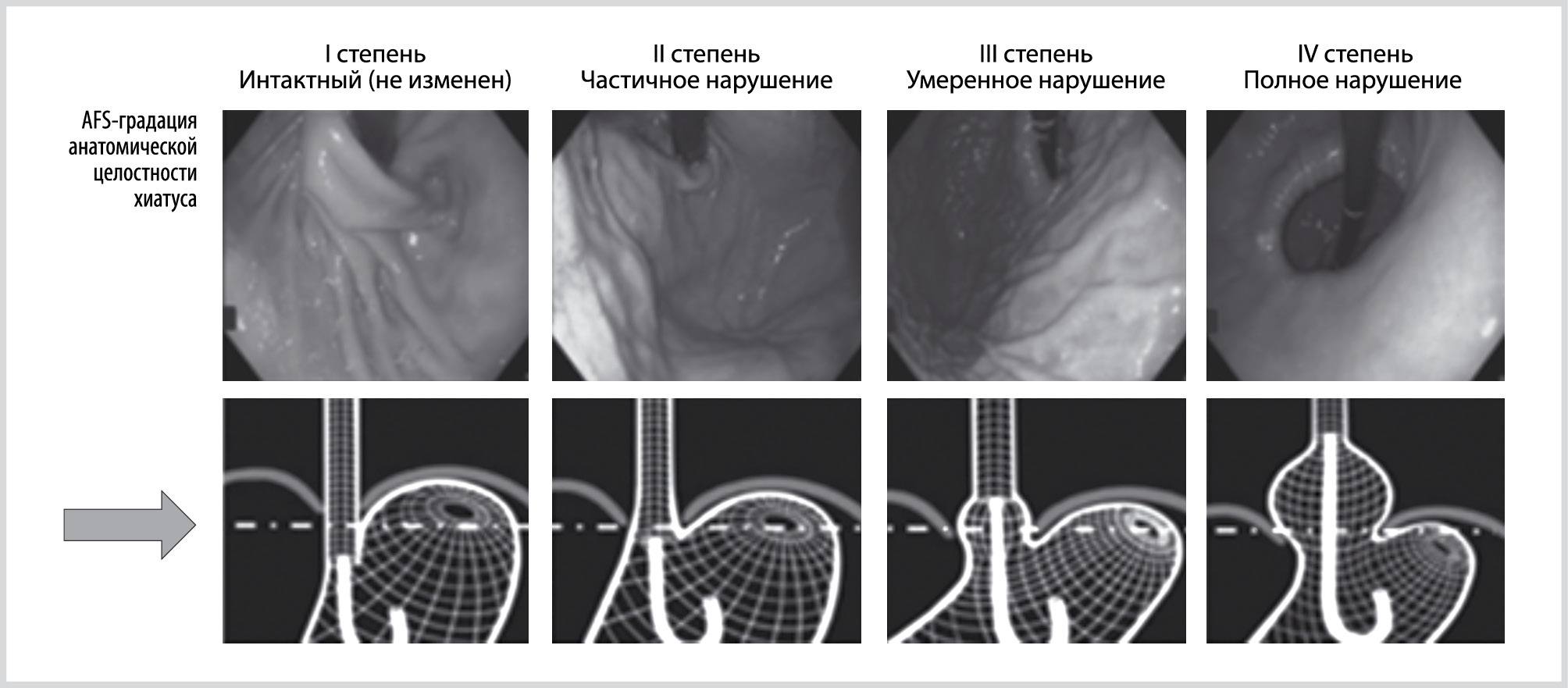
Рис. 3. Эндоскопическая классификация AFS-состоятельности пищеводно-желудочного перехода [по 14].
Стрелка показывает относительный уровень пищеводного отверстия диафрагмы, начиная с нормальной анатомии с сохраненным сегментом внутрибрюшного отдела пищевода и интактным хиатусом до прогрессирующего увеличения степени нарушения анатомической целостности диафрагмального отверстия по компонентам LDF (длина аксиальной грыжи, расхождение ножек диафрагмы, утеря створчатого клапана).
С целью валидации новых методов ретроградной эндоскопической оценки зоны кардии, в частности, классификации AFS и выявления корреляции получаемых при применении этих методов результатов с выраженностью ГЭРБ мы провели проспективное клиническое исследование с измерением всех ключевых параметров топографии зоны кардии и оценкой функционального состояния ПЖП с применением 24-часовой pH-импедансометрии, манометрии пищевода высокого разрешения и нового метода исследования — ретроградной эндоскопически-интегрированной манометрии (РЭИМ) зоны кардии [12, 13].
Материал и методы
В исследование вошло 103 пациента: 58 (56,3%) женщин и 45 (43,6%) мужчин в возрасте от 20 до 79 лет (55±2 года), которые находились на обследовании и лечении в нашей клинике с октября 2021 по май 2024 г. Среди них было 89 (86,4%) пациентов с ГЭРБ и 14 (13,5%) пациентов без симптомов заболевания. У 69 (77,5%) из 89 пациентов имелись клинические проявления ГЭРБ, среди них у 56 (62,9%) — на фоне постоянного приема ингибиторов протонной помпы (ИПП). Согласно клинико-анамнестическим данным все 103 пациента были разделены на 3 группы. В 1-ю группу вошло 14 (13,5%) пациентов без симптомов заболевания. Во 2-ю группу включены 49 (47,5%) пациентов с ГЭРБ, эндоскопической картиной недостаточности кардии и/или признаками аксиальной хиатальной грыжи, которым требовались дополнительное уточняющее обследование и решение вопроса о необходимости оперативного лечения ГЭРБ.
В 3-ю группу объединили 40 (38,8%) пациентов, ранее перенесших антирефлюксные хирургические вмешательства, причем 8 (20,0%) из них были оперированы повторно (ре-фундопликация). Первый пациент был прооперирован в 2016 г., последний — в 2023 г.; 31 (77,5%) пациент прооперирован в нашей клинике, 9 (22,5%) — в других лечебных учреждениях. «Классическая» операция Ниссена была выполнена у 34 (85,0%) пациентов, операция по Коллису—Ниссену — у 6 (15%). Лапаротомия проведена у 4 (10,0%), лапароскопическим доступом оперированы 100 (25,0%), остальным 26 (65,0%) пациентам проведено робот-ассистированное вмешательство.
Методика эндоскопической оценки ПЖП полностью соответствовала требованиям авторов классификации AFS и японских коллег [14, 12]. У всех пациентов осмотр проводили на аппаратуре экспертного класса EVIS Exera-III с использованием гастроскопов модели H190, HQ190 (Olympus, Япония). Одним из незаменимых факторов успешной оценки морфологии и функции ПЖП служило выполнение эзофагогастродуоденоскопии (ЭГДС) с применением тотальной внутривенной анестезии с сохранением спонтанного дыхания. Оценку ПЖП осуществляли из положения ретрофлексии с подачей углекислого газа в течение 30—45 с вплоть до максимально возможного уплощения складок свода желудка. Размеры аксиальной хиатальной грыжи и диастаза ножек диафрагмы измеряли после проведения провокационного ротационного маневра, в ходе которого индуцировалось скольжение потенциальной аксиальной грыжи и расширение диафрагмального отверстия, за счет осторожного подтягивания кончика эндоскопа в положении ретрофлексии вдоль малой кривизны желудка (рис. 4 на цв. вклейке). Авторами подчеркивается, что измерение этих параметров на входе, без предлагаемых маневров, не считается полноценным, нередко способствует недооценке ПЖП и создает почву для разногласий между исследователями [14]. После завершения провокационного маневра и анализа необходимых параметров мы возвращались в пищевод и измеряли осевую длину грыжи и расстояние между Z-линией и диафрагмальным сужением из прямого, антеградного доступа.
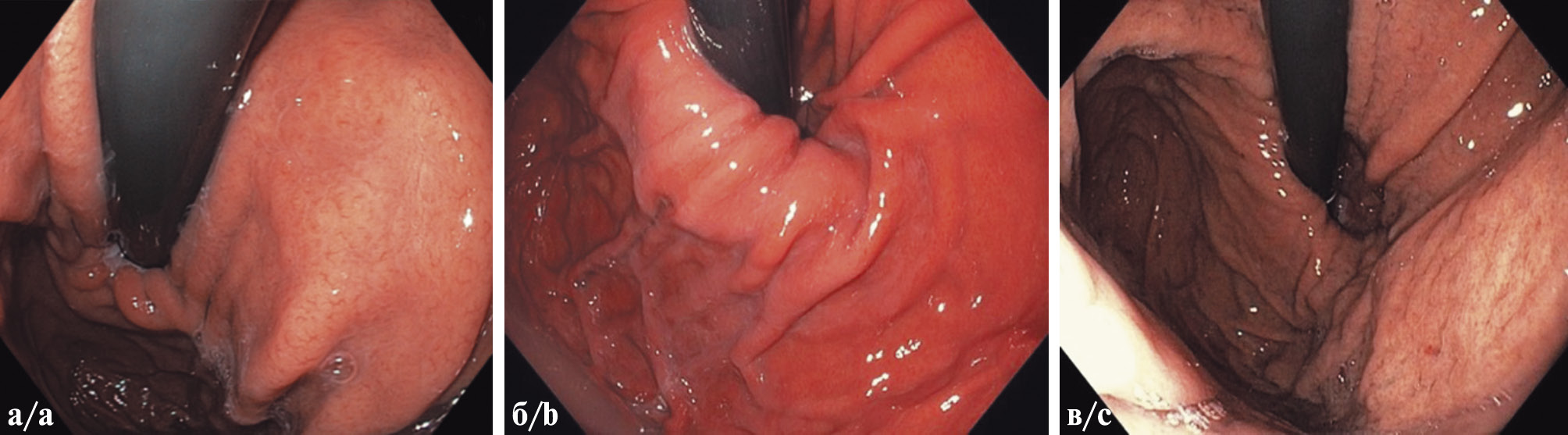
Рис. ٤. Эндоскопическая оценка пищеводно-желудочного перехода, включающая исходное состояние ПЖП при входе в желудок (а), прогрессирующую инволюцию (смещение в сторону грудной полости) желудочных складок и Z-линии при дальнейшей инсуффляции газа (б), большое диафрагмальное отверстие, которое становится видимым в процессе дальнейшей инволюции желудочных складок и Z-линии, после полного завершения инсуффляции с провокационными маневрами (в).
В процессе эндоскопического изучения ПЖП из ретроградного доступа пользовались критериями L, D, F классификации AFS (см. рис. 3; см. табл. 1).
При I степени (L0, D1, F+), которая соответствует анатомо-физиологической норме, топографическая анатомия пищеводно-желудочного перехода не изменена, т.е. аксиальная хиатальная грыжа отсутствует (L0), эндоскоп диаметром 1 см плотно обхвачен на уровне ножек диафрагмы (D1), створчатый клапан хорошо выражен (F+). По мере деградации створчатого клапана выделяется II степень (L0, D1—2, F–), при которой аксиальная хиатальная грыжа по-прежнему отсутствует (L0), расстояние между ножками диафрагмы составляет 1—2 см (D1—2), а створчатый клапан истончается, уплощается и в итоге не выполняет своей функции (F–). При III степени (L0—2, D2—3, F–) выявляется аксиальная хиатальная грыжа размерами менее 2 см (L0—2), расстояние между ножками диафрагмы составляет 2—3 см (D2—3), а створчатый клапан отсутствует (F–). IV степень (L>2, D>3, F–) считается терминальной и диагностируется при размере аксиальной хиатальной грыжи более 2 см (L>2), при полном разобщении ножек диафрагмы, расстояние между которыми составляет более 3 см (D>3), а створчатый клапан отсутствует (F–).
pH-импедансометрию применяли для обнаружения гастроэзофагеальных рефлюксов при ГЭРБ с использованием электрода 2,2 мм, который вводили в пищевод через носовую полость пациента на 24 ч. Данные фиксировали на автономном носимом блоке Гастроскан-ИАМ (ЗАО НПП «Исток-Система», Россия).
Манометрию пищевода высокого разрешения выполняли водно-перфузионным катетером с 22 каналами на системе Solar GI HRM (MMS, Нидерланды).
Ретроградная эндоскопически-интегрированная манометрия зоны кардии [12, 13] — новый метод функционального исследования ПЖП — проводили на 8-канальной водно-перфузионной манометрической системе компании MMS (Нидерланды). В качестве манометрического зонда использовали трехканальный катетер (Wilson-Cook, США), исходно предназначенный для манометрии сфинктера Одди. В положении инверсии катетер проводили через инструментальный канал эндоскопа и позиционировали на расстоянии 2 см от ПЖП вдоль малой кривизны желудка. Регистрировали кривую нарастания давления на фоне непрерывной инсуффляция углекислого газа в просвет желудка, максимально достигнутое внутрижелудочное давление и давление открытия НПС.
Общая характеристика обследованных больных по группам представлена в табл. 2.
Таблица 2. Характеристика обследованных больных по группам, n (%), Me [Q1; Q3]
Характеристика | Группа больных | p | ||
1-я (бессимптомные), n=14 | 2-я (ГЭРБ), n=49 | 3-я (хирургические вмешательства), n=40 | ||
Возраст, лет | 58,0 [39,0; 66,8] | 58,0 [45,0; 65,5] | 58,5 [50,0; 64,8] | 0,711 |
Пол: | ||||
мужской | 4 (28,6) | 26 (53,1) | 15 (37,5) | 0,159 |
женский | 10 (71,4) | 23 (46,9) | 25 (62,5) | |
Длина аксиальной грыжи, см | 0,0 [0,0; 1,3] | 3,0 [2,0; 4,8] | 2,0 [1,0; 4,0] | <0,001 |
Расхождение ножек диафрагмы, см | 1,2 [1,0; 1,6] | 3,0 [2,4; 3,4] | 2,0 [1,1; 2,5] | <0,001 |
Время обхватывания эндоскопом, с | 29,0 [25,0; 30,0] | 10,0 [5,0; 15,5] | 18,0 [5,8; 29,8] | <0,001 |
Дисфагия | 4 (28,6) | 6 (12,5) | 22 (55,0) | <0,001 |
Изжога | 4 (28,6) | 41 (83,7) | 23 (57,5) | <0,001 |
Боль за грудиной | 4 (26,7) | 23 (47,9) | 13 (32,5) | 0,266 |
Лечение с ИПП | 2 (14,3) | 38 (77,6) | 22 (55,0) | <0,001 |
Эндоскопические признаки рефлюкс-эзофагита | 1 (7,1) | 18 (36,7) | 5 (12,5) | 0,010 |
Эрозивный эзофагит по Лос-Анжелесской классификации | 1 (7,1) | 19 (38,8) | 19 (47,5) | 0,027 |
Язва пищевода | 0 | 2 (4,3) | 2 (5,1) | 1,000 |
AFS: | ||||
I | 12 (85,8) | 2 (4,1) | 11 (27,5) | <0,001 |
II | 0 | 6 (14,3) | 9 (22,5) | |
III | 1 (7,1) | 11 (22,4) | 10 (25,0) | |
IV | 1 (7,1) | 29 (59,2) | 10 (25,0) | |
Статистическая обработка данных. Анализ полученных данных проводили с использованием IBM SPSS 26. Описательные статистики для категориальных переменных представлены в виде абсолютных и относительных частот (процентные доли, %), для количественных — в виде медианы (1-й квартиль; 3-й квартиль). Для оценки значимости различия между тремя группами применяли критерий Краскела—Уоллиса. Для изучения связи между категориальными переменными использовали тест χ2 и точный критерий Фишера, ассоциацию считали статистически значимой при p<0,05.
Результаты и обсуждение
В 1-й группе из 14 пациентов без симптомов у 12 (85,7%) эндоскопические признаки нарушения запирательных механизмов кардии не выявлены; диагностирована I степень по классификации AFS (рис. 5 на цв. вклейке): зубчатая граница (Z-линия) располагалась на уровне пищеводного отверстия диафрагмы (L0); в процессе исследования ткани кардии плотно обхватывали эндоскоп (D1); створчатый клапан был хорошо выражен (F+). Лишь у одного из этих 12 пациентов по данным ЭГДС имелся рефлюкс-эзофагит степени A по Лос-Анжелесской классификации; время обхватывания эндоскопа составило у него 28/30 (93%) с. При углубленном изучении анамнеза пациент подтвердил, что периодически испытывал изжогу после погрешности в диете. У 2 (14,3%) пациентов 1-й группы обнаружена грыжа пищеводного отверстия диафрагмы (ГПОД) без эндоскопической картины рефлюкс-эзофагита, что не противоречит имеющимся сведениям по этому вопросу [6, 8]. У одного из них размер грыжи составил 2 см (L2), расстояние между ножками диафрагмы — 2,7 см (D2,7), створчатый клапан отсутствовал (F–); была установлена III степень по AFS; время обхватывания эндоскопа составило 2/30 (6,6%) с. У второго пациента размер грыжи составил 5 см (L5), расстояние между ножками диафрагмы 2,4 см (D2,4), створчатый клапан отсутствовал (F–) — установлена IV степень по AFS; время обхватывания эндоскопа составило 5/30 (16,6%) с.
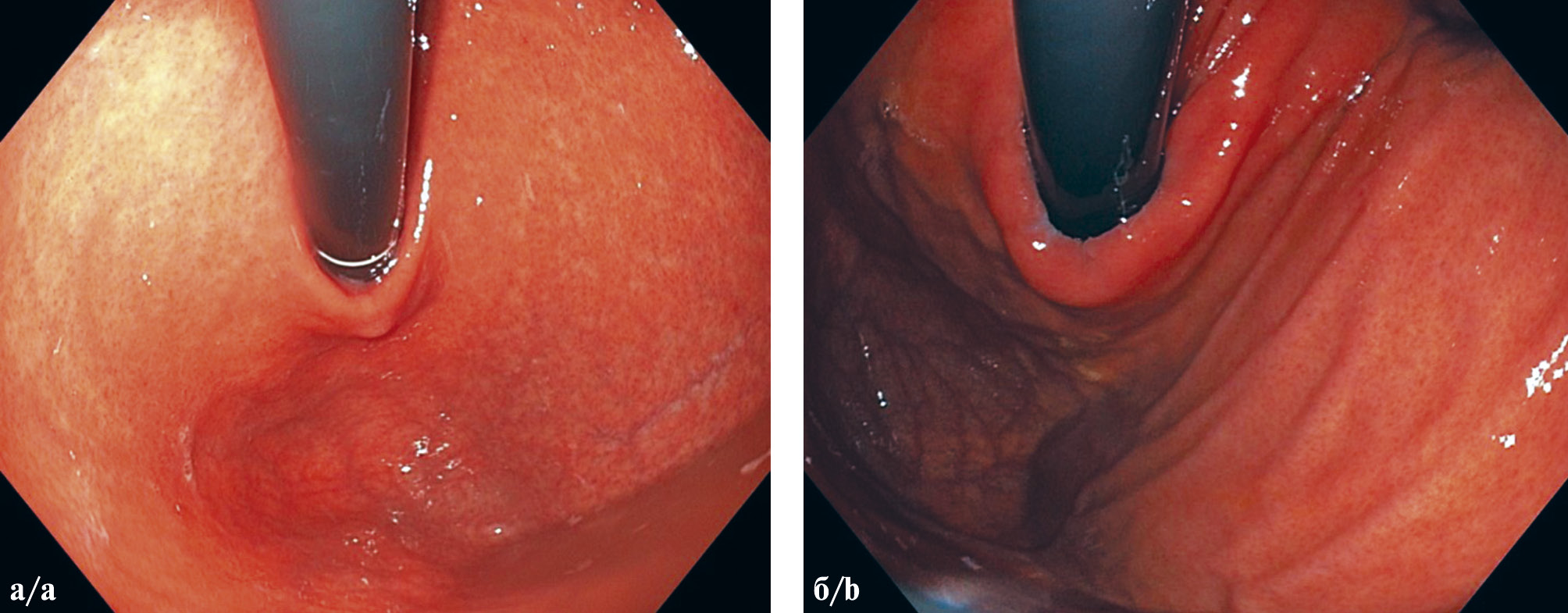
Рис. ٥. Степень I по AFS: нормальная функция запирательных механизмов кардии (а, б).
Во 2-й группе (49 пациентов с ГЭРБ, рефрактерной к консервативной терапии) у 2 (4,1%) пациентов с жалобами на постоянную изжогу на фоне приема ИПП, без эндоскопических признаков рефлюкс-эзофагита выявлена нормальная функция запирательных механизмов кардии — I степень по AFS (L0; D1; F+), время обхватывания эндоскопа у одного из них было 28/30 (93,3%) с, у второго — 15/30 (50%) с. При выполнении суточной pH-импедансометрии удалось выявить связь изжоги с физиологическими гастроэзофагеальными рефлюксами кислого и некислого содержимого, что укладывается в рамки нозологической формы «гиперчувствительный пищевод».
II степень несостоятельности ПЖП по AFS (L1; D1,9; F–; рис. 6 на цв. вклейке) мы установили у 7 (14,2%) исследуемых; у 6 (85,7%) из них имелись жалобы на постоянную изжогу, в том числе у 2 на фоне приема ИПП. Зубчатая граница находилась на 1 см выше пищеводного отверстия диафрагмы (L1); расстояние между ножками диафрагмы составило 1,9 см (D1,9), створчатый клапан имел уплощенную форму (F–). При этом у 6 (85,7%) из этих 7 пациентов был диагностирован рефлюкс-эзофагит: степени M — у 3, степени A — у 2, степени B — у 1 пациента по последней версии Лос-Анжелесской классификации. В этой подгруппе время обхватывания эндоскопа варьировало от 5/30 (16,7%) с до 20/30 (66,7%) с, в среднем составив 12/30 (40%) с, что также подтверждает нарушение функции антирефлюксного барьера (время охватывания <75% коррелировало с кислотным рефлюксом).

Рис. ٦. Степень II по AFS: эндоскопическая картина недостаточности розетки кардии (а, б).
III степень несостоятельности ПЖП по AFS (L1,9; D2,5; F–; рис. 7 на цв. вклейке) диагностирована у 11 (22,4%) из 49 пациентов 2-й группы. Средний размер аксиальной хиатальной грыжи составил 1,9 см (L1,9), среднее расстояние между ножками диафрагмы — 2,5 см (D2,5), также выявлено полное отсутствие створчатого клапана (F–). У 9 (81,8%) из 11 пациентов были жалобы на изжогу, при этом у 4 (36,4%) на фоне приема ИПП. Эндоскопическая картина рефлюкс-эзофагита диагностирована у 9 (81,8%) пациентов: степени M — у 4, степени A — у 2, степени B — у 2, степени C — у 1 пациента. В этой подгруппе время обхватывания эндоскопа составило 12/30 (40%) с: минимальное — 2/30 (6,6%) с, максимальное — 23/30 (76,6%) с. У 2 (18,18%) пациентов с клинической картиной изжоги, но без эндоскопических признаков эзофагита, время обхватывания эндоскопом составило 11/30 (36,6%) с. Низкий показатель данного симптома связан с нарушением запирательного механизма кардии, что объясняется наличием аксиальной хиатальной грыжи. У пациентов этой группы наличие ГЭРБ (неэрозивной формы) было верифицировано данными pH-импедансометрии (экспозиция кислоты в пищеводе более 6% за сутки, индекс De Meester более 14,72).

Рис. ٧. Степень III по AFS: аксиальная хиатальная грыжа средних размеров с эндоскопическими признаками несостоятельности замыкательной функции кардии (а, б).
С расширением хиатального отверстия частота развития симптомов ГЭРБ увеличивается (у 81,8% обследованных наблюдались жалобы на изжогу), одновременно увеличивается число пациентов с воспалительными изменениями в области ПЖП. Устойчивость к консервативному лечению может объясняться неспособностью замыкательных механизмов кардии предотвращать постоянные забросы желудочного содержимого в пищевод. О наличии патологических гастроэзофагеальных рефлюксов в этой подгруппе можно судить по симптому «время обхватывания эндоскопом», который составил 36% в общей группе (показатель ВОЭ менее 75% коррелировал с кислотным рефлюксом, что было подтверждено результатами pH-импедансометрии).
IV степень несостоятельности ПЖП по AFS (L4,3; D3,3; F–; рис. 8 на цв. вклейке) установлена у 29 (59,2%) из 49 пациентов 2-й группы. Средний размер аксиальной хиатальной грыжи составил 4,3 см (L4,3), среднее расстояние между ножками диафрагмы — 3,3 см (D3,3), створчатый клапан Губарева отсутствовал (F–). Из 29 пациентов этой подгруппы у 24 (82,8%) клиническая картина ГЭРБ, в частности, изжога, сохранялась на фоне приема ИПП. Во время ЭГДС у 22 (75,9%) пациентов выявлены признаки рефлюкс-эзофагита: степени M — у 11, степени A — у 3, степени B — у 5, степени C — у 3. ВОЭ составило 8/30 (26,6%) с: минимальное — 2/30 (6,6%) с, максимальное — 24/30 (80%) с. У 12 (41,4%) из 29 больных наряду с симптомами изжоги также отмечены боли за грудиной, среди них у 4 (33,3%) выявлены эндоскопические признаки эрозивного эзофагита. В этой подгруппе эндоскопическая диагностика ГПОД не представляла значительных трудностей, однако точное определение размеров грыжевой полости и описание эндоскопической картины играли важную роль при определении хирургической тактики и выборе метода хирургического вмешательства. Уделялось внимание и выяснению причины болей у пациентов с нормальной эндоскопической картиной, которые могли объясняться транзиторным ущемлением грыжи. Подтверждение наличия ГЭРБ методами функциональной диагностики и исключение неэффективной моторики пищевода, которая может считаться противопоказанием к проведению антирефлюксной операции, также имели важное значение.
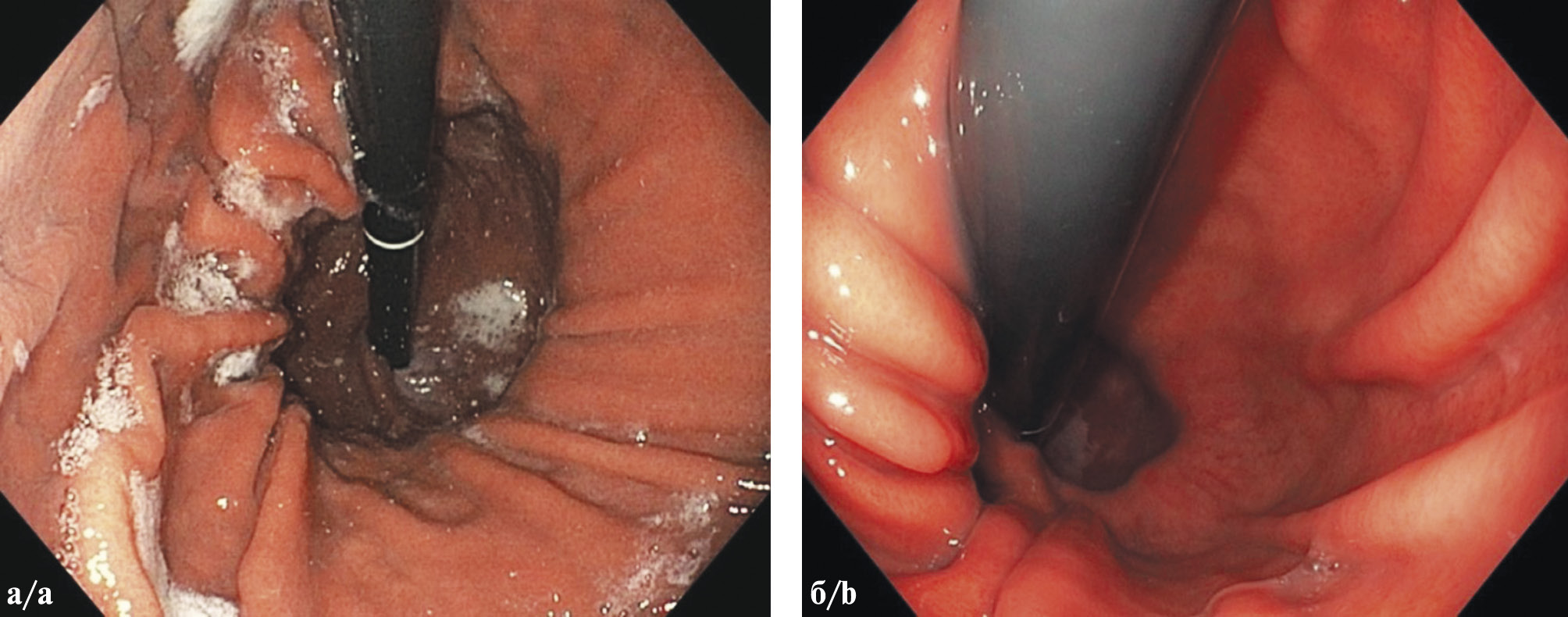
Рис. ٨. Степень IV по классификации AFS: L4, D4,5, F– (а); L2,5, D3,3, F– (б).
В 3-й группе (40 ранее оперированных пациентов) лишь у 11 (27,5%) была подтверждена состоятельность запирательных механизмов кардии — I степень по AFS (L0, D1,2, F+; рис. 9 на цв. вклейке): Z-линия на уровне пищеводного отверстия диафрагмы (L0), расстояние между ножками диафрагмы 1,2 см (D1,2), фундопликационная манжетка, реконструирующая створчатый клапан, хорошо выражена (F+). Несмотря на это жалобы на изжогу предъявляли 2 (18,2%) пациента этой подгруппы, 4 (36,4%) принимали ИПП постоянно. ВОЭ в этой подгруппе составило 27/30 (90%) с, минимальное ВОЭ — 14/30 (46,6%) с, максимальное — 30/30 (100%) с. У одного (9,1%) пациента имелся рефлюкс-эзофагит степени M, у другого (9,1%) — степени A и у третьего (9,1%) — степени C. Пациент с эрозивным рефлюкс-эзофагитом степени C в течение длительного времени предъявлял жалобы на изжогу и боли за грудиной, несмотря на то что за 3 года до поступления в клинику перенес фундопликацию по Ниссену по поводу ГПОД. При обследовании перед первой операцией у него методом манометрии высокого разрешения было выявлено отсутствие сократимости грудного отдела пищевода.

Рис. ٩. Фундопликация состоятельна (L0, D1,2, F+) по AFS: пликационная манжетка симметричная, обе складки хорошо визуализируются, плотно прилегают к эндоскопу.
Стойкая дисфагия в послеоперационном периоде, с нашей точки зрения, была связана с гиперфункцией фундопликационной манжетки после полной 360° фундопликации (рис. 10 на цв. вклейке) в комбинации с исходным нарушением перистальтики пищевода и выявленной нами при поступлении пептической стриктурой нижней трети пищевода. По данным ЭГДС, ВОЭ составило у него 30/30 (100%) с. Больному был проведен один сеанс баллонной дилатации, а также повторное хирургическое вмешательство (лапароскопическая рефундопликация) по поводу дисфункции фундопликационной манжетки и дисфагии II—III степени.
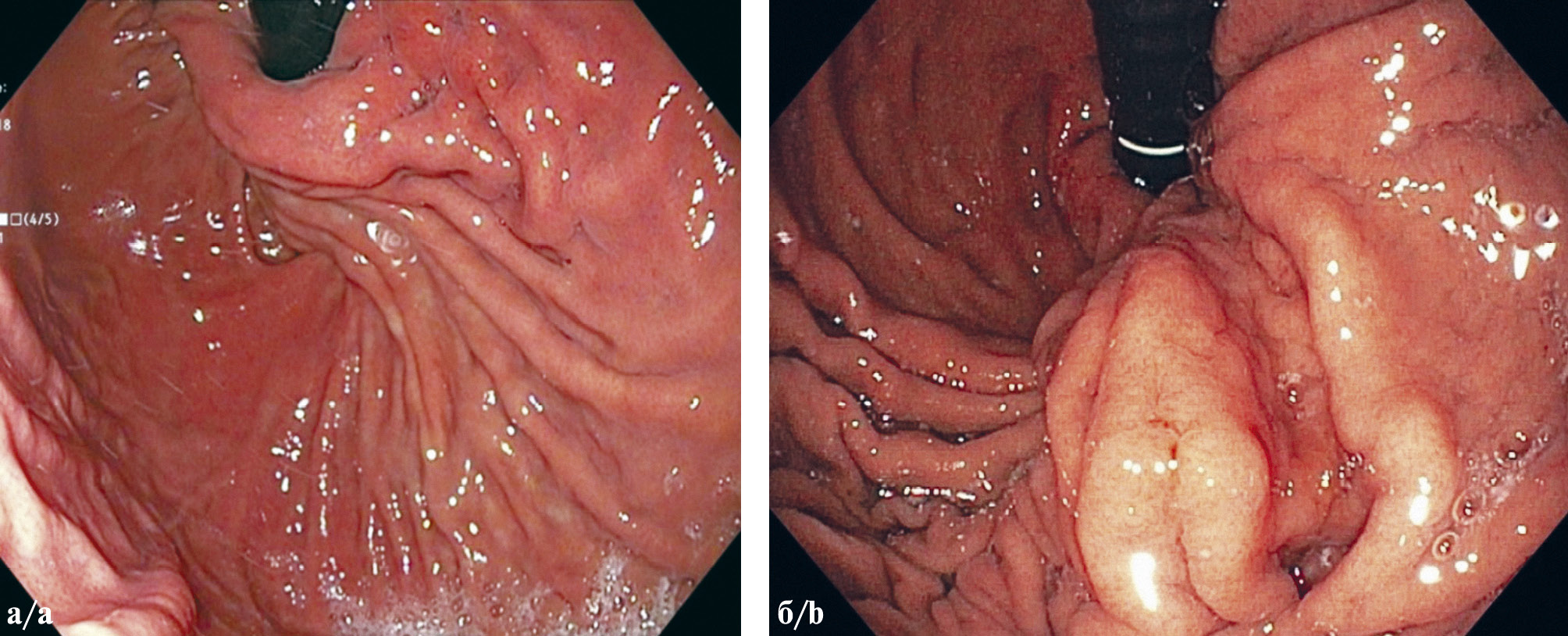
Рис. ١٠. I степень по классификации AFS (L0, D1,2, F+) с гиперфункцией фундопликационной манжетки (а, б) [٣].
II степень по AFS (L1,2, D1,5, F–; рис. 11 на цв. вклейке) диагностирована у 8 (20,0%) из 40 пациентов 3-й группы: зубчатая граница находилась на 1,2 см выше пищеводного отверстия диафрагмы (L1,2), расстояние между ножками диафрагмы составило 1,5 см (D1,5), створчатый клапан имел уплощенную форму (F–). Из этих 8 больных 5 (62,5%) описывали клиническую картину изжоги, 3 (37,5%) — на фоне приема ИПП. Во время ЭГДС рефлюкс-эзофагит выявлен у 5 (62,5%) пациентов: степени А — у 4, степени В — у 1. ВОЭ составило 23/30 (79%) с, минимальное — 4/30 (13,3%) с, максимальное — 30/30 (100%) с. В этой подгруппе у 2 пациентов боли за грудиной и изжога на фоне приема ИПП не были связаны с воспалительными изменениями в области ПЖП. Следует отметить, что ВОЭ составляло у них максимальное значение — 30/30 (100%) с. Исходя из этого, можно предположить, что боль после операции могла быть связана как с рецидивом основного заболевания, так и с нарушением моторно-эвакуаторной функции верхних отделов пищеварительного тракта. В частности, у 3 пациентов из данной подгруппы наблюдались рентгенологические признаки нарушения моторно-эвакуаторной функции желудка.

Рис. ١١. Состояние после фундопликации. II степень по классификации AFS: недостаточность запирательных механизмов кардии. Частично разрушенная фундопликация (а, б).
Рецидив аксиальной хиатальной грыжи с эндоскопическими признаками нарушения и разобщения запирательных механизмов кардии — III степень по AFS (L2,1, D1,5, F–; рис. 12 на цв. вклейке) диагностирована у 11 (27,5%) пациентов. Средний размер ГПОД составил 2,1 см (L2,1), среднее расстояние между ножками диафрагмы — 1,5 см (D1,5), отмечено полное отсутствие фундопликационной манжетки/створчатого клапана (F–).

Рис. ١٢. Рецидив аксиальной хиатальной грыжи после фундопликации с эндоскопическими признаками нарушения и разобщения запирательных механизмов кардии — III степень по классификации AFS.
Жалобы на изжогу предъявляли 8 (72,7%) из 11 больных, 7 (63,6%) — на фоне приема ИПП. Изжога сопровождалась болью за грудиной и клинической картиной дисфагии. Эндоскопическая картина рефлюкс-эзофагита отмечалась у 7 (63,6%) пациентов: степени М — у 3, степени А — у 2, степени В у 2. Среднее ВЭО составило 10/30 (33,3%) с: минимальное — 1/30 (3,3%) с, максимальное — 30/30 (100%) с. Среди 2 пациентов с максимальным значением ВОЭ у одного наблюдались выраженная картина дисфагии и боли за грудиной. В этой подгруппе с появлением рецидива аксиальной хиатальной грыжи, при стойкой дисфагии встал вопрос о выполнении повторных хирургических вмешательств. Рецидив основного заболевания в большинстве случаев возобновлял симптоматику рефлюксной болезни и вынуждал пациентов принимать антисекреторные препараты, что можно считать неудачей антирефлюксной операции.
IV степень по AFS (L4,3, D2,7, F–; рис. 13 на цв. вклейке) диагностирована у 10 (25,0%) пациентов: средний размер аксиальной хиатальной грыжи составил 4,4 см (L4,3), среднее расстояние между ножками диафрагмы — 2,7 см (D2,7), фундопликационная манжетка/створчатый клапан отсутствовали (F–). Изжога беспокоила 9 (90,0%) из 10 пациентов, у 2 (20,0%) — на фоне приема ИПП. Рефлюкс-эзофагит во время ЭГДС выявлен у 7 (70,0%): степени A — у 2/7 (28,5%), степени B — у 2/7 (28,5%). ВОЭ составило 11/30 (36,6%) с: минимальное — 1/30 (3,3%) с, максимальное — 19/30 (63,3%) с. В этой подгруппе боли за грудиной, сопровождающиеся ощущением изжоги, выявленные у 8 (80,0%) из 10 пациентов на фоне приема препарата ИПП, могут быть связаны как с воспалительными изменениями в области ПЖП, так и с нарушениями моторики пищевода, выявленными при манометрии высокого разрешения, такими как неэффективная перистальтика и отсутствие сократимости пищевода.

Рис. ١٣. Рецидив аксиальной хиатальной грыжи после фундопликации: полное разрушение фундопликационной манжетки — IV степень по классификации AFS.
Рецидив основного заболевания (ГПОД) в большинстве случаев возобновлял симптоматику рефлюксной болезни и вынуждал пациентов принимать антисекреторные препараты, что можно считать неудачей антирефлюксной операции. Рецидив аксиальной хиатальной грыжи, выявленный в третьей и четвертой подгруппах у 52,5% пациентов, в сочетании со стойкой дисфагией, обусловил необходимость выполнения повторных хирургических вмешательств.
Мы согласны с авторами классификации AFS и с японскими авторами [12—14] в том, что предложенные методы оценки топографической анатомии зоны кардии из просвета желудка носят комплексный характер и направлены на повышение физиологической значимости градации компонентов антирефлюксного барьера, стандартизацию методологии и номенклатуры эндоскопического ранжирования этих важных признаков. Ключевым отличием новой классификации является то, что она фокусируется не только на створчатом клапане, но и на степени нарушения анатомической целостности пищеводного отверстия диафрагмы и осевом распространении ГПОД с пониманием того, что все три переменные взаимосвязаны и влияют на состояние антирефлюксного барьера [14].
Заключение
Новая классификация, предложенная Американским обществом по изучению верхних отделов пищеварительного тракта, а также компоненты оценки физиологии пищеводно-желудочного перехода, предложенные японскими авторами, могут и должны стать универсальным эндоскопическим методом оценки пищеводно-желудочного перехода у пациентов с гастроэзофагеальной рефлюксной болезнью.
Ретроградное эндоскопическое исследование наряду с другими методами обеспечивает объективную оценку степени нарушения антирефлюксного барьера; может стать основой для определения необходимости в хирургическом лечении и эффективности проведенного антирефлюксного хирургического лечения пациентов с гастроэзофагеальной рефлюксной болезнью.
Опыт применения этой классификации продемонстрировал простоту ее использования в клинической практике, а также более полноценную оценку недостаточности работы антирефлюксного барьера.
Участие авторов:
Концепция и дизайн исследования — Партенадзе Т.А., Федоров Е.Д., Шаповальянц С. Г.
Сбор и обработка материала — Партенадзе Т.А., Шидий-Закруа А.В.
Статистическая обработка — Партенадзе Т.А., Мурашкина М.В.
Написание текста — Партенадзе Т.А., Кайбышева В.О., Федоров Е.Д.
Редактирование — Федоров Е.Д.
Participation of authors:
Concept and design of the study — Partenadze T.A., Fedorov E.D., Shapovalyants S.G.
Data collection and processing — Partenadze T.A., Shidii-Zakrua A.V.,
Statistical processing of the data — Partenadze T.A., Murashkina M.V.
Text writing — Partenadze T.A., Kaybysheva V.O., Fedorov E.D.
Editing — Fedorov E.D.
Авторы заявляют об отсутствии конфликта интересов.
- Chang KJ. Endoscopic foregut surgery and interventions: the future is now. The state-oF-the-art and my personal journey. World J Gastroenterol. 2019;25(1):1-41.
- Papa A, Urgesi R, Grillo A, Danese S, Guglielmo S, Roberto I, et al. Pathophysiology, diagnosis and treatment of Non-Erosive Reflux Disease (NERD). Minerva Gastroenterol Dietol. 2004;50(3):215-226.
- Тимербулатов М.В., Сендерович Е.И., Гришина Е.Е., и др. Эндоскопическое обследование фундопликационной манжеты для оценки результатов антирефлюксных операций. Эндоскопическая хирургия. 2015;21(5):11-18. https://doi.org/10.17116/endoskop201521511-18
- Inoue H, Tanabe M, de Santiago ER, Abad MRA, Shimamura Y, Fujiyoshi Y, Ueno A, Sumi K, Tomida H, Iwaya Y, Ikeda H, Onimaru M. Anti-reflux mucosal ablation (ARMA) as a new treatment for gastroesophageal reflux refractory to proton pump inhibitors: a pilot study. Endosc Int Open. 2020;8(2): E133-E138. https://doi.org/10.1055/a-1031-9436
- Inoue H, Ito H, Ikeda H, Sato C, Sato H, Phalanusitthepha C, Hayee B, Eleftheriadis N, Kudo SE. Anti-reflux mucosectomy for gastroesophageal reflux disease in the absence of hiatus hernia: a pilot study. Ann Gastroenterol. 2014;27(4):346-351.
- Amano Y, Ishimura N, Furuta K, Okita K, Masaharu M, Azumi T, Ose T, Koshino K, Ishihara S, Adachi K, Kinoshita Y. Interobserver agreement on classifying endoscopic diagnoses of nonerosive esophagitis. Endoscopy. 2006;38(10):1032-1035.
- Дронова О.Б., Чиндяскин М.А., Каган И.И., Мирончев А.О. Сравнительная оценка эндоскопической анатомии пищеводно-желудочного перехода в норме при исследовании традиционной эзофагогастроскопией и видеокапсульной эндоскопией. Экспериментальная и клиническая гастроэнтерология. 2022;(5):32-38. https://doi.org/10.31146/1682-8658-ecg-201-5-32-38
- Шептулин А.А., Работягова Ю.С. Киотское международное согласительное совещание, посвященное анатомии, патофизиологии и клиническому значению пищеводно-желудочного перехода. Российский журнал гастроэнтерологии, гепатологии, колопроктологии. 2023;33(5):98-104. https://doi.org/10.22416/1382-4376-2023-33-5-98-104
- Вовненко М.И., Славинский А. А., Горбов Л.В., Сухинин А.А. Диагностические критерии эндоскопической диагностики грыжи пищеводного отверстия диафрагмы. Хирургия. Журнал им. Н.И. Пирогова. 2014;1:85-87.
- Оскретков В.И., Ганков В.А., Андреасян А.Р., Климова Г.И., Овсепян М.А. Причины патологического гастроэзофагеального рефлюкса после видеолапароскопической коррекции замыкательной функции кардии у больных аксиальной грыжей пищеводного отверстия диафрагмы. Хирургия. Журнал им. Н.И. Пирогова. 2020;6:38-43. https://doi.org/10.17116/hirurgia202006138
- Hill LD, Kozarek RA, Kraemer SJ et.al MD, The gastroesophageal flap valve: in vitro and in vivo observations. Gastrointest Endosc. 1996;44:541-547.
- Haruhiro Inoue, Yusuke Fujiyoshi, Mary Raina Angeli Abad, Enrique Rodriguez de Santiago, Kazuya Sumi, Yugo Iwaya, Haruo Ikeda, Manabu Onimaru, Yuto Shimamura. A novel endoscopic assessment of the gastroesophageal junction for the prediction of gastroesophageal reflux disease: a pilot study. Endosc Int Open. 2019;07(11):E1468-E1473.
- Inoue H, Shimamura Y. Functional Endoscopy. Digestion. 2024;105(1):58-61. https://doi.org/10.1159/000534831
- Ninh T Nguyen, Nirav C Thosani, Marcia Irene Canto, Kenneth Chang, John Lipham, Barham Abu Dayyeh, Erik B Wilson, V Raman Muthusamy, John Clarke, Reginald Bell, Peter Janu, Lee Swanstrom, Ava Runge, Peter J Kahrilas. The American Foregut Society White Paper on the Endoscopic Classification of Esophagogastric Junction Integrity. Foregut. 2022;2:339.



Рекомендуем статьи по данной теме:
Эндохирургические функционально-щадящие операции при неэпителиальных опухолях пищеводно-желудочного перехода.Хирургия. Журнал им. Н.И. Пирогова. 2026;(9):39-46
Современные проблемы диагностики и лечения ларингофарингеальной рефлюксной болезни.Вестник оториноларингологии. 2026;91(3):77-84
Профилактика образования эрозий твердых тканей зубов у лиц с гастроэзофагеальной рефлюксной болезнью.Стоматология. 2026;105(3):66-70
Основные положения современных рекомендаций Всемирной организации эндоскопии по диагностике и ведению пациентов с пищеводом Баррета.Доказательная гастроэнтерология. 2026;15(2):73-80
Современные аспекты диагностики гастроэзофагеальной рефлюксной болезни у коморбидных пациентов.Доказательная гастроэнтерология. 2025;14(4):5-13
Повторные антирефлюксные операции: сравнительная оценка лапароскопического и робот-ассистированного методов.Доказательная гастроэнтерология. 2025;14(3):14-20
Патология пищевода и бронхиальная астма: патогенетические взаимодействия и возможности оптимизации терапии.Профилактическая медицина. 2024;27(11):129-134