Авторы:

Виктория Валерьевна Ромих,
зав. отделением уродинамики и нейроурологии НИИ урологии и интервенционной радиологии им. Н.А. Лопаткина – филиала ФГБУ «НМИЦ радиологии» Минздрава России
Людмила Юрьевна Кукушкина,
научный сотрудник отделения уродинамики и нейроурологии НИИ урологии и интервенционной радиологии им. Н.А. Лопаткина – филиала ФГБУ «НМИЦ радиологии» Минздрава России

Тренировка мышц тазового дна. Метод профилактики и метод лечения
Физическая культура или, как принято ее сокращенно называть, физкультура, – важная часть жизни современной женщины. В целом физическая культура считается особым видом деятельности, крайне полезным для отдельной личности и общества в целом. Она способствует гармоничному развитию человека, совершенствует его способности и готовит к другим видам деятельности. Первичные цели физкультуры состоят в развитии физических качеств: силы, скорости реакции, ловкости, выносливости. Без этих качеств невозможно сформировать жизненно важные физические навыки: правильную координацию движений, осанку, моторику. С другой стороны, физкультура становится основой формирования дисциплинированности, целеустремленности, устойчивости, в том числе эмоциональной.
С медицинской точки зрения физкультура – это прежде всего укрепление здоровья и профилактика заболеваний. Существует и так называемая лечебная физкультура, задача которой – терапия уже состоявшейся болезни. Тренировки мышц тазового дна (ТМТД) в медицине применяют и в профилактических, и в лечебных целях.
Профилактические ТМТД женщинам молодого возраста проводят в период подготовки к родам для их успешного разрешения и недопущения возникновения недержания мочи в послеродовом периоде. Женщинам более старшей возрастной группы ТМТД важны как часть лечебной программы уже возникшего недержания мочи [1]. Такие «укрепляющие» тренировки – самые распространенные среди всех ТМТД.
Мышечно-связочные структуры таза – сложный биомеханизм, и для результативного проведения тренировок специалистам необходимо четко представлять анатомо-функциональные взаимосвязи тазовой зоны.
Мышцы таза анатомически подразделяют на внутренние и наружные. К внутренним мышцам таза относят подвздошно-поясничную, грушевидную и внутреннюю запирательную мышцу. К наружным – большую, среднюю и малую ягодичные, квадратную мышцу бедра, верхнюю и нижнюю близнецовые мышцы, наружную запирательную мышцу, напрягатель широкой фасции. Отдельную группу составляют мышцы тазового дна.
В целом тазовое дно представлено следующими структурами: лобково-копчиковая мышца, поднимающая мышечная пластина, подвздошно-копчиковая мышца, анально-копчиковая связка (верхний слой); продольная мышца ануса (средний слой); наружный анальный сфинктер, мышечные волокна позадианальной пластины (нижний слой).
Мышечно-связочный аппарат таза обеспечивает нормальное взаиморасположение и функцию тазовых органов, в том числе удержание мочи и кала, за счет механической поддержки. Взаимоотношение основных мышц тазового дна, связок и тазовых органов представлено на рисунке.
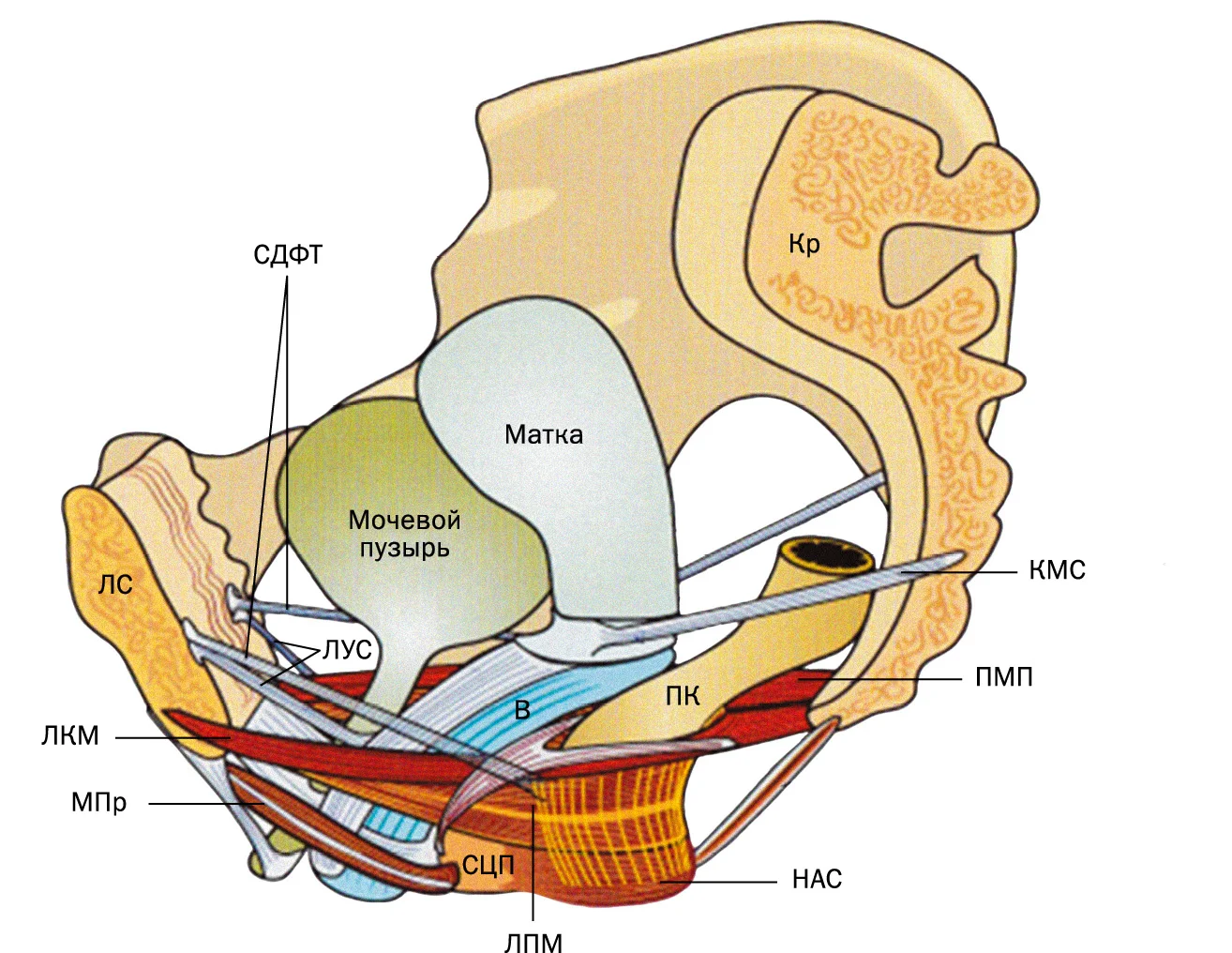
Схема мышечно-связочного аппарата малого таза [2]
Примечание. ЛС – лобковый симфиз; Кр – крестец; ЛКМ – лобково-копчиковая мышца; ПМП – поднимающая мышечная пластина; ПК – прямая кишка; МПр – промежностная мембрана; ЛПМ – лобково-прямокишечная мышца; ЛУС – лобково-уретральная связка; СДФТ – сухожильная дуга фасции таза; КМС – крестцово-маточная связка; В – влагалище; СЦП – сухожильный центр промежности; НАС – наружный анальный сфинктер.
Когда мы говорим о тазовом дне, то имеем в виду прежде всего его мышечный компонент, который состоит из мышц, поднимающих задний проход, и копчиковых мышц, совместно обеспечивающих поддержку тазовых органов. Первая мышечная группа является «целевой» для ТМТД и состоит из трех частей: лобково-прямокишечной, лобково-копчиковой и подвздошно-копчиковой. Именно сокращение лобково-прямокишечной мышцы поддерживает тазовое дно при физической активности.
Данные мышечные структуры являются поперечнополосатыми, имеют соматическую иннервацию, поэтому поддаются сознательному управлению (их можно сознательно напрягать/сокращать и расслаблять). Конечно, это доступно не для всех тазовых мышц, но комплексное управление всегда возможно.
ТМТД применяют как терапию первой линии. В отличие от медикаментозного и инвазивных видов лечения, все типы ТМТД не имеют нежелательных побочных действий и абсолютно безопасны. Отечественные и европейские клинические рекомендации по недержанию мочи предлагают начинать лечение именно с тренировок [3–5].
Безусловно, для успешного восстановления функции удержания мочи важны поведенческая терапия и коррекция образа жизни. Но данные элементы «первой линии» необходимо использовать в комплексе с ТМТД. Применение данных методов без тренировок улучшает функцию нижних мочевыводящих путей не более чем у 7,2% пациенток [6].
Целесообразность тренировочной терапии обоснована тем, что развитие недержания мочи связано с дисфункцией мышц тазового дна [7, 8]. Тренировки, направленные на произвольное сокращение и расслабление тазовых мышц, дают возможность повысить «управляемость» ими и улучшают способность мышц к сокращению, что является важным фактором удержания мочи.
Предложено множество способов проведения ТМТД. Самостоятельные тренировки без использования каких-либо устройств могут быть эффективны в случае, когда предварительно проведен инструктаж, включающий пальпацию (опознавание) «рабочих» (участвующих в тренировке) групп мышц и мышц-антагонистов, участие которых должно быть исключено. «Рабочие» мышцы – это структуры тазового дна, «антагонисты» – мышцы брюшного пресса. Часто во время тренировки женщины отключают внимание от тазового дна, незаметно переключаясь на тренировку «прессом». Такая тренировка обречена на провал. Поэтому устное разъяснение специалистом смысла тренировки, ее демонстрация на обучающем оборудовании и непосредственная пальпация мышц являются стартовой точкой тренировок.
Комплекс упражнений часто называют «упражнениями Кегеля» по имени автора – Арнольда Кегеля, впервые предложившего их в 1948 году. Он показал, что мышцы тазового дна можно укрепить/усилить, используя специальные упражнения. Он также сконструировал и применял в практике перинеометр (вагинальный манометр) для оценки силы сокращения тазовых мышц, который также помогал женщинам правильно выполнять упражнения, используя нужную мышечную группу. Его исследования продемонстрировали, что ТМТД помогают предотвратить цистоцеле, ректоцеле и недержание мочи.
ТМТД состоит из периодических напряжений и расслаблений мышц тазового дна. Для тренировок можно использовать влагалищные конусы, что облегчает понимание того, какие именно мышцы следует тренировать. ТМТД можно проводить при разных положениях тела (лежа, стоя, сидя) в зависимости от состояния/желания пациентки. Цель тренировки – улучшение функции удержания мочи – достигается за счет увеличения силы сокращений мышц диафрагмы таза и более длительного удержания мышц в состоянии сокращения вне зависимости от положения тела. Для достижения лучшего результата специалисты советуют во время тренировки менять положение тела.
Ряд научных исследований подтверждает положительное влияние тренировочных методов на состояние мочеиспускания у женщин с недержанием мочи [9]. Данные об эффективности метода, по мнению разных авторов, существенно отличаются – от 27 до 75%, что связано с различиями в отборе пациенток, методик тренировок и их длительности [10–13]. При 12-недельной тренировке эффект достигал 90% [6]. В системном обзоре S. Alouini и соавт. [14], охватывающем 15 рандомизированных клинических исследований с участием 997 пациенток, проанализировано влияние методов ТМТД на лечение стрессового недержания мочи и выявлена их высокая эффективность. Более 50% женщин отметили существенное улучшение, а 21,8% из них достигли полного удержания.
Часто во время тренировки женщины отключают внимание от тазового дна, незаметно переходя на тренировку «прессом». Такие упражнения обречены на провал
В исследовании P. Rygh и соавт. результаты анкетирования 24602 женщин с недержанием мочи показали, что ТМТД уменьшают выраженность симптомов недержания мочи. 65% женщин оценили результат лечения как положительный [15].
Как указано выше, ТМТД у женщин в период беременности и в раннем послеродовом периоде уменьшают риск развития недержания мочи, а у женщин с уже развившимся недержанием после родов тренировочные методы считаются терапией первой линии [16]. Большое значение ТМТД имеют и для других женщин молодого возраста, например для женщин-спортсменок, занимающихся атлетикой. Известно, что у них риск развития недержания мочи в 3 раза выше, чем в общей популяции женщин. ТМТД важны и для физически активных женщин – как для профилактики развития, так и в качестве лечения уже возникшего недержания мочи. Использование программы тренировок увеличивает силу мышечных сокращений и уменьшает объем теряемой при нагрузке мочи, повышая качество их жизни [17].
У женщин с недержанием мочи и пролапсом тазовых органов тренировочная терапия не только улучшает степень удержания, но и уменьшает выраженность пролапса, оцененного по системе РОР [18].
Для повышения эффективности тренировочной терапии разработаны инструктирующие портативные устройства с обратной связью. Для осуществления контроля чаще всего используют влагалищные датчики, которые фиксируют мышечные сокращения и передают информацию на устройство со специальной вспомогательной программой. В исследовании S. Hoseini и соавт. показано, что ТМТД с использованием телеинструктора при выполнении упражнений Кегеля позволяют улучшить параметры мочеиспускания с повышением способности удерживать мочу даже у пожилых женщин, способствуя их социальной адаптации [19].
У женщин с недержанием мочи и пролапсом тазовых органов тренировочная терапия улучшает степень удержания
В проспективном рандомизированном исследовании, оценивавшем эффективность использования 4-недельной программы ТМТД с дополнительным применением инструктирующих устройств у 80 женщин с недержанием мочи, развившемся после родов, продемонстрирована эффективность подобных тренировок с уменьшением доли женщин с симптомами ургентного недержания с 35,3 до 8,8%, а со стрессовым недержанием – с 41,2 до 11,8% [20].
V. Blanchard и соавт. оценили эффективность программы обучения методу ТМТД, включавшей один визуальный обучающий сеанс и 5 персональных тренировок под наблюдением специалиста перед последующими самостоятельными тренировками у 50 женщин со стрессовым или смешанным недержанием мочи. В конце обучающего цикла была проведена интегративная оценка результатов лечения: 73% женщин отметили улучшение или значительное улучшение мочеиспускания [21].
В целом вид ТМТД с применением устройств, регистрирующих мышечный тонус (фазы сокращения и расслабления) и обеспечивающих обратную связь с пациенткой посредством визуального сигнала (мышечная работа демонстрируется на экране в виде графика, картинки, фильма, анимации) или, реже, звукового сигнала, получил название «биологическая обратная связь» (БОС). Хотя, принципиально, это та же ТМТД со вспомогательным устройством [22]. Безусловно, обратная связь помогает выполнять упражнения правильно: отключать мышцы брюшного пресса, задействовать нужную группу мышц, контролировать силу сокращений и расслабление. Такая тренировка становится более эффективной, а результат проявляется уже после нескольких занятий, что, как правило, воодушевляет пациентку и стимулирует ее продолжать занятия. Именно поэтому БОС-терапия очень распространена и популярна среди женщин.
Многие авторы рекомендуют дополнять тренировки мышц тазового дна физиотерапией. Доказано, что электромагнитная стимуляция мышц тазового дна улучшает состояние женщин с недержанием мочи, оцененное методом анкетирования с использованием 8 опросников, характеризующих выраженность стрессового недержания мочи, пролапс тазовых органов, гиперактивность детрузора, ургентность и качество жизни [23, 24].
Целый ряд публикаций свидетельствует, что ТМТД помогают не только повысить степень удержания мочи, но и, наоборот, уменьшить повышенный тонус мышц, вызывающих затрудненное мочеиспускание.
Вовлечение тазовых мышц в развитие дисфункционального мочеиспускания привело к разработке специальных программ тренировок, суть которых заключается в обучении пациенток координации работы различных мышц во время мочеиспускания [23, 25].
Таким образом, ТМТД на современном этапе – это не только метод профилактики недержания мочи и опущения тазовых органов, но и эффективное средство лечения различных видов дисфункции нижних мочевыводящих путей.