Авторы:

Ашот Мусаелович Мкртумян,
д.м.н., профессор, заведующий кафедрой эндокринологии НОИ клинической медицины им. Н.А. Семашко ФГБОУ ВО «Российский университет медицины» Минздрава России, руководитель научного отдела эндокринных и метаболических нарушений ГБУЗ МКНЦ имени А.С. Логинова ДЗМ, заслуженный врач России

Светлана Викторовна Булгакова,
д.м.н., доцент, заведующая кафедрой эндокринологии и гериатрии ФГБОУ ВО «Самарский государственный медицинский университет» Минздрава России
Людмила Александровна Шаронова,
к.м.н., доцент кафедры эндокринологии и гериатрии ФГБОУ ВО «Самарский государственный медицинский университет» Минздрава России
Юлия Александровна Долгих,
к.м.н., доцент кафедры эндокринологии и гериатрии ФГБОУ ВО «Самарский государственный медицинский университет» Минздрава России
Полина Ярославовна Мерзлова,
ассистент кафедры эндокринологии и гериатрии ФГБОУ ВО «Самарский государственный медицинский университет» Минздрава России
Ольга Владиславовна Косарева,
к.м.н., доцент кафедры эндокринологии и гериатрии ФГБОУ ВО «Самарский государственный медицинский университет» Минздрава России

Цитопротекторы в комплексной терапии полиморбидных пациентов: обосновано ли применение?
Ожирение – глобальная проблема современной цивилизации. Его распространенность ежегодно растет как во всем мире, так и в РФ [1]. Установлено, что ожирение является самым мощным модифицируемым фактором риска развития множества социально-значимых неинфекционных заболеваний, включая сахарный диабет (СД) [2, 3]. Ожирение повышает риск развития СД 2-го типа (СД2) в 8 раз, а при наличии отягощенного семейного анамнеза по СД2 в 15 раз [4]. На 2025 год в мире насчитывалось 589 млн взрослых с СД, прогнозируется прирост числа больных к 2030 году до 643 млн человек [5]. Ожидается, что к 2050 году СД войдет в тройку самых распространенных причин потерянных лет жизни из-за плохого состояния здоровья, инвалидизации или ранней смертности [6]. Ежегодно численность больных СД увеличивается в основном за счет пациентов, имеющих ожирение и предиабет. По данным эпидемиологического исследования NATION (n=26620), среди случайно отобранных взрослых в возрастной группе от 20 до 79 лет оказалось, что почти 5,5% (около 6 млн человек) имеют СД. Из них почти 3% впервые при исследовании гликированного гемоглобина (HbA1c), который оказался в пределах от 6,5 до 10%, узнали, что у них СД. Все эти люди имели избыточную массу тела. В исследовании также было показано, что около 20% жителей в РФ имеют предиабет [4]. По некоторым данным, частота прогрессирования предиабета до СД2 в течение пяти лет после постановки диагноза составляет 26 и 50% для нарушения толерантности к глюкозе (НТГ) и нарушения гликемии натощак (НГН) соответственно [7]. Ожирение и СД2 являются ведущими компонентами метаболического синдрома, которые в результате схожих механизмов патогенеза сопровождаются метаболическими нарушениями (МН), способствующими формированию и прогрессированию в первую очередь кардиоваскулярных заболеваний.
Пациент с ожирением и СД2 – это полиморбидный пациент с весомыми факторами риска развития кардиоренальной патологии. Атеросклеротические сердечно-сосудистые заболевания (АССЗ), в первую очередь ишемическая болезнь сердца (ИБС), а также хроническая сердечная недостаточность (ХСН), артериальная гипертензия (АГ), хроническая болезнь почек (ХБП) имеют высокую распространенность у пациентов с ожирением и СД2 вне зависимости от степени ожирения и длительности диабета [8].
Общие патогенетические механизмы МН при ожирении и СД2
Выделяют несколько патогенетических механизмов, способствующих прогрессированию МН при СД в сочетании с ожирением, формированию АССЗ, а также характерных для СД2 микрососудистых осложнений (диабетическую ретино-, нефро- и нейропатию).
Инсулинорезистентность, хроническое системное воспаление и липотоксичность
Несомненно, что основным механизмом развития МН, макро- и микрососудистых осложнений при СД2 является инсулинорезистентность, которая наблюдается более чем у 80% лиц с избыточной массой тела и ожирением [2]. Большой объем висцерального жира (ВЖ) связан с повышенной секрецией провоспалительных цитокинов, нарушением выработки адипокинов, участвующих в регуляции чувства голода и насыщения, конформацией молекулы инсулинового рецептора с нарушением связывания его с инсулином – все это способствует прогрессированию инсулинорезистентности [9–11].
У пациентов с ожирением значительный объем ВЖ, имеющего высокую липолитическую активность, приводит к тому, что в портальную венозную систему и периферический кровоток поступает большое количество свободных жирных кислот (СЖК), развивается атерогенная дислипидемия и гипертриглицеридемия. Высвобождение СЖК способствует поддержанию хронического системного воспаления, инсулинорезистентности, активации ангиогенеза и протромбогенных эффектов [10, 12, 13], оказывает прямое липотоксическое действие на β-клетки поджелудочной железы и гепатоциты.
Оксидативный стресс и митохондриальная дисфункция
Длительная гипертриглицеридемия у пациентов с ожирением и СД2 нарушает эндотелий-зависимую вазодилатацию, вызывает оксидативный стресс (ОС), который является важнейшим фактором риска развития раннего атеросклероза и дебюта сердечно-сосудистых заболеваний (ССЗ) [14, 15]. Механизм повреждающего действия ОС заключается в активации перекисного окисления липидов с повреждением клеточных и митохондриальных мембран. В результате повышается их проницаемость, происходит разобщение окислительного фосфорилирования и клеточного дыхания, а окислительная модификация белков приводит к инактивации ключевых ферментов метаболизма митохондрий. Итогом ОС является возникновение мутаций в митохондриальной ДНК, высвобождение проапоптотических факторов в цитозоль и гибель клетки в результате увеличения продукции активных форм кислорода (АФК) и снижения уровня продукции аденозинтрифосфата (АТФ) митохондриями [16, 17].
Симпатикотония, эндотелиальная дисфункция и нарушение процессов внутриклеточного энергообмена
У пациентов с ожирением и СД2 инсулинорезистентность и гиперинсулинемия, а также дисфункция жировой ткани и избыточное высвобождение СЖК способствуют развитию симпатикотонии с активацией ренин-ангиотензин-альдостероновой системы [18–20]. Высокое содержание в крови СЖК, так называемая сосудистая липотоксичность, содействует продукции провоспалительных цитокинов и может оказывать самостоятельный нефротоксический эффект, что способствует формированию АГ, возникновению микроальбуминурии (МАУ) и гломерулосклероза [21].
Изменениям в сосудистой стенке у пациентов с ожирением и СД2, помимо процессов атерогенеза, способствует и эндотелиальная дисфункция. Известно, что инсулин в клетках эндотелия стимулирует активность ферментов, которые увеличивают синтез оксида азота (NO). Эндогенный NO образуется в основном ферментативным путем при участии одной из трех изоформ NO-синтаз (NOS). Каждая изоформа NOS уникальна и имеет важное значение. NO, постоянно продуцируемый нейрональной NOS (nNOS) и эндотелиальной NOS (eNOS), в низких или умеренных концентрациях (ниже 10 нМ) имеет множество положительных эффектов: обеспечивает вазодилатацию, контроль АД, нейрональную передачу сигналов, ингибирование системы гемостаза. Кроме того, он стимулирует окисление глюкозы и СЖК, подавляет синтез глюкозы, триглицеридов и липопротеинов низкой плотности (ЛПНП), активирует противоапоптотические механизмы, положительно влияя на секрецию инсулина β-клетками и на их выживаемость. Эти эффекты опосредованы через усиление митохондриального биогенеза и окислительного фосфорилирования. Индуцибельная NOS (iNOS) в основном продуцируется провоспалительными макрофагами, практически не чувствительна к NO-зависимому аутоингибированию, что способствует генерации высоких (выше 10 нМ) уровней NO и превращению его в токсичные формы, которые вызывают повреждение клеток и нарушают их функцию [22].
У пациентов с ожирением и СД2 на фоне инсулинорезистентности дисфункция эндотелия обусловлена преимущественно воздействием активных форм кислорода (АФК) и нарушением процессов внутриклеточного энергообмена. Неадекватная релаксация сосудов способствует повышению общего периферического сопротивления, усилению агрегации тромбоцитов, что способствует повышению артериального давления (АД), нарушению микроциркуляции и ишемизации тканей, увеличению риска развития тромбообразования [22, 23]. Повышение сосудистого сопротивления и постнагрузки приводит к ремоделированию сердца. Под действием цитокинов запускаются процессы фиброза и апоптоза, которые приводят к повышению жесткости и тонуса миокарда, изменению геометрии камер и толщины стенок левого желудочка (ЛЖ), что способствует раннему развитию диастолической дисфункции у пациентов с СД2 и ожирением, развитию ХСН [24, 25]. Таким образом, пациент с ожирением и СД2 автоматически относится к категории высокого и очень высокого сердечно-сосудистого риска.
Особенности коррекции МН у полиморбидного пациента
Несомненно, достижение целевых показателей углеводного и липидного обмена у пациента с СД2 в сочетании с ожирением имеет первостепенное значение в лечении как самого заболевания, так и его микрососудистых осложнений. Однако было показано, что глюкоцентрический подход значимо не влиял на макрососудистые осложнения и не снижал сердечно-сосудистые риски. Это привело к смещению фокуса терапии СД2 с глюкоцентрического на многофакторный или органо-протективный, в котором основное внимание в настоящее время уделяется кардиоренальному риску. В настоящее время при выборе сахароснижающего препарата для лечения пациента с СД2 необходима оценка имеющейся доминирующей клинической проблемы. У пациентов с наличием АССЗ или указанием на его высокий риск, ХСН, ХБП рекомендованы препараты с доказанными преимуществами – агонисты рецепторов глюкагоноподобного пептида-1 (арГПП-1) или ингибиторы натрий-глюкозного котранспортера 2-го типа (иНГЛТ-2) [26, 27], эти группы препаратов имеют положительный эффект и в отношении ожирения у пациентов с СД2.
Ожирение и СД ассоциированы с состоянием хронической гипоксии. Этому способствуют как имеющаяся у пациента ангиопатия, так и плохая компенсация самого СД, в результате которой избыточное гликирование гемоглобина снижает его способность переносить кислород.
В этой связи применение препаратов, оказывающих комплексное действие (включающее метаболический и сосудистый эффекты) и способных работать у пациентов в условиях гипоксии, может повысить эффект базовой терапии, улучшить контроль над СД2, его микро- и макрососудистыми осложнениями.
Возможности применения цитопротектора мельдония (Милдроната) в комплексной терапии полиморбидного пациента
В ряде исследований в комплексной терапии полиморбидных пациентов хорошо зарекомендовал себя цитопротектор мельдоний (Милдронат®) – парциальный ингибитор β-окисления жирных кислот (pFOX – partial fatty acid oxidation inhibitors). Применение мельдония (Милдроната) адаптирует клеточный метаболизм к гипоксически-ишемическим нарушениям, значимо улучшает качество жизни полиморбидных пациентов и снижает полипрагмазию [28].
Эффекты мельдония (Милдроната) опосредованы его антигипоксическим и антиоксидантным действием, препарат является цито-, вазо- и энергопротектором – уменьшает повреждение клеток, защищает эндотелий сосудов и восстанавливает энергобаланс клеток.
Оптимизация энергосинтеза в условиях гипоксии и защита клетки от повреждения
Основным механизмом действия мельдония (Милдроната) является ингибирование биосинтеза L-карнитина, действие которого основано на переносе жирных кислот из цитозоля в митохондриальный матрикс с образованием АТФ. Мельдоний (Милдронат®) имеет структуру, сходную с L-карнитином и его предшественником гамма-бутиробетаином (GBB), которые присутствуют в печени, почках и головном мозге. Благодаря этому сходству мельдоний (Милдронат®) становится конкурентным ингибитором фермента окисления жирных кислот и переносчиков карнитина гамма-бутиробетаин гидроксилазы (BBOX), которая преобразует GBB в L-карнитин и, таким образом, уровень L-карнитина и его метаболитов снижается [29–31].
Мельдоний (Милдронат®) также может ингибировать реабсорбцию L-карнитина, опосредованную экспресс-транспортером органических катионов 2 (OCTN2), который экспрессируется в клетках проксимальных канальцев почек, сердца, головном мозге и скелетных мышцах [28, 32, 33].
Еще один механизм действия мельдония (Милдроната) – ингибирование карнитинпальмитоилтрансферазы-1 (CPT1). CPT1 использует L-карнитин в качестве субстрата вместе с ацил-КоА из жирных кислот для получения ацилкарнитинов, которые транспортируются из межмембранного пространства митохондрий в митохондриальный матрикс. Химическая структура мельдония сходна с ацилкарнитином, что позволяет ему проникать в митохондриальный матрикс, где он взаимодействует с ферментом карнитинпальмитоилтрансферазой-2 (CPT2), который участвует в превращении ацилкарнитина в L-карнитин и ацил-КоА [32, 34].
Таким образом, снижение уровня карнитина, ингибирование окисления жирных кислот и стимуляция кислородосберегающего окисления глюкозы оптимизируют транспорт АТФ, потребление кислорода тканями, предупреждают повреждение клеточных мембран, осуществляя цито- и энергопротекцию.
Коррекция эндотелиальной дисфункции и факторов сердечно-сосудистого риска
Как уже упоминалось выше, эндотелиальная дисфункция является одним из механизмов сосудистого повреждения у пациентов с ожирением и СД2. Ингибирование BBOX мельдонием (Милдронатом) вытесняет GBB на альтернативный путь эстерификации, в результате образуются эфиры GBB. В частности, этиловый эфир GBB проявляет холинергическую активность, снижая диастолическое и систолическое давление, активирует eNOS в различных тканях, включая кору головного мозга, мозжечок, печень, сердце и почки. Продукты гидролиза эфиров GBB, в свою очередь, действуют как вторичный сигнал, активирующий синтез NO [35, 36]. Индукция биосинтеза NO опосредованно способствует улучшению функции эндотелия, замедляет агрегацию тромбоцитов, повышает эластичность эритроцитов, снижает периферическое сопротивление без синдрома обкрадывания. Таким образом, в совокупности с активацией митохондриального аэробного окисления глюкозы и подавлением синтеза L-карнитина коррекция NO-ергической системы обусловливает антиоксидантный и вазопротективный эффекты мельдония (Милдроната), повышает в целом эффективность уже имеющейся базовой терапии, так как улучшает метаболизм глюкозы и липидов, положительно влияет на секрецию инсулина β-клетками и их выживаемость (см. рисунок).
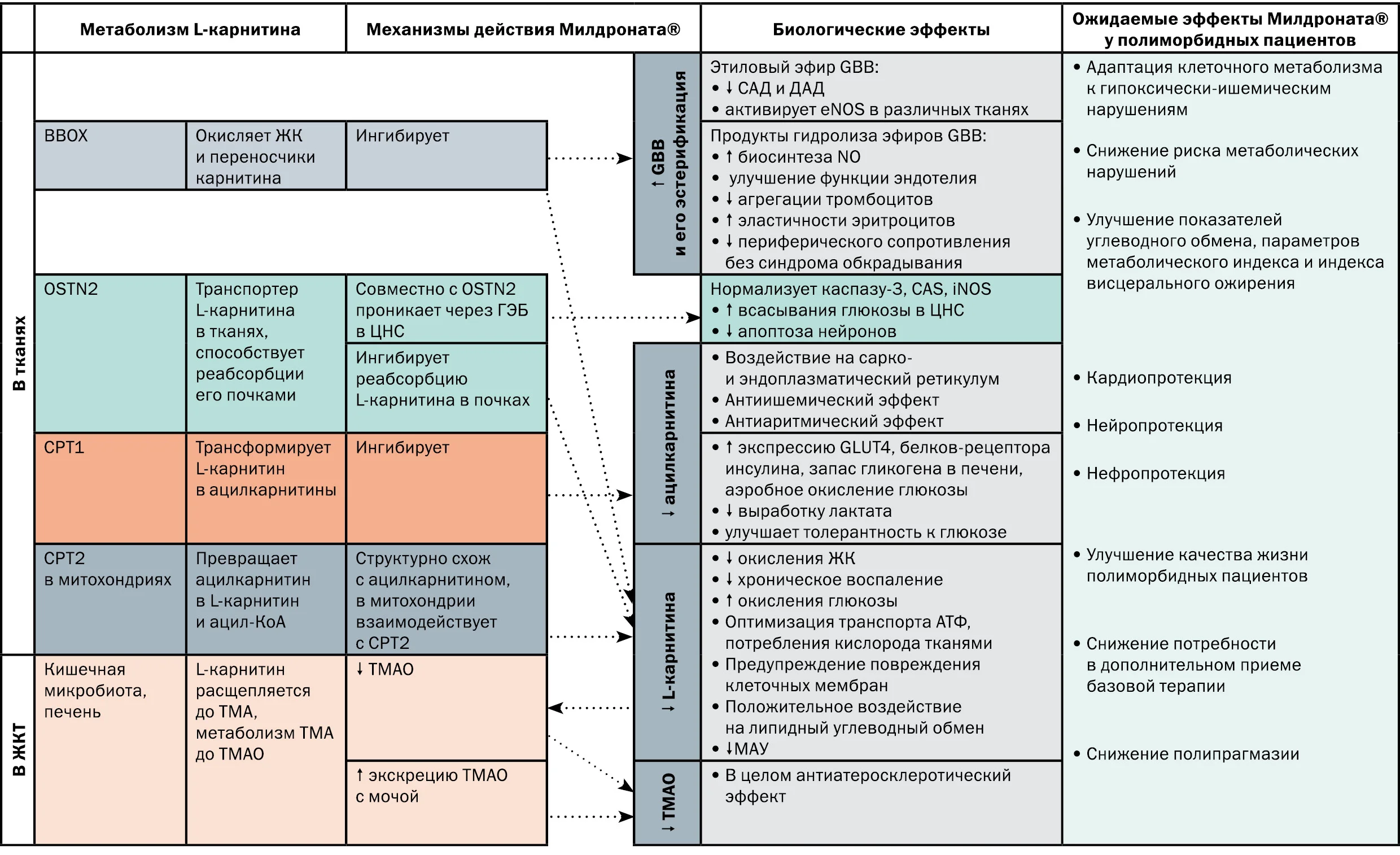
Метаболизм L-карнитина и влияние Милдроната на метаболические процессы и клинические исходы у полиморбидных пациентов
Примечание. ЖКТ – желудочно-кишечный тракт; ЖК – желчные кислоты; ГЭБ – гематоэнцефалический барьер; ЦНС – центральная нервная система; САД – систолическое артериальное давление; ДАД – диастолическое артериальное давление.
Антиоксидантный и вазопротективный эффекты мельдония (Милдронат®)
Нейропротекция
Как при ожирении, так и при СД отмечаются изменения в нервной системе. Механизмы повреждения нервной системы связаны с сосудистыми нарушениями, нейровоспалением и нейродегенерацией, что является следствием дислипидемии, липотоксичности, инсулинорезистентности.
Дислипидемия ассоциирована с соматической и вегетативной нейропатией за счет митохондриальной дисфункции. Избыток СЖК при ожирении нарушает трофику нервного волокна и способствует нейродегенерации. В норме гематоэнцефалический барьер препятствует попаданию в головной мозг воспалительных клеток крови, но при длительно текущем воспалении проницаемость гематоэнцефалического и гематоневрального барьеров повышается. Длинноцепочечные жирные кислоты и медиаторы воспаления обладают прямым повреждающим действием на нейроны корешковых ганглиев, окончания кожных нервных волокон и гематоневрального барьера, все эти изменения приводят к развитию полинейропатии. Ожирение связано с когнитивной дисфункцией, депрессией, тревогой и нарушениями сна [37].
Клиническая эффективность мельдония в комплексной терапии периферической нейропатии была показана в рандомизированном исследовании, где пациенты получали препарат в течение трех месяцев на фоне стандартной базисной терапии препаратами α-липоевой кислоты. Результаты исследования позволили установить достоверное влияние мельдония на клиническое состояние больных, что проявлялось улучшением показателей по оценочным шкалам, электрофизиологических свойств нервного волокна, оптимизацией кислородного баланса тканей, а также благоприятно влияло на показатели углеводного и липидного обменов, закономерно улучшало качество жизни пациентов [38].
По некоторым данным, Милдронат® может проникать также через гематоэнцефалический барьер в центральную нервную систему (предположительно, с помощью OCTN2 – белка, играющего важную роль в транспорте карнитина через клеточные мембраны), улучшать гемодинамику, электролитный баланс и насыщение кислородом головного мозга при нарушениях мозгового кровообращения. Милдронат® нормализует активность каспазы-3 и белка, ответственного за клеточный апоптоз (CAS), экспрессию iNOS, которая активируется в условиях ишемии, что способствует улучшению всасывания глюкозы в центральной нервной системе [39, 40].
В работе Yang W. и соавт. [42] отмечено, что Милдронат® способствовал выживанию нейронов, улучшая функцию и антиоксидантную способность митохондрий во время церебральной ишемии, тем самым значительно уменьшая размер инфаркта и улучшая двигательные способности. Милдронат® сдерживал чрезмерное деление митохондрий и потерю мембранного потенциала митохондрий, сохраняя их морфологию и дыхательную функцию. Кроме того, мельдоний (Милдронат®) опосредованно подавлял митохондриально-зависимый апоптоз нейронов [41].
Кардиопротекция
Известно, что ожирение и СД2 повышают сердечно-сосудистые риски, в то время как в различных исследованиях показаны кардиопротективные эффекты мельдония (Милдронат®). Так, мельдоний (Милдронат®), снижая содержание ацилкарнитина и повышая активность гексокиназы 1, может воздействовать на саркоплазматический и эндоплазматический ретикулумы, регулирующие активность Са2+-АТФазы и Na+/K+-АТФазы, что благоприятно влияет на сократительную способность миокарда [36, 42, 43].
Отмечены положительные эффекты мельдония (Милдроната) при добавлении его в комбинацию к основным базовым препаратам для лечения ССЗ, а в ряде случаев наблюдается уменьшение потребности в них. Например, комбинация мельдония (Милдроната) и лизиноприла улучшала качество жизни, физическую активность и периферическое кровообращение у пациентов с ХСН по сравнению с монотерапией лизиноприлом. Была отмечена сосудорасширяющая способность мельдония (Милдроната) в отношении предсердных сосудов, а также улучшение результатов теста на переносимость статической нагрузки [44]. По данным Стаценко М.Е. и соавт. [46], внутривенное применение мельдония (Милдроната) в составе комбинированной терапии у больных с ХСН оказывает позитивное влияние на течение восстановительного периода: уменьшает выраженность симптомов ХСН, снижает тяжесть функционального класса ХСН, уменьшает содержание в крови пациентов N-концевого предшественника мозгового натрийуретического пептида (NT-proBNP), оказывает антиишемический и антиаритмический эффекты (достоверно снижает частоту приступов стенокардии и потребность в дополнительном приеме нитратов, количество эпизодов аритмии и ишемии). На фоне применения мельдония (Милдроната) уменьшилось число пациентов с неблагоприятными типами ремоделирования ЛЖ, улучшилась диастолическая функция сердца, увеличилось число больных с нормотонией [45].
В наблюдательном исследовании ИНДИКОР (субанализ с учетом ИМТ), проведенном в условиях реальной клинической практики, было обследовано более 2 тыс. пациентов, имеющих полиморбидную патологию, включая ожирение, СД2, ССЗ. Было показано, что в группе пациентов, получавших в дополнение к базисной терапии мельдоний (Мидронат®), снижалась частота приступов стенокардии (на 25%), число пациентов с блокадами (на 35%) и аритмиями (на 55%), функциональный класс стенокардии (на 63%) и ХСН (на 79%), улучшалась фракция выброса (на 3%) и качество жизни (на 41%) [46].
Коррекция показателей углеводного и липидного обменов
Известно, что при СД и ожирении высокие концентрации ацилкарнитина ассоциированы с инсулинорезистентностью [28, 32, 47, 48]. В исследованиях показано, что лечение препаратом Милдронат® вызывает экспрессию как гена GLUT4, так и белков рецептора инсулина, увеличивает запас гликогена в печени, усиливает аэробное окисление глюкозы и снижает выработку лактата. Эти эффекты Милдроната в отношении метаболизма глюкозы связаны с ингибированием CPT1 и снижением уровня ацилкарнитина [32, 49].
Применение Милдроната в режиме монотерапии или в комбинации с метформином на биологических моделях СД приводило к снижению уровня HbA1c и глюкозы крови, улучшению толерантности к глюкозе, нормализации уровня экспрессии гена GLUT1 в сердце, печени, почках и мышцах, увеличению активности PPAR-α (рецепторов, активируемых пероксисомным пролифератором альфа), а также предотвращало развитие эндотелиальной дисфункции, потерю болевой чувствительности тканей, увеличение массы тела, развитие нейропатии, снижало концентрацию лактата в плазме крови [50–52].
Большую роль в настоящий момент в механизмах МН при ожирении отводят дисфункции кишечной микробиоты. Известно, что в кишечнике L-карнитин расщепляется кишечной микробиотой с образованием триметиламина (ТМА), который метаболизируется печеночной флавинмонооксигеназой-3 с образованием N-оксида триметиламина (TMA) [28, 53, 54]. В некоторых исследованиях было показано, что высокая концентрация TMAO в плазме крови связана с развитием артериосклероза и индукцией экспрессии провоспалительных цитокинов и молекул адгезии [55–57]. Высокая концентрация TMAO может влиять на метаболизм холестерина и развитие атеросклероза – увеличивать экспрессию генов, которые отвечают за синтез транспортеров холестерина, и нарушать обратный захват холестерина, способствовать накоплению холестерина в макрофагах с их последующей трансформацией в пенистые клетки [58, 59]. TMAO является также маркером нестабильности атеросклеротической бляшки, повышает гиперреактивность тромбоцитов, увеличивая риск развития атеротромботических осложнений [60, 61].
Мельдоний (Милдронат®) может уменьшать концентрацию TMAO за счет снижения уровня L-карнитина и/или увеличения его выведения с мочой [28, 53]. Именно с этим эффектом в отношении TMAO связывают положительное воздействие на липидный обмен и в целом антиатеросклеротический эффект мельдония (Милдроната).
В наблюдательном исследовании ИНДИКОР (субанализ с учетом ИМТ) в группе пациентов с ССЗ и СД2 и/или метаболическим синдромом, получавших в дополнение к базисной терапии мельдоний (Милдронат®), кроме кардиопротективных эффектов было выявлено снижение уровней общего холестерина на 9% и ЛПНП на 17%, а также уровней глюкозы и HbA1c на 9 и 6% соответственно. По мнению авторов, это может косвенно свидетельствовать о повышении чувствительности к инсулину у обследуемой группы больных, а применение в дополнение к базисной терапии мельдония (Милдроната) может влиять на снижение инсулинорезистентности. В этом же исследовании при субанализе с учетом ожирения было выявлено, что добавление мельдония (Милдроната) к базисной терапии улучшает параметры метаболического индекса и индекса висцерального ожирения [46].
Нефропротекция
Ожирение и другие компоненты метаболического синдрома напрямую или косвенно способны негативно влиять на функцию почек. Развитию и прогрессированию ХБП на фоне ожирения способствуют как прямые, так и косвенные факторы риска, наиболее значимыми из которых являются СД2 и АГ. Даже в отсутствие АГ и СД2 прямые факторы риска (повышенная реабсорбция натрия и изменения в гемодинамике, дисрегуляция адипо- и цитокинов, инсулинорезистентность, ОС, липотоксичность – приводят к первоначальной гиперфильтрации, а в последующем к снижению скорости клубочковой фильтрации (СКФ) [62].
В настоящий момент получены некоторые данные о нефропротективном эффекте Милдроната®. В одном из исследований было показано, что при применении мельдония (Милдроната) в течение 16 недель в постинфарктном периоде по сравнению с базисной терапией у больных с СД2 повышало СКФ на 20% против 2% (p<0,05), а также снижало уровень креатинина в крови и МАУ на 24% против 9% (p<0,05). По мнению авторов, эти эффекты связаны как с уменьшением выраженности ХСН при применении мельдония (Милдроната), так и с прямым благоприятным влиянием на метаболизм нефроцитов. Возможно, длительное применение мельдония (Милдроната) и снижение МАУ может уменьшить сердечно-сосудистые риски у больных с СД2 [63]. В другом исследовании также было показано усиление гломерулярной фильтрации, снижение уровня креатинина и МАУ при применении мельдония (Милдроната) в дозе 1 г в день у пациентов с СД2 и ХСН [64].
Состояние «сосудистой липотоксичности», которое характерно для пациентов с СД и ожирением, оказывает повреждающее действие на почки. Существует также множество доказательств неблагоприятного накопления СЖК при остром повреждении / реперфузионной ишемии почек (I/R), что в конечном итоге также может привести к липотоксичности [65, 66]. В результате липотоксичности происходит накопление липидов в нежировых тканях, которые не способны их метаболизировать. Так, при ишемии и реперфузии, как и при СД, снижается β-окисление СЖК и увеличивается гидролиз фосфолипидов, поглощение жирных кислот и синтез липидов. Последний может служить ранним буферным механизмом против переизбытка жирных кислот, однако даже незначительные изменения в содержании липидов, структуре, функции или расположении в клетке могут существенно повлиять на клеточный гомеостаз [67].
Нефропротекторное влияние мельдония (Милдроната) при инсулинорезистентности на биологических моделях изучали в своей работе Đurašević S. и соавт. [69]. Эксперимент показал, что мельдоний (Милдронат®) снижал активность перекисного окисления липидов, апоптотические и некротические события, что подтверждалось гистологией почек. Мельдоний (Милдронат®) комплексно изменял почечную липидомику [68]. Авторы предполагают, что липотоксичность как патогенетический фактор повреждения почки может требовать новых терапевтических возможностей, а среди потенциальных препаратов особое место могут занять средства, препятствующие повреждению клеток жирными кислотами и их нежелательному накоплению.
Вопрос о нефропротективном эффекте Милдроната, несомненно, требует дальнейшего изучения.
Краткое резюме
Приведенные в обзоре факты свидетельствуют о широком спектре эффектов цитопротектора мельдония (Милдроната), что определяет возможность клинического применения препарата у полиморбидных пациентов, имеющих ожирение и СД2. Следует отметить, что применение мельдония (Милдроната) в комплексной терапии имеет благоприятный профиль безопасности. Он не оказывает влияния на электрокаталитическую активность цитохрома Р450 3А4 и, соответственно, снижает вероятность возникновения межлекарственного взаимодействия на уровне метаболизма лекарственных препаратов при его использовании.
У полиморбидных пациентов в рамках комплексной терапии совместно с базовым лечением ИБС, ХСН, подострых нарушений кровоснабжения мозга рекомендуется проведение регулярных поддерживающих курсов терапии препаратом мельдоний (Милдронат®) согласно зарегистрированным показаниям к применению в дозе 1000 мг в сутки в виде инъекций или капсул. На первом этапе лечения препарат назначается в виде инъекций по 10 мл (100 мг/мл) в сутки течение 10 дней, на втором – в виде капсул по 500 мг (2 капсулы ежедневно в течение 4–6 недель); по решению лечащего врача возможен и более длительный прием – до 1 года.
В заключение можно сказать, что возможности мельдония (Милдроната) сопоставимы с целым рядом представителей класса метаболических цитопротекторов. Комплексное действие мельдония (Милдроната) как антигипоксанта, антиоксиданта и органопротектора, сочетается с положительными эффектами на углеводный и липидный обмен. Препарат в целом влияет на основные патогенетические механизмы ожирения, снижает риски МН, инсулинорезистентность, уменьшает хроническое воспаление, осуществляет кардио, нейро- и нефропротекцию, снижает потребность в дополнительном приеме базовой терапии и полипрагмазию. Это позволяет считать мельдоний (Милдронат®) оптимальным корректором метаболизма для полиморбидных пациентов, может быть дополнительным инструментом в комплексной борьбе с ожирением и СД2.