
Патоморфологическая характеристика воспалительных и наследственных миопатий
Резюме
ЦЕЛЬ ИССЛЕДОВАНИЯ
Охарактеризовать иммунофенотипические особенности клеточного состава воспалительного инфильтрата и морфометрические особенности мышечных волокон биоптатов скелетных мышц при наследственных и воспалительных миопатиях, а также разработать интегральный коэффициент для помощи в дифференциальной диагностике воспалительных и наследственных миопатий.
МАТЕРИАЛ И МЕТОДЫ
Материал представлен биоптатами m. tibialis anterior, m. vastus lateralis, m. gastrocnemius med., m. peroneus longus et brevis, m. deltoideus, m. biceps femoris и m. latissimus dorsi пациентов с полимиозитом (n=7), дерматомиозитом (n=3), дисферлинопатией (n=10) и кальпаинопатией (n=3), установленными на основании молекулярно-генетических, клинико-инструментальных и морфологических данных. Биоптаты были исследованы патогистологически и иммуногистохимически.
РЕЗУЛЬТАТЫ
Количество некрозов мышечных волокон значимо больше при полимиозите в сравнении с дерматомиозитом (p=0,008), дисферлинопатией (p=0,003) и кальпаинопатией (p=0,009), с диффузным характером поражения. При дерматомиозите некротизированные мышечные волокна локализованы преимущественно перифасцикулярно. При дисферлинопатии выявлена положительная корреляция между CD68+-макрофагами и CD4+-T-хелперами в перимизии (p=0,04). Количество CD8+-T-киллеров, инвазирующих в мышечные волокна, выше при полимиозите по сравнению с дисферлинопатией (p=0,034). При полимиозите отмечено повышенное количество CD138+-плазмоцитов. Коэффициент MICE был ниже при наследственных миопатиях.
ЗАКЛЮЧЕНИЕ
Иммунофенотипирование воспалительного инфильтрата и количественная морфометрия с использованием интегрального коэффициента MICE представляет критерии дифференциальной диагностики миопатий различного генеза. Установленные различия в клеточном составе инфильтрата (в частности, преобладание инвазии CD8+-T-киллерами при полимиозите) и в степени морфологической однородности мышечных волокон (более высокая при наследственных формах) представляют объективные дифференциально-диагностические критерии. Таким образом, комплексное применение данных подходов может существенно повысить точность верификации дифференциального диагноза при миопатиях различного генеза.
Ключевые слова
- поясно-конечностная мышечная дистрофия
- DYSF
- CAPN3
- полимиозит
- дерматомиозит
Дата поступления: 07.02.2025
Дата принятия в печать: 29.04.2025
Дата публикации: 03.09.2025
Миопатии представлены обширной и гетерогенной группой заболеваний, характеризующихся прогрессирующей слабостью и атрофией скелетных мышц. Многообразие этиологических факторов (генетические дефекты, аутоиммунные процессы, метаболические нарушения и др.) и сходство клинико-морфологических проявлений затрудняют установление точного диагноза, определяющего выбор адекватной терапевтической стратегии. Диагностика миопатий основана на комплексе клинических и инструментальных исследований, включая инцизионную биопсию скелетных мышц [1, 2].
Верификация генетически обусловленных орфанных миопатий сопряжена с трудностями дифференциальной диагностики с потенциально курабельными воспалительными миопатиями (полимиозитом, дерматомиозитом). Для воспалительных миопатий характерны сходные клинические проявления, включающие поясно-конечностный фенотип, миалгии, повышение уровня креатинфосфокиназы, а также миопатические изменения на электромиографии, что осложняет постановку диагноза на основании только клинических данных и результатов неинвазивных и малоинвазивных инструментальных исследований. В частности, ложная диагностика полимиозита у пациентов с дисферлинопатией — орфанным заболеванием из группы прогрессирующих миодистрофий (1—9:1 000 000, Orphanet, 2024) — достигает 25% [3—5].
Задачу дифференциальной диагностики осложняют особенности генов, связанных со структурной целостностью и функциональной активностью скелетной мускулатуры. Большой размер некоторых генов (например, гены DMD, TTN, NEB, RYR1), фенотипическая вариабельность (разнообразие клинических проявлений одной и той же мутации у разных пациентов), а также возможность нарушений сплайсинга РНК могут осложнять интерпретацию результатов секвенирования нового поколения (NGS), в частности, вести к недооценке распространенности патогенных вариантов в популяции [6]. Согласно данным молекулярно-генетического анализа методом NGS 429 связанных с миопатиями генов у 1001 пациента с поясно-конечностным фенотипом мышечной слабости, в 48% случаев не было обнаружено патологических вариантов [7].
В связи с этим патоморфологическое исследование биопсийного материала скелетных мышц приобретает ключевое значение в дифференциальной диагностике миопатий, однако интерпретация морфологических данных не всегда однозначна. Так, обнаружение лимфоцитарно-макрофагального инфильтрата при патоморфологическом исследовании скелетных мышц пациентов с орфанными наследственными миопатиями (в частности, с дисферлинопатией и кальпаинопатией) является нередкой причиной ложной диагностики полимиозита [8, 9]. Воспалительный инфильтрат также может быть выявлен в биопсийном материале при саркогликанопатии и аноктаминопатии [10,11]. Преимущественно используемые в литературе стандартные морфометрические параметры (средняя площадь и периметр мышечных волокон (МВ)) не позволяют описать вариабельность размеров и формы МВ.
Таким образом, ключевым подходом к дифференциальной патоморфологической диагностике наследственных и воспалительных миопатий является не само наличие воспалительного инфильтрата, а оценка его клеточного состава, распространенности и взаимосвязи с повреждением МВ. Иммунофенотипирование позволяет выявить состав и количественное соотношение разных типов иммунных клеток, что может указывать на первичность воспалительного процесса в патоморфогенезе повреждения МВ [12].
Дополнительным дифференциально-диагностическим подходом может служить разработка интегрального индекса, включающего совокупность стандартных гистоморфометрических параметров с учетом вариабельности размеров и формы МВ.
Цель исследования — охарактеризовать иммунофенотипические особенности клеточного состава воспалительного инфильтрата и морфометрические особенности МВ в биоптатах скелетных мышц при наследственных и воспалительных миопатиях, а также разработать интегральный коэффициент для помощи в дифференциальной диагностике воспалительных и наследственных миопатий.
Материал и методы
Получены биоптаты m. tibialis anterior, m. vastus lateralis, m. gastrocnemius medialis, m. peroneus longus et brevis, m. deltoideus, m. biceps femoris и m. latissimus dorsi от пациентов с полимиозитом (n=7), дерматомиозитом (n=3), дисферлинопатией (n=10) и кальпаинопатией (n=3) (табл. 1).
Таблица 1. Характеристика групп пациентов
Заболевание | Пол | Возраст, среднее±стандартное отклонение, лет | Локализация и количество биоптатов, мышца, n |
Дисферлинопатия | М:Ж — 5:5 | 36,7±12,8 | m. peroneus longus, 2 m. gastrocnemius medialis, 1 m. tibialis anterior, 1 m. trapezius, 1 m. vastus lateralis, 5* |
Кальпаинопатия | Ж —3 | 55,3±6,5 | m. vastus lateralis, 1* m. tibialis anterior, 1 m. gastrocnemius lateralis, 1 |
Полимиозит | М:Ж — 3:4 | 44,3±9,4 | m. vastus lateralis, 4* m. biceps femoris caput longum, 2 m. biceps femoris, 1 |
Дерматомиозит | М:Ж — 1:2 | 46,3±16,2 | m. vastus lateralis, 1* m. biceps femoris caput longum, 2 |
Примечание. * — биоптаты m. vastus lateralis, включенные в расчет коэффициента MICE.
Методология и этические аспекты исследования были определены в протоколе обсервационного исследования, зарегистрированного в ClinicalTrials.gov (NCT4824040), рассмотрены и одобрены локальным этическим комитетом Военно-медицинской академии им. С.М. Кирова. Срезы с парафиновых блоков окрашивали гематоксилином и эозином, проводили иммуногистохимические реакции с антителами к CD3, CD4, CD8, CD20, CD68, CD138, HLA-DR (Abcam, Великобритания). В качестве контроля использовали фрагмент m. vastus lateralis, полученный при аутопсии трупа мужчины 38 лет, не страдавшего при жизни аутоиммунными, ревматическими и нервно-мышечными заболеваниями. Сканирование гистологических препаратов осуществляли при помощи системы 3DHISTECH Pannoramic 250 Flash III (3DHISTECH, Венгрия). Морфометрию проводили с использованием программного обеспечения Aperio ImageScope (Leica Biosystems, США) и определением площадей поперечных сечений МВ (в мкм2), периметров МВ (в мкм), доли некротизированных МВ (в %), доли МВ с интернализированными ядрами (в %), количества маркер-позитивных клеток в строме (эндомизии, перимизии, периваскулярной области), а также в зонах фиброза и липоматоза поперечнополосатой скелетной мышечной ткани.
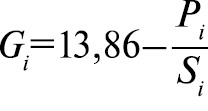
Интегральный коэффициент был разработан с помощью стандартных гистоморфометрических параметров (площадь и периметр МВ) и назван MICE (muscle integrative coefficient evaluation). Для расчета MICE использованы морфометрические данные биоптатов m. vastus lateralis пациентов из основной выборки исследования с дисферлинопатией (n=5), кальпаинопатией (n=1), полимиозитом (n=4), дерматомиозитом (n=1) (см. табл. 1). Для оценки различий форм МВ был использован коэффициент G, рассчитанный по формуле:
 ,
,
где 13,86 — константа, полученная при делении квадрата периметра на площадь равностороннего шестиугольника для анализа вариабельности формы поперечного сечения МВ; Pi2 — квадрат периметра МВ; Si — площадь МВ.
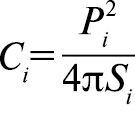
Для оценки округлости МВ был использован коэффициент округлости, рассчитанный по формуле:
 .
.
Для включения вариабельности площадей МВ использовано стандартное отклонение для конкретного пациента sdS.
Таким образом, формула интегрального коэффициента:
 ,
,
где Sref — поправка на референсную площадь МВ m. vastus lateralis; n — количество МВ конкретного пациента; Ci — коэффициент округлости; Gi — поправка на отклонение от идеальной формы МВ.
Для статистического анализа данных использовали язык программирования R (версия 4.4.0) с пакетами ggplot2 (версия 3.5.1) [13, 14].
Результаты и обсуждение
При патогистологическом исследовании препаратов, окрашенных гематоксилином и эозином, во всех группах обнаружены сходные изменения, включающие атрофию и некроз МВ, интернализацию ядер МВ, а также фиброз и липоматоз стромы. Количество некротизированных МВ было статистически значимо большим при полимиозите в сравнении с дерматомиозитом (p=0,008), дисферлинопатией (p=0,003) и кальпаинопатией (p=0,009) (рис. 1, а). При этом некроз МВ при полимиозите и наследственных миопатиях имеет диффузный характер, тогда как при дерматомиозите некротизированные МВ локализованы преимущественно перифасцикулярно. Несмотря на то что при дисферлинопатии наблюдалось наибольшее количество МВ с интернализацией ядер, это различие было статистически значимо только в сравнении с кальпаинопатией (p=0,019) (см. рис 1, б).
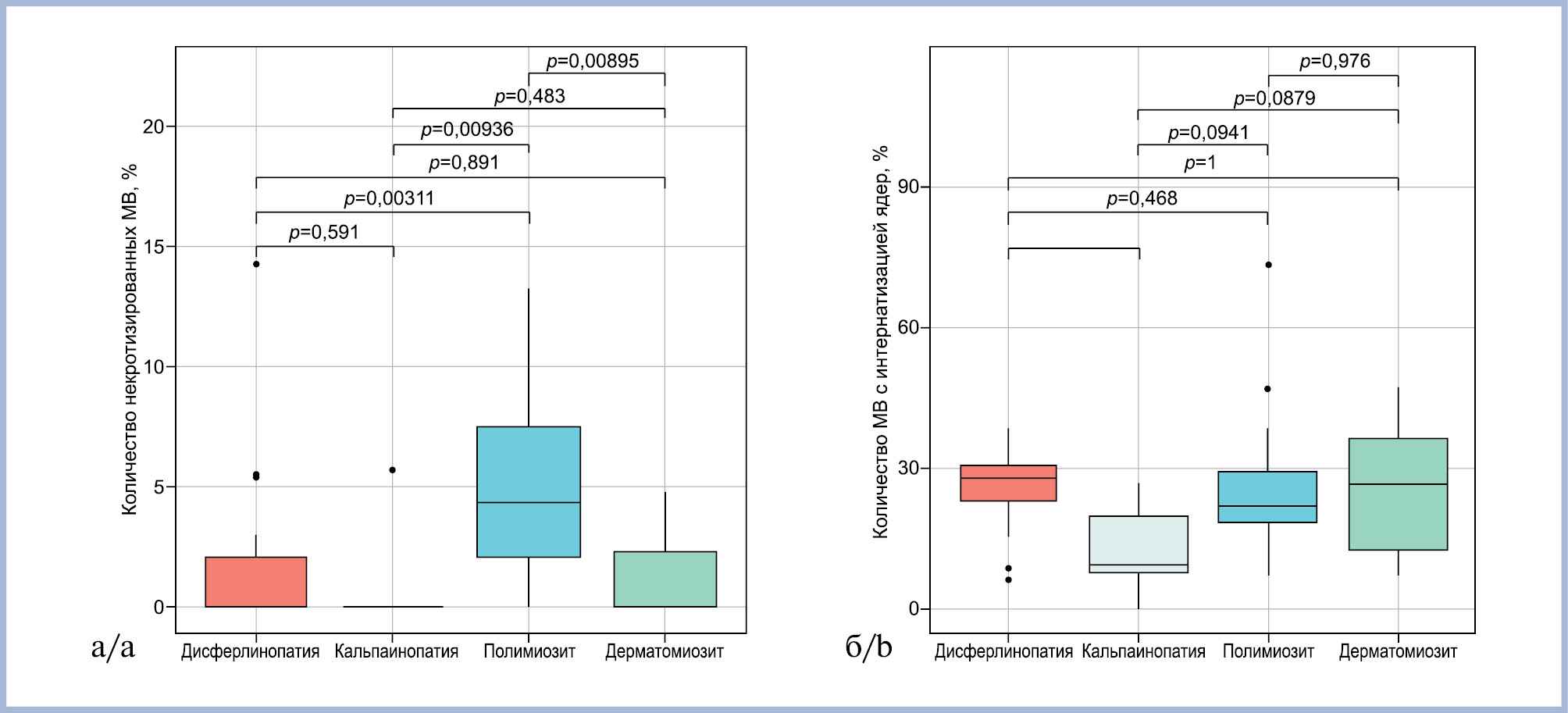
Рис. 1. Количественный анализ общих патогистологических изменений скелетных мышц: некроза и мышечных волокон (МВ) с интернализацией ядер.
а — доля некротизированных МВ; б — доля МВ с интернализацией ядер.
При анализе клеточного состава воспалительного инфильтрата во всех группах выявлена массированная инфильтрация CD68+-клетками (рис. 2, а). При полимиозите выявлена статистически более высокая плотность CD68+-макрофагов в перимизии скелетных мышц в сравнении с дерматомиозитом (p=0,04) (см. рис. 2, б). При дисферлинопатии определяется тенденция к инвазии МВ CD68+-макрофагами, не достигая статистической значимости (см. рис 2, в, г, д).
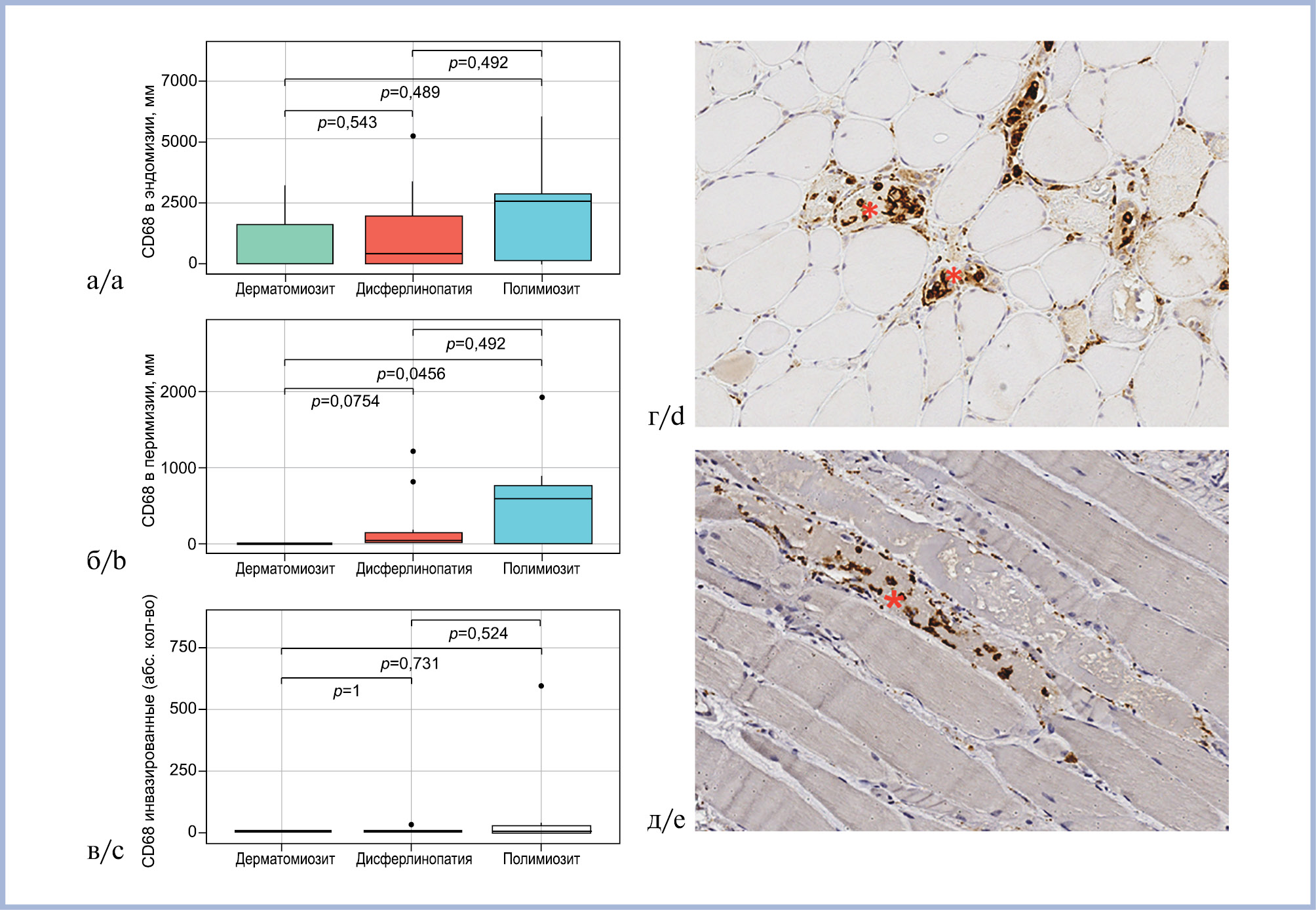
Рис. 2. Дисферлинопатия. Исследование CD68+-позитивных клеток воспалительного инфильтрата.
а — доля CD68+-макрофагов в эндомизии мышечных волокон; б — доля CD68+-макрофагов в перимизии; в — доля CD68+-макрофагов, инвазирующих в мышечные воловна; г — эндомизиальный CD68+-инфильтрат, инвазия CD68+-макрофагов в мышечных волокнах (*); д — массированная CD68+-макрофагальная инфильтрация некротизированного мышечного волокна (*). Иммуногистохимическая реакция с антителами к CD68; г—д — ×200.
Обнаружена выраженная положительная корреляция между количеством CD68+-макрофагов в перимизии и количеством CD4+-T-хелперов в той же области в группе дисферлинопатии, при этом в других группах этой корреляции выявлено не было (p=0,04). Число CD8+-T-киллеров, инвазирующих МВ, было статистически значимо больше при полимиозите по сравнению с дисферлинопатией (p=0,034) (рис. 3).
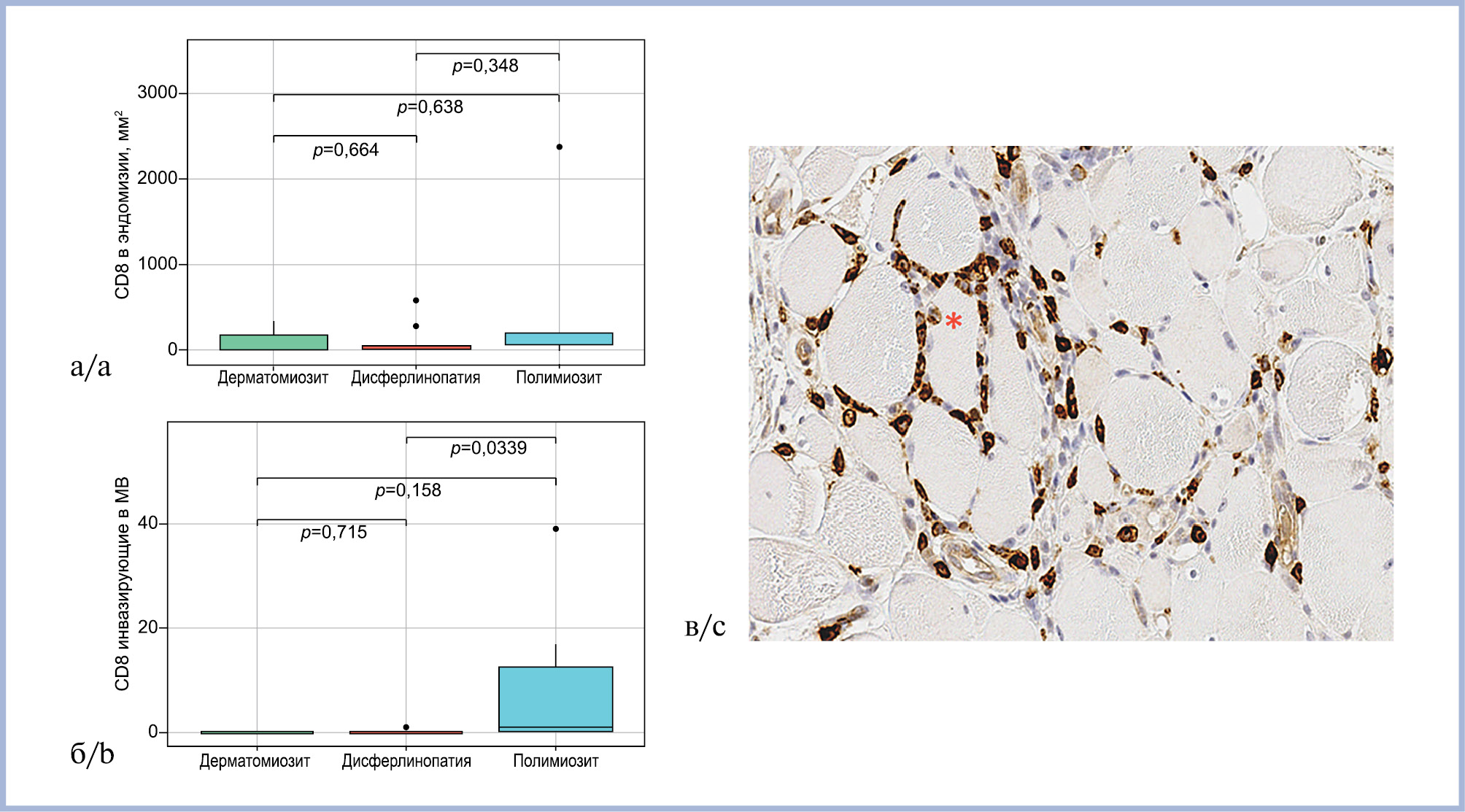
Рис. 3. Полимиозит. Исследование CD8+-позитивных клеток воспалительного инфильтрата.
а — доля CD8+-T-киллеров в эндомизии мышечных волокон; б — доля CD8+-T-киллеров, инвазирующих мышечные волокна; в — массированный эндомизиальный CD8+-инфильтрат, инвазия CD8+-T-киллеров в жизнеспособное мышечное волокно. в — иммуногистохимическая реакция с антителами к CD8, ×200.
Число CD138+-плазмоцитов статистически значимо преобладало при полимиозите в сравнении с группой дисферлинопатии в эндомизии (p=0,014), перимизии (p=0,03) и периваскулярной области (p=0,03) (рис. 4).
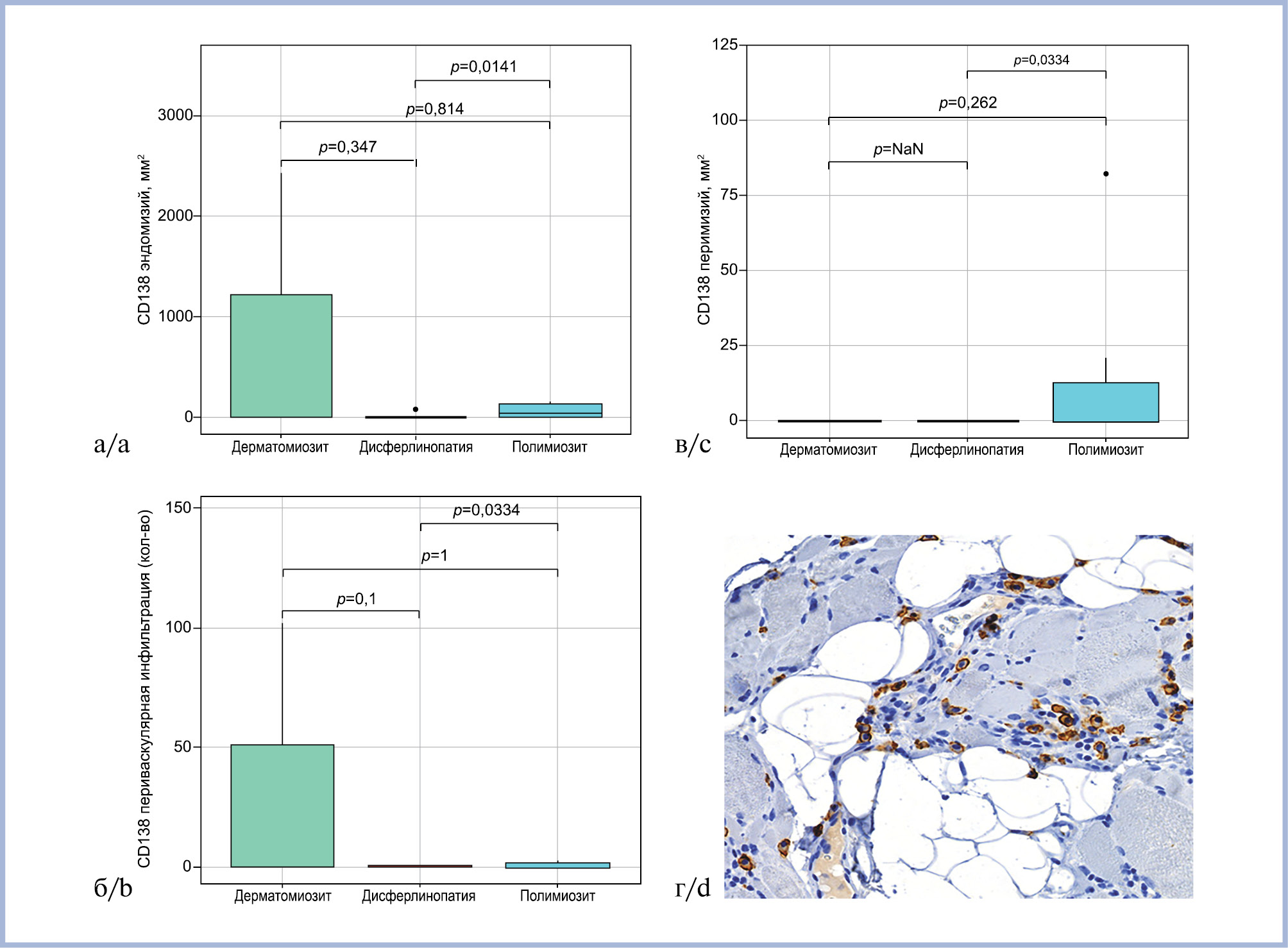
Рис. 4. Полимиозит. Исследование CD138+-позитивных клеток воспалительного инфильтрата.
а — доля CD138+-плазматических клеток в эндомизии мышечных волокон; б — доля CD138+-плазмоцитов в перимизии; в — доля CD138+-плазматических клеток в периваскулярной зоне; г — выраженная лимфоплазмоцитарная эндомизиальная и периваскулярная инфильтрация на фоне липоматоза поперечнополосатой скелетной мышечной ткани. Иммуногистохимическая реакция с антителами к CD138; г — х 200.
Иммуногистохимическое определение HLA-DR (Human Leukocyte Antigen — DR isotype) не выявило значимых различий в количестве позитивных клеток.
На форму МВ влияют многочисленные факторы, включая частоту и длительность нервных импульсов, гормональную регуляцию, механическую нагрузку, доступность энергетических субстратов и кислорода [15]. Значения коэффициента MICE, отражающего интегральную оценку морфометрических характеристик МВ, различались между исследуемыми группами. У пациентов с миопатиями наследственного генеза (дисферлинопатией и кальпаинопатией) выявлены более низкие значения MICE, что свидетельствует о меньших отклонениях формы МВ от нормальной и их более высокой однородности. В группе с воспалительными миопатиями (полимиозитом и дерматомиозитом) значения MICE были выше и имели больший размах, что указывает на более выраженную вариабельность форм и размеров МВ (рис. 5). Несмотря на тенденцию к различиям между группами, статистическая значимость была на границе уровня (p=0,0556). Низкий уровень значимости получен ввиду относительной мономорфности МВ в группе дерматомиозита (значение коэффициента 1,63). При исключении пациента с диагнозом дерматомиозита обнаружены значимые различия между группами (p=0,016).
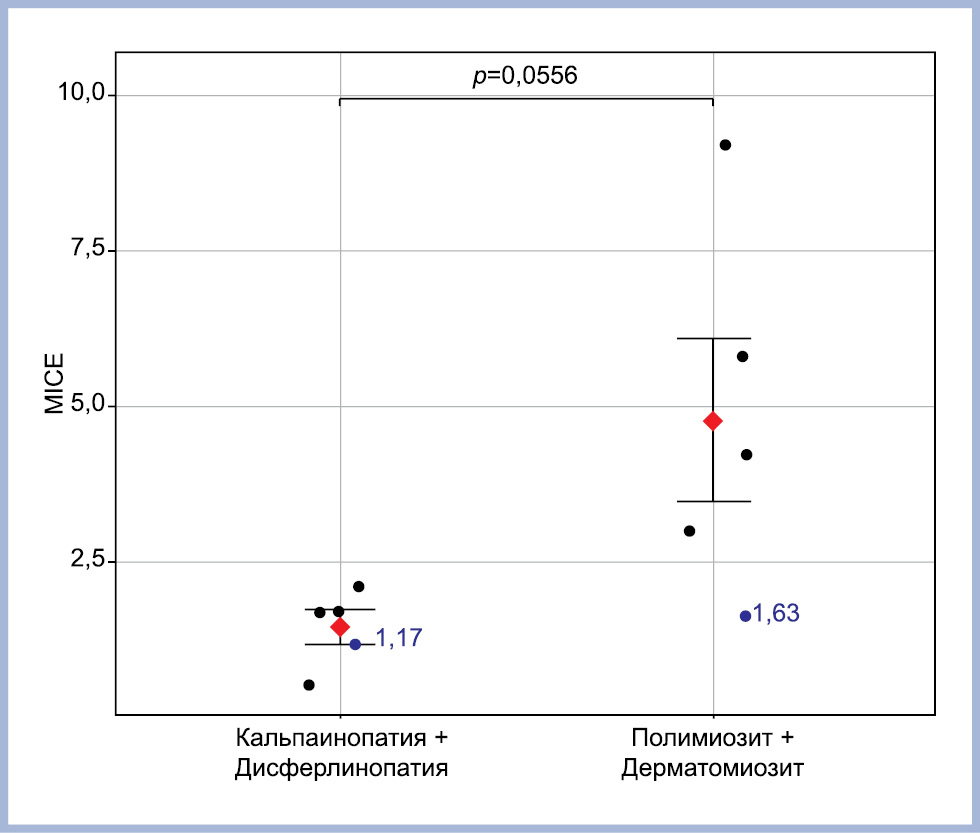
Рис. 5. Error-bar, отображающий распределение коэффициента MICE в группах заболеваний.
Синие точки обозначают пациентов (n) с кальпаинопатией (MICE=1,17) и дерматомиозитом (MICE=1,63).
Сводная характеристика ключевых морфологических, иммуногистохимических и морфометрических признаков, выявленных при исследовании различных миопатий, представлена в табл. 2.
Таблица 2. Сравнительная характеристика ключевых морфологических, иммуногистохимических и морфометрических (коэффициент MICE) признаков при воспалительных и наследственных миопатиях
Признак | Полимиозит | Дерматомиозит | DYSF | CAPN3 |
Общие патогистологические признаки: | ||||
Некроз МВ | +++ (диффузный) | ++ (преимущественно перифасцикулярный) | ++ (диффузный) | + (диффузный) |
Интернализация ядер МВ | ++ | ++ | +++ | + |
Иммуногистохимическая характеристика воспалительного инфильтрата: | ||||
CD68+-клетки в эндомизии | +++ | + | ++ | |
CD68+-клетки в перимизии | +++ | + | ++ | |
CD68+-инвазия в МВ | + | + | ++ | |
CD8+-клетки в эндомизии | +++ | + | ++ | |
CD8+-инвазия в МВ | +++ | + | + | |
CD20+-клетки (в строме) | ++ | + | + | |
CD138+-клетки (в строме) | ++ | + | + | |
Морфометрический анализ: | ||||
Среднее значение MICE | 19294,490 | 9767,040 | 5931,305 | 7043,214 |
Примечание. (+) — единичные клетки; (++) — умеренное количество клеток; (+++) — большое количество клеток; DYSF — дисферлинопатия, CAPN3 — кальпаинопатия.
Наблюдаемые во всех группах некроз и интернализация ядер МВ описаны для широкого спектра состояний разнообразной этиологии. Наличие этих признаков во всех исследованных группах при отсутствии статистически значимых различий в большинстве наблюдений подтверждает их низкую специфичность вне учета данных о локализации этих изменений относительно соединительнотканных компартментов исследуемой мышцы. Преимущественная перифасцикулярная локализация атрофичных и некротизированных МВ при дерматомиозите может свидетельствовать о микроциркуляторных изменениях и ишемии в этой зоне, что подтверждается редукцией капилляров, повреждением эндотелия, отложением комплемента и перифасцикулярными инфильтратами, описанными в литературе [16, 17]. Несмотря на то что подобные изменения описываются как специфичные для дерматомиозита, перифасцикулярная атрофия выявлена в биопсийном материале пациентов с антисинтетазным синдромом [17, 18]. При этом также описаны случаи отсутствия перифасцикулярной атрофии у пациентов с дерматомиозитом, что ставит под вопрос специфичность этого гистопатологического признака [19].
Патоморфологическое исследование биоптатов скелетных мышц выявило наличие воспалительного инфильтрата во всех группах, что согласуется с данными литературы [20] о воспалительных изменениях при дисферлинопатии и кальпаинопатии, имитирующих воспалительные миопатии. Наблюдение подтверждает, что воспалительный инфильтрат сам по себе не может служить надежным критерием дифференциальной диагностики [12].
Результаты количественного анализа CD68+-макрофагов свидетельствуют об их активном участии в патогенезе как воспалительных, так и наследственных миопатий (дисферлинопатии и кальпаинопатии), что подчеркивается массивной инфильтрацией CD68+-клетками во всех исследуемых группах. Большое количество CD68+-клеток в эндомизии с учетом тенденции к повышенной инвазии в МВ и в сочетании с относительно небольшим количеством некротизированных МВ привносит дополнительный аргумент в пользу представления о вторичности иммуновоспалительного ответа при дисферлинопатии [20, 21].
Выраженная положительная корреляция между количеством CD68+-макрофагов в перимизии и количеством CD4+-T-хелперов в той же области в совокупности с малым количеством лимфоцитов других иммунофенотипов при дисферлинопатии (CD8, CD20 и CD138) позволяет предположить потенциальное участие T-хелперов в подавлении иммунного ответа и стимуляции поляризации макрофагов в сторону противовоспалительного фенотипа в условиях хронического генетически обусловленного повреждения [22—24]. Статистически значимое преобладание CD8+-T-киллеров, инвазирующих МВ, при полимиозите соотносится с данными литературы [25—27].
Количественный анализ CD20+- и CD138+-клеток выявил малое вовлечение B-клеточного звена иммунитета в воспалительный ответ при дисферлинопатии [28]. Описанные в литературе [29] иммуногистохимические исследования биопсийного материала скелетных мышц пациентов с полимиозитом выявляют вовлечение прежде всего T-клеточных субпопуляций. Настоящее исследование демонстрирует повышенный уровень CD138+-клеток при полимиозите в сравнении с группами дерматомиозита и дисферлинопатии. Сходные данные были получены путем комплексного анализа биоптатов скелетных мышц пациентов с полимиозитом и миозитом с включениями посредством анализа экспрессии генов, иммуногистохимического анализа (CD19, CD20, CD138), а также лазерной микродиссекции с ПЦР в реальном времени, показав активную транскрипцию антител, дифференцировку B-клеток и экспрессию генов иммуноглобулинов в предполагаемых плазматических клетках [30].
Сходные медианные значения HLA-DR-позитивных клеток при полимиозите и дерматомиозите подтверждают участие иммунного звена в патогенезе обоих заболеваний [29].
Исследование Y. Iwasaki и соавт. [31], посвященное морфометрическим изменениям мышечной ткани при боковом амиотрофическом склерозе, включает средний диаметр МВ, площадь МВ и частоту патологических изменений. Предложенный подход основывается на раздельном анализе указанных характеристик, что усложняет их интеграцию для комплексной интерпретации гистоморфометрической характеристики МВ. Исследование J. Lexell и D.Y. Downham [32] акцентирует внимание на возрастных изменениях пространственного распределения и группировки типов МВ, что является важным для анализа процессов денервации и реиннервации. Однако работа не рассматривает вариабельность размеров и форм МВ, что ограничивает ее применение для диагностики. В исследовании F. Garton и соавт. [33] представлен автоматизированный анализ площадей и пропорций МВ, что повышает точность и воспроизводимость результатов. Однако этот подход не позволяет выполнить комплексную оценку функционального состояния скелетных мышц, поскольку ориентирован исключительно на автоматизацию подсчета отдельных параметров.
Методология интегрального коэффициента MICE основана на объединении показателей отклонения формы МВ, их округлости и вариабельности площади в единую интегральную метрику. Такой подход позволяет обеспечить объективную оценку структурных и функциональных изменений мышечной ткани, уменьшая субъективность, присущую ручным методам анализа. У пациентов с воспалительными миопатиями значения MICE были выше и имели больший размах, что отражает более выраженную вариабельность морфометрических параметров. Важно отметить влияние мономорфности МВ в группе дерматомиозита на результаты исследования. Возможно, коэффициент MICE более эффективен для дифференциации миопатий с диффузной атрофией и меньше подходит для заболеваний с локальными изменениями структуры мышечных волокон (например, перифасцикулярной атрофией).
Комплексный патоморфологический анализ, сочетающий иммунофенотипирование воспалительного инфильтрата и количественную морфометрию с использованием коэффициента MICE, предоставляет ценные дифференциально-диагностические критерии. Ключевые различия включают значимо более выраженную инвазию CD8+-T-киллеров и значительное количество CD138+-плазмоцитов при полимиозите, отражая активное вовлечение как клеточного, так и гуморального звена иммунного ответа. Интегральный коэффициент MICE, отражающий вариабельность МВ, был статистически значимо ниже в группе наследственных миопатий по сравнению с воспалительными формами, что свидетельствует о большей морфологической однородности МВ. Это также указывает на ограниченность воспалительного процесса при наследственных миопатиях и может служить дополнительным объективным критерием при затрудненной дифференциальной диагностике.
Таким образом, использование количественной оценки иммунного клеточного состава и морфометрических характеристик с использованием коэффициента MICE повышает точность диагностики миопатий различного генеза и может способствовать более обоснованному принятию клинико-диагностических решений.
Работа выполнена по направлению научных исследований в рамках тематики «Генно-клеточная регуляция регенерации тканей опорно-двигательного аппарата и разработка лекарственных препаратов на их основе» №125021201974-2 от 12.02.25, поддержанной Министерством науки и высшего образования Российской Федерации.
Участие авторов:
Концепция и дизайн исследования — Деев Р.В.
Сбор и обработка материала — Бардаков С.Н., Лимаев И.С., Емелин А.М., Ветрова Ю.А.
Написание текста статьи — Лимаев И.С., Гладышев Н.С.
Статистический анализ — Гладышев Н.С.
Редактирование — Деев Р.В.
Авторы заявляют об отсутствии конфликта интересов.
- Joyce NC, Oskarsson B, Jin LW. Muscle biopsy evaluation in neuromuscular disorders. Phys Med Rehabil Clin N Am. 2012;23(3): 609-631. https://doi.org/10.1016/j.pmr.2012.06.006
- Dubowitz V, Sewry SA, Oldfors A. Muscle biopsy. A practical approach. 5th ed. Elsevier; 2021. 530p.
- Nguyen K, Bassez G, Bernard R, Krahn M, Labelle V, Fugarella-Branger D, Pouget J, Hammouda el H, Béroud C, Urtizberea A, et al. Dysferlin mutations in LGMD2B, Miyoshi myopathy, and atypical dysferlinopathies. Hum Mutat. 2005;26(2):165. https://doi.org/10.1002/humu.9355
- Bouchard C, Tremblay JP. Portrait of dysferlinopathy: diagnosis and development of therapy. J Clin Med. 2023;12(18):6011. https://doi.org/10.3390/jcm12186011
- Wang N, Han X, Hao S, Han J, Zhou X, Sun S, Tang J, Lu Y, Wu H, Ma S, et al. The clinical, myopathological, and molecular characteristics of 26 Chinese patients with dysferlinopathy: a high proportion of misdiagnosis and novel variants. BMC Neurol. 2022;22(1):398. https://doi.org/10.1186/s12883-022-02905-w
- Savarese M, Välipakka S, Johari M, Hackman P, Udd B. Is gene-size an issue for the diagnosis of skeletal muscle disorders? J Neuromuscul Dis. 2020;7(3):203-216. https://doi.org/10.3233/JND-190459
- Johnson K, Bertoli M, Phillips L, Töpf A, Lek M, Xu L, MacArthur D, Straub V. P 243. The MYO-SEQ project: application of exome sequencing technologies of 1000 patients affected by limb-girdle weakness of unknown origin. Neuromuscul Disord. 2016;26(Suppl. 2):S161. https://doi.org/10.1016/j.nmd.2016.06.273
- Contreras-Cubas C, Barajas-Olmos F, Frayre-Martínez MI, Siordia-Reyes G, Guízar-Sánchez CC, García-Ortiz H, Orozco L, Baca V. Dysferlinopathy misdiagnosed with juvenile polymyositis in the pre-symptomatic stage of hyperCKemia: a case report and literature review. BMC Med Genomics. 2022;15(1):139. https://doi.org/10.1186/s12920-022-01284-y
- Schutz P, Scalco RS, Barresi R, Houlden H, Parton M, Holton JL. Calpainopathy with macrophage-rich, regional inflammatory infiltrates. Neuromuscul Disord. 2017;27(8):738-741. https://doi.org/10.1016/j.nmd.2017.04.012
- Alonso-Pérez J, González-Quereda L, Bruno C, Panicucci C, Alavi A, Nafissi S, Nilipour Y, Zanoteli E, Isihi LMA, Melegh B, et al. Clinical and genetic spectrum of a large cohort of patients with δ-sarcoglycan muscular dystrophy. Brain. 2022;145(2):596-606. https://doi.org/10.1093/brain/awab301
- Soontrapa P, Liewluck T. Anoctamin 5 (ANO5) muscle disorders: a narrative review. Genes (Basel). 2022;13(10):1736. https://doi.org/10.3390/genes13101736
- Бардаков С.Н., Емелин А.М., Никитин С.С., Хелковская-Сергеева А.Н., Лимаев И.С., Муртазина А.Ф., Царгуш В.А., Гусева М.В., Сафронова Я.В., Каймонов В.С., Исаев А.А., Деев Р.В. Причины ложной диагностики полимиозита у пациентов с дисферлинопатией: клинический случай. Нервно-мышечные болезни. 2022;12(4):73-87. https://doi.org/10.17650/2222-8721-2022-12-4-73-87
- Wickham H. ggplot2. Elegant graphics for data analysis. Springer; 2016. 260p. https://doi.org/10.1007/978-3-319-24277-4
- Wickham H, François R, Henry L, Müller K, Vaughan D. dplyr: a grammar of data manipulation. R package. Version 1.1.4. 2023. https://github.com/tidyverse/dplyr,https://dplyr.tidyverse.org
- Blaauw B, Schiaffino S, Reggiani C. Mechanisms modulating skeletal muscle phenotype. Compr Physiol. 2013;3(4):1645-1687. https://doi.org/10.1002/cphy.c130009
- Caetano AM, Borges IBP, da Silva LMB, Shinjo SK. High prevalence of necrotizing myofibers in adult dermatomyositis muscle biopsies. Clin Rheumatol. 2022;41(11):3411-3417. https://doi.org/10.1007/s10067-022-06270-4
- Zhang L, Xia Q, Li W, Liu Q, Zhang L, Tian X, Ye L, Wang G, Peng Q. Immunoproteasome subunit β5i promotes perifascicular muscle atrophy in dermatomyositis by upregulating RIG-I. RMD Open. 2023;9(1):e002818. https://doi.org/10.1136/rmdopen-2022-002818
- Aouizerate J, De Antonio M, Bassez G, Gherardi RK, Berenbaum F, Guillevin L, Berezne A, Valeyre D, Maisonobe T, Dubourg O, et al. Myofiber HLA-DR expression is a distinctive biomarker for antisynthetase-associated myopathy. Acta Neuropathol Commun. 2014;2:154. https://doi.org/10.1186/s40478-014-0154-2
- Pinal-Fernández I, Casciola-Rosen L, Christopher-Stine L, Corse A, Mammen AL. The prevalence of individual histopathologic features varies according to autoantibody status in muscle biopsies from dermatomyositis patients. J Rheumatol. 2015;42(8):1448-1454.
- Becker N, Moore SA, Jones KA. The inflammatory pathology of dysferlinopathy is distinct from calpainopathy, Becker muscular dystrophy, and inflammatory myopathies. Acta Neuropathol Commun. 2022;10(1):17. https://doi.org/10.1186/s40478-022-01320-z
- Schutz PW, Scalco RS, Barresi R, Houlden H, Parton M, Holton JL. Calpainopathy with macrophage-rich, regional inflammatory infiltrates. Neuromuscul Disord. 2017;27(8):738-741. https://doi.org/10.1016/j.nmd.2017.04.012
- Kwee BJ, Budina E, Najibi AJ, Mooney DJ. CD4 T-cells regulate angiogenesis and myogenesis. Biomaterials. 2018;178:109-121. https://doi.org/10.1016/j.biomaterials.2018.06.003
- Dittel BN. CD4 T cells: balancing the coming and going of autoimmune-mediated inflammation in the CNS. Brain Behav Immun. 2008;22(4):421-430. https://doi.org/10.1016/j.bbi.2007.11.010
- Ceccon G, Lehmann HC, Neuen-Jacob E, Meng G, Fink GR, Wunderlich G. „Therapierefraktäre Polymyositis“ — stimmt die Diagnose? [“Therapy-resistant polymyositis” — is the diagnosis correct?]. Z Rheumatol. 2017;76(7):640-643. (In German). https://doi.org/10.1007/s00393-017-0326-0
- Dalakas MC. Muscle biopsy findings in inflammatory myopathies. Rheum Dis Clin North Am. 2002;28:779-798. https://doi.org/10.1016/s0889-857x(02)00030-3
- Rider LG, Ruperto N, Pistorio A, Erman B, Bayat N, Lachenbruch PA, Rockette H, Feldman BM, Huber AM, Hansen P, et al.; International Myositis Assessment and Clinical Studies Group and the Paediatric Rheumatology International Trials Organisation. 2016 ACR-EULAR adult dermatomyositis and polymyositis and juvenile dermatomyositis response criteria-methodological aspects. Rheumatology (Oxford). 2017;56(11):1884-1893. https://doi.org/10.1093/rheumatology/kex226
- Findlay AR, Goyal NA, Mozaffar T. An overview of polymyositis and dermatomyositis. Muscle Nerve. 2015;51:638-656. https://doi.org/10.1002/mus.24566
- Xu C, Chen J, Zhang Y, Li J. Limb-girdle muscular dystrophy type 2B misdiagnosed as polymyositis at the early stage: case report and literature review. Medicine. 2018;97:e10539. https://doi.org/10.1097/md.0000000000010539
- Раденска-Лоповок С.Г. Биопсийная диагностика ревматических заболеваний. Руководство для врачей. М.: Практическая медицина; 2024. 160 с.
- Greenberg SA, Pinkus JL, Pinkus GS, Burleson T, Sanoudou D, Tawil R, Barohn RJ, Saperstein DS, Briemberg HR, Ericsson M, et al. Interferon-alpha/beta-mediated innate immune mechanisms in dermatomyositis. Ann Neurol. 2005;57(5):664-678. https://doi.org/10.1002/ana.20464
- Iwasaki Y, Sugimoto H, Ikeda K, Takamiya K, Shiojima T, Kinoshita M. Muscle morphometry in amyotrophic lateral sclerosis. Int J Neurosci. 1991;58(3-4):165-170. https://doi.org/10.3109/00207459108985432
- Lexell J, Downham DY. The occurrence of fibre-type grouping in healthy human muscle: a quantitative study of cross-sections of whole vastus lateralis from men between 15 and 83 years. Acta Neuropathol. 1991;81(4):377-381. https://doi.org/10.1007/BF00293457
- Garton F, Seto JT, North KN, Yang N. Validation of an automated computational method for skeletal muscle fiber morphometry analysis. Neuromuscul Disord. 2010;20(8):540-547. https://doi.org/10.1016/j.nmd.2010.06.012


Рекомендуем статьи по данной теме:
Случай сочетания локализованной склеродермии, псориаза и признаков дерматомиозита: диагностические и терапевтические аспекты.Клиническая дерматология и венерология. 2026;25(3):444-449
Случай диагностики миастении у пациента с полимиозитом.Журнал неврологии и психиатрии им. С.С. Корсакова. 2026;126(2):130-135
Ультраструктурные изменения скелетной мышечной ткани у пациентов с дисферлинопатией.Архив патологии. 2025;87(1):28-36