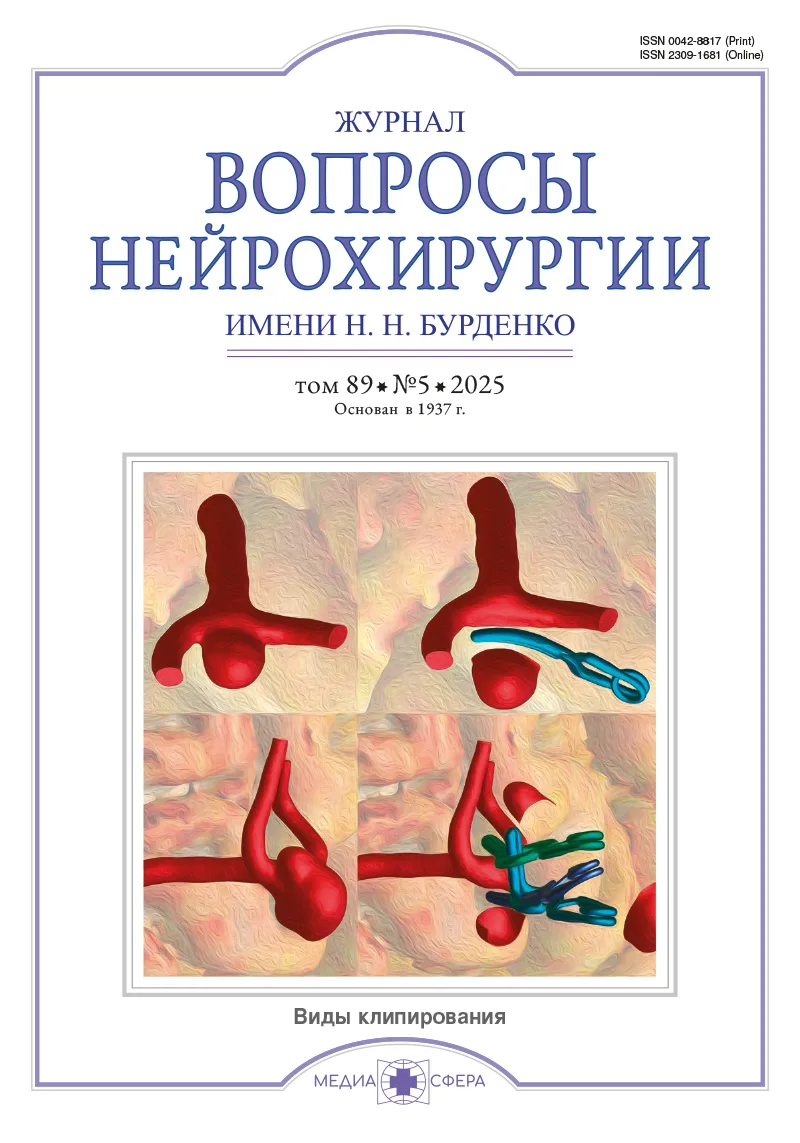
Феномен субдуральных скоплений при арахноидальных кистах сильвиевой щели у детей
Журнал: Вопросы нейрохирургии имени Н.Н. Бурденко. 2025;89(5):96-102.
DOI: 10.17116/neiro20258905196
Прочитано: 1409 раз
Резюме
Одним из вариантов осложнения клинического течения арахноидальных кист (АК) сильвиевой щели являются субдуральные скопления (СС) в виде гигром или гематом, которые формируются вследствие спонтанного либо травматического разрыва стенок кисты. Возникновение СС возможно и после хирургического лечения — кистоцистерностомии.
ЦЕЛЬ ИССЛЕДОВАНИЯ
Описание двух клинических случаев с СС, развившимися у детей с АК сильвиевой щели, а также обзор литературы, посвященной изучению генеза этого феномена, анализ методов профилактики и лечения.
МАТЕРИАЛ И МЕТОДЫ
Представлены два наблюдения АК сильвиевой щели у детей с СС: первое наблюдение — СС возникли вследствие первичного спонтанного разрыва стенок кисты, второе наблюдение — после эндоскопической кистоцистерностомии.
РЕЗУЛЬТАТЫ
В первом случае у ребенка произошел спонтанный разрыв АК сильвиевой щели типа 2 по Galassi с формированием хронической субдуральной гематомы лобно-височно-теменной области слева. После микрохирургической субдуро-кистоцистерностомии отмечался регресс патологической симптоматики. МРТ-контроль в динамике после выписки показал отсутствие СС и дислокации срединных структур. Во втором наблюдении, с АК левой сильвиевой щели типа 3 по Galassi после эндоскопической кистоцистерностомии, МРТ-контроль в первый год наблюдения выявил наличие клинически незначимых СС, расцененных как хроническая субдуральная гигрома, а затем еще через 1 год — как хроническая гематома. МРТ-контроль через 3 года демонстрировал полный регресс СС.
ЗАКЛЮЧЕНИЕ
При спонтанном разрыве АК сильвиевой щели и возникновении напряженных субдуральных скоплений у детей методом выбора является микрохирургия с созданием сообщения между субдуральной полостью, полостью кисты и базальными цистернами, в некоторых случаях возможно ограничиться дренированием субдуральных скоплений. Возникновение клинически незначимых субдуральных скоплений (СС) после эндоскопической кистоцистерностомии арахноидальных кист (АК) сильвиевой щели у детей — частое явление и в большинстве случаев не требует хирургической коррекции.
Ключевые слова
- субдуральные скопления
- субдуральные гигромы
- субдуральные гематомы
- арахноидальные кисты сильвиевой щели у детей
- кистоцистерностомия
Дата поступления: 03.06.2025
Дата принятия в печать: 18.07.2025
Дата публикации: 16.10.2025
- Tomita T, Kwasnicki AM, McGuire LS, Dipatri AJ. Temporal sylvian fissure arachnoid cyst in children: treatment outcome following microsurgical cyst fenestration with special emphasis on cyst reduction and subdural collection. Child’s Nervous System. 2023;39(1):127-139. https://doi.org/10.1007/s00381-022-05719-w
- Nguyen BT, Tran VD, Bista J, Van Trinh T. Chronic subdural hematoma associated with type II and type III Galassi arachnoid cysts: illustrative cases. Journal of Neurosurgery: Case Lessons. 2023;6(26):CASE23544. https://doi.org/10.3171/CASE23544
- Wang JY, Hadi H, Arshad M, Whitney E. A Comprehensive Review of Arachnoid Cysts. Cureus. 2025;17(5):e83894. https://doi.org/10.7759/cureus.83894
- Ahmed AK, Cohen AR. Intracranial arachnoid cysts. Child’s Nervous System. 2023;39(10):2771-2778. https://doi.org/10.1007/s00381-023-06066-0
- Коновалов А.Н., Назаров В.В., Линде Н.Н., Кадашева А.Б., Спирин Д.С., Андреев Д.Н., Кулдашев К.А., Галстян С.А., Аслаханова К.С., Захарова Н.Е., Козлов А.В. Арахноидальная киста ствола мозга: описание клинического случая и обзор литературы. Вопросы нейрохирургии им. Н.Н. Бурденко. 2021;85(5):88-94. https://doi.org/10.17116/neiro20218505188
- Fuentes AM, Jane JA Jr. Spontaneous regression of an interhemispheric arachnoid cyst: illustrative case. Child’s Nervous System. 2024;40(8):2637-2640. https://doi.org/10.1007/s00381-024-06464-y
- Недугов Г.В. Субдуральные гематомы. Самара; 2011.
- Лившиц М.И., Чмутин Г.Е., Смолянкина Е.И., Левов А.В., Чигибаев М.Ж. Клинический случай формирования острой субдуральной гигромы на фоне спонтанного разрыва арахноидальной кисты сильвиевой щели у ребенка. Детская хирургия. 2021;25(1):50.
- Tamburrini G, Caldarelli M, Massimi L, Santini P, Di Rocco C. Subdural hygroma: an unwanted result of Sylvian arachnoid cyst marsupialization. Child’s Nervous System. 2003;19(3):159-165. https://doi.org/10.1007/s00381-003-0724-2
- Okano A, Ogiwara H. The effectiveness of microsurgical fenestration for middle fossa arachnoid cysts in children. Child’s Nervous System. 2016;32(1): 153-158. https://doi.org/10.1007/s00381-015-2908-y


Рекомендуем статьи по данной теме:
Профессор Виктор Николаевич Звягин. К 85-летию со дня рождения.Судебно-медицинская экспертиза. 2026;69(5):67-70
Профессор Виктор Ильич Прозоровский. К 125-летию со дня рождения.Судебно-медицинская экспертиза. 2026;69(5):65-66
Алевтина Михайловна Орлова. К 80-летию со дня рождения.Судебно-медицинская экспертиза. 2026;69(5):63-64
Профессиональная подготовка специалистов в области судебно-химической и химико-токсикологической экспертизы: ключевые аспекты.Судебно-медицинская экспертиза. 2026;69(5):56-62
К вопросу о судебно-медицинском значении трупной имбибиции вокруг подкожных вен в случаях смерти от общего переохлаждения.Судебно-медицинская экспертиза. 2026;69(5):49-55
Роль магнитно-резонансной томографии в диагностике диффузного аксонального повреждения.Судебно-медицинская экспертиза. 2026;69(5):42-48
Анатомические варианты, аномалии и другие неметрические характеристики скелета при судебно-медицинской экспертизе костных останков (случаи из практики).Судебно-медицинская экспертиза. 2026;69(5):38-41
Сравнительная характеристика огнестрельных повреждений, произведенных с разного расстояния самоснаряженными и фабрично изготовленными патронами 12-го калибра при выстрелах из ружья МЦ 21-12.Судебно-медицинская экспертиза. 2026;69(5):32-37
Электронно-микроскопическая характеристика повреждений волос, причиненных предметами различной остроты.Судебно-медицинская экспертиза. 2026;69(5):28-31
О возможности установления видовой принадлежности пятен слюны методом количественного иммуноферментного анализа.Судебно-медицинская экспертиза. 2026;69(5):24-27