The site of the Media Sphera Publishers contains materials intended solely for healthcare professionals.
By closing this message, you confirm that you are a certified medical professional or a student of a medical educational institution.

Arushanian É.B.

Kafedra farmakologii Stavropol'skoĭ gosudarstvennoĭ meditsinskoĭ akademii

Chronobiology of depression: a role of suprachiasmatic nuclei of the hypothalamus and clock genes

Authors:

Arushanian É.B.

More about the authors

Read: 4654 times


To cite this article:

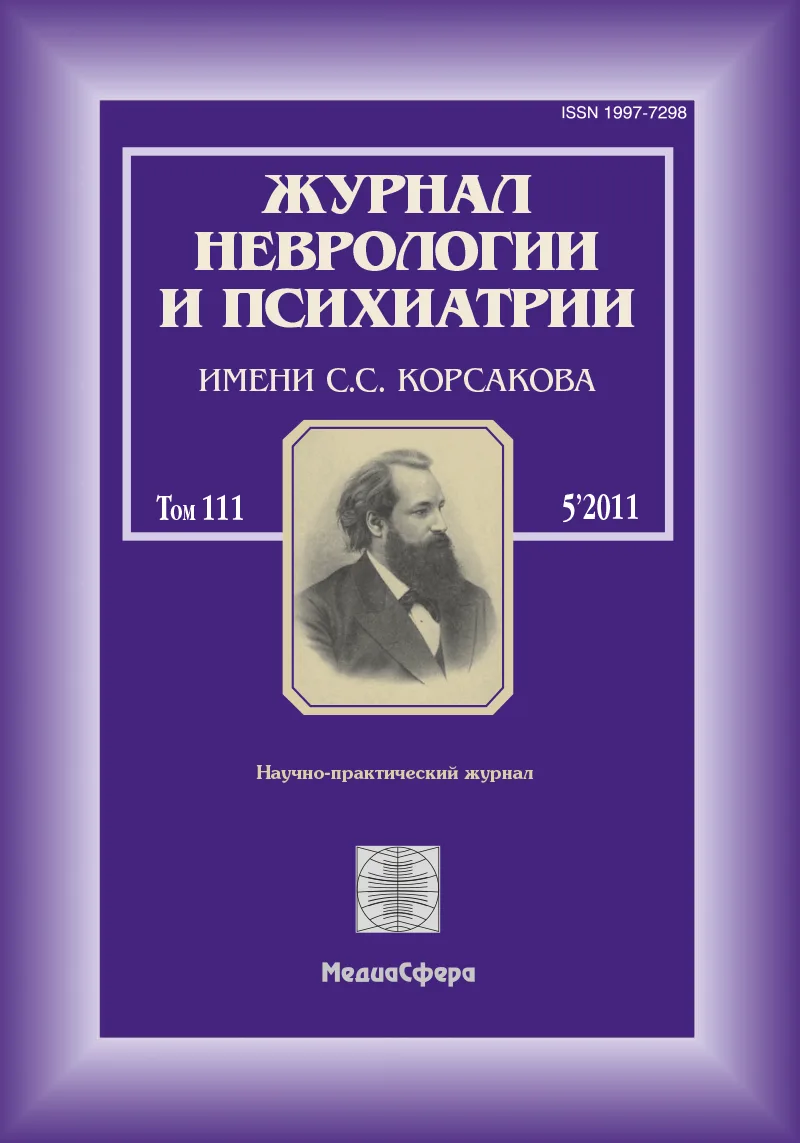
Arushanian ÉB. Chronobiology of depression: a role of suprachiasmatic nuclei of the hypothalamus and clock genes. S.S. Korsakov Journal of Neurology and Psychiatry. 2011;111(5):96‑103. (In Russ.)

References:

  1. Arushanyan E.B. Epifiz i depressiya. Zhurn nevropatol i psikhiat 1991; 91: 108-112.
  2. Arushanyan E.B., Baturin V.A., Popov A.V. O retsiproknykh otnosheniyakh mezhdu suprakhiazmaticheskimi yadrami gipotalamusa i epifizom v protsesse perestroiki tsirkadiannoi podvizhnosti pri smeshchenii svetovogo rezhima. Zhurn vyssh nervn deyat 1993; 43: 60-75.
  3. Arushanyan E.B., Popov A.V. Vliyanie povrezhdeniya suprakhiazmaticheskikh yader gipotalamusa krys na dinamiku korotkoperiodnykh kolebanii normal'nogo i abnormal'nogo povedeniya. Fiziol zhurn 1994; 80: 1-7.
  4. Arushanyan E.B., Baturin V.A. Depressiya, antidepressanty i biologicheskie chasy. Zhurn nevropatol i psikhiat 1995; 95: 85-89.
  5. Arushanyan E.B., Beier E.V. Suprakhiazmaticheskie yadra gipotalamusa i organizatsiya sutochnogo periodizma. Khronobiologiya i khronomeditsina. M: Triada 2000; 50-64.
  6. Arushanyan E.B., Beier E.V., Loktev N.A. Gistokhimicheskie i morfologicheskie dokazatel'stva uchastiya neironov dorsal'nogo gippokampa v antistressornom deistvii melatonina. Eksper i klin farmakol 2001; 64: 10-12.
  7. Arushanyan E.B. Khronofarmakologiya na rubezhe vekov. Stavropol' 2005; 575.
  8. Arushanyan E.B., Popov A.V. Osobennosti organizatsii tsirkadiannoi podvizhnosti krys posle udaleniya epifiza. Zhurn vyssh nervn deyat 2006; 56: 345-348.
  9. Arushanyan E.B., Popov A.V. Tofizopam i melatonin oslablyayut perestroiku ritma sutochnoi podvizhnosti krys pri in''ektsionnom stresse. Eksper i klin farmakol 2006; 64: 14-17.
  10. Arushanyan E.B., Popov A.V. Epifizektomiya ogranichivaet khronotropnuyu aktivnost' anksiolitikov i usilivaet effekt psikhostimulyatorov. Eksper i klin farmakol 2007; 70: 6-9.
  11. Arushanyan E.B. Khronobiologicheskii podkhod k ponimaniyu prirody psikhicheskoi depressii i antidepressivnogo effekta veshchestv. Affektivnye rasstroistva. Mezhdistsiplinarnyi podkhod. St-Peterburg 2009; 38-44.
  12. Otellin V.A., Arushanyan E.B. Nigrostrionigral'naya sistema. Meditsina 1989; 220.
  13. Abrahamson E.E., Moore R.J. Suprachiasmatic nucleus in the mouse: retinal innervations, intrinsic organization and efferent projections. Brain Res 2001; 916: 172-191.
  14. Akiyama M., Kirihara T., Takahashi S. et al. Modulation of mPer1 gene expression by anxiolytic drugs in mouse cerebellum. Brit Pharmacol 1999; 128: 1616-1622.
  15. Arendt J. Melatonin and the mammalian pineal gland. London 1994; 214.
  16. Aton S.J., Colwell C.S., Harmar A. et al. Vasoactive intestinal polypeptide mediates circadian rhythmicity and synchrony in mammalian clock neurons. Nature Neuroscience 2005; 8: 478-483.
  17. Aton S.J., Huettner J.E., Straume M. GABA control circadian rhythms and synchrony in clock neurons. Proc Nat Acad Sci USA 2006; 103: 19188-19193.
  18. Bao A.M., Swaab D.F. Corticotropin-releasing hormone and arginine vasopressin in depression focus on the human postmortem hypothalamus. Vitam Horm 2010; 82: 339-365.
  19. Benedetti F., Dallaspezia S., Colombo C. et al. A length polymorphism in the circadian clock gene Per3 influences age at onset of bipolar disorder. Neurosci Lett 2008; 445: 184-189.
  20. Bunney W.F., Bunney B.G. Molecular clock genes in man and lower animals: possible implications for circadian abnormalities in depression. Neuropsychopharmacology 2000; 22: 335-345.
  21. Carpentieri A.R., Pujolras M.A., Chiesa J.J. et al. Effect of melatonin and diazepam on the dissociated circadian rhythm in rats. J Pineal Res 2006; 40: 318-325.
  22. Cuesta M., Clesse D., Pevet P. New light on the serotonergic paradox in the rat circadian system. J Neurochem 2009; 110: 231-243.
  23. Dijk D.J., Czeisler C.A. Contribution of the circadian pacemaker and the sleep homeostasis to sleep propensity sleep structure, electroencephalographic slow waves and sleep spindle activity in humans. J Neurosci 1995; 15: 3526-3538.
  24. Doi M., Hirayama J., Sassone-Corsi P. Circadian regulator CLOCK is a histone acetyltransferase. Cell 2006; 125: 497-508.
  25. Dragich J.M., Loh D.H., Wang L.M. et al. The role of the neuropeptides PACAP and VIP in the photic regulation of gene expression in the suprachiasmatic nucleus. Eur J Neurosci 2010; 31: 864-875.
  26. Ehlen J.C., Novak C.M., Karom M. et al. GABA A receptor activation suppresses Period 1 mRNA and Period 2 mRNA in the suprachiasmatic nucleus during the mid-subjective day. Eur Neurosci 2006; 23: 3328-3336.
  27. Ehlen J.C., Paul K.N. Regulation of lights action in mammalian circadian clock: role of extrasynaptic GABA A receptor. Am J Physiol Regul Integr Comp Physiol 2009; 296: 1606-1612.
  28. Fuller P.M., Gooley J.J., Saper C.B. Neurobiology of the sleep-wake cycle sleep architecture, circadian regulation and regulatory feedback. J Biol Rhythms 2006; 21: 482-493.
  29. Gardani M., Blance R., Biello S.M. NMDA alters the response of the mammalian circadian clock in hamsters: effects on re-entrainment and triazolam-induced phase shifts. Brain Res 2005; 1046: 105-115.
  30. Graff C., Kohler M., Pevet P. Involvement of retinohypothalamic tract in the photic-like effects of the serotonin agonist quipasine in the rat. Neuroscience 2005; 135: 273-283.
  31. Hamet P., Tremblay J. Genetics of the sleep-wake cycle and its disorders. Metabolism 2006; 55: 7-15.
  32. Hampp G., Ripperger J.A., Houben T. et al. Regulation of monoamine oxidase by circadian clock components implies clock influence on mood. Curr Biol 2008; 18: 678-683.
  33. Hastings M.H., Reddy A.B., Maywood E.S. A clockwork web: circadian timing in brain and periphery, in health and disease. Nature Reviews Neurosciences 2003; 4: 649-661.
  34. Hastings M.H., Herzog E.D. Clock genes, oscillators, and cellular networks in the suprachiasmatic nuclei. J Biol Rhythms 2004; 19: 400-413.
  35. Hastings M.H., ONeill J.S., Maywood E.S. Circadian clock: regulators of endocrine and metabolic rhythms. J Endocrinol 2007; 195: 187-198.
  36. Homa S., Ikeda M., Abe H. et al. Circadian oscillation of BMAL1, a partner of a mammalian clock gene CLOCK, in rat suprachiasmatic nucleus. Bioch Biophysiol Res Commun 1998; 250: 83-87.
  37. Huang J., Lu C., Chen S. et al. Postnatal ontogenesis of clock genes in mouse suprachiasmatic nucleus and heart. Lipids Health Dis 2010; 9: 22-23.
  38. Ikonomov O.C., Stoynev A., Shisheva A. Circadian function of suprachiasmatic nuclei: molecular and cellular biology. Chronobiologia 1994; 21: 1-12.
  39. Jones C.R., Campbell S.S., Zone S.E. et al. Familial advanced sleep-phase syndrome: A short-period circadian rhythm variant in humans. Nat Med 1999; 5: 1062-1065.
  40. Kalsbeek A., Perrau-Lenz S., Buijs R.M. A network (autonomic) clock outputs. Chronobiol Int 2006; 23: 521-535.
  41. Kennaway D.J., Hugel H.M. Melatonin, melatonin metabolites and the suprachiasmatic nucleus. Adv Pineal Res 1991; 6: 169-178.
  42. Kennedy S.H. Agomelatine: efficacy of each phase of antidepressant treatment. CNS Drugs 2009; 23: 41-47.
  43. King D.P., Zhao Y., Sagoram A.M. et al. Positional cloning of the mouse circadian clock gene. Cell 1997; 89: 641-653.
  44. Ko C.Y., Takahashi J.S. Molecular components of the mammalian circadian clock. Human Molecular Genetics 2006; 15: 271-277.
  45. Leak R.K., Moore R.J. Topographic organization of suprachiasmatic nucleus projection neurons. J Comp Neurol 2001; 433: 312-334.
  46. Leproult R., Van Onderbergen A., LHermite-Balderiaux M. Phase-shifts of 24-h rhythms of hormonal release and body temperature following early evening administration of the melatonin agonist agomelatine in healthy older men. Clin Endocrinol 2005; 63: 298-304.
  47. Li J.D., Burton K.J., Zhang C. et al. Vasopressin receptor V1a regulates circadian rhythms of locomotor activity and expression of clock-controlled genes in the suprachiasmatic nuclei. Am J Physiol Regul Integr Comp Physiol 2009; 296: 824-830.
  48. Li J.D., Hu W.P., Zhou Q.Y. Disruption of the circadian output molecule prokineticin 2 results in anxiolytic and antidepressant-like effects in mice. Neuropsychopharmacology 2009; 34: 367-373.
  49. Liu A.C., Welsh D.K., Ko C.H. et al. Intercellular coupling confers robustness against mutations in the SCN circadian network. Cell 2007; 129: 605-616.
  50. Liu R.J., Zhou J.N., Hoogendijk W.J. et al. Decreased vasopressin gene expression in the biological clock of Alzheimer disease patients with and without depression. J Neuropathol Exp Neurol 2000; 59: 314-322.
  51. Maywood E.S., ONeil J.S., Chesam J.E. et al. Minireview: The circadian clockwork of the suprachiasmatic nuclei - analysis of a cellular oscillator that drives endocrine rhythms. Endocrinology 2007; 148: 5624-5634.
  52. Mendlewicz J. Disruption of the circadian timing systems: molecular mechanisms in mood disorders. CNS Drugs 2009; 23: 15-26.
  53. Moore R.Y., Eichler V.B. Loss of a circadian adrenal corticosterone rhythm following suprachiasmatic lesions in the rat. Brain Res 1972; 42: 201-206.
  54. Morin L.P., Shivers K.Y., Blanchard J.H. Complex organization of mouse and rat suprachiasmatic nucleus. Neuroscience 2006; 137: 1285-1297.
  55. Nomura K., Castanon-Cervantes O., Davidson A. Selective serotonin reuptake inhibitors shorten the period of Period1-driven circadian bioluminescence rhythms in rat fibroblasts. Life Sci 2008; 82: 1169-1174.
  56. Pallier P.N., Maywood E.S., Zheng Z. et al. Pharmacological imposition of sleep slows cognitive decline and reverses dysregulation of circadian gene expression in a transgenic mouse model of Huntingtons disease. J Neurosci 2007; 27: 7869-7878.
  57. Partonen T., Treutlein J., Alpman A. et al. Three circadian clock genes Per2, Arntl, and Npas2 contribute to winter depression. Ann Med 2007; 39: 229-238.
  58. Proser R.A., Lee H.D., Wehner A. Serotonergic pre-treatments block in vitro serotonergic phase shifts of the mouse suprachiasmatic nucleus circadian clock. Neuroscience 2006; 142: 547-555.
  59. Racagni G., Riva M.A., Popoli M. The interaction between the internal clock and antidepressant efficacy. Int Clin Psychopharmacol 2007; 22: 9-14.
  60. Reiter R.J. The pineal gland. V.1. Anatomy and Biochemistry. CRC Press Florida 1981; 315.
  61. Schwartz J.R., Roth T. Neurophysiology of sleep and wakefulness: basic science and clinical implications. Curr Neuropharmacol 2008; 6: 367-378.
  62. Smale L., Michels K., Moore R.Y. Destruction of the hamster serotonergic system by 5,7-DHT: effects on circadian rhythm phase, entrainment and response to triazolam. Brain Res 1990; 515: 9-19.
  63. Soria V., Martinez-Amoros E., Escaramis G. et al. Differential association of circadian genes with mood disorders: Cry1 and associated with unipolar major depression and Clock and VIP with bipolar disorders. Neuropsychopharmacology 2010; 35: 1279-1289.
  64. Sprouse J., Braselton J., Reynolds L. Fluoxetine modulates the circadian biological clock via phase advances of suprachiasmatic nucleus neuronal firing. Biol Psychiat 2006; 60: 896-899.
  65. Takahashi S., Yoshikobu Y., Aida R. et al. Extended action of MKC-242, a selective 5-HT (1A) receptor agonist, on light-induced Per gene expression in the suprachiasmatic nucleus in mice. J Neurosci Res 2002; 68: 470-478.
  66. Uz T., Ahmed R., Akhisaroglu M. et al. Effect of fluoxetine and cocaine on the expression of clock genes in the mouse hippocampus and striatum. Neuroscience 2005; 134: 1309-1316.
  67. Vasolou C., Henson M.A. A multiscale model to investigate circadian rhythmicity of pacemaker neurons in the suprachiasmatic nucleus. Comput Biol 2010; 6: 105-130.
  68. Yamazaki S., Numano R., Abe M. et al. Resetting central and peripheral circadian oscillators in transgenic rats. Science 2000; 288: 682-685.

Email Confirmation

An email was sent to test@gmail.com with a confirmation link. Follow the link from the letter to complete the registration on the site.

Email Confirmation

We use cооkies to improve the performance of the site. By staying on our site, you agree to the terms of use of cооkies. To view our Privacy and Cookie Policy, please. click here.