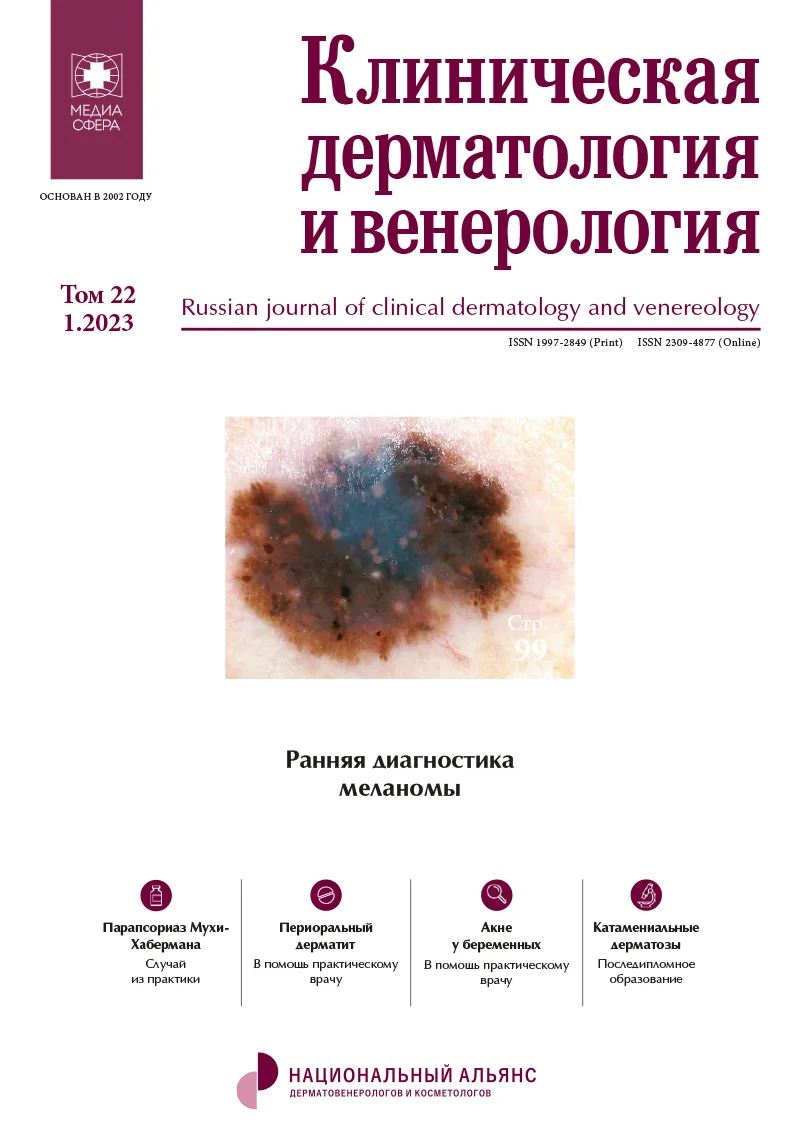
Случай острого вариолиформного парапсориаза Мухи—Хабермана
Журнал: Клиническая дерматология и венерология. 2023;22(1):22-25.
DOI: 10.17116/klinderma20232201122
Прочитано: 3235 раз
Резюме
Термин «парапсориаз» объединяет заболевания кожи различного генеза, проявляющиеся высыпаниями, напоминающими псориатические папулы или бляшки, но не связанные с псориазом. Выделяют 2 основные формы парапсориаза: бляшечный и лихеноидный. Лихеноидный парапсориаз подразделяют на хронический и острый (вариолиформный парапсориаз Мухи—Хабермана, parapsoriasis lichenoides et varioliformis acuta). Клиническая картина острого вариолиформного парапсориаза Мухи—Хабермана характеризуется появлением на коже папул размером 2–8 мм с некрозом в центре, оспенновидных пустул, а также рубцов и пигментации. При локализации на коже лица и других открытых участков тела эти высыпания являются существенным косметическим дефектом. Приводим описание клинического случая вариолиформного парапсориаза Мухи—Хабермана у мальчика в возрасте 1 года 3 мес, поступившего на стационарное лечение в детское отделение ГБУ РД «Республиканский кожно-венерологический диспансер». У пациента в течение 3 мес с момента обращения к специалистам первичного звена не был верифицирован диагноз, в связи с чем он не получал соответствующую терапию. Лечение проводилось по схеме токсикодермии, атопического дерматита, контактно-аллергического дерматита, без эффекта. За этот период у пациента образовались атрофические рубцы, в том числе на коже лица. В стационаре больному проводили терапию десенсибилизирующими средствами, антибиотиками; наружно применяли раствор метиленового синего, мазь Левомеколь, топические кортикостероидные средства. В результате проведенного лечения патологический процесс разрешился. При своевременной идентификации парапсориаза и его адекватной терапии косметический дефект в виде атрофических рубцов, сформировавшихся у пациента, можно было предотвратить. В таких случаях уже на 1-й неделе упорного течения заболевания на фоне проводимой терапии необходимо выносить вопрос о верификации клинического диагноза и коррекции лечения на врачебную комиссию с привлечением экспертов третьего уровня и использованием при необходимости телемедицинских технологий.
Ключевые слова
- лихеноидный лишай
- острый вариолиформный парапсориаз Мухи—Хабермана
Дата поступления: 22.06.2022
Дата принятия в печать: 08.12.2022
Дата публикации: 07.03.2023
Парапсориаз (синонимы: дерматит псориазиформный нодулярный, хронический лихеноидный лишай, parapsoriasis guttata Brocq [1]) — понятие, объединяющее заболевания кожи различного генеза, проявляющиеся высыпаниями, напоминающими псориатические папулы или бляшки, но не связанные с псориазом.
Выделяют 2 основных формы парапсориаза: бляшечный и лихеноидный. Лихеноидный парапсориаз подразделяют на хронический и острый (острый вариолиформный парапсориаз Мухи—Хабермана, parapsoriasis lichenoides et varioliformis acuta).
В 1902 г. французский дерматолог M. Brocq предложил использовать термин «парапсориаз» для обозначения нескольких сравнительно редких заболеваний кожи [1]. Автор выделил 3 варианта парапсориаза: каплевидный, бляшечный и лихеноидный, каждый из которых является самостоятельным заболеванием, в связи с чем их дифференциальная диагностика представляет определенные трудности [2]. Вместе с тем данные дерматозы имеют и ряд общих признаков: отсутствие в большинстве случаев общих расстройств и выраженных субъективных ощущений, поверхностный характер кожного процесса, слабая выраженность гиперемии и шелушения, резистентность к проводимой терапии; кроме того, существует несколько переходных форм между различными вариантами парапсориаза [3].
Многие авторы ранее считали острый вариолиформный парапсориаз Мухи—Хабермана вариантом каплевидного псориаза, но позже его стали относить к парапсориазу. Он манифестирует чаще весной и осенью и обычно протекает как поверхностный васкулит. Описаны случаи сочетания отдельных форм парапсориаза у одного больного, например каплевидного и бляшечного [4, 5]. Ряд авторов связывают причину развития заболевания с инфекционно-токсическими факторами: перенесенными гриппом, ангиной, детскими вирусными инфекциями, глистной инвазией [6].
Наиболее часто встречается хроническая форма лихеноидного парапсориаза, характеризующаяся появлением розово-красных плотных не зудящих папул полусферической формы диаметром 3–4 мм. Патологический процесс может длиться годы с ремиссиями в теплое время года, общее самочувствие при этом не нарушается. Высыпания обычно наблюдаются на туловище и конечностях (сгибательная поверхность плеч, предплечья, бедра, подколенные складки). В процессе развития клинической картины отмечается ложный полиморфизм, при поскабливании определяются симптомы «скрытого шелушения» и точечного кровотечения [5, 6]. На стадии регресса элементы покрываются слюдообразными чешуйками, которые впоследствии отстают по периферии папул и прикрепляются в центре, напоминая облатку. Полное разрешение папул может сопровождаться развитием гипопигментации кожи.
При остром вариолиформном парапсориазе Мухи—Хабермана характерно появление папул размером 2–8 мм с явлениями некроза в центре, а также оспенновидных пустул, рубцов и пигментации [7]. Нередко могут поражаться слизистые оболочки щек, языка, неба, половых органов у женщин. Возможны нарушение общего состояния, повышение температуры тела и увеличение лимфатических узлов. Заболевание имеет рецидивирующее течение, полное разрешение элементов происходит в течение 6 мес [6]. При гистологическом исследовании в дерме наблюдают расширение кровеносных сосудов, инфильтрацию и пролиферацию фибробластов. При хронической форме лихеноидного парапсориаза отмечают спонгиоз, вакуольную дистрофию, акантоз, паракератоз, гиперкератоз, гранулез [8, 9].
Поскольку одной из наиболее частых причин заболевания являются инфекционно-аллергические факторы, в комплексное лечение пациентов обычно включают антибиотики [10]. Рекомендуется применение макролидов (джозамицин по 1 г/сут в 2 приема), пенициллинов (до 15 млн ЕД на курс), цефтриаксона (до 20 г на курс). При остром течении лихеноидного парапсориаза показаны кортикостероидные препараты (дексаметазон, преднизолон) с постепенным снижением дозы и переходом на лечение наружными средствами: кремами, мазями, пастами, аэрозолями [2]. В качестве десенсибилизирующей терапии назначают 10% раствор хлорида кальция (по 10 мл внутривенно через день) или 10% раствор глюконата кальция (по 10 мл внутривенно через день), на курс 10 инъекций. При выраженном проявлении пурпуры у больных с острым и подострым течением заболевания применяют аскорутин [11].
При хронической форме лихеноидного парапсориаза назначают вазоактивные препараты: никотиновую кислоту (по 100 мг 3 раза в сутки) или ксантинола никотинат (по 150 мг 3 раза в сутки) в течение 2–3 нед [11]. Эффективно также применение циклоспорина (150 мг/сут) [12].
Представляем описание клинического наблюдения пациента в возрасте 1 года 3 мес с острым вариолиформным парапсориазом Мухи—Хабермана, поступившего на стационарное лечение в детское отделение ГБУ РД «Республиканский кожно-венерологический диспансер».
Болен в течение 3 мес, лечение получал амбулаторно в поликлинике ГБУ РД «Республиканский кожно-венерологический диспансер» и частных клиниках, без эффекта. При поступлении в стационар патологический процесс имел распространенный характер. На коже лица, туловища, верхних и нижних конечностей наблюдались множественные несгруппированные папулопустулезные элементы с геморрагической коркой в центральной части, местами встречались мелкие рубцы по типу оспенновидных (рис. 1).

Рис. 1. Пациент К. в возрасте 1 года 3 мес, клиническая картина до лечения.
а — папулопустулезные несгруппированные высыпания на коже спины и ягодиц, пустулезные элементы обработаны фукорцином; б — оспенновидные элементы на коже живота, обработанные фукорцином, местами встречаются рубцы.
Результаты клинического анализа крови: Hb 101 г/л, эр. 4,1·1012/л, л. 6,8·109/л, э. 2%, с. 56%, лимф. 39%, мон. 2%; СОЭ 9 мм/ч. Результаты биохимического анализа крови: глюкоза 4,59 ммоль/л, общий билирубин 10,0 мкмоль/л, аланинаминотрансфераза 23,3 ЕД/л, аспартатаминотрансфераза 46,1 ЕД/л, креатинин 34,2 мкмоль/л, мочевая кислота 206,6 ммоль/л, триглицериды 0,9 ммоль/л, общий холестерин 3,3 ммоль/л, сывороточное железо 10,9 мкмоль/л. Общий анализ мочи: цвет соломенно-желтый, реакция кислая, удельный вес 1018, прозрачность полная, белок не обнаружен, лейкоциты 1–2 в поле зрения. В анализе кала яйца глист не обнаружены. В соскобе с кожного элемента патологические грибы не найдены.
Больному проводили терапию с применением пероральных десенсибилизирующих средств (глюконат кальция по 125 мг 3 раза в сутки, диметиндена малеат по 0,5 мг или 10 капель 3 раза в сутки) и амоксициллина (по 125 мг перорально 2 раза в сутки). Наружно применяли раствор метиленового синего, мазь Левомеколь, кортикостероидные мази. В результате проведенного лечения наблюдалось разрешение патологического процесса: элементы сыпи почти полностью регрессировали, местами сформировались небольшие очаги вторичной гиперпигментации и атрофические рубцы (рис. 2).

Рис. 2. Пациент К. в возрасте 1 года 3 мес, клиническая картина после лечения: на коже спины (а) и живота (б) небольшие очаги гиперпигментации и рубцы, некоторые элементы обработаны раствором метиленового синего.
Следует отметить, что в течение 3 мес с момента обращения к специалистам первичного звена ребенку не был верифицирован парапсориаз, в связи с чем он не получал соответствующую терапию. Лечение проводили по схеме токсикодермии, атопического дерматита, контактно-аллергического дерматита, эффекта от которого не отмечено. За этот период у пациента образовались атрофические рубцы, в том числе на коже лица. При своевременной идентификации парапсориаза и его адекватной терапии этот косметический дефект можно было предотвратить. Уже на 1-й неделе упорного течения заболевания на фоне проводимой терапии необходимо выносить вопрос об уточнении клинического диагноза и коррекции лечения на врачебную комиссию с привлечением экспертов третьего уровня и использованием при необходимости телемедицинских технологий.
Продемонстрированный нами клинический случай острого вариолиформного парапсориаза Мухи—Хабермана акцентирует внимание дерматовенерологов на его манифестных проявлениях, что позволит своевременно верифицировать у пациентов подобную патологию.
Авторы заявляют об отсутствии конфликта интересов.
- Brocq ML. Les parapsoriasis. Ann Dermatol Syph. 1902;3:313-315.
- Дифференциальная диагностика кожных болезней. Руководство для врачей. Под ред. Беренбейна Б.А., Студницина А.А. 2-е изд. М. 1989;105-171.
- Сыдиков А.А., Заславский Д.В., Зайцев В.С., Насыров Р.А. Об эволюции взглядов на группу парапсориазов Брока. Современные проблемы науки и образования. 2013;5:317.
- Кей Шу-Мей Кэйн, Лио П.А., Стратигос А.Дж. и др. Детская дерматология. Цветной атлас и справочник. Пер. с англ. под ред Иванова О.Л., Львова А.Н. М.: изд-во Панфилова; БИНОМ; 2011;248-260.
- Студницин А.А., Мордовцев В.Н. Папулезные дерматозы. Дифференциальная диагностика кожных болезней: Руководство для врачей. Под ред. Беренбейна Б.А., Студницина А.А. 2-е изд. М. 1989;105-171.
- Иванов О.Л. Парапсориаз. Клиническая дерматовенерология. Руководство для врачей в 2 томах. Под ред. Скрипкина Ю.К., Бутова Ю.С. М.: ГЭОТАР-Медиа; 2009;2:351-370.
- Суколин Г.И. Иллюстрированная клиническая дерматология. М. 2009; 122-123.
- Разнатовский И.М. Парапсориазы. В книге: «Кожные и венерические болезни. Руководство для врачей». Под ред. Скрипкина Ю.К., Мордовцева В.Н. М. 1996;2:157-170.
- Яковлев А.Б. Парапсориаз: современное состояние проблемы. Лечащий врач. 2012;10:27-30.
- Елькин В.Д., Митрюковский Л.С. Избранная дерматология. Пермь. 2000;335-338.
- Каламкарян А.А., Мордовцев В.Н., Трофимова Л. Я. Клиническая дерматология. Редкие и атипичные дерматозы. Ереван. 1989;357-361.
- Uzoma MA, Wilkerson MG, Carr VL, et al. Pentoxifylline and cyclosporine in the treatment of febrile ulceronecrotic Mucha-Habermann disease. Pediatric Dermatology. 2014;31(4):525-527. https://doi.org/10.1111/j.1525-1470.2012.01862.x


Рекомендуем статьи по данной теме:
Профессор Виктор Николаевич Звягин. К 85-летию со дня рождения.Судебно-медицинская экспертиза. 2026;69(5):67-70
Профессор Виктор Ильич Прозоровский. К 125-летию со дня рождения.Судебно-медицинская экспертиза. 2026;69(5):65-66
Алевтина Михайловна Орлова. К 80-летию со дня рождения.Судебно-медицинская экспертиза. 2026;69(5):63-64
Профессиональная подготовка специалистов в области судебно-химической и химико-токсикологической экспертизы: ключевые аспекты.Судебно-медицинская экспертиза. 2026;69(5):56-62
К вопросу о судебно-медицинском значении трупной имбибиции вокруг подкожных вен в случаях смерти от общего переохлаждения.Судебно-медицинская экспертиза. 2026;69(5):49-55
Роль магнитно-резонансной томографии в диагностике диффузного аксонального повреждения.Судебно-медицинская экспертиза. 2026;69(5):42-48
Анатомические варианты, аномалии и другие неметрические характеристики скелета при судебно-медицинской экспертизе костных останков (случаи из практики).Судебно-медицинская экспертиза. 2026;69(5):38-41
Сравнительная характеристика огнестрельных повреждений, произведенных с разного расстояния самоснаряженными и фабрично изготовленными патронами 12-го калибра при выстрелах из ружья МЦ 21-12.Судебно-медицинская экспертиза. 2026;69(5):32-37
Электронно-микроскопическая характеристика повреждений волос, причиненных предметами различной остроты.Судебно-медицинская экспертиза. 2026;69(5):28-31
О возможности установления видовой принадлежности пятен слюны методом количественного иммуноферментного анализа.Судебно-медицинская экспертиза. 2026;69(5):24-27