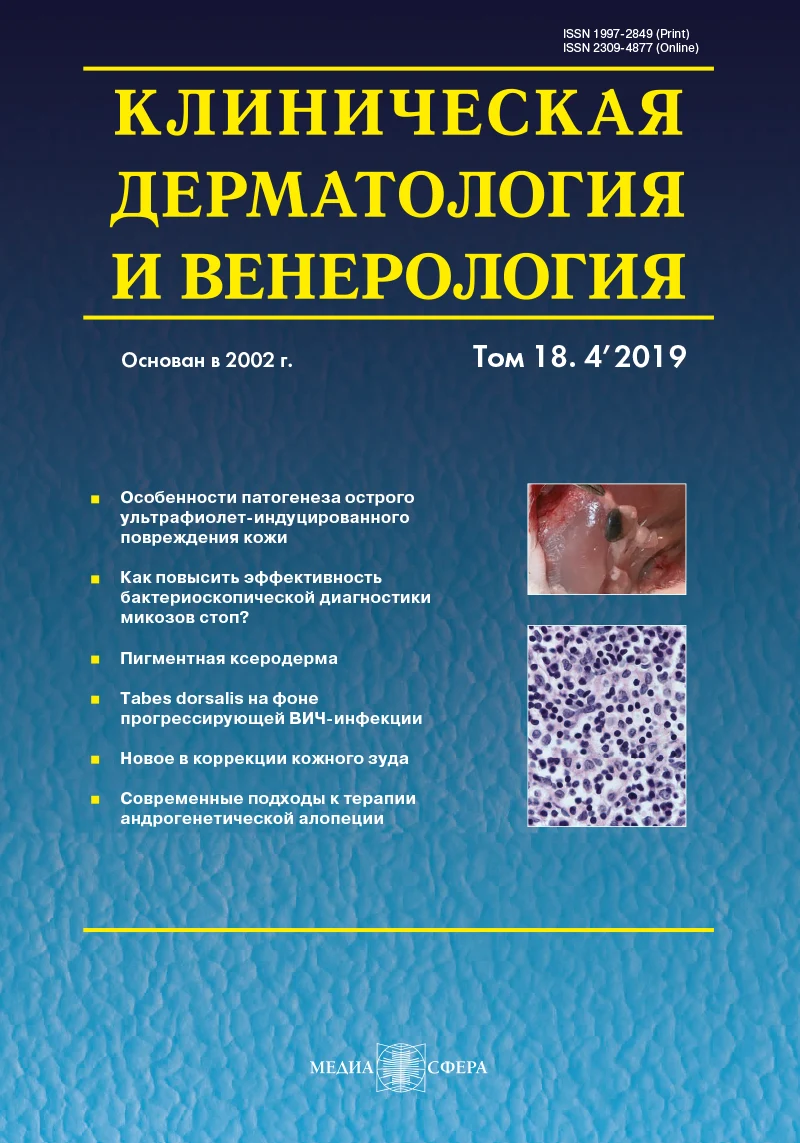
Пигментная ксеродерма
Журнал: Клиническая дерматология и венерология. 2019;18(4):442-449.
DOI: 10.17116/klinderma201918041442
Прочитано: 28148 раз
Резюме
Ключевые слова
- пигментная ксеродерма
- пигментный ксеродермоид Юнга
- случай из практики
Дата публикации: 30.04.2020
Пигментная ксеродерма (ПК; син.: прогрессирующий лентикулярный меланоз Пика, пигментная атрофия кожи Кроккера) — редкое наследственное заболевание, впервые описанное M. Kaposi [1] в 1870 г. Встречается дерматоз у предста-вителей всех рас с частотой 4:1 000 000 [2]. Тип наследования аутосомно-рецессивный. Известно восемь генетических субтипов ПК, каждый из которых соответствует определенному дефектному гену. При этом в коже выявлен дефект репаративных ферментов (отсутствуют или малоактивны) эндо- и экзонуклеаз полимераз, не позволяющий устранить повреждения, возникающие при мутагенном воздействии УФ-лучей, ионизирующей радиации в ДНК клеток кожи любого типа: кератиноцитах, фибробластах, лимфоцитах и т. д. [3]. По этой причине кожа таких пациентов чрезвычайно чувствительна к солнечному облучению, а манифестные проявления заболевания в ней являются облигатным предраком [4].
После рождения клинических признаков ПК не наблюдают. Манифестацию заболевания в 75% случаев отмечают в возрасте с 3 мес до 3 лет, однако дерматологический процесс может начаться и после 30 лет [5].
Для клинической картины ПК характерно поражение центральной нервной системы, органов зрения и кожи [6]. Первым дерматологическим признаком является эритема лица (открытые участки тела) с отечностью и иногда пузырьками после интенсивной инсоляции. Отмечается это у 60% больных с высокой чувствительностью к солнечному свету. У 40% пациентов без признаков фоточувствительности диагноз становится очевидным несколько позже — при появлении гиперпигментированных пятен (лентиго, веснушки) на подверженных инсоляции участках кожи. Такая же картина (гиперпигментация) вырисовывается после регресса воспалительных явлений. В комплексе вышеуказанные проявления идентифицируются как первая (воспалительная) стадия ПК [3]. Затем наступает вторая (пойкилодермическая) стадия. Для нее типичны телеангиэктазии, участки атрофии, сухости, истонченной кожи (появляются беловатые рубчики с гладкой блестящей поверхностью) и сохраняющаяся гиперпигментация, которые создают картину пойкилодермии [3]. На фоне гиперпигментации со временем появляются гипопигментированные пятна, часто на спинке носа и над подбородком [4].
Атрофия кожи приводит к деформации носовых ходов и ротового отверстия, истончению хрящей ушных раковин и носа. В 80% случаев одновременно наблюдается поражение органов зрения: светобоязнь, кератоконъюнктивит, эктропион, блефарит, изъязвление слизистой оболочки век, помутнение роговицы, ее васкуляризация, пигментные пятна на ней, птеригиум; также могут возникать эпителиумы на этих участках [3, 6].
На второй стадии у 20% больных отмечают неврологические нарушения: гипо- и арефлексию, атаксию, сенсорные нарушения, умственную отсталость, аномалии ЭЭГ [3, 6].
Для третьей (опухолевидной) стадии характерно возникновение доброкачественных (папилломы, кератоакантомы, ангиомы, ангиомиомы, фибромы) и злокачественных опухолей. Появляются такие новообразования на слизистой оболочке полости рта (лейкоплакия, хейлит актинический, рак языка и губ). На 8—10-м году болезни происходит малигнизация доброкачественных новообразований или сразу образуются базоцеллюлярные и спиноцеллюлярные эпителиомы, меланомы и саркомы [5]. Частота развития злокачественных новообразований коррелирует с тяжестью кожного процесса. Больные погибают после возникновения метастазов во внутренние органы [3]. В 70% случаев смерть наступает до 15 лет. Однако, по данным P. Bradford и соавт. [7], около 45% больных доживают до 40 лет.
Интересна публикация D. Tennstedt и J.-M. La-chapell [8], в которой они описывают спонтанное исчезновение четырех кератоакантом при ПК после удаления трех, предшествовавших им.
Заболевание обостряется весной и летом, а прогноз тем хуже, чем раньше оно начинается [5].
Комбинация ПК с идиотией и карликовым ростом носит название синдрома Де Санктиса—Каккьоне (идиотия ксеродермическая), описанного в 1932 г. [6]. В клинической картине доминируют умственная отсталость, микроцефалия, задержка роста (карликовый рост) и полового созревания, возможны потеря слуха, мозжечковая атаксия, параличи. На рентгенограмме отмечают малые размеры турецкого седла. Из-за недоразвития гипофиза и мозжечка нарушается порфириновый обмен. Кожные проявления резко выражены. У 70% больных развиваются злокачественные опухоли, которые метастазируют во внутренние органы и ведут к летальному исходу в детском возрасте [3].
Б.А. Бернбейн и соавт. [6] выделяли разновидности ПК: вариант ПК (форма без неврологических нарушений), форма II ПК (повышенная чувствительность к ионизирующей радиации, при которой отсутствуют злокачественные новообразования даже при тяжелом и длительном поражении кожи), пигментный ксеродермоид Юнга. Последняя разновидность является абортивной формой ПК, для которой характерны более позднее начало — в 3—4-м десятилетии, менее выраженные кожные изменения, легкое течение процесса. Предположительно при этой форме понижена чувствительность к солнечному облучению в сравнении с классической ПК (но она выше, чем у здоровых людей) [3].
Дифференциальный диагноз ПК проводят с синдромом Блума, наследственным лентигинозом, световой оспой Базена, пигментной крапивницей, врожденным дискератозом, врожденной пойкилодермией Ротмунда—Томсона, хроническим рентгеновским дерматитом, недержанием пигмента [3, 5].
Лечение ПК малоэффективно. Применяют витамины группы А, В1, В6, В12, РР, противомалярийные препараты, ароматические ретиноиды (этретинат, изотретиноин). Опухолевидные образования предпочтительно удалять (применяют методы иссечения, дерм-абразии, электроэксцизии, диатермокоагуляции, крио-деструкции). Назначают также проспидин по 100 мг внутримышечно (на курс 3000 мг), 5-флюорцитозиновую мазь. В качестве профилактики предохраняют кожу от солнечных лучей, применяя широкополые шляпы, зонты от солнца, фотозащитные кремы.
Приводим наши клинические наблюдения трех случаев ПК.
Больной М., 17 лет, обратился в ГБУ Республики Дагестан «Республиканский кожно-венерологический диспансер» (ГБУ РД РКВД) г. Махачкалы с жалобами на сухость, чувство стягивания и зуд кожи лица, шеи, кистей, стоп, появление там эффлоресценций, а также светобоязнь.
Анамнез. Со слов матери, болеет с годовалого возраста, когда на тыле кистей и лице появлялись шелушащиеся красные пятна, которые постепенно темнели, образовывались беловатые рубчики. Процесс сопровождался зудом и жжением кожи. Лечение (амбулаторное и стационарное) эффекта не давало. Отмечал обострение в летнее время года. Пациент несколько отстает в росте и массе тела от сверстников. Общее состояние удовлетворительное, питание пониженное. Родители не имеют дерматологических заболеваний и не являются родственниками между собой. Имеет старшего брата и сестру, которые не страдают подобной патологией.
Status specialis: поражение кожи локализовано на лице, шее, тыле кистей и стоп. Кожа лица и шеи имеет пестрый вид: многочисленные темные пятна, белесоватые рубчики, крупнопластинчатые чешуйки (рис. 1). 


Проведено лечение: дексаметазон по 4 мг внутримышечно 1 раз в день (10 дней), экстракт алоэ подкожно по 1 мл ежедневно в течение 14 дней, хлорохин (делагил) по 0,25 г 1 раз в день (14 дней), мебгидролин (диазолин) по 0,1 мг 2 раза в день (10 дней), силимарин (карсил) по 35 мг 3 раза в день в течение 9 дней, рибофлавин по 0,01 г 3 раза в день (10 дней), наружно крем солнцезащитный для светлой кожи (SPF-15). В результате терапии клиническая картина не претерпела изменений.
Больная З., 13 лет, с жалобами на гиперпигментированные высыпания и зуд кожи госпитализирован в ГБУ РД РКВД г. Махачкалы.
Анамнез. Родилась от первой беременности, протекавшей без осложнений. В возрасте 2 лет стали появляться эритематозные эффлоресценции на открытых участках кожи. В летнее время процесс обострялся. На момент осмотра пациентка адекватно отвечает на поставленные вопросы. Указывает на зуд пораженных участков. Других заболеваний кожи и внутренних органов не выявлено.
На предплечьях пойкилодермическая картина (рис. 6). 

Диагноз: «пигментная ксеродермия, пойкилодермическая стадия».
Назначено лечение: мебгидролин (диазолин) по 0,1 мг 1 раз в день (утром) и хлоропирамина гидро-хлорид (супрастин) внутримышечно по 1 мл 1 раз в день (вечером) в течение 10 дней, 30% раствор тиосульфата натрия по 4 мл внутривенно через день (14 дней), энтеросгель по 15 г (столовая ложка) 3 раза в день в течение недели, местно на лицо мазь акридерм 2 раза в день в течение 14 дней, на тело и конечности крем солнцезащитный для светлой кожи (SPF-15). На фоне терапии зуд стал менее выражен, клиническая картина сохраняется.
Больная К., 47 лет, обратилась в ГБУ РД РКВД г. Махачкалы с жалобами на крупные пятна лица, шеи и слизистой рта.
Анамнез. Со слов пациентки, экзантема имелась на лице, шее и слизистой рта с рождения. В течение времени она меняла яркость, несколько смещалась. Никаких субъективных ощущений пятно не вызывало. Год назад на нем появились папилломатозные разрастания. Три месяца назад ухудшилась острота зрения левого глаза и появился шум в левом ухе. При ярком солнечном свете рябит в левом глазу, а затем возникают гул и боль в голове.
Status specialis. Состояние пациентки удовлетворительное. Поражение носит распространенный характер, локализовано на левой половине лица — на волосистой части головы, уха, шеи, а также на слизистой оболочке рта. Очаг поражения кожи имеет темно-бордовый цвет, местами фиолетовый, темно-красный с участками здоровой кожи. Кожа подбородка, нижняя губа гипертрофированы и инфильтрированы (рис. 8). 

На фоне пигментного участка местами папилломатозные разрастания и черные милиарные узелки.
Левая половина слизистой оболочки рта и язык насыщенно-красного цвета строго до средней линии. Отмечается инфильтрированность пораженной половины языка (рис. 10). 
Диагноз: «ксеродермоид пигментный Юнга».
От госпитализации пациентка отказалась и повторно не обращалась.
Мы постарались ознакомить практикующих врачей с клиническими случаями пигментной ксеродермии и ее абортивной формы — пигментного ксеродермоида Юнга. Это должно способствовать свое-временной дифференциальной диагностике редкого генодерматоза, вторичной профилактике его об-острений и симптоматическому лечению, что должно повысить качество жизни таких пациентов.
Сведения об авторах
Гаджимурадов М.Н. — https://orcid.org/0000-0002-3663-3235
Алиева М.Г. — https://orcid.org/0000-0001-7718-1610
Мамашева Г.Д. — https://orcid.org/0000-0002-6484-5788
Гаджимурадова К.М. — https://orcid.org/0000-0001-8101-1665
КАК ЦИТИРОВАТЬ:
Гаджимурадов М.Н., Алиева М.Г., Мамашева Г.Д., Гаджимурадова К.М. Пигментная ксеродерма. Клиническая дерматология и венерология. 2019;18(4):-447. https://doi.org/10.17116/klinderma201918041
Автор, ответственный за переписку: Гаджимурадов М.Н. —
e-mail: gabenu@mail.ru


Рекомендуем статьи по данной теме:
Учет инструментальной погрешности измерения температуры трупа при определении давности смерти (случай из практики).Судебно-медицинская экспертиза. 2025;68(5):53-57