Сравнение спинальной и общей анестезии в сочетании с блокадой приводящего канала и локальной инфильтрационной анестезией при артроскопической пластике крестообразных связок: рандомизированное контролируемое исследование
Журнал: Анестезиология и реаниматология. 2025;(5):49-57.
DOI: 10.17116/anaesthesiology202505149
Прочитано: 2047 раз
Резюме
ЦЕЛЬ ИССЛЕДОВАНИЯ
Выполнить сравнительную оценку эффективности спинальной анестезии с сочетанной общей анестезией, включающей блокаду приводящего канала и локальную инфильтрационную анестезию, при артроскопической пластике крестообразных связок.
МАТЕРИАЛ И МЕТОДЫ
Дизайн исследования: одноцентровое рандомизированное контролируемое исследование, проведенное в условиях одиночного ослепления. В исследование включены 107 пациентов, которым выполняли артроскопическую пластику крестообразных связок. Методом конвертов участники распределены на две группы по варианту предполагаемого анестезиологического обеспечения: 1-я группа — спинальная анестезия (СА) — 54 пациента; 2-я группа — общая сочетанная анестезия (ОСА): блокада приводящего канала + локальная инфильтрационная анестезия — 53 пациента. Первичной конечной точкой исследования являлась динамика интенсивности послеоперационной боли, оцениваемой по 10-сантиметровой визуальной аналоговой шкале (ВАШ) в состоянии покоя и при движении оперированной конечностью сразу после операции и каждые 4 ч в течение первых суток. Вторичными точками исследования являлись: время до первого запроса на обезболивание; время до первого присаживания на кровати; потребность в назначении опиоидных анальгетиков и их суммарная доза в первые сутки после операции; наличие критериев рикошетной боли; удовлетворенность пациентов анестезией; удовлетворенность пациентов послеоперационным обезболиванием.
РЕЗУЛЬТАТЫ
Более интенсивный болевой синдром на всех этапах исследования отмечен при движении оперированной конечностью у пациентов 1-й группы — 3,50±0,81 балла, чем у пациентов 2-й группы — 1,82±0,92 балла (p<0,001). Назначение опиоидных анальгетиков в послеоперационном периоде понадобилось 43 пациентам 1-й группы (82,7%), причем 8 (18%) из них требовалось их назначение 2 раза и более в сутки. В назначении (однократном) опиоидов нуждались только 11 (22%) пациентов 2-й группы. Суммарная суточная доза тримеперидина не различалась между группами и составила в среднем 40 мг (p=0,130). Время до первого запроса анальгетика оказалось значительно больше у пациентов 2-й группы: медиана составила 380 [300; 480] мин против 180 [140; 200] мин в 1-й группе (p<0,001). Время вертикализации пациентов 1-й и 2-й групп составляло 230 [197,5; 260,0] мин и 130 [116,25; 158,75] мин соответственно (p<0,001). Критерии рикошетной боли отмечены у 80,8% пациентов 1-й группы и у 8% пациентов 2-й группы.
ЗАКЛЮЧЕНИЕ
Методика сочетанной анестезии, включающая не только блокаду периферических нервов нижней конечности, но и локальное воздействие местного анестетика на сенсорные ветви нервов посредством инфильтрационной анестезии, может быть эффективно использована при артроскопической пластике крестообразных связок. Необходимы дальнейшие исследования, касающиеся профилактики рикошетной боли.
Ключевые слова
- артроскопическая пластика крестообразных связок
- спинальная анестезия
- блокада приводящего канала
- локальная инфильтрационная анестезия
- блокада периферических нервов
- послеоперационное обезболивание
- рикошетная боль
Дата поступления: 15.01.2025
Дата принятия в печать: 27.05.2025
Дата публикации: 22.10.2025
Введение
Разрыв крестообразных связок является распространенной, преимущественно спортивной травмой с частотой выявления, например, в США, около 200 тыс. случаев в год [1]. По данным зарубежных национальных регистров, количество артроскопических вмешательств на крестообразных связках ежегодно составляет 32 случая на 100 тыс. человек в Швеции, 52 случая на 100 тыс. человек в Австралии с постоянным ежегодным абсолютным приростом числа выполняемых реконструкций [2].
Основные методы анестезиологического обеспечения артроскопической пластики крестообразных связок (АПКС) включают в себя методики общей, нейроаксиальной и проводниковой анестезии [3]. Недостатком традиционной общей анестезии является высокая частота послеоперационной тошноты и рвоты (ПОТР), достигающая 56,9% и 19,4% соответственно [4].
«Чистая» общая анестезия при АПКС подразумевает назначение опиоидных анальгетиков для достижения послеоперационной анальгезии. Известно, что опиоидная анальгезия сопровождается развитием различных, в том числе жизнеугрожающих, побочных эффектов более чем у 13% пациентов [5]. Помимо этого, назначение опиоидных анальгетиков препятствует реализации концепции ускоренного восстановления после операции (Enhanced Recovery After Surgery — ERAS), особенно важной при АПКС, поскольку эти операции нередко проводятся в условиях стационара одного дня.
К недостаткам широко используемой спинальной анестезии (СА) относится высокая частота постпункционной головной боли (0,16—1,30%), что определяется молодым возрастом пациентов, подвергающихся операциям данного типа [6]. Феномен рикошетной боли, т.е. резкое повышение интенсивности боли на фоне разрешения сенсорного блока, часто встречается при проведении плотных сенсорных блокад типа СА [7]. Из методик регионарной анальгезии для обезболивания после АПКС широко применяется блокада бедренного нерва [8], обеспечивающая удовлетворительное обезболивание, но сопровождающаяся слабостью четырехглавой мышцы бедра, которая в той или иной степени может сохраняться до 6 мес после операции [9]. Данная особенность препятствует реализации концепции ERAS, а также повышает риск падения пациентов в послеоперационном периоде. Блокада приводящего канала (БПК) представляется разумной альтернативой блокаде бедренного нерва, в меньшей степени влияющей на тонус четырехглавой мышцы, поскольку она не затрагивает большинство моторных волокон бедренного нерва, отходящих проксимальнее приводящего канала [9].
Сообщается, что АПКС сопровождается выраженным послеоперационным болевым синдромом. Согласно данным исследования H. Gerbeshagen и соавт., оценивавшим интенсивность боли в первые сутки после 179 различных хирургических вмешательств у 50 523 пациентов 105 клиник Германии, средняя интенсивность боли после АПКС составляет 5,41 по 10-сантиметровой цифровой рейтинговой шкале (36 место по интенсивности боли из 179 операций) и превышает интенсивность боли после эндопротезирования коленного сустава (5,30), панкреатодуденальной резекции (5,16), ампутации нижней конечности (5,13) [10].
Изложенное, а также отсутствие в литературе убедительных данных о выборе оптимального метода анестезиологического обеспечения АПКС определили актуальность нашего исследования.
Цель исследования — выполнить сравнительную оценку эффективности спинальной анестезии с сочетанной общей анестезией, включающей блокаду приводящего канала и локальную инфильтрационную анестезию, при артроскопической пластике крестообразных связок.
Материал и методы
Дизайн исследования
Одноцентровое рандомизированное контролируемое исследование, выполненное в условиях одиночного ослепления.
Критерии соответствия
Критерии включения:
— возраст 18 лет и старше;
— плановое проведение артроскопической пластики крестообразных связок (передней или задней);
— класс физического статуса I—II по шкале ASA (Американского общества анестезиологов);
— подписанное информированное добровольное согласие;
— отсутствие противопоказаний к компонентам анестезиологического протокола.
Критерии невключения:
— аллергия или непереносимость к любому из компонентов протокола;
— класс физического статуса III—V по шкале ASA;
— противопоказания к проведению спинальной или регионарной анестезии (абсолютные или относительные), включая коагулопатию (МНО >1,5, тромбоциты <100·109/л, активированное частичное тромбопластиновое время >1,5 нормы), наличие или последствия перенесенных неврологических заболеваний, инфекцию в области пункции, тяжелую гиповолемию, сепсис, прием антикоагулянтов вне зоны терапевтического окна;
— тяжелые когнитивные нарушения и психические расстройства;
— участие в другом клиническом исследовании в течение последних 30 дней.
Критерии исключения после рандомизации:
— изменение методики анестезии в связи с техническими трудностями при выполнении того либо иного ее вида;
— интраоперационные проявления аллергии на любой из компонентов анестезиологического обеспечения;
— отказ пациента от участия или нарушение протокола.
Структура включения в исследование
Перед включением в исследование проводили предварительный скрининг. Всего оценены 107 пациентов. В рандомизированную часть исследования вошли все пациенты (n=107), которые с использованием стратифицированной рандомизации (по шкале ASA) методом запечатанных конвертов распределены на две группы: 1-я группа (контрольная, n=54, спинальная анестезия — СА); 2-я группа (основная, n=53, общая сочетанная анестезия, включающая блокаду приводящего канала и локальную инфильтрационную анестезию, — ОСА). Рандомизацию проводили по принципу одиночного ослепления: врачи — анестезиологи-реаниматологи были информированы о распределении, в то время как пациенты — нет. После начала лечения 5 пациентов были исключены из исследования в связи с аллергической реакцией на антибиотик (n=1), изменением тактики анестезии (n=1), неудачно выполненной БПК (n=3). В итоговый анализ включены 102 пациента (рис. 1).
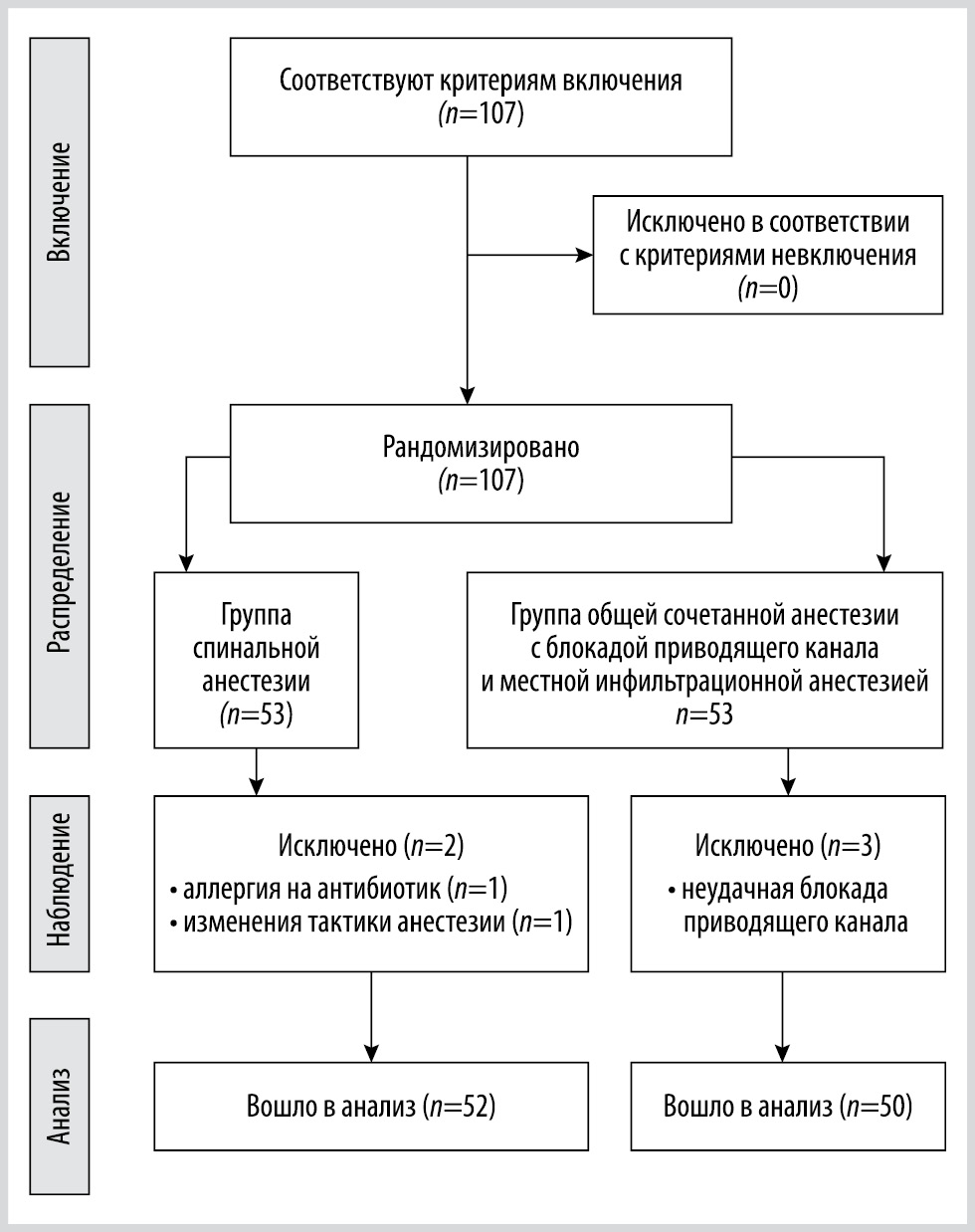
Рис. 1. Блок-схема включения, рандомизации и анализа участников исследования (согласно стандарту отчетности рандомизированных контролируемых исследований CONSORT).
Условия проведения и продолжительность исследования
Работа выполнена в период с сентября 2023 г. по август 2024 г. на базе отделения анестезиологии и реанимации №1 ГБУЗ «ГКБ им. С.С. Юдина ДЗМ».
Описание медицинского вмешательства
В обеих группах при поступлении пациента в операционную осуществляли мониторинг по Гарвардскому стандарту. Пациентам 1-й группы после установки периферического венозного доступа при необходимости выполняли премедикацию мидазоламом в дозе 1—2 мг внутривенно с целью достижения психоэмоционального комфорта пациента; антибиотикопрофилактику цефазолином в дозе 2 г внутривенно за 20 мин до начала операции. Затем в асептических условиях в положении сидя или лежа выполняли пункцию субарахноидального пространства на уровне LIII—LIV. Интратекально вводили 15 мг изобарического 0,5% раствора бупивакаина. Седативный эффект при необходимости достигали инфузией пропофола со скоростью 2—3 мг на 1 кг массы тела в час и оценивали на основании шкалы возбуждения-седации Ричмонда (Richmond Agitation-Sedation Scale — RASS). После окончания операции и восстановления сознания пациентов переводили в палату травматологического отделения.
У пациентов 2-й группы помимо стандартного мониторинга оценивали показатели qNOX (оценка вероятности реакции пациента на болевую стимуляцию) и qCON (оценка глубины анестезии) на аппарате Conox View (Fresenius Kabi Austria GmbH, Австрия).
После установки периферического венозного доступа, проведения антибиотикопрофилактики цефазолином в дозе 2 г, преоксигенации до достижения экспираторного уровня О2, равного 80—90%, осуществляли индукцию анестезии раствором фентанила в дозе 2 мкг на 1 кг массы тела и пропофола в дозе 2 мг на 1 кг массы тела. Затем устанавливали ларингеальную маску i-gel (АО «Интерседжикал», Россия) в соответствии с размерностью, проводили искусственную вентиляцию легких с параметрами: дыхательный объем 6 мл на 1 кг идеальной массы тела; положительное давление в конце выдоха 5 см вод.ст.; фракция вдыхаемого кислорода 40%; частоту дыхания подбирали с целью достижения нормовентиляции (уровень экспираторного углекислого газа 35—40 мм рт.ст.). Поддержание анестезии осуществляли подачей ингаляционного анестетика севофлурана. Целевое значение qCON определяли как 40—60. Целевое значение qNOX определяли как <40. Недостаточную анальгезию определяли как повышение уровня артериального давления и частоты сердечных сокращений на 20% по сравнению с исходным уровнем, повышение значения qNOX более 40, после чего дополнительно вводили раствор фентанила в дозе 0,05—0,1 мг.
После индукции общей анестезии пациентам выполняли БПК: в положении пациента на спине под ультразвуковым контролем линейным датчиком длиной 5 см и с диапазоном частот 4,0—13,0 МГц (система ультразвуковая диагностическая медицинская Venue 50, GE Healthcare, США) на уровне середины по внутренней поверхности бедра, между передней верхней подвздошной остью и верхней границей надколенника, визуализировали поверхностную бедренную артерию, передне-боковую гиперэхогенную структуру, подкожный нерв и портняжную мышцу. Вводили изолированную иглу длиной 12 см 22G Stimuplex D (B. Braun Melsungen AG, Германия) с использованием техники in-plane в боковом направлении. С помощью метода гидродиссекции лоцировали кончик иглы в зоне ниже портняжной мышцы и латеральной границы поверхностной бедренной артерии. После отрицательной аспирационной пробы вводили ропивакаин раствор 0,375% 20 мл.
Интраоперационно пациентам выполняли локальную инфильтрационную анестезию (ЛИА) посредством введения ропивакаина раствора 0,2% 60,0 мл в пространство, образованное после отсечения сухожилия полусухожильной мышцы, нежной мышцы, малоберцовой мышцы (при использовании); периартикулярную инфильтрацию, подкожную инфильтрацию.
Оценку выполненной БПК с помощью булавочного теста проводили по окончании оперативного вмешательства, после полного восстановления сознания, самостоятельного эффективного дыхания, мышечного тонуса и удаления ларингеальной маски; уменьшение (по сравнению с неоперированной конечностью) или отсутствие ощущений при уколе считалось признаком успешного выполнения блока.
Периоперационная анальгезия
В контексте протокола мультимодальной анальгезии пациенты обеих групп интраоперационно получали кетопрофен в дозе 100 мг, парацетамол в дозе 1000 мг и нефопам в дозе 20 мг.
Пациенты обеих групп в качестве базовой послеоперационной анальгезии получали кетопрофен в дозе 100 мг 2 раза в сутки внутримышечно. Если на фоне базовой анальгезии интенсивность боли составляла >3 баллов по 10-сантиметровой визуальной аналоговой шкале (ВАШ) в покое или >4 баллов при активизации, назначали тримеперидин в дозе 20 мг внутримышечно.
Исходы исследования
Основной исход исследования
Первичной конечной точкой исследования являлась динамика интенсивности послеоперационной боли, оцениваемой по 10-сантиметровой ВАШ в состоянии покоя и при движении оперированной конечностью. Измерения проводил пациент самостоятельно под наблюдением медицинского персонала через 0 ч, 4 ч, 8 ч, 12 ч, 16 ч, 20 ч и 24 ч после завершения операции. Основным сравнительным показателем служило среднее значение оценки по ВАШ за 24 ч и его изменение во времени между группами.
Дополнительные исходы исследования
Дополнительными исходами исследования являлись: время до первого запроса на обезболивание; время до первого присаживания на кровати; потребность в назначении опиоидных анальгетиков и их суммарная доза в первые сутки после операции; наличие критериев рикошетной боли на основании предложенной D.L. Hamilton [11] модифицированной шкалы рикошетной боли (МШРБ). Рикошетная боль определяется как различие между самой высокой интенсивностью болевого синдрома по ВАШ, зарегистрированной в первые 24 ч после выполнения блокады нервов, и самой низкой оценкой боли за тот же период (различие более чем 4 балла свидетельствует о наличии рикошетной боли). Кроме того, к дополнительным исходам исследования относились удовлетворенность пациентов анестезией согласно опроснику Е.В. Синбуховой и соавт. [12]; удовлетворенность пациентов послеоперационным обезболиванием, которую определяли по 5-балльной шкале, где 1 балл — крайне плохое обезболивание, 5 баллов — отличное обезболивание [13].
Оценка контрольных точек проводилась субъективно пациентом.
Этическая экспертиза
Исследование выполнено в рамках клинического исследования, проведение которого одобрено на заседании локального этического комитета при онкологическом центре №1 ГБУЗ «ГКБ им. С.С. Юдина ДЗМ» (выписка из протокола №3.2024 от 28.06.2024).
Статистический анализ
Принцип расчета размера выборки
Размер выборки рассчитан для первичной конечной точки — среднего значения боли по ВАШ за первые 24 ч после операции. Принимая минимально клинически значимое различие 1,4 см по 10-сантиметровой ВАШ [14] и стандартное отклонение 2,0 см, описанное в исследованиях реконструкции ПКС [15], при двустороннем уровне значимости α=0,05 и мощности 80% требуемый объем составил 36 пациентов на группу. С учетом 10% возможных выбываний необходимый объем выборки составил 40 пациентов в каждую группу (всего — 80). Фактическая выборка увеличена для компенсации возможных потерь и повышения статистической мощности при оценке вторичных исходов.
Статистические методы
Статистический анализ проводился по принципу per-protocol с исключением пациентов, не завершивших протокол.
Статистический анализ выполнен в Python с использованием библиотек pandas, numpy, scipy.stats, scikit-posthocs, matplotlib и seaborn.
Проверку нормальности распределения количественных данных проводили с помощью теста Шапиро—Уилка. Описательная статистика представлена в виде среднего значения и стандартного отклонения (Mean±SD) для нормально распределенных данных или медианы и межквартильного размаха (Me [Q1; Q3]) для ненормально распределенных данных.
Для сравнения количественных переменных между двумя независимыми группами применяли: t-критерий Стьюдента — при нормальном распределении и гомогенности дисперсий; t-критерий Уэлча — при нормальном распределении, но неоднородности дисперсий; непараметрический критерий Манна—Уитни — при отклонении от нормального распределения. Однородность дисперсий оценивали с помощью теста Левена.
Для сравнения категориальных переменных использовали критерий Пирсона χ² или точный критерий Фишера (при ожидаемой численности менее 5 наблюдений).
Визуализацию данных выполняли с помощью диаграмм «ящик с усами» и линейных графиков, отображающих средние значения с 95% доверительными интервалами (ДИ). Уровень статистической значимости — p<0,05.
Результаты
В исследование включены 102 пациента в возрасте 35,1±9,2 года (min=18 лет, max=62 года). Статистически значимых различий в возрасте, поле, физическом статусе по ASA, а также в длительности операции между группами не было. Оценка риска ПОТР не показала различий между группами. Длительность анестезии у пациентов 2-й группы была в среднем на 17,8 мин дольше, что связано со временем выполнения периферической блокады и индукции анестезии (таблица). Средняя интраоперационная доза фентанила у пациентов 2-й группы составила 158,7±54 мкг.
Характеристика исходных данных
Показатель | 1-я группа (n=52) | 2-я группа (n=50) | p-value | |
Возраст, годы | 34,9±9,8 | 35,4±8,7 | 0,771* | |
ИМТ, кг/м2 | 26,0 [23,6; 28,9] | 25,6 [23,5; 28,9] | 0,823** | |
Пол, n (%) | женщины | 19 (36,5) | 11 (22,0) | 0,163*** |
мужчины | 33 (63,5) | 39 (78,0) | ||
ASA, n (%) | ASA I | 38 (73,1) | 35 (70,0) | 0,901*** |
ASA II | 14 (26,9) | 15 (30,0) | ||
Продолжительность анестезии, мин | 120,0 [100,0; 140,0] | 132,5 [120,0; 150,0] | 0,001** | |
Продолжительность операции, мин | 80,0 [65,0; 100,0] | 85,0 [75,0; 100,0] | 0,298** | |
Риск ПОТР (по APFEL), % | 0,20 [0,20; 0,20] | 0,40 [0,25; 0,40] | < 0,001** | |
Примечание. Значения количественных данных представлены в виде M±SD, Me [Q1; Q3] или n (%). ИМТ — индекс массы тела; ПОТР — послеоперационная тошнота и рвота; APFEL — шкала оценки риска развития ПОТР; ASA — шкала физического статуса пациентов Американского общества анестезиологов. * — t-критерий Стьюдента; ** — U-критерий Манна—Уитни; *** — χ².
Оценка эффективности анальгезии в послеоперационном периоде
Среднесуточный уровень боли в покое у пациентов 1-й группы составил 3,50±0,81 балла, тогда как у пациентов 2-й группы — 1,82±0,92 (p<0,001, критерий Манна—Уитни). При движении среднесуточная оценка по ВАШ у пациентов 1-й группы также была выше и составила 4,23±0,84 балла — по сравнению с 2,63±0,93 балла у пациентов 2-й группы (p<0,001, t-критерий Стьюдента) (рис. 2).
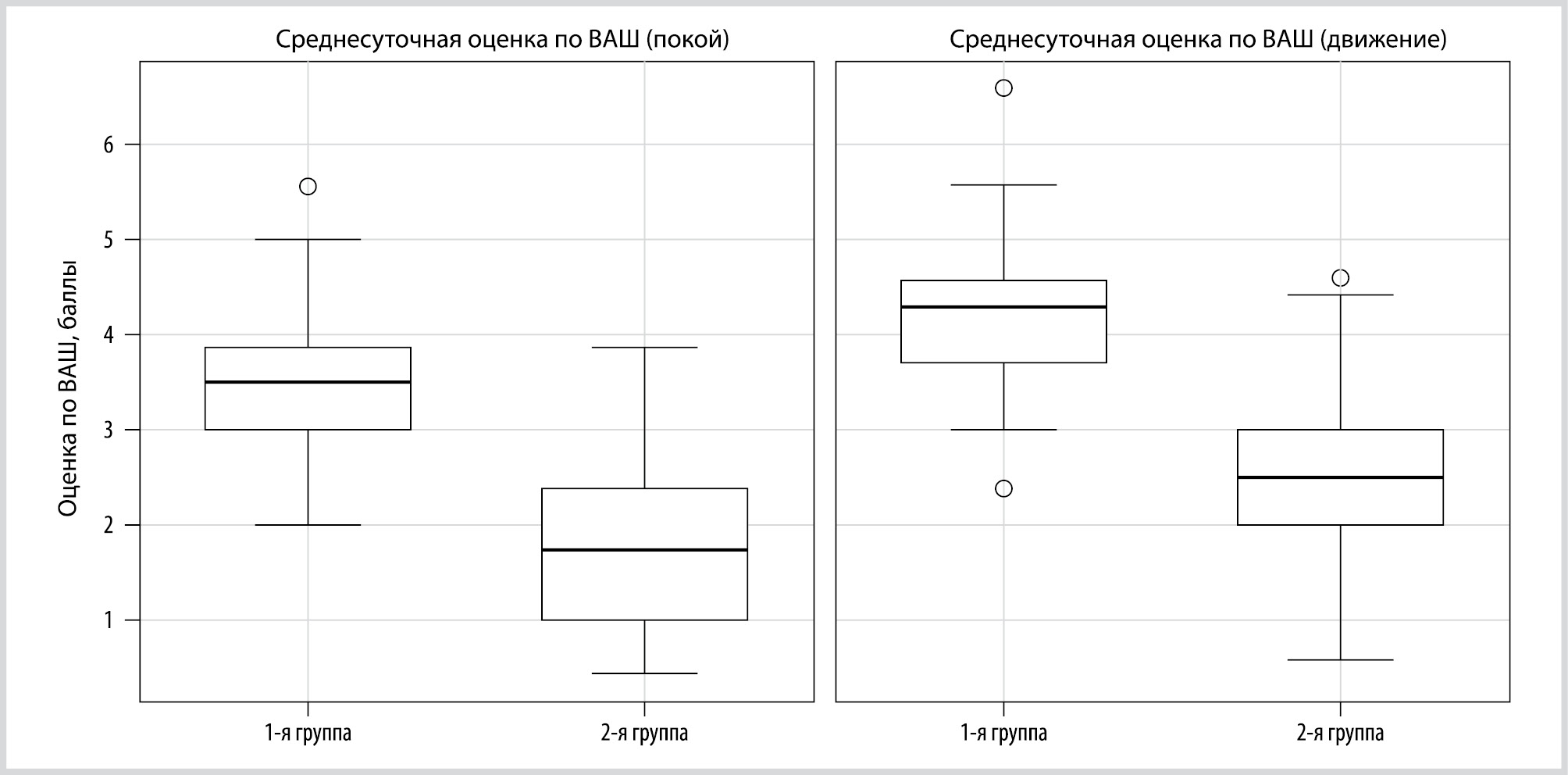
Рис. 2. Среднесуточная интенсивность боли по визуальной аналоговой шкале.
Диаграммы «ящик с усами» показывают распределение оценок интенсивности боли по 10-балльной визуальной аналоговой шкале (ВАШ) в покое и при движении в течение первых 24 ч после операции у пациентов 1-й и 2-й групп.
В течение первых суток после операции у пациентов обеих групп отмечали динамику снижения боли как в покое, так и при движении, при этом во всех временных точках, начиная с 4-го часа, оценка по ВАШ у пациентов 2-й группы была статистически значимо ниже по сравнению с оценкой у пациентов 1-й группы. Динамика средней интенсивности боли с 95% ДИ представлена на рис. 3.
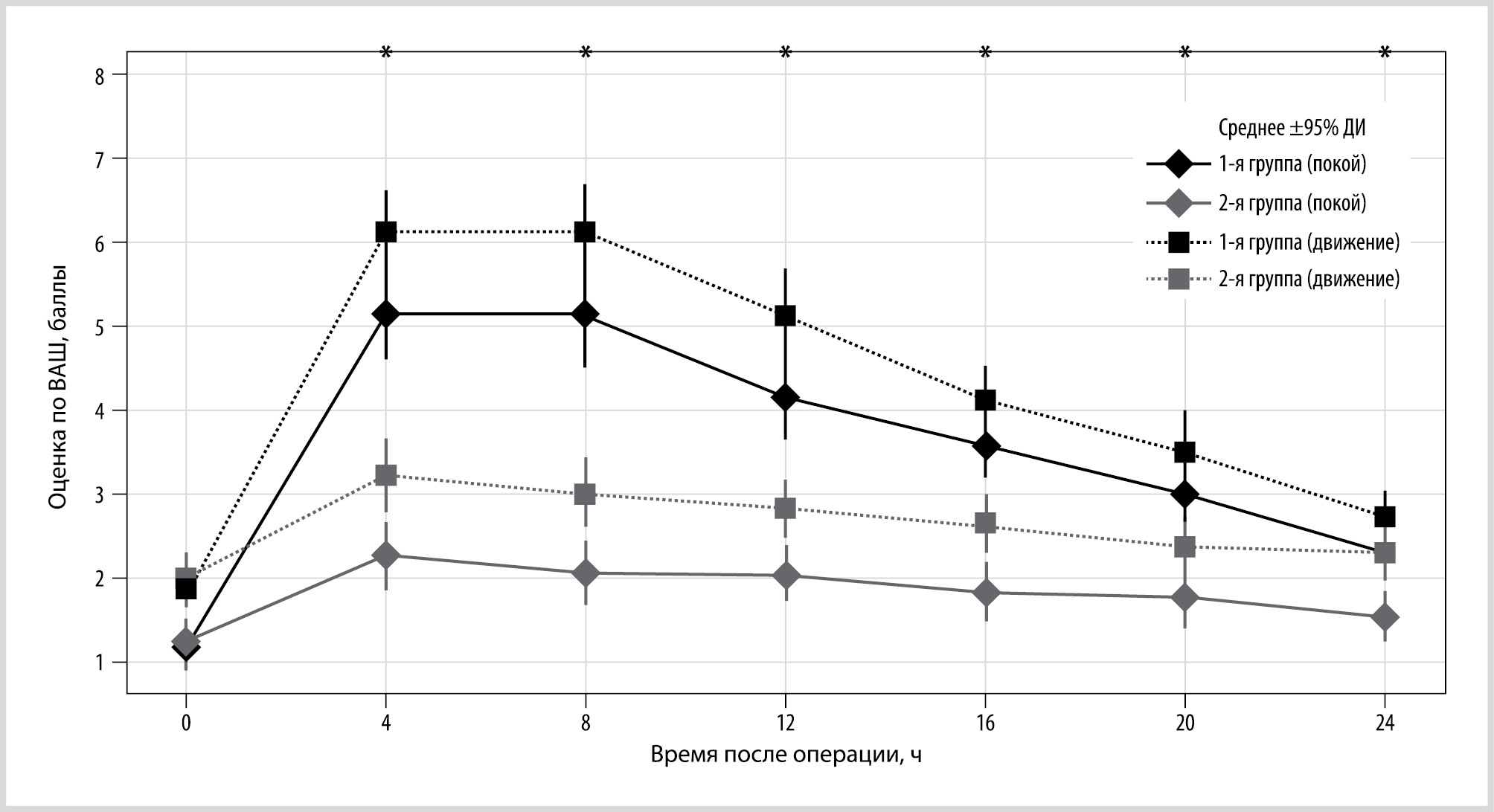
Рис. 3. Динамика интенсивности боли по визуальной аналоговой шкале в покое и при движении.
Линейные графики показывают изменение средней интенсивности боли по визуальной аналоговой шкале (ВАШ) с 95% доверительными интервалами в течение первых 24 ч после операции у пациентов 1-й и 2-й групп. Звездочкой (*) отмечены временные точки, в которых различия между группами в покое и при движении были статистически значимыми (p<0,001, критерий Манна—Уитни).
Рикошетную боль наблюдали у 80,8% (n=42) пациентов 1-й группы и только у 8,0% (n=4) пациентов 2-й группы (p<0,001, χ²), ОР=0,21 (95% ДИ 0,119—0,367). Время до первого запроса анальгетика оказалось значительно больше у пациентов 2-й группы: медиана составила 380 [300; 480] мин — по сравнению со 180 [140; 200] мин у пациентов 1-й группы (p<0,001, критерий Манна—Уитни).
Потребность в опиоидах (тримеперидин) возникла у 82,7% пациентов 1-й группы (n=43) и только у 22,0% пациентов 2-й группы (n=11) (p<0,001, χ²). При этом в случаях введения тримеперидина суммарная суточная доза не различалась между группами и составила в среднем 40 мг (p=0,130, критерий Манна—Уитни).
Зарегистрирована ПОТР у 26,9% (n=14) пациентов 1-й группы и только у 6,0% (n=3) пациентов 2-й группы (p=0,010, критерий χ²). Расчет относительного риска показал его снижение у пациентов 2-й группы: ОР=0,78 (95% ДИ 0,65—0,93).
Пациенты 2-й группы вставали с кровати значительно раньше, чем пациенты 1-й группы: медиана времени до вертикализации составила 130 [116,25; 158,75] мин и 230 [197,5; 260,0] мин соответственно (p<0,001, критерий Манна—Уитни).
В целом пациенты 2-й группы отметили высокую удовлетворенность анестезией, большинство поставили высшую оценку — 10 [10; 10] (8—10) баллов — по сравнению с оценкой 9 [8; 9] (7—10) баллов у пациентов 1-й группы (p<0,001, критерий Манна—Уитни). Удовлетворенность послеоперационным обезболиванием также была выше у пациентов 2-й группы, она составила 5 [5; 5] (4—5) баллов — по сравнению с оценкой 4 [4; 4] (3—5) балла у пациентов 1-й группы (p<0,001, критерий Манна—Уитни).
Обсуждение
В совокупности полученные результаты свидетельствуют о преимуществе методики общей сочетанной анестезии с БПК и локальной инфильтрационной анестезией по сравнению со спинальной анестезией при артроскопической пластике крестообразных связок. Применение этого метода обеспечивает более выраженное снижение послеоперационной боли (среднее значение оценки по ВАШ при движении 2,63 и 4,23 соответственно; p<0,001), уменьшение потребности в опиоидах (22% и 82,7% соответственно; p<0,001) и сокращает время вертикализации, что имеет высокую клиническую значимость и способствует реализации принципов ERAS. Таким образом, общая сочетанная анестезия представляется более предпочтительной тактикой периоперационного обезболивания в рамках данной хирургической процедуры.
Обоснование преимуществ данной методики заключается в нескольких ключевых аспектах, отражающих как анальгетическую эффективность, так и влияние на восстановление пациентов. Во-первых, адекватная анестезия у пациентов основной группы, которым проведена ОСА, достигнута введением меньших доз опиоидных анальгетиков за счет проведения регионарной анестезии. В частности, средняя интраоперационная доза фентанила составила 158,7±54 мкг, из которых 100 мкг во всех случаях введено во время индукции анестезии, при продолжительности операции 80—85 мин. Во-вторых, достигнут лучший анальгетический эффект после операции по сравнению с нейроаксиальной методикой. В исследовании M.F. Chisholm и соавт. с выборкой 80 пациентов, где на фоне спинальной анестезии не выявлено разницы в оценке болевого синдрома и потреблении опиоидов между добавлением блокады бедренного нерва и БПК, среднее значение болевого синдрома составило 3 балла при рутинном приеме нестероидных противовоспалительных средств (НПВС) и пероральных опиоидов [16]. В нашем же исследовании среднее значение составило 1,82 балла на фоне применения опиоидов по требованию у 22% пациентов, что подтверждает эффективность добавления ЛИА к основным методикам анестезии. В подтверждение этому E.M. Yung и соавт. на основании метаанализа 11 РКИ выявили, что ЛИА у пациентов с АПКС улучшает послеоперационное обезболивание за счет уменьшения потребления опиоидов и приводит к снижению показателей выраженности боли [17]. Добавление ЛИА и БПК к общей анестезии кажется перспективным и, возможно, поможет избежать рутинного применения опиоидных препаратов в послеоперационном периоде, что является предметом дальнейших исследований.
Феномен рикошетной боли отмечен у пациентов обеих групп со значимо более высокой частотой в группе СА. Выраженные различия в частоте возникновения феномена можно объяснить тем, что рикошетная боль преимущественно встречается при выполнении плотных сенсорных блокад (к примеру, блокады плечевого сплетения). В этих случаях после окончания действия сенсорного блока возникает непрерывный сигнальный ответ от периферических ноцицепторов в результате периферической и центральной сенсибилизации. В то же время выраженного усиления боли и потребления опиоидов, связанных с разрешением блокады, не наблюдается при использовании сенсорных блокад, не связанных с моторным блоком, что продемонстрировано в работе F. Muñoz-Leyva и соавт. на примере межфасциальных блокад [18].
В результате мультимодального периоперационного обезболивания у пациентов группы ОСА становилась возможной более ранняя вертикализация. Это позволяет проводить операции АПКС в условиях стационаров одного дня, а также применять методики лечебной физкультуры с первых-вторых суток после операции, что ускоряет сроки полного восстановления функции оперированного сустава [19].
Несмотря на то что пациенты группы ОСА получали меньше опиоидов в послеоперационном периоде, методика не является полностью безопиоидной. Это подтверждается результатами близкого по дизайну исследования Y. Xie и соавт., в котором авторы оценивали возникновение послеоперационной боли после выполнения АПКС в условиях общей сочетанной анестезии (оценка пациентом по ВАШ >4 баллов) [20]. Полученная частота возникновения послеоперационной боли (10%) ниже, чем в нашем исследовании, где под этот критерий подходят около 20% пациентов, что может объясняться меньшей выборкой, чем в нашем исследовании, и использованием пролонгированных форм НПВС.
В ходе настоящего исследования не было серьезных нежелательных явлений с показаниями к медицинскому вмешательству или повлиявших на клинические исходы. В рамках оценки осложнений анестезии анализировали частоту ПОТР, которая оказалась ниже при использовании методики ОСА (6% и 26,9% соответственно; p=0,010). Не было осложнений, связанных с выполнением регионарных блокад, таких как гематомы, неврологические нарушения или признаки токсического действия местных анестетиков. Следует отметить, что применявшиеся дозы препаратов не превышали регламентированных значений, указанных в инструкции по применению. Тем не менее для всесторонней оценки профиля безопасности требуется расширение выборки и удлинение периода наблюдения с учетом отсроченных эффектов, включая вероятность формирования хронического болевого синдрома.
Ограничения исследования
К ограничениям настоящего исследования следует отнести относительно небольшой объем выборки, ограниченный пациентами с низким анестезиологическим риском (ASA I—II), а также проведение исследования в одном центре, что может снижать возможность обобщения результатов. Кроме того, в исследовании использовалось одиночное ослепление: врачи — анестезиологи-реаниматологи знали о типе анестезии, что потенциально могло повлиять на оценку некоторых исходов. Еще одним фактором является невозможность включения парацетамола в послеоперационную схему терапии по организационным причинам, что могло ограничить эффективность базовой анальгезии.
Заключение
Общая сочетанная анестезия, включающая не только блокаду периферических нервов, но и локальное воздействие местного анестетика на сенсорные ветви нервов посредством инфильтрационной анестезии, может быть с успехом применена при выполнении артроскопической пластики крестообразных связок. Сочетание этих методов регионарной анестезии на фоне общей анестезии обеспечивает более эффективное послеоперационное обезболивание по сравнению со спинальной анестезией, что выражается в снижении интенсивности боли, потребности в опиоидах и в лучшей переносимости анестезии. Показан благоприятный профиль безопасности метода. В то же время остаются открытыми вопросы, касающиеся оптимизации сенсорной блокады при сохранении двигательной функции и профилактики феномена рикошетной боли, что означает необходимость дальнейших сравнительных и многоцентровых исследований.
Участие авторов:
Концепция и дизайн исследования — Горелов Д.В., Овечкин А.М., Бабаянц А.В., Игнатенко О.В., Сластинин В.В.
Сбор и обработка материала — Горелов Д.В., Овечкин А.М., Бабаянц А.В., Игнатенко О.В., Сластинин В.В., Политов М.Е.
Статистический анализ данных — Горелов Д.В., Политов М.Е.
Написание текста — Горелов Д.В., Овечкин А.М., Бабаянц А.В., Игнатенко О.В., Сластинин В.В., Политов М.Е.
Редактирование — Горелов Д.В., Овечкин А.М., Бабаянц А.В., Игнатенко О.В., Сластинин В.В., Политов М.Е.
Авторы заявляют об отсутствии конфликта интересов.
- Mall NA, Chalmers PN, Moric M, Tanaka MJ, Cole BJ, Bach BR Jr, Paletta GA Jr. Incidence and trends of anterior cruciate ligament reconstruction in the United States. The American Journal of Sports Medicine. 2014;42(10):2363-2370. https://doi.org/10.1177/0363546514542796
- Алиева А.А., Аджиева А.М., Махатова М.М., Кожемова К.Р., Султанова З.И. Артроскопическая реконструкция передней крестообразной связки коленного сустава и выбор оптимального трансплантата. Медицина. Социология. Философия. Прикладные исследования. 2023;(4):117-123.
- Горелов Д.В., Бабаянц А.В., Овечкин А.М. Актуальные методы периоперационного обезболивания при артроскопической пластике крестообразных связок: обзор литературы. Регионарная анестезия и лечение острой боли. 2024;18(1):5-16. https://doi.org/10.17816/RA624428
- Odom-Forren J, Jalota L, Moser DK, Lennie TA, Hall LA, Holtman J, Hooper V, Apfel CC. Incidence and predictors of postdischarge nausea and vomiting in a 7-day population. Journal of Clinical Anesthesia. 2013;25(7):551-559. https://doi.org/10.1016/j.jclinane.2013.05.008
- Kessler ER, Shah M, Gruschkus SK, Raju A. Cost and quality implications of opioid-based postsurgical pain control using administrative claims data from a large health system: opioid-related adverse events and their impact on clinical and economic outcomes. Pharmacotherapy. 2013;33(4):383-391. https://doi.org/10.1002/phar.1223
- Ghaleb A. Postdural puncture headache. Anesthesiology Research and Practice. 2010;2010:102967. https://doi.org/10.1155/2010/102967
- Lavand’homme P. Rebound pain after regional anesthesia in the ambulatory patient. Current Opinion in Anaesthesiology. 2018;31(6):679-684. https://doi.org/10.1097/ACO.0000000000000651
- Vorobeichik L, Brull R, Joshi GP, Abdallah FW. Evidence Basis for Regional Anesthesia in Ambulatory Anterior Cruciate Ligament Reconstruction: Part I — Femoral Nerve Block. Anesthesia and Analgesia. 2019;128(1):58-65. https://doi.org/10.1213/ANE.0000000000002854
- Runner RP, Boden SA, Godfrey WS, Premkumar A, Samady H, Gottschalk MB, Xerogeanes JW. Quadriceps Strength Deficits After a Femoral Nerve Block Versus Adductor Canal Block for Anterior Cruciate Ligament Reconstruction: A Prospective, Single-Blinded, Randomized Trial. Orthopaedic Journal of Sports Medicine. 2018;6(9):2325967118797990. https://doi.org/10.1177/2325967118797990
- Gerbershagen HJ, Aduckathil S, van Wijck AJ, Peelen LM, Kalkman CJ, Meissner W. Pain intensity on the first day after surgery: a prospective cohort study comparing 179 surgical procedures. Anesthesiology. 2013;118(4): 934-944. https://doi.org/10.1097/ALN.0b013e31828866b3
- Hamilton DL. Rebound pain: distinct pain phenomenon or nonentity? British Journal of Anaesthesia. 2021; 126(4):761-763. https://doi.org/10.1016/j.bja.2020.12.034
- Синбухова Е.В., Лубнин А.Ю., Данилов Г.В., Струнина Ю.В. Удовлетворенность пациентов анестезией. Анестезиология и реаниматология. 2019;1:50-56. https://doi.org/10.17116/anaesthesiology201901150
- Hudak PL, Wright JG. The characteristics of patient satisfaction measures. Spine (Phila Pa 1976). 2000;25(24):3167-3177.
- Kelly AM. The minimum clinically significant difference in visual analogue scale pain score does not differ with severity of pain. Emergency Medicine Journal. 2001;18(3):205-207. https://doi.org/10.1136/emj.18.3.205
- Cho EA, Kim N, Lee B, Song J. The Effect of Perioperative Pregabalin on Pain after Arthroscopic Anterior Cruciate Ligament Reconstruction: A Randomized Controlled Trial. Journal of Clinical Medicine. 2019;8:1426. https://doi.org/10.3390/jcm8091426
- Chisholm MF, Bang H, Maalouf DB, Marcello D, Lotano MA, Marx RG, Liguori GA, Zayas VM, Gordon MA, Jacobs J, YaDeau JT. Postoperative analgesia with saphenous block appears equivalent to femoral nerve block in ACL reconstruction. HSS Journal. 2014;10(3):245-251. https://doi.org/10.1007/s11420-014-9392-x
- Yung EM, Brull R, Albrecht E, Joshi GP, Abdallah FW. Evidence Basis for Regional Anesthesia in Ambulatory Anterior Cruciate Ligament Reconstruction: Part III: Local Instillation Analgesia — A Systematic Review and Meta-analysis. Anesthesia and Analgesia. 2019;128(3):426-437. https://doi.org/10.1213/ANE.0000000000002599
- Muñoz-Leyva F, Cubillos J, Chin KJ. Managing rebound pain after regional anesthesia. Korean Journal of Anesthesiology. 2020;73 (5):372-383. https://doi.org/10.4097/kja.20436
- Гомжина Е.А. Влияние раннего применения реабилитационных методик после артроскопических операций на восстановление функции оперированного сустава. Смоленский медицинский альманах. 2019; 3:33-36.
- Wang K, Luo J, Zheng L, Luo T. Preoperative flurbiprofen axetil administration for acute postoperative pain: a meta-analysis of randomized controlled trials. Journal of Anesthesia. 2017;31(6):852-860. https://doi.org/10.1007/s00540-017-2409-0



Рекомендуем статьи по данной теме:
Оценка эффективности и безопасности нового пептидного анальгетика «Тафалгин» для купирования послеоперационной боли у пациентов онкологического профиля.Анестезиология и реаниматология. 2025;(6):118-124