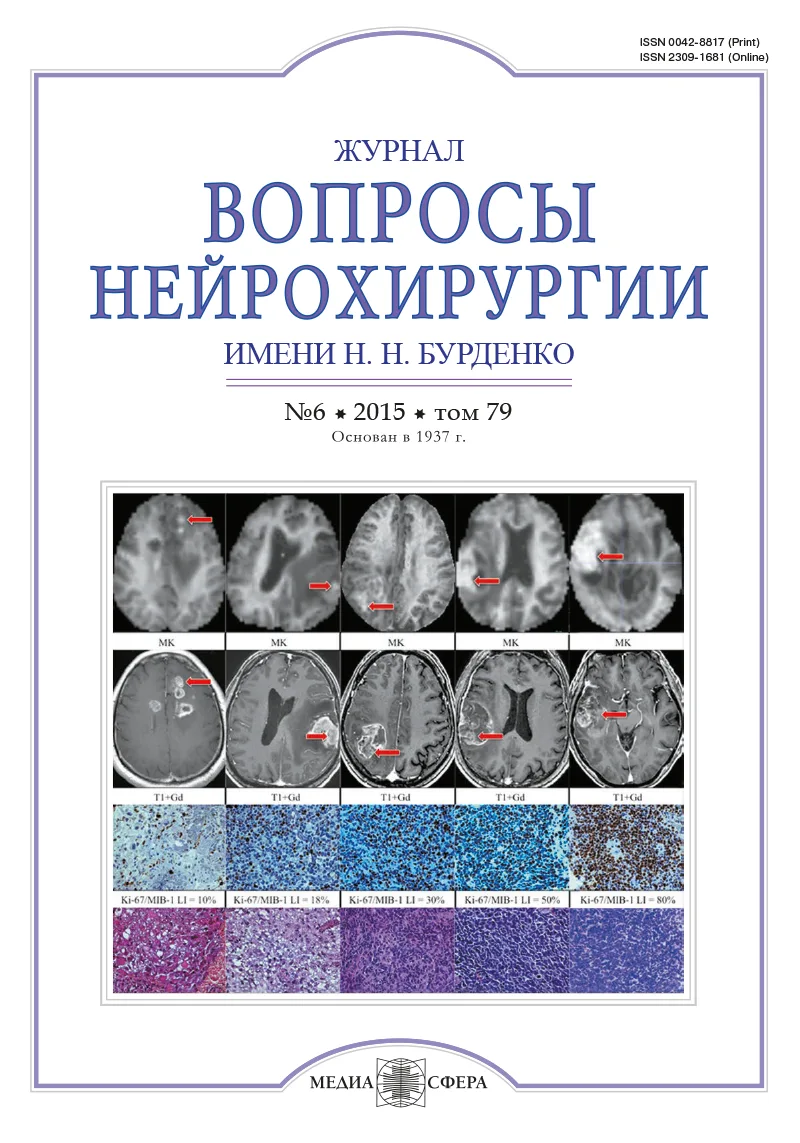
Оценка биологического поведения АКТГ-секретирующих опухолей гипофиза при помощи различных методов
Журнал: Вопросы нейрохирургии имени Н.Н. Бурденко. 2015;79(6):107-114.
DOI: 10.17116/neiro2015796107-114
Прочитано: 4205 раз
Резюме
Ключевые слова
- АКТГ-секретирующие опухоли гипофиза
- оценка и маркеры злокачественного потенциала
Дата публикации: 30.04.2020
Аденомы гипофиза являются нейроэндокринными опухолями, которые происходят из клеток аденогипофиза. Ранее считалось, что опухоли гипофиза составляют около 10% внутричерепных новообразований. Однако значительное усовершенствование методов радиологического и гормонального исследований увеличивает количество диагностированных случаев до 25%, из них на долю гормонально-активных кортикотропином приходится 10—15% [1, 2].
Течение и клиническая картина опухолей гипофиза разнообразны (при избыточной секреции различных тропных гормонов гипофиза или отсутствии гормональной гиперпродукции). В обоих случаях при экстраселлярном росте опухолей может происходить повреждение окружающих структур центральной нервной системы (ЦНС). Подавляющее большинство аденом гипофиза (около 98—99%) являются доброкачественными новообразованиями. Однако вопрос, касающийся определения прогноза дальнейшего течения аденом гипофиза и эффективности различных видов лечения, остается открытым. Так, за последние несколько десятилетий проведено множество исследований для определения маркеров, которые могут быть ассоциированы с течением аденом гипофиза и повышенным злокачественным потенциалом: инвазивным ростом в окружающие структуры ЦНС, развитием рецидивов после различных видов лечения и появлением метастазов (при карциномах гипофиза). В результате исследованы многочисленные молекулярные и иммуногистохимические маркеры, которые указывают на агрессивный потенциал аденом гипофиза.
Анализ биологического поведения кортикотропином будет неполным, если оценивать разрозненные данные различных методов. Очень важно оценивать в совокупности клиническую картину, данные лабораторных и инструментальных методов исследования. Оценка гистологического строения и иммунофенотипа полученных образцов ткани удаленных опухолей позволяет провести дифференциальную диагностику аденом гипофиза от других патологических процессов в области турецкого седла, определить гормональную, пролиферативную активность, рецепторный статус и др. С этой же целью дополнительно можно использовать молекулярно-генетические методы.
Анализ клинической картины и исследование крови на содержание тропных гормонов гипофиза необходимы для понимания профиля гормональной продукции опухоли, суждения об активности заболевания, оценки результатов проведенного лечения (достижения клинико-биохимической ремиссии или прогрессии опухоли после хирургического, медикаментозного или радиологического методов лечения) [3].
Для оценки размера, направления роста опухоли гипофиза и поражения окружающих структур ЦНС наиболее важную роль играет магнитно-резонансная томография (МРТ). МРТ является оптимальной для диагностики аденом гипофиза в режиме Т1 с толщиной среза 3 мм. Для более четкой визуализации микроаденомы за счет различий в васкуляризации ткани опухоли и сохранного аденогипофиза проводится МРТ с контрастным усилением (ткань аденогипофиза интенсивнее накапливает контрастное вещество, а ткань опухоли демонстрирует «дефект накопления») [4]. Особенно важно отметить, что МРТ позволяет оценить наличие инвазивного роста. J. Trouillas и соавт. [5] показали, что наличие или отсутствие инвазивного роста опухоли гипофиза по данным МРТ является главным прогностическим фактором (при помощи многофакторного анализа и ROC-кривой) в отношении развития ремиссии или рецидива после нейрохирургического удаления указанных новообразований. Также известно, что МРТ является более ценным методом обнаружения инвазивного роста по сравнению с гистологическим методом. При гистологическом исследовании возможно определить только 9% инвазивных опухолей [6].
Другая проблема при верификации кортикотропином может быть связана с отсутствием опухоли на МРТ. В такой ситуации для подтверждения АКТГ-секретирующей опухоли гипофиза рекомендуется провести забор крови из кавернозных синусов со стимуляцией десмопрессином [3].
Гистологическое исследование кортикотропином с окраской гематоксилином и эозином позволяет определить гистологическое строение опухоли и при необходимости провести дифференциальную диагностику от других патологических процессов в области турецкого седла: метастазов, краниофарингиом, различных видов кист, воспалительных изменений, гиперплазии аденогипофиза [7].
АКТГ-секретирующие аденомы чаще всего локализуются интраселлярно и располагаются в среднем секторе гипофиза. Макроскопически ткань кортикотропином красного цвета, мягкой консистенции и отличается от желтовато-коричневого, плотного гипофиза. Микроскопически иногда сложно отличить опухолевую ткань от окружающего гипофиза за счет слабо выраженной капсулы или ее отсутствия [8].
По данным электронной микроскопии, среди кортикотропином выделяют плотно гранулированные и редко гранулированные опухоли. В настоящее время электронную микроскопию заменил более простой и менее трудоемкий метод иммуногистохимического исследования при помощи антител к низкомолекулярному кератину CAM 5.2, а также при помощи шик-реакции. Плотно гранулированные кортикотропиномы состоят из мономорфных круглых базофильных клеток с выраженной диффузной иммуноэкспрессией АКТГ (около 60% — моногормональные, остальные могут экспрессировать различные тропные гормоны гипофиза, а также САМ 5.2). Митозы в них выявляются редко, индекс метки Ki-67 низкий (до 1%).
Редко гранулированные кортикотропиномы состоят из хромофобных клеток с диффузным характером роста и образованием синусоидных структур вокруг капилляров. Часто имеются клеточный и ядерный полиморфизм, признаки апоптоза, митозы очень редки. Иммуногистохимическая реакция с антителами к АКТГ слабая, окрашиваются очаги опухолевых клеток, выявляются выраженная экспрессия CAM 5.2 и слабая шик-реакция.
Весьма редко встречаются так называемые круковские аденомы, которые состоят из крупных хромофобных или эозинофильных клеток с выраженными круковскими гиалиновыми изменениями (при накоплении кератина цитоплазма становится стекловидной), которые возникают при воздействии на клетки гипофиза высокого уровня кортизола. В результате отложения кератина в цитоплазме АКТГ-позитивные гранулы смещаются на периферию опухолевых клеток или в околоядерное пространство. Окрашивание с антителами к CAM 5.2 принимает вид кольца вокруг ядра клетки. Такие крупные полиморфные клетки необходимо дифференцировать от нейронов ганглиоцитомы или метастатических карцином другой локализации. Иммуноэкспрессия Tpit (T-box transcription factor) позволяет подтвердить дифференцировку клеток из кортикотрофов [9].
У пациентов с болезнью Иценко—Кушинга (БИК) размер опухоли и ее распространение в турецком седле не всегда ассоциируется с выраженностью симптоматики, обусловленной избыточной продукцией АКТГ. Классическое течение БИК обычно связано с наличием микроаденомы гипофиза (70—90%), гистологическое исследование которой выявляет плотно гранулированную кортикотропиному [9, 10]. Остальные макрокортикотропиномы по гистологическому строению являются редко гранулированными или представляют собой аденомы с круковскими изменениями [11]. Клинически макроаденомы чаще всего характеризуются циклическим течением, либо неполной картиной гиперкортицизма, или же отсутствием гормональной активности со склонностью к опухолевой прогрессии после различных видов лечения [12].
Тщательное исследование ткани, окружающей опухоль гипофиза, может дать дополнительную информацию. В случаях когда в операционном материале отсутствует опухоль гипофиза, при гистологическом исследовании возможно определить наличие круковских изменений в ткани гипофиза вне опухоли. Это доказывает наличие гиперкортизолемии, которая таким образом воздействует на клетки аденогипофиза [9, 13, 14].
После удаления кортикотропином возникает вопрос о прогнозе дальнейшего течения заболевания.
Классификация ВОЗ 2004 г. [8] выделяет типичные и атипичные аденомы гипофиза, карциномы гипофиза. К диагностическим критериям типичных аденом относят отрицательную иммуноэкспрессию р53, индекс метки Ki-67 менее 3%, низкую митотическую активность. Для атипичных аденом характерны избыточная иммуноэкспрессия р53, индекс метки Ki-67 более 3%, высокая митотическая активность. Принципиальное отличие карцином от аденом гипофиза заключается в наличии краниоспинальных и/или отдаленных метастазов.
При исследовании ткани 121 аденомы гипофиза G. Zada и соавт. [15] обнаружили 15% атипичных аденом: гормонально-активные (соматотропиномы, n=32, из них 5 атипичных, кортикотропиномы, n=12, из них 2 атипичные, пролактиномы, n=18, из них 2 атипичные) и неактивные опухоли (n=58, из них 9 атипичных). Однако в этой работе не проводилось динамического наблюдения за пациентами после удаления опухолей.
В работе W. Saeger [7] показано значительно меньшее количество атипичных аденом. Всего исследована 451 аденома гипофиза, из которых атипичных было 12 (2,7%). Среди атипичных аденом обнаружены 3 соматотропиномы, 1 пролактинома, 3 кортикотропиномы, 1 гонадотропинома, 3 нульклеточных аденомы и 1 плюригормональная аденома. Такое расхождение можно объяснить тем, что были использованы различные критерии в оценке результатов.
Ряд экспертов предлагают внести уточнения в классификацию аденом гипофиза, в которой бы учитывались клиническая картина и данные лабораторно-инструментальных исследований, результаты оперативного лечения и дальнейшее течение заболеваний.
G. Raverot и соавт. [6] предлагают использовать более подробную клинико-патологическую классификацию опухолей гипофиза, которая основана на следующих характеристиках.
1. Размер опухоли по данным МРТ: микроаденома (менее 10 мм), макроаденома (более 10 мм), гигантские опухоли (более 40 мм).
2. Гормональный профиль опухоли по данным иммуногистохимического исследования: СТГ-, ПРЛ-, АКТГ-, ЛГ/ФСГ- и ТТГ-секретирующие аденомы.
3. Стадия развития опухоли согласно следующим критериям:
— ивазивный рост опухоли в кавернозный или сфеноидальный синусы по данным гистологического исследования и МРТ;
— пролиферативная активность по наличию двух признаков из трех: митозы (более 2 на 10 полей зрения)>; индекс метки Ki-67 не менее 3%; позитивный p53 (более 10 окрашенных ядер в 10 полях зрения).
Таким образом, на основании указанных характеристик выделяют три стадии развития опухоли:
1а — неинвазивная;
1b — неинвазивная и пролиферирующая;
2а — инвазивная;
2b — инвазивная и пролиферирующая;
3 — метастазирующая, с развитием цереброспинальных или отдаленных метастазов (карцинома гипофиза).
Пролиферативная активность аденом гипофиза оценивается по наиболее распространенным маркерам (количество митозов, Ki-67 и p53). Учитывая противоречивую значимость этих маркеров, особенно Ki-67, недостаточно определенные методологические стандарты и установленные пренебрегаемые величины для p53, авторы классификации предлагают использовать хотя бы два из трех указанных критериев пролиферативной активности: более двух митозов на 10 полей зрения и индекс метки Ki-67 не менее 3%, так же как и для эндокринных опухолей поджелудочной железы [16].
Авторы полагают, что представленная классификация имеет весомое прогностическое значение относительно послеоперационного периода для всех видов аденом гипофиза. В течение 8 лет вероятность прогрессии опухоли возрастает в 12 раз, если у пациента имеется инвазивная и пролиферирующая опухоль (2b стадия), по сравнению с неинвазивной и непролиферирующей опухолью (1а стадия) [17].
Ранее и в настоящее время возникают проблемы в диагностике карцином гипофиза. Карциномами гипофиза считаются опухоли, происходящие из клеток аденогипофиза, с распространением метастазов в ЦНС и отдаленные органы (классификация ВОЗ, 2004). По различным данным, злокачественные опухоли гипофиза встречаются в 0,2—1% случаев с наличием подтвержденных краниальных и/или спинальных метастазов. Всего в литературе [6, 18] описаны 132 случая карцином гипофиза за 1961—2009 гг. Большинство из них — гормонально-активные карциномы: 36% пролактином и 30% кортикотропином, гормонально-неактивных — около 23%.
Макроскопически большинство карцином гипофиза не отличаются от инвазивных макроаденом. Основными признаками карцином являются продолженный рост в виде одного или нескольких субарахноидальных узлов с инвазией в подлежащую ткань мозга или твердую оболочку.
У большинства злокачественных опухолей гипофиза наблюдается инвазивный рост в структуры турецкого седла (твердая оболочка, кости, кавернозные синусы, черепные нервы), гипоталамус. В структуры ЦНС опухоль распространяется по спинномозговой жидкости. Системные метастазы распространяются гематогенным путем через кавернозные синусы и яремную вену с поражением печени, легких, костей, надпочечников, сердца и даже яичников. При инвазивном росте в основание черепа и мягкие ткани опухоль диссеминирует через лимфоузлы шеи.
До настоящего времени не обнаружены гистологические, иммуногистохимические или ультраструктурные признаки, с помощью которых можно надежно диагностировать злокачественные опухоли гипофиза, особенно в тех случаях, когда опухоль не распространяется за пределы турецкого седла [19].
По микроскопическому строению карциномы гипофиза в той или иной степени напоминают аденомы и отличаются только наличием метастазов. Митотическая активность также может варьировать и обнаруживается в 3,9% неинвазивных аденом, 21,4% инвазивных аденом и 66,7% карцином.
Карциномы, так же как и аденомы, иммунопозитивны к различным гипофизарным гормонам (чаще всего экспрессируют ПРЛ и АКТГ с развитием соответствующей клинической картины), нейроэндокринным маркерам (хромогранин, А и синаптофизин).
При сравнении экспрессии гена супрессии опухоли (ТР53) в аденомах была обнаружена недостаточная экспрессия этого маркера, а в 15% инвазивных аденом и 100% карцином и их метастазах — выраженная иммуноэкспрессия. В большинстве карцином показано наличие р53, р27, топоизомеразы-2а (регулирует репликацию ДНК), VEGF, HER-2/neo, редко в карциномах имеются ингибиторы клеточного цикла по сравнению с нормальным аденогипофизом. Индекс метки Ki-67 наиболее высокий в карциномах (12%) по сравнению с инвазивными (4,5%) и неинвазивными (1%) аденомами [8].
Средняя выживаемость пациентов равняется 2 годам и сокращается при обнаружении метастазов до 1 года и менее. Продолженный рост опухоли, по данным МРТ, нарастание симптомов гипопитуитаризма или значительное повышение уровня гормонов, исчезновение чувствительности к агонистам дофамина или аналогам соматостатина являются неблагоприятными прогностическими факторами.
За последние годы были проведены многочисленные работы, в которых исследовано большое количество биологических маркеров, ассоциированных с неблагоприятным течением аденом гипофиза (инвазивные свойства, опухолевая прогрессия). Однако до сих пор не найден ни один маркер, который самостоятельно можно было бы использовать для определения прогноза поведения опухолей гипофиза.
В данном обзоре литературы представлен ряд биологических маркеров (ростовые факторы фибробластов, матриксные металлопротеиназы, факторы апоптоза, гипофизарный опухоль-трансформирующий ген, сосудистые маркеры), определяемых при помощи иммуногистохимического исследования, которые считаются прогностически наиболее точными относительно биологического поведения аденом гипофиза.
В гипофизе найдена экспрессия ростовых факторов фибробластов второго и четвертого типов (РФФ2, РФФ4), которые регулируют рост, дифференцировку, миграцию клеток и ангиогенез [21]. Наиболее высокая экспрессия этих факторов найдена в кортикотропиномах по сравнению с соматотропиномами и пролактиномами. Это может быть связано с вовлечением РФФ в патогенез АКТГ-секретирующих опухолей. При потере РФФ2 в опухоли возникает активация MAGE-A3 (melanoma-associated antigen A3-антиген А3, ассоциированный с меланомой) [49] и видоизмененной изоформы РФФ4, что приводит к инвазивному росту опухолевых клеток invivo и потере экспрессии N-кадгерина на мембране клеток. Кроме того, видоизмененная изоформа РФФ4 взаимодействует с NCAM (neuronal cell adhesion molecules — молекулы нейрональной клеточной адгезии), что также ассоциируется с инвазивными свойствами аденом гипофиза.
Матриксные металлопротеиназы (ММП) — это семейство одноцепочечных цинксодержащих протеолитических ферментов, которые регулируют состояние внеклеточного матрикса в физиологических и патологических условиях. Описаны 8 различных классов металлопротеиназ, в которые входят 24 функциональных типа. ММП проникают в такие структуры внеклеточного матрикса, как коллагеновые волокна, ламинин, фибронектин, витронектин и протеогликаны. Источником ММП являются клетки инвазивных опухолей, фибробласты, макрофаги и др. [20]. ММП, в частности 9-го типа, разрушают коллагеновые волокна 4, 5 и 10-го типов, эластин, фибронектин, белки, связанные с протеогликанами. ММП9 и ММП2 экспрессируются эндотелиальными клетками сосудов и клетками стромы. Экспрессия ММП9 найдена в злокачественных опухолях молочной железы, легких. В аденомах гипофиза экспрессия ММП значительно выше в инвазивных опухолях [21—23].
Учитывая описанные свойства ростовых факторов фибробластов и матриксных металлопротеиназ, изучение данных маркеров признается перспективным в отношении определения неблагоприятного прогноза кортикотропином.
Процесс апоптоза в опухолях гипофиза мало изучен. Аденомы гипофиза — это новообразования с низкой пролиферативной активностью (небольшое количество митозов, низкий индекс метки Ki-67) и низким уровнем апоптоза. Апоптоз и митотическая активность — это по своей сути противоположные процессы. В новообразованиях другой локализации обычно нарушен баланс между антипролиферативной активностью и пролиферацией опухолевых клеток в сторону последней. Однако в аденомах гипофиза эти процессы однонаправлены. В карциномах гипофиза показан высокий уровень пролиферации и апоптоза [24].
В связи с низкой активностью процессов апоптоза в аденомах гипофиза сложно определить опухолевые клетки с апоптотическими изменениями при рутинном гистологическом исследовании. На ранней стадии апоптоза отмечается пикноз ядра и дальнейшая конденсация хроматина с неровными контурами. Размер клетки уменьшается, цитоплазма становится компактной. Клетки постепенно теряют связь с окружающими структурами. Затем происходит фрагментация ядра в мелкие пикнотические частицы с формированием апоптотических телец.
Процесс апоптоза также возможно изучать при помощи электронной микроскопии, иммуногистохимического исследования, цитометрического анализа и TUNEL-методики.
При иммуногистохимическом исследовании около 30% гипофизарных аденом различных типов экспрессируют Bcl-2. Bcl-2 — это внутриклеточный белковый фактор, который подавляет апоптоз во многих клеточных системах, включая лимфогематопоэтические и нейрональные клетки, регулирует клеточную смерть, контролируя проницаемость митохондриальной мембраны. Практически все гормонально-активные и значительное количество гормонально-неактивных опухолей иммунопозитивны к проапоптотическому белку bах. Нарушение экспрессии Bcl-2 и bах наблюдается в опухолях гипофиза и играет важную роль в регуляции механизмов апоптоза. Среди различных аденом гипофиза в кортикотропиномах наиболее часто определяются апоптотические изменения при электронной микроскопии. По данным различных работ, не обнаружено достоверной разницы в уровне апоптоза в микро- и макроаденомах гипофиза. В ряде исследований [25—27] было показано, что экспрессия проапоптотических молекул bах и bаd снижена в инвазивных аденомах гипофиза по сравнению с неинвазивными.
Интересные данные получены С. Tanase [28] при исследовании функциональных белков, участвующих в процессе апоптоза: активирующего фактора-1 апоптотической протеазы (apoptotic protease-activating factor-1, APAF-1) и катепсина-В при помощи иммуногистохимического метода с указанными антителами, вестерн-блота и хемилюминесценции. Катепсин-В – это лизосомальная протеаза, которая вносит вклад в дезинтеграцию внеклеточного матрикса за счет активации ММП, а также участвует в активации апоптотических и супрессии антиапоптотических генов. В исследование были включены образцы ткани 30 аденом гипофиза (из них 16 были гормонально-активные, 22 — с инвазивным ростом) для сравнения экспрессии APAF-1 и катепсина-В в группах инвазивных и неинвазивных аденом. В инвазивных аденомах показана сниженная экспрессия APAF-1, которая ассоциировалась с повышенным индексом метки Ki-67 и положительной экспрессией р53. При исследовании экспрессии APAF-1 и катепсина-В по отношению друг к другу наблюдалась обратная корреляция. Повышенная экспрессия катепсина-В наблюдалась в инвазивных аденомах и коррелировала с высоким индексом метки Ki-67 и положительной экспрессией р53.
В последних работах описан еще один маркер, отражающий процессы апоптоза. Сурвивин является одним из членов семейства ингибиторов апоптоза. В указанных исследованиях описаны результаты сравнения экспрессии сурвивина в ткани нормального гипофиза, инвазивных и неинвазивных гормонально-активных аденом гипофиза при помощи иммуногистохимического и ПЦР-методов. Была показана гиперэкспрессия сурвивина в аденомах гипофиза по сравнению с нормальной гипофизарной тканью, а также в инвазивных по сравнению с неинвазивными аденомами [29, 30].
Таким образом, исследование расширенной панели маркеров приведет к большему пониманию процессов апоптоза и пролиферации в опухолях гипофиза, а также позволит использовать их в качестве предикторов неблагоприятного прогноза.
Следующим важным маркером является гипофизарный опухольтрансформирующий ген (Pituitary tumor-transforming gene — PTTG). Экспрессия гипофизарного опухольтрансформирующего гена наблюдается во многих опухолях, происходящих из органов эндокринной системы (в том числе и в опухолях гипофиза) и других систем. PTTG участвует в таких клеточных и тканевых процессах, как пролиферация, репарация ДНК, стимуляция и угнетение апоптоза, активация ангиогенеза, инвазия, индукция генной нестабильности [31].
В опухолях гипофиза показана гиперэкспрессия PTTG по сравнению с нормальной тканью гипофиза, в которой наблюдаются низкая экспрессия или ее отсутствие [32].
При иммуногистохимическом исследовании наблюдается цитоплазматическая реакция в большинстве опухолевых клеток гипофиза, реже — ядерная. Ряд проведенных исследований показал, что ядерная иммуногистохимическая реакция с антителами к PTTG (наряду с митотической активностью, индексом метки Ki-67 и р53) в опухолевых клетках гипофиза является ценным прогностическим маркером в отношении биологического поведения. X. Zhang и соавт. [33, 34] и A. Wierinckx и соавт. [35] в своих работах обнаружили гиперэкспрессию микроРНК PTTG в инвазивных гормонально-активных опухолях гипофиза. В гормонально-неактивных аденомах гипофиза не показана корреляция между уровнем экспрессии PTTG и наличием инвазии. M. Filippella и соавт. [36] выявили ядерную иммуноэкспрессию PTTG в 89% различных гормонально-активных аденом гипофиза, которая была статистически достоверно выше в рецидивирующих опухолях и коррелировала с индексом метки Ki-67. Точка разделения для экспрессии PTTG в рецидивирующих и нерецидивирующих аденомах составила 3,3% (60% чувствительность и 76% специфичность). Достоверная корреляция между иммуноэкспрессией PTTG и размером опухолей, радиологической картиной, возрастом, полом пациентов или лечением не обнаружена.
В ряде работ [30, 34, 37] исследовали связь между экспрессией PTTG и типом аденом гипофиза. При изучении 40 аденом гипофиза (12 соматотропином, 5 пролактином, 5 кортикотропином и 18 гормонально-неактивных) значительное повышение экспрессии микроРНК PTTG обнаружено в соматотропиномах по сравнению с пролактиномами и кортикотропиномами. Предполагается, что различный уровень экспрессии PTTG зависит от различных молекулярных механизмов, запускающих инициацию и/или опухолевую прогрессию, обусловленные PTTG.
В исследованиях invitro показана связь между экспрессией PTTG и ростовых факторов фибробластов. Гиперэкспрессия указанных маркеров была обнаружена именно в инвазивных аденомах гипофиза [38].
C. McCabe и соавт. [39, 40] на 111 аденомах гипофиза различного типа показали статистически значимую положительную корреляцию между PTTG и микроРНК VEGF. T. Minematsu и соавт. [41, 48] обнаружили связь между сосудистой плотностью (определяемой при помощи иммуноэкспрессии CD34) и PTTG в соматотропиномах. Исходя из этих данных, авторы сделали выводы, что PTTG участвует в ангиогенезе опухолей гипофиза через активацию VEGF. Интересные данные сообщают E. Hunter и соавт. [37]: была обнаружена корреляция между экспрессией VEGF и S100, которая является маркером сустентоцитов (предполагаемый источник секреции VEGF).
В исследовании A. Heaney и соавт. [42] на четырех аденомах гипофиза выявлено снижение экспрессии PTTG, которое ассоциировалось со снижением пролиферативной активности (PCNA) и Bcl-2.
Таким образом, гипофизарный опухольтрансформирующий ген является интегративным маркером наиболее важных процессов онкогенеза в опухолях гипофиза.
В опухолях, происходящих из различных органов (молочная железа, яичники, мочевой пузырь, щитовидная железа, гипофиз), описаны хромосомные нарушения, связанные с потерей 11q региона 13 хромосомы, которые ассоциировались с опухолевой прогрессией и распространением метастазов. Аллельные делеции 11q13, 13q12—14,10q и 1p были обнаружены в инвазивных аденомах гипофиза. Такая информация получена больше в отношении пролактином и соматотропином в отличие от кортикотропином. Недостаточное количество данных о хромосомных нарушениях в кортикотропиномах требует их дальнейшего исследования в этом направлении [43—45].
Перспективными в отношении прогностических факторов биологического поведения кортикотропином являются исследования микроРНК. МикроРНК — это эндогенные некодируемые РНК, которые регулируют экспрессию генов на посттранскрипционном уровне. МикроРНК могут действовать как супрессоры опухолевых генов или как проонкогены. Эти белки можно определить при помощи количественной ПЦР в реальном времени и микрочиповых методов.
В различных работах была обнаружена как гиперэкспрессия, так и гипоэкспрессия микроРНК в АКТГ-секретирующих аденомах гипофиза. В кортикотропиномах описана сниженная экспрессия miR-145, miR-21, miR-141, которая ассоциировалась именно с неблагоприятным прогнозом [43]. В соматотропиномах и пролактиномах сниженная экспрессия miR-15a и miR-16−1 коррелировала с размером опухолей в отличие от кортикотропином [46]. F. Amaral и соавт. [43] обнаружили гипоэкспрессию miR-145, miR-21, miR-141, let-7a в кортикотропиномах по сравнению с нормальным гипофизом и не выявили связи между размером указанных аденом и результатами нейрохирургического лечения. Исключением являлась miR-141 со сниженной экспрессией, которая ассоциировалась с развитием ремиссии БИК после аденомэктомии. В литературе описана гиперэкспрессия ряда микроРНК: 122, 10b, 208a/b, 592, которая может быть ассоциирована с опухолевой прогрессией кортикотропином [24, 47].
Одним из самых современных методов для изучения различных заболеваний у человека, в том числе и опухолей гипофиза, является протеомика и транскриптомика. Эти методы основаны на определении обширного профиля белков в различных средах (кровь, ткани и др.) при помощи электрофореза в геле, масс-спектрометрии (для протеомики) и микрочиповых исследованиях (для транскриптомики). Протеомика и транскриптомика позволяют обнаружить большое количество белковых соединений, которые будут способствовать глубокому пониманию онкогенеза различных видов аденом гипофиза на молекулярном уровне. Эти данные можно будет использовать в качестве маркеров биологического поведения аденом гипофиза [24].
Таким образом, на сегодняшний день накоплены знания в отношении клинической картины, гистологического строения и иммунофенотипа, необходимые для оценки биологического поведения АКТГ-секретирующих опухолей гипофиза. Однако до сих пор не изучено истинное соотношение типичных и атипичных кортикотропином, отсутствуют результаты долгосрочных исследований в отношении исхода после нейрохирургического лечения кортикотропином в зависимости от диагностических категорий указанных опухолей (типичных и атипичных аденом). В то же время изучается наличие связи между гистологическим строением кортикотропином, их иммунофенотипом и исходом после аденомэктомии. Данные исследований многочисленных международных научных коллективов показали, что функциональная активность со стороны опухолевых клеток (пролиферативные и антипролиферативные процессы), стромального компонента и ангиогенеза имеют определенное значение для понимания биологического поведения кортикотропином. Однако эти данные разрозненны, и к тому же отсутствует комплексное понимание указанных процессов. В связи с этим во всем мире активно изучаются молекулярно-генетические аспекты онкогенеза кортикотропином, что в дальнейшем, вероятно, позволит выделить надежные предикторы неблагоприятного прогноза кортикотропином в частности, и аденом гипофиза в целом.
Конфликт интересов отсутствует.
Комментарий
Оценка биологического поведения аденом гипофиза, в том числе кортикотропином, крайне важна для выяснения причин патогенеза и прогрессии опухолей гипофиза, а также разработки эффективных методов диагностики и лечения этой сложной и многообразной группы опухолей.
До недавнего времени аденомы гипофиза подразделялись на ацидофильные, базофильные, хромофобные и смешанные; однако эта классификация не представляла большой значимости в диагностике опухолей, так как не было достаточной корреляции с клинической картиной заболевания.
В 1995 г. E. Horvath и K. Kovacs предложили модифицированную классификацию с учетом морфологических, ультраструктурных и иммуногистохимических особенностей различных видов аденом. Согласно этой классификации, были выделены соматотрофная, лактотрофная, маммосоматотрофная, кортикотрофная, тиреотрофная, гонадотрофная, плюригормональная, «немая» и другие виды аденом.
Последняя морфологическая классификация опухолей гипофиза была пересмотрена ВОЗ более 10 лет назад (в 2004 г.).
Однако в последние годы опубликовано большое количество исследований аденом гипофиза, в том числе АКТГ-секретирующих, с использованием современных морфологических методик.
Авторы проанализировали большое количество современной литературы по морфологии и молекулярной биологии аденом гипофиза.
Вызывает большой интерес, что статья написана одним из пионеров изучения болезни Иценко—Кушинга в нашей стране, проф. Е.И. Маровой и канд. мед. наук А.М. Лапшиной, являющейся экспертом в современной морфологической диагностике аденом гипофиза, что позволило комплексно оценить данные лабораторных и инструментальных методов исследований в совокупности с клинической картиной заболевания.
В обзоре приводится интересная оценка гистологических и иммуногистохимических аспектов АКТГ-секретирующих опухолей гипофиза в сравнении с другими морфологическими типами аденом гипофиза. Представлены морфологические классификации аденом гипофиза, критерии аденокарциномы гипофиза. Показаны возможности гистологических, иммуногистохимических методов диагностики аденом гипофиза, широко используемые в настоящее время, а также перспективы эпигенетических исследований с изучением экспрессии микроРНК, протеомики и транскриптомики.
Представлены наиболее известные на сегодня биомаркеры, имеющие значение в патогенезе аденом гипофиза, в частности кортикотропином. Статья будет крайне полезна для нейрохирургов, эндокринологов и морфологов, занимающихся проблемой аденом гипофиза. Представленные в работе данные могут быть положены в основу планирования проспективных исследований с изучением морфологических особенностей опухолей гипофиза с последующим проведением катамнестического исследования и выявления факторов, имеющих наиболее важное значение в патогенезе, биологическом поведении опухолей, в том числе прогнозировании рецидивов.
Л.И. Астафьева (Москва)


Рекомендуем статьи по данной теме:
Профессор Виктор Николаевич Звягин. К 85-летию со дня рождения.Судебно-медицинская экспертиза. 2026;69(5):67-70
Профессор Виктор Ильич Прозоровский. К 125-летию со дня рождения.Судебно-медицинская экспертиза. 2026;69(5):65-66
Алевтина Михайловна Орлова. К 80-летию со дня рождения.Судебно-медицинская экспертиза. 2026;69(5):63-64
Профессиональная подготовка специалистов в области судебно-химической и химико-токсикологической экспертизы: ключевые аспекты.Судебно-медицинская экспертиза. 2026;69(5):56-62
К вопросу о судебно-медицинском значении трупной имбибиции вокруг подкожных вен в случаях смерти от общего переохлаждения.Судебно-медицинская экспертиза. 2026;69(5):49-55
Роль магнитно-резонансной томографии в диагностике диффузного аксонального повреждения.Судебно-медицинская экспертиза. 2026;69(5):42-48
Анатомические варианты, аномалии и другие неметрические характеристики скелета при судебно-медицинской экспертизе костных останков (случаи из практики).Судебно-медицинская экспертиза. 2026;69(5):38-41
Сравнительная характеристика огнестрельных повреждений, произведенных с разного расстояния самоснаряженными и фабрично изготовленными патронами 12-го калибра при выстрелах из ружья МЦ 21-12.Судебно-медицинская экспертиза. 2026;69(5):32-37
Электронно-микроскопическая характеристика повреждений волос, причиненных предметами различной остроты.Судебно-медицинская экспертиза. 2026;69(5):28-31
О возможности установления видовой принадлежности пятен слюны методом количественного иммуноферментного анализа.Судебно-медицинская экспертиза. 2026;69(5):24-27