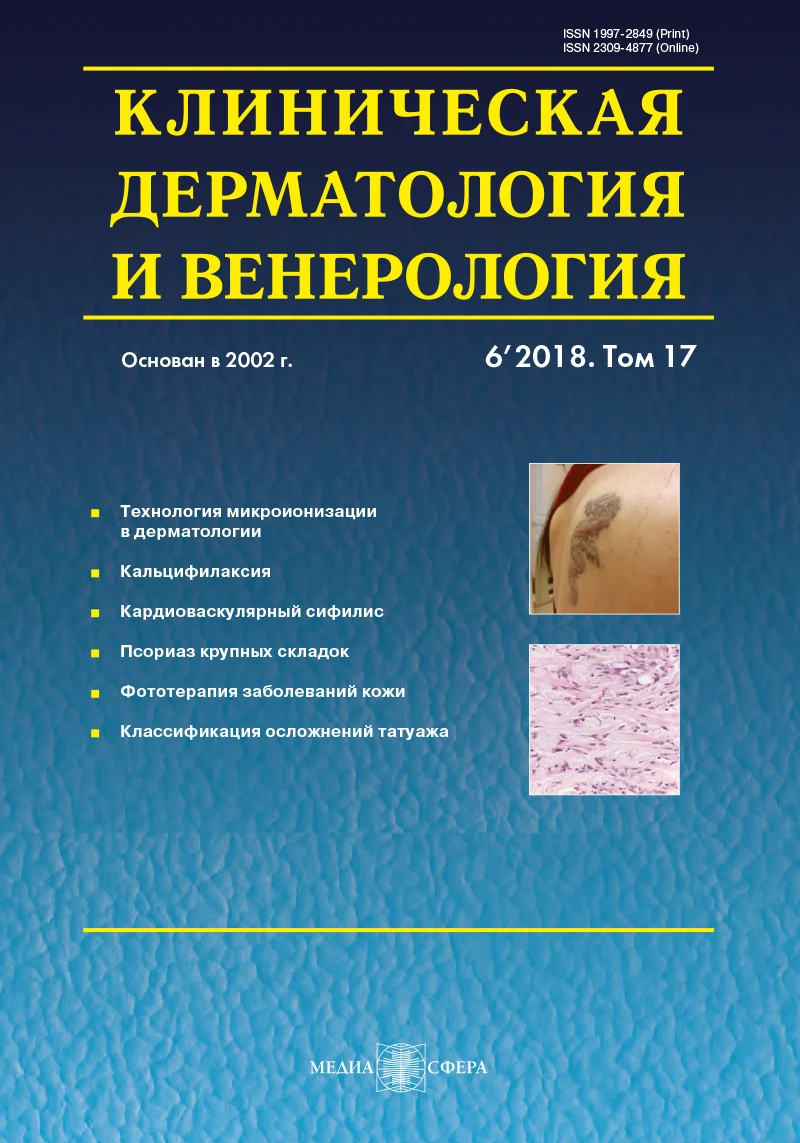
Классификация осложнений татуажа
Журнал: Клиническая дерматология и венерология. 2018;17(6):98-106.
DOI: 10.17116/klinderma20181706198
Прочитано: 27033 раза
Резюме
Ключевые слова
- татуаж
- пигменты для татуировок
- осложнения татуажа
- классификация осложнений после татуировок
Дата публикации: 30.04.2020
Татуировкой называется искусственное нарушение целости кожных покровов с помощью колющих/режущих инструментов с последующим введением в кожу красящих веществ с целью получения стойких, не исчезающих рисунков или изображений. В настоящее время все большее распространение в популяции получает татуаж, выполненный различными техниками. Наиболее древним стилем считают полинезийский — этнический стиль тату, возникший на Полинезийских островах и признанный одним из древнейших образцов изобразительного искусства. Традиционный стиль, или стиль «старой школы» (traditional and old school), зародился в начале ХХ века в США и характеризуется минимализмом изображения. Кроме того, существуют техники тату в стиле реализма (realistic), точечный стиль дотворк (dotwork), геометрический (geometric), племенной стиль трайбл (tribal), японский стиль (Japanese). Тату, выполненные в стиле блэкворк (blackwork), представляют собой покрытие участка кожи масштабным одноцветным рисунком и, как правило, свидетельствуют о низком социальном статусе его обладателя [1]. Отдельно выделяют перманентный макияж, популярность которого ежегодно растет среди женщин разного возраста и социальной принадлежности [2, 3].
Однако у этого культурного феномена есть и обратная сторона в виде осложнений от процедуры, о которых мастера тату-салонов не информируют потребителей. Все красители, используемые для татуажа в Российской Федерации и за рубежом, не подлежат обязательной сертификации, а следовательно, безопасность их применения не гарантирована, увеличивается риск развития побочных эффектов [4]. Однотонные черные татуировки в своей основе содержат сажу, включающую полициклические ароматические углеводороды и фенол, которые являются признанными мутагенами и канцерогенами [5]. Кроме того, имеются сведения о том, что полициклические ароматические углеводороды под действием ультрафиолетового излучения способны генерировать цитотоксический синглетный кислород, который может влиять на целость кожных покровов [6].
Для выполнения цветных татуировок используют пигменты, большинство из которых производят для окрашивания одежды, и они часто не предназначены для иного употребления; часть пигментов разлагается от солнечного света, выделяя в качестве метаболитов ароматические амины, являющиеся канцерогенами [7].
В литературе [8, 9] имеются сведения о побочных эффектах татуажа, вызванных как травмированием кожных покровов, так и действием используемых красителей, однако данные единичны и противоречивы, отсутствует классификация осложнений, что и обусловливает актуальность исследования.
Цель исследования — на основе анализа данных литературы и собственных клинических наблюдений систематизировать осложнения татуажа, разработать классификацию и наметить пути профилактики.
Материал и методы
Исследование проводили по нескольким направлениям. На первом этапе в качестве единиц анализа мы выбрали публикации PubMed c 1997 по 2017 г., посвященные осложнениям после выполнения татуажа. Категории анализа объединяли ключевые слова, характеризующие возникновение осложнений, сопряженных с выполнением татуировок. В качестве ключевых слов были заявлены такие слова и словосочетания, как «татуаж», «татуировка», «неблагоприятные эффекты», «осложнения татуажа», «реакция на тату», а также различные диагнозы в сочетании со словом «татуировка».
Параллельно мы накопили базу пациентов в отделении лазеротерапии и других аппаратных методов лечения и диагностики «Московского научно-практического центра дерматовенерологии и косметологии» с осложнениями после выполнения процедуры татуажа.
Клинико-лабораторная диагностика включала сбор анамнеза, осмотр, дерматоскопию, аллергологические пробы, бактериологическое исследование, иммунофлюоресцентные тесты, твердофазный иммуноферментный анализ, в ряде случаев выполняли патоморфологическое исследование биоптатов ткани татуировки. Для этого материал помещали в 10% формалин на 24 ч с заливкой в парафиновые блоки и последующей стандартной проводкой, окрашиванием срезов гематоксилином и эозином и по Ван Гизону. Микрофотографии сделаны с использованием микроскопа Leiсa DM 100 с цифровой фотокамерой.
Статистическая обработка проведена общепринятыми для медико-биологических исследований методами с помощью программных пакетов Exсel 7.0 («Microsoft», США) и АРКАДА (Диалог-МГУ, Россия).
Результаты
При проведении анализа нами установлено, что для выполнения татуировок во всех салонах тату использовали несертифицированные пигменты, в которых обнаружен ряд примесей и загрязнений. Для выполнения татуировок используется широкая цветовая палитра, при этом химический состав пигментов, как правило, не указывается. Установлено, что цветные и черные пигменты имеют различный состав. При этом в составе черных красителей по-прежнему преобладает сажа, в то время как ингредиенты цветных красителей обладают значительным количеством примесей, что и обусловливает максимальное количество осложнений [10]. Имеются единичные исследования, посвященные изучению химических веществ, входящих в состав татуировочных пигментов различных цветов. Так, J. Sowden и D. Slater и соавт. [11, 12] при изучении красного пигмента с помощью световой и электронной микроскопии в сочетании с рентген-микроанализом установлено, что данный краситель включает алюминий, железо, титан, кремний, кальций, ртуть и кадмий, способные стать причиной различных осложнений.
Состав красителей в зависимости от цвета представлен в табл. 1 [13, 
Кроме токсичных веществ, входящих в состав пигментов, используемых для татуировок, ряд исследователей обнаружили соединения, обладающие выраженным мутагенным и канцерогенным действием (табл. 2). 
При проведении анализа отмечено, что наиболее распространенным осложнением являются аллергические реакции, выражающиеся в крапивнице (3%), контактном дерматите (19,9%), экземе (7%), анафилактической реакции (0,1%). Кроме того, отмечались случаи заражения ВИЧ (3%), гепатитом (8%). Вторичная инфекция присоединялась в 15% случаев.
Побочные эффекты обладали выраженным полиморфизмом, включая гнойно-воспалительные, дегенеративные, некротические и опухолевые процессы.
Клинические случаи
В качестве примера приводим несколько клинических случаев, наблюдаемых нами в рамках разработки данной проблемы.
Пациентка А., 24 года, обратилась в Московский научно-практический центр дерматовенерологии и косметологии Департамента здравоохранения Москвы в марте 2016 г. с жалобами на бугристый вид татуировки, зуд, жжение, чувство стянутости кожи. Татуировка сделана за 6 мес до обращения к дерматологу, в течение 1—2 мес татуировка видоизменилась: приобрела неравномерно бугристый вид, покраснела. При первичном объективном исследовании состояние удовлетворительное, изменений со стороны органов и систем не выявлено. Status localis: на коже спины выявлен твердый покрасневший рубец в форме дракона с включениями сине-черного пигмента, с гладкой поверхностью, с возвышениями на протяжении. Рубец при пальпации плотный, безболезненный (рис. 1). 

Диагноз клинический заключительный: «келоидный рубец» (L91.0). При данном диагнозе лазерная терапия неэффективна, в связи с этим пациентке рекомендовано внутриочаговое введение дипроспана. На фоне проводимой терапии отмечено незначительное клиническое улучшение.
Пациентка Н., 23 лет, обратилась в мае 2017 г. в Московский научно-практический центр дерматовенерологии и косметологии Департамента здравоохранения Москвы с жалобами на изменение внешнего вида татуировки, шелушение на участках введения красного пигмента, кожный зуд. Появление заболевания отметила через 2 мес после процедуры, лечилась глюкокортикостероидными, антигистаминными средствами, без эффекта. При первичном объективном исследовании состояние удовлетворительное, изменений со стороны органов и систем не выявлено.
Status localis: в области участков кожи с красным пигментом и по периферии имеется сухость кожных покровов, в очаге — уплотнение кожи, на поверхности выявлено крупнопластинчатое шелушение, единичные крупные везикуло-буллезные элементы (рис. 3). 
При гистологическом исследовании на фоне выраженного гиперкератоза и акантоза обнаружены атрофические изменения в эпидермисе, сглаживание его выростов. Кроме того, визуализированы участки папилломатоза. В дерме диффузно расположены гранулы пигмента, при этом лимфогистиоцитарная инфильтрация отсутствовала. Выраженный отек обусловливал отслойку прилежащей дермы от эпидермиса на некоторых участках, при этом образовывались щели, что морфологически соответствует пемфигоидной форме красного плоского лишая (рис. 4). 
Выявленные нами осложнения после процедуры татуажа были соотнесены с данными литературы и представлены в табл. 3. 
Осложнения татуажа условно могут быть разделены на местные (непосредственно в зоне татуировки) и системные (патологические процессы, развившиеся вследствие выполнения манипуляции). По срокам возникновения целесообразно выделить осложнения, возникшие непосредственно в момент выполнения процедуры, и отсроченные. Срочные побочные эффекты чаще всего характеризовались аллергическими реакциями, так как пигмент является чужеродным антигеном, и в зависимости от иммунологической реактивности организма реакция на его введение была индивидуальной вплоть до развития анафилактического шока. Инфекционные осложнения, связанные с нарушениями санитарно-гигиенических норм при проведении процедуры. К отсроченным осложнениям татуировок следует отнести заболевания, возникновение которых обусловлено выполнением процедуры татуажа, первые проявления которых зарегистрированы до 4 нед (ранние) и свыше 4 нед (отсроченные).
В зависимости от этиологии осложнения татуажа могут быть разделены на инфекционные и асептические. При этом необходимо отметить, что данный побочный эффект не всегда обусловлен нарушением техники выполнения процедуры, но во многом определяется индивидуальной микрофлорой клиента, кожа которого может быть изначально колонизирована патогенными пиогенными микроорганизмами, проникающими в зону татуировки как в момент проведения манипуляции, так и после.
На основании проведенных исследований для систематизации имеющихся сведений о побочных эффектах татуировок мы предлагаем следующую классификацию осложнений татуировок.
Классификацияосложненийтатуировок
По распространенности
I. Системные — системный саркоидоз (D86), ВИЧ-инфекция (В20), гепатиты (В16), С, D (В17), красный плоский лишай (L43).
II. Местные — контактный дерматит (L25), келлоидный рубец (L91.0).
По времени возникновения
I. Срочные — возникшие в момент выполнения процедуры татуажа: анафилактический срок (Т78.2).
II. Отсроченные:
1) ранние осложнения татуажа — пиодермия (L08.0);
2) поздние осложнения татуажа — неспецифическое гранулематозное асептическое воспаление вокруг инородного тела (красителя) (L92.0—L92.9); новообразования, солнечная сенсибилизация.
По этиологии
I. Инфекционные:
1) бактериальные — пиодермия (L08.0), стафилококковое поражение кожи в виде ожегоподобных пузырей; пиогенная гранулема (L98);
2) вирусные — гепатиты группы В (В16), С, D (В17); ВИЧ-инфекция (В20); инфекции, передаваемые парентеральным путем;
3) грибковые (микозы);
4) дисбактериоз.
II. Аллергические реакции:
1) крапивница (L50);
2) аллергический контактный дерматит (L23);
3) контактный дерматит неуточненный (L25);
4) анафилактический шок (Т78.2).
III. Гранулематозные реакции:
1) неспецифическое гранулематозное асептическое воспаление вокруг инородного тела (красителя) (L92.0—L92.9);
2) неспецифическое гранулематозное асептическое воспаление вокруг инородного тела (красителя) c поражением лимфатических узлов (L92.0—L92.9);
3) саркоидоз кожи (D86.3).
IV. Опухоли и опухолевидные образования:
1) келоид (L91.0);
2) дерматофиброма (D23);
3) пигментный (меланоцитарный) невус (D22).
Заключение
Таким образом, несмотря на отсутствие четко прописанных противопоказаний к проведению процедуры татуажа, в конкретных клинических случаях татуировки могут стать причиной возникновения серьезных заболеваний, что требует дальнейшего изучения данной проблемы для профилактики осложнений и оптимизации лечебной тактики.
Учитывая инвазивный характер процедуры и значительное число осложнений, необходимо:
1) разработать перечень противопоказаний для процедуры татуажа;
2) обозначить проблему для соответствующих государственных структур по обязательной сертификации красителей для татуажа и рабочего места мастера татуажа;
3) разработать стандарт предварительных лабораторных исследований, предшествующих данной инвазивной процедуре (аллергическая проба на вводимый краситель, бактериологический посев кожи на предполагаемом участке для татуирования и т. д.);
4) повысить требования к специалистам, выполняющим татуаж (медицинское образование, сертификат о прохождении первичной аккредитации специалистов с присвоением квалификационной категории «мастер татуажа»).
Сведения об авторах
О.Н. Карымов — к.м.н., зав. отделением лазеротерапии и других аппаратных методов лечения и диагностики, «Московский научно-практический центр дерматовенерологии и косметологии» Департамента здравоохранения Москвы, Москва, Россия; https://orcid.org/0000-0002-7048-3605
А.А. Воробьев — д.м.н., проф., заведующий кафедрой оперативной хирургии и топографической анатомии ФГБУ ВО «Волгоградский государственный медицинский университет» Минздрава России; https://orcid.org/0000-0001-8378-0505
С.А. Калашникова — д.м.н., доцент, заведующая кафедрой морфологии, Пятигорский медико-фармацевтический институт — филиал ФГБОУ ВО «Волгоградский государственный медицинский университет» Минздрава России. https://orcid.org/0000-0002-7688-9366
Автор, ответственный за переписку: Калашникова Светлана Александровна — Пятигорский медико-фармацевтический институт — филиал ФГБОУ ВО «Волгоградский государственный медицинский университет» Минздрава России. e-mail: kalashnikova-sa@yandex.ru


Рекомендуем статьи по данной теме:
Профилактика герпетической инфекции при проведении процедуры дермапигментации губ.Клиническая дерматология и венерология. 2025;24(1):87-93