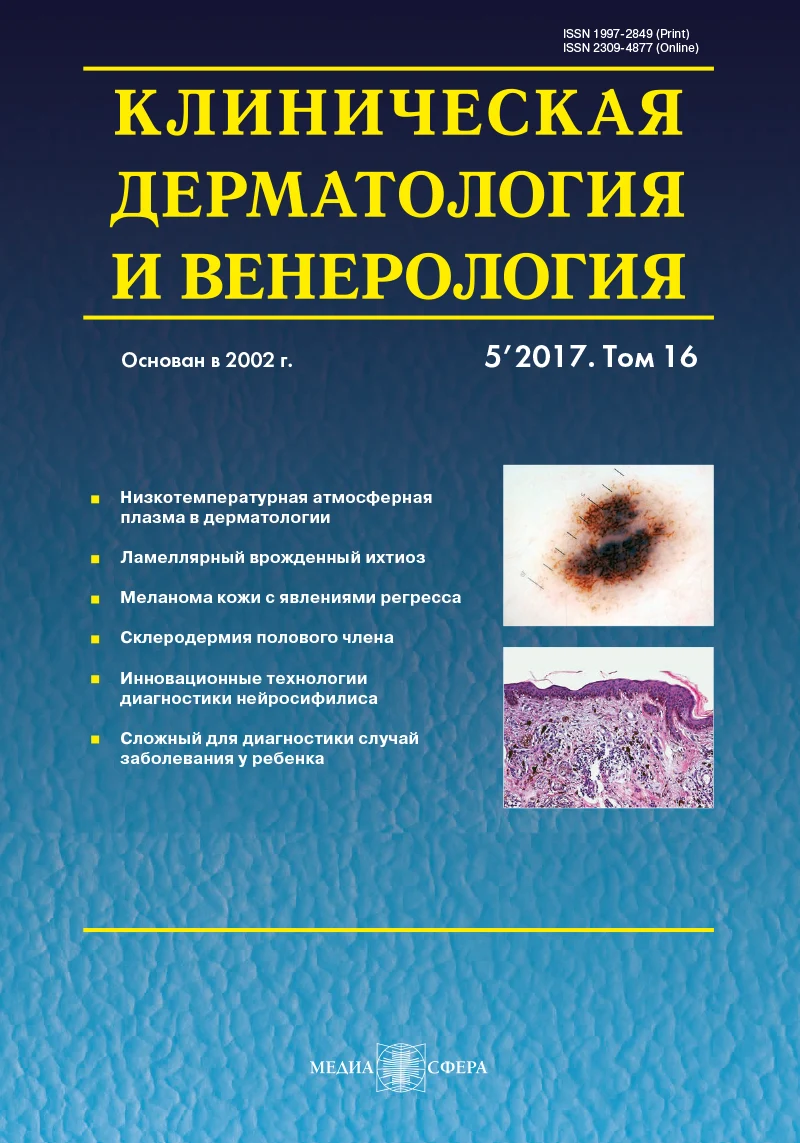
Энтеропатический акродерматит
Журнал: Клиническая дерматология и венерология. 2017;16(6):44-49.
DOI: 10.17116/klinderma201716644-48
Прочитано: 18299 раз
Резюме
Ключевые слова
- энтеропатический акродерматит
- случай из практики
Дата публикации: 30.04.2020
Шведский дерматолог Brandt в 1936 г. впервые описал редко наблюдаемую своеобразную форму хронического дерматоза младенцев, сочетающуюся с нарушениями обмена веществ и функций желудочно-кишечного тракта. Термин «энтеропатический акродерматит» предложили в 1942 г. N. Danbolt и J. CIoss [1, 2]. Заболевание передается по аутосомно-рецессивному типу. В основе лежит мутация гена SLC39A4 на хромосоме 8 g24.3, который кодирует трансмембранный белок — цинк-связывающий фактор (ЦСФ) [3, 4].
Развивается преимущественно у детей грудного и раннего детского возраста, иногда у взрослых [1]. В патогенезе заболевания основную роль играет дефицит цинка. Содержание цинка в крови больных детей в 2—3 раза ниже нормы. Недостаточность цинка вызывает снижение ферментативной активности и синтеза нуклеиновых кислот, поскольку этот микроэлемент является кофактором ряда ферментов: щелочной фосфатазы, карбоангидразы, тиаминкиназы, глутаминдегидрогеназы и т. д. При дефиците цинка происходит снижение напряженности гуморального и клеточного иммунитета, нарушается обмен триптофана. Вследствие изменений соотношения линолевой и олеиновой кислот происходит нарушение функциональной активности эпидермиса [5].
Заболевание может начинаться с первых дней жизни до 1,5 года (при переходе на искусственное вскармливание, так как в грудном молоке имеется связывающий цинк-лиганд, который способствует лучшему всасыванию цинка), в отдельных случаях – у детей старшего возраста и взрослых.
Основными признаками заболевания являются поражения кожи и слизистых оболочек у лиц, страдающих желудочно-кишечными заболеваниями. Нарушения со стороны желудочно-кишечного тракта либо развиваются одновременно, либо предшествуют кожным проявлениям, либо возникают позже. Клиническая картина характеризуется появлением эритематозно-отечных очагов с пузырьками и гнойничками на коже локтевых и коленных суставов, дистальных отделов конечностей, половых органов, в паховых складках. Высыпания располагаются обычно симметрично, имеют резкие границы, неправильные очертания. Эти очаги могут быть сходны с клинической картиной кандидоза, экземы, псориаза, буллезного эпидермолиза, что часто ведет к ошибочной диагностике. Заметного зуда не наблюдается, но у маленьких детей массивные кожные проявления вызывают неприятные ощущения. Дерматит имеет длительное хроническое течение, при этом могут развиваться незаживающие эрозивно-язвенные участки. Характерны дистрофические поражения ногтей, алопеция (типичный признак — нарушение роста волос в виде истончения, обламывания, поредения), диарея, нанизм, гипогонадизм, в ряде случаев — психические расстройства. На кистях и стопах часто обнаруживают паронихии, ногти продольно и поперечно исчерченные, онихолизис. Поражение слизистых оболочек может быть представлено в виде хейлита, стоматита, блефарита с фотофобией, конъюнктивита, глоссита, вульвита. Возможны эктропион, замедление развития зубов. Обострение процесса, как правило, связано с обострением желудочно-кишечных расстройств, которые сопровождаются потерей аппетита, вздутием живота, частым жидким стулом со слизью, непереваренной пищей, с неприятным запахом. Ухудшается общее состояние больных, появляется субфебрильная температура или лихорадка неправильного типа. Прогрессирование патологического процесса сопровождается замедлением развития ребенка, задержкой роста, снижением массы тела. Прогноз определяется тяжестью системной патологии, своевременностью диагностики заболевания и адекватностью заместительной терапии [1, 6].
Заболевание дифференцируют с врожденным буллезным эпидермолизом, детской экземой, стойким пустулезным акродерматитом Аллопо, псориазом, герпетиформным дерматитом [1, 7].
В лечении используют препараты цинка: оксид цинка принимают по 0,03—0,15 г/сут. После клинического улучшения принимают поддерживающую дозу препарата до 8 мг/сут, а продолжительность определяют индивидуально. При наличии в диете больного большого количества цинк-содержащих продуктов (мясо-молочные, рыба, яйца) дозу цинка уменьшают. Необходимо при терапии учитывать, что цинк нарушает метаболизм меди, вследствие чего необходимо назначение препаратов последнего.
Приводим наше наблюдение клинического случая акродерматита энтеропатического. Родители девочки в возрасте 2 лет 3 мес обратились в кожную клинику с жалобами на высыпания на коже туловища, лица, конечностей, сопровождающиеся сильным зудом, вялостью, сонливостью, частым жидким стулом. Ребенок родился от второй беременности. Родители являются троюродными родственниками между собой. В семье двое детей — старшая девочка 9 лет (здорова) и данный ребенок.
Из анамнеза — на cроке беременности 20 нед пренатальный консилиум установил у плода удвоение левой почки, удвоение лоханки правой почки с пиелоэктазией. Родоразршение путем операции кесарево сечение на сроке 39 нед, на 2-е сутки ребенок был переведен из родильного дома в клинический перинатальный центр.
В перинатальном центре ребенок был обследован. Объективно: состояние средней тяжести; самочувствие не страдает, аппетит хороший, на смешанном вскармливании. Реакция на осмотр — гиперестезия, раздражительный крик. Признаки зрелости: доношенный. Поза: скованность. Двигательная активность: гипервозбуждение, тремор конечностей. Мышечный тонус: дистония. Рефлексы: выполняет. Глазная симптоматика: нет. Менингеальные знаки: нет. Частота сердечных сокращений 138 в минуту.
Кожные покровы розовые, цианоз носогубного треугольника, лицо и уши гиперемированы с обильным шелушением (рис. 1). 


Дыхание в легких пуэрильное, хрипов нет. Живот мягкий. Перистальтика кишечника активная. Печень и селезенка не увеличены. Стул непереваренный.
Половые органы сформированы по женскому типу. Разведение ног в тазобедренных суставах полное.
Нейросонография: субэпендимальная киста в области таламо-каудальной вырезке справа.
Лабораторные данные. Общий анализ крови: гемоглобин 175 г/л, эритроциты 5,3·1012/л, тромбоциты 212·109/л, лейкоциты 12,8·109/л, палочкоядерные 0%, сегментоядерные 43%, эозинофилы 8%, лимфоциты 32%, моноциты 14%. Общий анализ мочи: реакция кислая; белок 0,68 г/л (колометрический метод с пирогалловым красным); глюкоза отсутствует; лейкоциты 5—6 в поле зрения; эритроциты 1—2 в поле зрения; эпителий в большом количестве. Биохимический анализ крови: глюкоза 6,3 ммоль/л; аланинаминотрансфераза 23 Ед/л; аспартатаминотрансфераза 55 Ед/л, С-реактивный белок 11,0 мг/л (нормальный показатель 0,00—5,80), щелочная фосфатаза 138 Ед/л.
Ультразвуковое исследование (УЗИ) внутренних органов: множественные кисты правой почки.
Окулист: глазное дно в норме.
Хирург: поликистоз правой почки, экстренное хирургическое вмешательство не показано.
УЗИ сердца: патологии не выявлено.
Клинический диагноз: поликистоз почки неуточненный.
Лечение: 1% раствор викасола 0,1 мл/кг внутримышечно однократно; ампициллин 50 мг/кг каждые 8 ч № 5; гентамицин 4 мг/сут внутривенно № 8; бифидумбактерин по 5 доз 2 раза в день, супрастин по ¼ таблетки 1 раз в день. Наружно — обработка кожи аэрозолем алазоль. Матери назначен цинктерол по 1 таблетке 3 раза в день за 30 мин до еды на период грудного вскармливания.
Повторно консультирован через 3 мес: состояние ребенка средней тяжести; кожные покровы сухие, шелушение на верхних конечностях, параорбитального цианоза нет.
Диагноз: энтеропатический акродерматит.
Лечение: фенистил по 5 капель 2 раза в день (10 дней); цинкит по ½ таблетки 2 раза в день; крем эмолиум; мазь адвантан 1 раз в день (15 дней); масло для ванны и душа (La Roche-Posay Lipikar huile lavante).
На момент повторного обращения (возраст 2 года 3 мес): кожные покровы сухие, шелушащиеся; процесс носит распространенный симметричный характер с вовлечением области лица, тыльной поверхности обеих кистей и стоп (рис. 5), 


На основании анамнеза и клинической картины подтвержден энтеропатический акродерматит. Пациентка по региональной квоте направлена Министерством здравоохранения Республики Дагестан в центральную клинику Москвы.
Как видно из вышеприведенного описания, даже своевременно начатая адекватная терапия энтеропатического акродерматита, продолжающаяся свыше 2 лет, не привела к улучшению кожного процесса. На cроке 20 нед беременности пренатальный консилиум установил у плода удвоение левой почки, удвоение лоханки правой почки с пиелоэктазией. В близкородственных браках либо при наличии у кого-либо в семье генетически детерминированного заболевания необходима внутриутробная диагностика и пренатальный консилиум в более ранние сроки, которые позволили бы принять решение о прерывании беременности.
Приведенное наблюдение указывает нам на необходимость кардинально иного подхода к профилактике генодерматозов с акцентом на раннюю пренатальную диагностику и предупреждение рождения детей с врожденной аномалией, сопровождающейся тяжелой системной патологией.
Автор заявляет об отсутствии конфликта интересов.
e-mail: gabenu@mail.ru


Рекомендуем статьи по данной теме:
Учет инструментальной погрешности измерения температуры трупа при определении давности смерти (случай из практики).Судебно-медицинская экспертиза. 2025;68(5):53-57